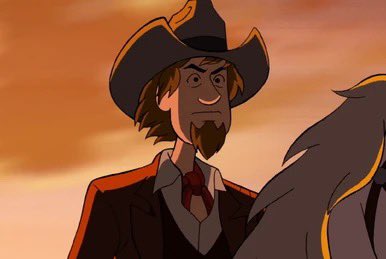
Nacho Libre was so underrated. Everything really comes together atop some really tight writing to make an endlessly rewatchable movie.
Nacho is a religious brother. He’s the cook, the low man on the totem pole at a monastery that runs an orphanage. He loves the orphans, but he’s frustrated at his treatment and the fact that he gets no funds to cook well.
In response, he indulges in a childhood fantasy of becoming a Luchador—forbidden by the brothers as an act of vanity, but rationalized by Nacho’s desire to provide funds for the orphans. This is a rich central conflict.
It’s based on the true story of Fray Tormenta, a Mexican priest who supported an orphanage by performing as a Luchador, who really deserves his own thread some time.
Nacho Libre was directed and co-written by Jared Hess, who also made Napoleon Dynamite. Napoleon Dynamite was a major cultural moment, but Nacho Libre is by far the better film.
Nacho Libre is such a seamless vision it’s hard to talk about its strengths separately. The photography has some Wes Anderson touches, warm tone, color-blocking and direct, centered, symmetries that match the whimsical tone.
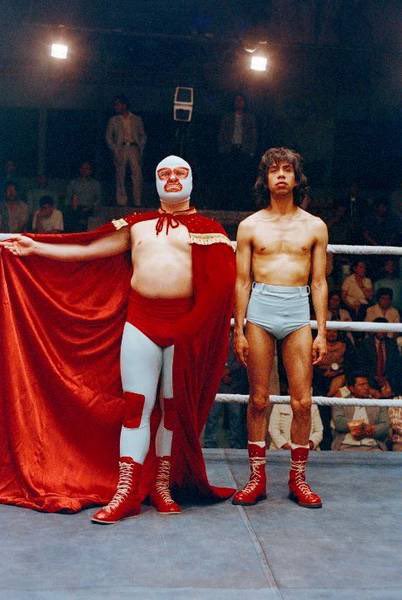
Jack Black is great as a good hearted but childish Nacho, and the whimsical tone and wrestling plot are a perfect match for his great strength in physical comedy.
Despite the whimsey, the film feels remarkably grounded thanks to being filmed entirely on site in Oaxaca and using mostly local actors for supporting roles, including many Lucha legends, like Silver King playing in gold as Ramses.
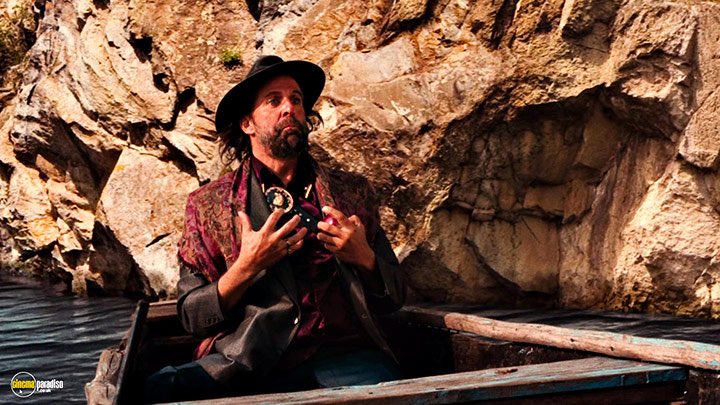
One of the few non-local cast is Peter Stormare, going wayyy over the top as a huckster shaman who induces Nacho to eat an eagle egg to gain the power to defeat Ramses.
Esquelito, played by Héctor Jiménez, plays a great straight man to Nacho, providing contract in every respect, even refusing to be baptised because “I believe in Science”.
The soundtrack is fun throughout and the credits song — Hombre Religioso — is a real earworm
The big key to all of it for me is how the movie never feels the need to be low or mean-spirited. The story has low stakes, but Nacho is still a hero, and the movie is smart to never denigrate what he stands for—the orphans, the Church, and Lucha Libre.
The ground of humor comes from his aware embrace of his heroic quest—even his low point of self-imposed exile in the desert, which he undertakes with great seriousness, before it’s revealed to be just outside of town.
Hess achieves an incredibly delicate duality in tone here where the story plays successfully as a truly feel-good heroic story, as well as a comedy pastiche of itself—this tone matches the experience of Kayfabe in Lucha Libre perfectly.
The stakes of the film come together beautifully in Nacho’s climactic match against Ramses—only by facing the personal shame of being unmasked in the ring in front of everyone he cares about can he find the strength to defeat Ramses and save the orphanage.
If you haven’t seen it, I highly recommend.
• • •
Missing some Tweet in this thread? You can try to
force a refresh

I'll never understand the inflexibility of some people's thinking. They can see that it's not working out for young people. So they must know something is wrong. If the answer is 'they're lazy and should buck up' - they're not going to. An entire generation has already been cooked as they say this over and over.
Even assuming (wrongly) it's just a generational character defect and the youth profligately spend on avocado toast and netflix, and assuming further this is not attributable to poor parenting, what is the solution?
The kids are not just going to 'buck up' all of a sudden, they're going to blame you and bury you for whatever they can finally get out of you. It doesn't really matter if it's a youth character defect or an old character defect that created the circumstance. The circumstance is an existential threat to American society.
I'm happy to listen to theories and criticisms, but I won't hear it from someone evincing a willingness to let our nation go in order to teach some imaginary moral lesson.
There is no end in life to your duty to your family and your people. You don't get to 'retire' from that and tell everyone else they're on their own.
It is fine to say that. Caleb Hammer clips do extremely well on here for that reason. That's all he does. But correcting individual bad personal finance habits doesn't resolve the underlying structural issue, and a lot of people for whatever reason pretend like it does.
To me, this is obvious and goes without saying. The question is whether the successful inculcation of these habits actually results in success for the average kid. I don't really see that it does for reasons outside the control of almost anyone's personal agency.
The Memory Sorrow Thorn series (1988-1993) is fantasy's missing link. It's the most successfully-achieved epic fantasy project done in the vein of Tolkien and it laid the foundations for the modern politically-savvy fantasy novel. This was a huge mistake.
Williams took broad influences from Tolkien (and others). The scope, fully-realized secondary world, the elves, the mythic tone. He added a Bildungsroman component you don't really see in Tolkien. Our hero Simon, a scullery boy, is more explicitly Arthurian.
This approach gives Williams the opportunity to build the story, on one level, into a conflict between a mythic, romantic worldview and the political and psychological realities of adult life, as Simon is thrust out of boyhood and into the world.
The main distortions that bug me are the way the movies treat the wraiths as a 'passive effect' of the ring and show Sauron having direct real-time awareness of the ring being used.
A casual viewer would assume the ring attracted the ringwraiths like moths, or spawned them in nearby as like a video game negative use effect. An attentive viewer would notice that Sauron reactivated them to find the ring after torturing Gollum.
Prior to that, they were inactive in Mordor. Sauron himself hadn't been active in Mordor all that long. He sent them in July; they were closing in on Frodo by September. Gandalf freaks out when Saruman tells him the wraiths have crossed the Isen.
Watching UFC in 2025 is just as full of brown people scamming you as anything else. It’s over. Half of fights on every card now are guys from scammer countries with fake records who take turns tackling each other to run out the clock for like $12K.
Yes but look at the mechanics of it. There are too many cards because UFC has a deal with ESPN for near-weekly cards. And as public companies they’re obligated to expand endlessly.
Everything autistic people don’t like about social interactions is cured by a culture of etiquette. Autists being outcasted is a result of the collapse of formal etiquette. That was the social API and they don’t give it to you anymore.
Here’s the method to reliably navigate social circumstances and relationships safely and profitably, son.
Scooby Doo projects each tend to focus on one member of the gang, resulting in each of them having a refined set of character traits and stories. Except Fred. Nobody really gets Fred.
In Legend of the Phantosaur and Shaggy’s Showdown, we get Shaggy in thoughtful conflict with his fearful nature, overcoming it internally, without Scooby snacks, to crack the case and save his friends.
In Big Top Scooby Doo and the Live Action Film we see Daphne in conflict with the limitations of her hot girl image.
Slim, please do not post your first thought seeing this image.