1/ A THREAD: As 2022 draws to a close, a few words about how technology helped shape and influence the war in Ukraine – specifically, the impact of commercial quadcopters. 
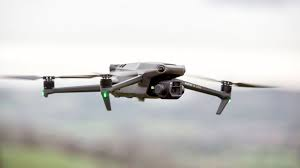


2/ Ukraine led this charge as Russia invaded in February 2022, scoring some major successes in key battles against Russian forces, with quadcopters providing crucial intelligence, surveillance and reconnaissance (ISR) capabilities to long-range artillery and MLRS systems.
3/ This capacity enabled Ukraine to better organize and position its forces to meet the invading Russian military. cnet.com/news/ukraine-i…
4/ The pinnacle of this tactic is a Chinese-made DJI Mavic quadcopter – easy to procure, easy to fly/ navigate, it became absolutely indispensable for ISR, target spotting, artillery correction and combat missions like “kamikaze attacks”, dropping small bombs and grenades.


5/ Ukrainian military forces have greater flexibility and independence in making decision based on the data from these quadcopters, a key capability that enabled them to faster react to Russian movements, maneuvers and force-positioning. This is still the case now.
6/ But the Russian military and its allies likewise incorporated the DJI and other quadcopters like Autel into their tactics and force structure. DNR militia expanded its drone training center in 2022 to teach drone operators that fly Mavics and other models.

7/ Ukraine has done the same, constantly training its soldiers with the help of the industry, ICT and other volunteers to make their quadcopters more lethal and effective. rferl.org/a/ukraine-dron…
8/ Russian forces have done the same, with the DNR drone center leading the way, along with other significant volunteer-based efforts like "Dronnitsa." The goal: make quadcopter use organic, train the operators and trainers who can quickly teach others how to use such technology.

9/ Today, drone-delivered videos are comm on social medial, with lots of content coming from quadcopters. Videos of attacks, tracking the soldiers and vehicles, of strike and bombings are in inseparable part of the Ukraine war narrative, told by Ukrainians and Russians alike.
10/ These DJI and Autel (and other) quadcopters have become so successful when paired with artillery that a Russian top general called DJI Mavic a true symbol of modern warfare, elevating artillery to the pedestal not seen since WW1.
https://twitter.com/SamBendett/status/1557697452039364610
11/ But these commercial products are vulnerable to military-grade countermeasures like electronic warfare, signals interference and different-caliber weapons. Both sides acknowledged that such countermeasures can have a powerful detrimental effect on quadcopter ops.
12/ This led to measures to counter these tactics - building different flight concepts, manipulating software and disengaging from the aeroscope. Ukraine and Russian efforts include hackathons to come up with the best ways to pilot such UAVs in a severely contested environment.
13/ What's in store for Mavic and other quadcopters in 2023? More widespread use, better integration of quadcopters and their operators into combined arms formations and units, and more widespread pilot training. npr.org/2022/08/22/111…
14/ Additional evolution includes building on current group quadcopter use to scaling it up to swarm ops, enabled by machine learning algorithms that recognize targets on the ground. vox.com/2022/9/21/2335…
15/ The DJI will finally see the semblance of competition as Ukrainian and Russian domestic efforts include investing in mass-scale production capacity to deliver thousands of small UAVs and quadcopters to the front. eastrussia.ru/news/drony-dly…
16/ For Russia, the continue dependence on many Chinese-made components will remain a feature in 2023. “Got it on AliExpress” will remain relevant, as customers will look for ready quadcopters solutions and components at online and physical marketplaces. ria.ru/20221201/dron-…
17/ In 2022, Telegram-based informational awareness and fundraising reached unprecedented levels, allowing volunteers to donate specific equipment, materiel and even raise funds for specific drones.

18/ As the Russian military seeks to retrain its mobilized force, it will push quadcopter use down to the tactical levels for more advanced tactical ISR. For both sides, targeting the other’s quadcopter operations left-of-launch and during/post- launch will remain a key tactic.
19/ Bottom line - the small quadcopter showed its utility in 2022 and we will see its use become more professionalized by both sides.


20/ Questions for next year: Will national industries finally find a substitute to DJI drones in combat? Can these small quadcopters be battle-hardened to withstand countermeasures? Can their operations become more sophisticated with new technology like AI? Stay tuned…

• • •
Missing some Tweet in this thread? You can try to
force a refresh