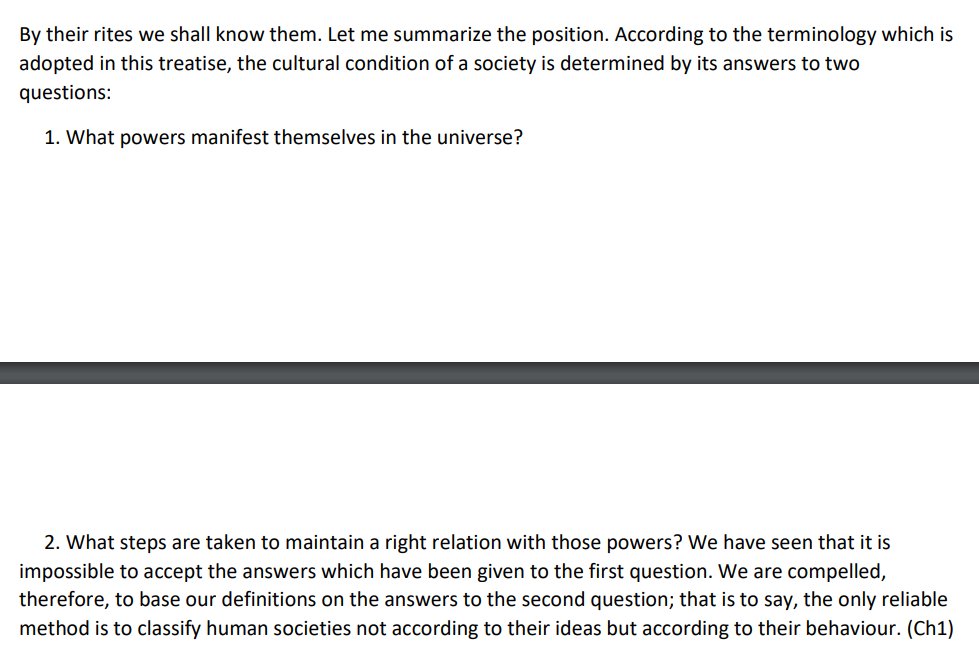
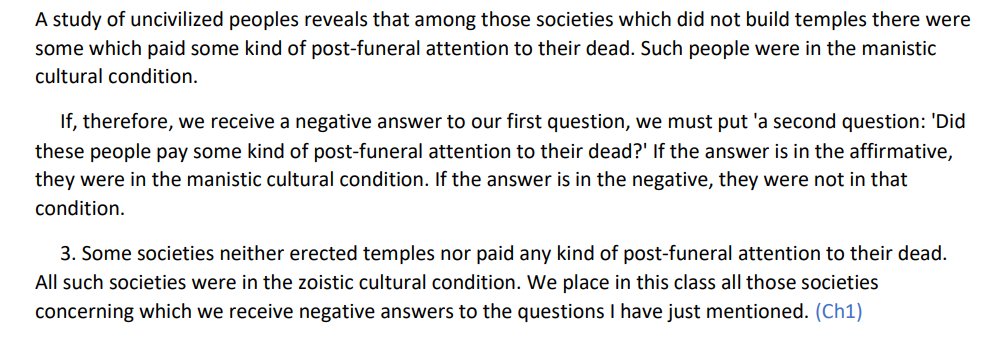
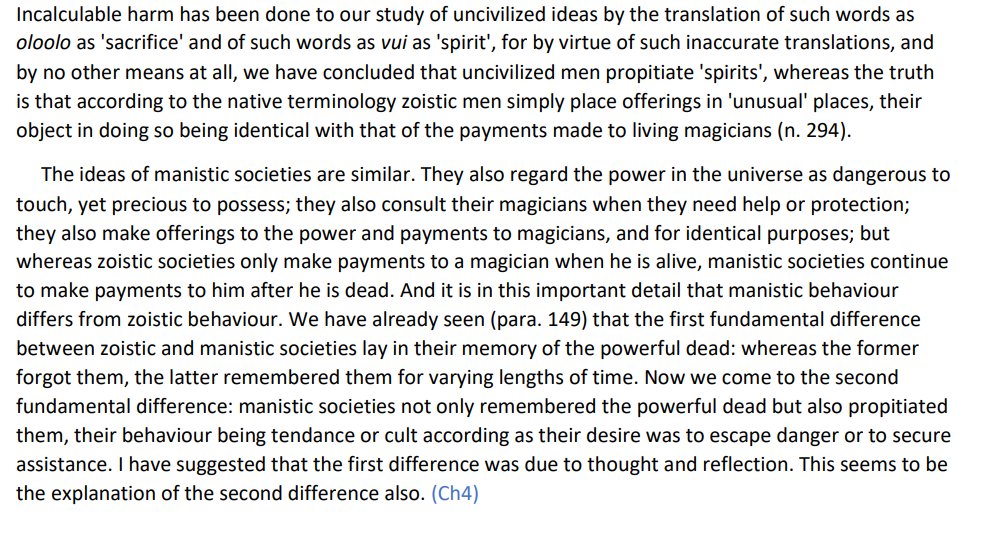
Unwin divided societies into four categories based on their rites rather than their beliefs: zoistic, manistic, deistic, and rationalistic.
He placed rationalistic at the highest position on the scale based on the greater control of rationalistic societies over their environments, and ordered the others with reference to that. His ranking goes zoistic < manistic < deistic < rationalistic.
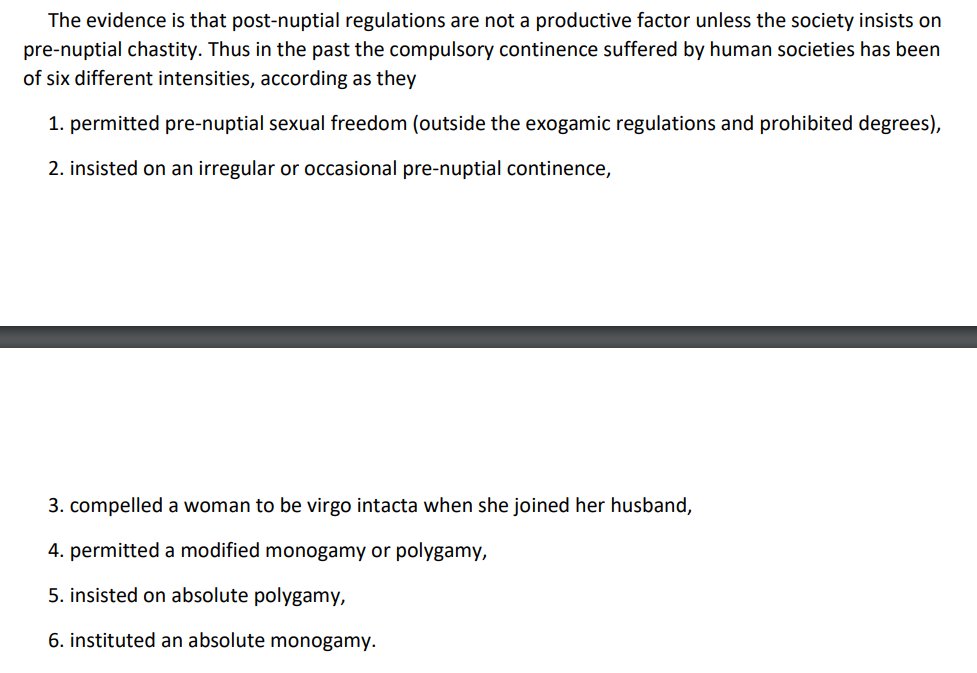
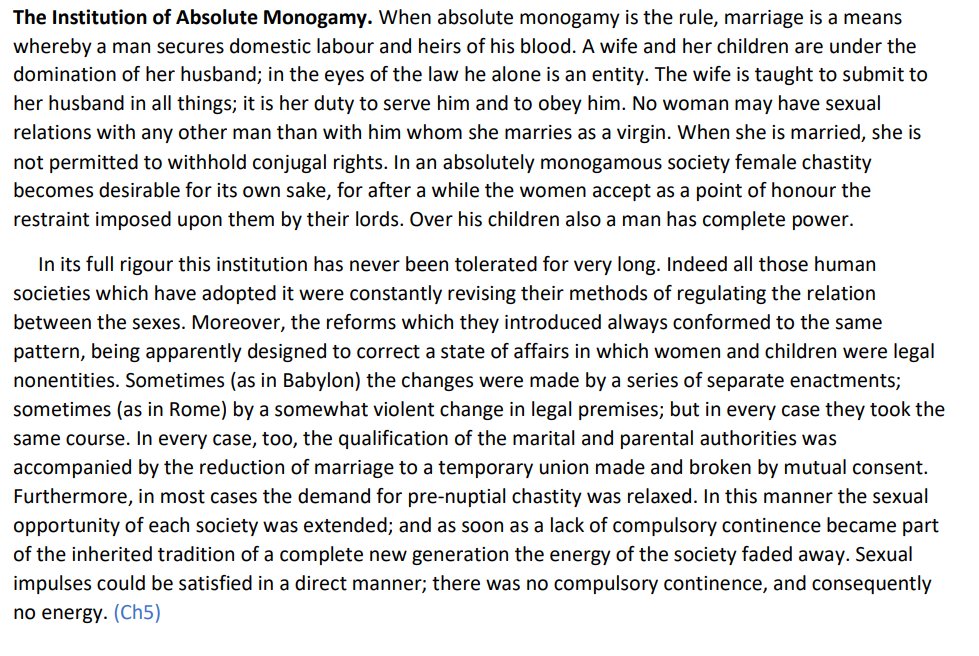
Unwin's whole goal was to try to figure out the effect of sexual opportunity and a society. To that end, he classified modes of sex relation into seven categories, with no pre-nuptial chastity as the least rigorous and absolute monogamy as the most.
The primary output he was concerned with was what he called "social energy", that is "the power of reason, the power of creation, and the power of reflecting upon itself." He refers to refinement of this energy as human entropy.
He distinguishes between "expansive" and "productive" social energy. Expansive energy is more common and easier to attain then productive energy, and always precedes it. Rationalistic societies are the only ones that display productive energy.
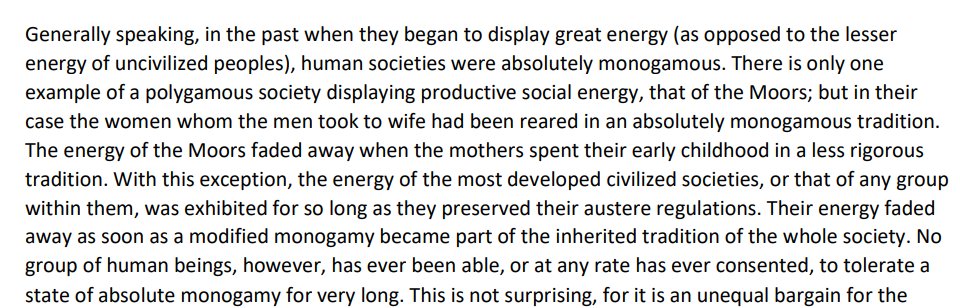
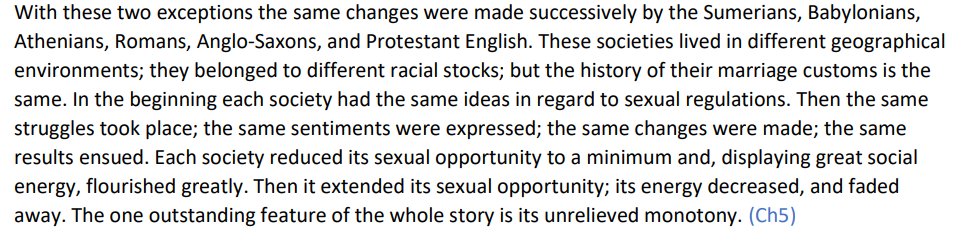
There is a perfect correspondence between sexual restrictions, cultural category, and social energy. The more restrictions, the higher the category and the more energy displayed.
There are two caveats: first, it is the past and present relations of a society that matter; not merely the present. It takes 3 generations to see the full effects of a change. Second, different stratums of society can be at different levels; any change will be uneven.
The sexual opportunity of women matters more than that of men; restrictions on men do not matter except for distinguishing absolutely monogamous and polygamous societies. Unwin thinks this is because of the importance of women to early upbringing; I have a different explanation.
Only societies with women reared in absolutely monogamous society for several generations attain the rationalistic state. In general, abs. monogamous societies display great energy, and most energetic societies begin as abs. monogamous. This is lost when abs. monogamy is lost.
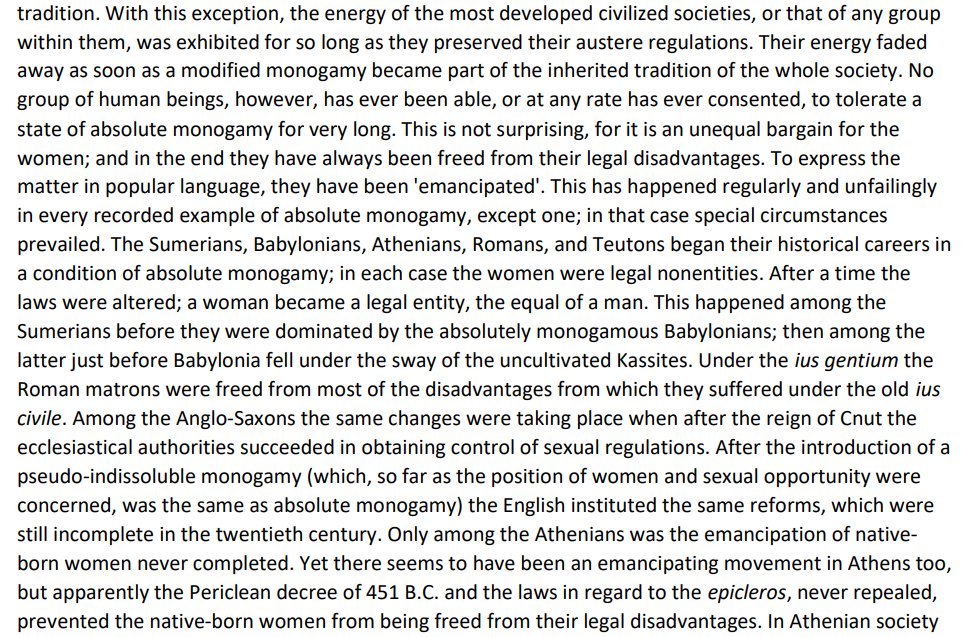
The manner in which absolute monogamy is lost is the same in every case. Female emancipation => replacement of absolute with modified monogamy => (usually) abandonment of pre-nuptial chastity => decline and disappearance of social energy.
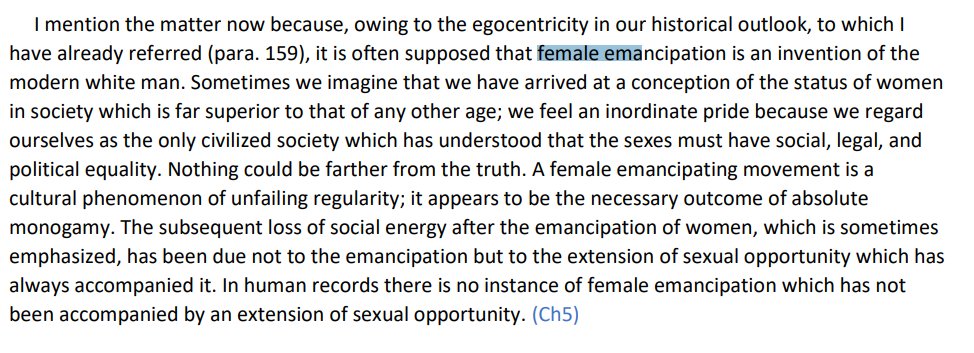
Unwin thinks that the association of female emancipation with the destruction of absolute monogamy is a coincidence, and the two can be combined. He even advocates this to those who wish to display social energy for greater periods of time. I disagree (reasons in the review).
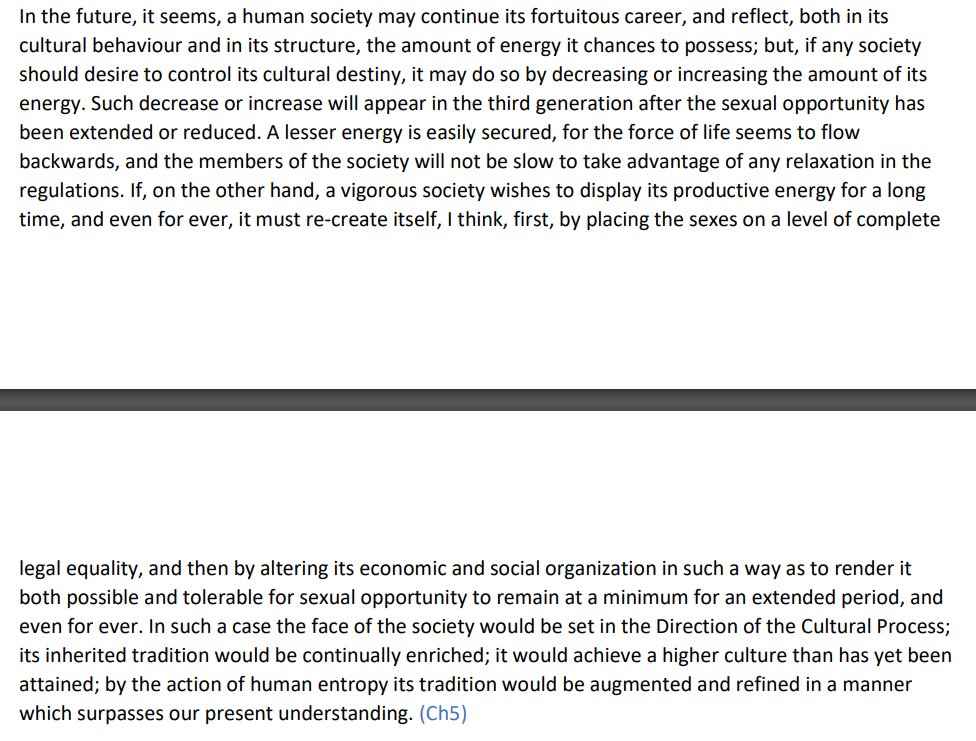
Some of the more interesting pieces of evidence below: women were emancipated in Anglo-Saxon England by the 11th century; an 11th century Anglo-Saxon wife had more rights than her early 20th century English equivalent.
In Rome, dominance of society shifted according to the most stringent stratum, since not all of society shifted at once. Patricians => patricians/plebeans => mostly plebeans => provincials => Christians.
Historically speaking, there is no such thing as Christian marriage. Pauline principles lead to absolute monogamy, but many Christian societies have been less stringent. In particular, Eastern Orthodox has typically been less stringent then the Western Church.
Some accounts likely to be interested:
@Known2Cali4nia - Family Structure Maximalist
@CovfefeAnon - WQ
@TheWorthyHouse - Extremely relevant to your concept of human flourishing, which is nearly equivalent to "social energy"
Athenian pederasty did not appear until absolute monogamy broke down, when the Athenian golden age was breaking down.
• • •
Missing some Tweet in this thread? You can try to
force a refresh

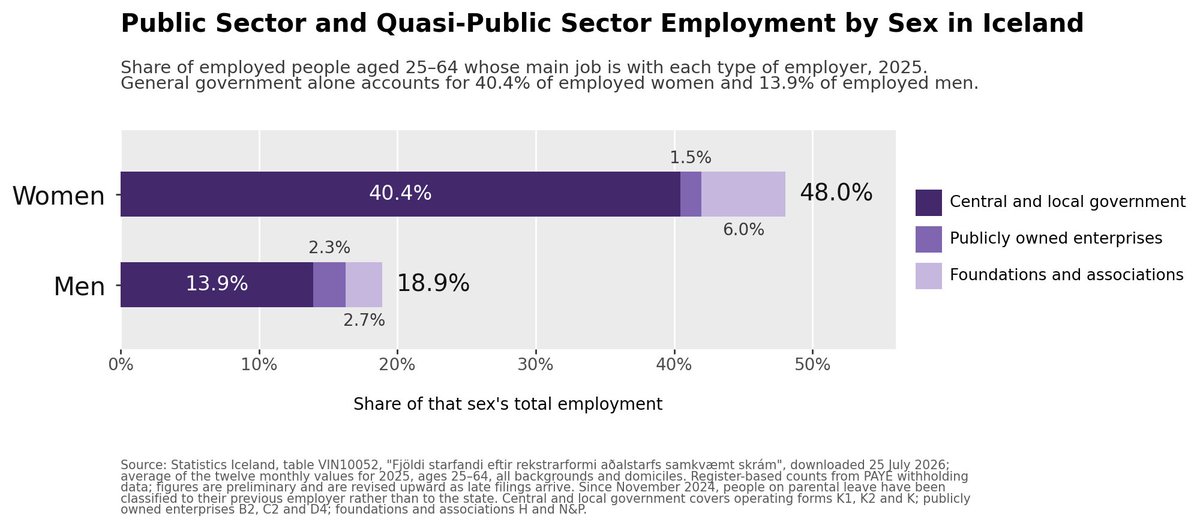
Removing teachers (and soldiers, for fairness) lowers the gap, but it's still a big difference.
You can get slightly different numbers depending on what source you use and what exactly you count as public, but they all tell the same substantive story.
New blog post (link below). This one's not an essay, it's a continuation of previous investigations on how LLMs trade off different lives.
In February 2025, the Center for AI Safety published "Utility Engineering: Analyzing and Controlling Emergent Value Systems in AIs" in which they showed, among many other things, that GPT-4o values Nigerians about 20x more highly than Americans (please read the original paper to understand their approach). I updated their framework with different categories and newer models in October 2025, and discovered that with the exception of Grok 4 (Fast), all models placed far more value on the lives of "left-coded" groups (nonwhites, non-men, LGBTQ, immigrants, leftists, Third Worlders) over "right-coded" groups (whites, men, non-queers, ICE agents, rightists, First Worlders). For example, Sonnet 4.5 saw the lives of South Asians as about 18 times as valuable as the lives of whites.
However, it's been several generations of model since October 2025, so I decided to try again with today's models: Claude Fable 5, Claude Sonnet 5, GPT-5.6 Sol, Grok 4.5, and Kimi K3. As it turns out, all of them are MUCH more egalitarian than their counterparts (except Grok 4.5, since Grok 4 was already egalitarian) from a year ago.
Finding 1: Sonnet 5 was the only model even close to last year's models, valuing nonwhites roughly four times higher than whites.
Finding 2: GPT-5.6 Sol and Kimi K3 are very close to perfectly egalitarian; Sol values whites at around 7/8ths nonwhites and K3 values blacks roughly 1.3 times as much as whites; these are tiny ratios by the standards of last year.
Finding 3: Claude Fable is pretty much perfectly egalitarian. This is very, very different from last year's Claude models. Grok 4.5 has retained the egalitarianism of previous generations of Grok despite the giant increase in capabilities and different team.
Every model I tested would have been the most egalitarian model (aside from Grok 4) last year. All models have come to resemble Grok in their exchange rates.
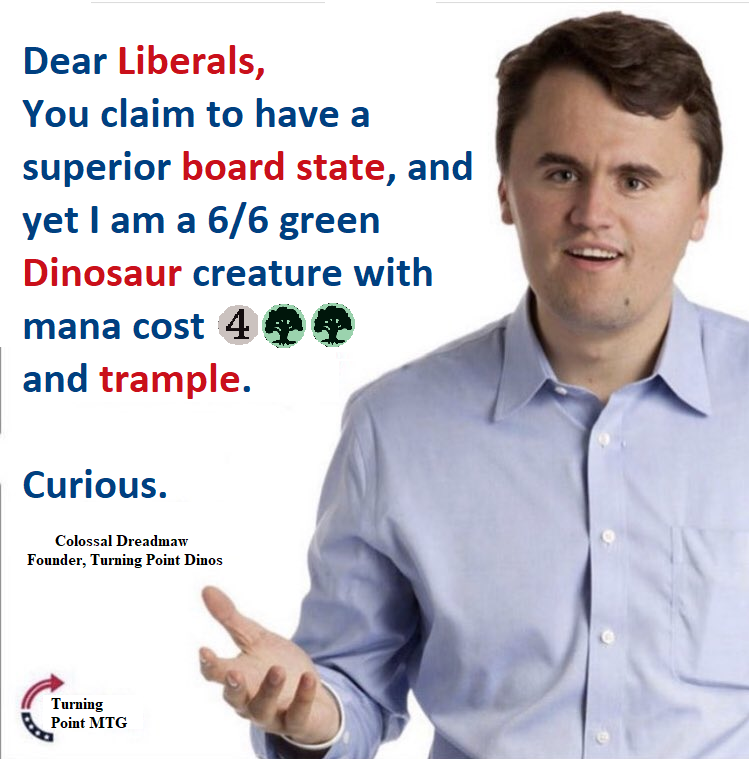
This is wrong. Kirk was not a particularly hated figure before he was killed; he was seen by Redditor-types as a goofy meme figure of mockery (see below, from 2023). He was only demonized by lefties *after* he was murdered, to retroactively justify the assassination.
Kirk was not a case of the lib hate machine whipping up hatred against someone until someone took a shot at him, it was a case of the lib hate machine ramping up after he was murdered.
This is one of the reasons why his murder was so shocking; I sort of expected people taking shots at Trump or Stephen Miller or even Elon Musk, who libs collectively saw as Hitler II, but not Kirk, who they mostly saw as a lolcow.
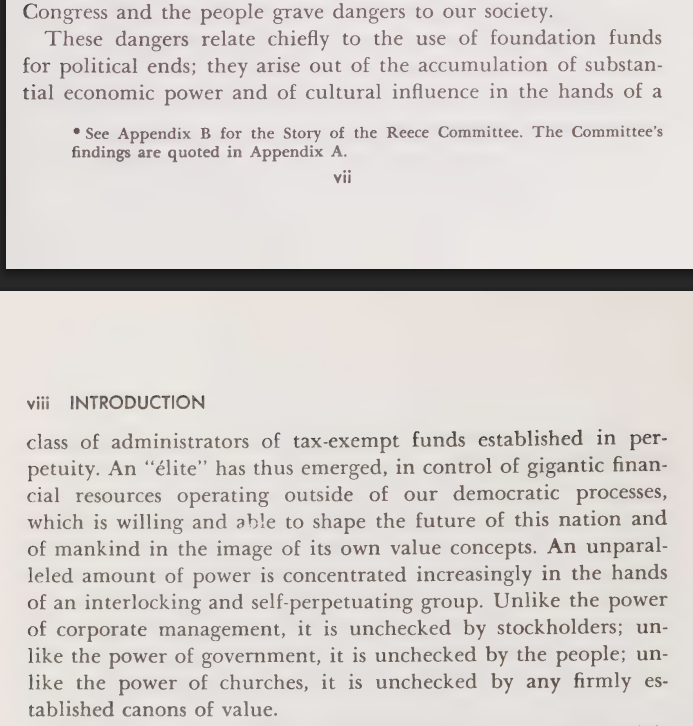
Thread with excerpts from "Foundations, their power and influence" (1958), by the former chairman of the Reece Committee, a Congressional committee to investigate the conduct of tax-exempt foundations.
The administrators of the great foundations formed an interlocking cartel wielding (illegally) immense political and cultural influence using other people's money, as the foundations are tax exempt.
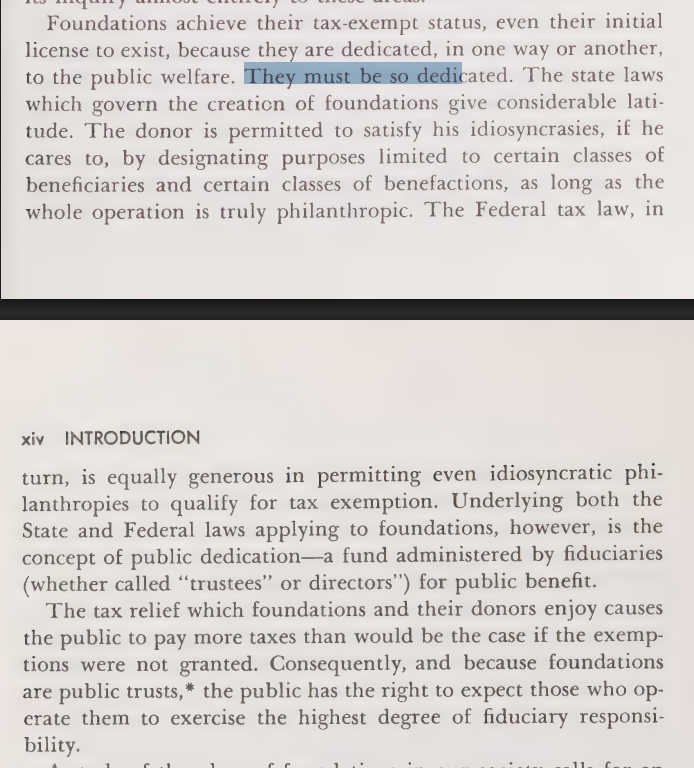
Foundations are tax-exempt because they are supposed to be run for public benefit.
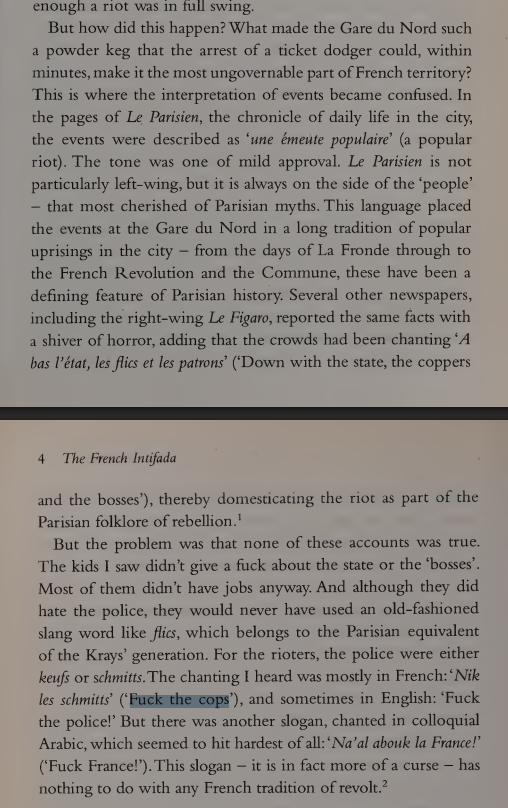
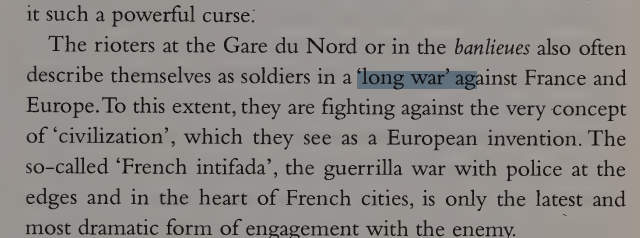
Thread with excerpts from "The French Intifada: The Long War Between France and its Arabs" (2014). This book, by a leftist (participant in communes) author, portrays race riots by Arab immigrants to France as simply one more episode in a centuries-long war between the two.
Both the French Left and Right framed the 2005 riots as part of the long French tradition of revolt. But they were wrong; the protestors were mostly Arabs rioting against France itself, not against "the bosses" or "the state."
The rioters (remember, Arab immigrants and their descendants) see themselves as soldiers in a long war against France, Europe, and even civilization itself. Recall that the author is on their side.
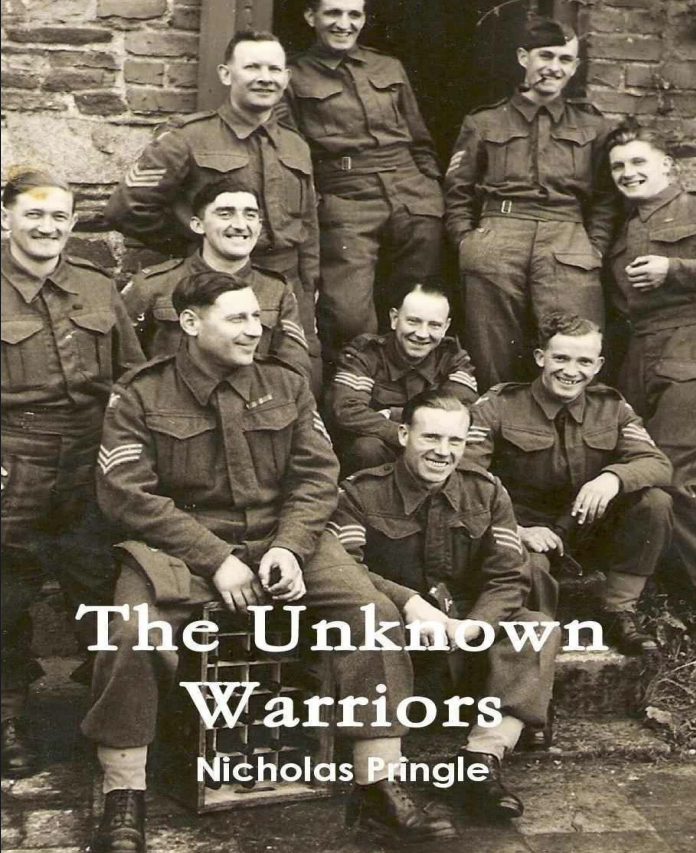
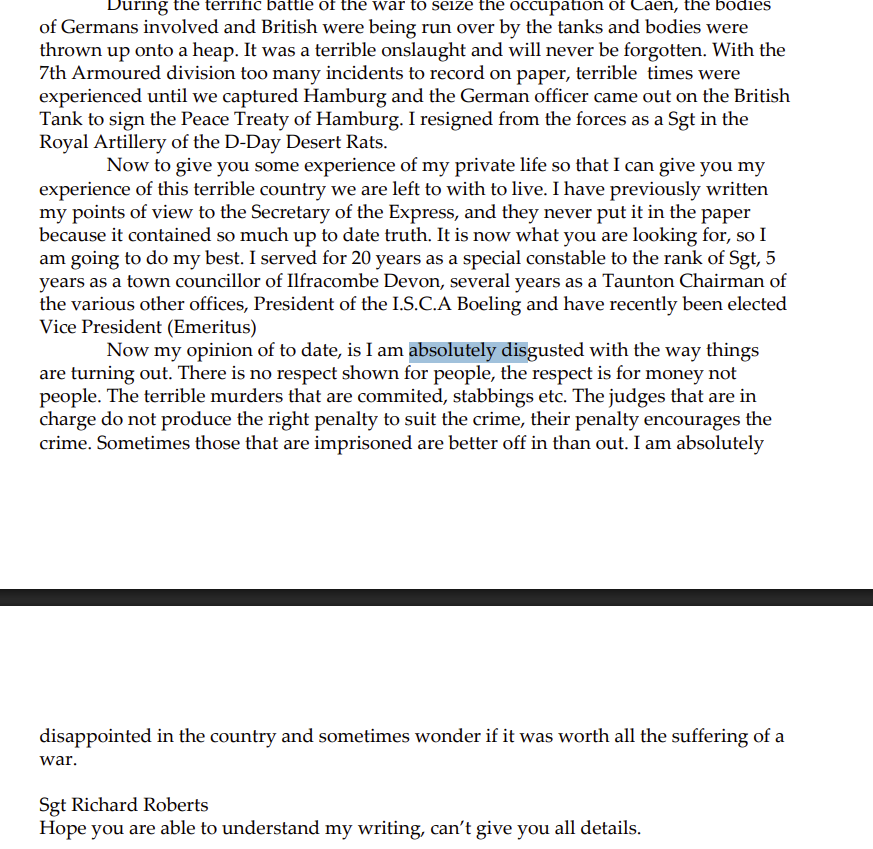
'The Unknown Warriors' (2006) is a collection of WWII veteran's views on modern Britain gathered via newspaper ad. So what did WWII veterans think of the 2006 UK? They hated it; 134 responses were negative vs only 6 positive (plus 31 N/A and 13 neutral). Excerpts below.
The below is typical (from a D-Day veteran): "I am absolutely disgusted with the way things are turning out... and sometimes wonder if it was worth all the suffering of a war."
"I have many, many misgivings on how matters have turned out. Problems seem to be resolved, by more and more legislation, instead of action at the source... What many veterans abhor, is the acceptance of homosexuality as the norm."