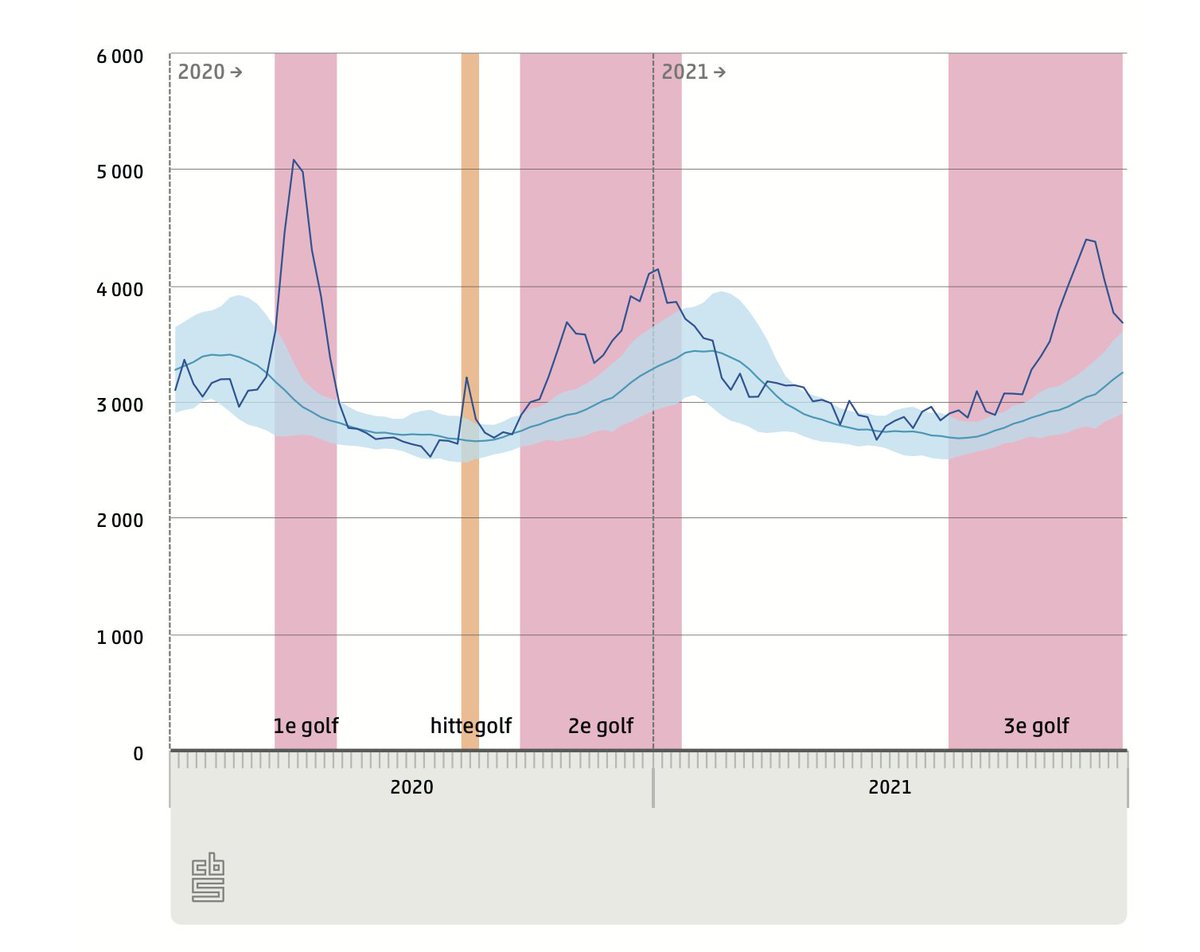
Belangrijk rapport deze week, opmerkelijk weinig aandacht. Onderzoek oversterfte, stap 1: CBS en RIVM doen versneld de analysis die ze altijd al deden over oversterfte. Dit is gericht op oversterfte vanwege COVID over 2020 en 2021 rivm.nl/documenten/ein…
daarna volgt onderzoek naar niet verklaarde oversterfte. Hiervoor heeft ZON MW calls uitgezet. zonmw.nl/nl/over-zonmw/…
Het CBS heeft de oversterfte en sterfte aan COVID-19 en andere doodsoorzaken in 2020 en 2021 beschreven. Hierbij is gekeken naar verschillen in sterfte naar leeftijd en bij gebruik van langdurige zorg.
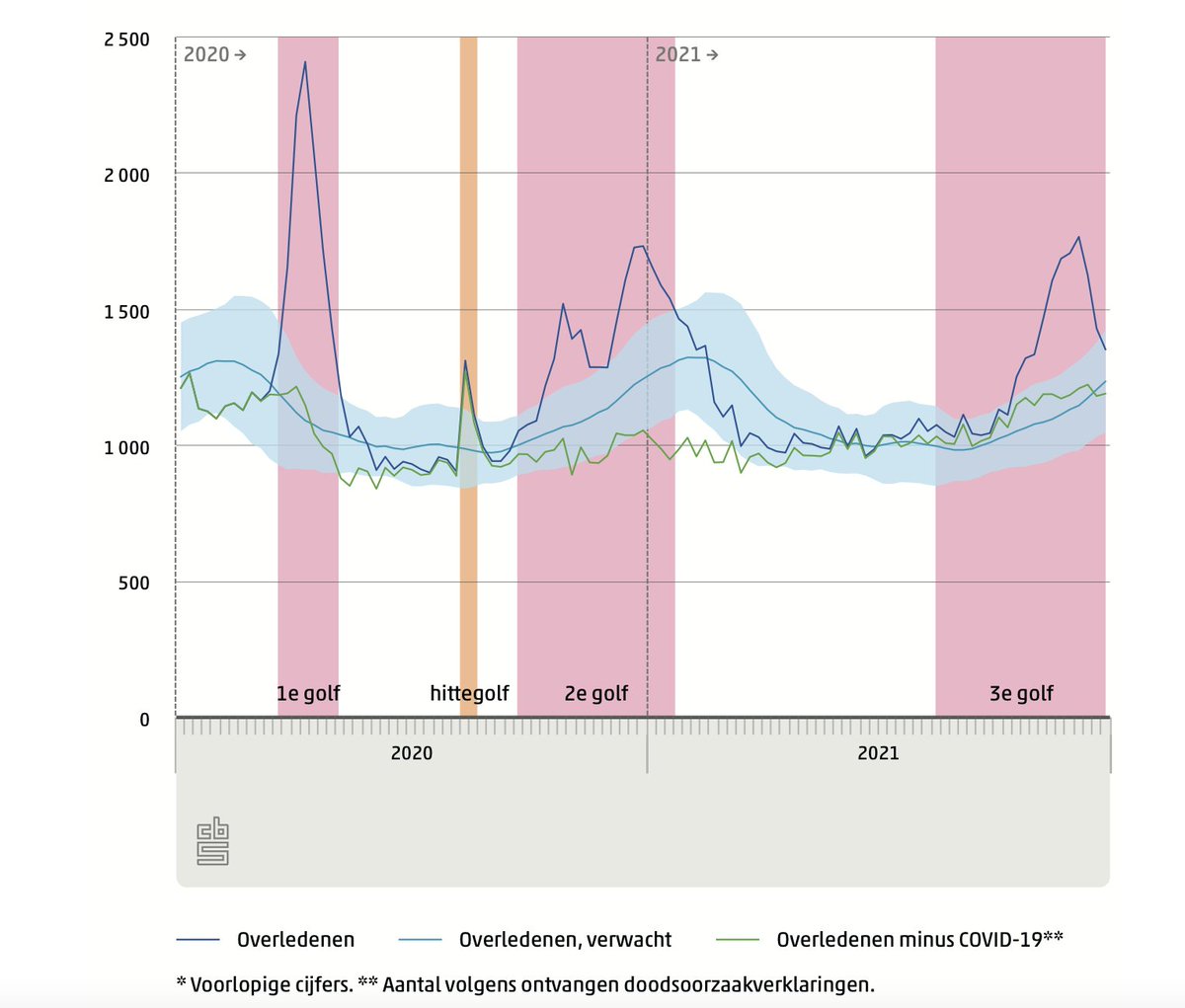
de eerste twee golven liepen samen op met covid pieken. de derde golf gaf een verschuiving naar ouderen en moet verder worden onderzocht
in 2020 en 2021 overleden naar schatting 30.000 mensen meer dan verwacht dan zonder covid. In totaal wordt circa 40.000 overlijdens direct aan covid toegeschreven.
in de langdurige zorg is ook een oversterfte piek te zine bij de hittegolf in die periode. Dat is een bekend fenomeen.
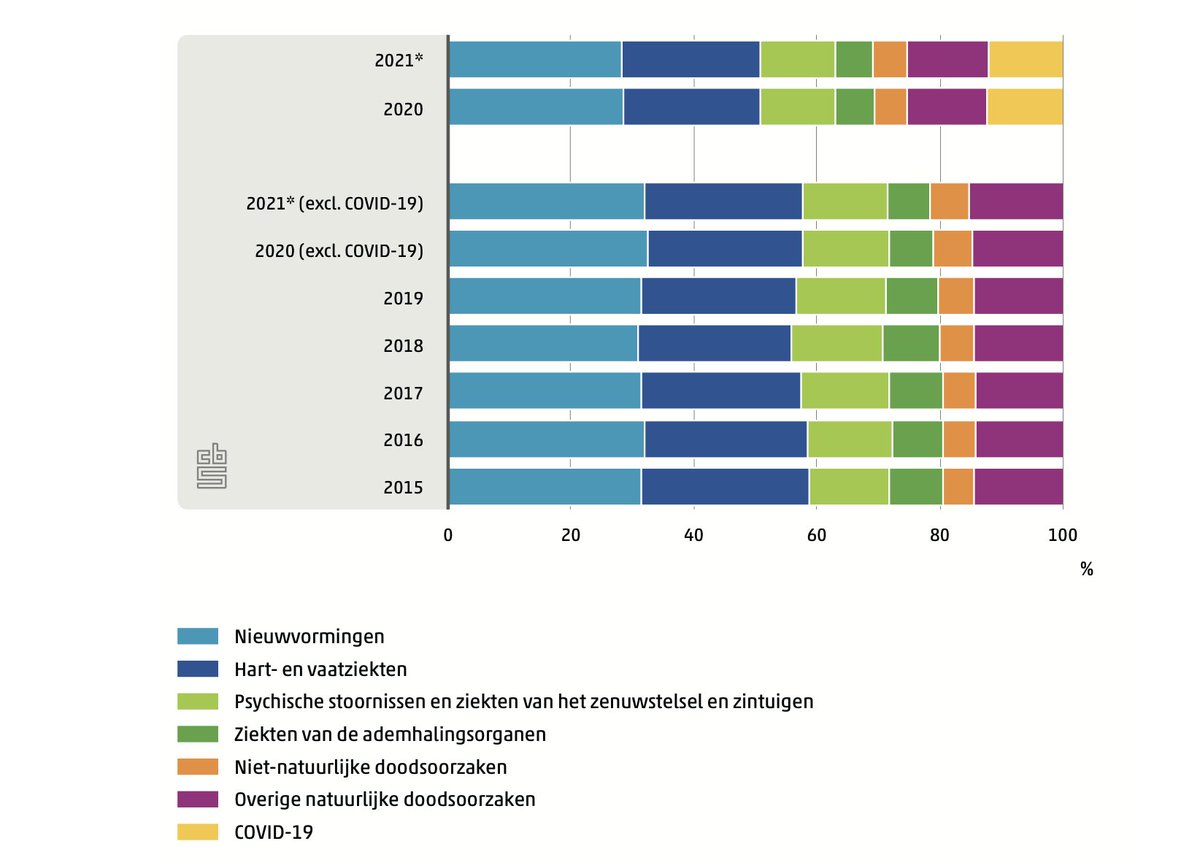
het rapport bekijkt ook het aandeel covid in het totale overzicht van doodsoorzaken
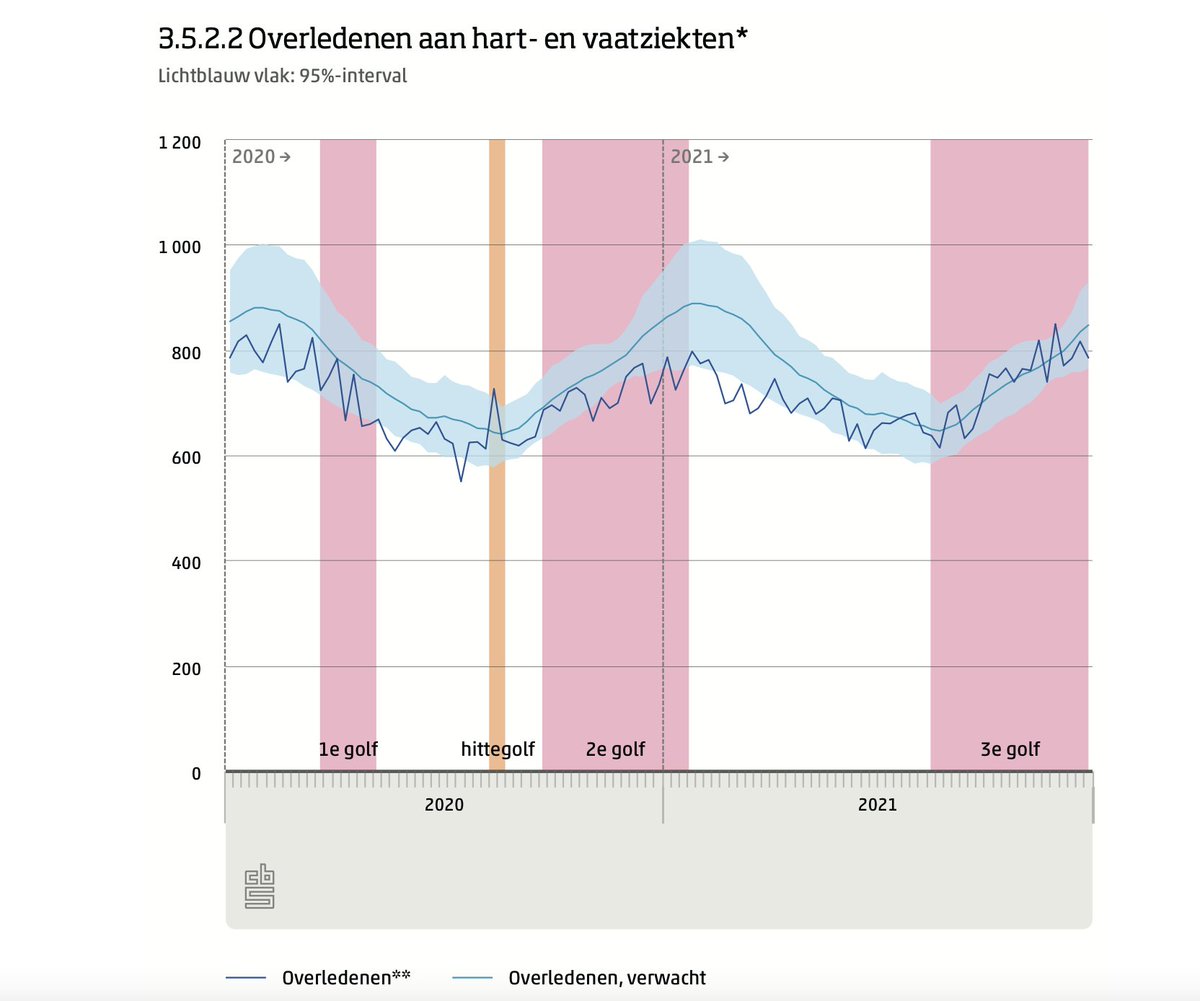
het rapport bevat interessante tussen analyses. Bijvoorbeeld trends in overlijdens aan hart en vaatziekten: iets lager dan verwacht
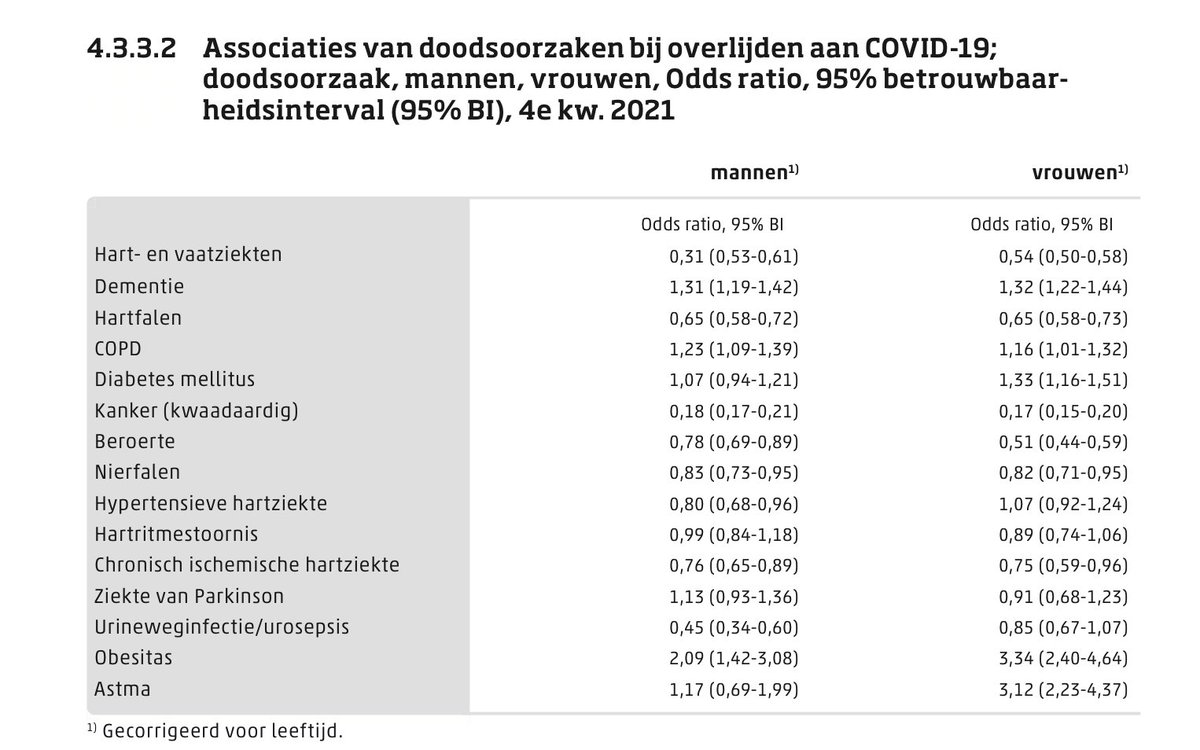
Ook de oversterfte analyses door RIVM staan in het rapport. Daar een interessante aanvulling: welke andere ziektes komen vaker voor bij mensen met COVID. Zegt wat over risicofactoren. Ik vind her wat verschillen tussen mannen en vrouwen opmerkelijk.
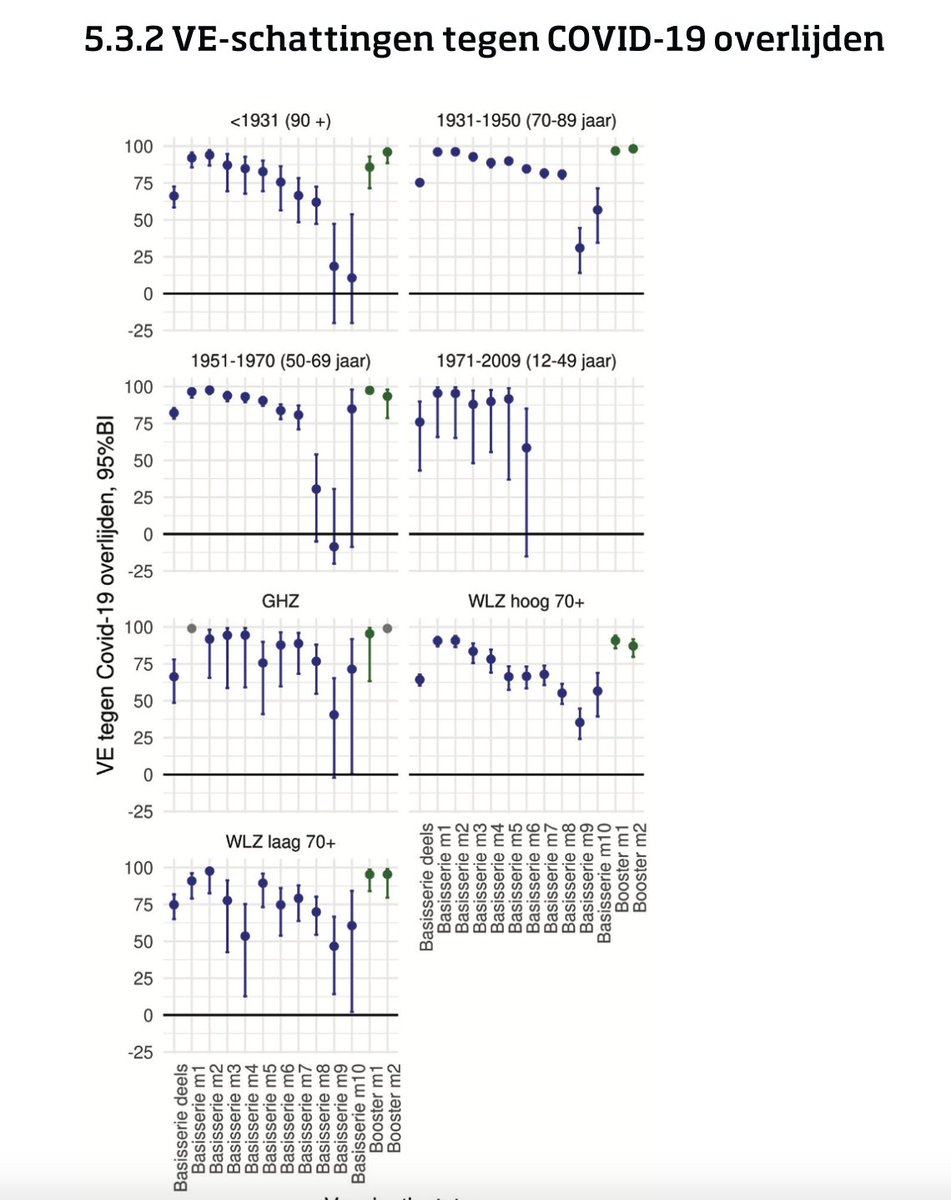
Dan, natuurlijk heel belangrijk: de mate van bescherming van vaccins tegen overlijden. NB dit is in 2021
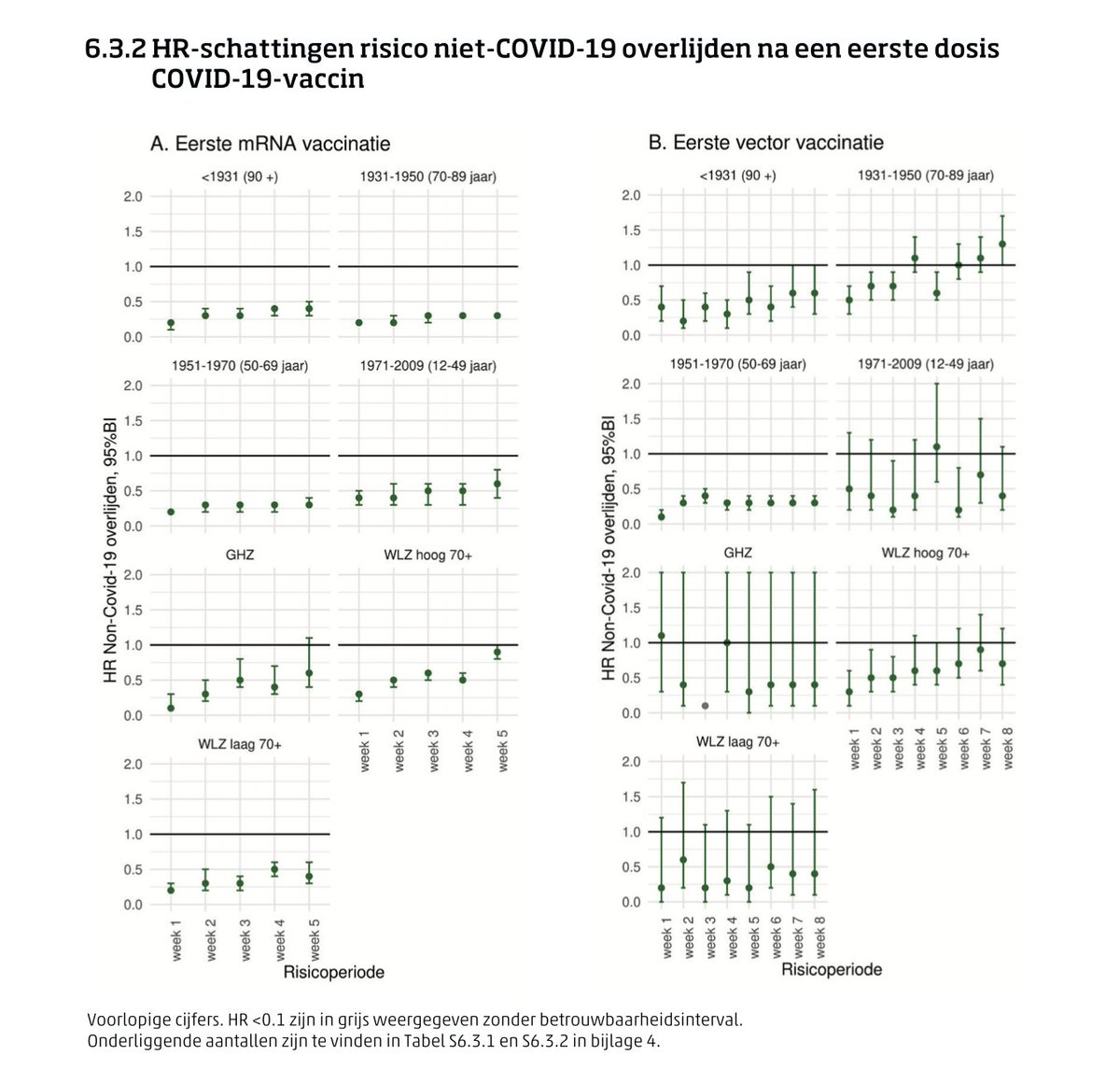
en last but not least: oversterfte kort na vaccinatie. Conclusie: die is er niet.
tenslotte een stevige conclusie: Op basis van de ervaringen in dit traject en ... in de beleidsmonitoring COVID-19, achten veel bronhouders de huidige juridische kaders niet voldoende om een optimale data-infrastructuur mogelijk te maken voor onderzoek naar COVID-19. Hearhear
correctie, was al wat ouder...
• • •
Missing some Tweet in this thread? You can try to
force a refresh

Hanta virus outbreak, cruise ship: I see lots of posts on this. What are we looking at? A cluster of cases of hantavirus, a rare but known zoonotic disease, present in rodents. There are many different hantaviruses across the world, so it matters to know exactly which virus it is
given history, working diagnosis is Andes Virus, one of the new world hantaviruses that can cause a severe respiratory syndrome with a high mortality rate. There are some descriptions of human to human transmission in close contacts, which is not seen in other hantaviruses
what needs to happen and is ongoing; 1) taking care of people on board with and without symptoms 2) epidemiological investigation to figure out if there are possible common sources of exposure before embarking 3) helping the ship to reduce risk of spread 4) further testing
@DrJBhattacharya thanks for responding. Few more points. Happy to agree to disagree. You mention topics that I consider to be part of the science advise process, and topics more related to the policy arena and how that works. Sorry, long thread, lost the blue button
I read that your criticism focusses a lot on the second argument and agree evaluation is important. Now there, I think this is very different in different countries, although the same trend (scientists that felt left out) is clear in many places.
I personally believe in the process of evidence synthesis from multiple sources, while maintaining the need for speed. That is how I saw this done in several countries in Europe, with often a key spokesperson conveying the conclusions to policy makers.
@DrJBhattacharya I will give this 1 try. I am looking at your inciting tweets with astonishment. You probably group me in the box of lock down pushers. I wonder if you ever have been in a public health crisis advisory role, hospital outbreak management team, employer health
protection responsibility. Let me explain the way this works: there is an evolving crisis, with lots of uncertainty, but a looming risk of serious impact. That means, there is an immediate and urgent need for detailed data on the evolving situation.
Let's start there: outbreaks typically start messy, particularly when there is a new disease: you have no way of diagnosing yet, you do not know the extend of spread, you do not know who are at risk, who contribute to spread, etc.
Amazing. The scientists ( that challenge my take of things), their institutes, and now also the journals all are corrupt and in the pocket of pharma. Was signed: the head of HHS. This is a direct attack on science, scientists. The sneaky thing is: this narrative builds from
Valid criticism that you will also hear from withon the science community. For instance, if we want to study something, in most organisations this is not like “ yeak great, here you have a pot of money”. No, you write a grant application, that is reviewed ( anonymiusly),
And sometimes selected ( roughly 10% of them). Then you go through all permissions ( medical ethical, animal ethics, biosafety, etc). Then you do the work -usually with a team-, analyse the data, write it up and submit to a journal. There again the work is reviewed , criticised
Shooting the messenger. The person who developed a global network for collaborative surveillance is scapegoated in a political “ trial”. Discussing safety of biosurveillance and details of reporting is one thing. But singling out a single actor and organisation for “ the safety
Of americans” is preposterous. I would suggest that this committee looks at the bovine H5 flu situation in the US, which is teaching material for universities and public health institutes across the globe on how to NOT do outbreak response oversight.house.gov/release/breaki…
I know that this message is going to get response, but would really ask everyone to think this through before shooting the next text: peter Daszak and EHA have been global leaders in our understanding of emerging diseases. Do some reported admin mistakes outweigh that?
1. Een draad nav een belangrijk rapport: Oversterfte obv huisartsen informatie, 1 miljoen personen. Onderzocht in relatie tot vaccinatie (COVID19) , type vaccin, aantallen vaccinaties, en medische voorgeschiedenis.
2. Verschillende leeftijdsgroepen en de griepgroep onder de 60 jaar (de oudere griepgroep zit al in de leeftijdscategorien). Data 2021 in vergelijking met de periode 2015-1018. Oversterfte bekeken binnen drie en twaalf maanden
3. Oversterfte is toegenomen, 913 per 100.000 inwoners in 2019 naar 993, 987 en 961 per 100.000 inwoners in respectievelijk 2020, 2021 en 2022. Onderzoek moeilijk door koppeling gegevens van verschillende bronnen