Belangrijk rapport deze week, opmerkelijk weinig aandacht. Onderzoek oversterfte, stap 1: CBS en RIVM doen versneld de analysis die ze altijd al deden over oversterfte. Dit is gericht op oversterfte vanwege COVID over 2020 en 2021 rivm.nl/documenten/ein…
daarna volgt onderzoek naar niet verklaarde oversterfte. Hiervoor heeft ZON MW calls uitgezet. zonmw.nl/nl/over-zonmw/…
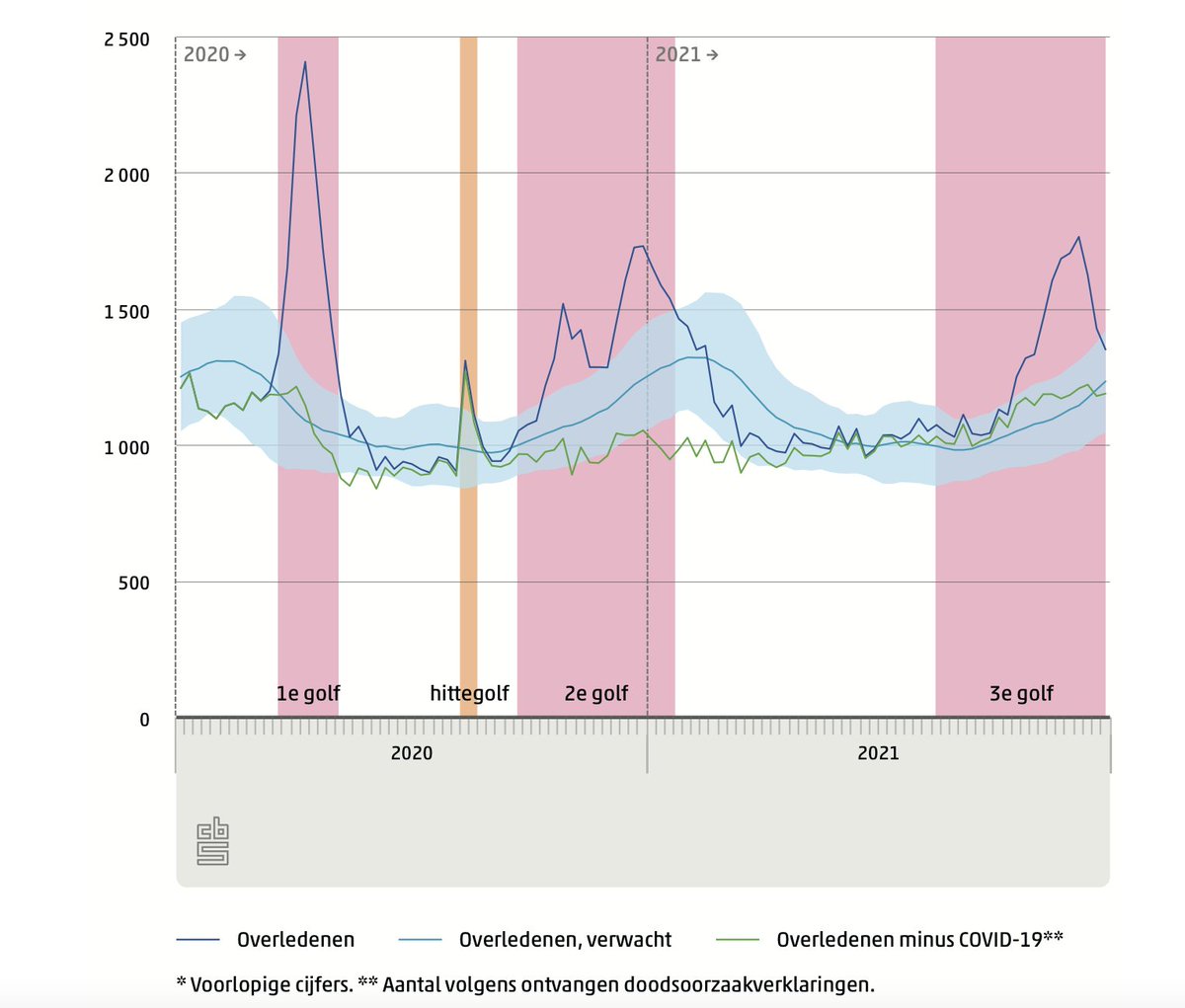
Het CBS heeft de oversterfte en sterfte aan COVID-19 en andere doodsoorzaken in 2020 en 2021 beschreven. Hierbij is gekeken naar verschillen in sterfte naar leeftijd en bij gebruik van langdurige zorg.
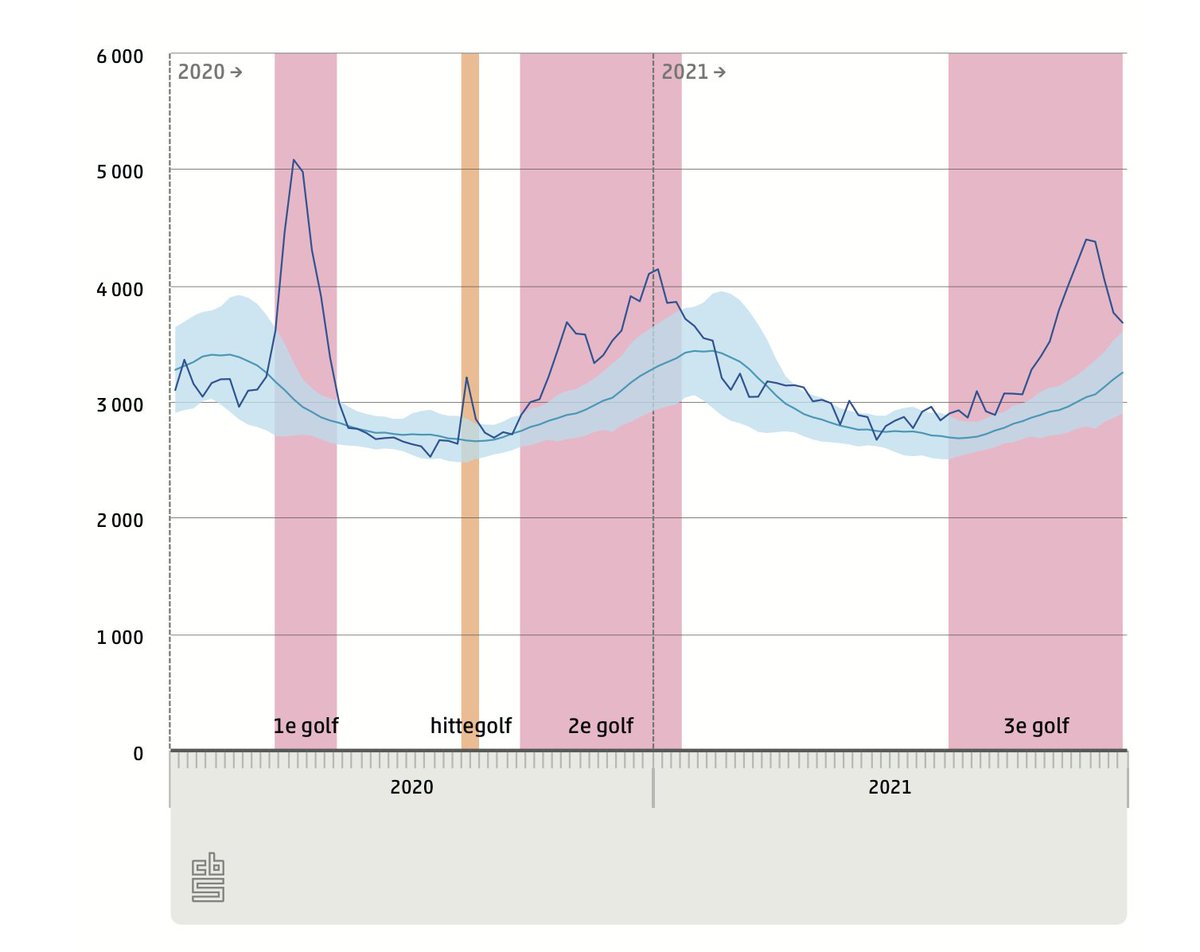
de eerste twee golven liepen samen op met covid pieken. de derde golf gaf een verschuiving naar ouderen en moet verder worden onderzocht
in 2020 en 2021 overleden naar schatting 30.000 mensen meer dan verwacht dan zonder covid. In totaal wordt circa 40.000 overlijdens direct aan covid toegeschreven.
in de langdurige zorg is ook een oversterfte piek te zine bij de hittegolf in die periode. Dat is een bekend fenomeen.
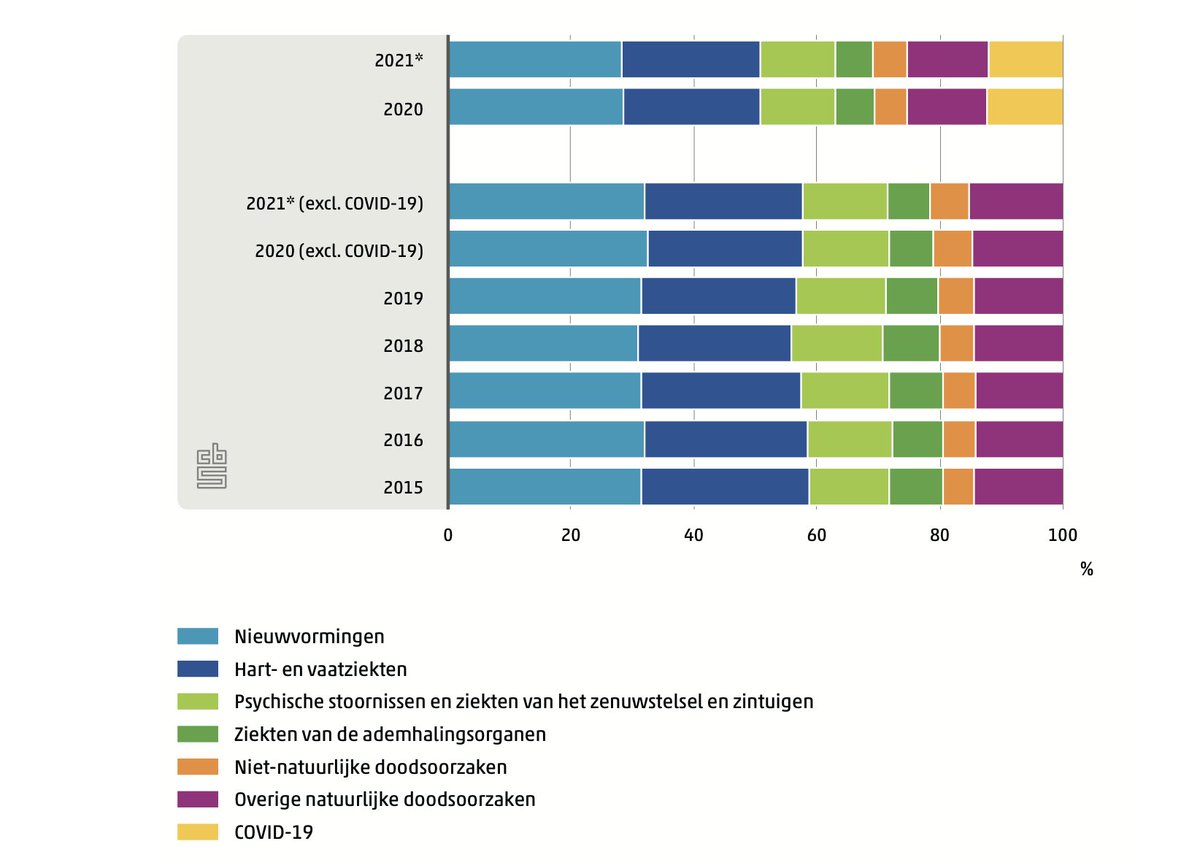
het rapport bekijkt ook het aandeel covid in het totale overzicht van doodsoorzaken
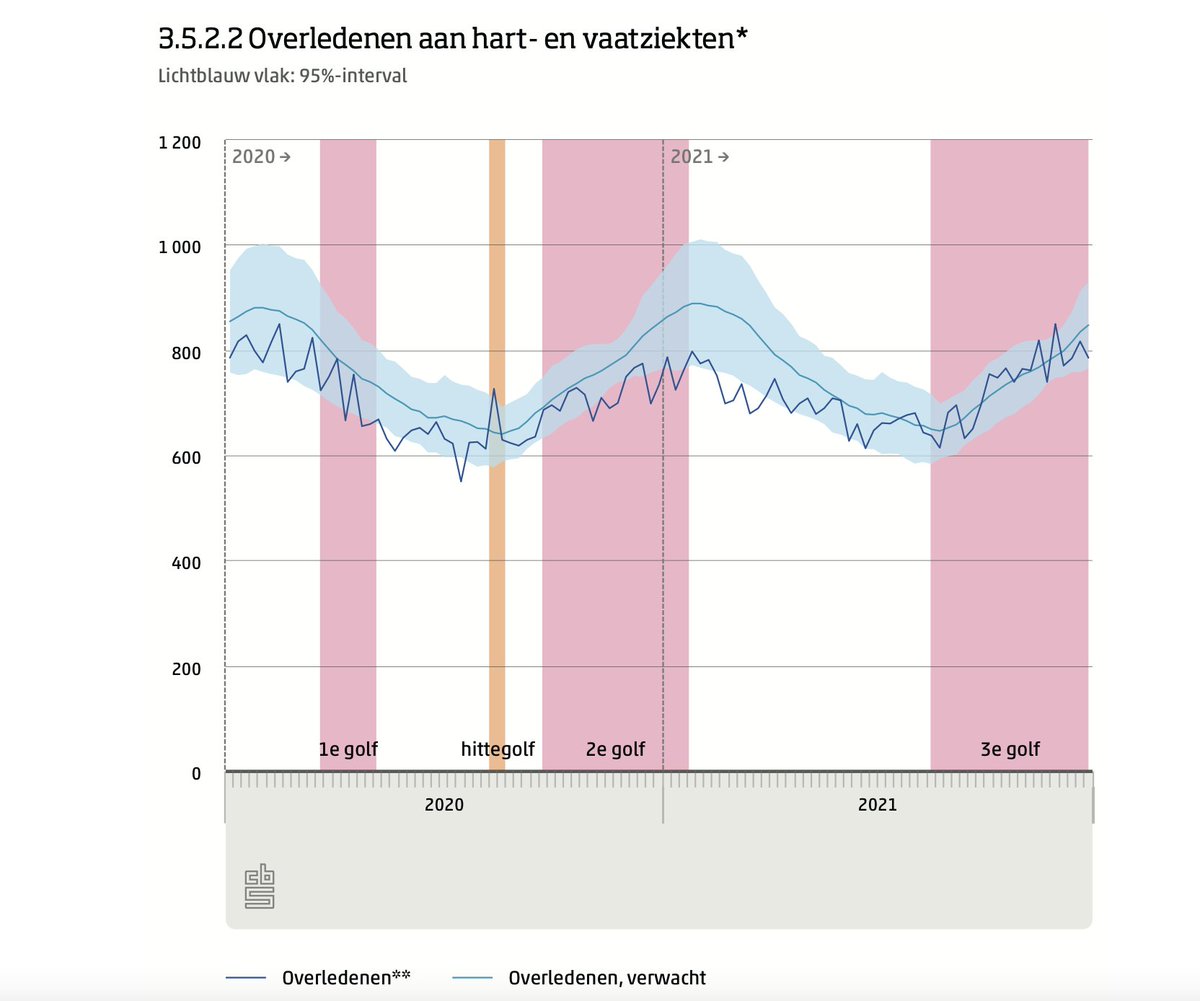
het rapport bevat interessante tussen analyses. Bijvoorbeeld trends in overlijdens aan hart en vaatziekten: iets lager dan verwacht
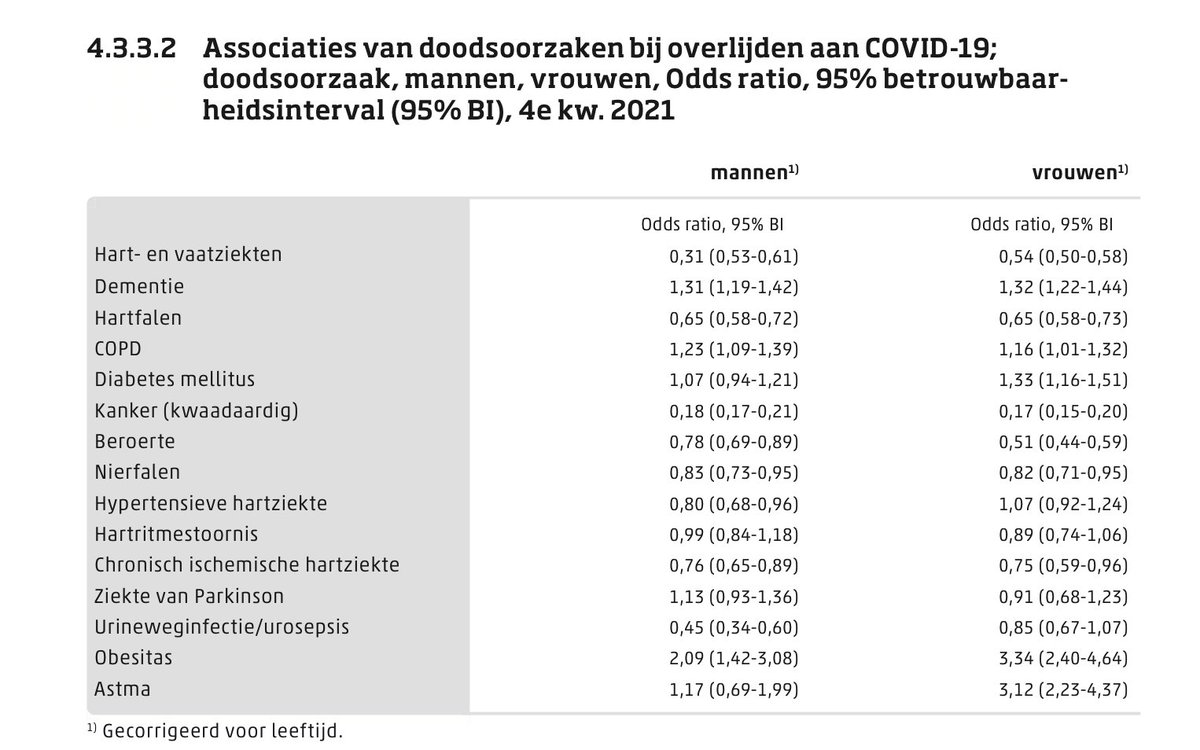
Ook de oversterfte analyses door RIVM staan in het rapport. Daar een interessante aanvulling: welke andere ziektes komen vaker voor bij mensen met COVID. Zegt wat over risicofactoren. Ik vind her wat verschillen tussen mannen en vrouwen opmerkelijk.
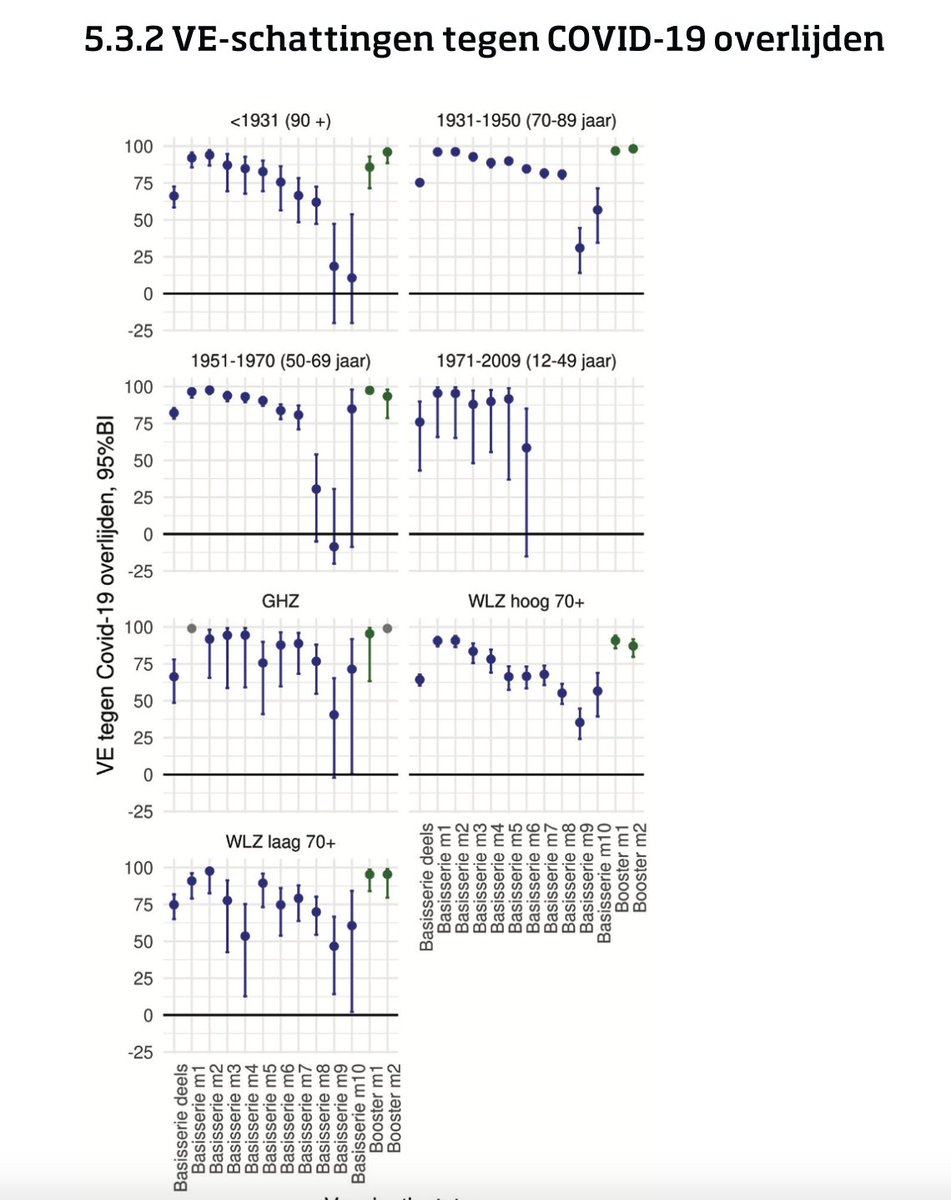
Dan, natuurlijk heel belangrijk: de mate van bescherming van vaccins tegen overlijden. NB dit is in 2021
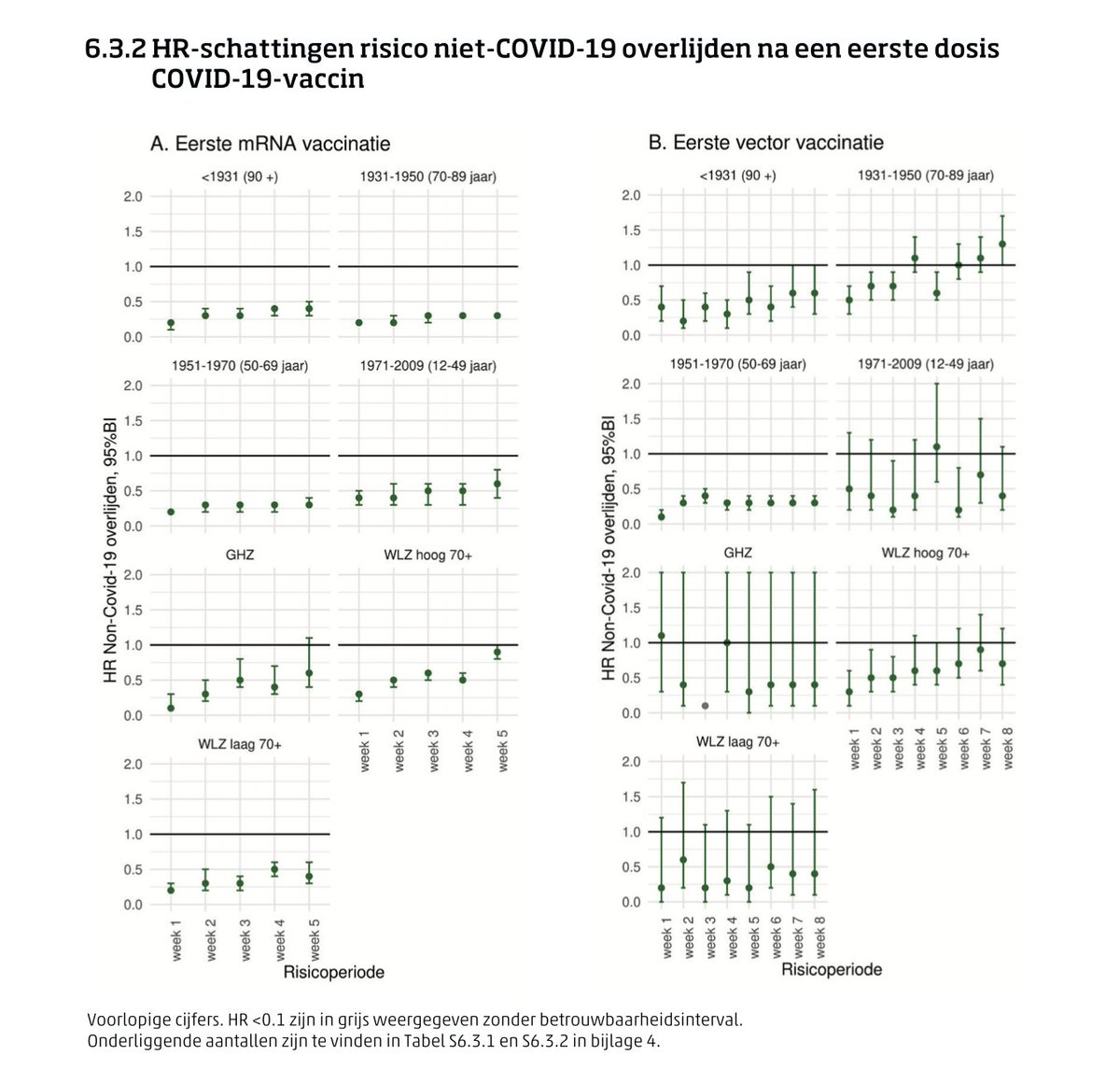
en last but not least: oversterfte kort na vaccinatie. Conclusie: die is er niet.
tenslotte een stevige conclusie: Op basis van de ervaringen in dit traject en ... in de beleidsmonitoring COVID-19, achten veel bronhouders de huidige juridische kaders niet voldoende om een optimale data-infrastructuur mogelijk te maken voor onderzoek naar COVID-19. Hearhear
correctie, was al wat ouder...
• • •
Missing some Tweet in this thread? You can try to
force a refresh

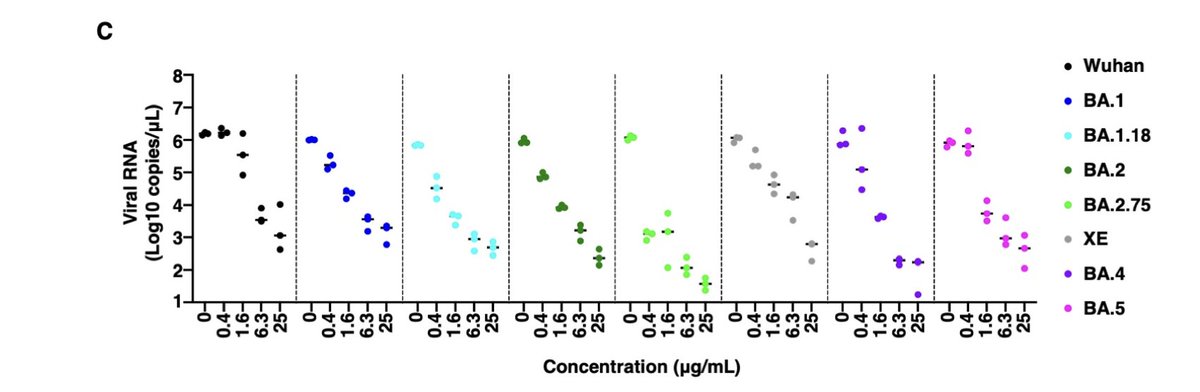
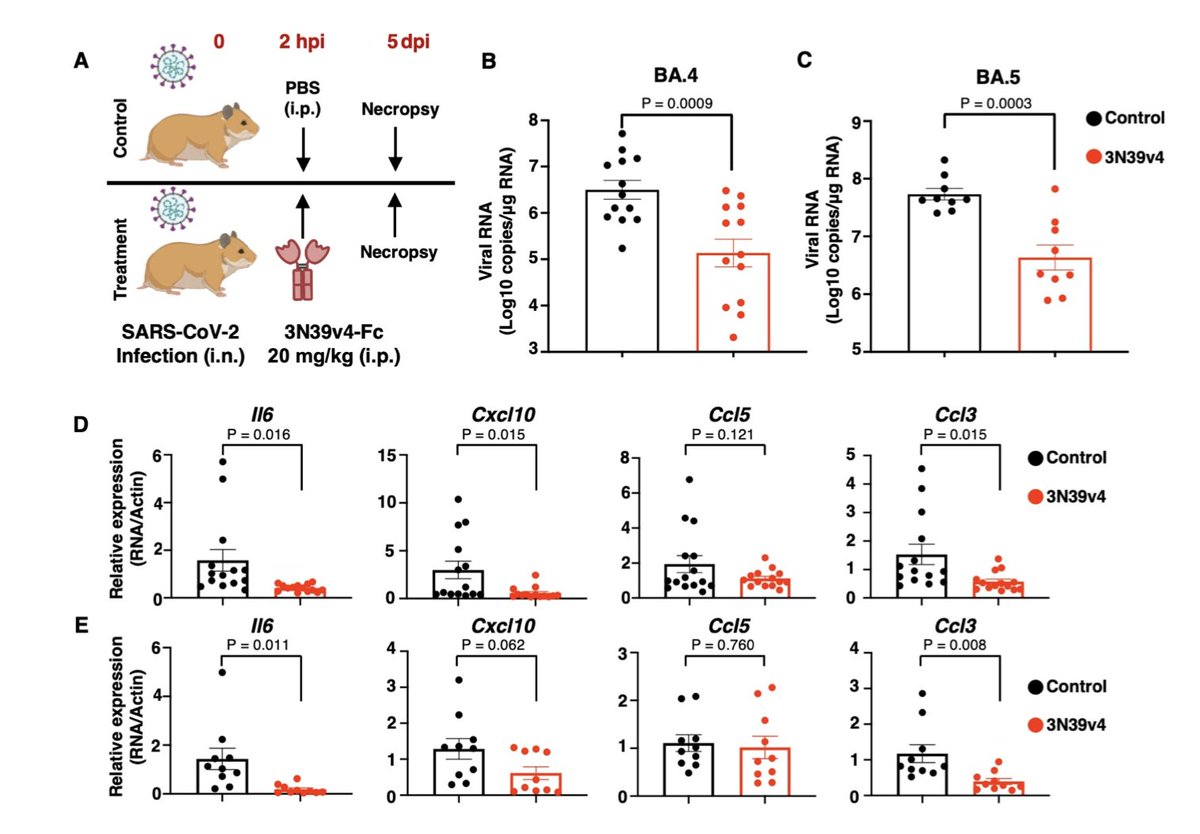
Work from Japan: the use of engineered SARS COV 2 rsptor molecules (ACE 2) as treatment. Principle is treatment: SARS COV 2 binds to ACE 2, so by applying extra ACE 2 that is not fixed to cells during an infection, this competes for binding.
part of engineering also included increasing affinity for ACE 2 binding. After in vitro testing, the decoy was administered to mice, both intravenously and intratracheally. Some treatment effect was observed, although in this lethal model, still a high proportion of mice died
Next admin was by inhalation, which delivered more of the drug to the relevant respiratory site and showers some effect. Finally, drug was administered to macaques. Again, some effect. So interesting work. We do need better drugs, and the philosophy here
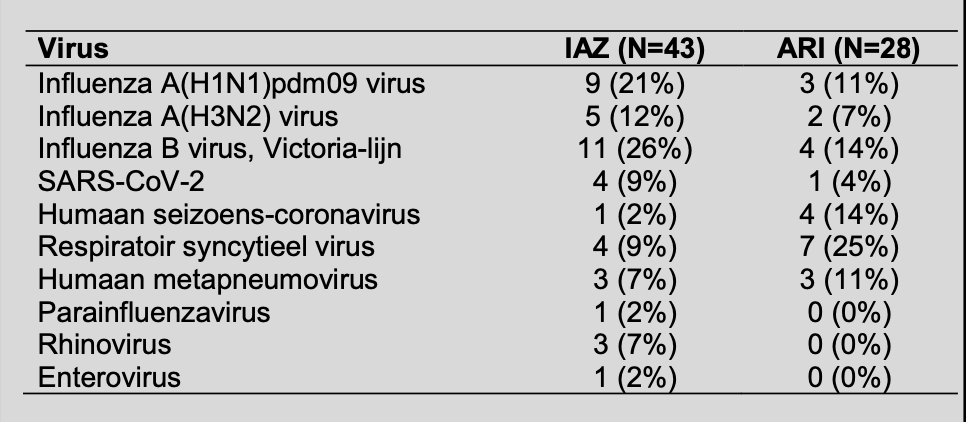
De influenza nieuwsbrief van deze week is weer uit, met de gegevens over influenza klachten meldingen via huisartsen. Ter duiding (er zijn hier en daar wat alarmerende berichten) namen we gegevens op over een aantal voorgaande jaren, zowel tijdens als voor de pandemie. @rivm
Dit zijn peilstation huisartsen van het NIVEL nivel.nl/nl die aangeven hoeveel mensen ze zien met influenza achtige ziekte (IAZ), of de wat mildere " acute respiratoire infectie (ARI) en een deel van hen laten testen om te zien welke virussen ze bij zich dragen.
Dat zijn de basis gegevens van de monitoring van deze infecties. Daarnaast worden gegevens verzameld door deelnemende virologische labs, vaak in ziekenhuizen. Dat is zonder noemer, dus daar zeggen de aantallen niet zoveel maar de verdeling weer wel.
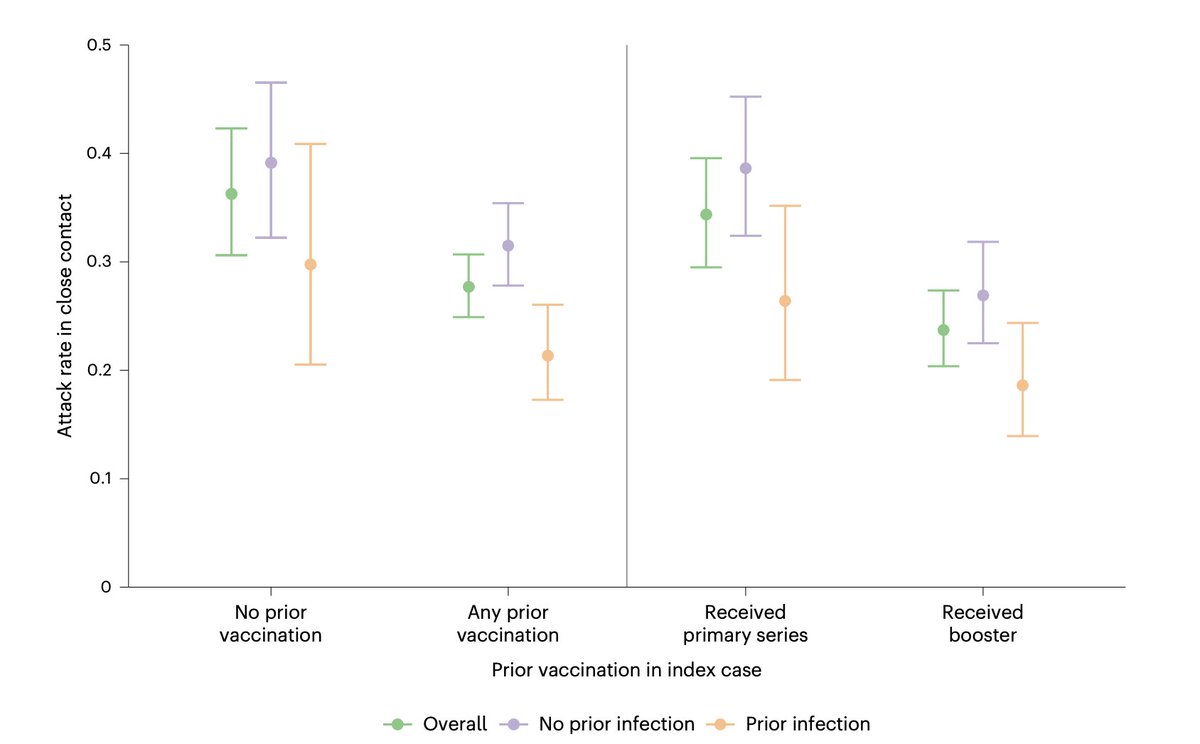
There is this mantra that vaccines since omicron did do not protect from infection. That is incorrect. Yes, protection from infection has been much reduced, but there still is a detectable effect. Data from a study in closed settings (prisons in the US):
any vaccination, prior infection alone and both vaccination and prior infection reduced an index case’s risk of transmitting infection by 22% (6–36%), 23% (3–39%) and 40% (20–55%), respectively
study done in the first half of 2022, and more recent variants of omicron have further escaped from neutralising antibodies. In the meantime however, repeated exposures have also broadened immunity in a manner that is still only partially understood. nature.com/articles/s4159…
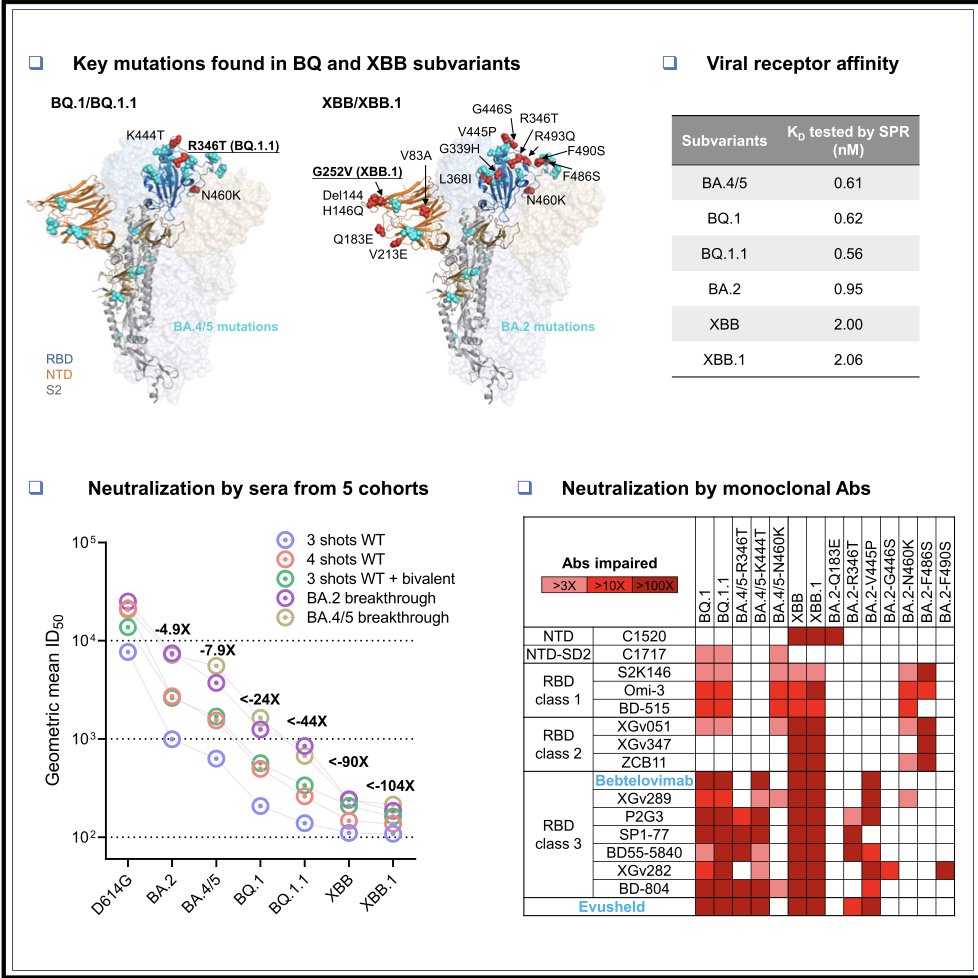
Lots to do about XBB. Omicron derived sub lineage, that actually is a recombination (a new virus produced by stitching together parts of the genome from two different sub lineages, BQ1 and BA5. It can only happen in a patient simultaneously gets infected with two viruses).
XBB viruses have also picked up additional mutations that affect how good antibodies from vaccines or infections are at blocking it from infecting cells. cell.com/action/showPdf…
Currently, it looks like XBB variant viruses are becoming dominant in some countries, reflecting advantage in transmission. That can be because more virus is produced or virus is less neutralised by existing antibodies that many people have from vaccination and infection
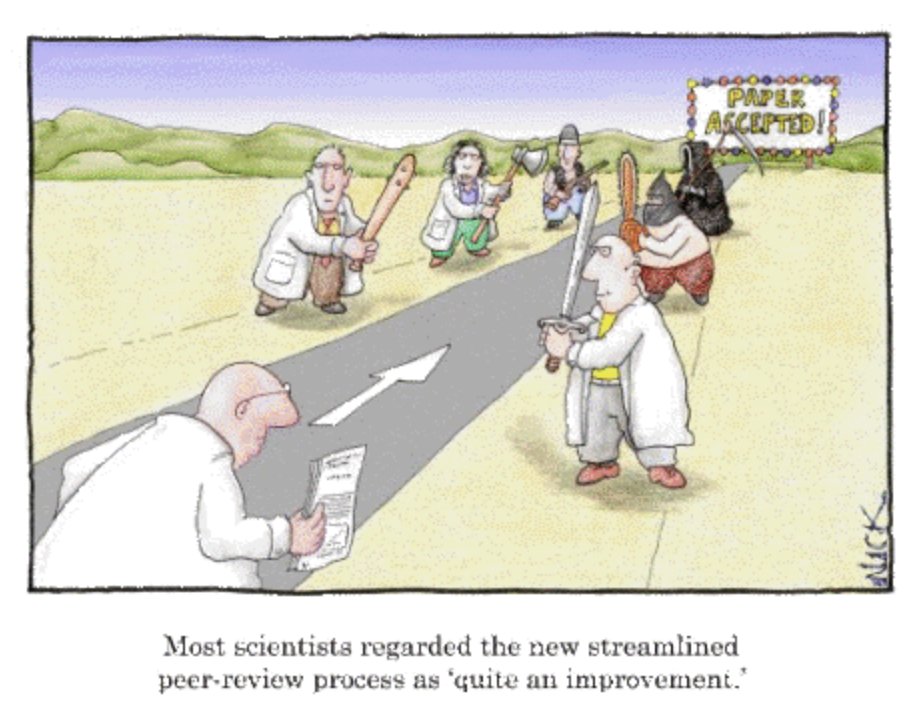
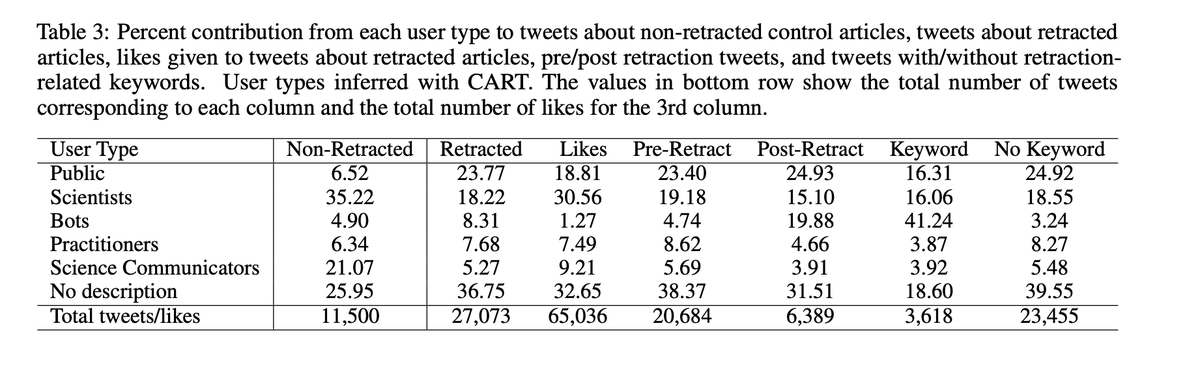
Reading backlog....a paper on the fate of retracted articles. The explosive dissemination of preprints during the pandemic has been impressive, and has really sped up the sharing of researsh findings tremendously. It also has open up " peer review" to the winder world.
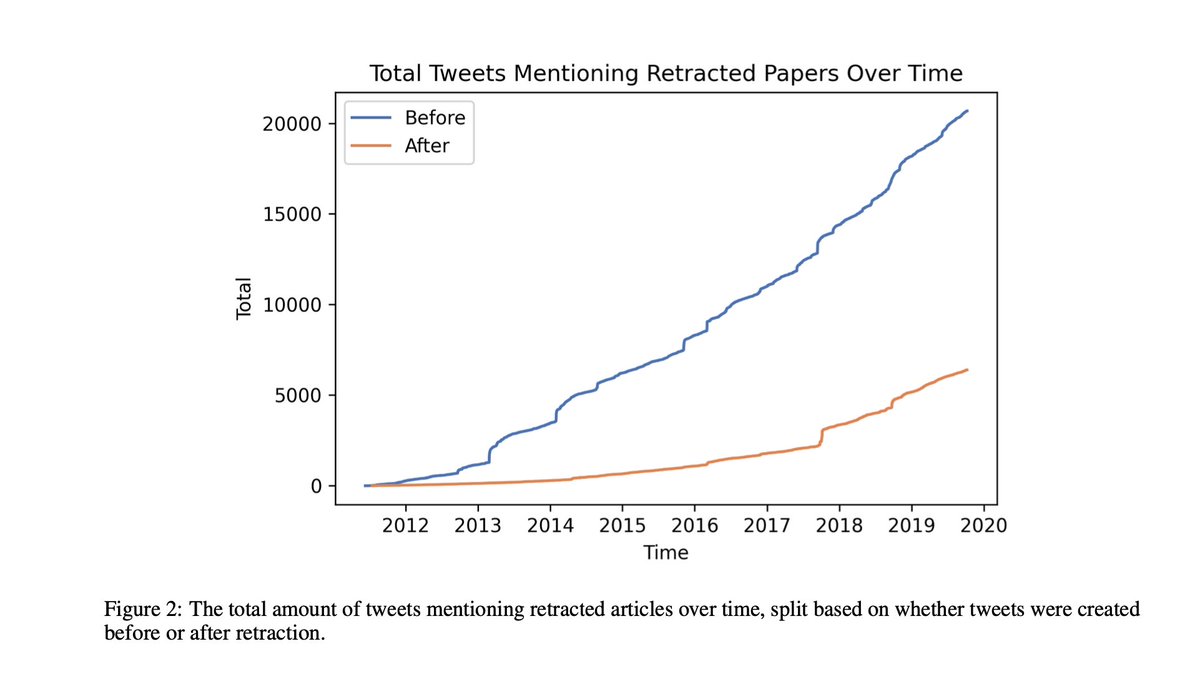
this paper assessed the responses on twitter to papers that were released but eventually retracted. They looked at the responses by user type, before and after retraction. A number of quite interesting findings.
retracted articles receive greater overall engagement than non-retracted articles, especially among members of the public and bot users, the majority of engagement happening prior to retraction
Backlog reading: this is a wonderful paper that really shows why true One Health surveillance might actually work. With sure OH surveillance I mean, including information on drivers of spillover.
One health is the notion that the health of humans, animals and ecosystems are connected and therefore need to be studied and safeguarded through a balanced approach. journals.plos.org/plospathogens/…
That also implies that changes in ecosystems may affect behaviour and health of animals, and risk of infections of humans. Driver based surveillance tries to understand what drives disease emergence, to monitor changes in those drivers, and thereby predict outbreak(risk)