Ukraine is about to get some 70+ self-propelled artillery systems... time for an artillery thread about:
🇺🇸 M109A6 Paladin (18x donated)
🇬🇧 AS-90 (24x donated)
🇫🇷 CAESAR 8x8 (19x donated by Denmark)
🇸🇪 Archer (probably 12x donated)
1/n
🇺🇸 M109A6 Paladin (18x donated)
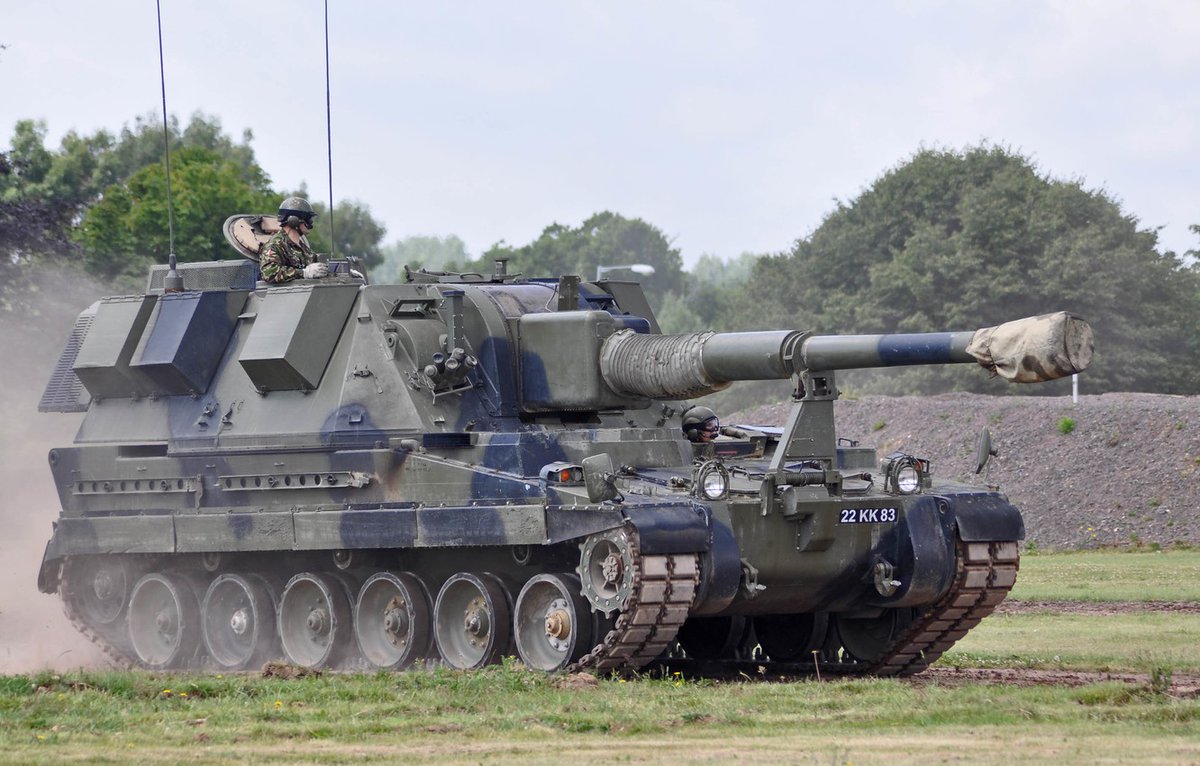
🇬🇧 AS-90 (24x donated)
🇫🇷 CAESAR 8x8 (19x donated by Denmark)
🇸🇪 Archer (probably 12x donated)
1/n



Before I continue: do you know how NATO 155mm howitzers work? If not, please read my earlier thread about the M777 howitzer.
Once you know how the M777 works (and what primer, fuzes, and charges are), then you will easily understand this thread.
2/n
Once you know how the M777 works (and what primer, fuzes, and charges are), then you will easily understand this thread.
2/n
https://twitter.com/noclador/status/1526328417230241796
The M109A6 Paladin is the sixth modification of the M109, which was introduced in 1963.
It's a good system, but AS-90, CAESAR, CAESAR 8x8, Archer, PzH 2000, AHS Krab, and Zuzana 2 are all better systems.
The Paladin still uses a 39 caliber barrel and thus has an 18 liter
3/n
It's a good system, but AS-90, CAESAR, CAESAR 8x8, Archer, PzH 2000, AHS Krab, and Zuzana 2 are all better systems.
The Paladin still uses a 39 caliber barrel and thus has an 18 liter
3/n

charge chamber, which can hold max. five M232A1 charges. This results in a maximum range of 24 km with boat tail projectiles and 30 km with base bleed projectiles - the same range as the FH70 and M777.
But unlike these two towed howitzers the Paladin has INS/GPS and a
4/n
But unlike these two towed howitzers the Paladin has INS/GPS and a
4/n

Muzzle Velocity Radar System (MVRS - red circle). This allows the Paladin to stop and start firing within 50-60 seconds, and means that the barrel adjusts after every around for improved accuracy. (The M777A2 has INS/GPS/MVRS too, but Ukraine received the M777A0 which hasn't)
5/n
5/n

But what makes the M109A6 an antique when compared to all the other self-propelled NATO howitzers is the loading of projectile, charges and primer... it's all muscle power.
The only help the crew gets is a pneumatic rammer, which was installed with the M109A5 upgrade.
6/n
The only help the crew gets is a pneumatic rammer, which was installed with the M109A5 upgrade.
6/n

Let's look at all the manual steps a Paladin crew has to take to load their gun:
1) move the ramming tray into place
2) grab and place the projectile onto the rammer
3) push the projectile in
4) move the rammer to be barrel
5) remove the ramming tray
6) push in the charges
7/n
1) move the ramming tray into place
2) grab and place the projectile onto the rammer
3) push the projectile in
4) move the rammer to be barrel
5) remove the ramming tray
6) push in the charges
7/n
8) close the breech
8) grab a primer and insert it
9) hook up the lanyard
And then you're ready to fire.
Paladin crews sweat as much as M777 crews.
Luckily for US Army crews the current M109A7 upgrade adds an electric automatic rammer, which also increases the rate of fire.
8/n
8) grab a primer and insert it
9) hook up the lanyard
And then you're ready to fire.
Paladin crews sweat as much as M777 crews.
Luckily for US Army crews the current M109A7 upgrade adds an electric automatic rammer, which also increases the rate of fire.
8/n
The British Army AS-90 was the most modern NATO self propelled howitzer when it was introduced in 1992.
With automatic gun laying, automatic magazine, semi-automatic projectile loading, automatic projectile ramming, automatic primer loading it was a massive capability
9/n
With automatic gun laying, automatic magazine, semi-automatic projectile loading, automatic projectile ramming, automatic primer loading it was a massive capability
9/n

jump. It's only drawback is its 39 caliber barrel, which limits the AS-90's range. The British Army designed an improved turret with a 52 caliber barrel, which the UK government canceled to save money... but that turret is now used on the Polish AHS Krab (pictured).
10/n
10/n

As you can see in the video an AS-90 crew is aided massively by the automated system. This results in a higher rate of fire and less crew fatigue, both important factors in an high-intensity war.
And both, Paladin and AS-90 crews, only have to exit their vehicles when they
11/n
And both, Paladin and AS-90 crews, only have to exit their vehicles when they
11/n
have to reload their vehicles' magazines. At all other times they are protected by their vehicles' armor.
This is different with the CAESAR 8x8. Here the crew has to exit the vehicle to fire the gun.
The 8x8x took everything great about the original CAESAR and improved
12/n
This is different with the CAESAR 8x8. Here the crew has to exit the vehicle to fire the gun.
The 8x8x took everything great about the original CAESAR and improved
12/n

on it: armored crew cabin, more ammo on board, automatic projectile and charge loading, Multiple Rounds Simultaneous Impact (MRSI), etc. etc.
Here French Army and Danish Army troops operate the first CAESAR 8x8 - note the arm grabbing the projectile and placing it into the
13/n
Here French Army and Danish Army troops operate the first CAESAR 8x8 - note the arm grabbing the projectile and placing it into the
13/n
loading tray. All this allows for a high rate of fire. Also CAESAR 8x8 are ready to fire in 30 seconds and will depart before the first fired projectile hits, which helps protect the exposed crew from enemy counter battery fire.
Naturally the 8x8 has MVRS, GPS, INS and a
14/n
Naturally the 8x8 has MVRS, GPS, INS and a
14/n

52 caliber barrel with automatic gun laying.
52 caliber barrels have an 23 liter charge chamber, which can hold up to six M232A1 charges and thus have a max. range of 30 km with boat tail projectiles and 40 km with base bleed projectiles
Denmark donated of all (!!) of its
15/n
52 caliber barrels have an 23 liter charge chamber, which can hold up to six M232A1 charges and thus have a max. range of 30 km with boat tail projectiles and 40 km with base bleed projectiles
Denmark donated of all (!!) of its
15/n
artillery - a stunning move and Ukrainians will enjoy these 19 CAESAR 8x8 a lot.
Now to the Archer, which is best artillery system in Ukraine (sorry PzH 2000). It is - like the Zuzana 2 - a fully automated system. Once loaded the crew operates the entire system from the
16/n
Now to the Archer, which is best artillery system in Ukraine (sorry PzH 2000). It is - like the Zuzana 2 - a fully automated system. Once loaded the crew operates the entire system from the
16/n

armored cabin. The Archer has a 52 caliber barrel, fires 9 rounds a minute, can set Excalibur and Bonus rounds automatically. And if the Archer should encounter russian troops, then the crew grabs the joystick or gamepad and lights the russians up with the remote controlled
17/n
17/n


heavy machine gun or the 155mm cannon in direct fire mode. Archer - the howitzer the russians will come to fear.
Last but not least: here is a video of the Archer in action. I cut the music at the end so you can hear the sound of the autoloader.
18/n
Last but not least: here is a video of the Archer in action. I cut the music at the end so you can hear the sound of the autoloader.
18/n
Ukraine is finally getting all the artillery its needs (including M109L and PzH 2000 from Italy).
Still more is needed: especially dual-purpose improved conventional munition (DPICM) projectiles to annihilate russian infantry attacks (a perfectly legal ammunition)
19/n
Still more is needed: especially dual-purpose improved conventional munition (DPICM) projectiles to annihilate russian infantry attacks (a perfectly legal ammunition)
19/n

And above all Ukraine needs Western main battle tanks and infantry fighting vehicles.
Denmark showed the way: donate all of a weapons system to help Ukraine NOW! NOW!
Piecemeal donations prolong the war and cost lives. We have to send Ukraine all it needs and do so NOW!
20/end
Denmark showed the way: donate all of a weapons system to help Ukraine NOW! NOW!
Piecemeal donations prolong the war and cost lives. We have to send Ukraine all it needs and do so NOW!
20/end


• • •
Missing some Tweet in this thread? You can try to
force a refresh