Soon Challenger 2, Leopard 2A5/6 and M1A1/2 Abrams will roam across the Ukrainian steppe to hunt and destroy russian armor.
All three are leagues better than what the russians field, but tanks on their own are useless. So, an easy to understand thread about combined arms 🧵:
1/n
All three are leagues better than what the russians field, but tanks on their own are useless. So, an easy to understand thread about combined arms 🧵:
1/n

Western tanks like the M1A1/2 Abrams, Challenger 2, Leopard 2A5/6/7, Leclerc, Ariete AMV, Merkava IV, K2 Black Panther have way better armor than russian tanks.
An M1A2 Abrams is visibly larger than i.e. a T-72 or a T-80, and weighs (depending on model) 15-20 tons more.
2/n
An M1A2 Abrams is visibly larger than i.e. a T-72 or a T-80, and weighs (depending on model) 15-20 tons more.
2/n


That extra weight is mostly armor. russian tanks are not able to penetrate the front armor of modern Western tanks at distances of 2 km (because the armor is twice as thick as what russian APFSDS projectiles can penetrate).
Photo of a Strv 122 APFSDS training round, which
3/n
Photo of a Strv 122 APFSDS training round, which
3/n
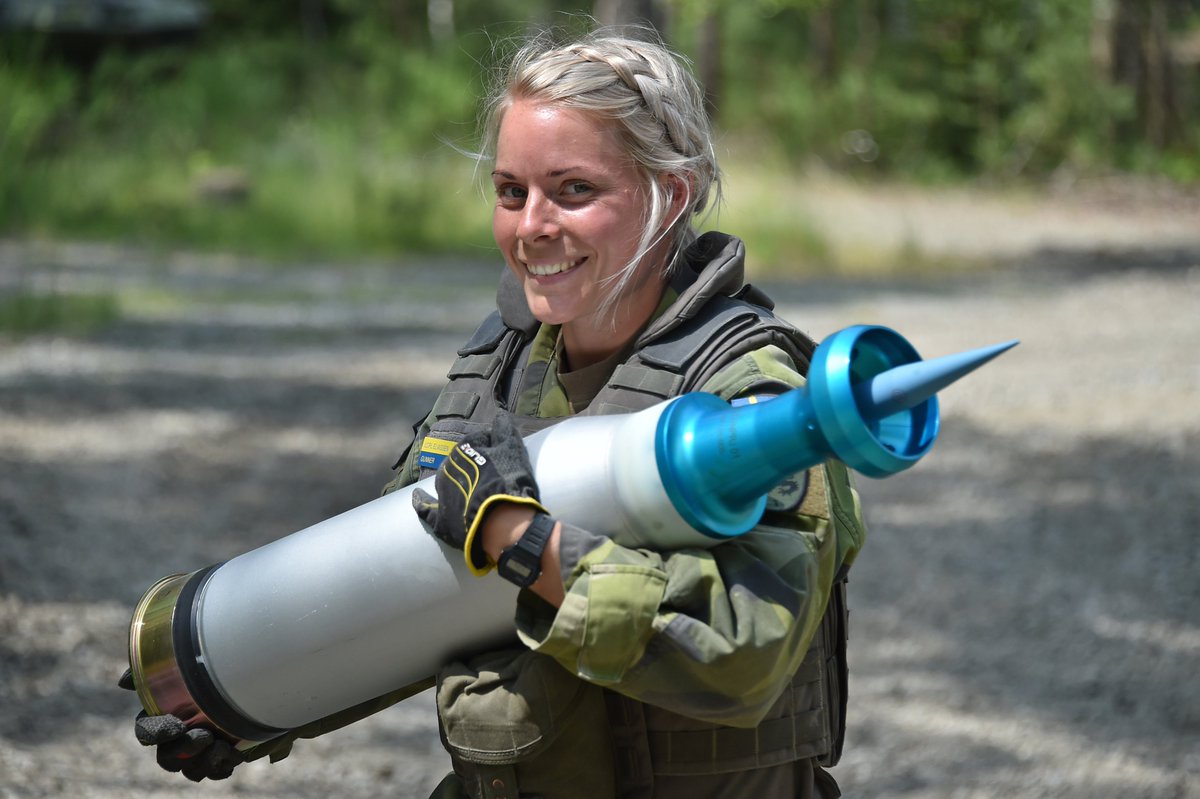
in its non-training version will smash through all russian tanks' frontal armor with ease.
More importantly Western tanks have way better optics, which means Western crews will see russian tanks first and from further away. And thanks to ballistic computers, which use laser
4/n
More importantly Western tanks have way better optics, which means Western crews will see russian tanks first and from further away. And thanks to ballistic computers, which use laser
4/n
rangefinders, wind sensors, cant sensors, boresight data, ammo, barrel and air temperature, barometric pressure, tank and target speed etc. Western tank guns never miss a shot.
Photos of a USMC M1A1 FEP AIDATS commander's station, vs. a russian T-90 commander's station.
5/n
Photos of a USMC M1A1 FEP AIDATS commander's station, vs. a russian T-90 commander's station.
5/n


But the biggest advantage of Western tanks are their far superior thermal sights.
At night russian tankers won't even see Western tanks, while Western tanks will see, target and destroy russian tanks from distances of up to 5km. russian tank crews will only survive if they
6/n
At night russian tankers won't even see Western tanks, while Western tanks will see, target and destroy russian tanks from distances of up to 5km. russian tank crews will only survive if they
6/n
jump out and run, because with reverse speeds of 4 km/h (T-72), 10 km/h (T-80), and 6 km/h (T-90) there is no escape for russian tanks from Western APFSDS rounds.
In this video a Finnish T-72 reverses at maximum speed... and if a russian tank does a U-turn, then the APFSDS
7/n
In this video a Finnish T-72 reverses at maximum speed... and if a russian tank does a U-turn, then the APFSDS
7/n
will punch through the russian tanks thinly armored side or rear.
The only danger Western tanks will encounter in Ukraine is russian infantry or helicopters with anti-tank guided missiles (ATGM). As expected the russians are technologically 20 years behind and so don't have
8/n
The only danger Western tanks will encounter in Ukraine is russian infantry or helicopters with anti-tank guided missiles (ATGM). As expected the russians are technologically 20 years behind and so don't have
8/n

Fire and Forget ATGMs like the Javelin, Spike or Akeron and no top-attack ATGMs, and no overfly top attack ATGMs.
russian anti-tank teams have to see the target and aim at it from launch until impact, which means they are immobile... and that firing smoke grenades can defeat
9/n
russian anti-tank teams have to see the target and aim at it from launch until impact, which means they are immobile... and that firing smoke grenades can defeat
9/n

incoming russian missiles.
But the best way to defeat enemy infantry is infantry paired with infantry fighting vehicles (IFV) like the Bradley, CV90, etc.
Let me compress this info in a very simplified way: IFVs and the infantry they carry protect tanks from enemy infantry,
10/n
But the best way to defeat enemy infantry is infantry paired with infantry fighting vehicles (IFV) like the Bradley, CV90, etc.
Let me compress this info in a very simplified way: IFVs and the infantry they carry protect tanks from enemy infantry,
10/n

while tanks protect IFVs and the infantry they carry from enemy tanks.
The tanks' 120mm tank gun is used to destroy enemy tanks and bunkers.
The IFVs 25-40mm autocannon is used to destroy enemy infantry and light vehicles.
The infantry is used to clear enemy positions and
11/n
The tanks' 120mm tank gun is used to destroy enemy tanks and bunkers.
The IFVs 25-40mm autocannon is used to destroy enemy infantry and light vehicles.
The infantry is used to clear enemy positions and
11/n

enemy-held buildings.
As said: this is very simplified. If you attack just with infantry, or only with tanks - you will get your troops massacred and tanks destroyed, as russia shows us every day again and again and again.
But tanks, IFVs, and infantry are still not enough
12/n
As said: this is very simplified. If you attack just with infantry, or only with tanks - you will get your troops massacred and tanks destroyed, as russia shows us every day again and again and again.
But tanks, IFVs, and infantry are still not enough
12/n

for a successful armored attack formation. Armored recovery vehicles, armored engineer vehicles, armored bridgelayers, and self-propelled anti-aircraft gun are required or an combined arms attack will bog down and be defeated.
13/n
13/n


Armored Recovery Vehicles (ARV) are needed to recover damaged tanks and IFVs before the enemy can destroy or capture them. Modern ARVs like the German Bergepanzer Büffel (pictured) on a Leopard 2 chassis can recover damaged tanks while the crew remains inside the vehicle.
14/n
14/n

All modern Western ARVs: American M88A2 Hercules, British CRARRV, French DNG/DCL, German Büffel, include a crane to help repair damaged tanks in the field.
No ARV means every damaged tank is lost, and even if you can recover one, without the crane you can't repair it.
15/n
No ARV means every damaged tank is lost, and even if you can recover one, without the crane you can't repair it.
15/n


Germany sent 15 older Leopard 1 based Bergepanzer 2A2 ARVs, which are much less armored than the eight M88A2 Hercules the US sent. Still more are needed.
Armored Engineer Vehicles (AEV) are needed to remove obstacles like anti-tank ditches and to open lanes in minefields.
16/n
Armored Engineer Vehicles (AEV) are needed to remove obstacles like anti-tank ditches and to open lanes in minefields.
16/n

Without AEVs an armored attack will be stopped by the obstacles it encounters, but with AEVs:
if there is a minefield send i.e. a Leopard 2 based AEV3 Kodiak or an Abrams based M1150 Assault Breacher Vehicle with a mine plow forward to clear a lane, while the tanks,
17/n
if there is a minefield send i.e. a Leopard 2 based AEV3 Kodiak or an Abrams based M1150 Assault Breacher Vehicle with a mine plow forward to clear a lane, while the tanks,
17/n


IFVs, and infantry cover the AEVs. If an anti-tank ditch is the problem send i.e. a Leopard 2 based Wisent 2 or a Challenger 2 based Trojan forward to fill it in.
So far only five older Leopard 1 based Dachs 2A1 have been delivered, so far more are needed.
18/n
So far only five older Leopard 1 based Dachs 2A1 have been delivered, so far more are needed.
18/n

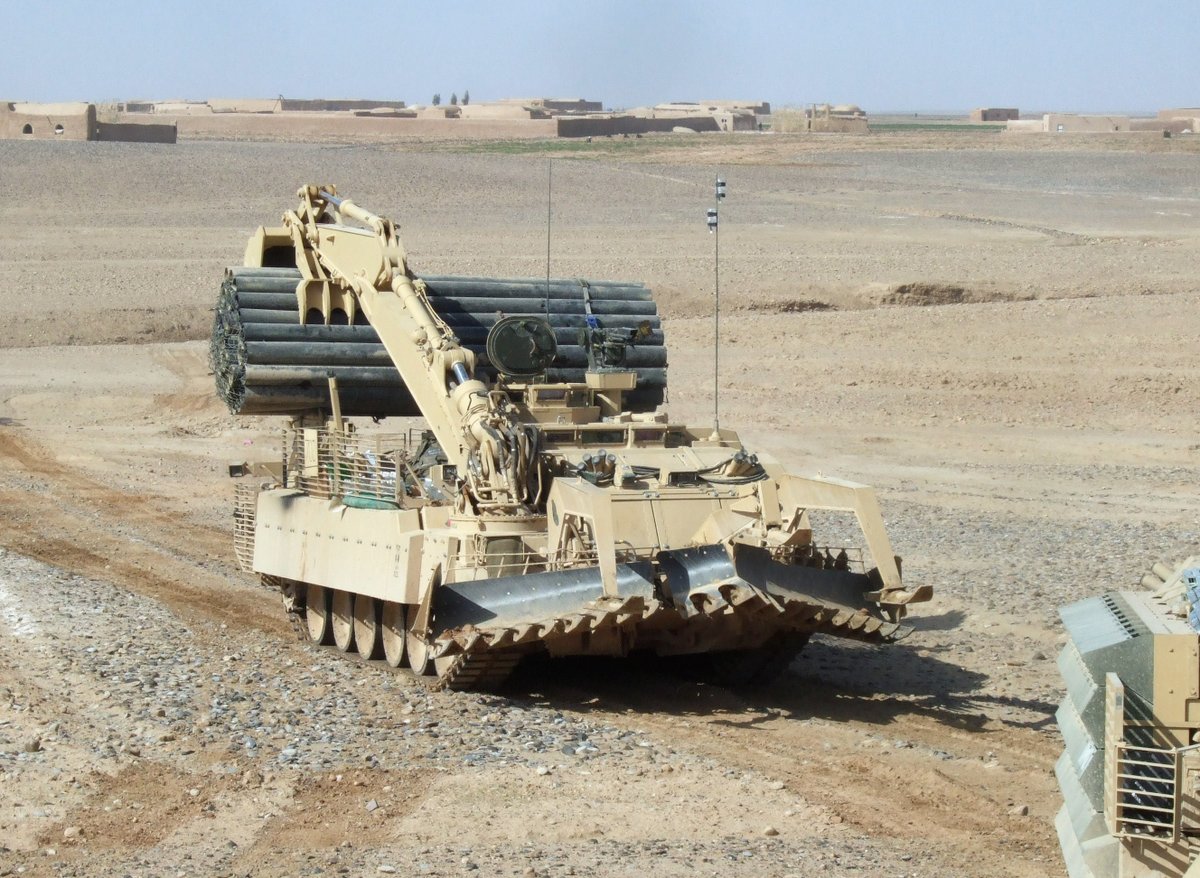
To clear a lane through a minefield the M1150 Assault Breacher Vehicle can also launch two line charges, which when detonated will destroy the buried mines and thus clear a lane for the attack to continue.
19/n
19/n


Armored bridgelayers allow the crossing of streams, brooks, etc.
Without bridgelayers an armored attack must either ford a river (risky because of the mud) or move around it.
Germany sent 16 Biber bridgelayers, which are Leopard 1 based and can't be used with Leopard 2 or
20/n
Without bridgelayers an armored attack must either ford a river (risky because of the mud) or move around it.
Germany sent 16 Biber bridgelayers, which are Leopard 1 based and can't be used with Leopard 2 or
20/n

M1A1/2 Abrams or Challenger 2, as the maximum weight the bridge can carry is 55 tons.
Therefore either American M1074 JAB, British Titan, American M104 Wolverine, or German Leguan bridgelayers are needed (the latter two are best, as they offer a much smaller silhouette when
21/n
Therefore either American M1074 JAB, British Titan, American M104 Wolverine, or German Leguan bridgelayers are needed (the latter two are best, as they offer a much smaller silhouette when
21/n


deploying the bridge.
Self-propelled anti-aircraft guns (SPAAG) are needed to shoot down enemy drones and helicopters... but only Finland built a SPAAG on a modern tank chassis: the Leopard 2 Marksman. But only seven pieces were built.
Other NATO members use the Stinger
22/n
Self-propelled anti-aircraft guns (SPAAG) are needed to shoot down enemy drones and helicopters... but only Finland built a SPAAG on a modern tank chassis: the Leopard 2 Marksman. But only seven pieces were built.
Other NATO members use the Stinger
22/n
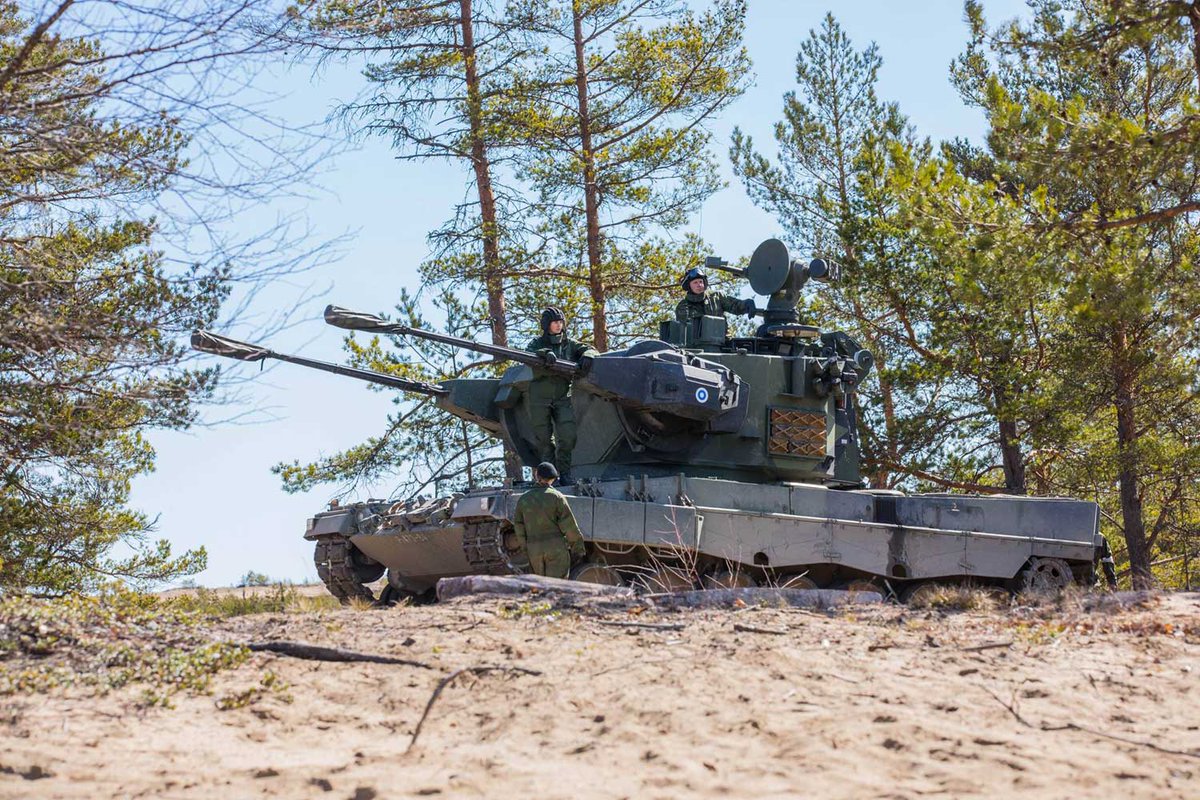
with the US using a Bradley variant called M6 Linebacker that carries four Stinger missiles. Good against helicopters, but pricey when used against drones.
Luckily Ukraine received 37 Leopard 1 based 7 Gepard SPAAGs. Ukraine can pair the Gepard with their armored spearheads,
23/n
Luckily Ukraine received 37 Leopard 1 based 7 Gepard SPAAGs. Ukraine can pair the Gepard with their armored spearheads,
23/n


unless Sweden includes the better Luftvärnskanonvagn 9040 in their CV90 donation.
This almost concludes this combined arms thread. I focused on the key systems: tanks, IFVs, and tank based armored support vehicles, BUT combined arms also includes reconnaissance, artillery,
24/n
This almost concludes this combined arms thread. I focused on the key systems: tanks, IFVs, and tank based armored support vehicles, BUT combined arms also includes reconnaissance, artillery,
24/n

helicopters, logistics, a lot of IFV based support vehicles, and so on and on.
russia has shown again and again that it is incapable of combined arms, and Ukraine now gets the tools for it - but training will take some time. And then Ukrainian forces will be unstoppable.
25/n
russia has shown again and again that it is incapable of combined arms, and Ukraine now gets the tools for it - but training will take some time. And then Ukrainian forces will be unstoppable.
25/n

PS: an armored attack with all the armored support vehicles is stopped by nothing, not even a forest as this video of a Bergepanzer 2 shows (watch until the end).
26/end
26/end
• • •
Missing some Tweet in this thread? You can try to
force a refresh