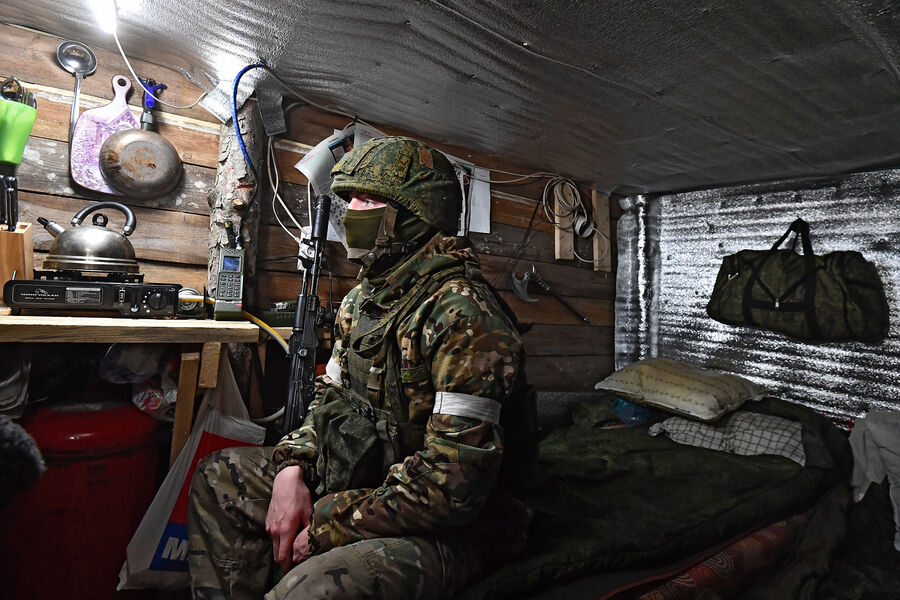
1/ Russia's 392nd Rifle Regiment, last seen complaining about its flooded ice-filled trenches two weeks ago, is reportedly in a deplorable state: mass drunkenness, fights between the men and even a covered-up murder in a quarrel over a sleeping bag. ⬇️
2/ A soldier serving with the regiment has told the 'Caution, News' Telegram channel that the man who filmed the video above was subsequently thrown in a pit by his superiors and then taken out of Ukraine. He and his wife are now both facing criminal charges.
3/ The soldier says his unit is wracked by drunkenness, which he says is "thriving among the personnel". They are taking their lead from their commander, who is himself regularly drunk and beats his men.
4/ "He constantly talks drunk on the radio, sends someone away, swears in foul language, threatens to shoot someone. Since the first day we arrived, he has been threatening to shoot people."
As a result, he says, the situation among his comrades is tense.
5/ The commander has surrounded himself with guards to protect himself from his subordinates, who are drinking and "constantly stabbing each other and fighting with their rifle butts."
6/ He says the tensions in the regiment led to a murder that took place before the New Year during "a drunken brawl in a wooded area". The victim "came at his assailants with someone else's gun and got a bullet in the head. What were they fighting about? Only a sleeping bag."
7/ Not surprisingly, this isn't the kind of thing that Russian commanders like to report to their superiors. "They're trying to cover it up, so it's hard to get details. But I heard about the fact that they came to pick up his body on the radio myself," the soldier says.
8/ The man blames his unit's problems on the fact that it has been assembled entirely from mobilised personnel, which he describes as a stupid idea, as they lack any discipline.
9/ He says that "corruption and lawlessness are rampant here. There are all sorts of extortions: 'Let's chip in for all sorts of stuff, but I won't report it.'"
1/ Why does the Russian government appear to be so clueless about the role Telegram plays in military communications? The answer, one warblogger suggests, is that the military leadership doesn't want to admit its failure to provide its own reliable communications solutions. ⬇️
2/ Recent claims by high-ranking officials that Telegram isn't relevant to military communications have prompted howls of outrage and detailed rebuttals from Russian warbloggers, but have also pointed to a deeper problem about what reliance on Telegram (and Starlink) represents.
3/ In both cases, the Russian military has failed abysmally to provide workable solutions. Telegram and Starlink were both adopted so widely because the 'official' alternatives (military messngers and the Yamal satellite constellation) are slow, unreliable and lack key features.
1/ Telegram is deeply embedded into Russian military units' internal communications, providing functionality that MAX, the Russian government's authorised app, doesn't have. A commentary highlights the vast gap that is being opened up by the government's blocking of Telegram. ⬇️
2/ The Two Majors Charitable Foundation writes that without Telegram, information exchange, skills transfer, and moral mobilisation work within the Russian army will be crippled:
3/ "I'd really like to add that for a long time, we've been gathering specialized groups in closed chats, including those focused on engineering and UAVs, to share experiences and build a knowledge base. Almost everyone there is a frontline engineer.
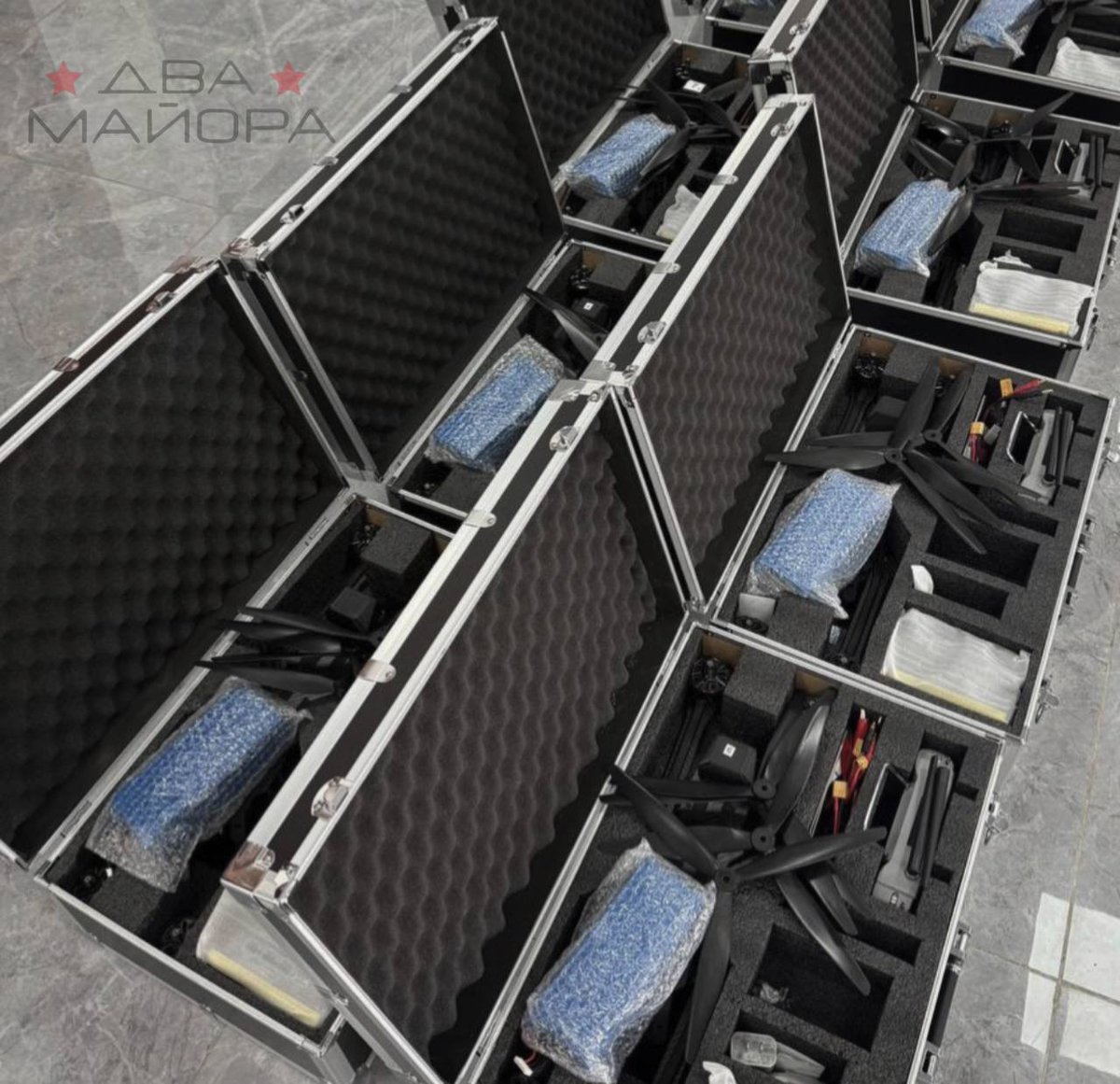
1/ Russia's Federal Customs Service is seeking to prosecute Russian volunteers who are importing reconnaissance drones from China to give to frontline troops. It's the latest chapter in a saga of bureaucratic obstruction that is blocking vital supplies to the Russian army. ⬇️
2/ Much of the army's equipment, and many of its drones, are purchased with private money by volunteer supporters or the soldiers themselves. High-tech equipment such as drones and communications equipment is purchased in China or Central Asia and imported into Russia.
3/ However, the Federal Customs Service has been a major blocker. Increased customs checks on the borders have meant that cargo trucks have suffered delays of days or even weeks, drastically slowing the provision of essential supplies for the Russian army.
1/ Leaked casualty figures from an elite Russian special forces brigade indicate that it has suffered huge losses in Ukraine, equivalent to more than half of its entire roster of personnel. Scores of men are listed as being 'unaccounted for', in other words having deserted. ⬇️
2/ The 10th Separate Guards Special Purpose Brigade (military unit 51532) is a special forces (spetsnaz) unit under the GRU. It is a 2002 refoundation by Russia of a Soviet-era spetsnaz unit that, ironically, passed to Ukraine when the Soviet Union broke up in 1991.
3/ Since the invasion of February 2022, the brigade has been fighting on the Kherson front, which has seen constant and extremely bloody fighting over the islands in the Dnipro river and delta. Russian sources have reported very high casualties.
1/ Russian warbloggers are continuing to provide examples of how Telegram is used for frontline battlefield communications, to refute the claim of presidential spokesman Dmitri Peskov that such a thing is "not possible to imagine". ⬇️
2/ Platon Mamadov provides two detailed examples:
"Example number one:
Aerial reconnaissance of Unit N spotted a Ukrainian self-propelled gun in a shelter in the middle of town N."
3/ "Five minutes after the discovery, the target's coordinates and a detailed video were uploaded to a special secret chat group read by all drone operators, scouts, and artillerymen in that sector of the front.
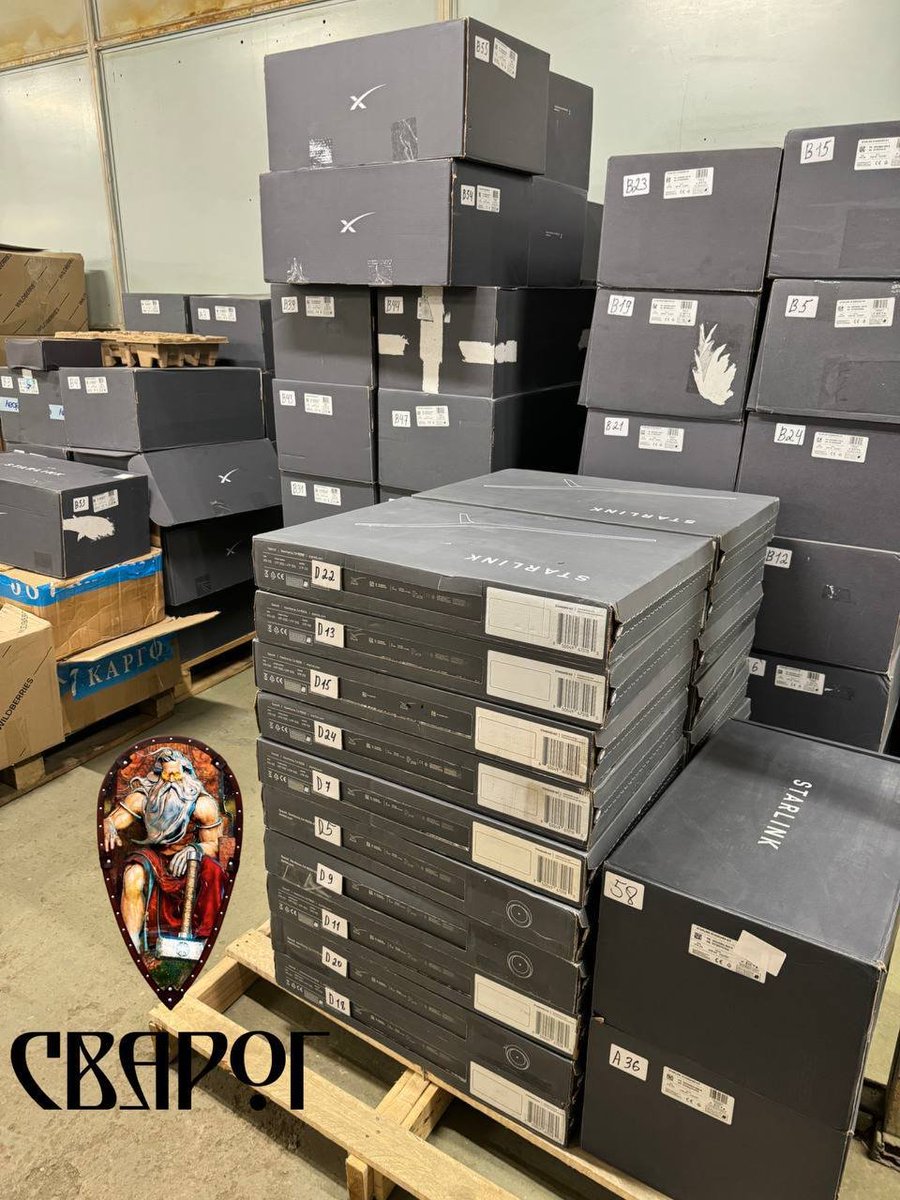
1/ The Russian army faces a crisis with obtaining aid for its soldiers, who are dependent on volunteers to provide them with everything from socks to Starlink terminals. Russian warbloggers say that the blocking of Telegram will wreck voluntary assistance efforts. ⬇️
2/ 'It's time ZOV to go home' writes:
"Since 2022, Telegram has become the primary source of funds for the front. Numerous units and volunteers have created their own channels."
3/ "This has enabled us to address a colossal number of issues that needed to be addressed right then and there. It's impossible otherwise: when a fundraising campaign begins, it means the fundraising item was needed yesterday, and there's no time to waste.