1
Babar, a savage barbarian can't be blamed for being ignorant, but it's shocking that many Indians know nothing about their own history. Centuries before the Mughals, Hindus had organized gardens, fountains, parks, flower groves, orchards, terraced gardens & even garden-cities.
Babar, a savage barbarian can't be blamed for being ignorant, but it's shocking that many Indians know nothing about their own history. Centuries before the Mughals, Hindus had organized gardens, fountains, parks, flower groves, orchards, terraced gardens & even garden-cities.
https://twitter.com/ashokkmrsingh/status/1619506747370246146

2
Ancient Hindu texts use several terms for gardens. Ārāma - pleasure garden is a common term used in Rāmāyana, Māhābhārata, etc. Brihat Samhitā says lakes should have gardens on their banks. Pre-Mughal inscriptions at Amaravati (13th c)., Cambay (10th c.), etc. refer to Ārāma.
Ancient Hindu texts use several terms for gardens. Ārāma - pleasure garden is a common term used in Rāmāyana, Māhābhārata, etc. Brihat Samhitā says lakes should have gardens on their banks. Pre-Mughal inscriptions at Amaravati (13th c)., Cambay (10th c.), etc. refer to Ārāma.


3
Inscriptions & texts refer to gardens like Vātikā (orchard), PushpaVātikā (flower bower), Upavana (planted forest), Udyāna (Park/public garden). An entire treatise on arboriculture Vrikshayurveda (10th c.) describes crossing & grafting of species to evolve new flowers & fruits.
Inscriptions & texts refer to gardens like Vātikā (orchard), PushpaVātikā (flower bower), Upavana (planted forest), Udyāna (Park/public garden). An entire treatise on arboriculture Vrikshayurveda (10th c.) describes crossing & grafting of species to evolve new flowers & fruits.


4
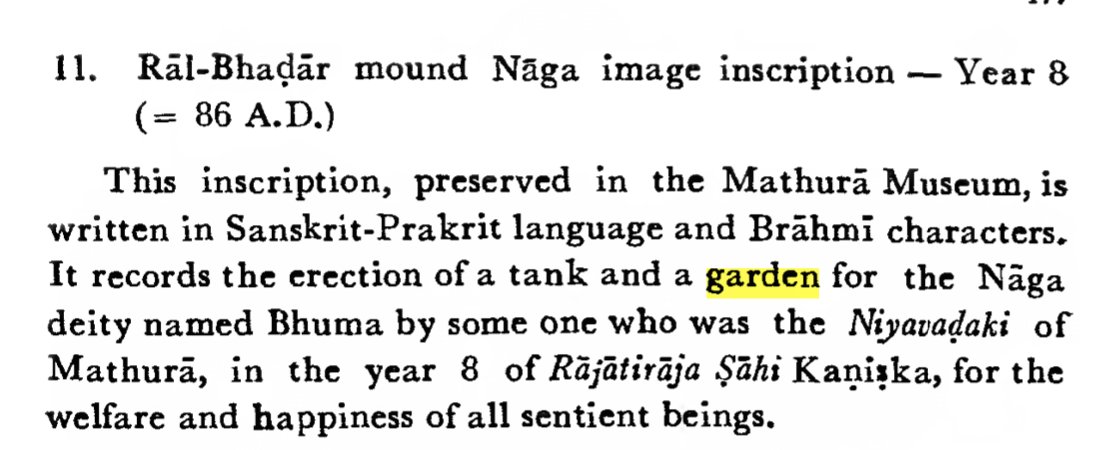
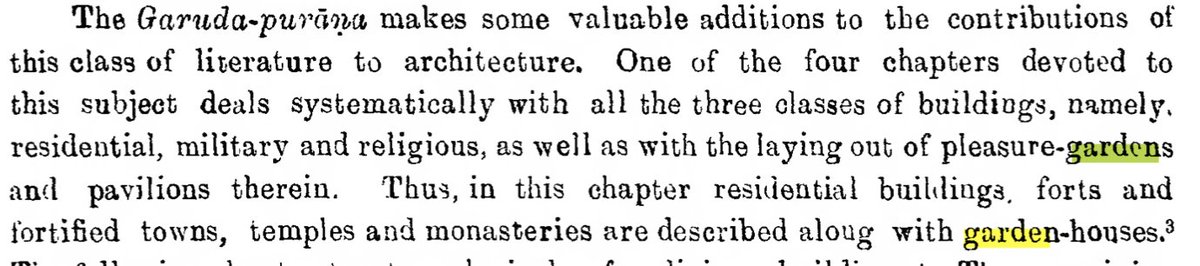
The oldest inscriptions describing gardens date back to 2nd c. in Mathura during the Kusana era. Texts like Garuda Purana, Viswakarma Vastu Shastra, Manasara, Mayamata, Shilparatna, Samarangana Sutradhara, etc. have chapters that discuss how to lay out & even terrace gardens.
The oldest inscriptions describing gardens date back to 2nd c. in Mathura during the Kusana era. Texts like Garuda Purana, Viswakarma Vastu Shastra, Manasara, Mayamata, Shilparatna, Samarangana Sutradhara, etc. have chapters that discuss how to lay out & even terrace gardens.

5
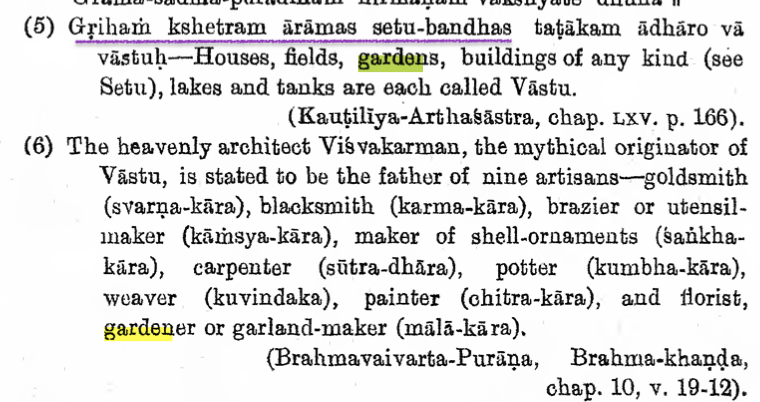
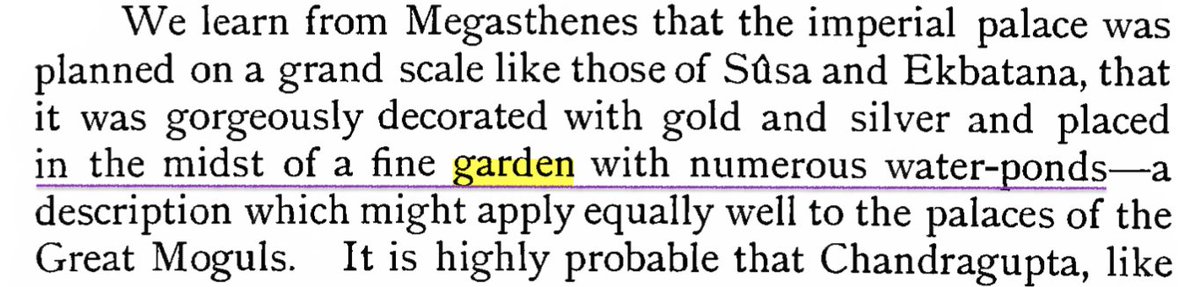
Ancient Hindu texts like Kautilya's Arthashastra (300 BCE) talk of gardens, lakes, tanks & fields. The Greek Ambassador Megasthenes (300 BCE) confirms this by describing how Hindu palaces he saw during the same era, were set in fine gardens decorated with numerous water ponds.
Ancient Hindu texts like Kautilya's Arthashastra (300 BCE) talk of gardens, lakes, tanks & fields. The Greek Ambassador Megasthenes (300 BCE) confirms this by describing how Hindu palaces he saw during the same era, were set in fine gardens decorated with numerous water ponds.
6
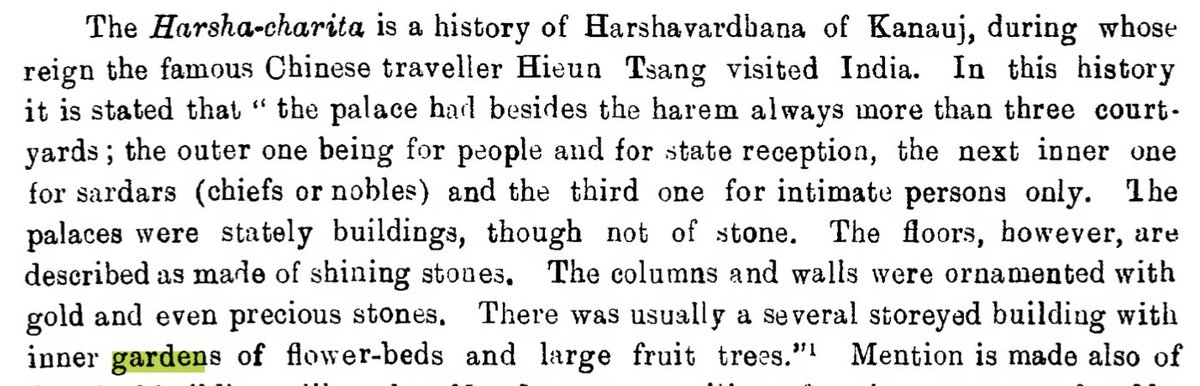
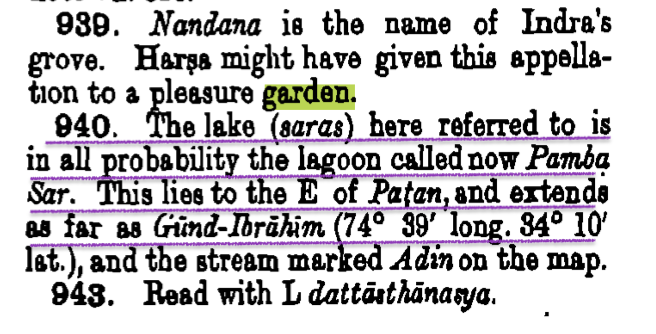
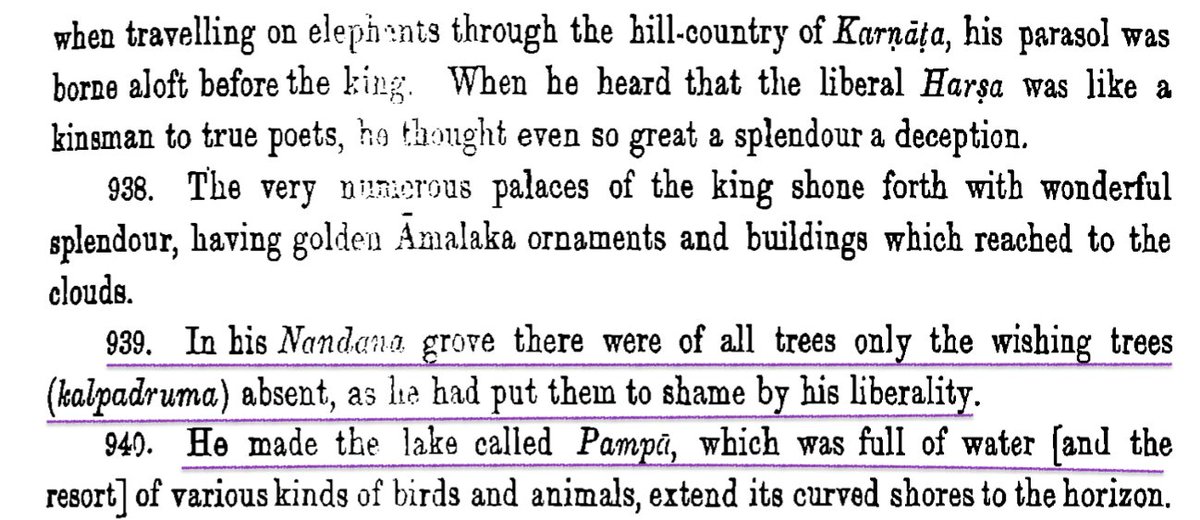
Harsha Charita, a history of Harshavardhana of Kanauj (7th c.) describes his palaces as multi storied buildings with gardens of flower-beds & large fruit trees. The Rājatarańginì (13th c.) confirms Harsha’s construction of gardens & lakes, the remains of which exist even today.
Harsha Charita, a history of Harshavardhana of Kanauj (7th c.) describes his palaces as multi storied buildings with gardens of flower-beds & large fruit trees. The Rājatarańginì (13th c.) confirms Harsha’s construction of gardens & lakes, the remains of which exist even today.
7
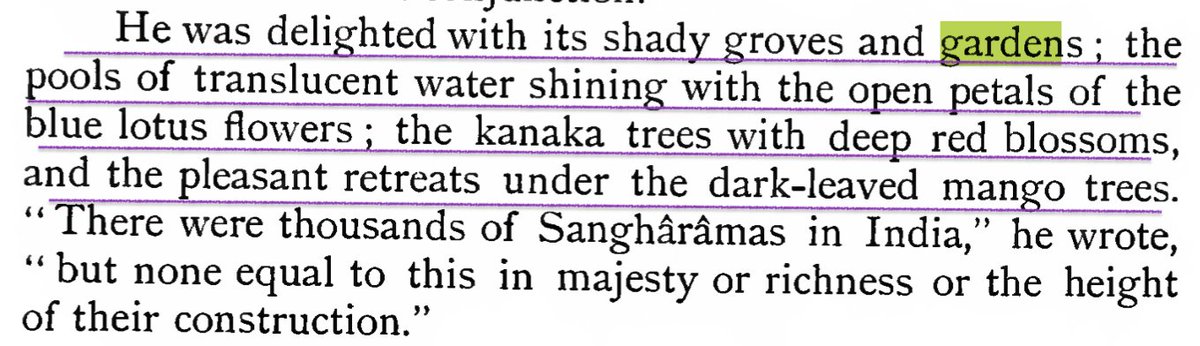
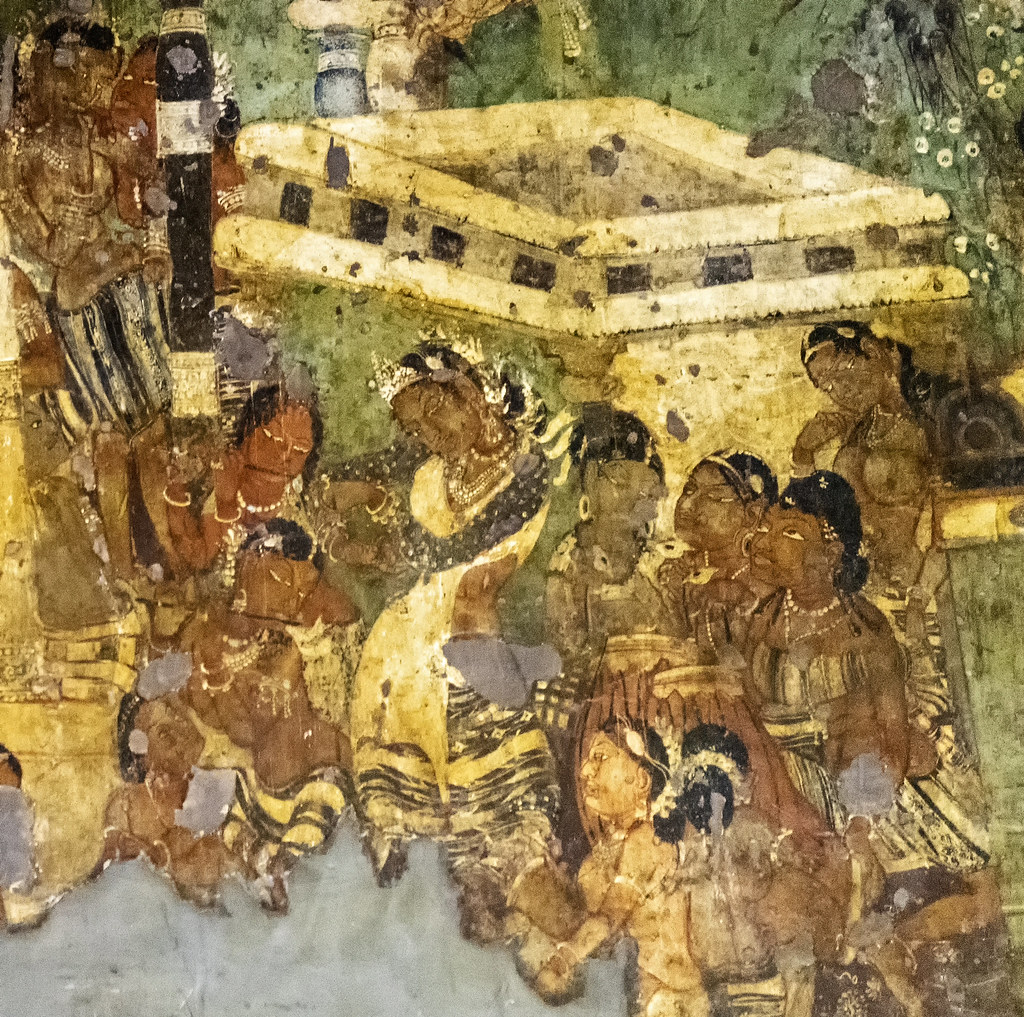
Buddhist Chinese traveller Hiuen Tsang (7th c.) who visited India during Harsha’s reign, lived at Nalanda University in Magadha for 5 years & describes shady groves & gardens with water pools full of blue lotuses, Kanaka trees with red blooms & pleasant times under mango trees.
Buddhist Chinese traveller Hiuen Tsang (7th c.) who visited India during Harsha’s reign, lived at Nalanda University in Magadha for 5 years & describes shady groves & gardens with water pools full of blue lotuses, Kanaka trees with red blooms & pleasant times under mango trees.

8
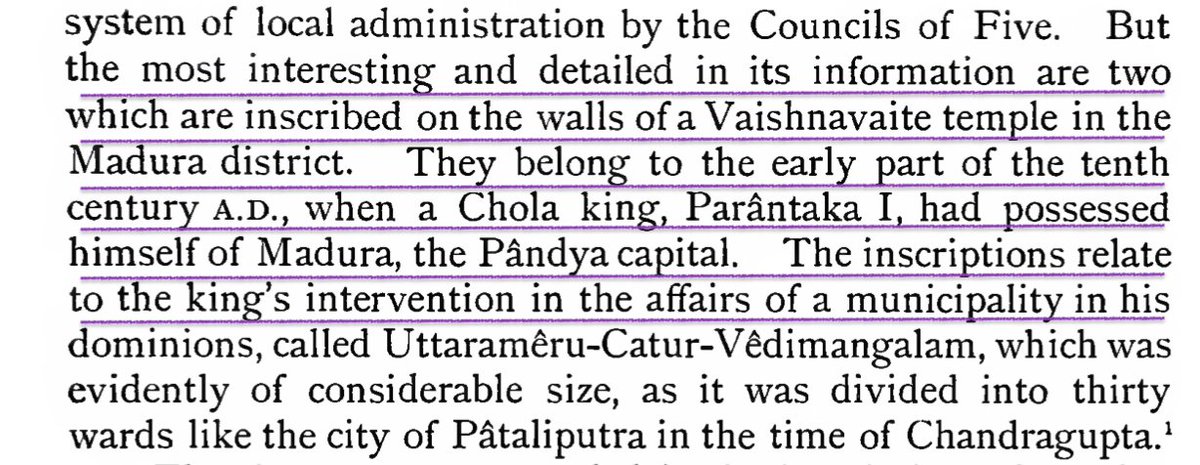
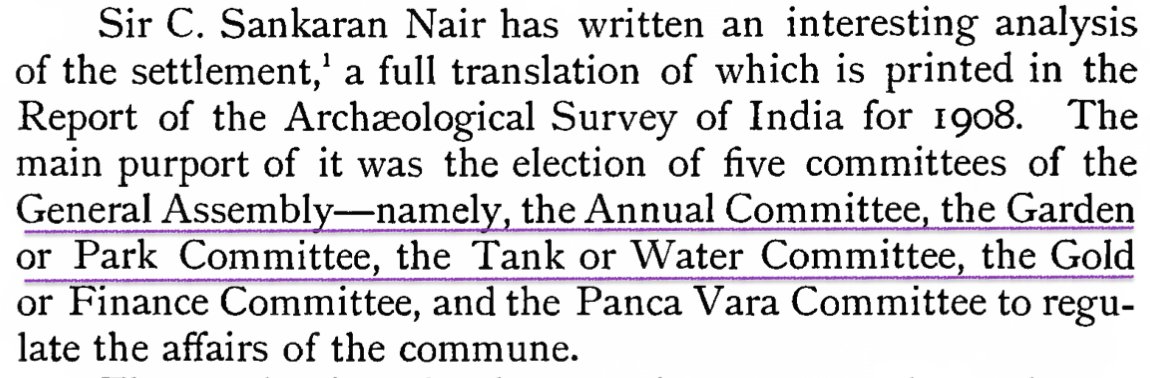
Supporting archaeological evidence from South India is found in inscriptions describing the intervention of Chola king, Parāntaka I of Madura (10th c.) who settled a municipal dispute by electing 5 committees including a Garden or Park Committee & the Water tank committee.
Supporting archaeological evidence from South India is found in inscriptions describing the intervention of Chola king, Parāntaka I of Madura (10th c.) who settled a municipal dispute by electing 5 committees including a Garden or Park Committee & the Water tank committee.
9
14th c. inscriptions in Karnataka describe Jain Chaityalayas with lotus ponds, fruit orchards, pleasure gardens & rice fields. Temples had flower gardens to adorn deities. Tamil legends say Aandal wove garlands for Vishnu daily with flowers from Nandavanam (temple garden).
14th c. inscriptions in Karnataka describe Jain Chaityalayas with lotus ponds, fruit orchards, pleasure gardens & rice fields. Temples had flower gardens to adorn deities. Tamil legends say Aandal wove garlands for Vishnu daily with flowers from Nandavanam (temple garden).


10
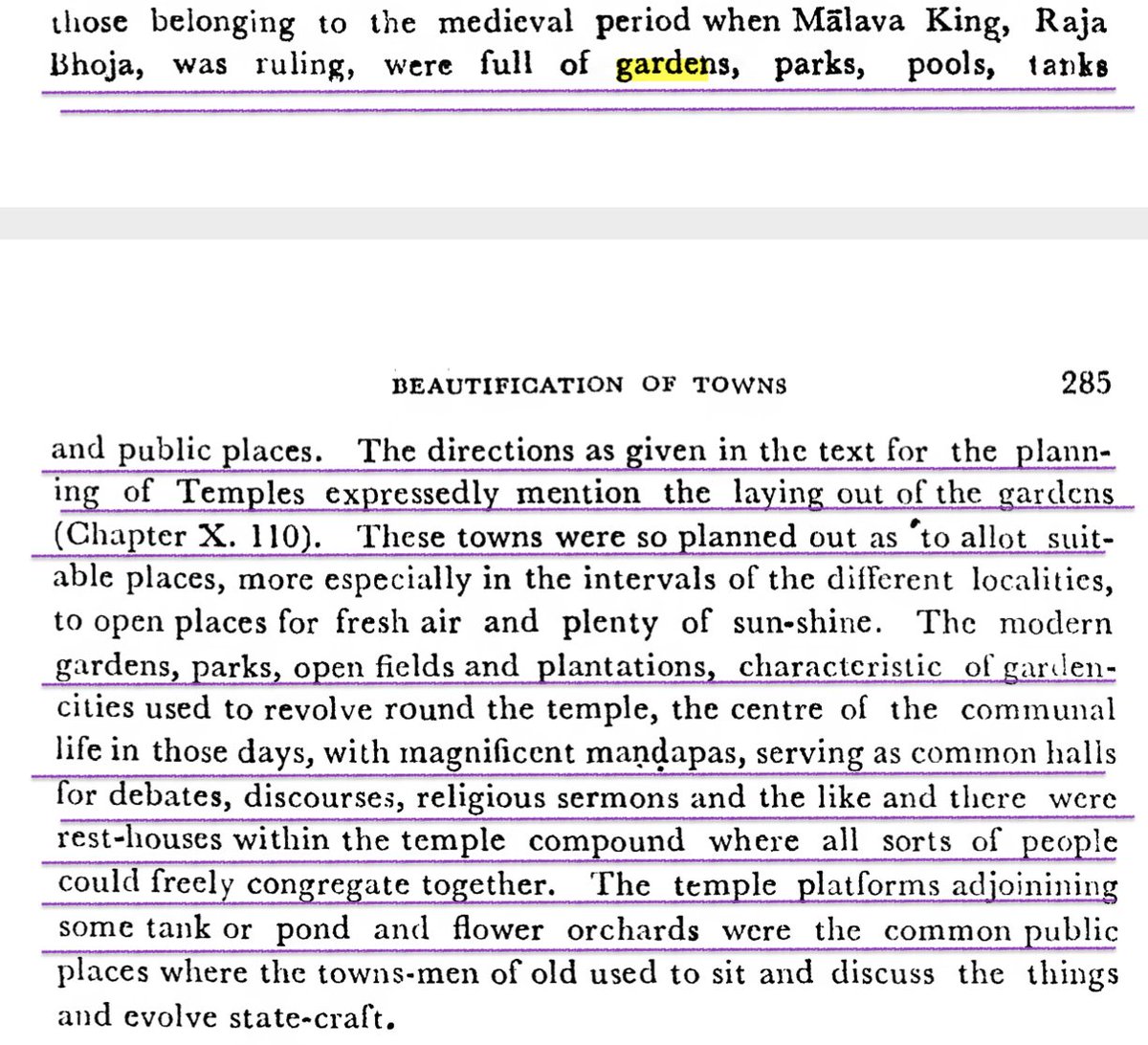
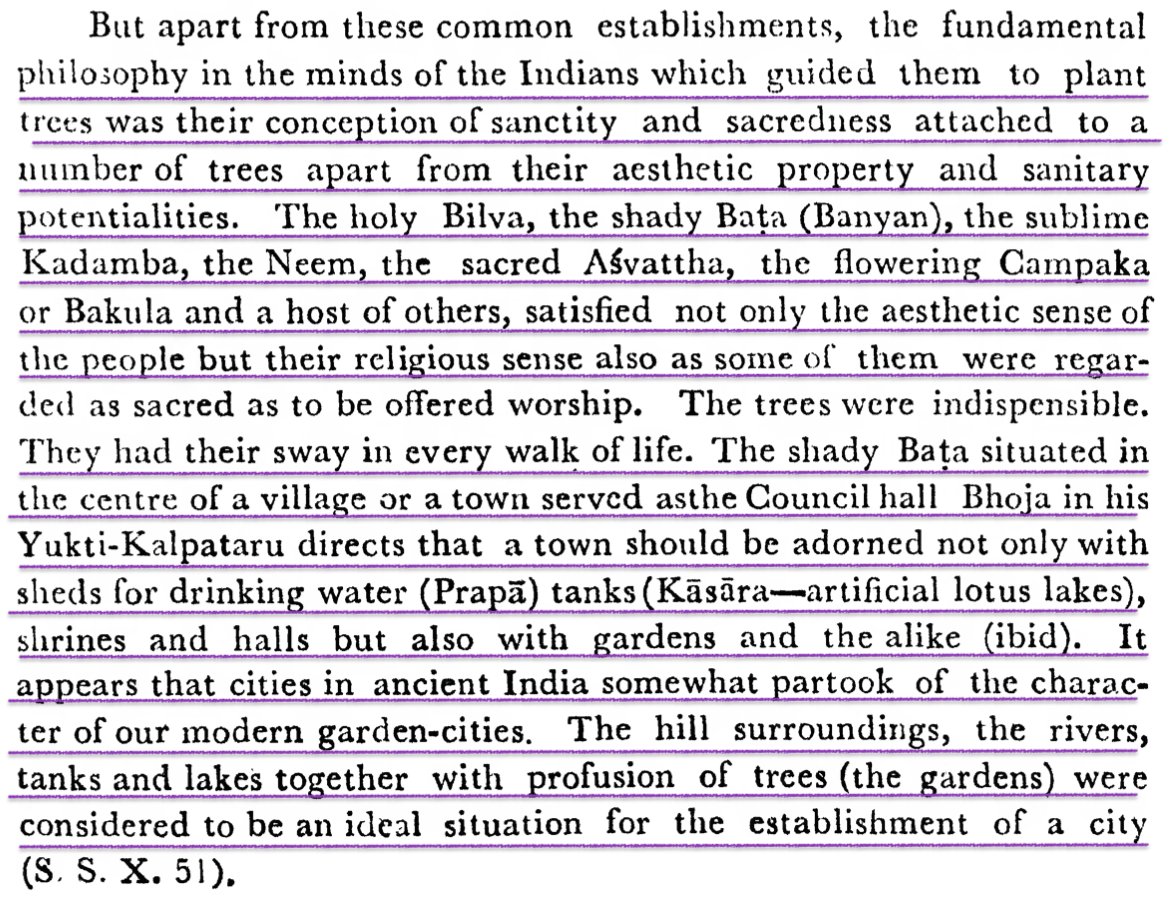
Malva Raja Bhoja’s treatise Samaranga Sutradhara (11th c.) provides incredible details on design of gardens for temples, towns, palaces & garden-cities. Temple gardens were for public community events & included groves of sacred trees such as Bilva, Asvattha, Neem, etc.
Malva Raja Bhoja’s treatise Samaranga Sutradhara (11th c.) provides incredible details on design of gardens for temples, towns, palaces & garden-cities. Temple gardens were for public community events & included groves of sacred trees such as Bilva, Asvattha, Neem, etc.
11
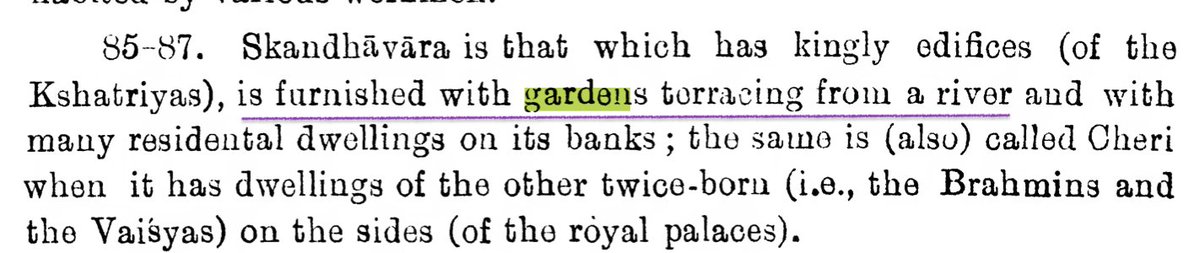
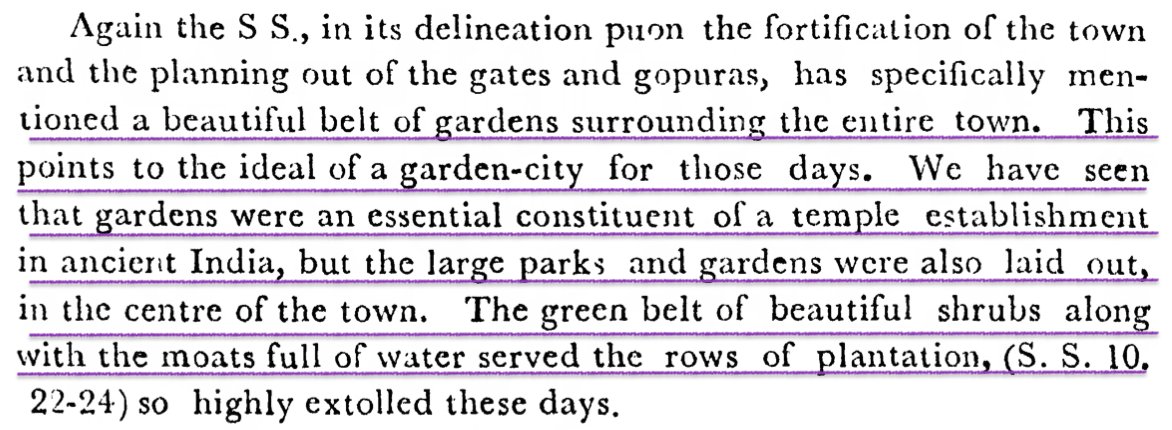
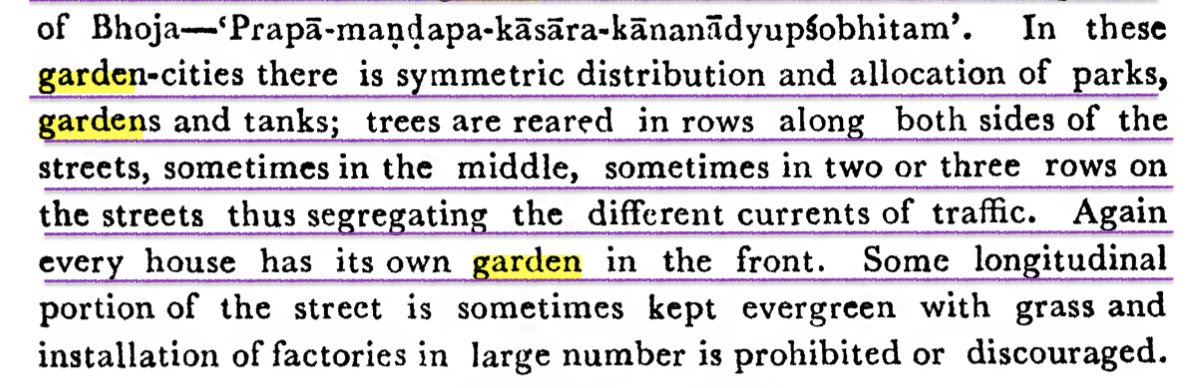
Beautiful Garden cities surrounded by an entire belt of gardens were symmetrically distributed with parks, gardens & tanks. Rows of trees lined both sides of the streets, urban spaces & every house had a garden in front. Moats of water edged the green belt around the city.
Beautiful Garden cities surrounded by an entire belt of gardens were symmetrically distributed with parks, gardens & tanks. Rows of trees lined both sides of the streets, urban spaces & every house had a garden in front. Moats of water edged the green belt around the city.
12
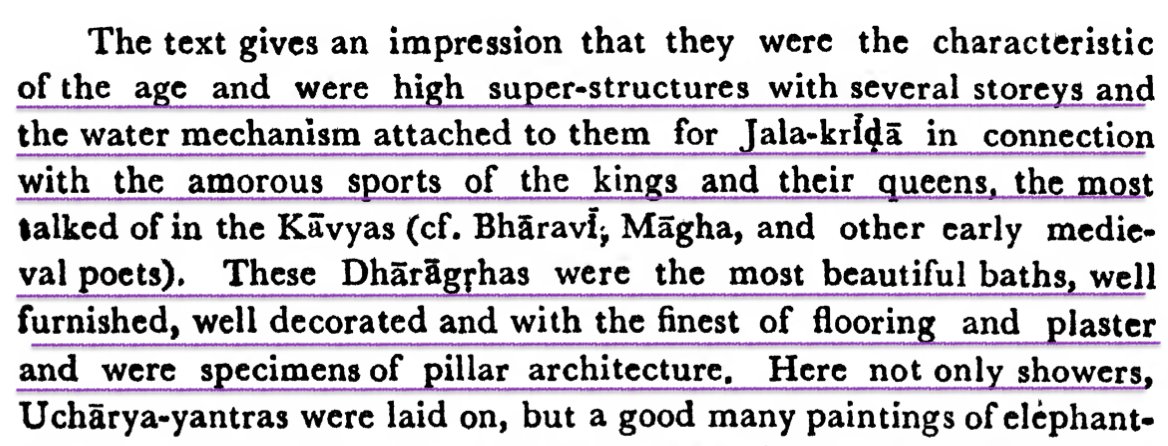
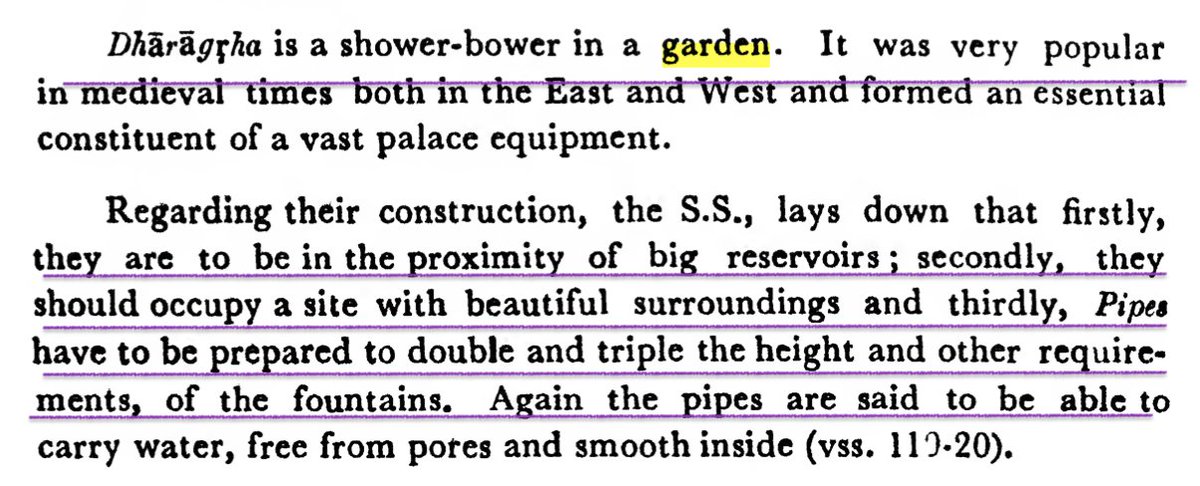
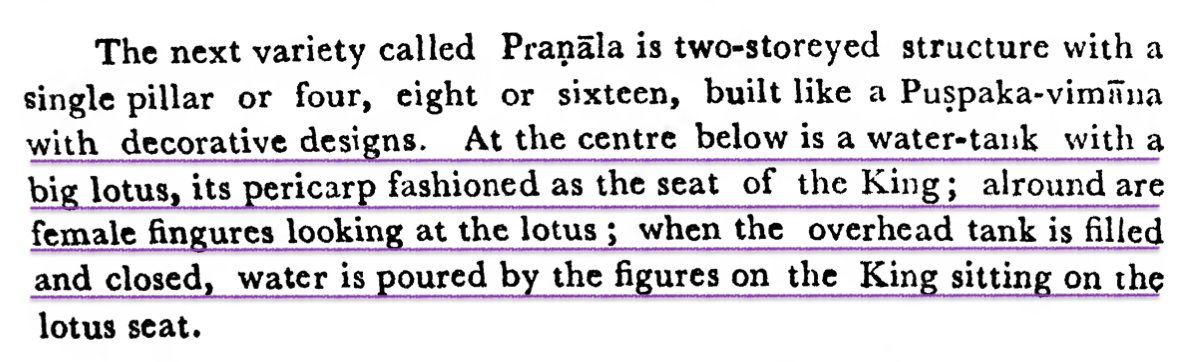
Raja Bhoja describes Dhārāgrha - a shower garden supplied by water pipes with many types of fountains. Water mechanisms were used for Jala krīdā using jets, sculptures that poured water & tanks built for royal entertainment, something that Babar could not even dream of.
Raja Bhoja describes Dhārāgrha - a shower garden supplied by water pipes with many types of fountains. Water mechanisms were used for Jala krīdā using jets, sculptures that poured water & tanks built for royal entertainment, something that Babar could not even dream of.
13
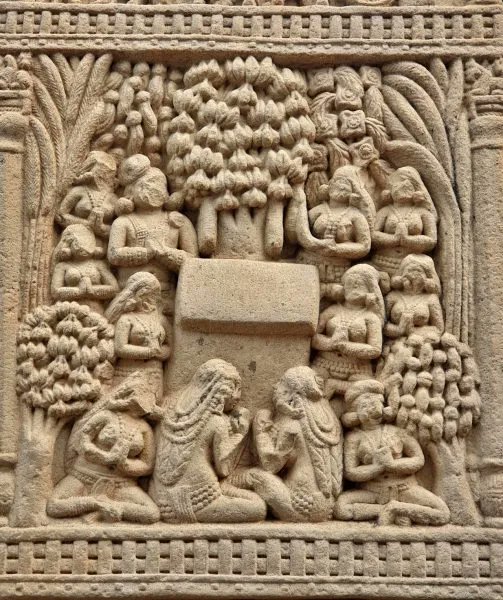
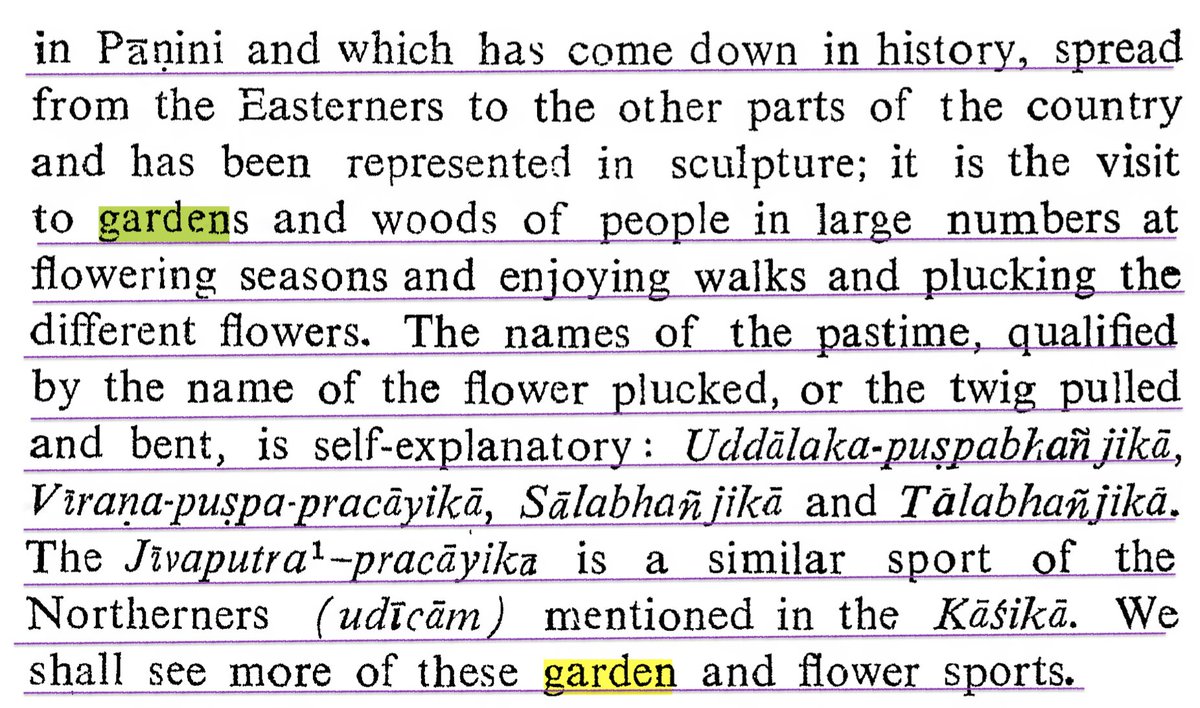
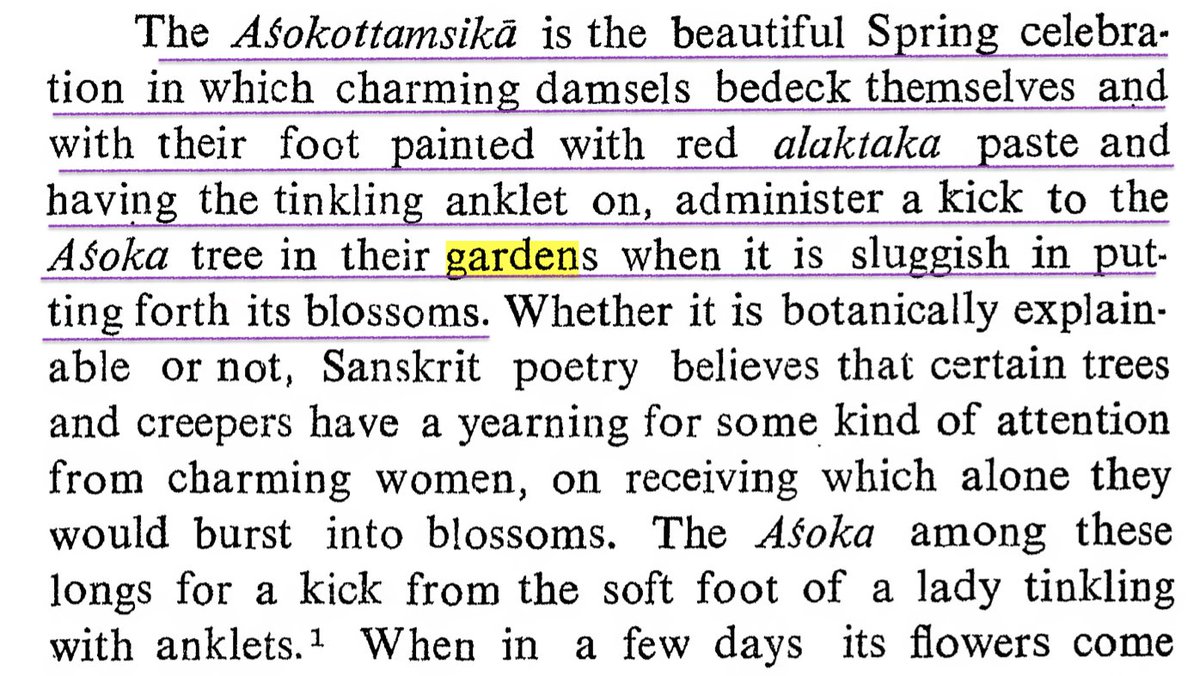
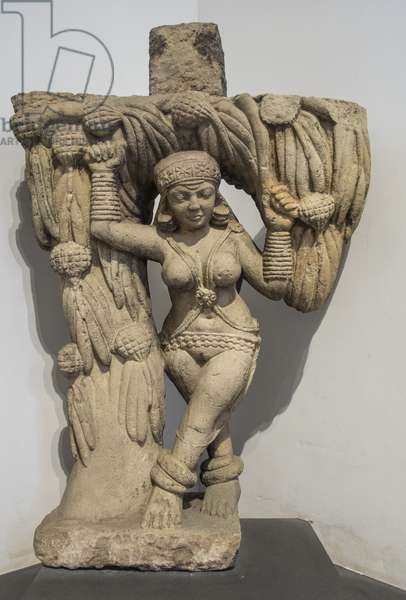
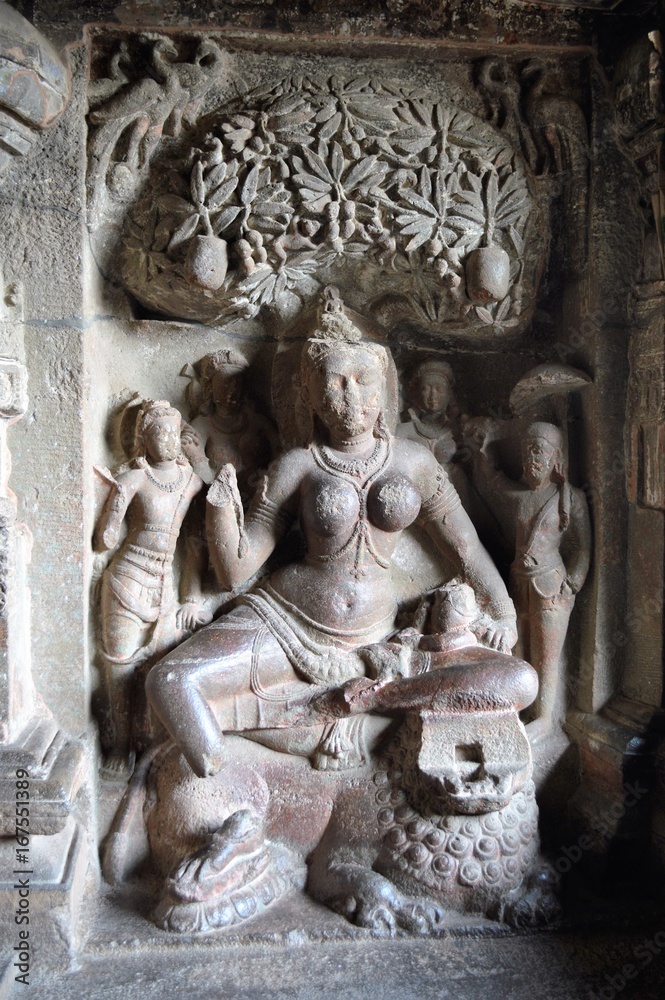
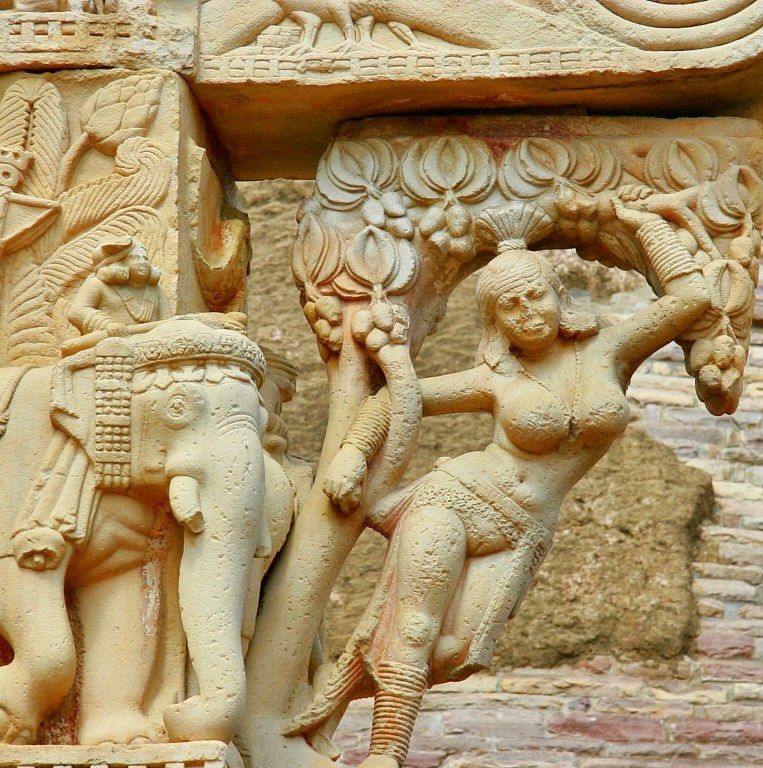
Garden sports & festivals are known since Panini (6th c. BCE). A lovely woman bending to pluck flowers during the Sāla-bhañjika festival is a recurring motif of Hindu sculpture. Spring festival Aśokottamsika, where maidens made Aśokā trees bloom were immortalized in poetry.
Garden sports & festivals are known since Panini (6th c. BCE). A lovely woman bending to pluck flowers during the Sāla-bhañjika festival is a recurring motif of Hindu sculpture. Spring festival Aśokottamsika, where maidens made Aśokā trees bloom were immortalized in poetry.

14
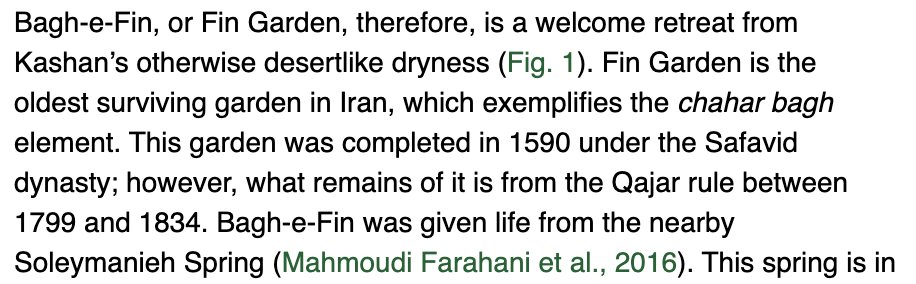
No physical evidence remains of pre-Mughal Hindu gardens in India because Islamic invaders destroyed or took over existing Hindu gardens, temples & palaces. Iran suffered a similar fate, where oldest Persian Chahar Bagh gardens date back no earlier than Islamic invasions.
No physical evidence remains of pre-Mughal Hindu gardens in India because Islamic invaders destroyed or took over existing Hindu gardens, temples & palaces. Iran suffered a similar fate, where oldest Persian Chahar Bagh gardens date back no earlier than Islamic invasions.
15
It is tragic that despite such an extensive documented history of horticulture, Indians believe myths of Mughals teaching us about gardens or fountains. Overwhelming evidence proves Hindus were designing, celebrating & elevating gardens 1000s of years before Mughals existed.
It is tragic that despite such an extensive documented history of horticulture, Indians believe myths of Mughals teaching us about gardens or fountains. Overwhelming evidence proves Hindus were designing, celebrating & elevating gardens 1000s of years before Mughals existed.
16
It’s about time places named “Mughal Gardens” were removed & replaced to reflect our real heritage. Such change is not about “Hindutva intolerance” but about ensuring we honor the facts of our true history instead of pandering to myths.
It’s about time places named “Mughal Gardens” were removed & replaced to reflect our real heritage. Such change is not about “Hindutva intolerance” but about ensuring we honor the facts of our true history instead of pandering to myths.
17
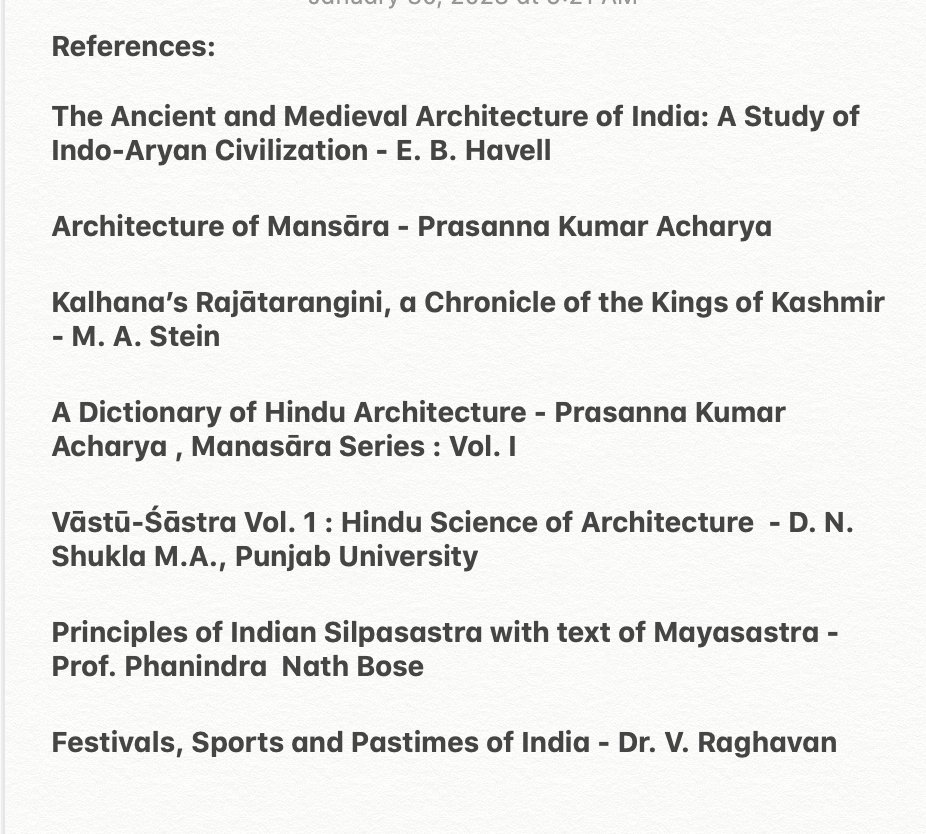
References:
References:
• • •
Missing some Tweet in this thread? You can try to
force a refresh