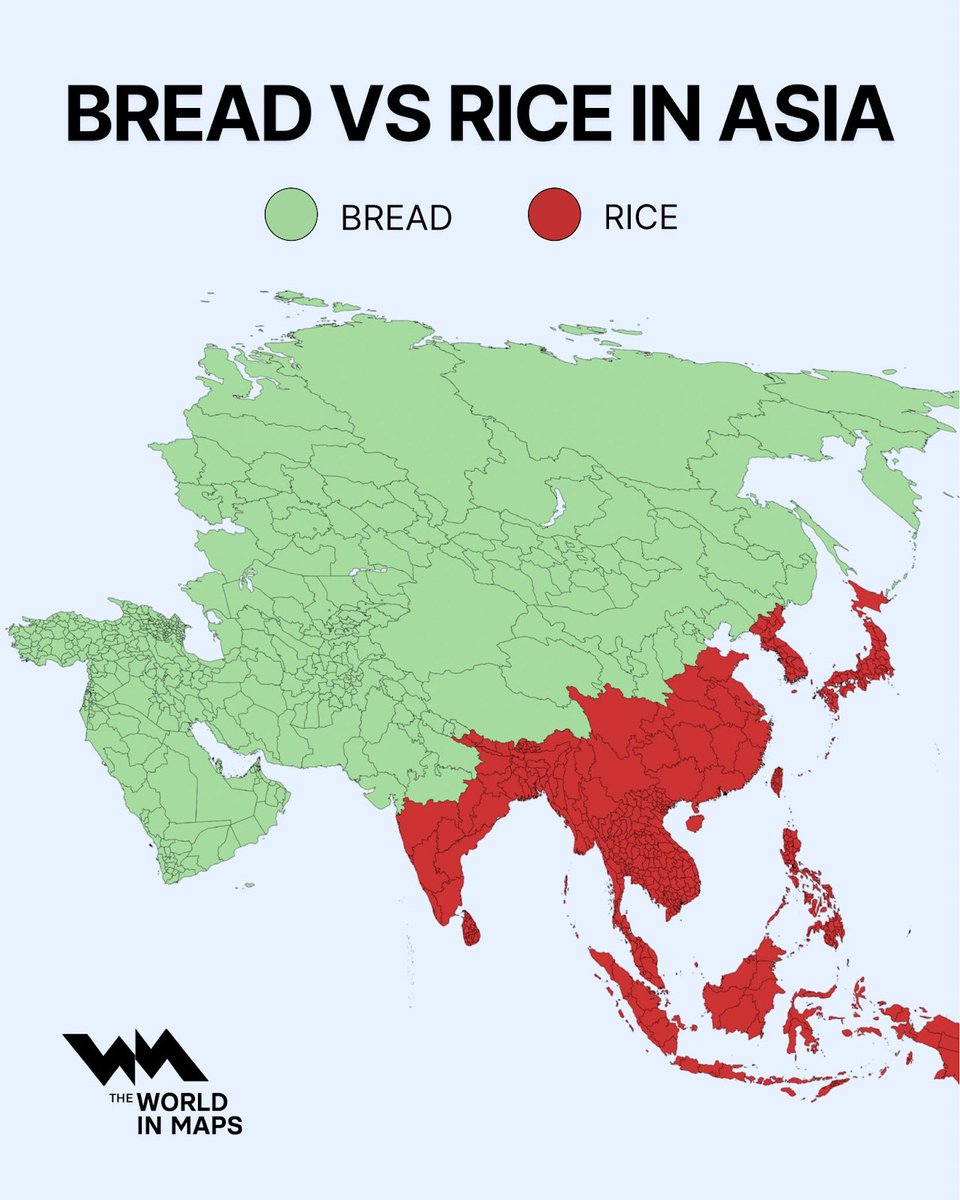
Why are the Philippines so densely populated?
It's the 12th most populous country in the world, the size of Italy but with 2x more density.
Is it the culture?
The economics?
Development?
Religion?
Geography?
It's the 12th most populous country in the world, the size of Italy but with 2x more density.
Is it the culture?
The economics?
Development?
Religion?
Geography?
If you look at Filipino women's fertility rate, it's indeed higher than in neighboring countries.
What might have caused this?
What might have caused this?

If you ask the Internets, they will point you at religion. 🇵🇭are the only predominantly Catholic country in East Asia (excl Timor).
If that was true, we should have seen the population grow consistently during the Spanish colonization, which lasted until 1898.
If that was true, we should have seen the population grow consistently during the Spanish colonization, which lasted until 1898.

But we see the opposite! The 🇵🇭 population grew mostly in the 20th century. It was still about 20M in the 1950s. It grew more than 5x in the last 70y!
We can see the growth rate explode not during the colonial period, but rather after
We can see the growth rate explode not during the colonial period, but rather after
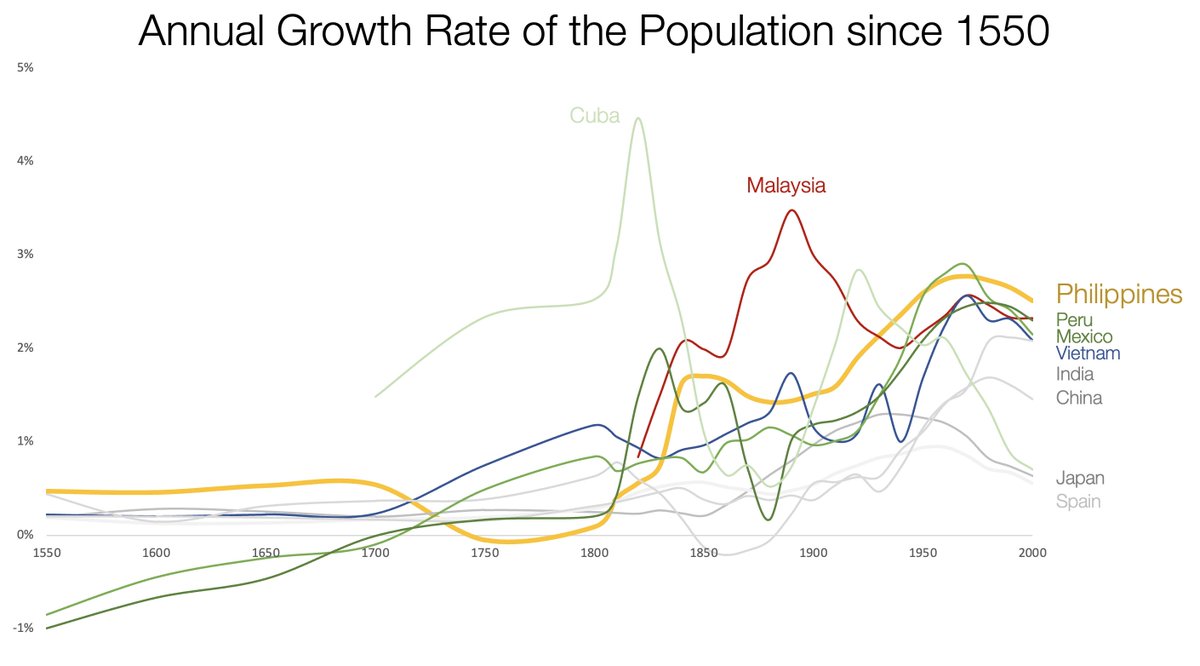
Other Spanish colonies like Mexico, Peru, or Cuba were all growing faster than the Philippines until the 1850s, and the Philippines really started standing out in the 2nd half of the 20th century
So it's unlikely to only be Catholicism pushed by Spanish colonizers. What then?
So it's unlikely to only be Catholicism pushed by Spanish colonizers. What then?
Let's look at some development factors.
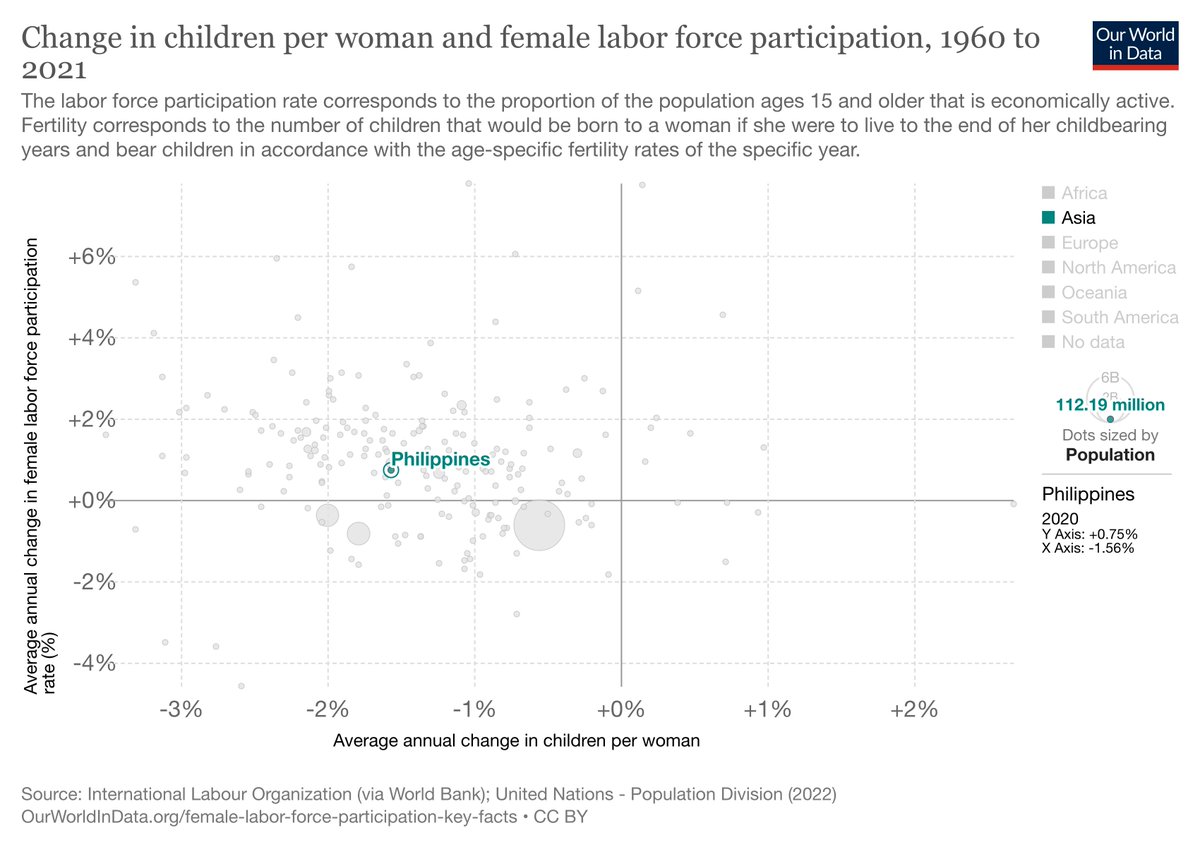
As Filipino women join the workforce, their fertility goes down normally (it's in the middle of the pack for a certain level of increase in female labor)
As Filipino women join the workforce, their fertility goes down normally (it's in the middle of the pack for a certain level of increase in female labor)
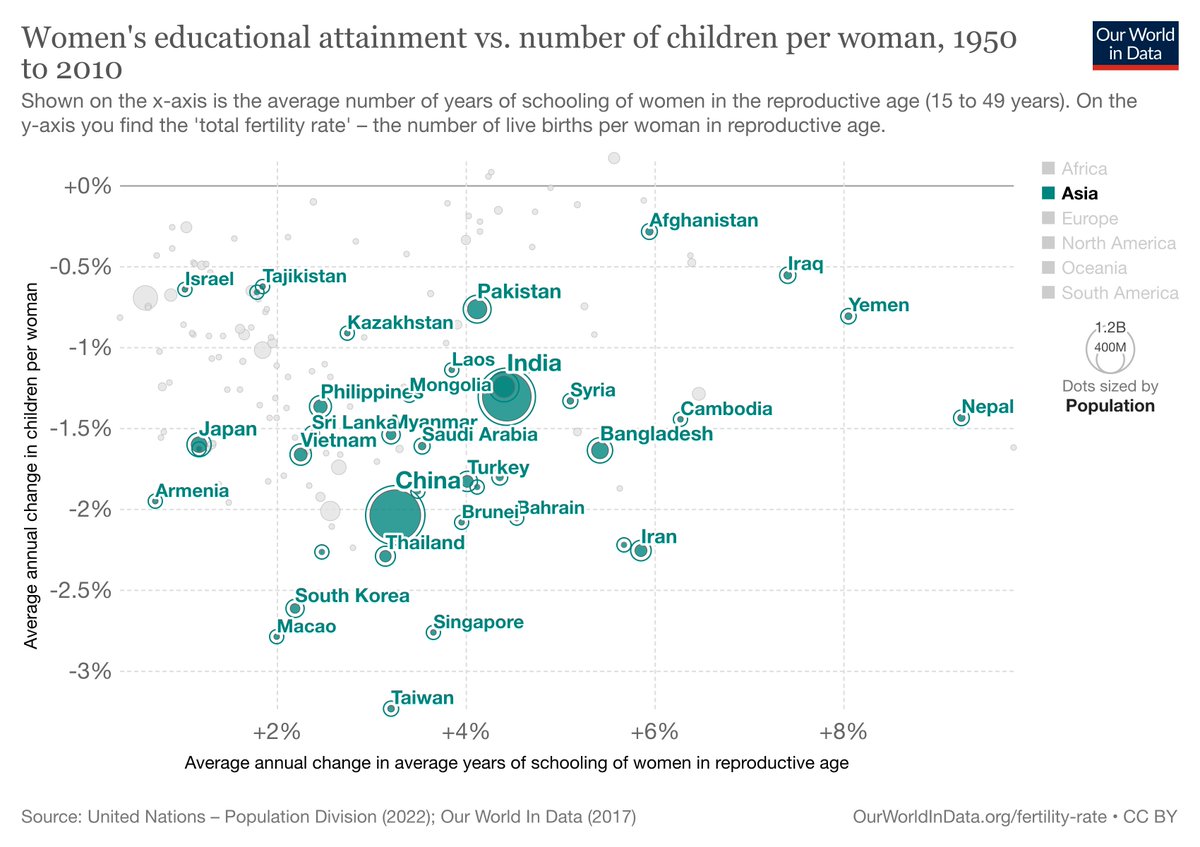
As they study more, their fertility also goes down accordingly (not faster or more slowly than comparable countries)
As child mortality goes down, Filipino women reduce their fertility accordingly (it's in the middle of the pack for a certain level of child mortality)
As the country develops further, it will reduce its fertility
As the country develops further, it will reduce its fertility
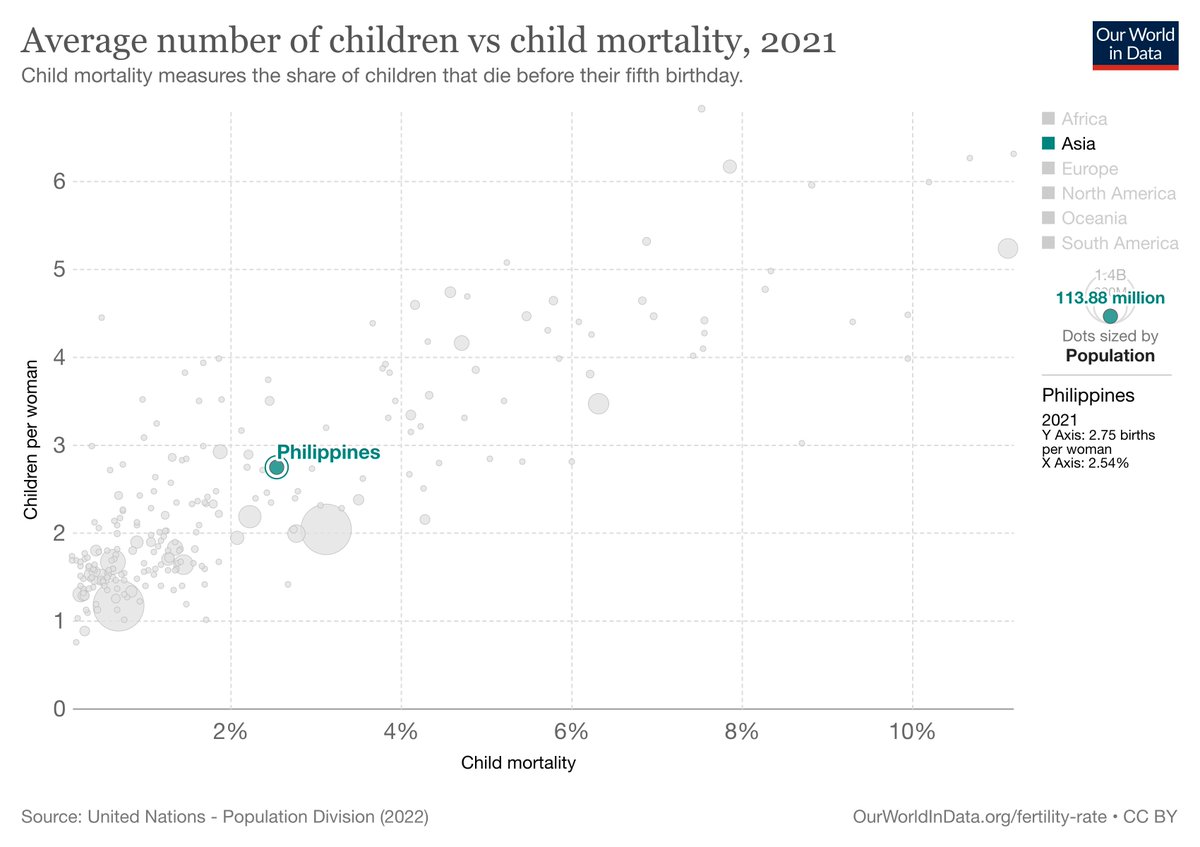
As contraceptives become more available, fertility goes down accordingly (not more or less than in other comparable countries)
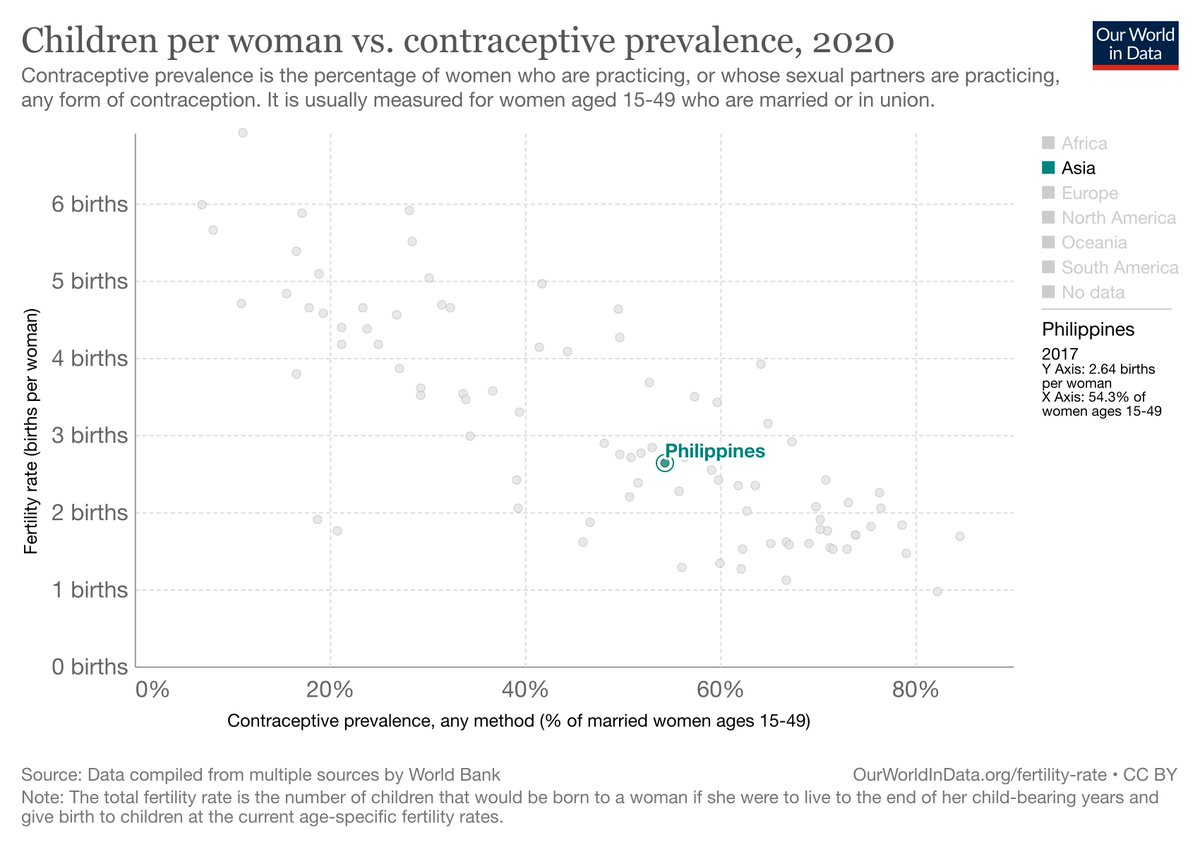
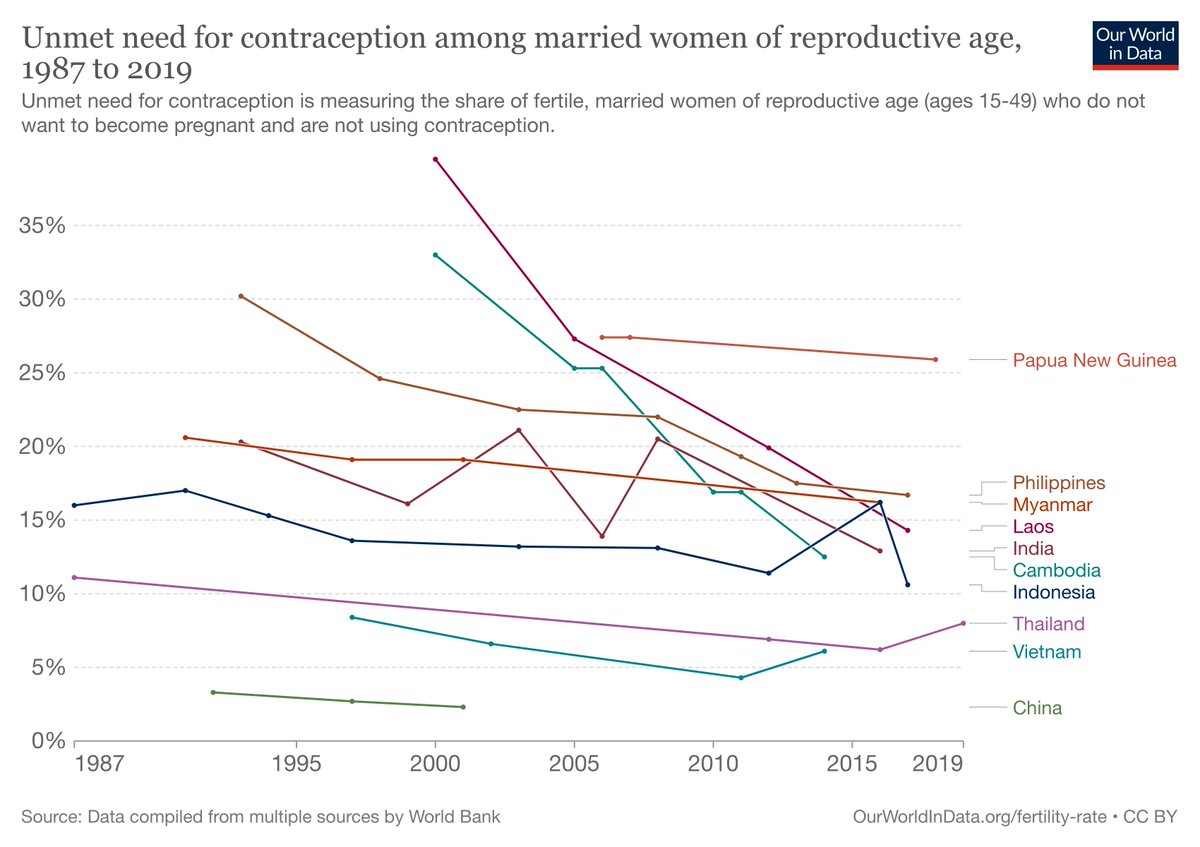
That said, contraceptives are less available than in neighboring countries. Maybe this is one of the ways that religion translated into present-day Philippines?
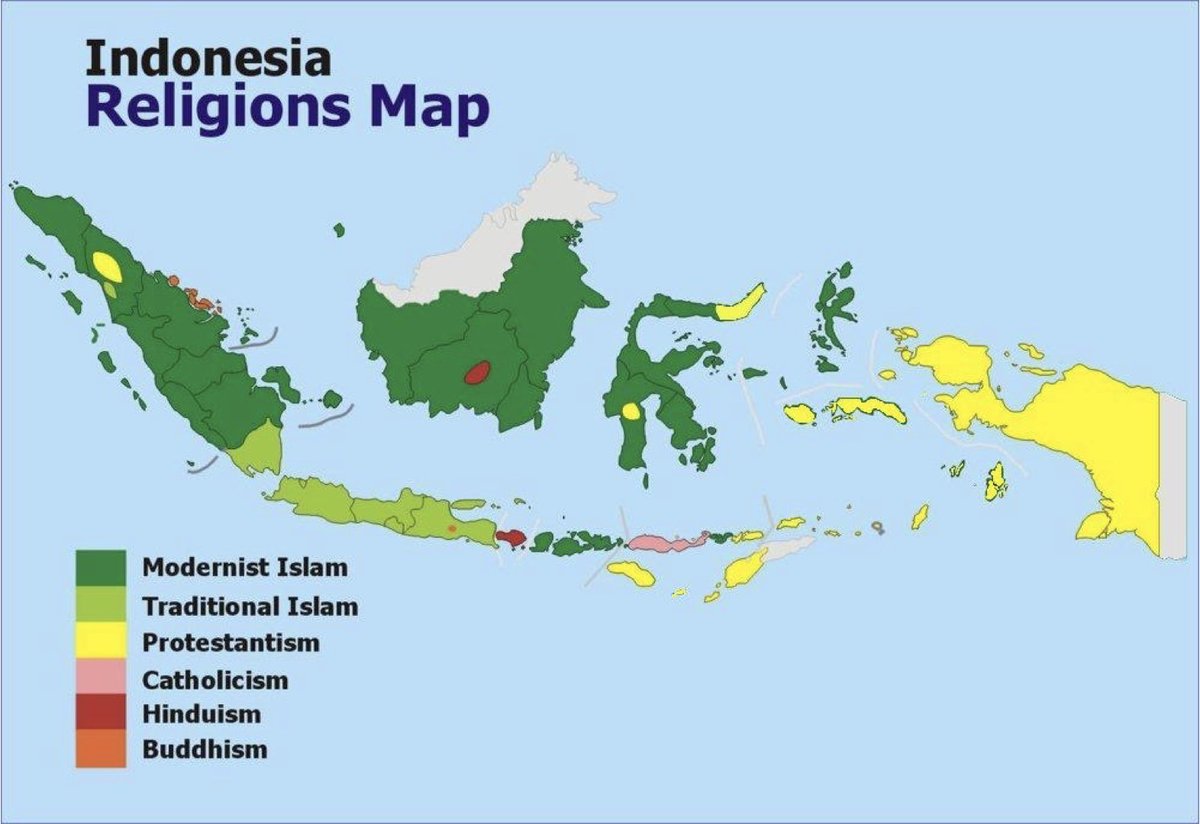
Interestingly, neighboring Indonesia has many religions, and it turns out that the one majority-Catholic island has the highest female fertility.
So maybe it explains a bit of growth additional growth over the last few decades, but not over 100M of ppl
So maybe it explains a bit of growth additional growth over the last few decades, but not over 100M of ppl
Is there any other factor?
Let's zoom into Luzon, the big island in the north. Where do people live?
Every plain is full of ppl, with the highest density close to fresh water (like Manila, the red blob between the bay and the lake)
Let's zoom into Luzon, the big island in the north. Where do people live?
Every plain is full of ppl, with the highest density close to fresh water (like Manila, the red blob between the bay and the lake)
You can see this is broadly true for all of the Philippines
But there's also another factor: volcanoes!
Manila is surrounded by a dozen of them. Which make it ultrafertile.
The island of Luzon (below) produces the vast majority of 🇵🇭 rice thx to☀️+🌧️+🌋+plains, all perfect for growing rice, which is highly caloric
Manila is surrounded by a dozen of them. Which make it ultrafertile.
The island of Luzon (below) produces the vast majority of 🇵🇭 rice thx to☀️+🌧️+🌋+plains, all perfect for growing rice, which is highly caloric
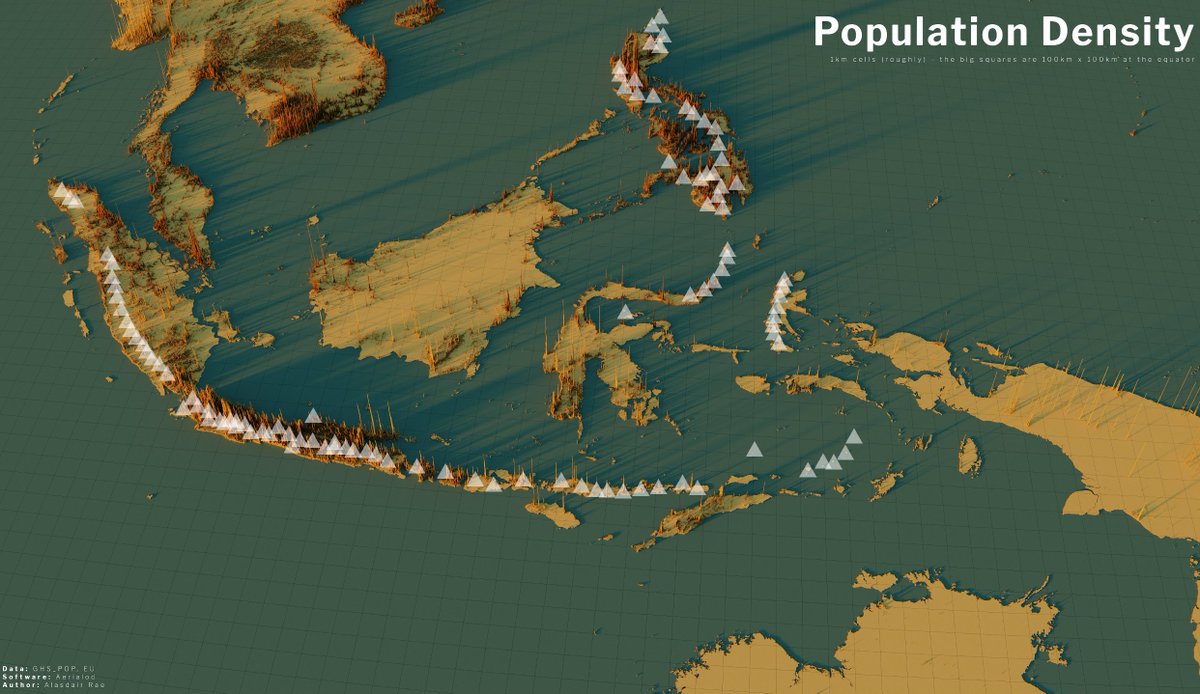
In fact, all the Philippines are very volcanic—like many Indonesian islands—which means hyperfertile:
• Volcanic soil is very fertile
• It's recent soil, so it hasn't been leached by rains
• Ash increases fertility
• Volcanic soil is very fertile
• It's recent soil, so it hasn't been leached by rains
• Ash increases fertility
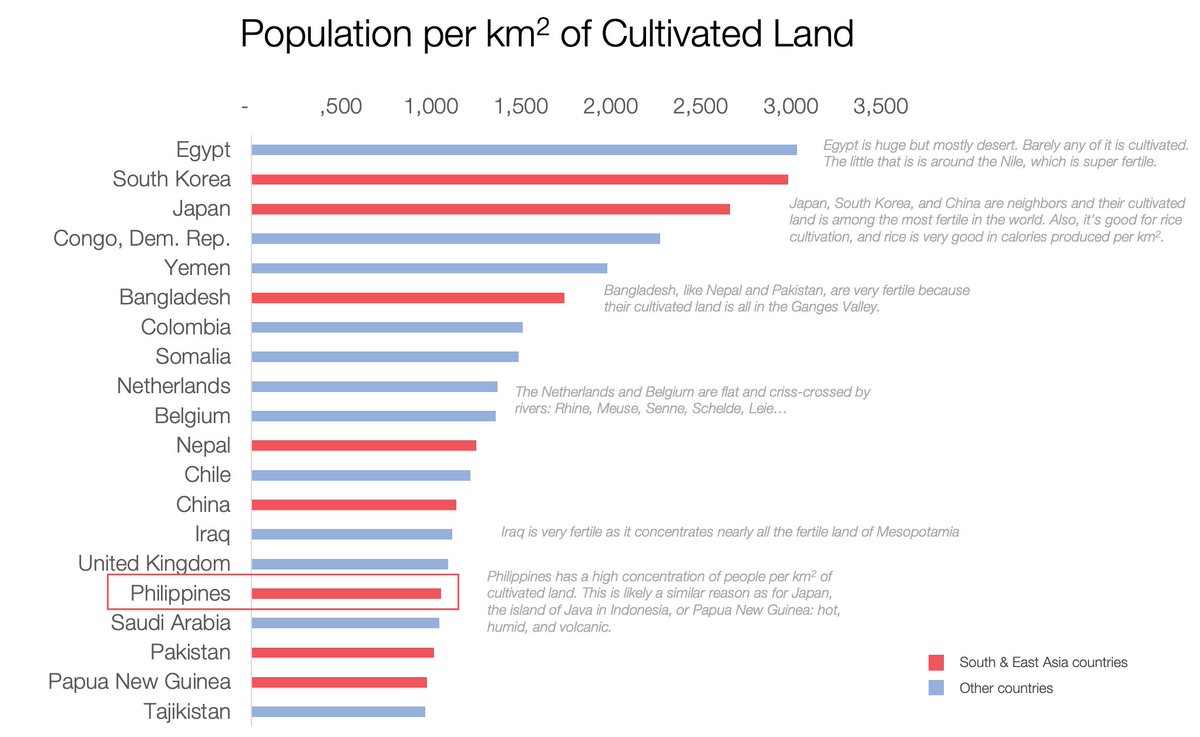
It's one of the reasons why the relatively little arable land that the Philippines has is extremely fertile. The Philippines are the 16th country in the world with most ppl per km2 of cultivated land. The little land they have is very fertile
And the latitude is quite good: Like the Java island, not too close to the equator to avoid leaching from rain, but close enough to have lots of 🌧️ and ☀️
https://twitter.com/tomaspueyo/status/1617988037656588288?lang=en
So what does this suggest? Why is the Philippines population so high?
1. 🇪🇸🇺🇸 occupation are unlikely causes of female fertility: growth is recent, while other Spanish colonies grew more slowly
2. ✝️ might play a role, likely small and recent
1. 🇪🇸🇺🇸 occupation are unlikely causes of female fertility: growth is recent, while other Spanish colonies grew more slowly
2. ✝️ might play a role, likely small and recent
3. Development also has a role: As the 🇵🇭 grows, female fertility will likely continue dropping
4. It seems like the biggest driver is its geography:
☀️+🌧️+🌋+fresh water+great plains=🌱=🧑🤝🧑
5. These are also perfect conditions for rice, highly caloric
4. It seems like the biggest driver is its geography:
☀️+🌧️+🌋+fresh water+great plains=🌱=🧑🤝🧑
5. These are also perfect conditions for rice, highly caloric
What am I missing? I couldn't find anything exhaustive, so I just looked into it myself. I might have missed something. Do you have other things to add? Great resources that cover all of this? Share them here!
Follow me for more of these, ~1/week.
I'll be writing more in depth about this and other countries soon in my newsletter. Subscribe to receive it, it's free
unchartedterritories.tomaspueyo.com
I'll be writing more in depth about this and other countries soon in my newsletter. Subscribe to receive it, it's free
unchartedterritories.tomaspueyo.com
• • •
Missing some Tweet in this thread? You can try to
force a refresh