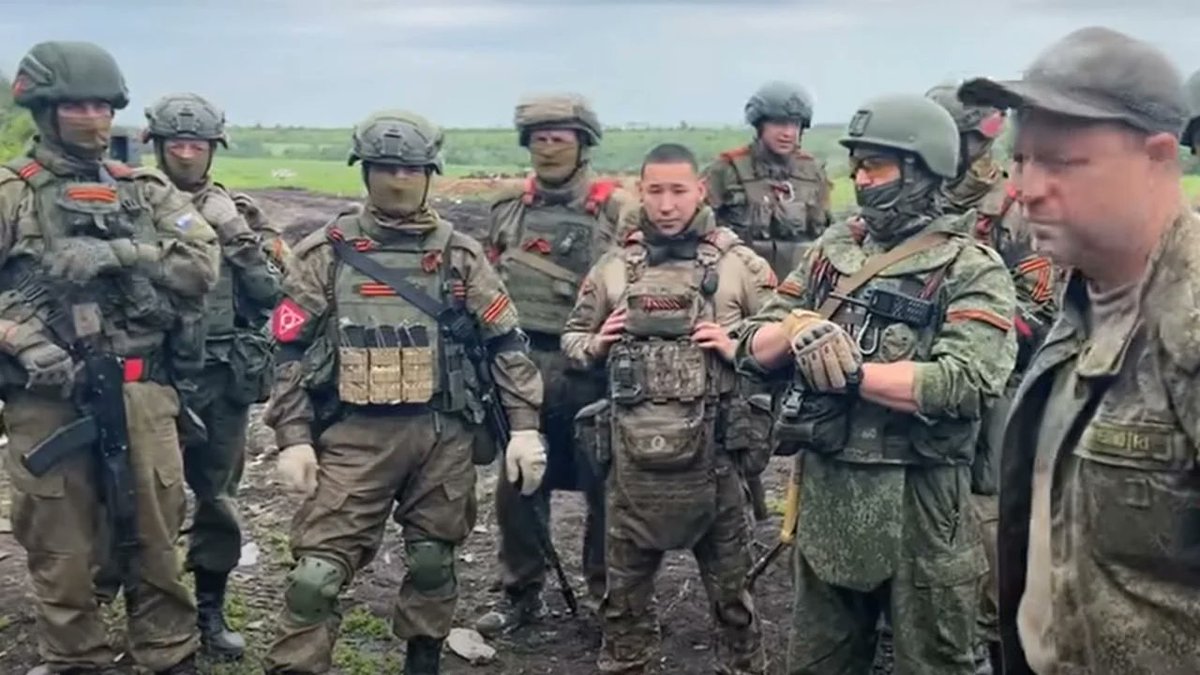
1/ Soldiers returning home to Russia after fighting in Ukraine are reportedly responsible for an increasing number of violent incidents, including fights and shootings. However, the Russian courts are being very lenient towards offenders, dismaying and frustrating civilians. ⬇️
2/ The independent Russian news outlet 'We can explain' ('MO') reports on what it calls 'special military operation syndrome' – the rising incidence of violence committed by returning soldiers. It's likely that many are suffering from untreated PTSD.
3/ Many incidents have been reported but have only resulted in light punishments from the courts, including:
4/ 🔴 "60,000 rubles ($803) for assaulting a member of the National Guard. The other day a Voronezh court passed a very mild sentence – a military man who hit and insulted a guardsman several times got away with a fine. The incident took place in a Voronezh hotel in September.
5/ The Russian Federal Guard Service was called by the staff, as the guest was behaving inappropriately. It came down to a fight, and the law enforcers made a concerted effort to get the troublemaker off.
6/ 🔴 In July 2022, a man threatened passers-by with a shotgun in Elektrostal, near Moscow. He said he had recently arrived from Ukraine and "they shot him there".
7/ 🔴 September 2022: In Tula, a military man beat up a pizzeria owner with a chair. The reason for the attack, according to the hooligan, was that he was not shown "enough respect" at the pizzeria.
8/ 🔴 In January 2023, a man in camouflage came with a Kalashnikov assault rifle to a nightclub and pointed the weapon at people standing on the stairs.
9/ 🔴 The loudest and most tragic event involving a serviceman returned from Ukraine took place in Kostroma. On November 5, Stanislav Ionkin, 23, who had been wounded, fired a flare gun at the Polygon nightclub (the incident was not captured on video).
10/ A fire broke out in the premises, killing 13 people."
MO notes that there have also been many incidents of weapons smuggling – Russia has strict gun control laws which returning soldiers have repeatedly violated.
11/ Since February 2022, it reports, "at least 42 Russian servicemen have been put on trial for misappropriation, storage, transportation and carrying of weapons, ammunition and explosive devices".
12/ There has also been a murder case: "in Udmurtia, according to investigators, in the course of a drinking bout in a garage, a comrade who had returned from the war shot his friend in the eye and then strangled him with a wire. The trial began on 9 February." /end
1/ Russian casualty ratios in Ukraine are in places as high as 25 to every 1 Ukrainian defender, according to the UK Defence Secretary John Healey. A newly published account by warblogger 'Bch3' of the lives of Russian convict stormtroopers helps to illustrate why. ⬇️
2/ "Different people. Different faces. Someone with a hoarse convict's voice, twisted by life like a Karelian birch; another simple, without his own opinion, just tagging along with fate. Mice with petty souls and predatory wolves; team players and loners.
3/ They're told — "You know cold and hunger, so go ahead, you are more prepared by life to survive, not to go crazy during a bloody assault." On all fronts, they are at the forefront of the attack, they do not receive medals and orders, those who follow.
1/ Simply travelling to and from the front line in Ukraine is a deadly task, due to the wide-ranging presence of drones. Many soldiers are killed before they even get near a frontline position. An account from a Russian warblogger highlights the work of "killzone runners". ⬇️
2/ 'Voenkor Kotenok' writes:
"On the front lines, they're often called "runners." They're supposedly special forces/semi-combatants on errands. They're supposedly as nimble as sperm, evading even drones."
3/ "The attitude is somewhat dismissive, as if they're not second-class citizens, but rather just helpers. They say there are "tough guys," assault troops, a military elite (and there is one, right?), and then there are the runners, the lackeys. You get the idea.
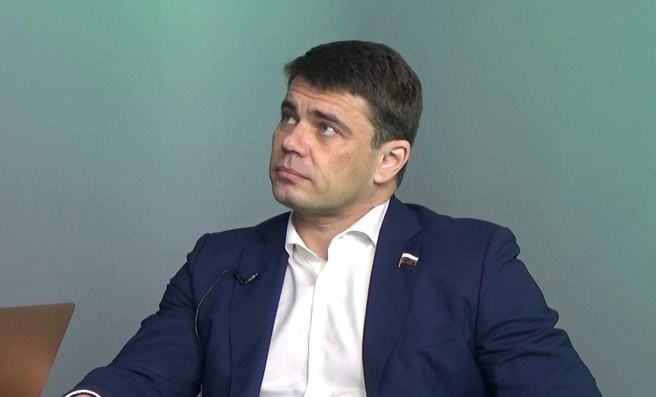
1/ Telegram will not be restored in Russia, and tighter restrictions will be imposed on mobile phone ownership, says Sergey Boyarsky, head of the State Duma IT Committee. He cites scammers, pro-Ukrainian sabotage, and drone attacks as the reasons behind these moves. ⬇️
2/ In a wide-ranging interview with the St Petersburg online newspaper Fontanka, Boyarsky has explained the thinking behind the government's new restrictions on Telegram. He says that "Telegram doesn't comply with Russian Federation law, and hasn't done so for many years."
3/ "The requirements are simple, basic: localise user data within the Russian Federation, remove prohibited information (extremism, terrorism), and cooperate with law enforcement agencies to solve serious crimes (for example, the Crocus [terroist attack] case)."
1/ While Telegram is only part of a wider complex of communications systems used in the Russian army, it comprises a keystone without which the wider system falls apart. A commentary by a Russian warblogger explains the Russian army's communications ecosystem in detail. ⬇️
2/ Responding to comments earlier this week by presidential spokesman Dmitry Peskov, 'Vault No. 8' provides a "briefing note" on the role of Telegram in the Russian military communications ecosystem.
3/ "A typical motorised rifle regiment (today, the basic tactical unit—the military unit that holds the front line) utilises several tools to manage its troops:
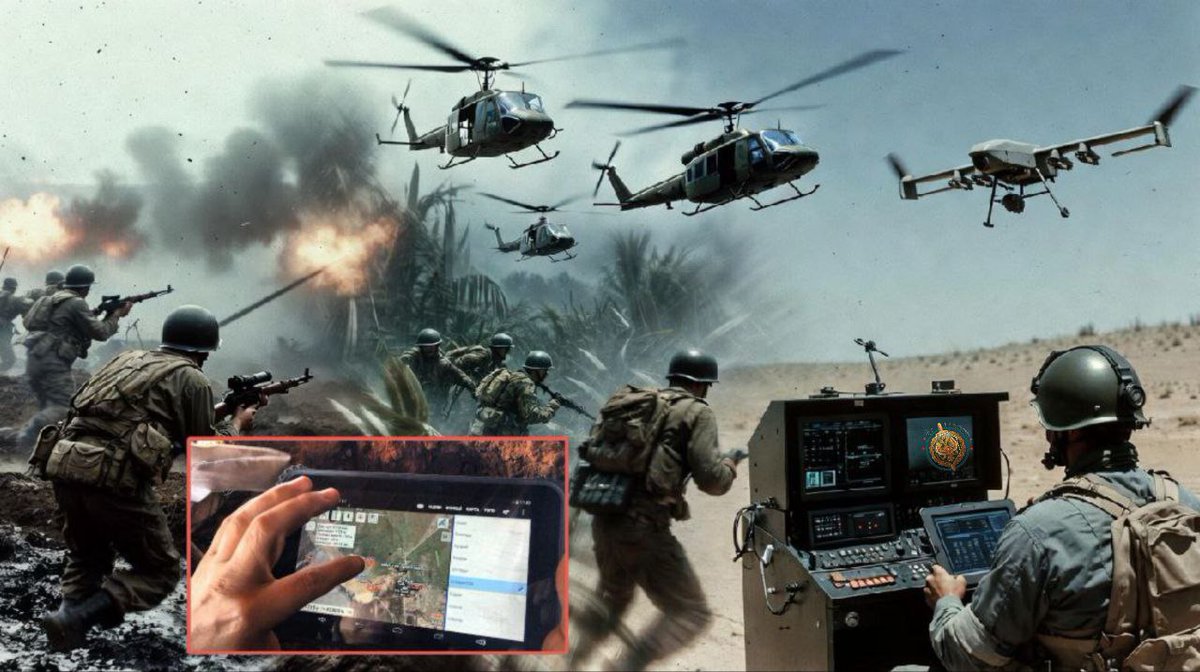
1/ While the Russia army struggles with the impact of Telegram and Discord being throttled or blocked by the government, Ukraine has long used a highly sophisticated indigenously developed digital command and control system. Russian warbloggers have highlighted the contrast. ⬇️
2/ Detailed accounts such as the one in the thread below illustrate how Telegram – a commercial app run from Dubai – has been a central tool in the Russian kill chain, allowing for rapid responses to Ukrainian actions. Discord was also heavily used.
3/ Although this approach has been effective, it has now deliberately been rendered unusable by the Russian government. 'Two Majors' compares how Ukraine has approached digital command and control, and never made itself reliant on Telegram:
1/ The Russian army is reportedly forcing its soldiers to abandon Telegram and move over to the government-authorised MAX app. A Russian warblogger explains why the transition will prove to be very difficult. ⬇️
"Some challenges of switching from Telegram to MAX for our military personnel.
Telegram doesn't require a Russian number to be linked, making it difficult for adversaries to [de]anonymise users."
3/ "Max requires not only a Russian number but also real data (according to the messenger's rules), which enemy electronic warfare systems will immediately receive (although a Russian number alone is sufficient for the enemy to identify a user).