

Lots of people asking "what is going on?" in wake of chemical disasters in #EastPalestine & #Kissimmee.
Sadly, these incidents happen *every 3 days* on average in the US, according to EPA data. But they can be prevented. 🧵
Sadly, these incidents happen *every 3 days* on average in the US, according to EPA data. But they can be prevented. 🧵
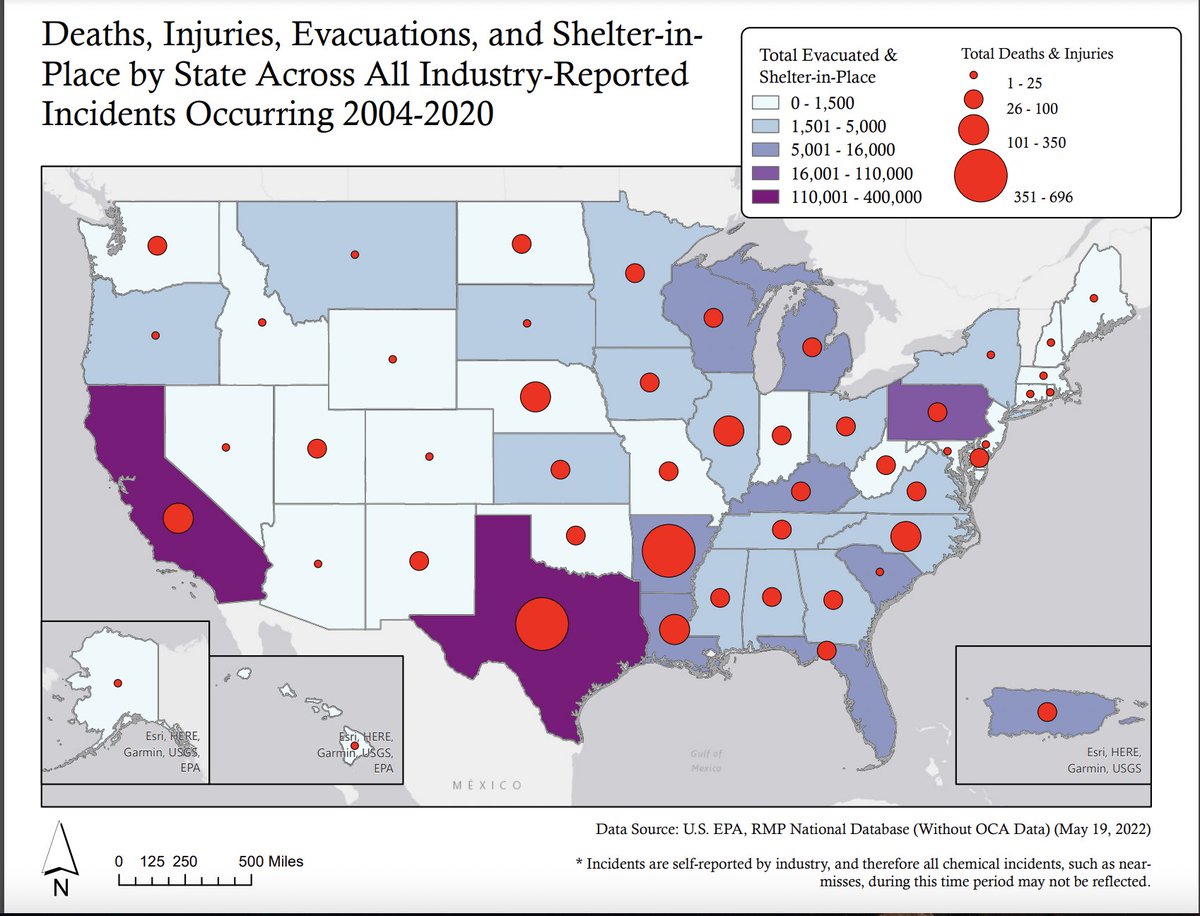
Preventchemicaldisasters.org keeps a running inventory of chemical fires, toxic releases and explosions that occur at facilities that use or store hazardous chemicals, & are regulated by the EPA's Risk Management Program (RMP).
The RMP rule is designed to #preventchemicaldisasters - but it was weakened by the Trump administration. A coalition of community members, unions, nurses, env. orgs & elected officials has been urging the EPA to make this rule as strong as possible.
Cory Booker and 48 other members of Congress recently called on EPA to strengthen chemical safety rules beyond what is now proposed, citing a major disaster in New Jersey last year.
https://twitter.com/SenBooker/status/1618331107673661440?s=20
Bottom line: fewer chemical disasters would happen if all hazardous facilities were required to adopt safer chemicals and technology.
Climate change is also putting hazardous facilities at risk. Facilities should be required to assess climate risks and prepare their facilities to withstand extreme weather, e.g. by installing backup power. @UCSUSA @CPRBlog @Earthjustice progressivereform.org/publications/p…
Workers need to be empowered to anonymously report unsafe practices and have the authority to stop working when their safety- and the safety of the surrounding community- is at risk.
And communities need information about the hazardous chemicals stored near them, as well as how to respond in case of an emergency, in multiple languages. This data should be publicly available.
Learn more on our website: comingcleaninc.org/projects/chemi…
• • •
Missing some Tweet in this thread? You can try to
force a refresh




