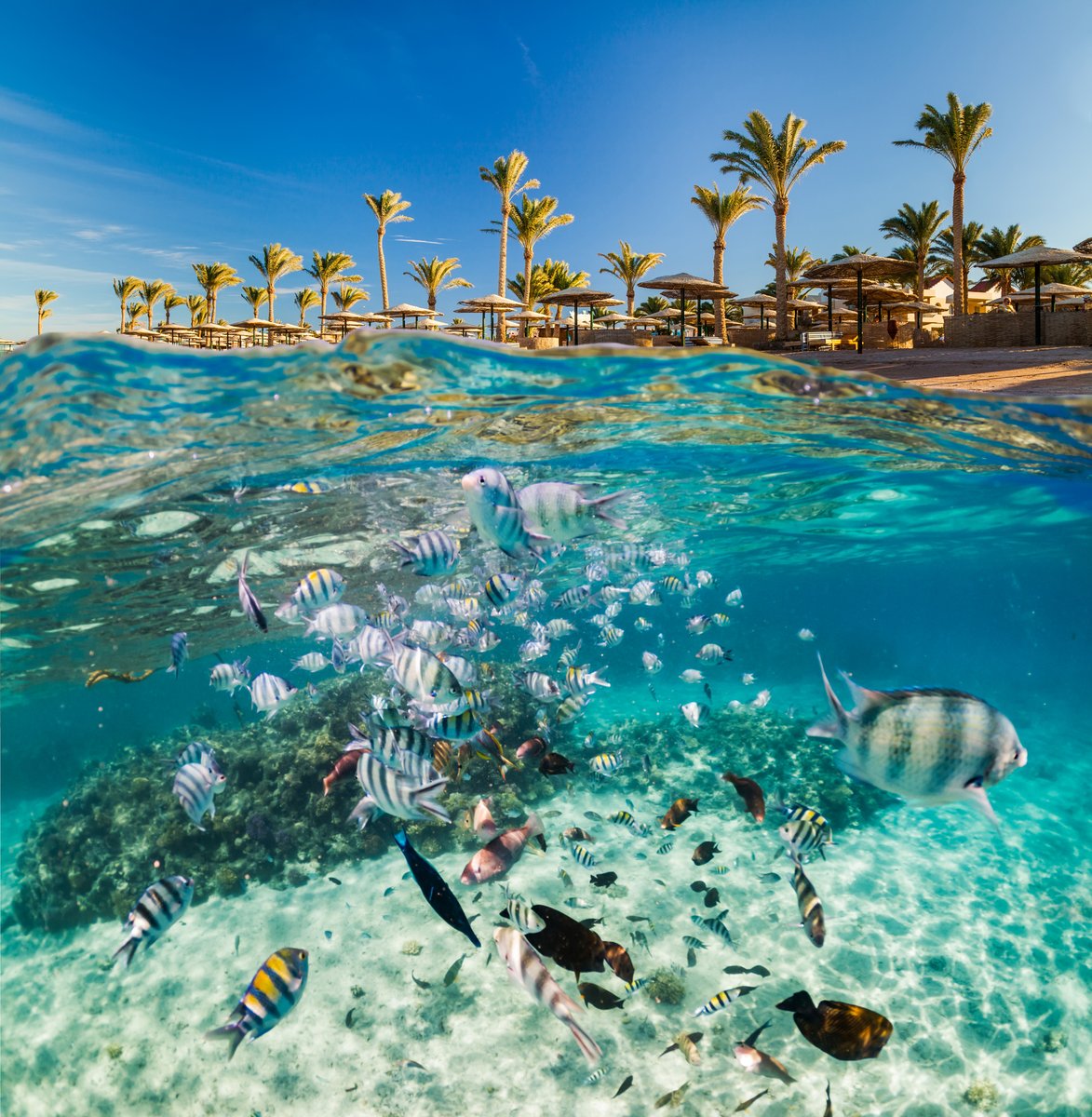
Why are tropical waters so transparent?
Because they're dead.
This is connected to why some scientists fear global warming could make Europe *colder*
And freeze 80% of all humans above the 60th parallel:
Because they're dead.
This is connected to why some scientists fear global warming could make Europe *colder*
And freeze 80% of all humans above the 60th parallel:


First: Dead? How can tropical waters be dead? They're teeming with life! With corals, fish!
But that's just on the coast. In the middle of the ocean, they're dead. Why do you think the water is transparent? Because it has nothing swimming in it.
But that's just on the coast. In the middle of the ocean, they're dead. Why do you think the water is transparent? Because it has nothing swimming in it.
Transparent waters don't have much phytoplankton (the plants of the ocean) nor zooplankton (tiny animals who eat the phytoplankton), both of which are the bottom of the food chain in the ocean. No plankton, no animals.

This is a map of chlorophyll in the sea➡️where there's phytoplankton
What do you notice?
• Around the equator, it's dark blue. Desertic! No phytoplankton!
• A bit more color close to the coasts: That's what you see in tropical beaches
• But the life is far north or south!
What do you notice?
• Around the equator, it's dark blue. Desertic! No phytoplankton!
• A bit more color close to the coasts: That's what you see in tropical beaches
• But the life is far north or south!

Open oceans produce ~125g of biological mass per m2 and year. That's about the same as a normal desert
This = This
This = This


Have you seen documentaries about the sea? Where's all the hunting action? Always in cold regions. This is why: The food is in the north (or south)
Phytoplankton➡️Zooplankton➡️small fish➡️big fish
Why?
Phytoplankton➡️Zooplankton➡️small fish➡️big fish
Why?


Phytoplankton is like plants. It needs sun and nutrients to grow. In the equator, you have plenty of sun... but no nutrients!
Why?
Nutrients slowly fall to the bottom of the sea. Currents from the bottom bring them back up. But around the equator, you don't have them. Why?
Why?
Nutrients slowly fall to the bottom of the sea. Currents from the bottom bring them back up. But around the equator, you don't have them. Why?
Because of the heat!
The sun in the equator heats the top of the ocean.
But hot water is denser than cold water: Heat means molecules have more energy, so they hit each other, and occupy more space. Hot things weight the same but take more volume➡️lighter
The sun in the equator heats the top of the ocean.
But hot water is denser than cold water: Heat means molecules have more energy, so they hit each other, and occupy more space. Hot things weight the same but take more volume➡️lighter
So surface water is hot➡️lighter➡️tries to go up
Deep water is cold➡️denser➡️falls down
They don't mix
This is called thermocline
Notice how cold water tries to go down and hot water remains at the top:
Deep water is cold➡️denser➡️falls down
They don't mix
This is called thermocline
Notice how cold water tries to go down and hot water remains at the top:
Because these waters don't mix, nutrients fall to the bottom of the ocean and don't go back up.
No nutrients➡️no phytoplankton➡️no animals
This doesn't happen in the north. Why?
No nutrients➡️no phytoplankton➡️no animals
This doesn't happen in the north. Why?

In the north, there's less sun➡️water is colder at the top, nearly at the same temperature as in the bottom. There's no temperature difference (no "thermocline"), so water from the bottom can go up and bring nutrients with it. Phytoplankton blooms and feeds all sea animals.

This is why, for example, in the Baltic Sea you have "phytoplankton blooms", which turn the sea green.
This makes the Baltic a sea teeming with life and fish➡️food for ppl
This makes the Baltic a sea teeming with life and fish➡️food for ppl

But there's also another reason that makes the Baltic and neighboring areas welcoming: the Gulf Stream
Hot water goes up from the Caribbean towards Europe, making Europe warmer than it should be at that latitude
Hot water goes up from the Caribbean towards Europe, making Europe warmer than it should be at that latitude
And that's why nearly all humans who live above the 60th parallel live in Northern Europe (and esp the Baltic): Iceland, Sweden, Norway, St Petersburg, and most of all, Finland (home to 1/3 ppl who live north of the 60th parallel)

Now we know why transparent, tropical waters are desertic, and why 75% of northerners live in this corner of the world. One question left: Why are scientists concerned that global warming might make Europe colder?
By interrupting the Gulf Stream.
By interrupting the Gulf Stream.
There's something I didn't tell you yet
Hot water goes north and becomes cold. That makes it easier to mix. But it doesn't *force* it to mix. In fact, it does.
There are massive ocean convection currents that dive into the depths of the sea in huge "chimneys".
Why?
Hot water goes north and becomes cold. That makes it easier to mix. But it doesn't *force* it to mix. In fact, it does.
There are massive ocean convection currents that dive into the depths of the sea in huge "chimneys".
Why?

Salt.
In the equator, heat evaporates water from the top of the ocean. Some of that water rains back there, but a lot rains on continents, reducing the water vs salt. This hot water is salty.
In the equator, heat evaporates water from the top of the ocean. Some of that water rains back there, but a lot rains on continents, reducing the water vs salt. This hot water is salty.

In the north, there's little evaporation, but lots of rain, rivers, & ice melting. That dilutes the salt in the water
What's heavier: normal water, or normal water plus added salt?
The one with added salt, right?
So with equal temperatures, the saltier water, heavier, will fall
What's heavier: normal water, or normal water plus added salt?
The one with added salt, right?
So with equal temperatures, the saltier water, heavier, will fall

What if all of this stops?
What if melting the ice caps means a ton more cold water dropped in the ocean before it reaches Europe?
What if northern water becomes warmer?
With less fresh water in the arctic, will the chimneys still exist there?
What if melting the ice caps means a ton more cold water dropped in the ocean before it reaches Europe?
What if northern water becomes warmer?
With less fresh water in the arctic, will the chimneys still exist there?
Today, winds in the arctic hit mostly ice. But if the ice cap disappears, they will hit the sea, creating stronger currents. Will they affect the Gulf Stream?
We don't know.
Do we want to find out?
We don't know.
Do we want to find out?
https://twitter.com/galka_max/status/741684681007988736/video/1
Let me know if I missed something. Otherwise, hope this was interesting! If it was, follow me for more. One of these a week or so.
Or better, join 50k ppl and sign up for the newsletter to not miss any of my articles. It's free!
unchartedterritories.tomaspueyo.com/subscribe
Or better, join 50k ppl and sign up for the newsletter to not miss any of my articles. It's free!
unchartedterritories.tomaspueyo.com/subscribe
• • •
Missing some Tweet in this thread? You can try to
force a refresh