AFRICAN & BLACK HISTORY Profile picture
Mar 8, 2023 11 tweets 5 min read Read on X
“fuck it, i’ll do it!” —black women

Black women are routinely erased from public memory and historical narratives of resistance.

Black women powered the civil rights movement, but rarely became its stars. #InternationalWomensDay

A THREAD!
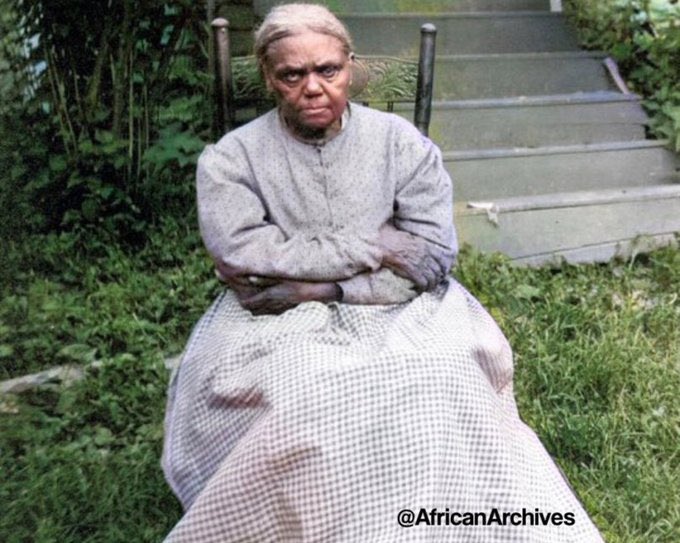
Aunt Polly Jackson, was an escaped slave who worked as an agent on the Underground Railroad helping others escape.

She was known for fighting off slave catchers with a butcher knife and a kettle of boiling water
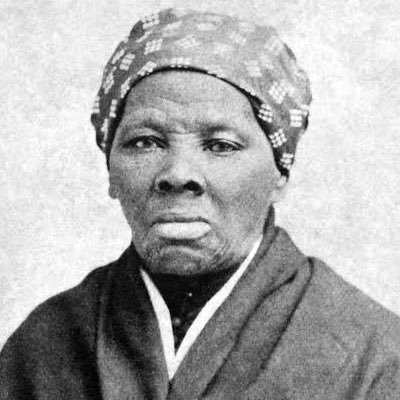
Harriet Tubman, the woman who escaped slavery then fought and freed hundreds of slaves.

She reminded us that bravery and refusal to accept injustice can change history.
Sojourner Truth was an evangelist, abolitionist, women’s rights activist and author who was born into slavery before escaping to freedom in 1826. After gaining her freedom, Truth preached about abolitionism and equal rights for all
A statue of La Mûlatresse Solitude, who in 1802, helpled lead a slave revolt while EIGHT Months pregnant in Guadeloupe.

She became a martyr and symbol for all women and mothers who against all odds defended the ideals of freedom and equality.
Queen Nanny Of The Maroons: Ashanti Woman who Fought And Freed Over 1,000 Enslaved Africans In Jamaica.
By the early 70s, women made up the majority of members in the US Black Panther Party.
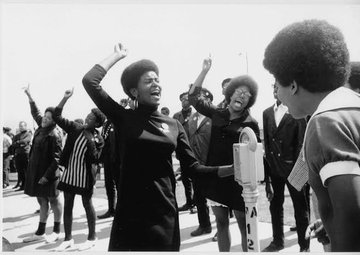
Mae Mallory was an activist during the Civil Rights Movement and a leader in the Black Power movement. Mallory was most-known as an advocate of following desegregation and Black armed self-defense.
Claudia Jones; Journalist and activist. Author of the seminal piece 'Ending the Neglect of Black Women' and original founder of Notting Hill Carnival. Founder of Britain's first major newsletter, the West Indian Gazette
Daisy Bates, civil rights activist and newspaper publisher. Through her newspaper, Bates documented the battle to end segregation in Arkansas
If you love my content, You can support my history page/project here through donations/tips to keep up on: ko-fi.com/africanarchives

• • •

Missing some Tweet in this thread? You can try to force a refresh

 

Keep Current with AFRICAN & BLACK HISTORY

AFRICAN & BLACK HISTORY Profile picture

Stay in touch and get notified when new unrolls are available from this author!

Read all threads

This Thread may be Removed Anytime!

PDF

Twitter may remove this content at anytime! Save it as PDF for later use!

Try unrolling a thread yourself!

how to unroll video
  1. Follow @ThreadReaderApp to mention us!

  2. From a Twitter thread mention us with a keyword "unroll"
@threadreaderapp unroll

Practice here first or read more on our help page!

More from @AfricanArchives

Dec 31
In 1780, Paul Cuffee, his brother & 5 other Black men petitioned the Massachusetts legislature demanding the right to vote.

He won free black men the right to vote in Massachusetts on the basis of "No Taxation Without Representation."

THREAD Image
Image
Paul Cuffee was born Paul Slocum on Jan. 17, 1759, Cuttyhunk Island, Massachusetts, to Kofi Slocum, a farmer & freed slave, and Ruth Moses, a native American of the Wampanog nation.
In 1766 he & his brother John inherited a 116 acre farm from their father in Buzzard's Bay, Massachusetts, near Dartmouth. He changed his surname to Kofi, spelled "Cuffee." The name Kofi suggests that his father came from the Ashanti or Ewe people of Ghana.
Read 15 tweets
Dec 27
Did you know Singer, dancer and activist Josephine Baker was also a spy in World War 2 for the French Air Force!

She found fame and freedom after fleeing racism in America and led a double life informing on the Nazis.

A THREAD Image
A talented dancer and singer, in 1927, Baker caused a sensation by performing at the Folies Bergère in Paris in a skirt made from bananas. Image
In 1934 she also became the first black woman to star in a major motion picture. Image
Image
Read 13 tweets
Dec 25
The Baptist War: The Christmas Rebellion.

On this day in 1831, Over 60,000 enslaved Jamaicans, led by one man, Baptist preacher, Samuel Sharpe, went on to carry out one of the largest Slave Rebellions in West Indian history.

A THREAD Image
Image
Image
So who was the Baptist preacher, Samuel Sharpe?

He was a baptist deacon and the leader of the native Baptists in Montego Bay. Also he was an avid follower of the growing abolitionist movement in London. Image
He led a plan for a peaceful general strike to start on Christmas Day in 1831, with the enslaved jamaicans demanding: —more freedom and
—a working wage
and refusing to work unless their demands were met by the state owners and managers.
Read 10 tweets
Dec 23
The Banyole of the ancient kingdom Of Uganda practiced and perfected C-Section long before the Europeans.

While Europeans mainly concentrated on saving the baby, the ugandans were performing the operation successfully saving both.

A THREAD Image
Caesarean section was considered a life-threatening procedure in England that was only to be undertaken in the direst of circumstances and facing the decision on whether to save the life of the mother or baby.
The first successful C-section done in Africa ("success" defined as both surviving) is usually credited to Irish surgeon James Barry (Margaret Ann Bulkley), who performed the operation in Cape Town, South Africa. Image
Read 15 tweets
Dec 18
In 1781, over 100 enslaved Africans were thrown overboard and drowned so that the slavers could cash in on the insurance of those enslaved.

The Zong Massacre,

THREAD Image
On September 6, 1781, the slave ship Zong sailed from Africa with around 442 enslaved Africans. Back then, slaves were a valuable ‘commodity’ so they often captured more than the ship could handle to maximize profits.
Ten weeks later, around November 1781, the Zong arrived at Tobago, then proceeded toward St. Elizabeth, but deviated from its route near Haiti. At that stage, water shortages, illness, and fatalities among the crew, combined with poor leadership decisions, caused chaos.
Read 8 tweets
Dec 6
On this day in 1865, the 13th Amendment of the United States Constitution is ratified, abolishing slavery.

This picture is 25 years after the end of slavery.

How Slavery continued after the 13th amendment ‘abolished slavery’

A THREAD Image
In 1866, a year after the amendment was ratified, Alabama, Texas, Louisiana, Arkansas, Georgia, Mississippi, Florida, Tennessee, and South Carolina began to lease out convicts for labor.
This made the business of arresting black people very lucrative, thus hundreds of white men were hired by these states as police officers.

Their primary responsibility being to search out and arrest black peoples who were in violation of ‘Black Codes’
Read 15 tweets

Did Thread Reader help you today?

Support us! We are indie developers!


This site is made by just two indie developers on a laptop doing marketing, support and development! Read more about the story.

Become a Premium Member ($3/month or $30/year) and get exclusive features!

Become Premium

Don't want to be a Premium member but still want to support us?

Make a small donation by buying us coffee ($5) or help with server cost ($10)

Donate via Paypal

Or Donate anonymously using crypto!

Ethereum

0xfe58350B80634f60Fa6Dc149a72b4DFbc17D341E copy

Bitcoin

3ATGMxNzCUFzxpMCHL5sWSt4DVtS8UqXpi copy

Thank you for your support!

Follow Us!

:(