Ilya Shabanov Profile picture
Mar 10 β€’ 8 tweets β€’ 3 min read
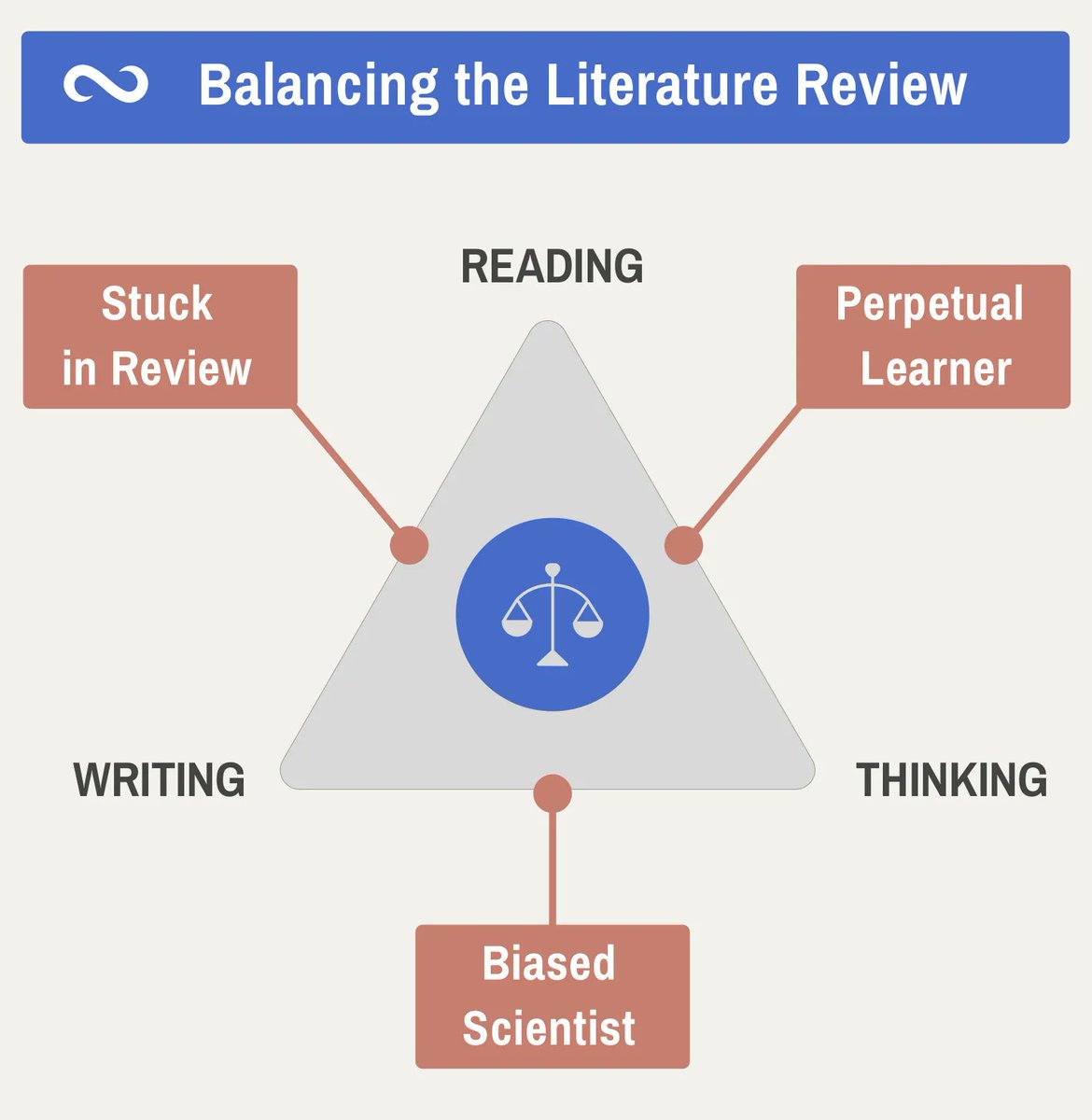
An efficient Literature Review is about balance.

Reading - Writing - Thinking.

3 signs your research is out of balance:
πŸ‘‡
Type 1: The Perpetual Learner

They read and take notes. They are smart.
But there is a lingering: "Am I good enough?" in the background...

Only writing can answer this question.

Writing forces to rethink what you know.

It reveals what you don't know and helps grow.
Can't get off the ground with writing?

Try to break down your notes into small concepts and questions.

Treat them as puzzle pieces.

Once you have a few, toss them into a new outline.

Flesh out the outline and you are done!

This might help:

Type 2: The Biased Scientist

You're excellent at what you do.
You had great insights wrote about them.

But this can be a curse.
How can you stay relevant without adding NEW knowledge?

It's time to apply your beautiful mind to a NEW problem!
If you are settled in your opinions, try to discover NEW literature.

Challenge your train of thought.

Go on a discovery journey across literature.

Here is a system for this:
Type 3: Stuck in Review

Reading and Writing is just summarizing.

New insights are connections between facts you summarize.

You miss out of them if you don't take time to think.

Take one day where you replace CONSUMING with CREATING.
If you are stuck in sumarizing, it's time for new techniques to boost creativity:

Connect your ideas heavily.

New connections are new insights.

This is one of them:
Modern tools can make this balancing act simpler.

Check out: effortlessacademic.carrd.co for a system of academic sense making.

And effortlesslitreview.carrd.co for discovering new literature.

β€’ β€’ β€’

Missing some Tweet in this thread? You can try to force a refresh

γ€€

Keep Current with Ilya Shabanov

Ilya Shabanov Profile picture

Stay in touch and get notified when new unrolls are available from this author!

Read all threads

This Thread may be Removed Anytime!

PDF

Twitter may remove this content at anytime! Save it as PDF for later use!

Try unrolling a thread yourself!

how to unroll video
  1. Follow @ThreadReaderApp to mention us!

  2. From a Twitter thread mention us with a keyword "unroll"
@threadreaderapp unroll

Practice here first or read more on our help page!

More from @Artifexx

Mar 9
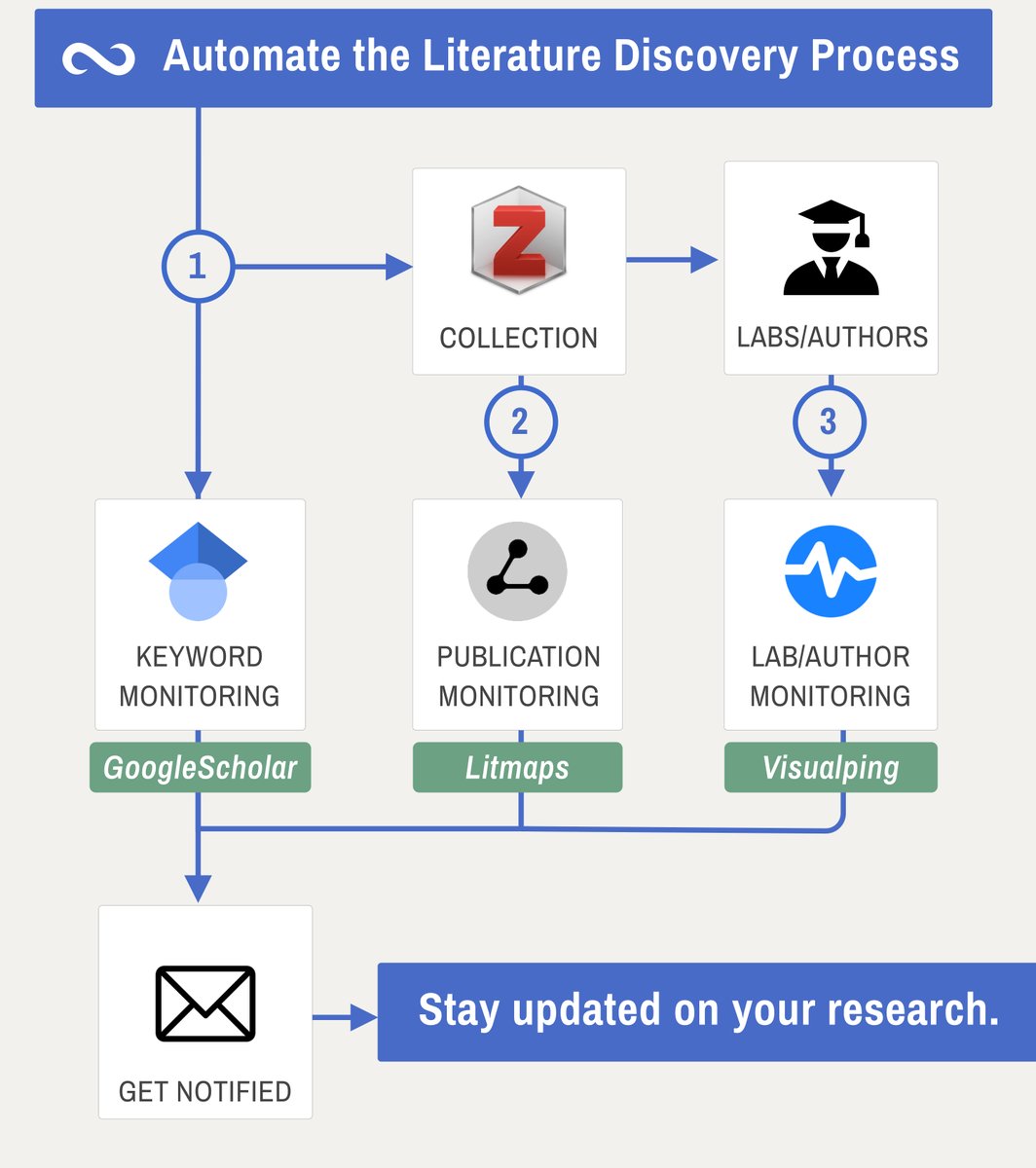
Automate the literature discovery/review process.

These 3 tools can monitor keywords, publications or labs.
πŸ‘‡
This workflow assumes you have a collection of papers.

The collection is either in @LitmapsApp or @zotero.

Here is how we got them:
@LitmapsApp @zotero 1. Keyword monitoring

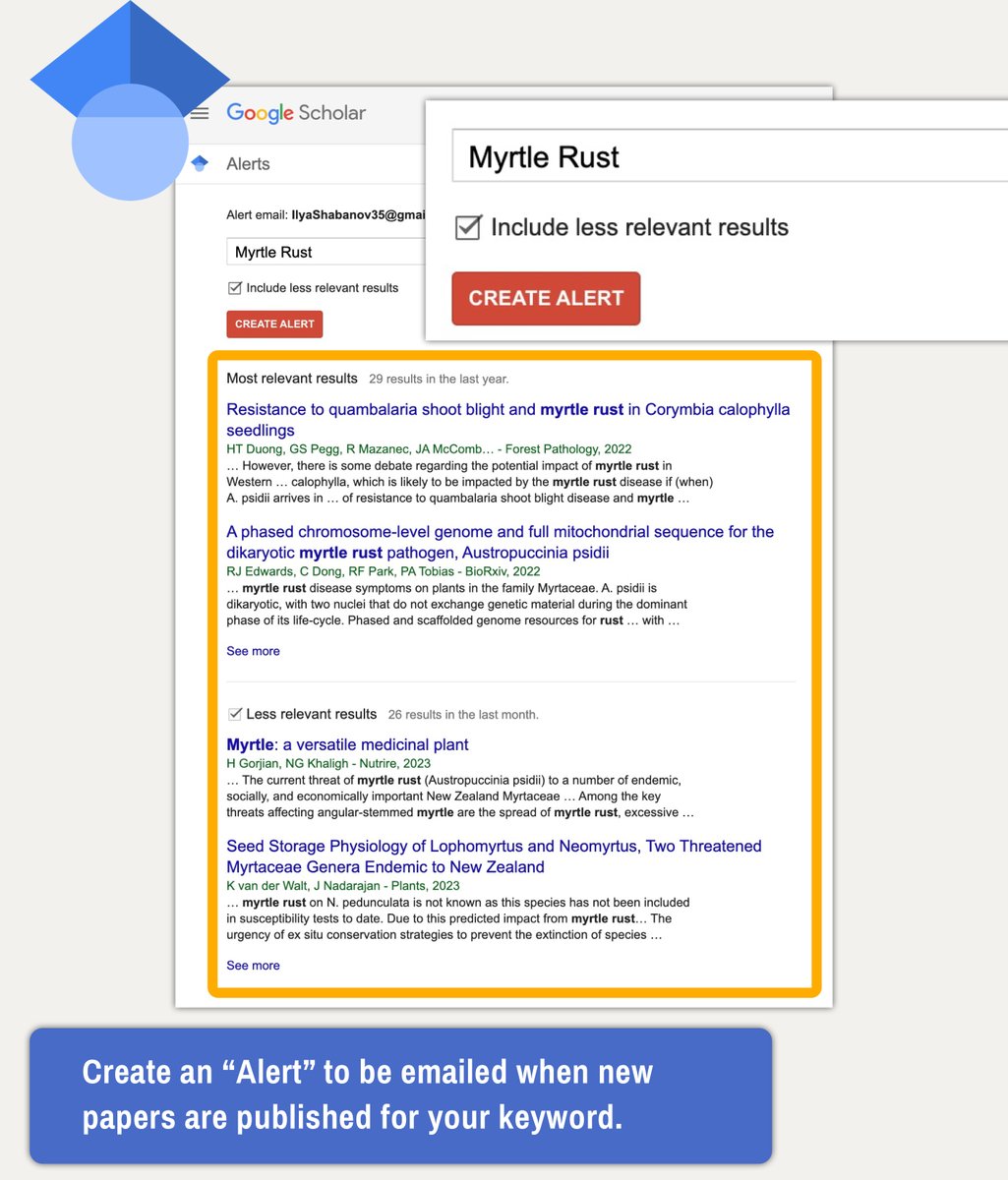
Go to Google Scholar Alerts (see last tweet).

Type in your topic (e.g. "Myrtle rust" a plant pathogen)

Tick the checkbox for more, but less relevant results.

Google will send you notifications.
The results aren't always relevant, but generally useful.
Read 11 tweets
Mar 8
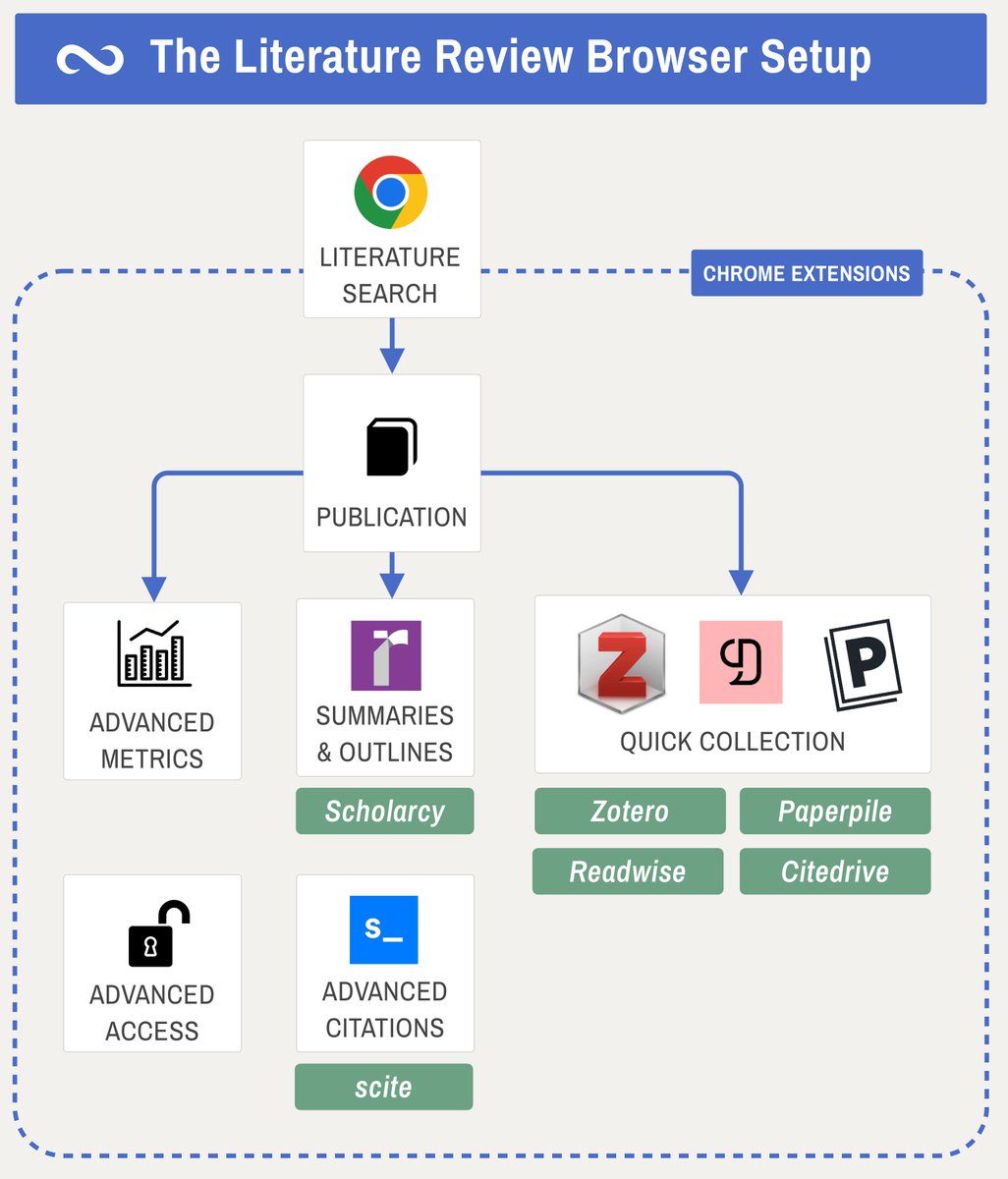
Upgrade your browser to an academic research tool.

8 Chrome plugins to help with your literature review.
πŸ‘‡
This tweet is part of a series on the "Effortless Literature Review" (ELR).

The ELR combines tools and best practies.

A central tool: Your browser.

Let's upgrade Chrome to a perfect research browser!

1. @scholarcy

Scholarcy turns dense abstracts into readable articles.

The key is to use it wisely!

First read the key 10% publications in your field as they are. No matter how long it takes.

β†’ Understand the subject matter.

Now use @scholarcy with the remaining 90%.
Read 13 tweets
Mar 7
Your literature review is not just a hunt for PDFs.

Become an expert by finding important SCHOLARS and JOURNALS.

Here is how to do this with @zotero, Google Scholar, @LitmapsApp.
πŸ‘‡
@zotero @LitmapsApp Science is made by people and published by people.

To really polish your understanding of the field, get to know these.

This tweet we discovered papers with @LitmapsApp (Step 3).

Let's start there and analyze their authors and journals!

@zotero @LitmapsApp @LitmapsApp is an app for discovery.

It will discover publications that you add to a growing colleciton.

When done, export this collection as CSV (will download a file).

Open the CSV file with Excel.

Copy the DOI column (usually the first)...
Read 15 tweets
Mar 5
Here is my method to conduct (and automate) a literature review.

Using Google Scholar, @scite , @litmaps , #ChatGPT, @zotero and @obsdmd.

Tutorial with examples and best practices:
πŸ‘‡
@scite @LitMaps @zotero @obsdmd We start with a search.

But: Without domain knowledge, it's hard to tell what is relevant.

We might collect too many.

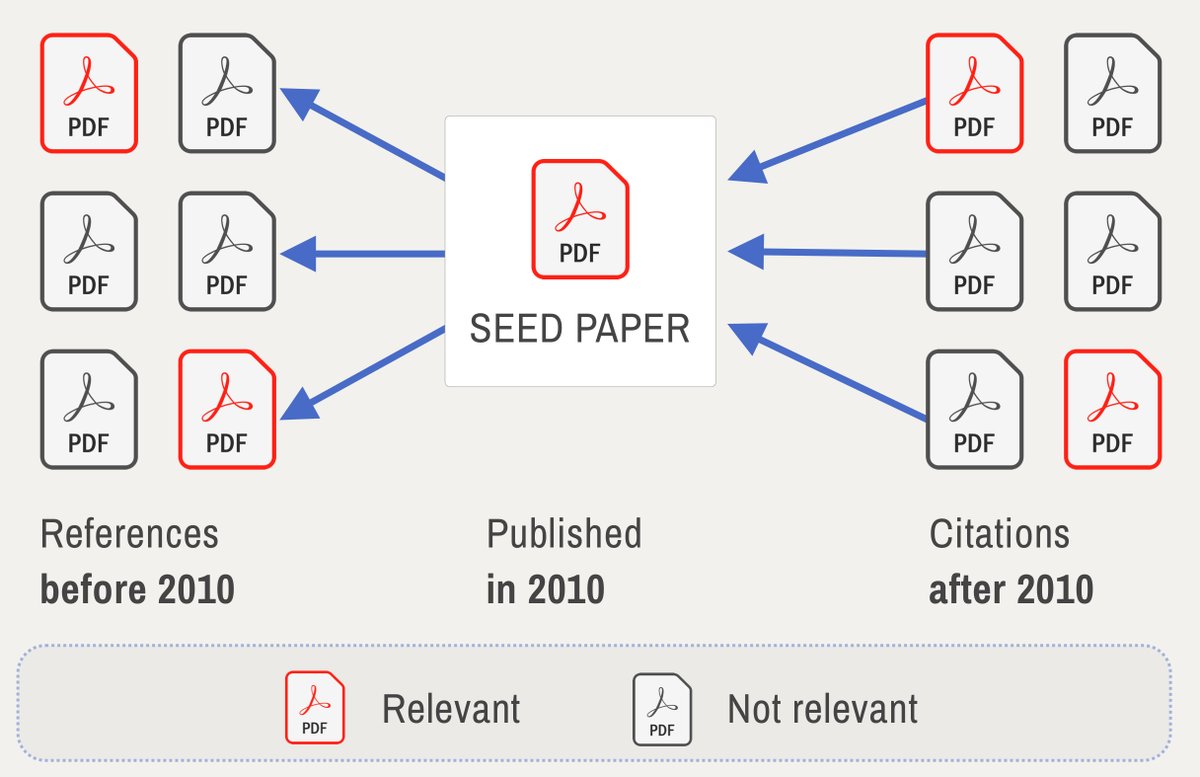
Instead: Find SEED papers and explore their relevant references/citations.

β†’ Fewer but more relevant papers.

(I will show a tool for this)
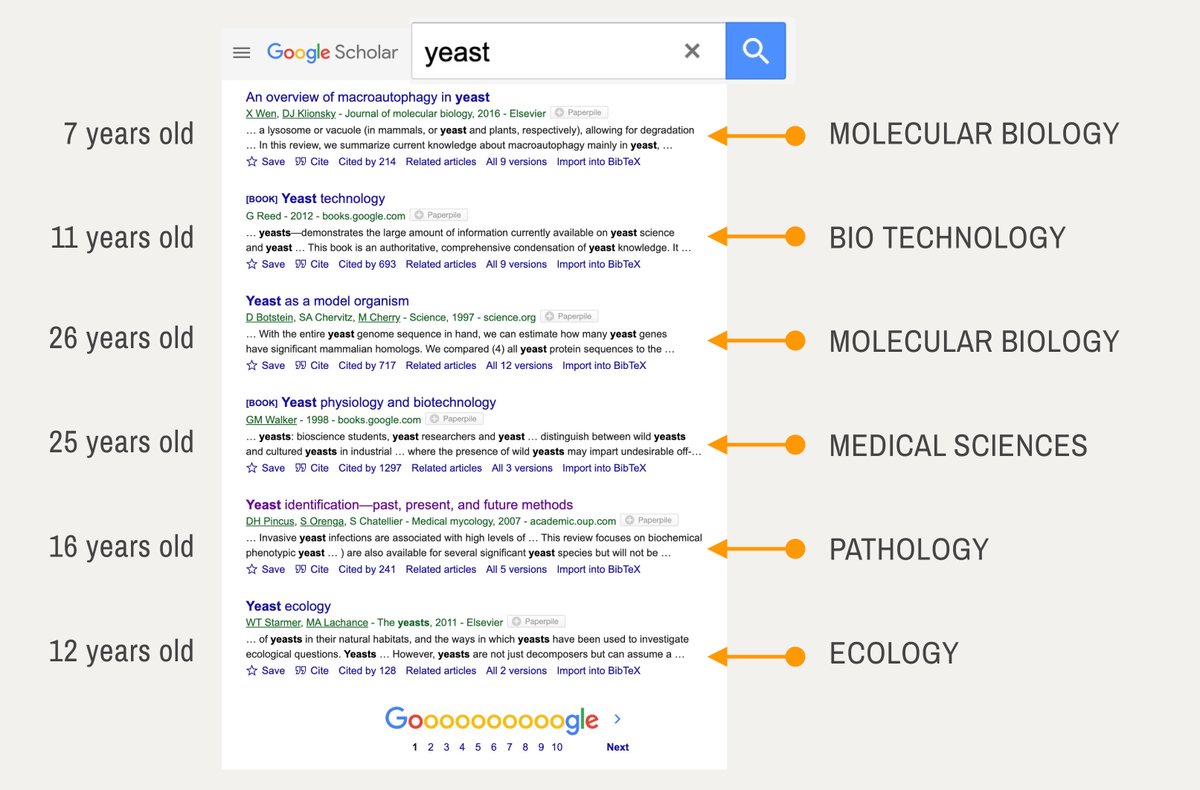
@scite @LitMaps @zotero @obsdmd Google Scholar is google but for scientific papers.

But:
- the domains are mixed up.
- it ranks mostly by # of citations β†’ older papers prioritized

Use it to find SEED papers, not for an exhaustive search.

Its strength: @zotero and @scite integration
Read 16 tweets
Mar 3
Take notes to ADD to your knowledge.

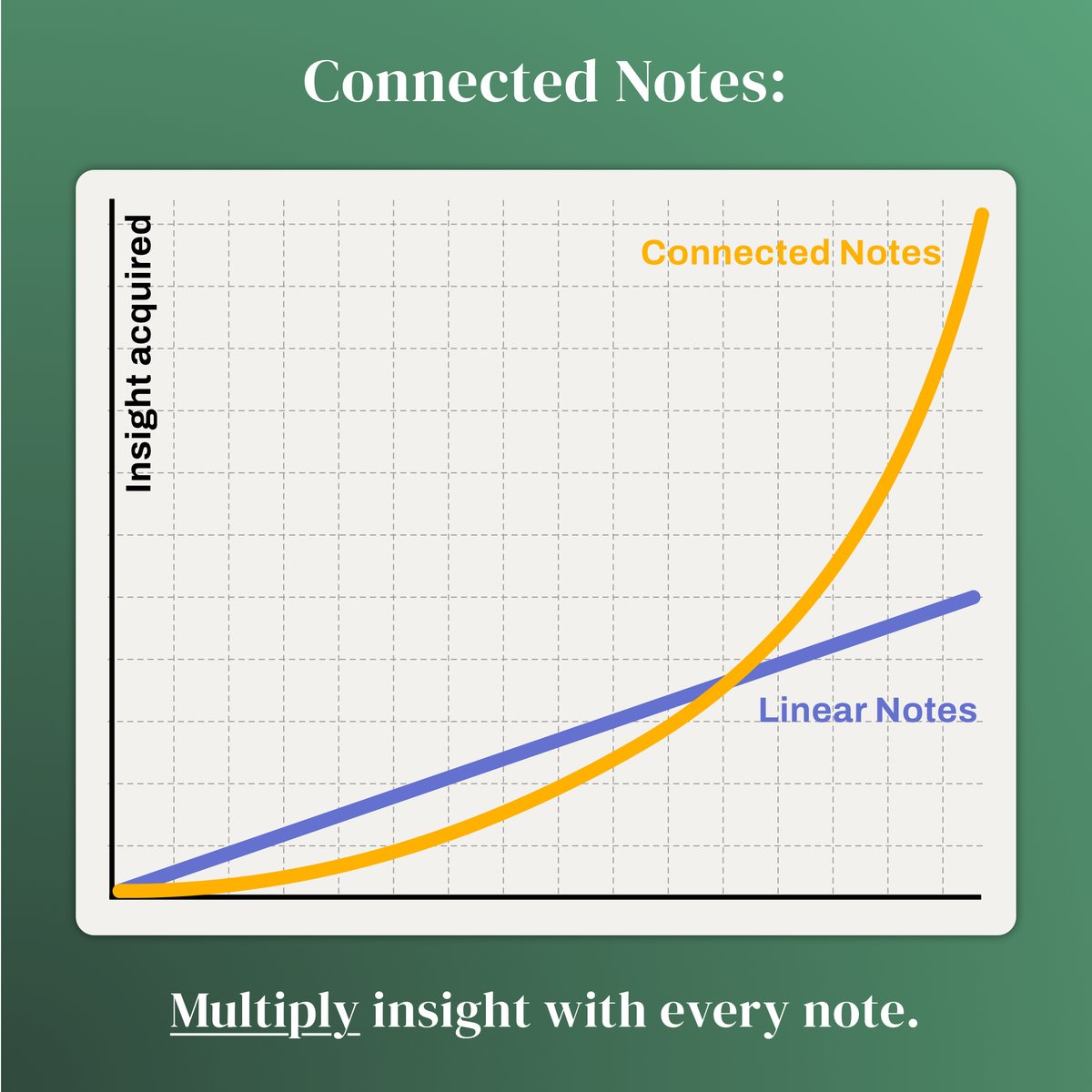
Connect them and you MULTIPLY your knowledge.

How connected notes unlock your FULL potential:
πŸ‘‡ Image
For every paper you read you take a note.

Every time you do this your "database" grows.

But it grows linearly.

To your existing knowledge N you add one paper 1.

β†’ N + 1 Image
But how many connections can you make with N notes?

Each note can be connected to the N - 1 remaining notes.

β†’ N * (N - 1) connections for N notes.

The number of connections grows MUCH faster. Image
Read 9 tweets
Feb 24
Every academic takes notes on literature.

But many struggle with new ideas or writer's block.

It won't happen to you, if you prepare your notes *right*.

Use this strategy: πŸ‘‡πŸ§΅
The ingredients of a lit note:

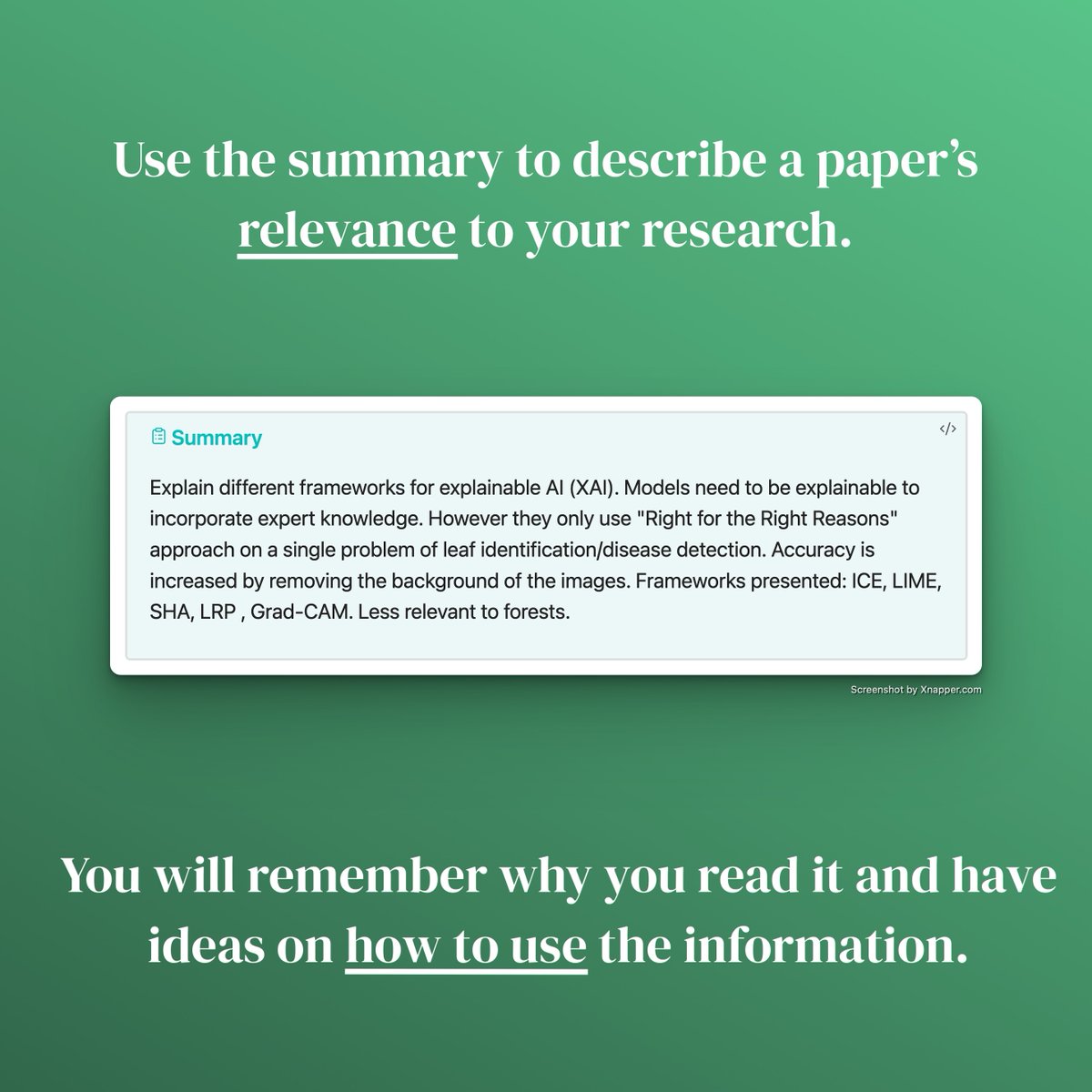
- Summary of the relation to your research
- Authors' intentions
- Quotable sentence
- Tags & links to concepts
- Title with linked PDF
- Metadata

We'll use them to create the mentioned benefits.
I use @obsdmd, but other tools will work too.
@obsdmd 1. Summary

Most people summarize the content.
But why? It's in the abstract already!

Better: Critically describe the RELATION to YOUR reserach.

Point out what you find USEFUL and what needs improvement etc.

βœ… Understand the paper's RELEVANCE to your research.
Read 14 tweets

Did Thread Reader help you today?

Support us! We are indie developers!


This site is made by just two indie developers on a laptop doing marketing, support and development! Read more about the story.

Become a Premium Member ($3/month or $30/year) and get exclusive features!

Become Premium

Don't want to be a Premium member but still want to support us?

Make a small donation by buying us coffee ($5) or help with server cost ($10)

Donate via Paypal

Or Donate anonymously using crypto!

Ethereum

0xfe58350B80634f60Fa6Dc149a72b4DFbc17D341E copy

Bitcoin

3ATGMxNzCUFzxpMCHL5sWSt4DVtS8UqXpi copy

Thank you for your support!

Follow Us on Twitter!

:(