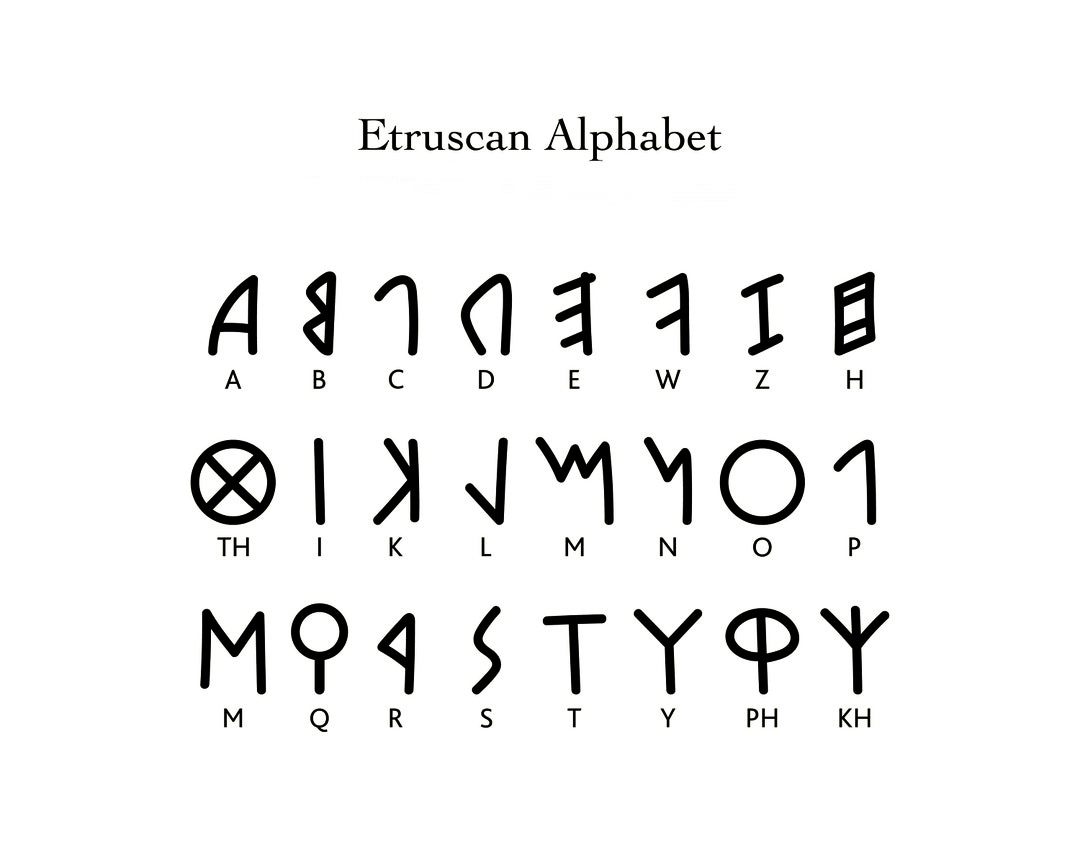
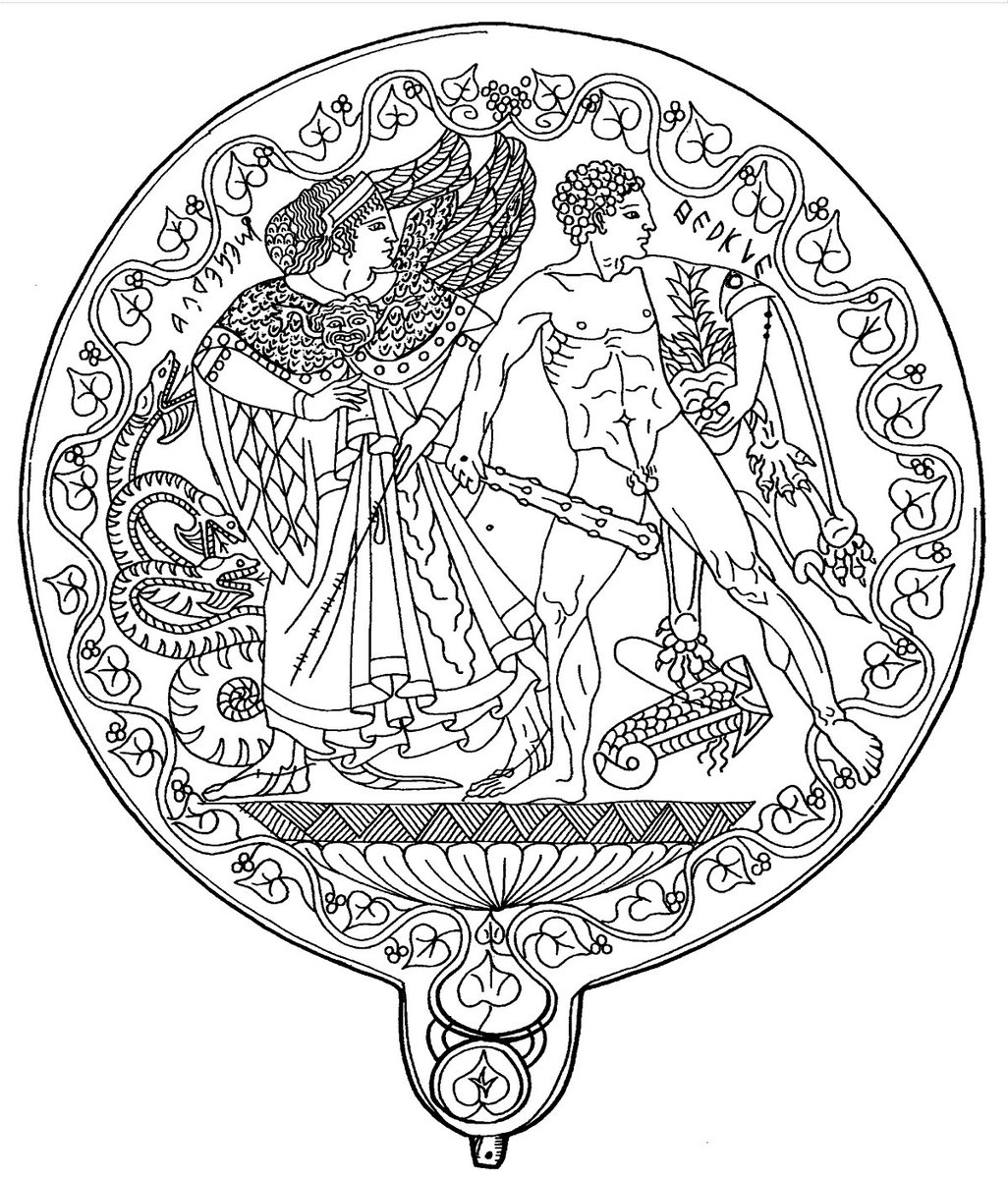
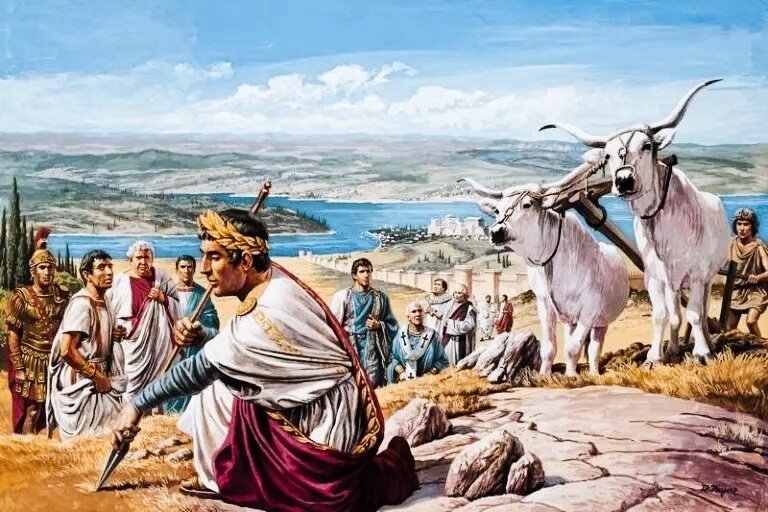
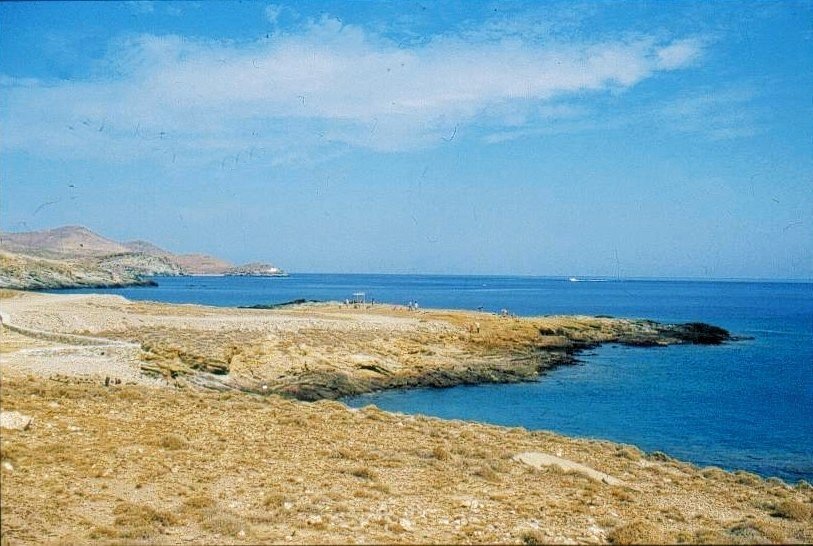
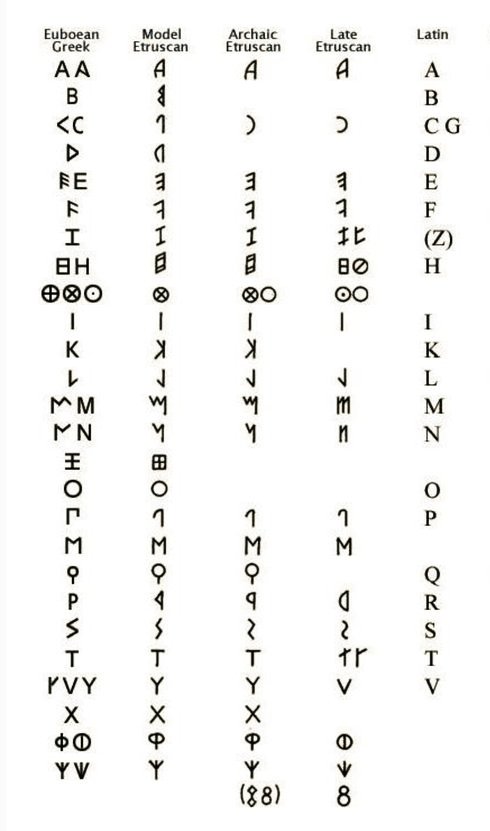
1/ The Etruscans showed a strong cultural influence from the early Greek civilization with more important loans the use of the Euboean alphabet and the adoption of many elements of Greek mythology (the presence of figures from the heroic circle makes a particular impression).
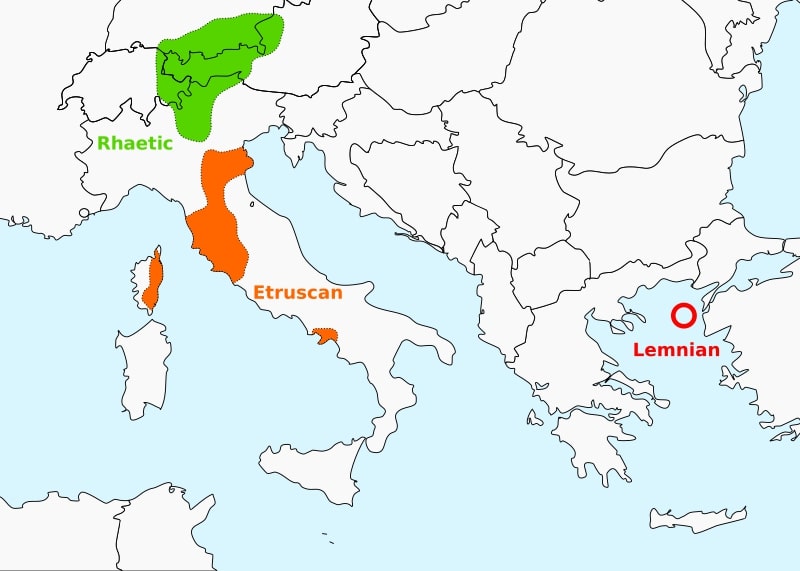
2/ Another interesting point of connection with the Aegean is the similarities between the Etruscan and Lemnian languages, both belonging to the Tyrrhenian language branch and concealing a common past. The Lemnian language was similarly recorded with the Euboean alphabet.
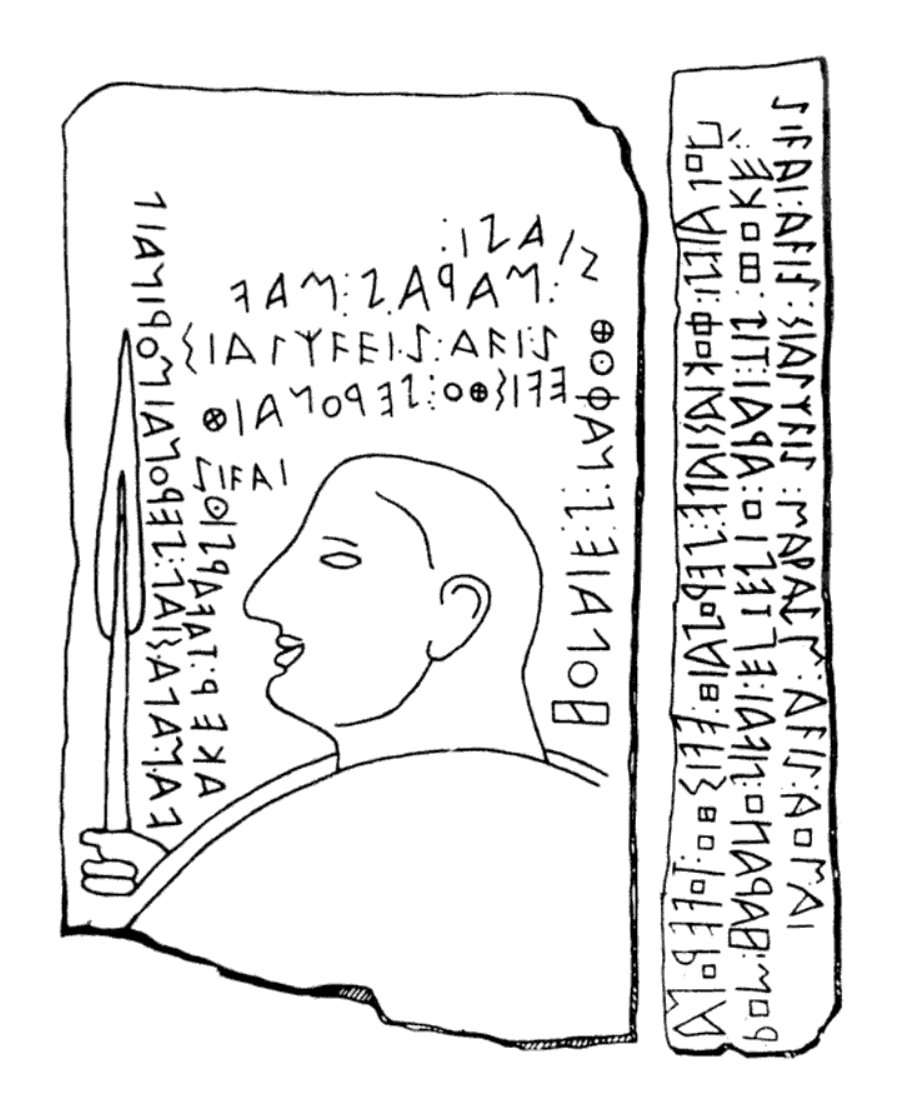
3/Parallelly, the ancient Greek tradition indicates a close relationship between the Etruscans and the Aegean, with the most interesting element being the various myths of the origin of the Etruscans from the wider Aegean region and indeed as carriers of the Pre-Greek substratum.
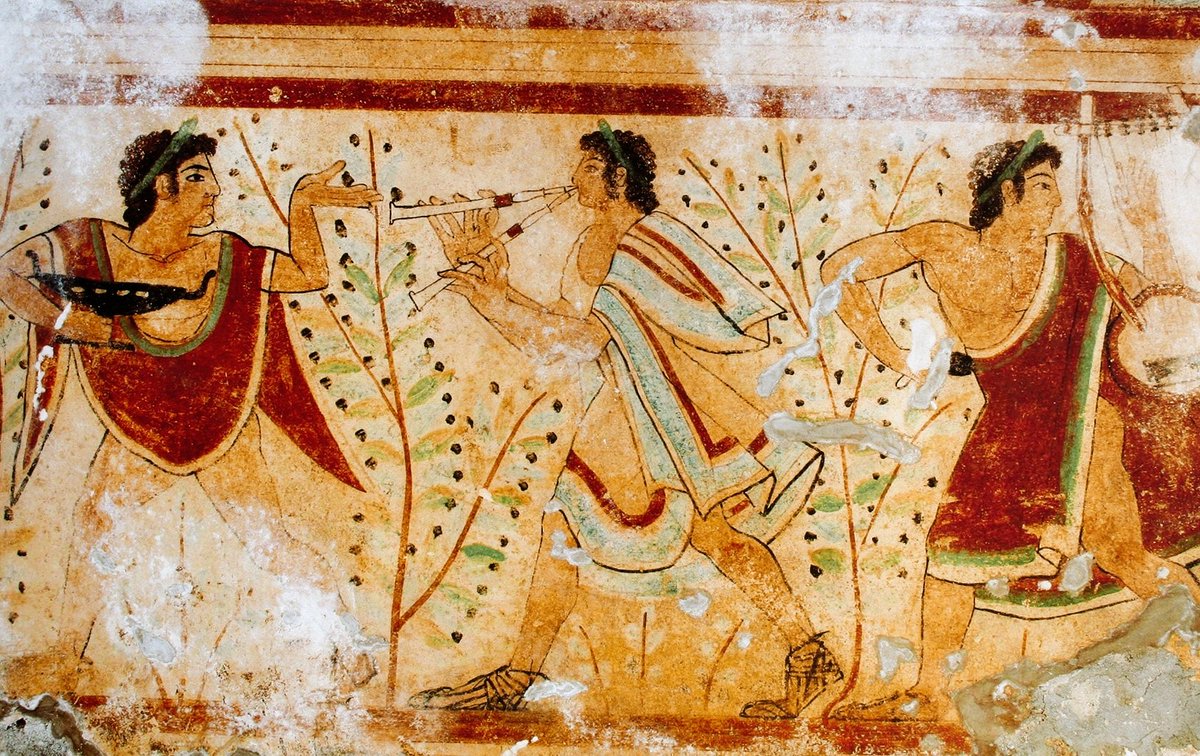
4/ Although the narrations of mythology could constitute a database from a linguistic point of view, genetic studies proved that the Etruscans were Indo-European and indeed with a high rate of genomic diffusion. ➡️
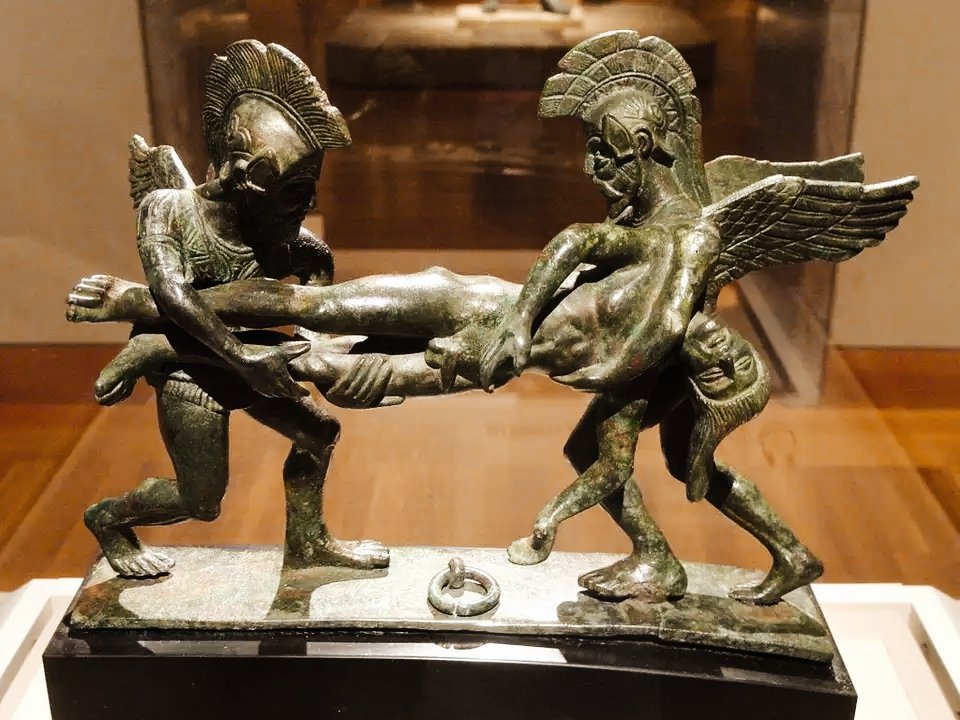
➡️ So how is it possible that the Etruscans, being an Indo-European population, spoke a non-Indo-European language and probably a language with primitive origins?
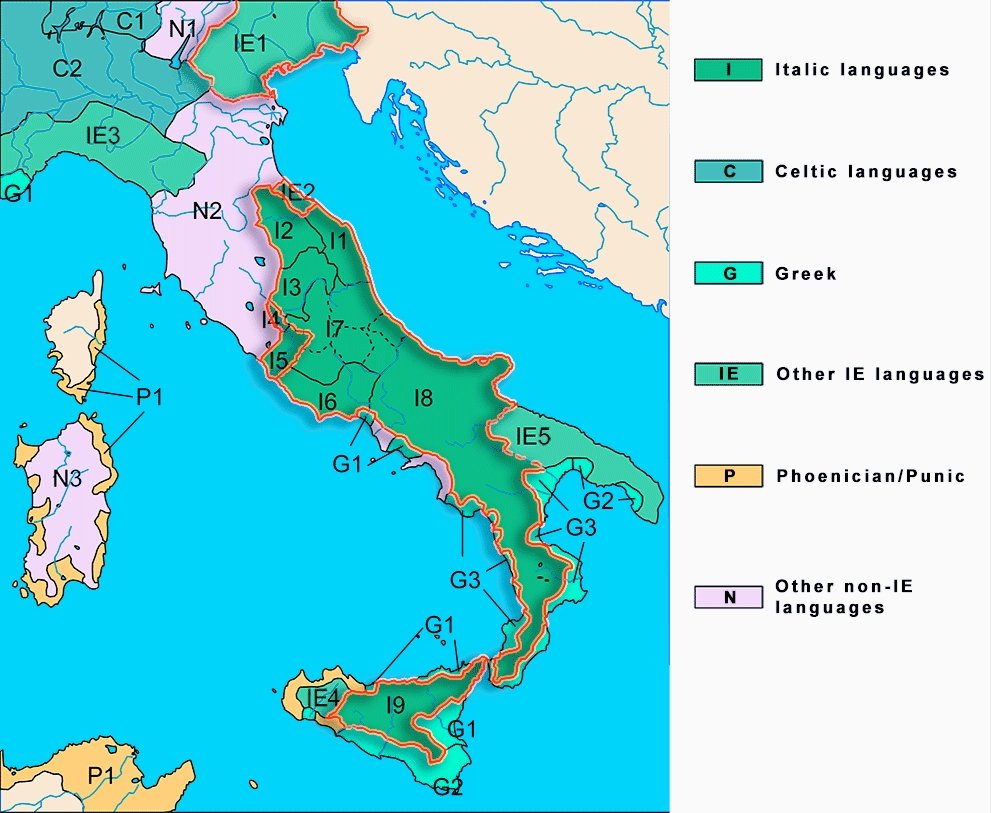
5/ Archaeologically and genetically, the Etruscans are direct descendants of the EIA Villanovan Culture, which they smoothly replaced, demonstrating a continuity. So what is it that led the Etruscans to adopt a non-Indo-European language? There could be two possible versions.
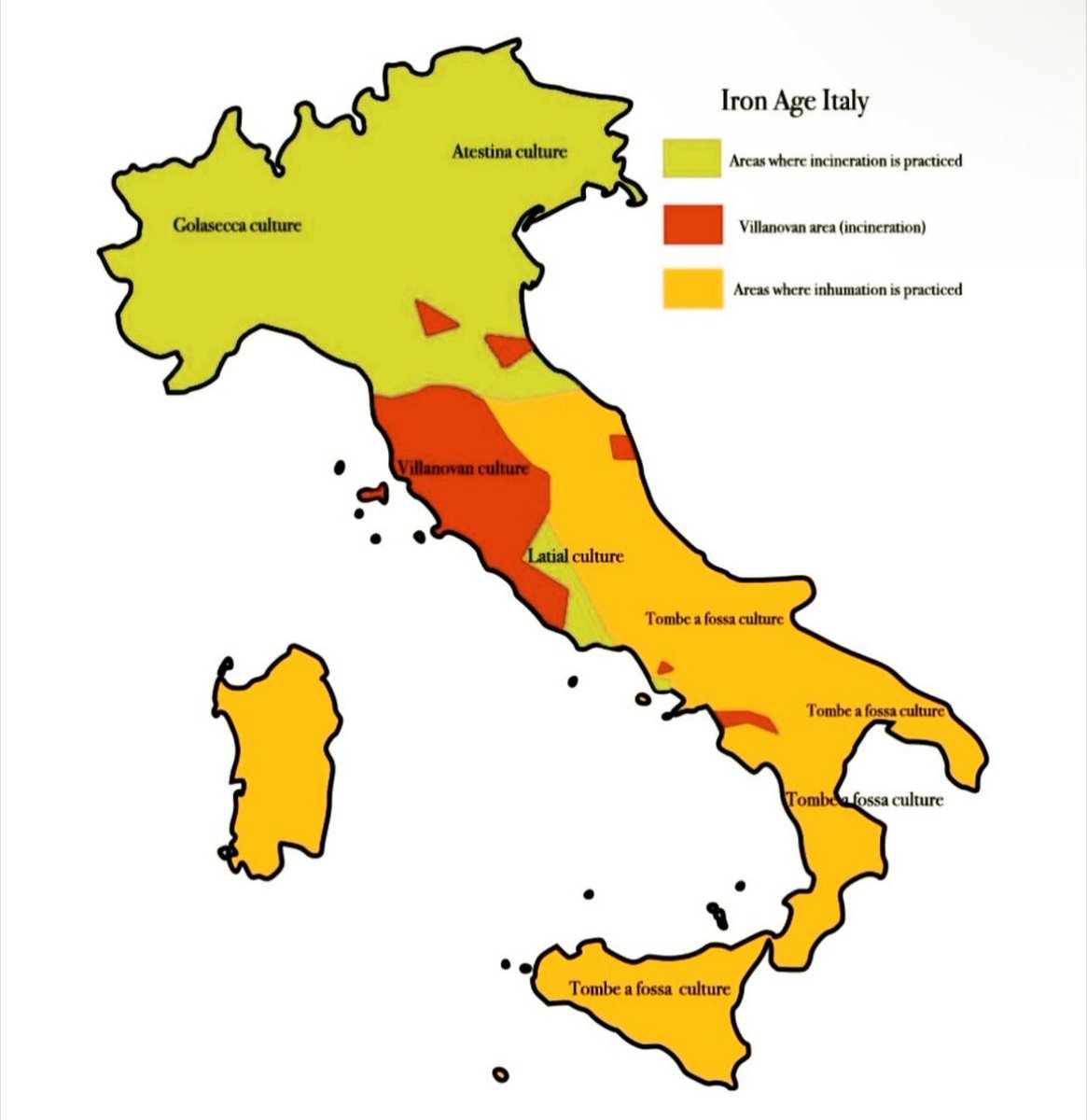
6/ The first version is that for some unknown reason the Etruscans adopted a primitive local language abandoning their own at some very early stage, e.g. a pre-Italic lingua franca. ➡️
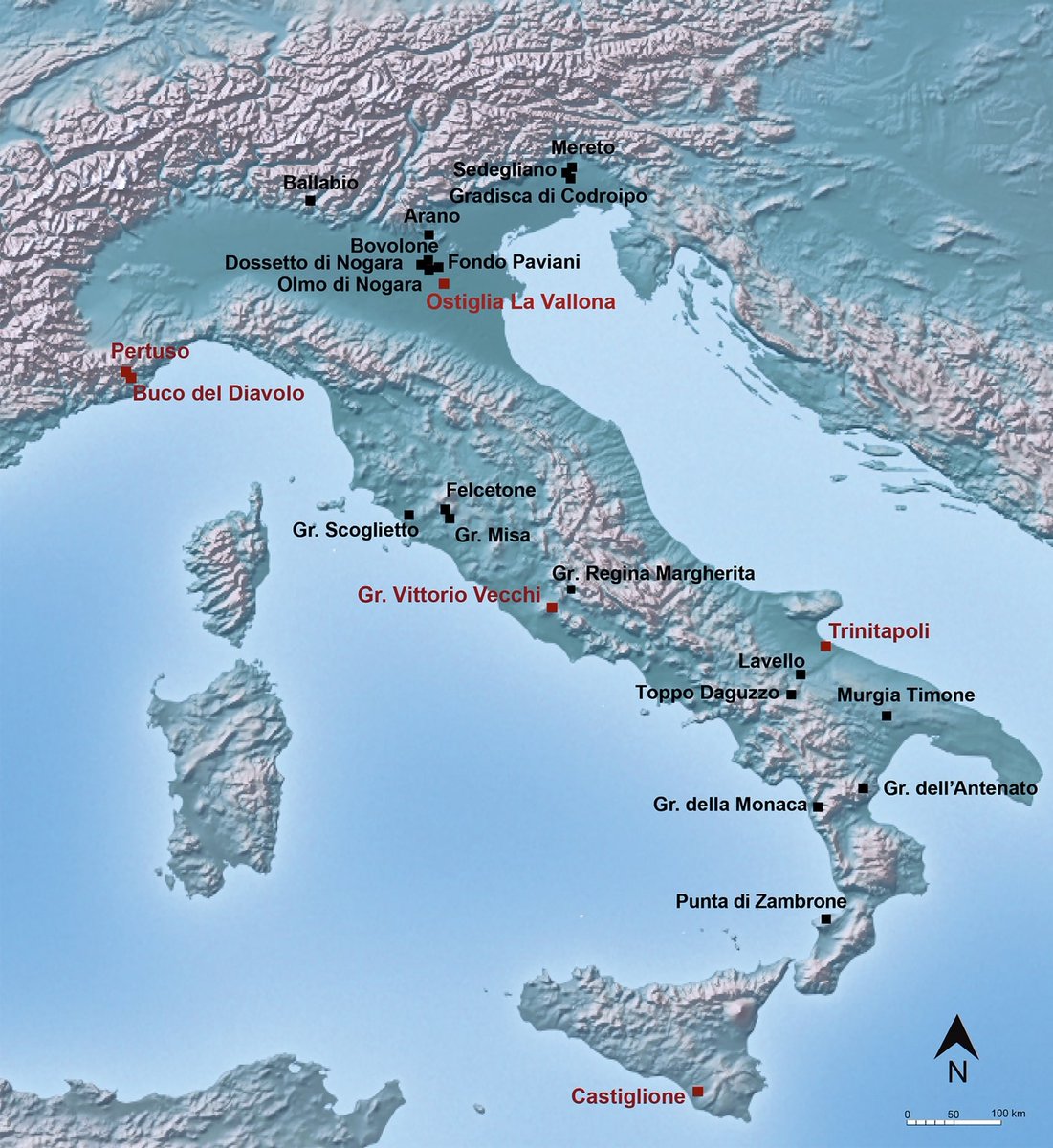
➡️ The carriers of the Proto-Italic languages seem to have been related to the Terramare Culture and while initially inhabiting the Alpine regions during the second half of the 2nd millennium BC they began to move further south.
7/ But what language was spoken on the Italian peninsula before the spread of the Proto-Italic languages? Maybe did Etruscan, Raetic, Lemnian belong to a common linguistic framework with Eteocretan and Pelasgian with clear Neolithic origins?
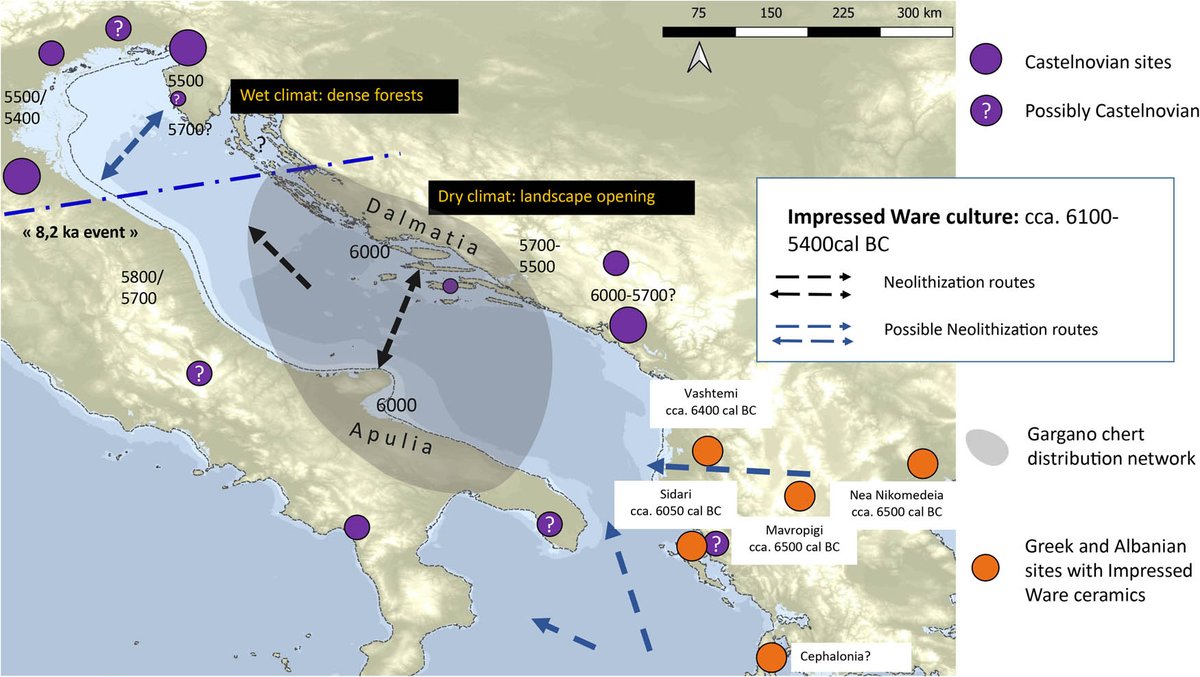
8/ Recent studies have argued that the Neolithicization of Italy may have originated via the Adriatic, where among others Neolithic populations from N. Greece - Ionian - Albania participated and is linked to the diffusion of the Impressed Ware Culture (=old Anatolian language).
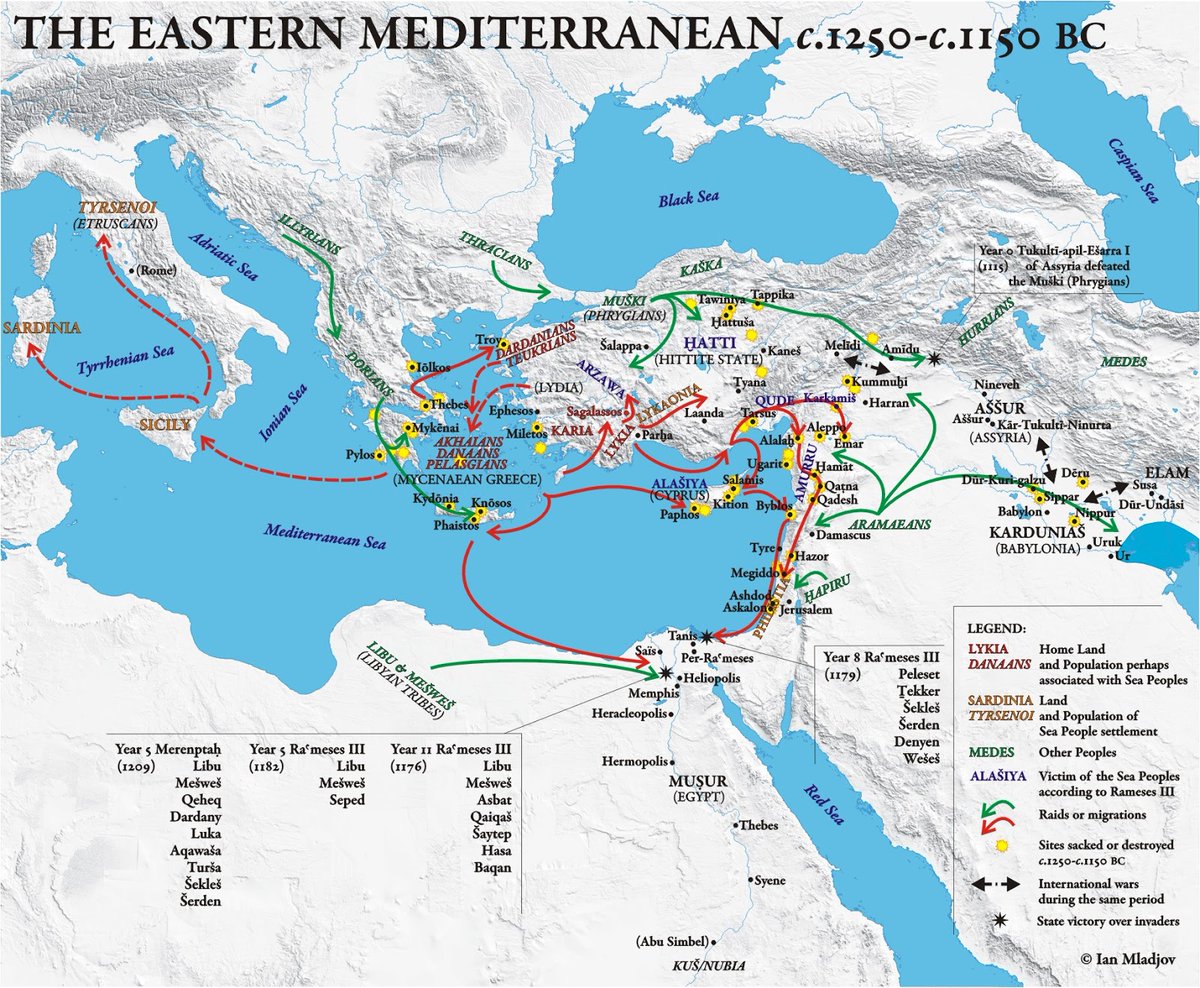
9/ The second version is that the early Etruscan populations came into contact with some population that settled in their wider area, for example as a consequence of the intense movements of the LBA Collapse, and it affected them drastically perhaps through mixed marriages.

10/ In this scenario the Etruscans, receptive to foreign influences, gradually adopted an Aegean language and in fact over time began to use the Euboean alphabet, another Aegean loan, for the transcription of their new language. ➡️
➡️ This language could not be other than the Proto-Tyrsenic of the NE Aegean - Troad. According to an archaeological study many Bos Taurus breeds from EIA Tuscany have an Asia Minor origin.
• • •
Missing some Tweet in this thread? You can try to
force a refresh

1/ The Hellenistic and Greco-Roman past were the yeast upon which the Eastern Roman Empire and its evolution, the Byzantine Empire, were formed and transformed, as Constantine the Great moved the capital of the Roman state to Constantinople. @Varangian_Tagma@retsinokinitoc
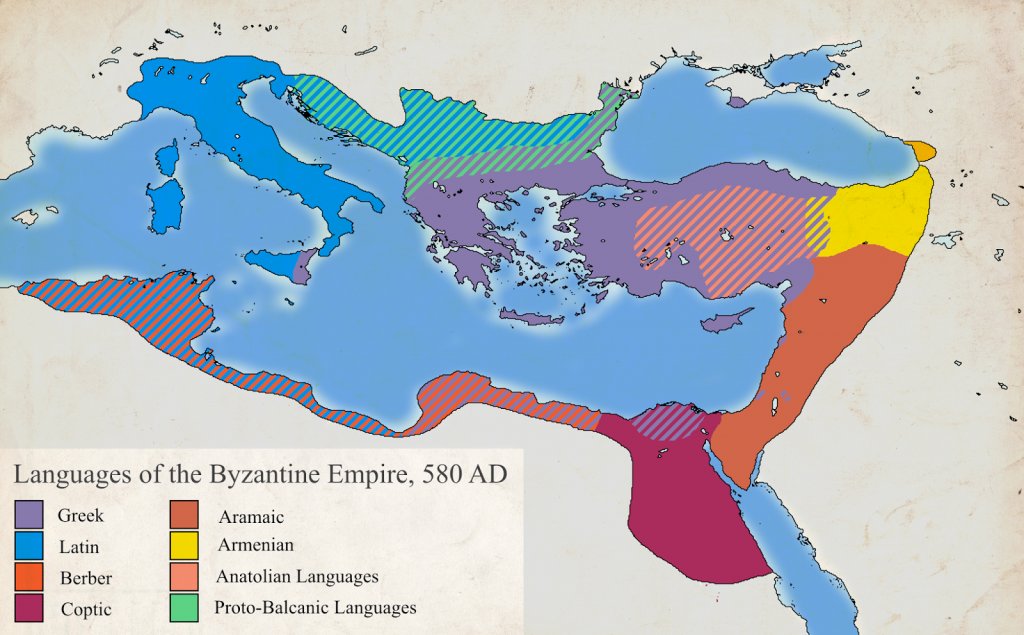
2/ The main characteristic of the early period was a gradual de-Latinization with a simultaneous promotion of a basic ideology of the Hellenistic world: heterogeneous populations identified with Greek (Romeiki) identity, culture and language, i.e. to act and behave as Greeks.
3/ The decisive turning point in this process was the introduction of the Greek language as the official language of the Empire in 610 AD by the emperor Heraclius. ➡️
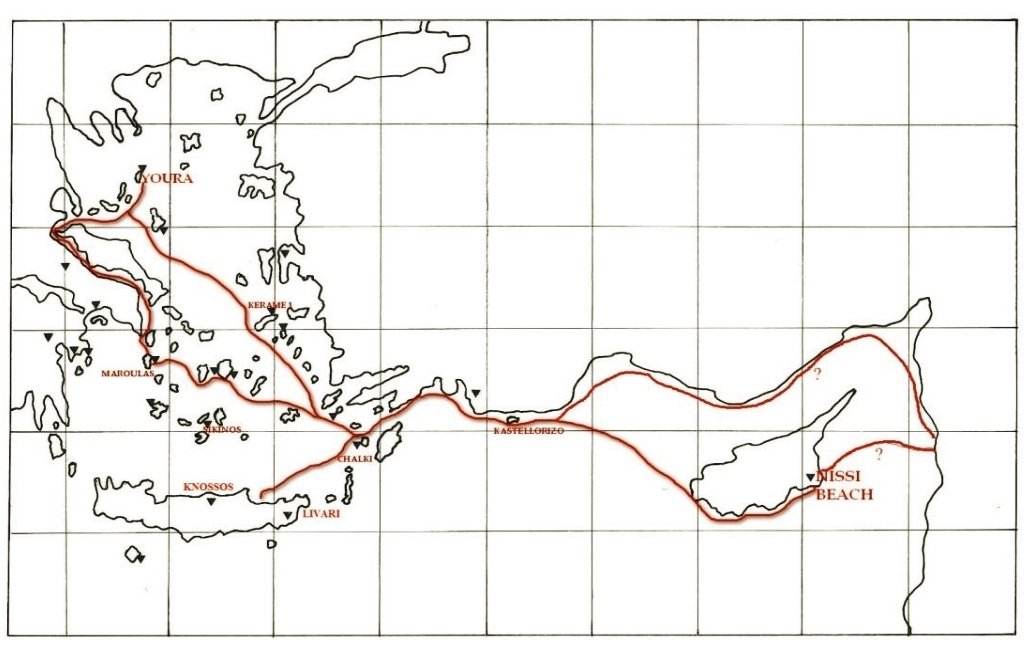
1/ Recent excavations have confirmed the Mesolithic presence in the entire southern and eastern range of the Archipelago, reaching as far as SW Anatolia and Cyprus,within a context of maritime contacts,where the sources of raw materials of obsidian and chert play a dominant role.
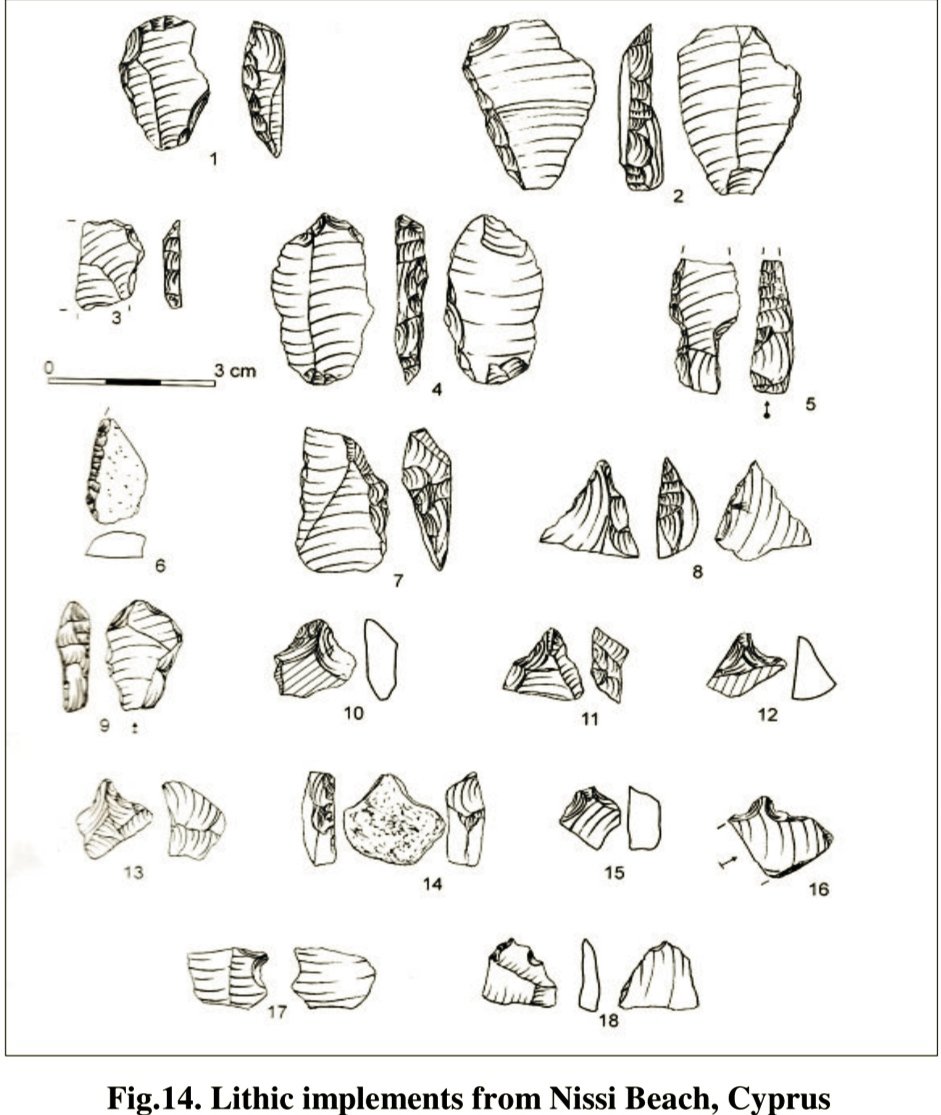
2/ The main distinguishing feature of the specific settlements - camps are the great similarities in the lithic industry that they produced and used, which is included in the broader term of the Aegean Mesolithic, despite any individual local differences.
1/ In the Iliad, Homer often refers to the uniqueness of the capabilities of the armies of Achilles and Ajax, where they are described as dense formations of elite soldiers, who use brilliant tactical battles under the guidance of highly trained warlords. #Homer#Iliad#Troy
2/ " ...howbeit thereto could he no more avail, for with shields were they fenced in on every side, as they stood around Patroclus, and before them they held their spears. For Ajax ranged to and fro among them and straitly charged every man; ➡️
➡️ Thus mighty Ajax charged them, not one, he bade them, should give ground backward from the corpse, nor yet fight in front of the rest of the Achaeans as one pre-eminent above them all; but stand firm close beside the corpse and do battle hand to hand. ➡️
1/ The discovery of untouched Mesolithic layers in the cave of Cyclops at Youra and a coastal Mesolithic open-air settlement in Maroulas at Kythnos have come to add to the Mesolithic finds from the great cave site at Franchthi, ➡️
➡️ offering valuable information for the understanding of the survival strategies of the pre-Neolithic groups of Aegean.
[PART TWO] THE CASE OF OPEN-AIR SETTLEMENT OF MAROULAS IN KYTHNOS AND ITS IMPORTANCE FOR THE INTERPRETATION OF THE AEGEAN MESOLITHIC.
1/ As a result of the intense climatic and environmental changes after the end of the Younger Dryas, the Mesolithic cave sites in Franchthi and Youra demonstrated the differentiation of the survival strategies of some Aegean hunters-gatherers groups ➡️
➡️ with the adoption of a semi-sedentary lifeway through the appropriation of living places, the intensification of fishing activities and the pre-domestication of wild animals and plants, taking a step towards the Neolithic revolution.
[PART ONE] FROM THE UPPER PALAEOLITHIC TO THE MESOLITHIC: FIRST INDICATIONS OF THE APPROPRIATION OF HABITATION SITES AND PRE-DOMESTICATION OF WILD ANIMALS - THE CASES OF FRANCHTHI AND CYCLOPS CAVES.
1/ After the end of the Last Glacial Maximum in the Aegean region, the sea level began to rise slowly but steadily around 14000 BC, while the whole process continued during the subsequent long transitional period from the Pleistocene to Holocene (12000-9700 BC).
2/ Despite the sharp changes from colder to warmer periods, the steady increase in temperature and sea level continued, which contributed to the formation of new environmental and climatic conditions. ➡️