Earlier I did a thread about the two types of warhead anti-tank weapons carried by infantry use: HEAT and EFP warheads (link in the next tweet).
Now a thread about 🧵:
trajectories, fuzes and tandem warheads of anti-tank rockets and missiles; and reactive and ceramic armor.
1/29
Now a thread about 🧵:
trajectories, fuzes and tandem warheads of anti-tank rockets and missiles; and reactive and ceramic armor.
1/29

If you have not yet read my HEAT and EFP thread - please do so now. I have linked it here:
Almost all anti-tank missiles and rockets fly in a (more or less) straight line towards the target and detonate upon impact, but there are a few exceptions:
2/n
Almost all anti-tank missiles and rockets fly in a (more or less) straight line towards the target and detonate upon impact, but there are a few exceptions:
2/n
https://twitter.com/noclador/status/1636388484880683014
• top attack missiles (Javelin, Spike, Akeron) fly a lofted trajectory and strike the target from above. Their warheads detonate upon impact.
• overfly top attack missiles (BILL/BILL 2, TOW-2B, NLAW) fly a straight line slightly above the target and fire their EFP warheads
3/n
• overfly top attack missiles (BILL/BILL 2, TOW-2B, NLAW) fly a straight line slightly above the target and fire their EFP warheads
3/n
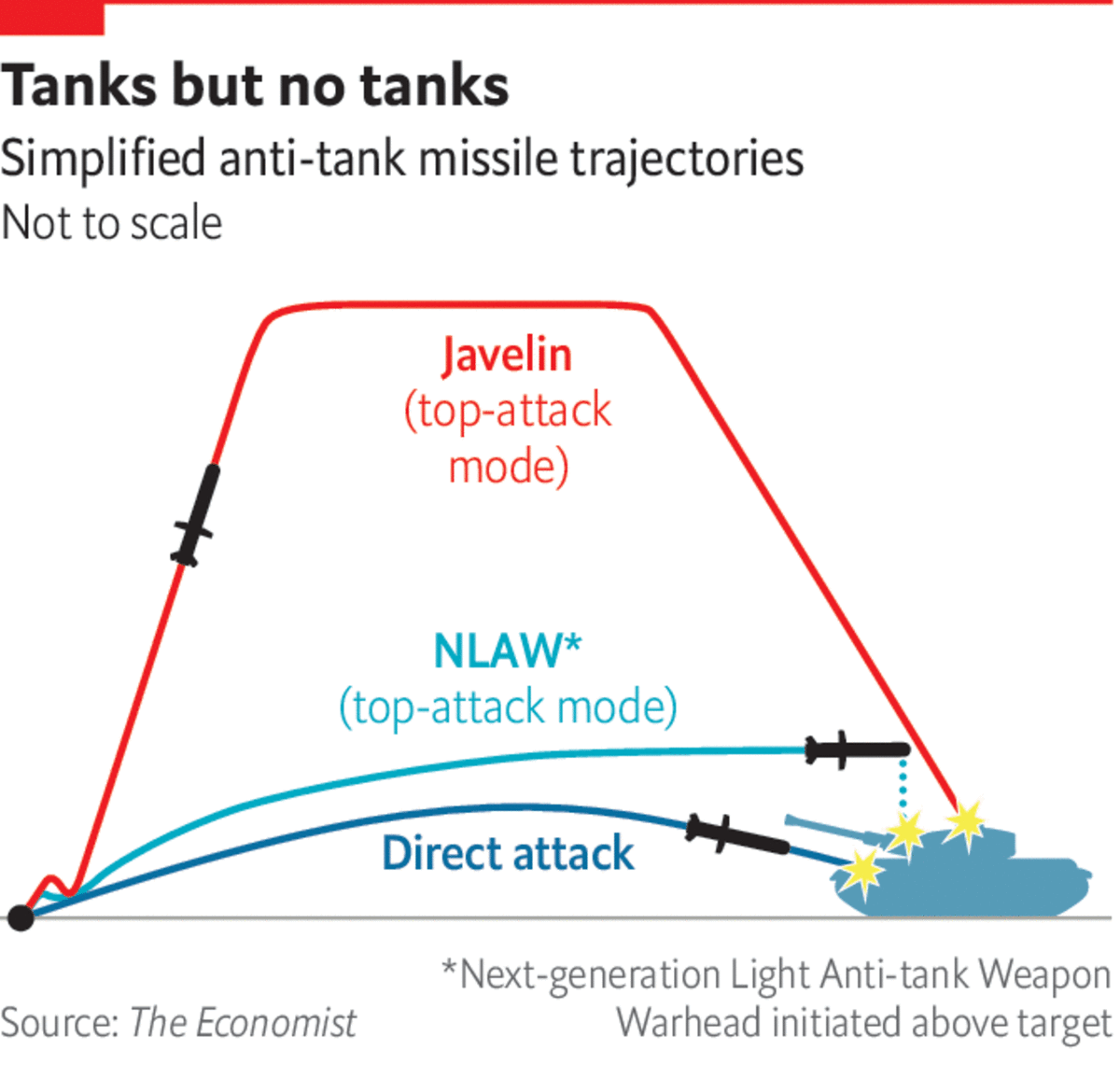
downward onto the target. Their warheads are triggered by optical and magnetic sensors.
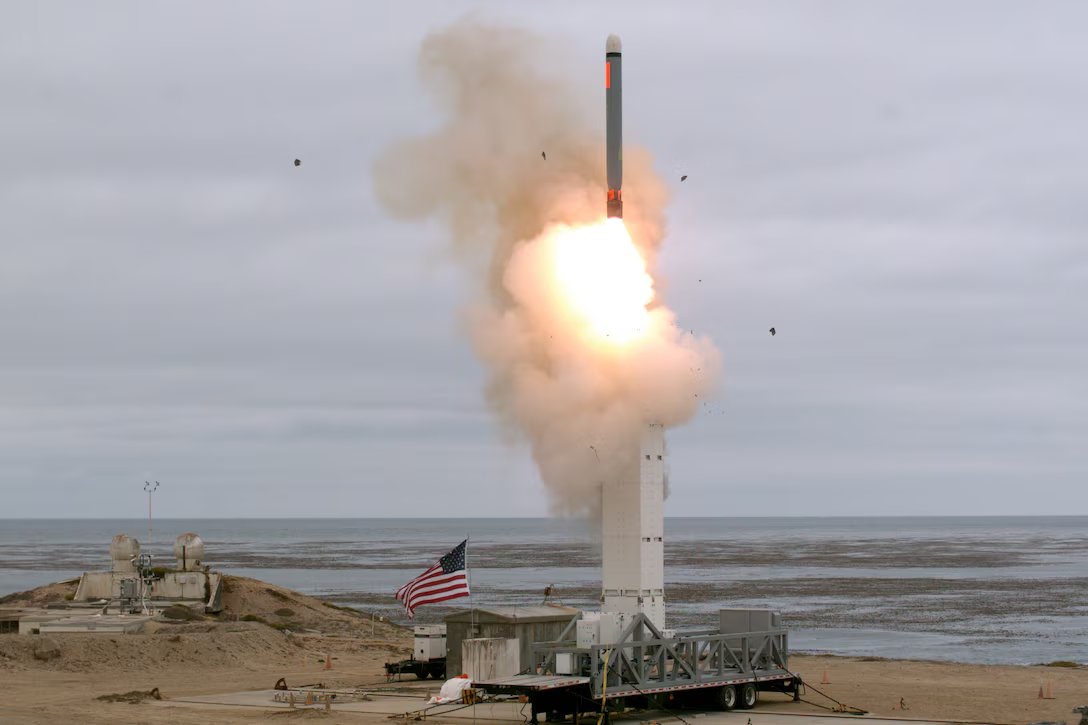
• then there is the Spike SR, which flies directly towards the target & is detonated by a proximity fuze.
The Spike SR (pic) and NLAW are the only short range guided anti-tank missiles.
4/n
• then there is the Spike SR, which flies directly towards the target & is detonated by a proximity fuze.
The Spike SR (pic) and NLAW are the only short range guided anti-tank missiles.
4/n

Everything else in this range/weight envelope is actually an unguided rocket. All missiles with more range are guided as there is very, very little chance to hit a target beyond 800 meter without a guidance system... especially if that target moves.
5/n
5/n
Let's look at short range, unguided, shoulder-fired, recoilless anti-tank weapons:
Everyone knows the Soviet RPG-7 (RPG = Rocket Propelled Grenade), which fires HEAT rounds, which (depending on the type) have a range of 300m to 700m.
The soldier aims, fires, and the fin
6/n
Everyone knows the Soviet RPG-7 (RPG = Rocket Propelled Grenade), which fires HEAT rounds, which (depending on the type) have a range of 300m to 700m.
The soldier aims, fires, and the fin
6/n

stabilized projectile flies towards the target. If the soldier aims badly the projectile will miss and the soldier has to reload, aim again, and fire again.
A very simple and easy to learn weapon.
All Western equivalents (and more modern russian RPGs) are one shot systems,
7/n
A very simple and easy to learn weapon.
All Western equivalents (and more modern russian RPGs) are one shot systems,
7/n
which fire unguided fin stabilized rockets. If your aim is bad, you better give the launcher to a buddy with a steady aim.
Below US troops fire a Swedish AT4, Spanish troops aim a Spanish C90, a Finnish soldier aims a French APILAS, a Ukrainian soldier shows a German RGW-90.
8/n
Below US troops fire a Swedish AT4, Spanish troops aim a Spanish C90, a Finnish soldier aims a French APILAS, a Ukrainian soldier shows a German RGW-90.
8/n


These systems are cheap, light, and essential for infantry to defeat enemy armor.
The German Panzerfaust 3 also belongs in this category, but here the warhead is outside the launch tube to allow for larger charge diameters, which we know improves armor penetration.
9/n
The German Panzerfaust 3 also belongs in this category, but here the warhead is outside the launch tube to allow for larger charge diameters, which we know improves armor penetration.
9/n

A Panzerfaust 3 HEAT round is about $300. The grip with the optics costs about $11,000 & is reused. To compare: a guided Javelin costs about $200,000.
But, the drawback of all short range systems is that they are only able to hit enemy targets that are close... which means
10/n
But, the drawback of all short range systems is that they are only able to hit enemy targets that are close... which means
10/n
the enemy can shoot back with assault rifles & machine guns.
Therefore infantry prefers guided missiles as these can destroy enemy armor before it can fire on the infantry.
However for urban combat, like here in Mariupol with this RGW-90 aiming at a russian BTR,
11/n
Therefore infantry prefers guided missiles as these can destroy enemy armor before it can fire on the infantry.
However for urban combat, like here in Mariupol with this RGW-90 aiming at a russian BTR,
11/n

short range, unguided rockets are the best tool to destroy armor.
A side note: the Swedish M4 Carl Gustaf isn't a rocket launcher. The M4 has a rifled barrel and therefore fires spin-stabilized and not fin-stabilized projectiles. This makes the M4 a recoilless rifle.
12/n
A side note: the Swedish M4 Carl Gustaf isn't a rocket launcher. The M4 has a rifled barrel and therefore fires spin-stabilized and not fin-stabilized projectiles. This makes the M4 a recoilless rifle.
12/n
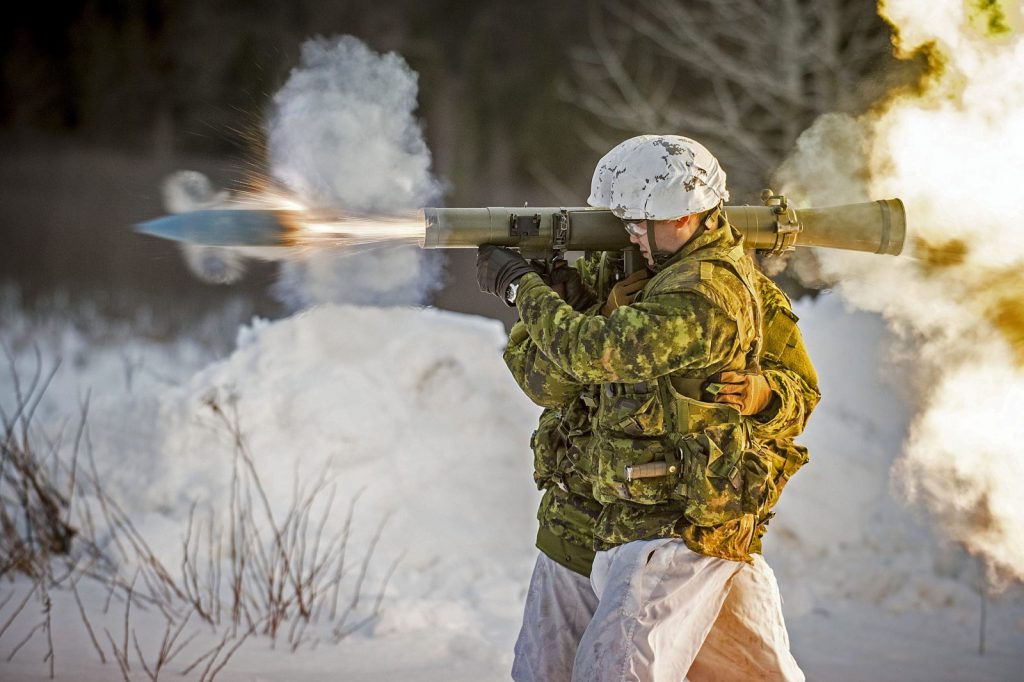
But the M4 is used just like the other shoulder launched short range anti-tank weapons.
Ukraine also received American M72 LAW & Spanish Alcotán-100 rocket launchers. The Alcotán and some Panzerfaust 3 rounds are the only unguided short range systems that use tandem HEAT
13/n
Ukraine also received American M72 LAW & Spanish Alcotán-100 rocket launchers. The Alcotán and some Panzerfaust 3 rounds are the only unguided short range systems that use tandem HEAT
13/n


warheads. (A RGW-90 variant also uses a tandem HEAT warhead, but it is used to breach walls.)
On the other hand all modern guided missiles use tandem HEAT warheads... but why?
To understand that we have to go back to how HEAT warheads work:
14/n
On the other hand all modern guided missiles use tandem HEAT warheads... but why?
To understand that we have to go back to how HEAT warheads work:
14/n
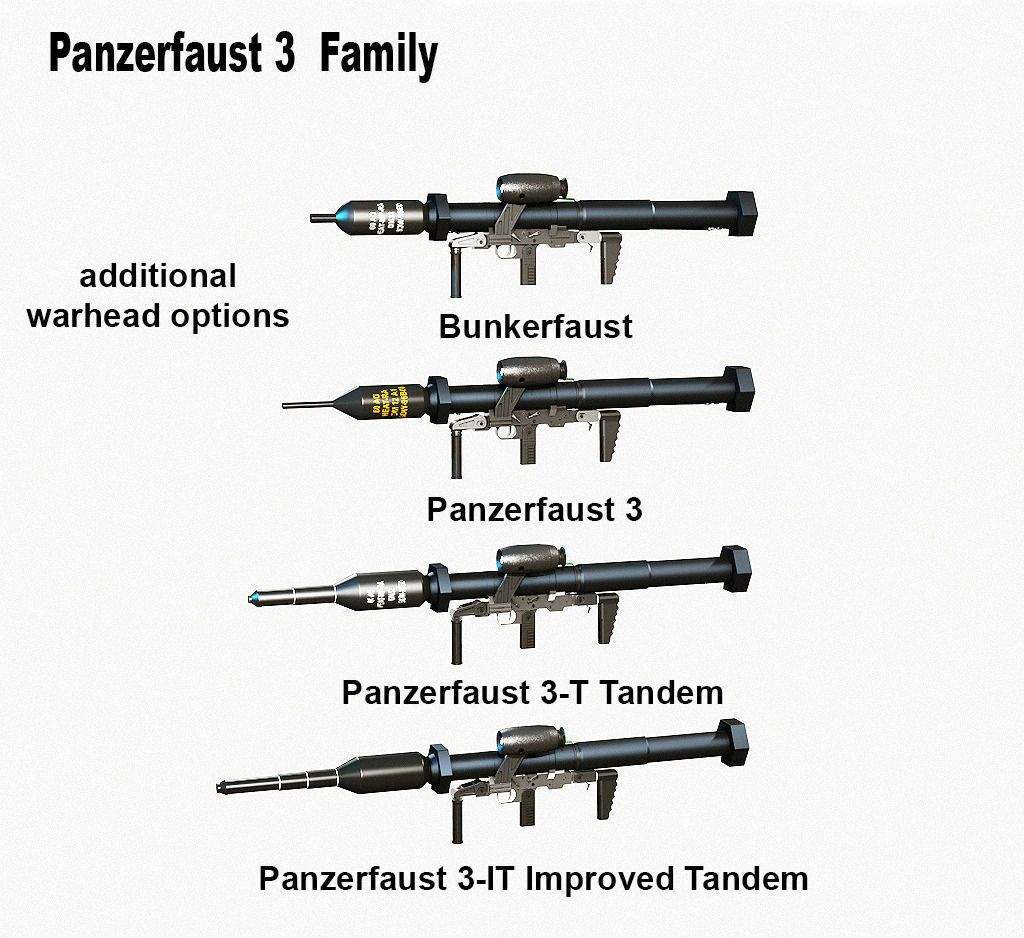
HEAT warheads form hypersonic metal particle jets, which pierce armor. These jets are most potent shortly after detonation, which occurs very close to the enemy armor.
When HEAT rounds became ubiquitous everyone looked for countermeasures and Explosive Reactive Armor (ERA)
15/n
When HEAT rounds became ubiquitous everyone looked for countermeasures and Explosive Reactive Armor (ERA)
15/n
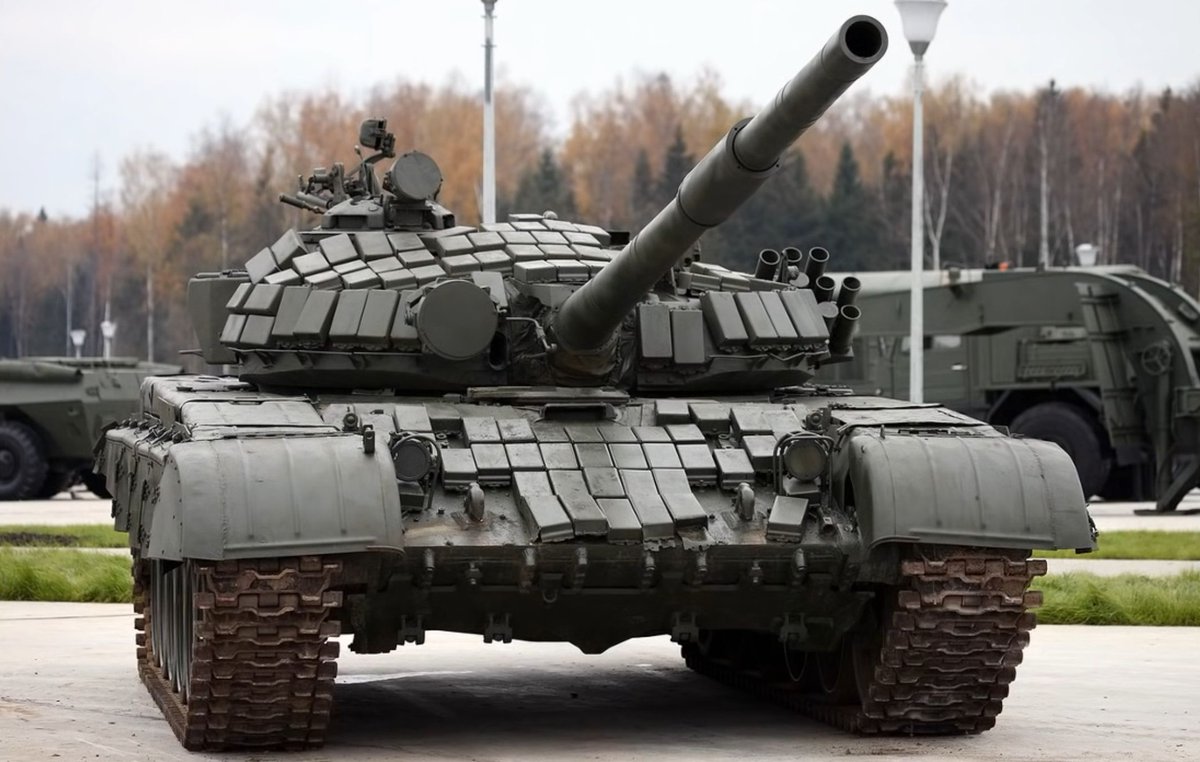
turned out to be the cheapest option to reduce the effectiveness of HEAT rounds.
All those bricks on russian tanks - they contain ERA.
ERA consists of a high explosive between two metal plates. Depending on type various numbers of these are then packed into an ERA brick.
16/n
All those bricks on russian tanks - they contain ERA.
ERA consists of a high explosive between two metal plates. Depending on type various numbers of these are then packed into an ERA brick.
16/n

On impact the high explosive detonates, driving the metal plates apart. The HEAT's jet will penetrate the plates, but as the plates move the jet's impact point on them moves too, forcing the jet to cut through new parts of the plates.
Higher ERA detonation speed results
17/n
Higher ERA detonation speed results
17/n

in higher plate velocity, which feeds more plate material into the jet's path. Modern ERA modules contain shaped explosives & a multitude of thick plates to create a maximum of interference.
And that is why modern anti-tank weapons, like the Javelin, use tandem warheads.
18/n
And that is why modern anti-tank weapons, like the Javelin, use tandem warheads.
18/n

The precursor HEAT warhead sets of the ERA module, which frees a path for main HEAT warhead's jet to pierce the enemy tank unimpeded.
russia LOVES ERA because the base armor of their tanks is so weak. ERA is the cheapest way to extend the life of their tanks, even though it
19/n
russia LOVES ERA because the base armor of their tanks is so weak. ERA is the cheapest way to extend the life of their tanks, even though it
19/n

is useless, when their tanks come up against a modern Western tandem warhead or against an overfly top attack missile.
ERA can defeat rockets with a single HEAT warhead, but those rockets can be used against russian BMPs & BTRs, as their armor is so thin that an exploding
20/n
ERA can defeat rockets with a single HEAT warhead, but those rockets can be used against russian BMPs & BTRs, as their armor is so thin that an exploding
20/n
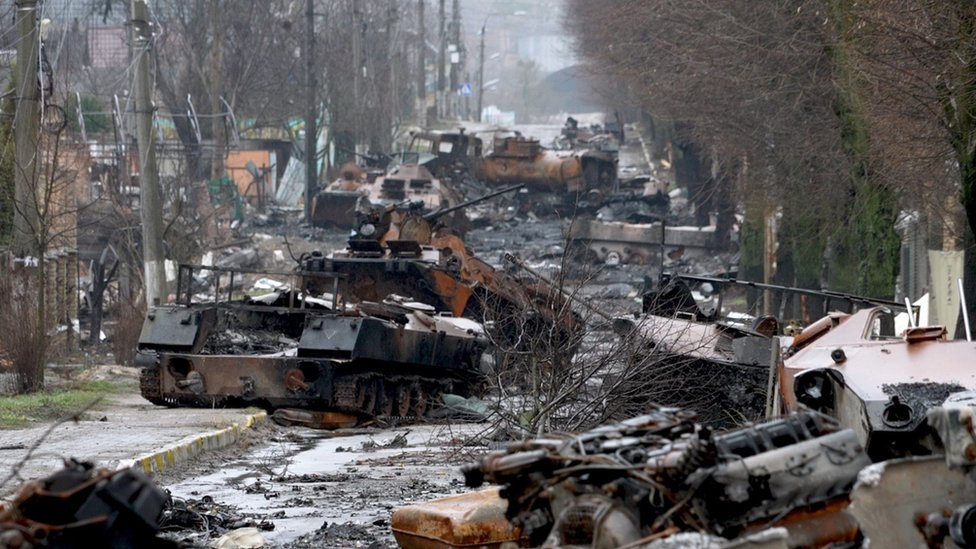
ERA module would smash a hole into them and kill their crew.
Western militaries aren't as cheap and technologically backwards as the russians. Although ERA modules exist for Western tanks, i.e. the Tank Urban Survival Kit for the Abrams tank (left - right a standard Abrams)
21/n
Western militaries aren't as cheap and technologically backwards as the russians. Although ERA modules exist for Western tanks, i.e. the Tank Urban Survival Kit for the Abrams tank (left - right a standard Abrams)
21/n


Western militaries developed composite armor, which includes spaced armor, ceramic armor, and Non-Explosive Reactive Armor (NERA).
If you compare a Leopard 2A4 (rear) with a newer version (front) you can easily see the added spaced armor, which detonates HEAT rounds further
22/n
If you compare a Leopard 2A4 (rear) with a newer version (front) you can easily see the added spaced armor, which detonates HEAT rounds further
22/n

away from the main armor and is filled with metal and ceramic plates, each of which reduces the HEAT jet's penetrating power.
Ceramic armor plates are brittle. When a HEAT round's jet passes through them the jet's channel is ragged, which causes extreme asymmetric pressures
23/n
Ceramic armor plates are brittle. When a HEAT round's jet passes through them the jet's channel is ragged, which causes extreme asymmetric pressures
23/n

that disturb the jet. This initiates a vicious circle as the disturbed jet causes still greater irregularities in the ceramic, until in the end the jet defeats itself.
Non-Explosive Reactive Armor (NERA) consists of an inert, elastic material between two metal plates.
24/n
Non-Explosive Reactive Armor (NERA) consists of an inert, elastic material between two metal plates.
24/n
When a HEAT jet passes through the elastic material the material will deform and expand, resulting in the front and back plates deforming and moving, which moves the jet's impact point and forces it to cut through new parts of the plates as seen in this pic.
25/n
25/n
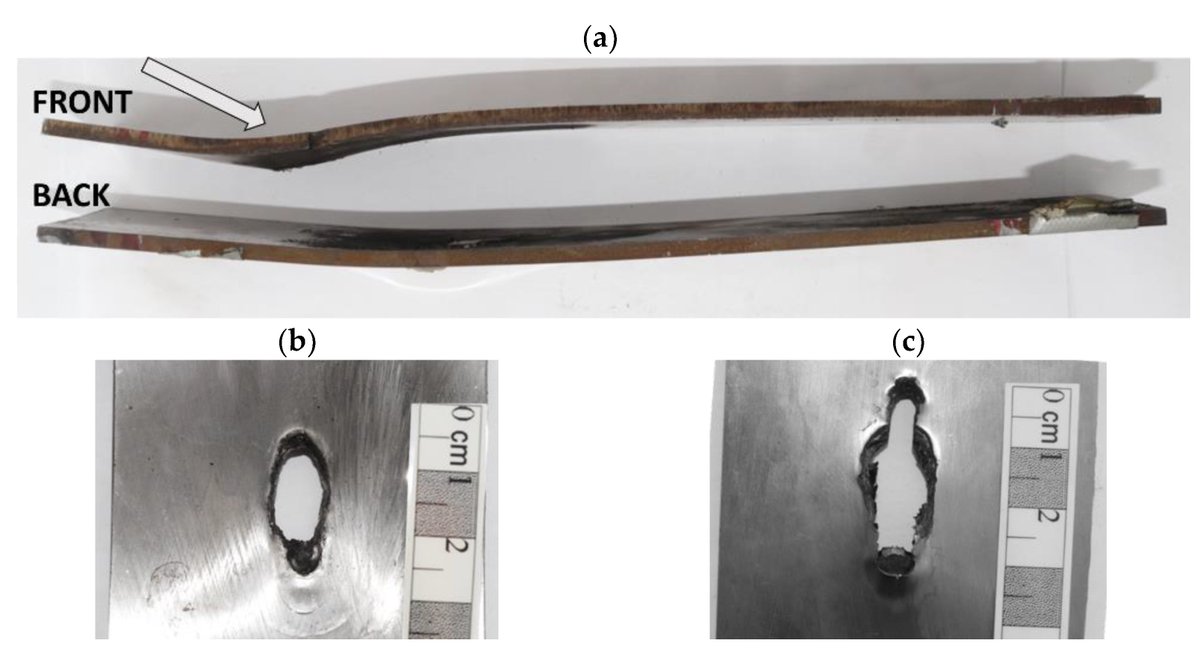
The advantage of Western composite armor is that it defeats tandem warheads and that it can withstand multiple impacts in the same spot (neither of which ERA can do).
The disadvantage is the high price and weight. Therefore composite armor is used primarily on the front of
26/n
The disadvantage is the high price and weight. Therefore composite armor is used primarily on the front of
26/n
Western tanks.
ERA kits for Western tanks are used mainly to reinforce the sides, while for Western IFVs, like this Bradley and Puma, ERA is used to reinforce the sides, and in case of the Bradley also the frontal glacis.
27/n
ERA kits for Western tanks are used mainly to reinforce the sides, while for Western IFVs, like this Bradley and Puma, ERA is used to reinforce the sides, and in case of the Bradley also the frontal glacis.
27/n

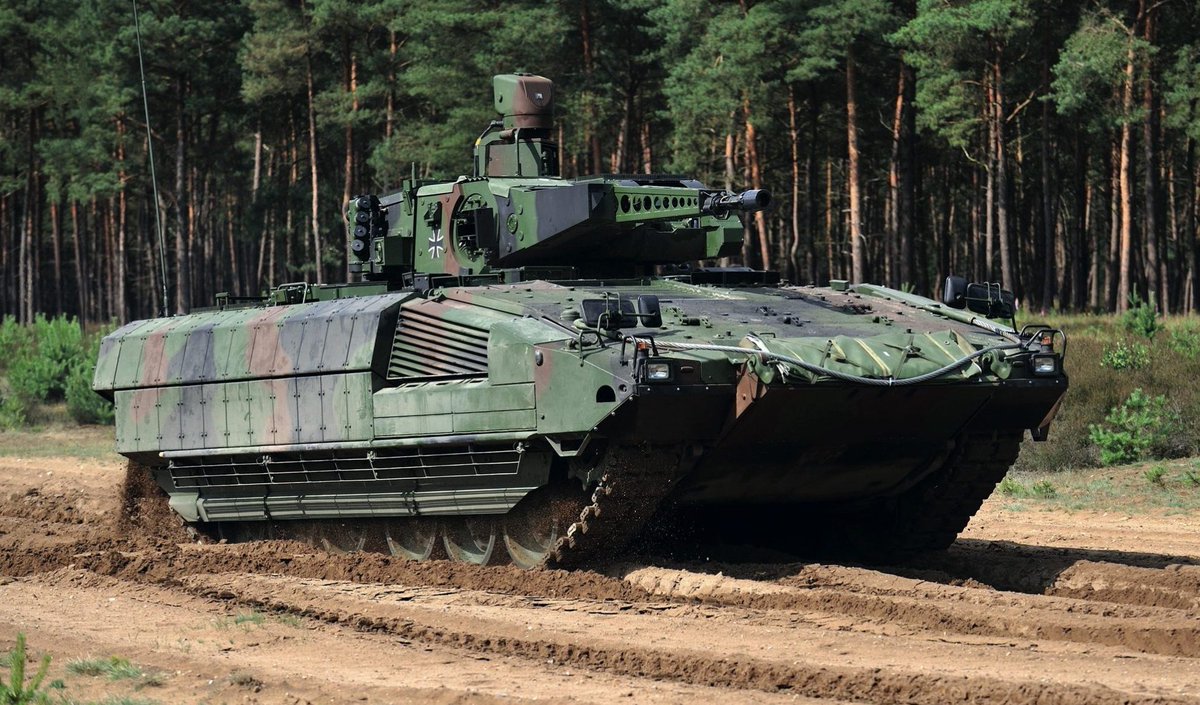
To summarize: Western anti-tank guided missiles with tandem warheads and Western overfly top attack guided missiles can defeat all russian armor.
Russian missiles, even with tandem warheads, can only defeat Western tanks and IFVs from the side or rear, which is why it is
28/n
Russian missiles, even with tandem warheads, can only defeat Western tanks and IFVs from the side or rear, which is why it is
28/n
imperative for Ukrainian infantry to cover the sides of tanks and IFVs against russian anti-tank teams.
This concludes this thread. Now you know all about warheads, trajectories, fuzes, countermeasures, etc. Tomorrow I will do a thread about missile guidance.
29/end
This concludes this thread. Now you know all about warheads, trajectories, fuzes, countermeasures, etc. Tomorrow I will do a thread about missile guidance.
29/end

• • •
Missing some Tweet in this thread? You can try to
force a refresh