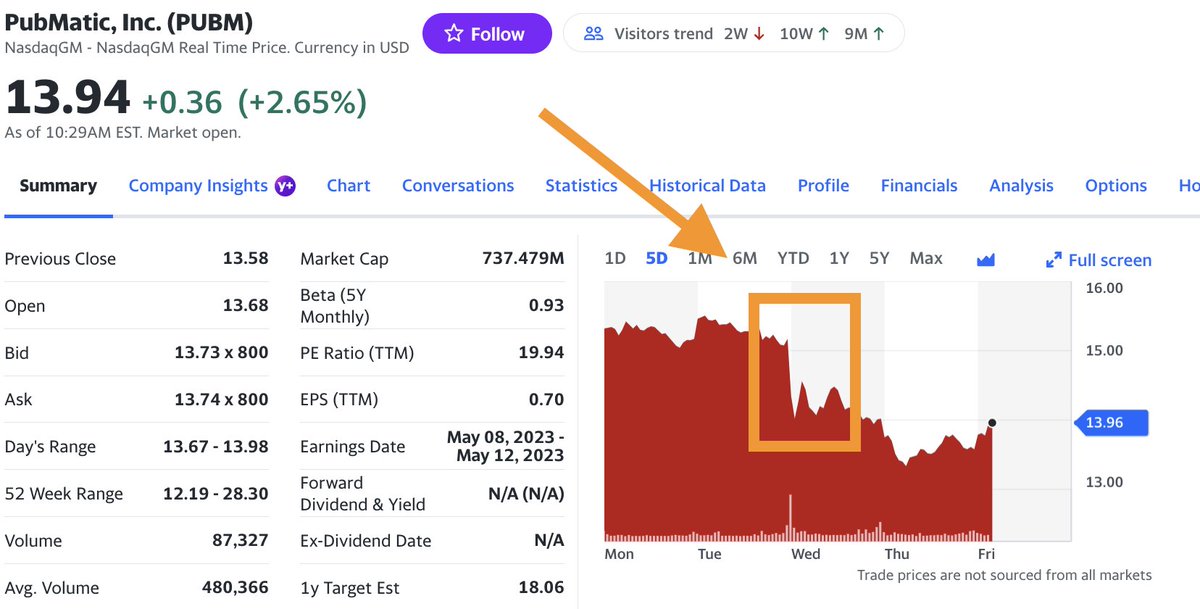
Banks collapsing has many worried about recession
Can companies in your portfolio weather the storm?
3️⃣ simple metrics to give you the answer⤵️
Can companies in your portfolio weather the storm?
3️⃣ simple metrics to give you the answer⤵️
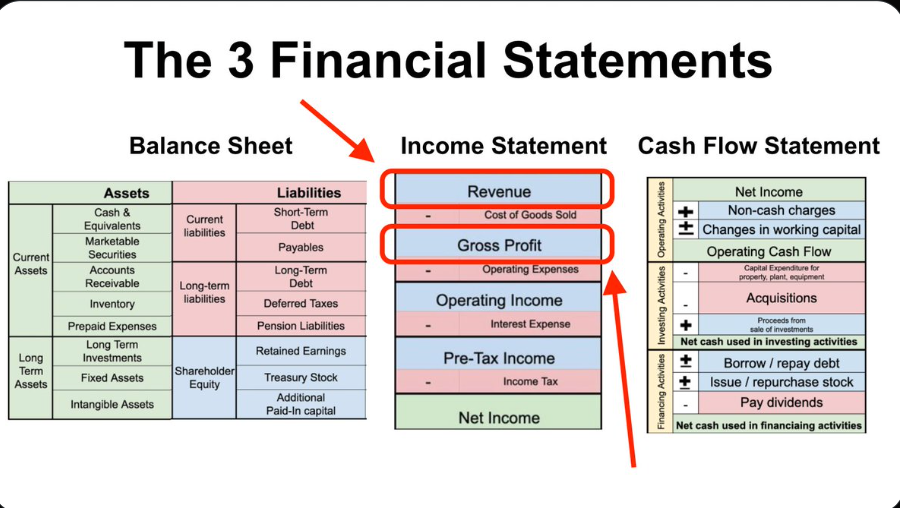
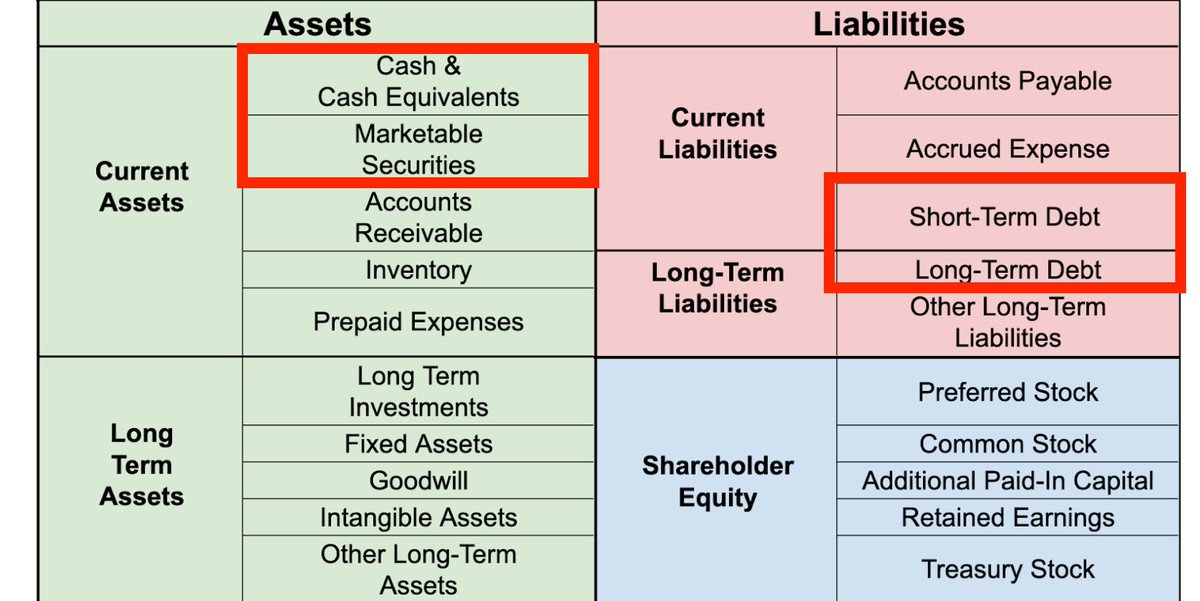
The first two metrics come from the BALANCE SHEET
1️⃣ Cash & Short-Term Investments
2️⃣ Debt (especially Long-Term)
This tells you a company's NET CASH position.
➕ Net Cash means more cash than debt
➖ Net Cash means more debt than cash
1️⃣ Cash & Short-Term Investments
2️⃣ Debt (especially Long-Term)
This tells you a company's NET CASH position.
➕ Net Cash means more cash than debt
➖ Net Cash means more debt than cash
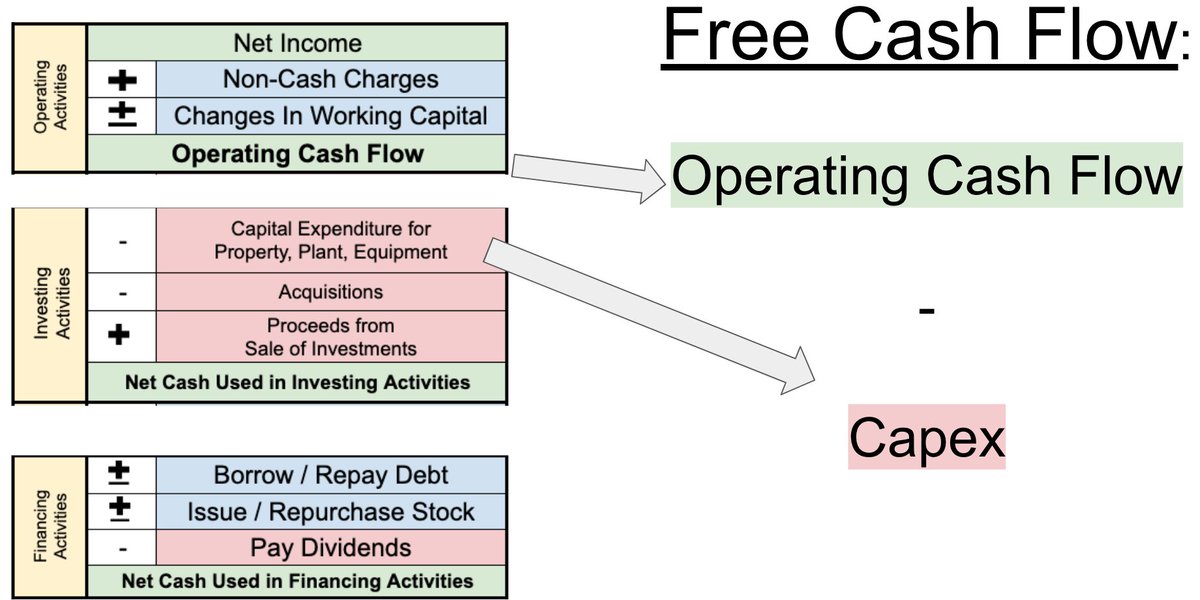
The last metric comes from the statement of CASH FLOWS
3️⃣ Free Cash Flow
The calculation⤵️
3️⃣ Free Cash Flow
The calculation⤵️
Think about it this way:
👉 The NET CASH position tells you if there's any gas sitting in the tank
👉 Free Cash Flow tells you if gas is GOING INTO or OUT OF the tank
The higher the net cash and FCF are, the better
👉 The NET CASH position tells you if there's any gas sitting in the tank
👉 Free Cash Flow tells you if gas is GOING INTO or OUT OF the tank
The higher the net cash and FCF are, the better
Put in one of 3 buckets
👉 FRAGILE: ➖ Net Cash & ➖ FCF
These will suffer when a crisis hits
👉 ROBUST: ➕ Net Cash & ➕ FCF
These will survive a crisis, but not get stronger
👉ANTIFRAGILE: ➕➕ Net Cash & ➕➕ FCF
These will get stronger BECAUSE OF the crisis. Here's how⤵️
👉 FRAGILE: ➖ Net Cash & ➖ FCF
These will suffer when a crisis hits
👉 ROBUST: ➕ Net Cash & ➕ FCF
These will survive a crisis, but not get stronger
👉ANTIFRAGILE: ➕➕ Net Cash & ➕➕ FCF
These will get stronger BECAUSE OF the crisis. Here's how⤵️
If you have TONS of cash and LOTS of FCF, you can do things others can't:
1️⃣ Acquire distressed competitors
2️⃣ Buyback your own shares on the cheap
3️⃣ Sell your products at a loss -- which you can survive, but drives the competition into bankruptcy
1️⃣ Acquire distressed competitors
2️⃣ Buyback your own shares on the cheap
3️⃣ Sell your products at a loss -- which you can survive, but drives the competition into bankruptcy
You can find all of these on Yahoo! Finance.
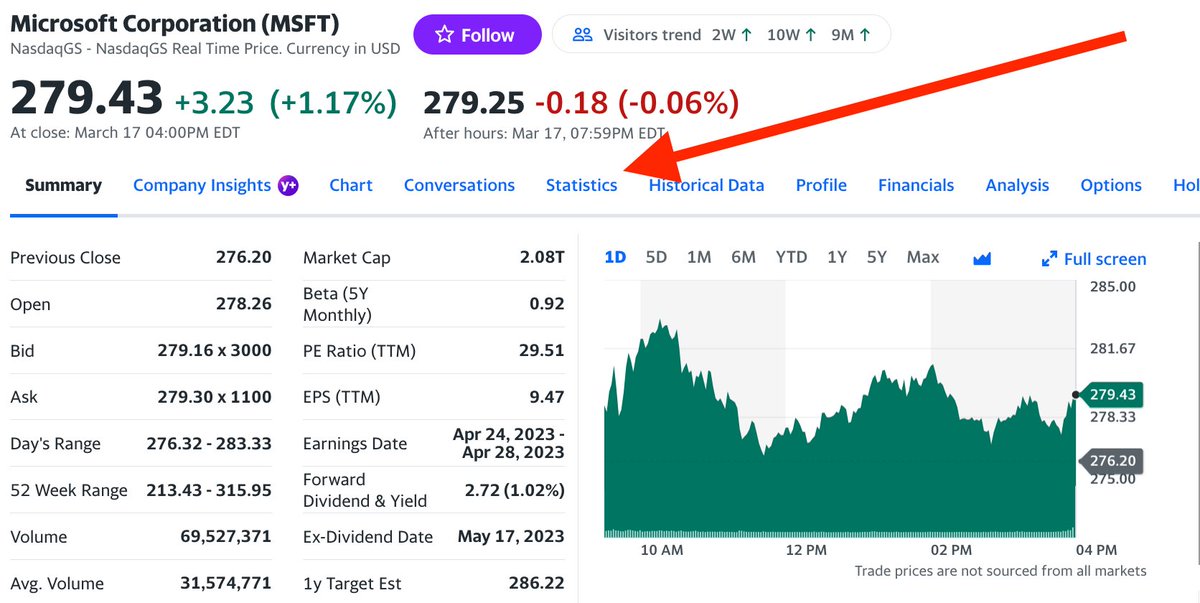
Let's use $MSFT as an example.
Click on the Statistics tab first
Let's use $MSFT as an example.
Click on the Statistics tab first
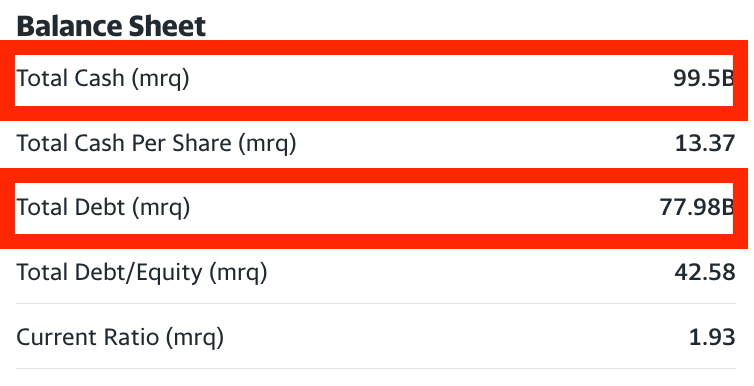
Here, we quickly see
👉 Cash: ~$100 Billion
👉 Debt: ~$78 Billion
Net Cash = ➕ $22 Billion
👉 Cash: ~$100 Billion
👉 Debt: ~$78 Billion
Net Cash = ➕ $22 Billion
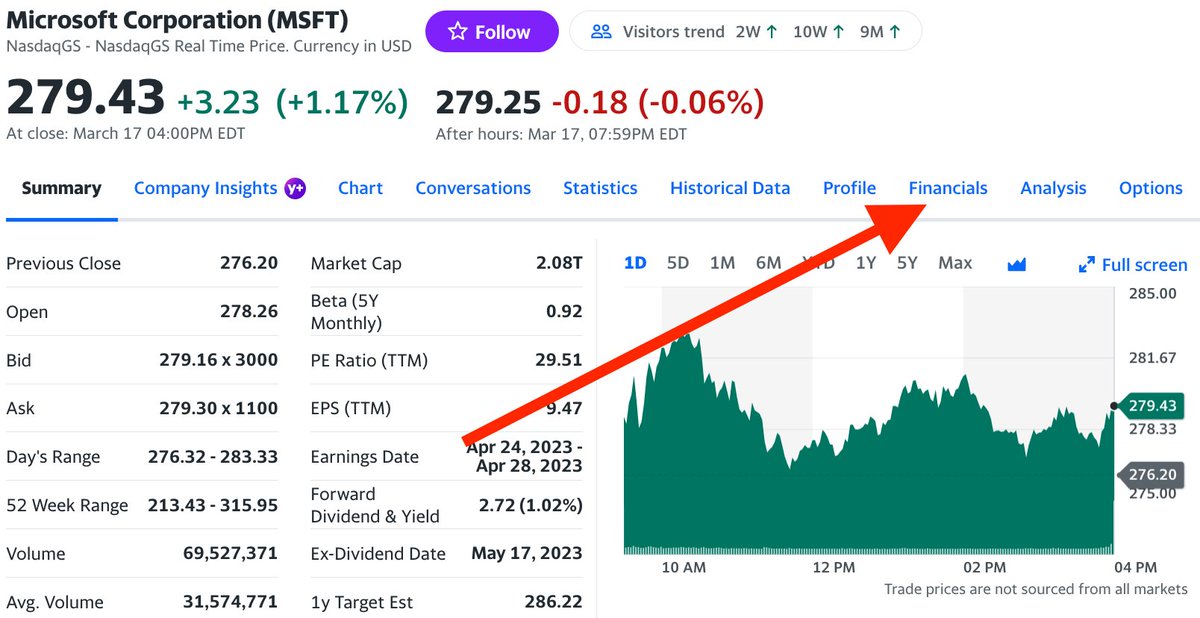
Next, we check Free Cash Flow by clicking on
FINANCIALS
then on
CASH FLOW
FINANCIALS
then on
CASH FLOW
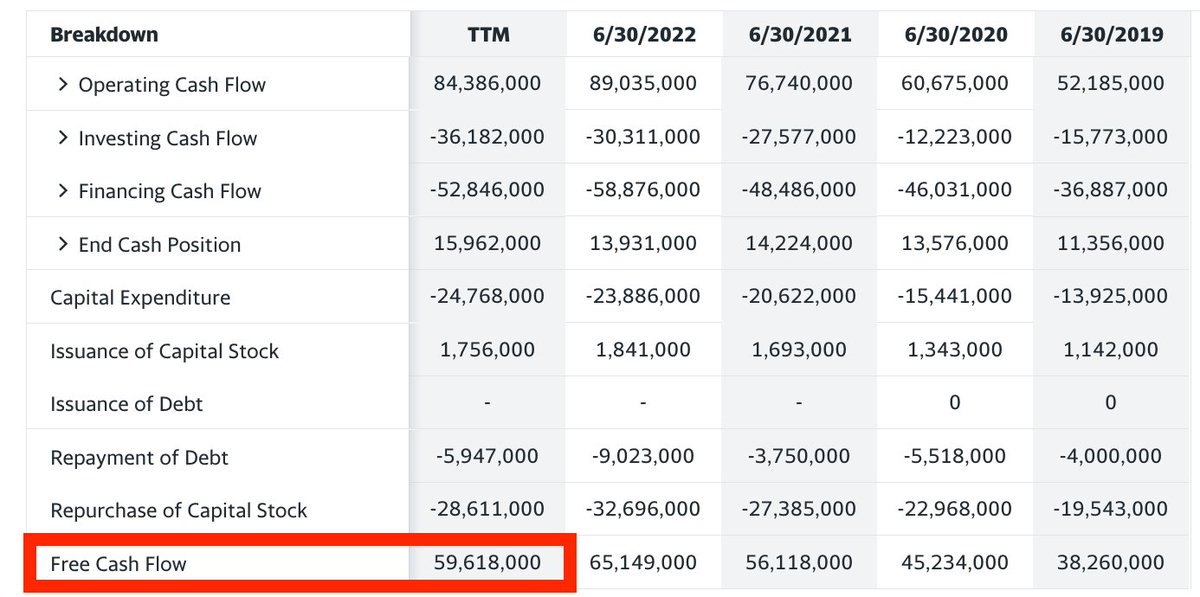
Scroll down and Free Cash Flow over the trailing twelve months (TTM) is calculated for you.
For $MSFT that's.....👀$60 Billion👀
Yes, you read that right. It has $60 Billion flowing into its accounts ANNUALLY right now
For $MSFT that's.....👀$60 Billion👀
Yes, you read that right. It has $60 Billion flowing into its accounts ANNUALLY right now
That does NOT mean $MSFT stock won't go down in a recession.
It DOES mean $MSFT will be able to do things others can't in a downturn.
And in the LONG-RUN, that *will* have a positive effect on $MSFT stock
It DOES mean $MSFT will be able to do things others can't in a downturn.
And in the LONG-RUN, that *will* have a positive effect on $MSFT stock
If focusing on the LONG-RUN matters to you as an investor, you'll love my FREE weekly, newsletter. 50,000+ investors are already subscribed.
Join us by entering your email here:
brianstoffel.com
Join us by entering your email here:
brianstoffel.com
To review
Check:
1️⃣ Cash & Short-Term Investments
2️⃣ Debt (especially Long-Term)
3️⃣ Free Cash Flow
Companies go in one of three buckets
👉 FRAGILE: Lots of debt, little cash, negative FCF
👉 ROBUST: Positive net cash, some FCF
👉 ANTIFRAGILE: MUCH more cash, LOTS of FCF
Check:
1️⃣ Cash & Short-Term Investments
2️⃣ Debt (especially Long-Term)
3️⃣ Free Cash Flow
Companies go in one of three buckets
👉 FRAGILE: Lots of debt, little cash, negative FCF
👉 ROBUST: Positive net cash, some FCF
👉 ANTIFRAGILE: MUCH more cash, LOTS of FCF
• • •
Missing some Tweet in this thread? You can try to
force a refresh