
THREAD latest Covid numbers in England:
TLDR: lots of covid around, hospitalisations going down, no idea what's next or how we'll know...
Inc Long Covid and pilot ONS data 1/12
TLDR: lots of covid around, hospitalisations going down, no idea what's next or how we'll know...
Inc Long Covid and pilot ONS data 1/12
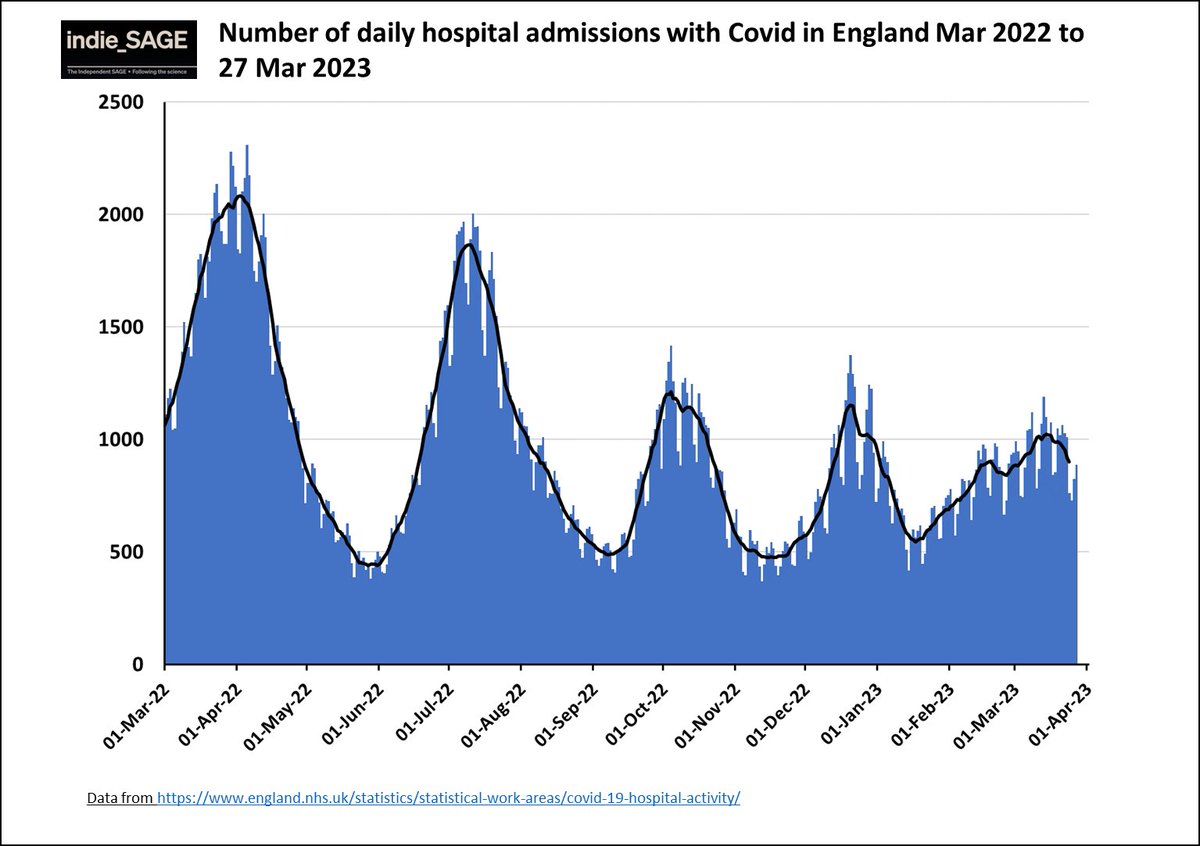
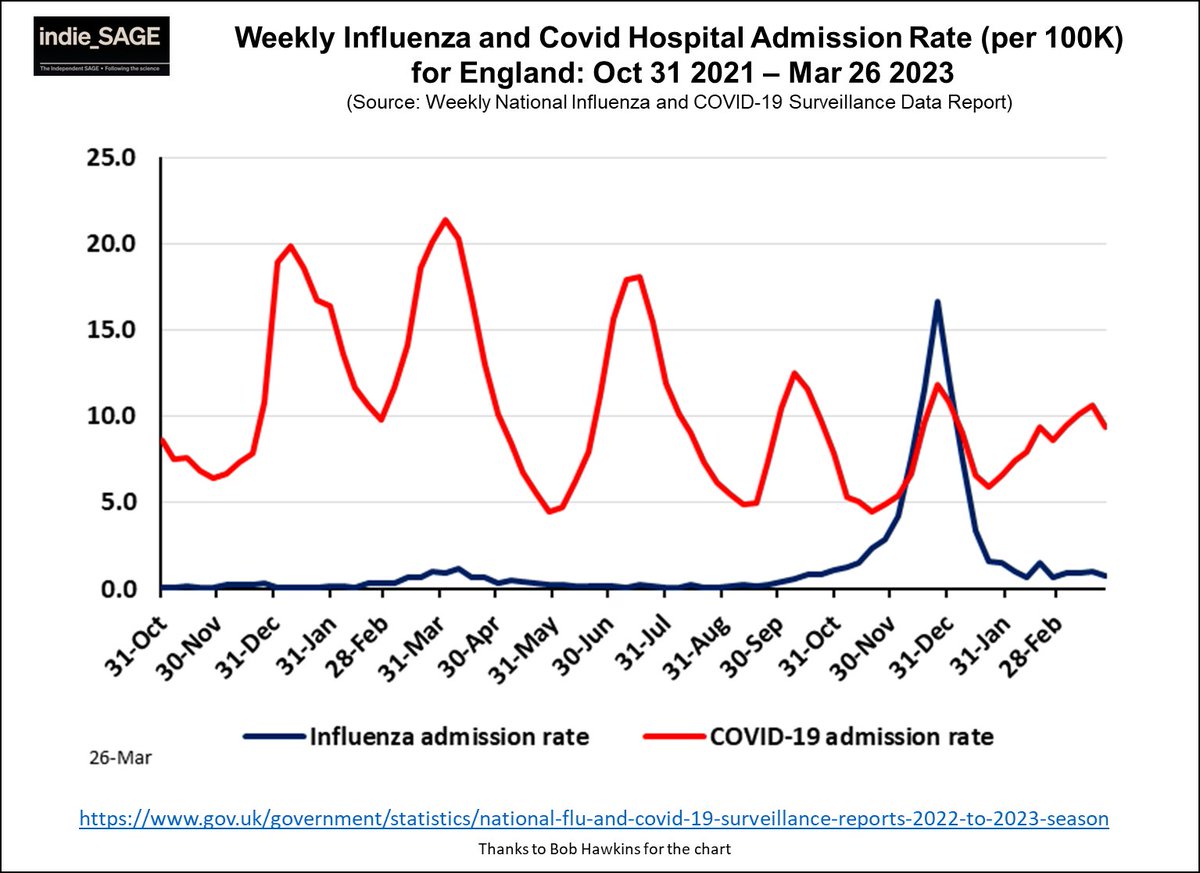
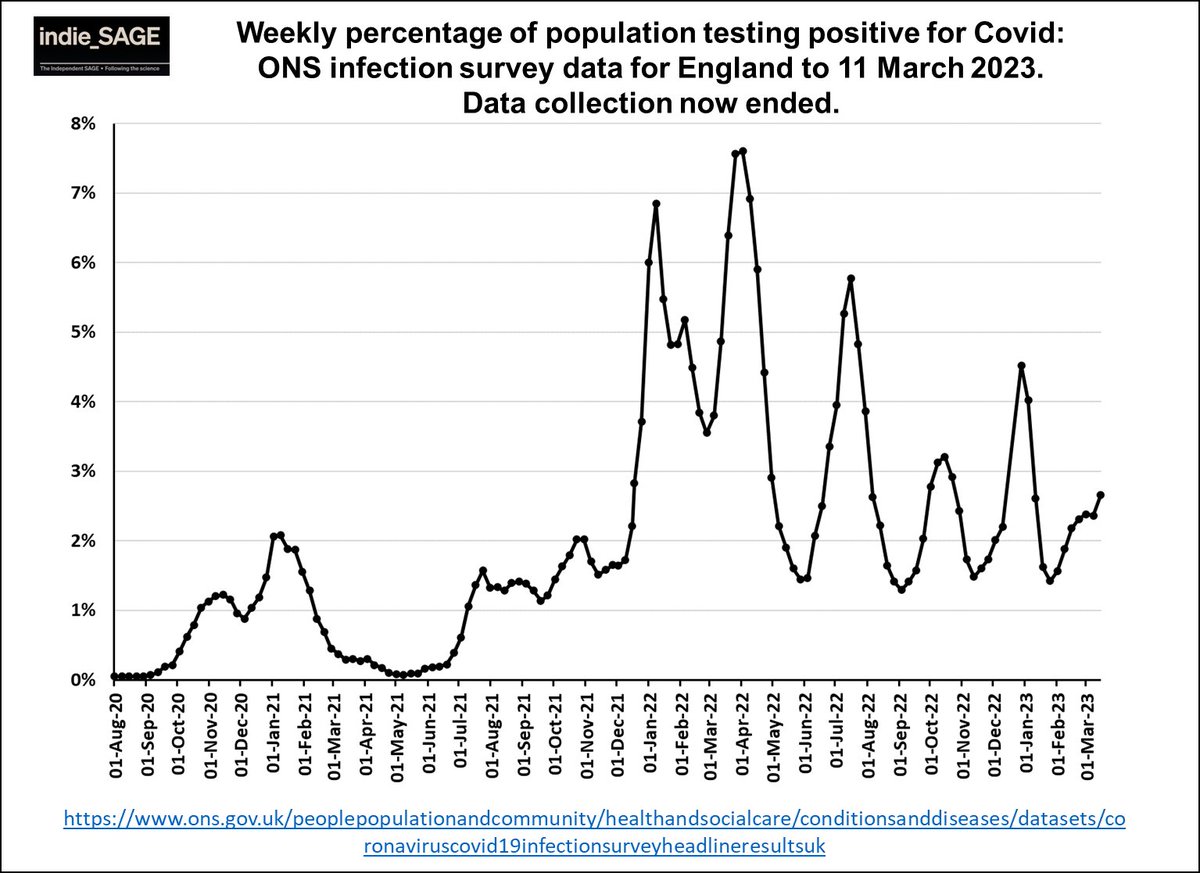
ONS infection survey has stopped so no new prevalence data. Hospital admissions are going down, suggesting the latest wave is receding. 2/12 
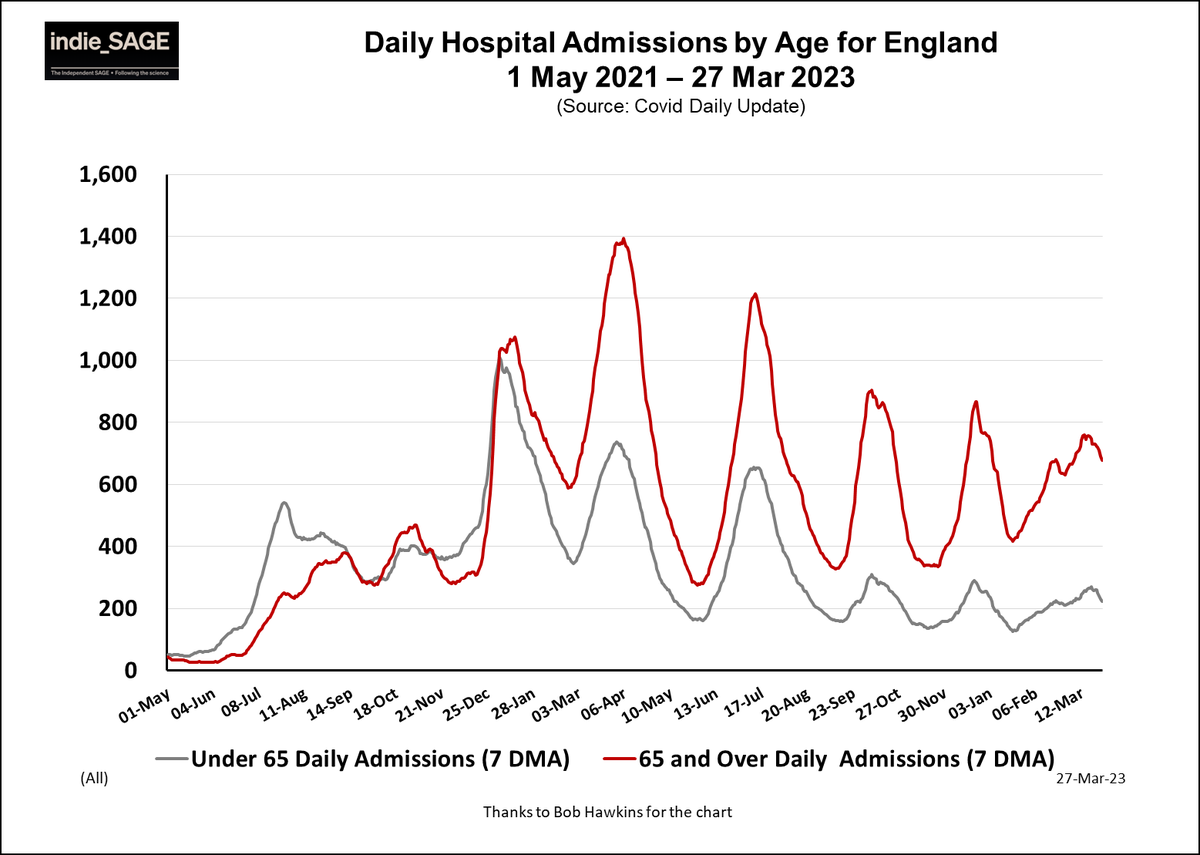
5% (!) of 70+ were infected in week to 11 March and this was reflecting in over 65 hospital admissions, but those are coming down - good! But remain relatively high at the moment. 3/12
But hospital testing has been reducing since last summer and is about to reduce further still. So hospital data is become less comparable to previous eras & also less reflective of community prevalence. So we are losing this info alongside the ONS infection survey. 😪 4/12

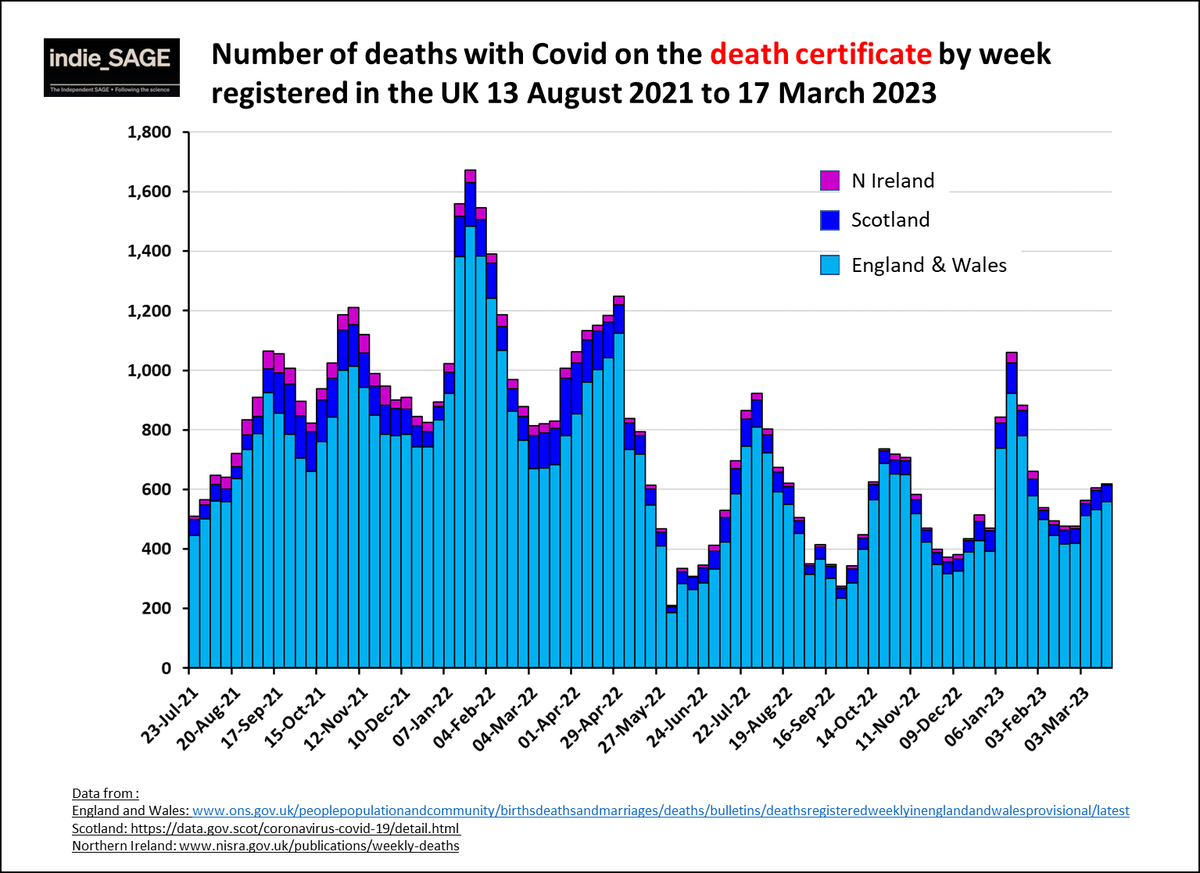
Deaths in England & Wales are still going up reflecting the increase in prevalence since late Jan. Since this is only just starting to fall, it is likely that Covid deaths will increase for a few more weeks yet. 5/12
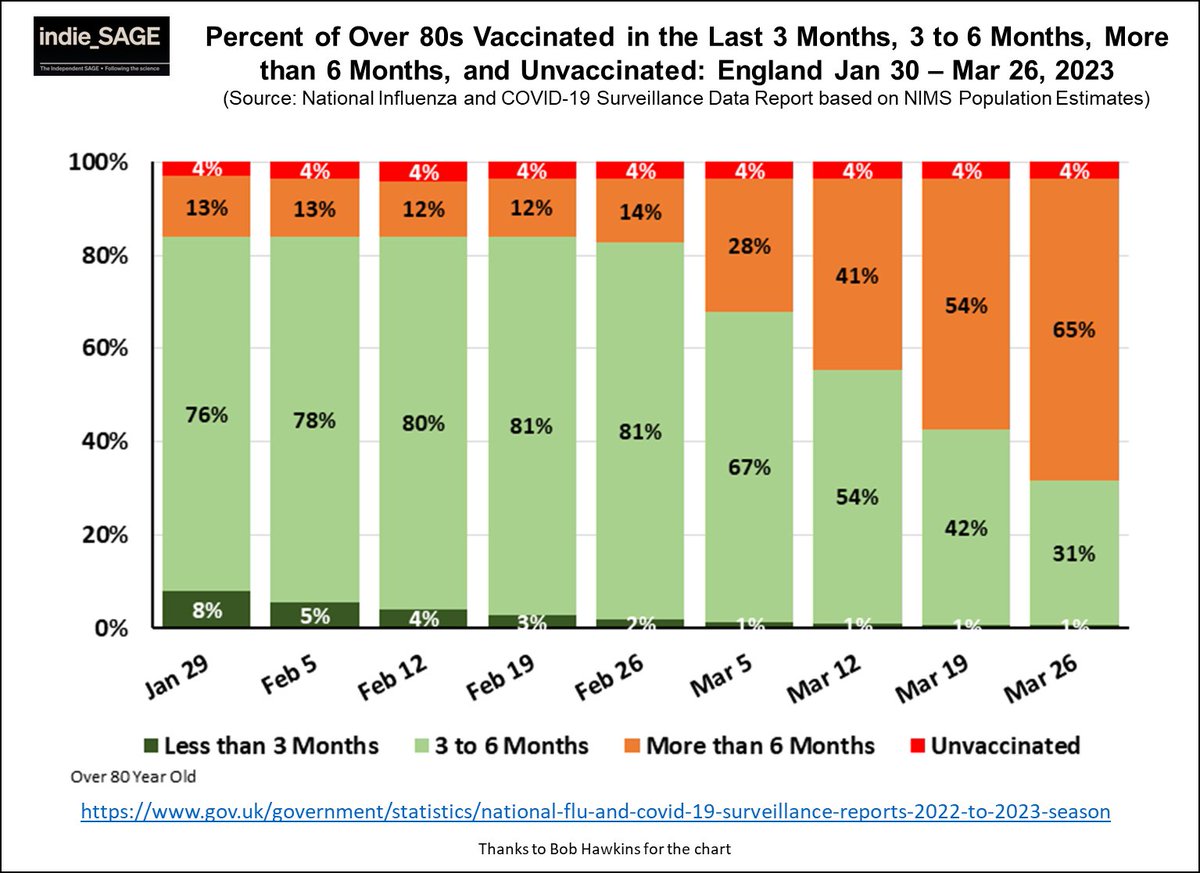
Almost 80% of the population is more than 6 months out from their most recent vaccine dose and about 40% more than a year out. Two thirds of over 80s are more than 6 months out too - thankfully their immunity will be topped up by the Spring booster starting soon. 6/12
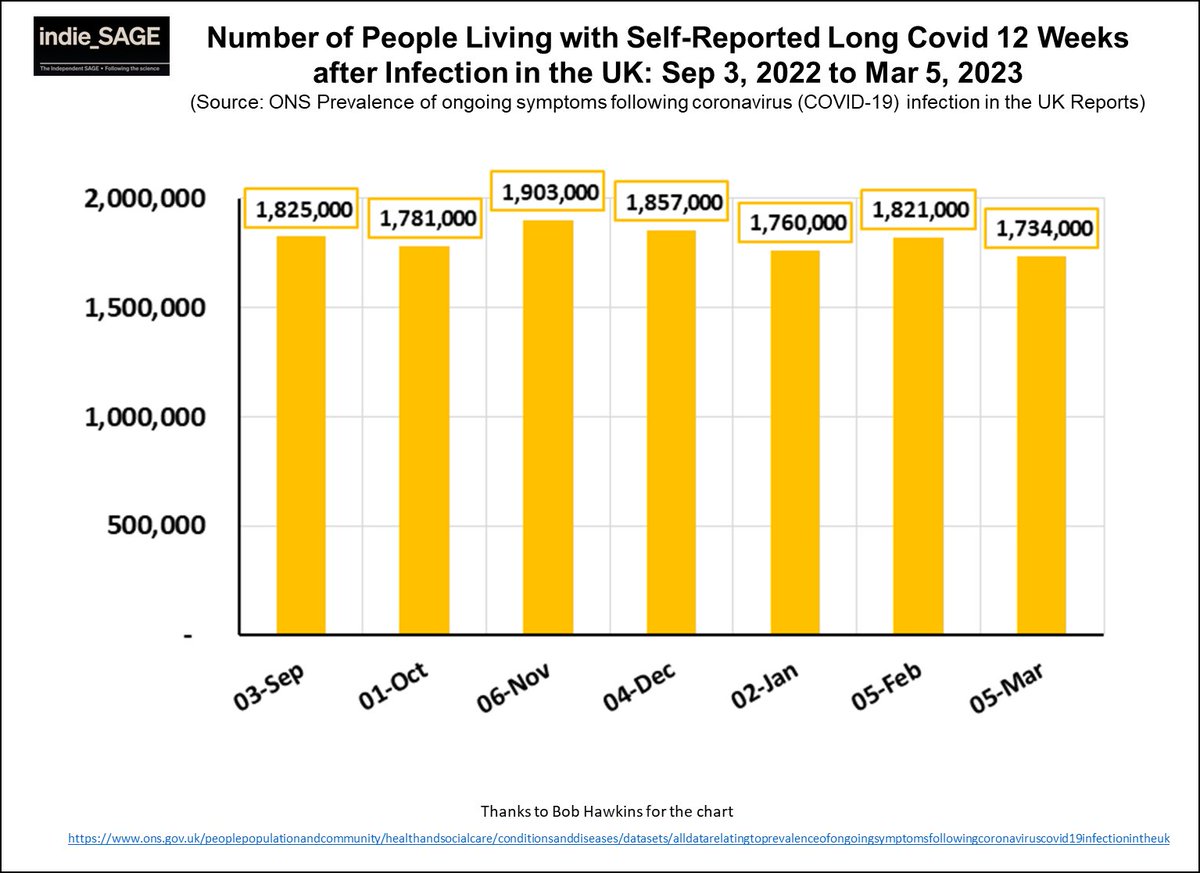
The (last?!) Long Covid report is out - numbers reporting long covid for at least 12 weeks are stubbornly between 1.7-1.9m over last 6 months. People are recovering but people also developing new Long Covid. Still a v high number! 7/12
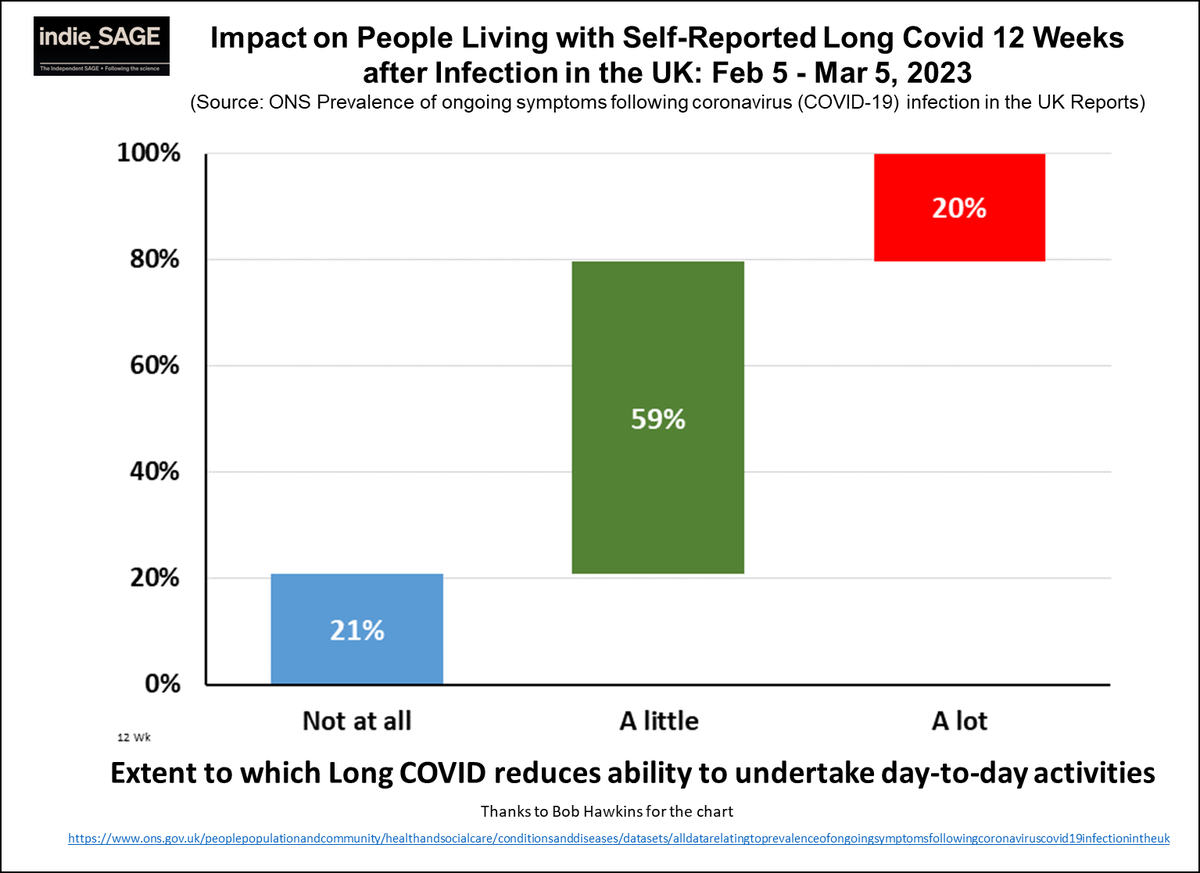
Of those reporting ongoing symptoms, about 1 in 5 say it has no impact on them and 1 in 5 say it has a big impact. The remaining 3/5 say it has some impact. So vast majority reporting some impact - it's not inconsequential. 8/12
So data on Covid is going away but Covid isn't. Pilot ONS data this winter looked at flu & RSV alongside main Covid survey (all random testing). Covid clearly higher outside winter season and all three spiked in December 2022 9/12
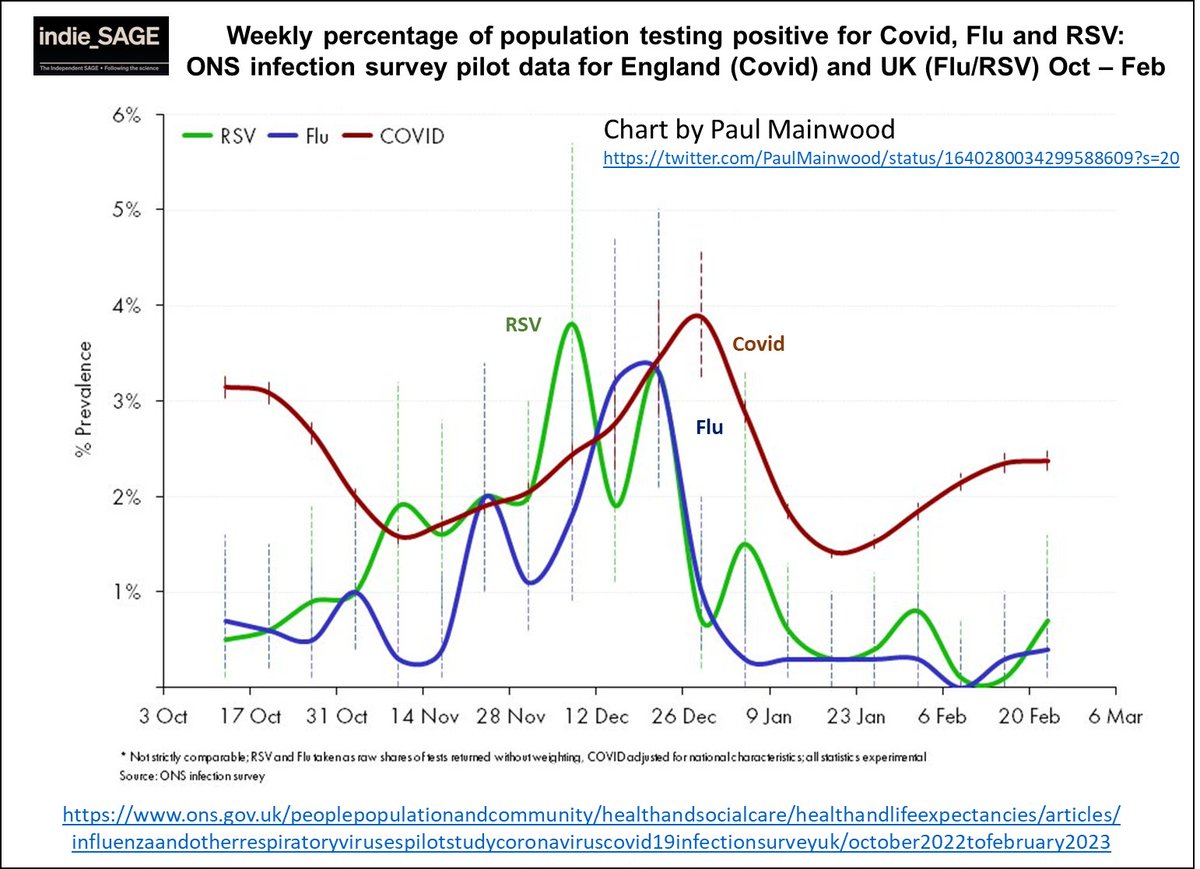
The 3 coming together in Dec would have contributed significantly to the winter NHS disaster that we had in Dec/Jan. Unsurprising cos we've added a serious 3rd disease to our population - and no reason it won't happen winter 2023 too! How are we going to deal with it?! 10/12
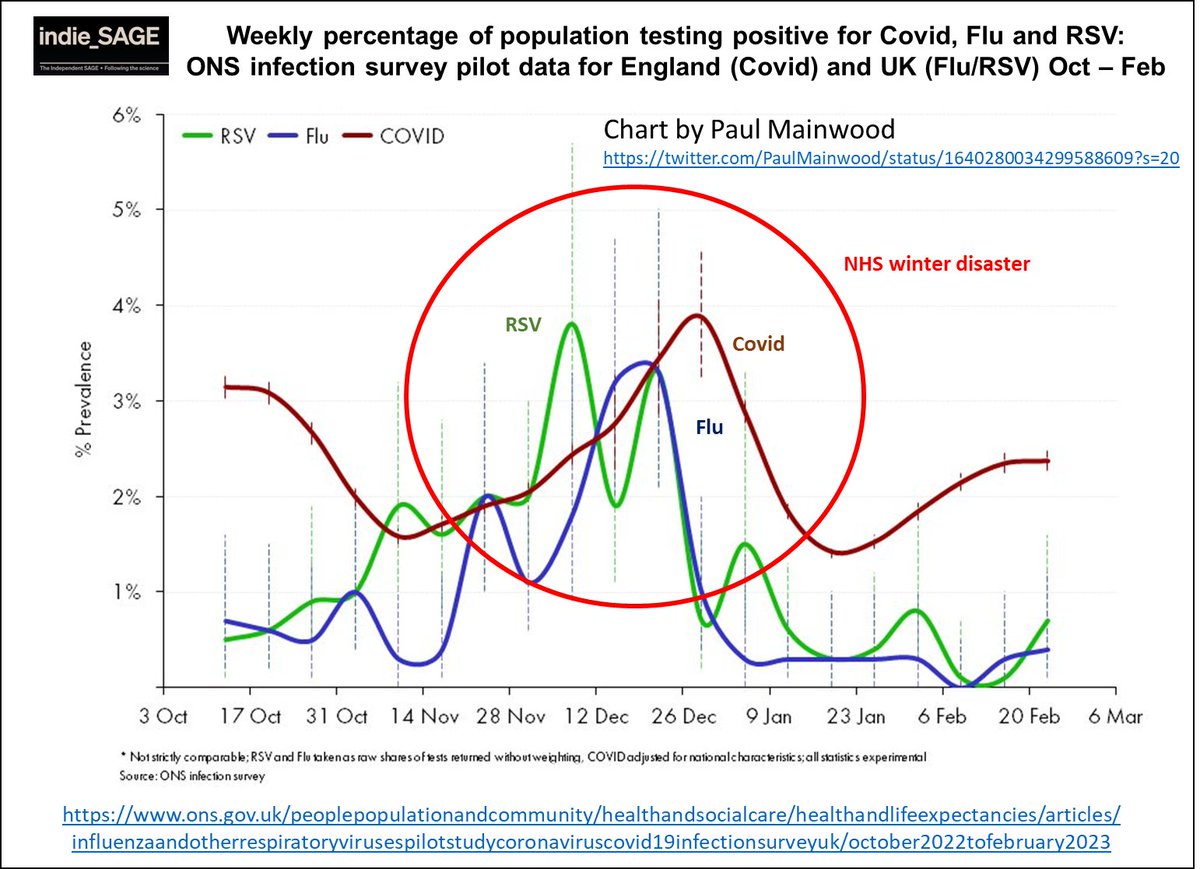
Outside of winter, Covid remains a significant burden on NHS and with significant in hospital transmission.
How many more waves will there be this year? Or will it be more of a high constant level between 2%-3% of population infected? 11/12
How many more waves will there be this year? Or will it be more of a high constant level between 2%-3% of population infected? 11/12
Continuing high levels of Covid mean that kids will be out of education and adults out of work as they fall sick - on top of the pre-pandemic illnesses. A minority will become longer term sick.
Not great as we struggle for economic recovery. 12/12
Not great as we struggle for economic recovery. 12/12
PS thank you as ever to Bob Hawkins for his help in producing the slides!
• • •
Missing some Tweet in this thread? You can try to
force a refresh






