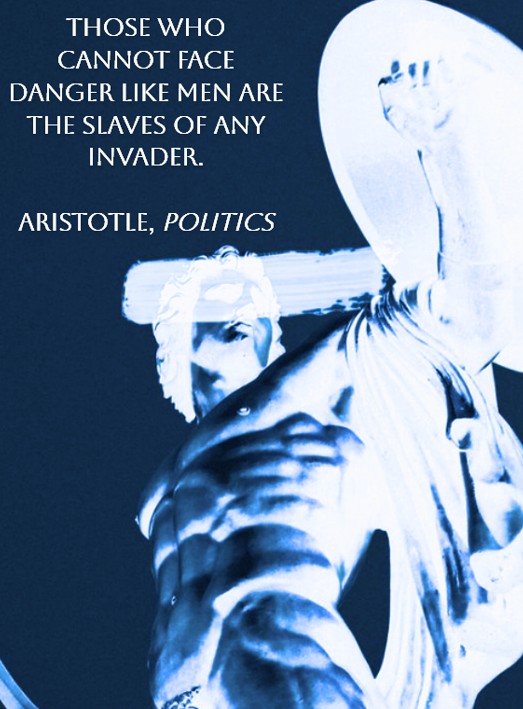
Chad Crowley Profile picture
Apr 1, 2023 31 tweets 11 min read Read on X
1/ In "Twilight of the Idols," the Great Zarathustra, Friedrich Nietzsche, writes: "The Greeks...created the concept of the aristocrat, and they produced a type that is incomparable and supreme: the noble human being, the aristos." 🧵
2/ The Greek concept of ἀρετή, arête ("excellence"), was not merely an abstract ideal, but a way of life and a mode of Being; it was the earthly representation of the pinnacle of human achievement.
3/ The writings of Homer gave birth, and external form, to a new vision of human greatness — a vision that was brought to life and made manifest within the flesh and blood of the ἄριστος, the Aristos ("the best; noblest"), the aristocratic warrior of ancient Hellas."
4/ In this thread, we shall delve into the realm of the Aristos and explore sublime Aristocratic Ideals that thrived in the ancient Greek world. Our aim is to understand and internalize these ideals, embodying them within ourselves as we strive for personal elevation.
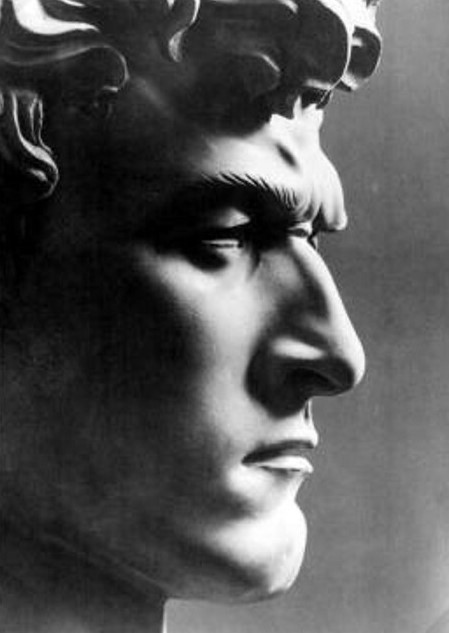
5/ Any exploration of the Greek world begins and ends with the epic writings of Homer. It is through his writings that we will embark on a journey towards aristocratic transfiguration, with the philosophy of Nietzsche playing a prominent role in our odyssey.
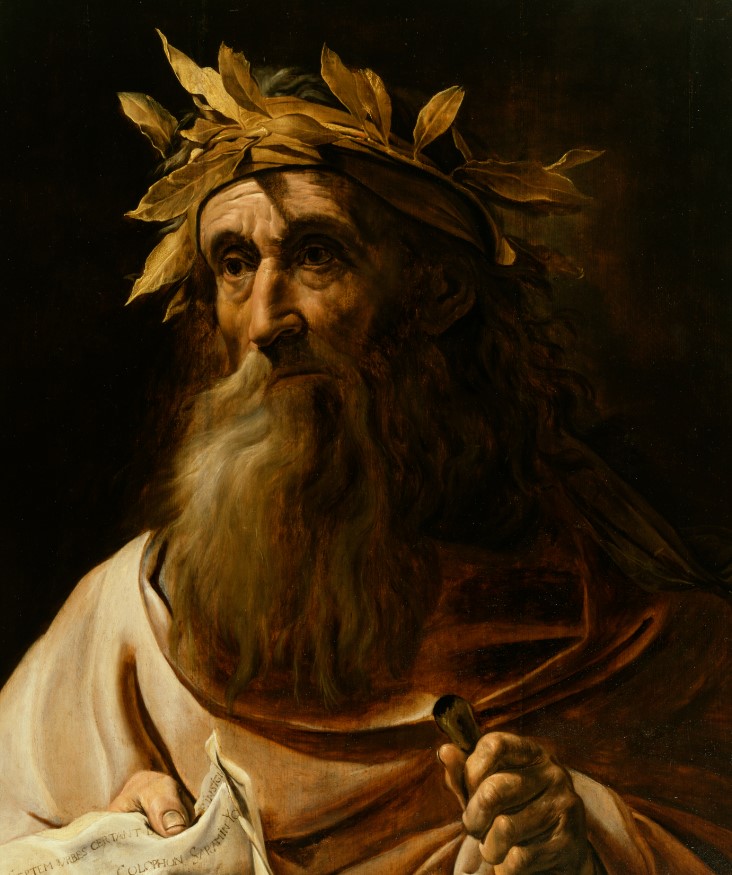
6/ For the Aristos, self-mastery is the key element in embracing arête, and as such, it requires the cultivation of the necessary inner strength and courage to overcome all limitations, vis-à-vis a Nietzschean Will to Power.
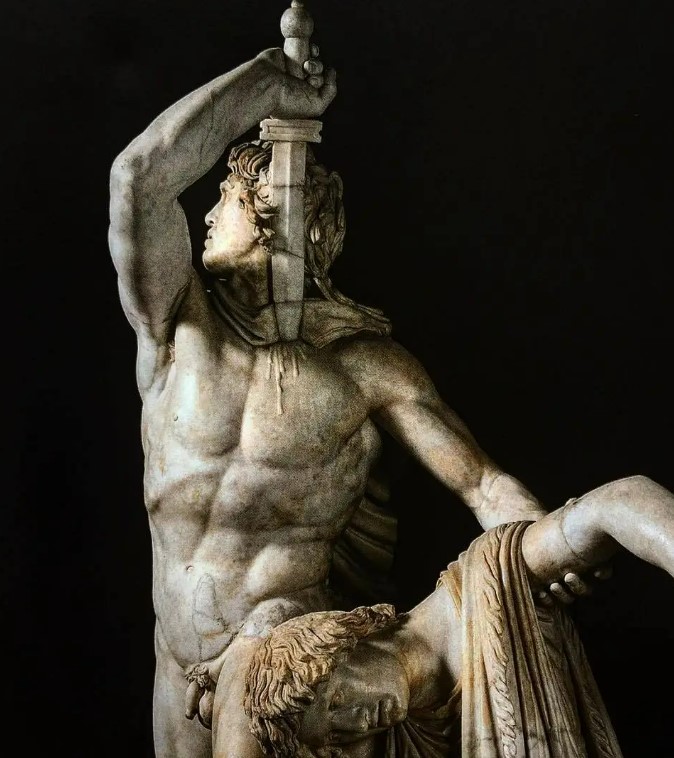
7/ The Aristocratic Ideal of arête was central and fundamental to Homer's epic poems, the "Iliad" and the "Odyssey." In the "Iliad," Achilles, the Aristos par excellence, is portrayed as possessing "the arete of body and of soul" and "the thumos of a lion."
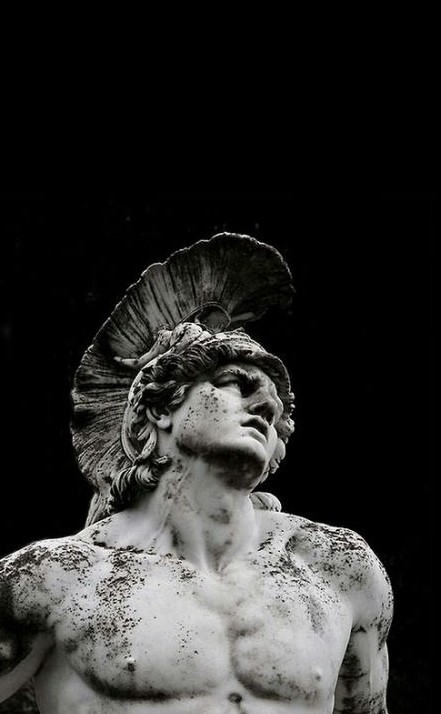
8/ The term thumos, θυμός, denotes spiritedness or a passionate desire to excel. It is through the fiery thumos, much like that of Achilles, that Alexander the Great carved out his great conquests, becoming the embodiment of the conquering spirit.
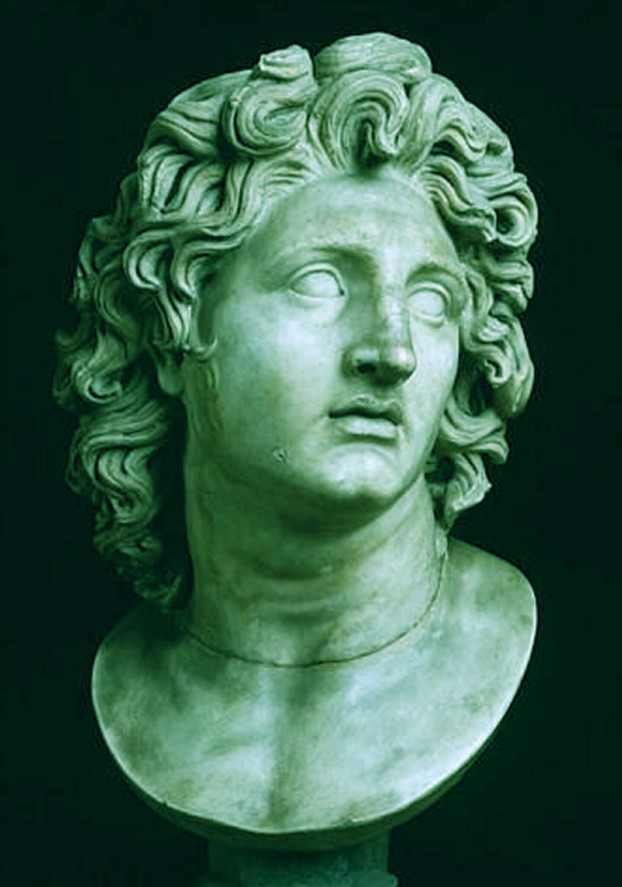
9/ Achilles' arête was evident in his skill as a warrior. With his spear and shield, he carved his way through countless foes, leaving no doubt of his superiority. As Homer recounts in the Iliad: "And now he charges like a god of war, Laying low the fighters left and right."
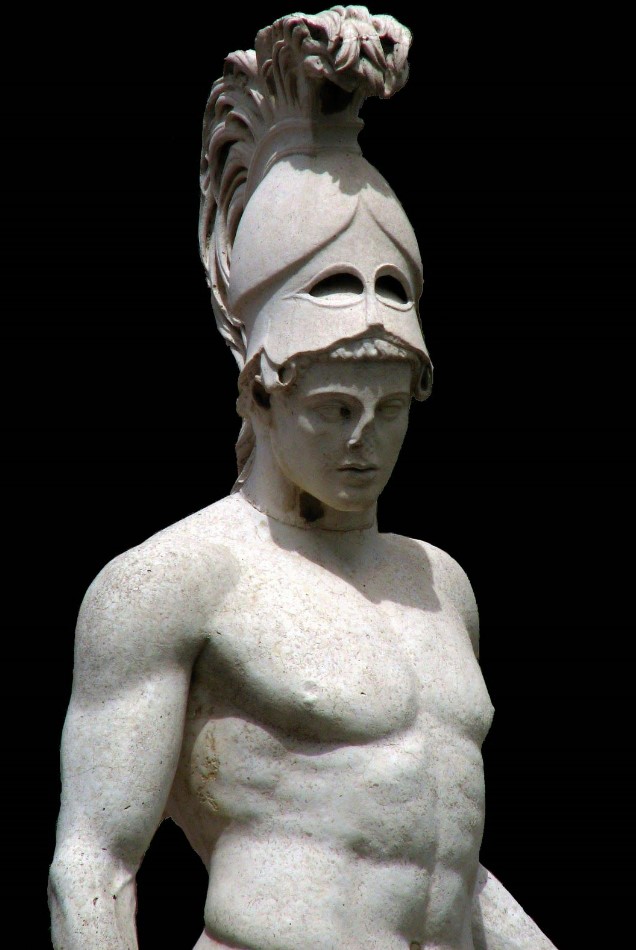
10/ However, Achilles exercised his arête not only through his execution of martial prowess but also through sagacity in battle. As such, Achilles possessed the wisdom to know when to fight, and when to refrain from the struggle of combat.
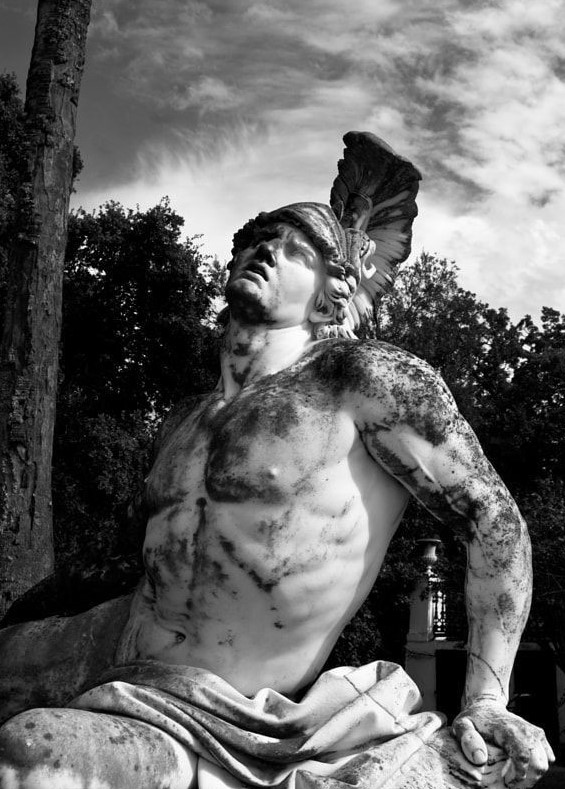
11/ Homer writes, "Achilles drew the great sword from his thigh and was about to dash among the foremost fighters, but Athena came to him from heaven... and spoke to him: 'Do not, by any means, even for a moment, set upon the Trojans and fight with them.'"
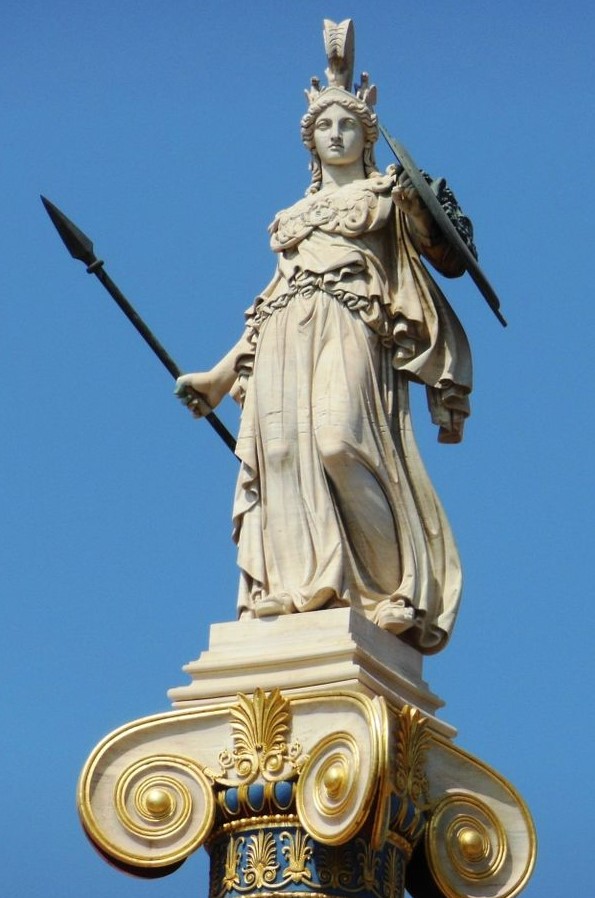
12/ For Nietzsche, arête was the pursuit of self-mastery and creation. He saw arête as a manifestation of the Will to Power, the driving force underlying all human action and creation. To achieve arête was to exercise one's Will to Power and to become a "master of oneself."
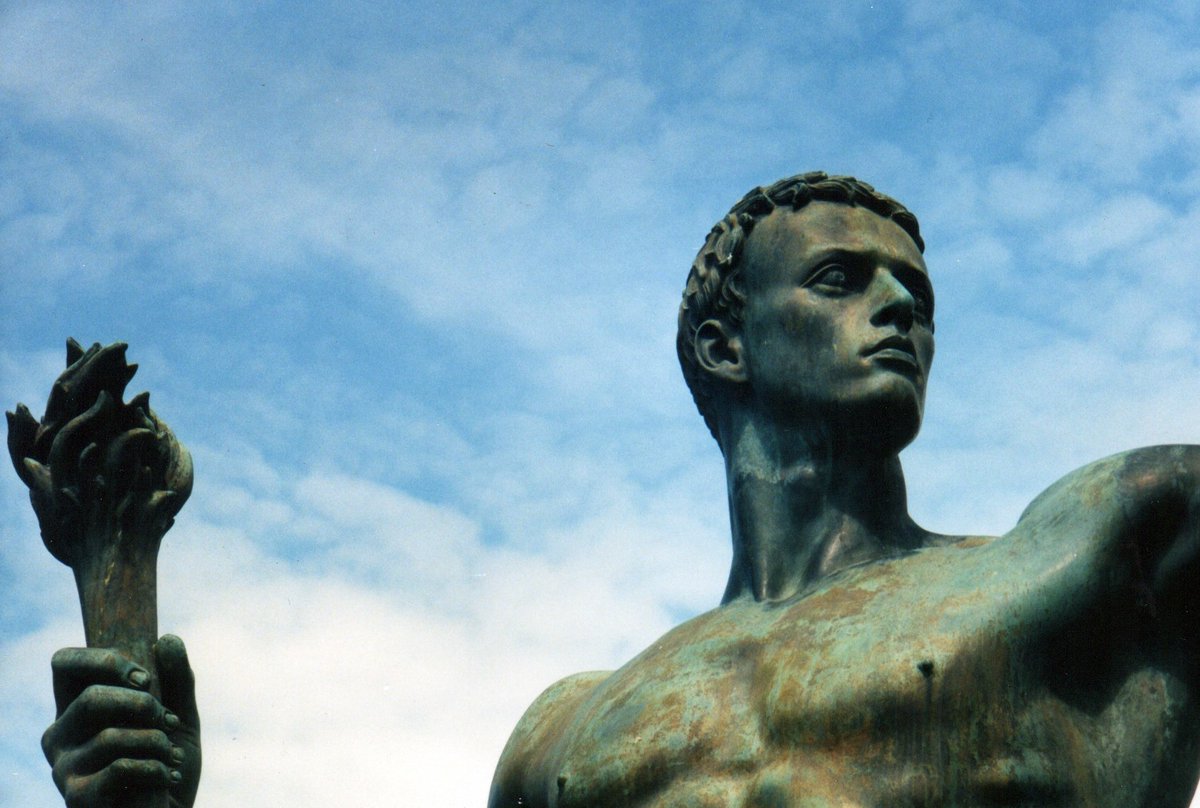
13/ In the pursuit of the Greek Aristocratic Ideal, the concept of τόλμα, tolma ("daring"; "I dare") also holds significant importance. In the "Iliad," the daring bravery of Hector is praised when he says –
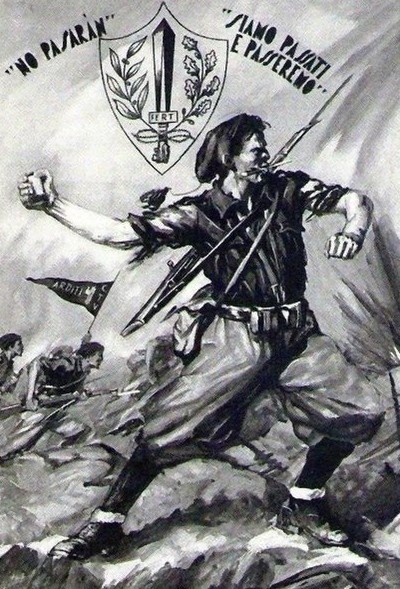
14/ –"Even when my spirit tells me to stand and fight no longer, I will have to disregard it and win glory, or die." By disregarding his own fear, and pushing himself to achieve glory, Hector demonstrates the importance of tolma, of daring courage, in the pursuit of excellence.
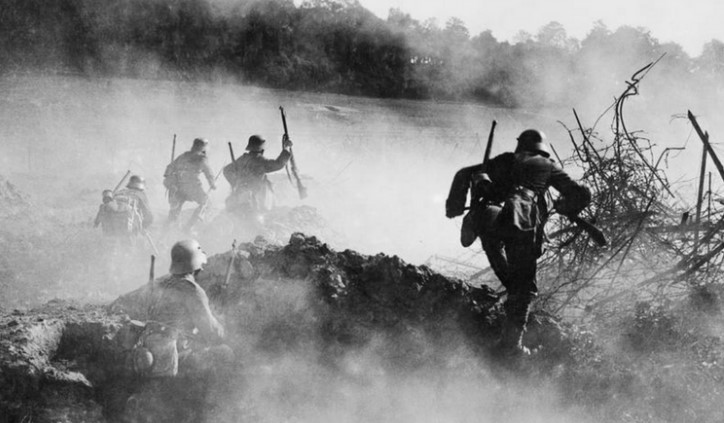
15/ For Nietzsche, tolma is a vital component of his vision of the Übermensch, the Overman, the ideal of human perfection and excellence. The Übermensch is one who possesses the courage and herculean strength to pursue excellence with unwavering determination and daring.
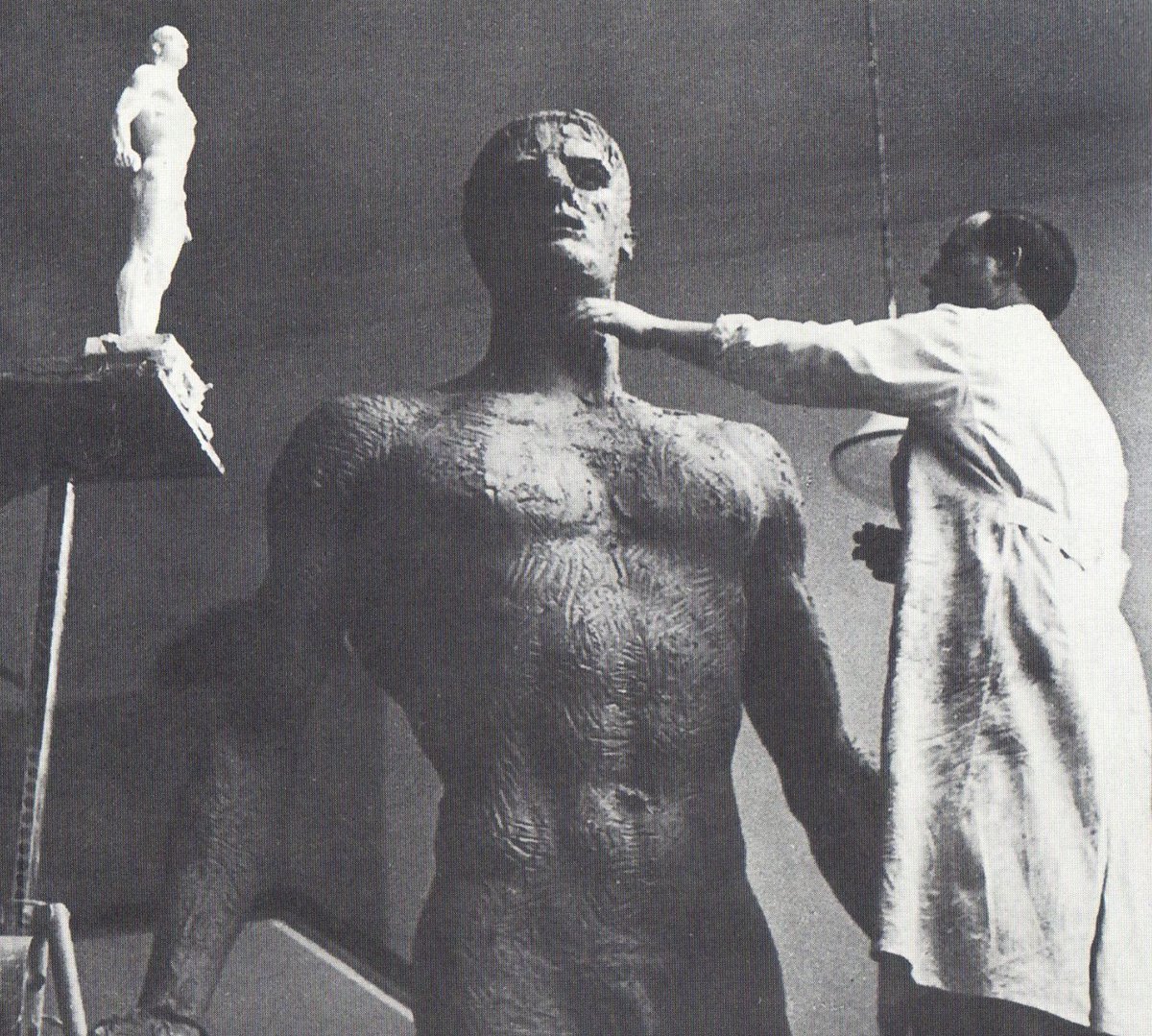
16/ Another fundamental principle of the Aristoi is τιμή, timē ("honor"; "reverence"). In the "Iliad," the mighty Achilles famously declared that his "timē comes before his life." Achilles was the personification of the principle "death before dishonor."
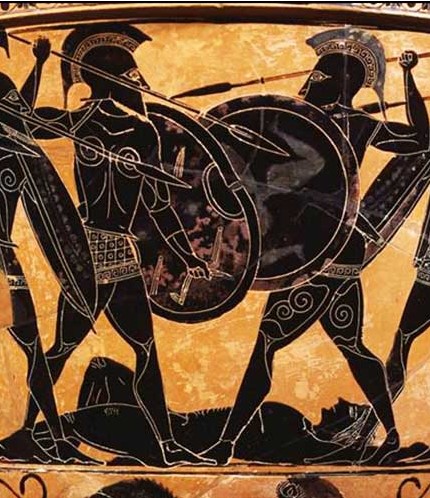
17/ For the ancient Hellenes and all true aristocrats throughout history, honor is not a mere abstraction, but rather an elemental aspect of being. It is a manifestation of noble character, unyielding courage, and an unwavering commitment to excellence.
18/ For Nietzsche, honor was not a passive state of Being, but an active pursuit of greatness and distinction. It was a manifestation of the individual's Will to Power, a reflection of their inner strength, courage, and self-mastery.
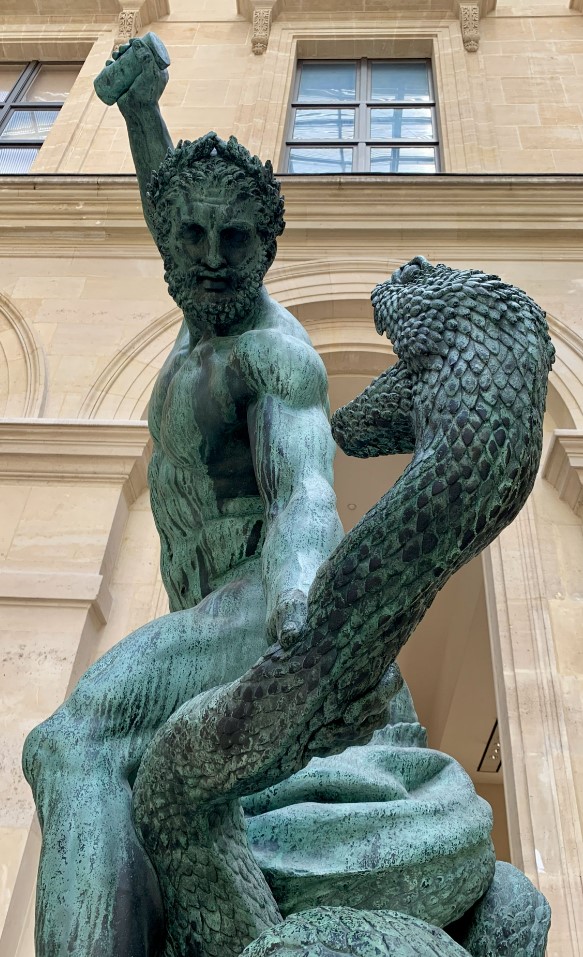
19/ Nietzsche believed that the pursuit of timē, of honor required the constant struggle against the forces of complacency, conformity, and mediocrity, and as such, it was a celebration of the exceptional. In Nietzsche's own words, "The noble soul has reverence for itself."
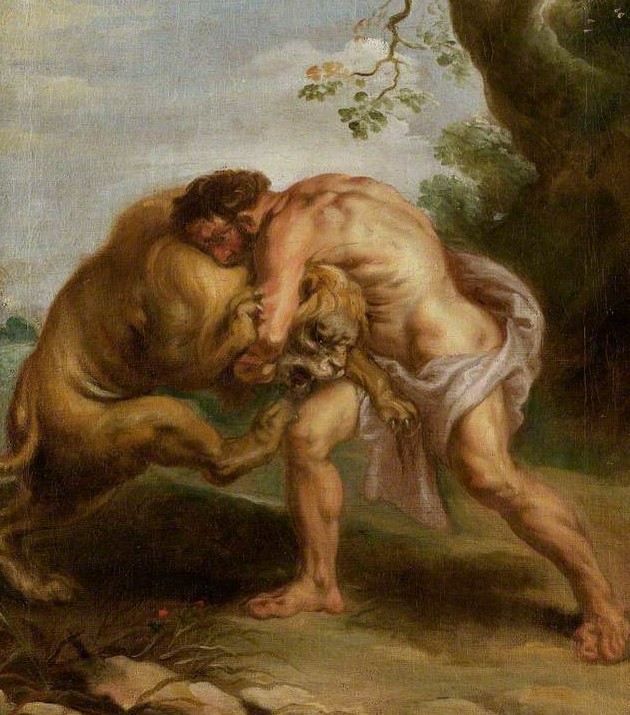
20/ The Aristocratic Ideal of κλέος, kleos ("glory"), was vital to the Aristos. In the "Iliad," Achilles' pursuit of kleos is evident in his willingness to sacrifice his life for the sake of glory when he says, "My fate is to live a short life, but to achieve everlasting glory."
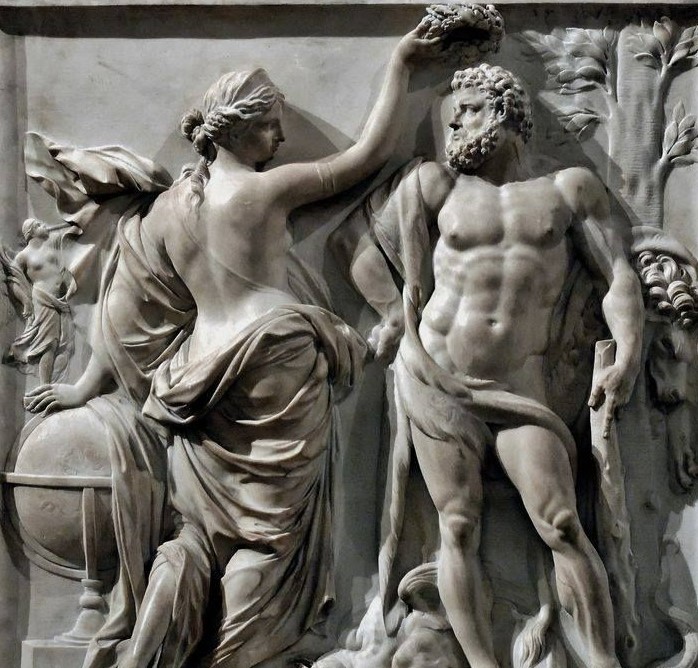
21/ Odysseus, the epic protagonist of the "Odyssey," is another prime example of someone who seeks glory, but in a sense beyond the utilization of martial prowess. In Book VIII of the "Odyssey," he is welcomed to the court of King Alcinous of the Phaeacians —
22/ — where he is asked to recount his fantastic adventures. Through his storytelling, Odysseus is able to achieve glory, and thus gain the admiration and respect of his audience. The bards of the "Odyssey" also sing of the kleos of heroes such as Achilles, Agamemnon, and Ajax.
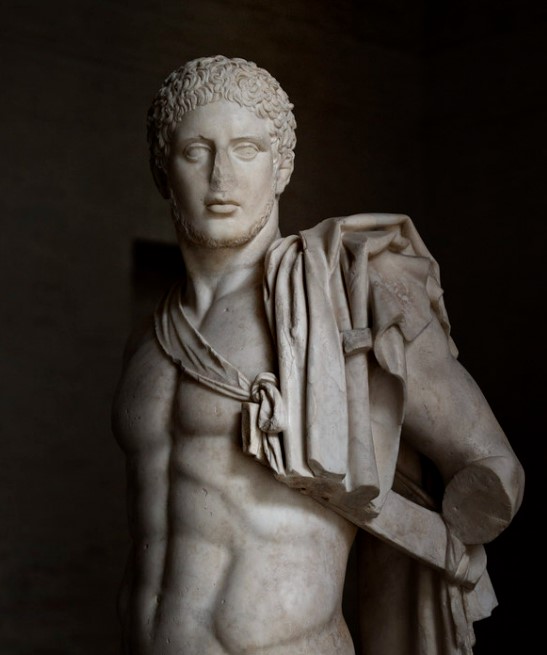
23/ In Nietzsche's view, the pursuit of kleos, or glory, is an expression of the Will to Power. By striving for eternal glory and renown, the Aristos' asserts self-mastery over themselves and dominance over the world.
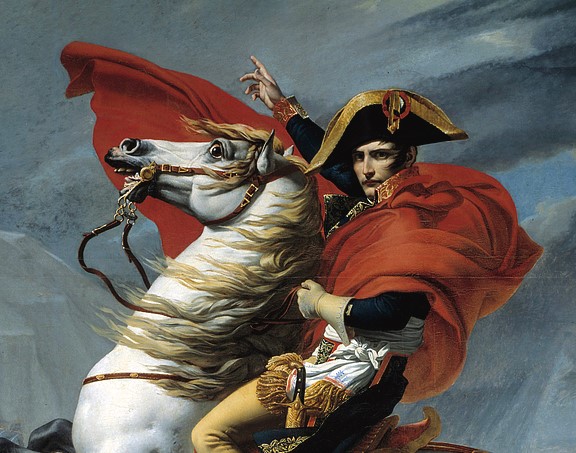
24/ The Aristocratic Ideal of ἀνδρεία, andreia ("courage"; "manly spirit") is another of the timeless attributes of all aristocrats, both past & present. Homer's "Iliad" provides numerous examples of courage and bravery in the face of seemingly insurmountable odds.
25/ One of the most iconic examples of andreia, or courage, in the "Iliad" is expressed by the Trojan prince Hector. Despite facing the wrath of the Greek hero Achilles, Hector shows no fear, and instead, he courageously confronts his foe.
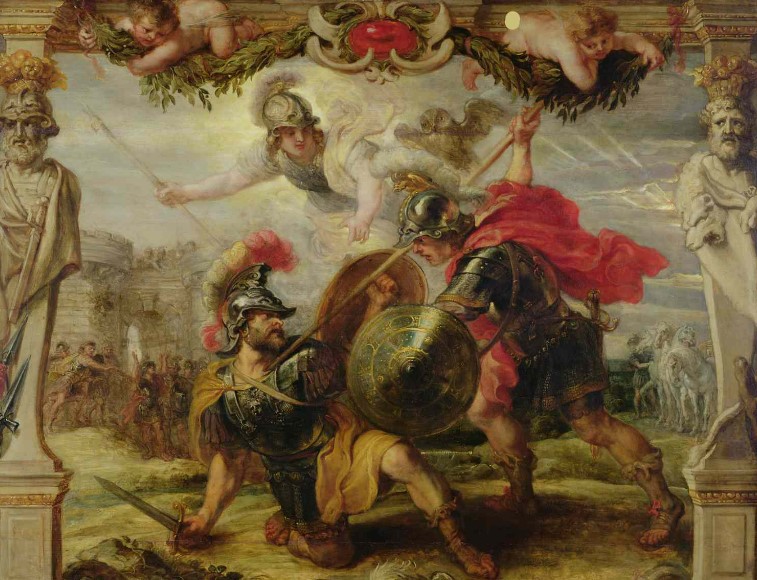
26/ Hector had slain Patroclus, the kinsmen and inseparable companion of Achilles, triggering the famed fury of Achilles. Despite this, Hector does not cower in fear. Instead, he displays great andreia and bravely confronts his adversary.
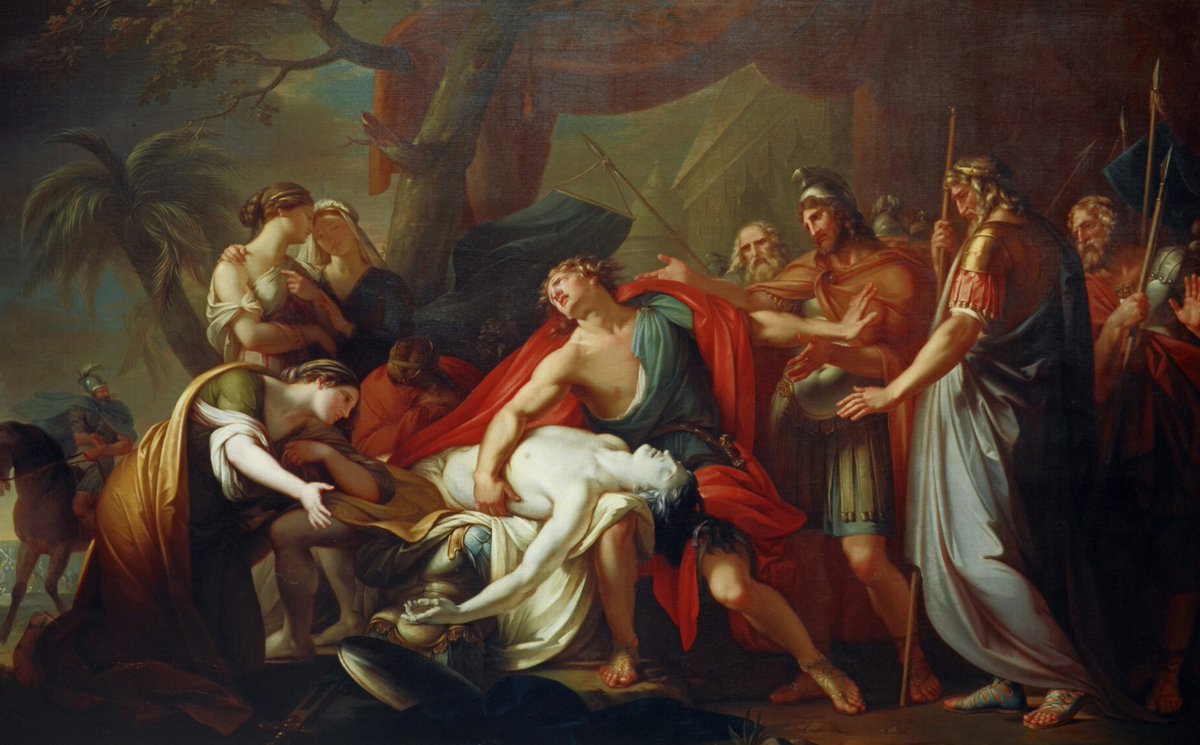
27/ In Book 22 of the "Iliad", Hector is described as "fierce as a bloodthirsty lion," and he is not afraid to face Achilles in single combat, even though he knows that the odds are overwhelmingly stacked against him, and death to be almost certain.
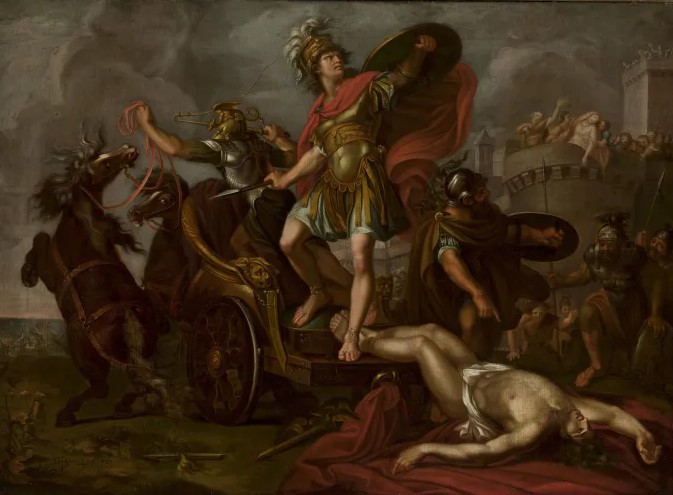
28/ For Nietzsche the pursuit of andreia is not just about physical courage in battle, but more broadly encompasses the courage to face the challenges of life with a "manly spirit." Hector embodies this ideal, not just a warrior but also as a husband, father, and great leader.
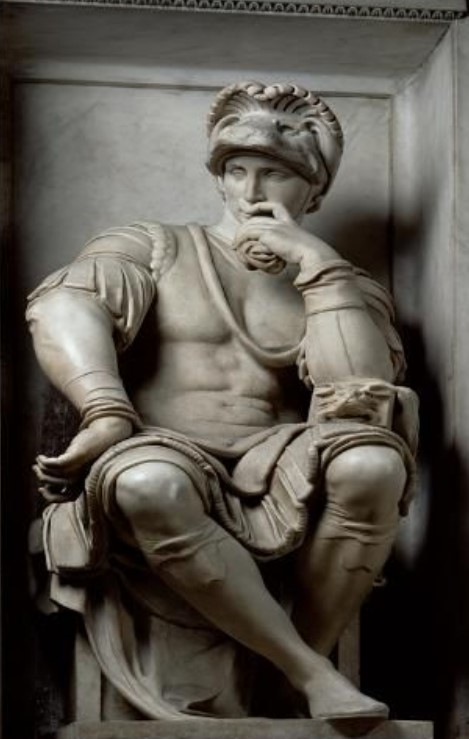
29/ Nietzsche believed that true greatness and power comes from the balance between pursuing both kleos ("glory") and andreia ("courage"), rather than favoring one over the other. It is the harmonious syncretism of the two which endows the Aristos with noble ferocity.
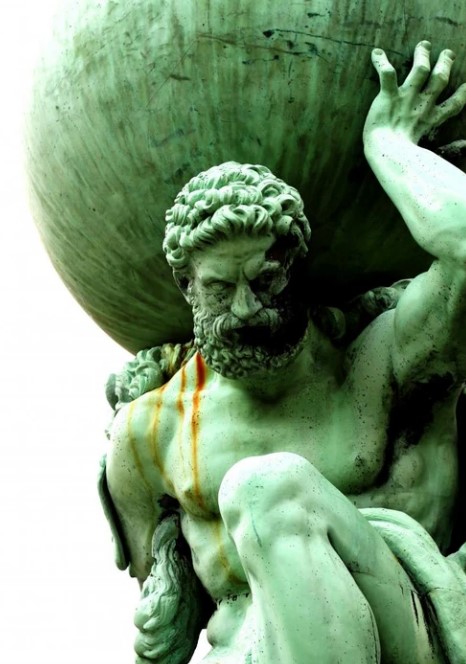
30/ In “The Struggle between Science and Wisdom” Nietzsche writes: “The Greeks progressed quickly, but they likewise declined with frightening quickness. When the Hellenic genius had exhausted its highest types, Greece declined with the utmost rapidity."
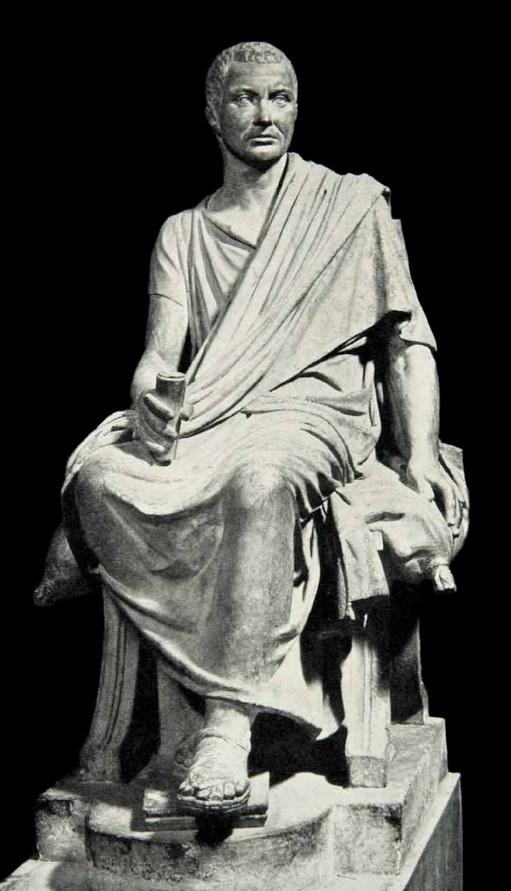
31/ As the heirs to noble Hellas, by embracing principles inherent to the Aristocratic Ideals of our forefathers, we can, and will become the Nietzschean bridge from whence Western Civilization is revitalized & restored to its former majestic glory.
• • •

Missing some Tweet in this thread? You can try to force a refresh

 

Keep Current with Chad Crowley

Chad Crowley Profile picture

Stay in touch and get notified when new unrolls are available from this author!

Read all threads

This Thread may be Removed Anytime!

PDF

Twitter may remove this content at anytime! Save it as PDF for later use!

Try unrolling a thread yourself!

how to unroll video
  1. Follow @ThreadReaderApp to mention us!

  2. From a Twitter thread mention us with a keyword "unroll"
@threadreaderapp unroll

Practice here first or read more on our help page!

More from @CCrowley100

Dec 29, 2025
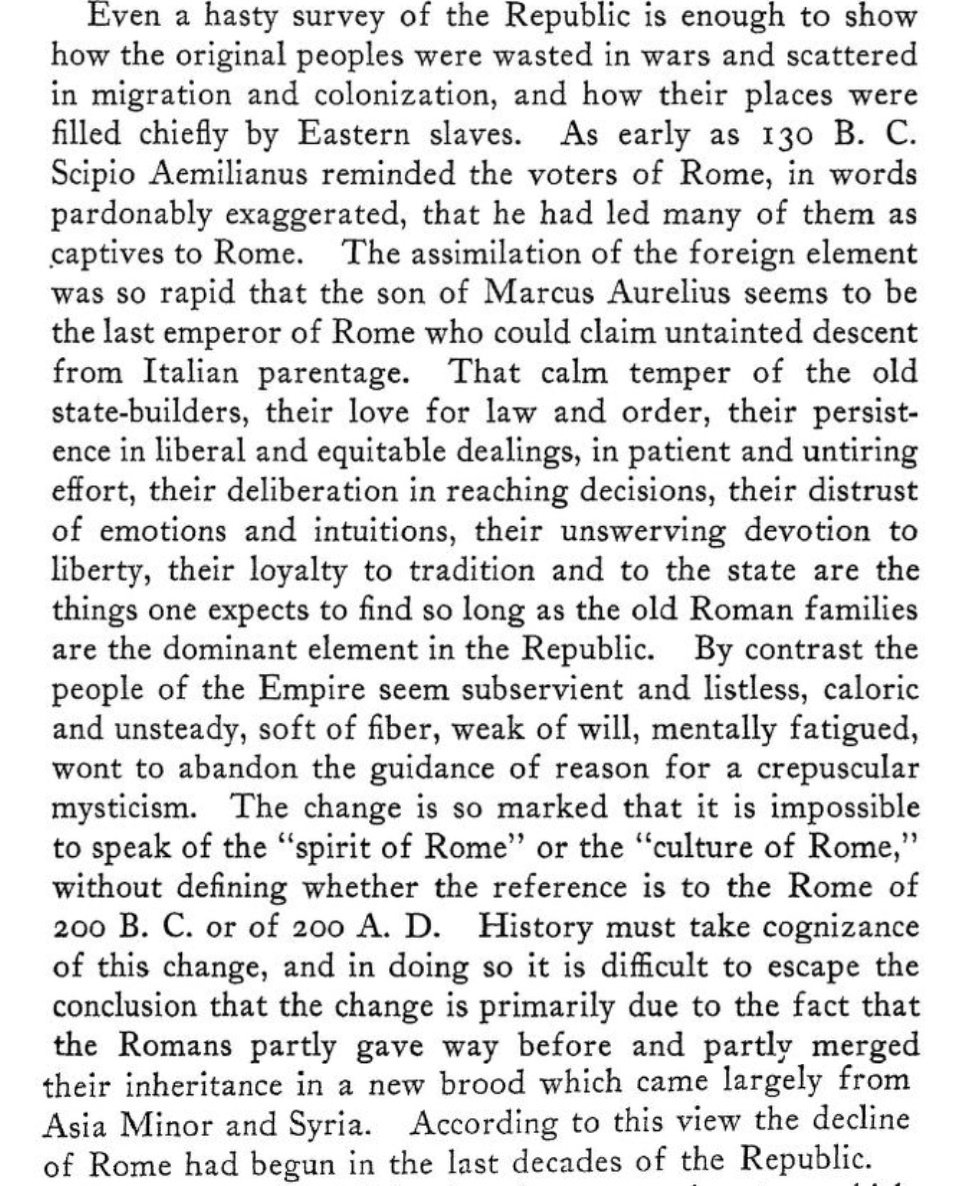
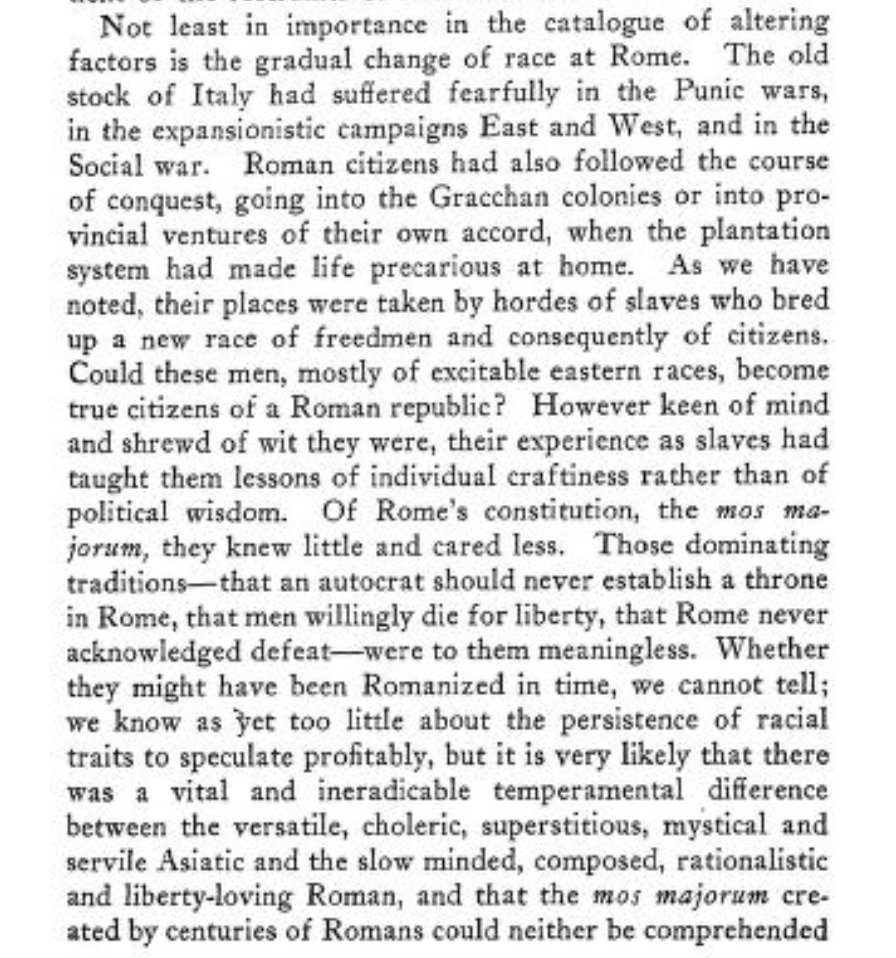
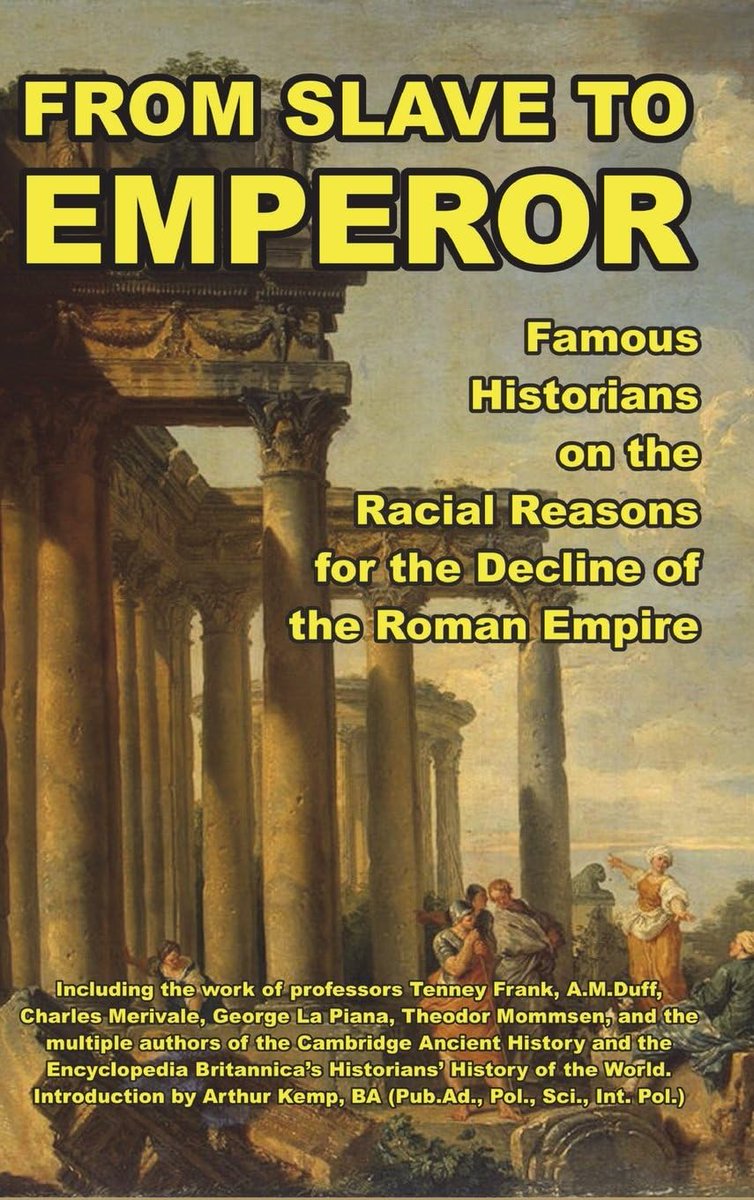
Professor Tenney Frank confirmed what Livy, Cicero, Seneca, Tacitus, Juvenal, and countless others knew millennia ago.

Rome’s decline began with racial replacement; everything else was merely its consequence.

Rome fell because it ceased to be Roman. Image
Civilization is shaped by many forces, yet its foundation is ALWAYS biological. It is the living soil from which culture rises, the inherited substance made visible in the world.

Change the people, and you change the culture; change the culture, and the civilization that rests upon it is transformed.

Is the Harare of today the same city that once stood as Salisbury, the capital of Rhodesia?

What is the underlying factor behind its collapse? Demography.

The city has been remade because those who now inhabit it are not the people who built it, nor the people who carried it through its years of strength and prosperity.Image
Reply #1: On Confusing Terminology with Concepts

Image
Read 7 tweets
Dec 22, 2025
“Nature has made us unequal.”

In De Legibus (“On the Laws”), Cicero argues that inequality is not an injustice to be corrected but a fact imposed by nature.

Justice, for him, is not the equal distribution of power or honor, but their proportionate assignment according to capacity.

Law does not exist to deny the harsh structure of life, but to impose form upon it.

A republic collapses when it treats unequal men as equals.

It endures only when differences of capacity are acknowledged as realities to be governed, not errors to be erased.

Nature does not endow all men alike, and political order survives only by enforcing discipline upon that truth.Image
Reply # 1: Judgment and Corruption

Reply # 2: On Cicero the Man

Read 4 tweets
Dec 21, 2025
1/ In his most famous work, Politics, Aristotle shows that democracy and tyranny express the same governing principle. Both rule by flattery and elevate the weakest. Democracy relies upon on women and slaves; tyranny survives through the importation of foreigners.
2/ Aristotle writes that women and slaves “delight in being flattered” because they stand outside deliberative authority within the city. Their position is defined by obedience rather than command, participation rather than authorship of order. Drawn to rulers who substitute indulgence for rule, they respond to authority that reassures rather than directs. Where command withdraws, favor takes its place.

When authority no longer gives form to appetite, political influence ceases to follow judgment shaped by rule and experience. It gathers instead around those most responsive to praise and permission. Power thus shifts toward men who govern by accommodation, not because they impose order, but because they affirm desire. In such conditions, rule no longer elevates those capable of command, but those most easily mobilized by favor, and the character of public life adjusts itself accordingly.Image
3/ This inversion reaches the city at its root because authority is detached from ancestry and from the ordered succession through which rule is sustained over time. Those least capable of judgment are raised into power, while those formed within ancestral peoples shaped for command are restrained or rendered politically ineffective. Authority no longer follows inherited capacity refined through habituation, but drifts toward dispositions that are compliant and dependent.

Public life ceases to preserve the qualities required for durable rule and instead favors traits compatible with immediate control. The city no longer renews the lineages from which rulers must arise, nor does it transmit the habits necessary for command across generations. Weakness advances into authority, strength becomes a liability, and power maintains itself by suppressing the kind of men capable of replacing it. What presents itself as stability is in fact the managed exhaustion of the city’s ruling potential.Image
Read 7 tweets
Nov 12, 2025
1/ “Man in his highest and noblest capacities is Nature, and bears in himself her awful character. His dreadfulness is the fertile soil from which alone all greatness has grown.” —Nietzsche

Let us consider the ancient Greeks and the excellence of their biopolitical order.
2/ The world of the ancient Hellenes, the Greeks, did not emerge ex nihilo from a vacuum. It was a continuation of what had come before, developing from older Indo-European traditions and merging with the early peoples of Europe, among whom kinship and ritual shaped the first structure of life. The Greeks then gave this inheritance a conscious form, turning what had been custom into reflection and creating a world in which descent and law became the foundations of order.

Alfred North Whitehead wrote that Western philosophy is a series of footnotes to Plato, and in a wider sense Western civilization, “civilization” being the key term here, begins with the Greeks. It was among them that the European mind first sought to bring life into accord with nature and to discern within existence the principles that govern man and the world.

Their political life, like that of all pre-modern peoples, was never abstract. It was the organized expression of necessity, shaped by the demands of survival and the discipline of inheritance. Power was understood as the means to preserve life, and life itself was secured through the unbroken continuity of descent.

The polis, the city-state, was born from the family, as the family was born from the necessity of reproduction and protection. Aristotle records that the household arose from the union of man and woman and expanded through the relation of parent to child and master to servant until it became the village and finally the city. The political community was therefore the natural enlargement of the household, an extension of biological and moral kinship.

The city carried forward what the family had begun, ensuring the passage of life and estate, the keeping of ancestral law, and the remembrance of those from whom its order had descended. The citizen was not a faceless entry in a meaningless voter register but a living participant in the common life of the polis. The Greek word idiotes, from which “idiot” derives, referred to one who lived only for himself and took no part in the affairs of the city. The true citizen was his opposite, bearing the blood of the founders and sharing in the duties that sustained their order. The civic life of Greece rested on this continuity of ancestry, without which there could be neither culture nor state.

Numa Denis Fustel de Coulanges later made explicit what the ancients themselves took for granted. In “The Ancient City,” he explained that the earliest political institutions were born from the religion of the household. The hearth, the ancestral tomb, and the domestic cult were the first sources of authority. When many households gathered beneath a common altar, the city arose as a sacred extension of family life. Aristotle described the process by which the polis grows naturally out of the household, and Fustel showed that this natural process was also a religious one, for it united the living with their forebears in an unbroken order of memory and obligation.Image
3/ The principle of descent defined citizenship at every level, and it was the ancient Greeks who, like in so many other things, first codified what we now take for granted in the Western conception of the citizen. Herodotus, in his “Histories,” described the Hellenes as men “of the same blood and speech, who share the same temples and sacrifices, and the same customs.” In this understanding, ancestry and worship, language and custom formed a single unity. To be a citizen was to belong to a people bound by descent and by rite. The polis was not an artificial creation imposed upon men but an organic expression of inherited being.

Athens and Sparta embodied dual sides of this Greek Welthanschauung in distinct form.

During the Athenian Golden Age, the great statesman Pericles expanded participation in public life while restricting citizenship to those born of two Athenian parents. Equality was confined to those who already belonged by birth. The freedom of the city depended upon cohesion, and cohesion required the preservation of ancestral descent.

Civic order rested on ancestral patrimony rather than residence or belief. This law reflected the Athenian understanding that their democracy, unlike the modern system of mass enfranchisement, could exist only within the bounds of a shared people. At its height, less than a tenth of the male population held the honor of citizenship. Generosity within the polis required a clear sense of who that people were, and correspondingly, who they were not. Foreign skill and commerce were welcomed, though always with caution, yet the political life of the city remained an inheritance guarded by those of Athenian blood. In this balance between openness and exclusivity, the Athenians preserved both the integrity of their laws and the continuity of their kind.

Sparta gave this principle a harder outline. The laws attributed to the Dorian lawgiver Lycurgus forged a people shaped by martial discipline and selective breeding. The Spartiates were citizens by birth and warriors by vocation, their lives ordered toward service to the state. They were forbidden from commerce, manual labor, and the pursuit of luxury, for such pursuits were thought to corrupt character and weaken resolve.

Their existence was one of perpetual preparation, devoted to strength and the defense of the common good. Education began in infancy, when the weak were set aside, and continued through a regimen that bound each man to the polis through the discipline of the agoge. The women were trained for strength and composure, for the bearing of healthy offspring was regarded as a sacred duty. Every institution, from the household to the army, for the army was the body of citizens, served the same end: the preservation of vigor and constancy of spirit. Through this unity of purpose, a small and austere people maintained their independence against powers greater in number and wealth.

Religion gave visible form to the same foundation. Each city revered its ancestral gods, whose worship was bound to the life of the people. The civic altars rose from the hearths of the household, and the festivals that gathered the citizens were acts of remembrance joining the living with the dead. The Olympic Games expressed this same spirit on a broader scale, uniting the Hellenes in celebration of shared descent while excluding the foreigner. To compete in any of the four great Panhellenic games was to be recognized as Greek by blood. The exclusion was not an act of hostility but of reverence and delineation, for the festival renewed the sacred kinship of those who shared a common origin and destiny.

This same bond of origin guided the Greek resistance to Persia. When the invasion came, the consciousness of shared blood and faith gave the Hellenes a unity stronger than empire. The stand of the Spartan king Leonidas at Thermopylae and the Athenian-led victories at Salamis and Plataea preserved more than territory or power. They defended a way of life founded upon descent and courage. Herodotus saw in these deeds the triumph of men who knew themselves as a distinct people and refused to vanish into the anonymity of empire.Image
Read 4 tweets
Nov 9, 2025
1/ America was conceived and carried out as an ethnonational project.

It was a Republic built by Europeans for their posterity, the continuation of their people and their civilization on new soil.

Not an idea, but a people made sovereign.

Let us discuss. Image
2/ The absurd notion that “America is an idea” is one that we hear often. It is peddled by the self-hating and the resentful alike, repeated by those too narrow of mind or too governed by ethnic interest to confront the plain historical record.

It has become a creed for the deracinated within and the alien now among them, a false consolation for those who refuse to see that nations are born of blood and soil, and of the will of a people conscious of who they are and of their destiny.

The line of attack usually proceeds along familiar lines.

It is said that America is a political and moral project founded on abstract principles such as liberty, equality, individual rights, and self-government. From this premise, it is concluded that anyone who professes belief in these ideas may become fully “American,” irrespective of ancestral identity.

This argument, of course, is not historical but philosophical in character. It is what may be called Creedal Universalism, the most pervasive of the myths that sustain the “idea” interpretation.

Creedal Universalism presents America as a proposition, an abstraction, divorced from the people who created it. It asserts that the Republic should be defined by principle rather than lineage, that allegiance to an ideal replaces the bonds of kinship and heritage.

It is an a priori doctrine, that is, derived from theory rather than experience, born from the Enlightenment’s rational philosophy rather than from the lived reality of a people.

In this view, America’s founders become apostles of a universal creed, and their nation only the first vessel of a global moral enterprise.

It is a moral argument, not a historical one, for it speaks of what America should mean rather than what it was, and still is.

Its purpose is plain: to detach American identity, born European and forged White (ethnogenesis), from its ancestry, and to make belonging a matter of sentiment rather than birthright.Image
3/ The second and nearly as common claim may be called the Immigrant Nation Mythology: “we are a nation of immigrants.”

It is not philosophical but narrative, appealing to emotion rather than reason, and built upon a shallow reading of history; a confusion of the immigrant with the settler, of arrival with creation.

Here the story is told that America has always been a “nation of immigrants,” that its true purpose was to transcend the limits of race and origin, and to serve as a universal refuge for all mankind.

The Founders are recast as imperfect apostles of diversity, men whose racial prejudice is acknowledged only to magnify the supposed nobility of their universal vision. Thus the narrative preserves its own contradiction: the Founders are denounced as racists, yet credited with conceiving a nation meant for everyone.

Settlement and conquest are presented not as the work of a people creating a continuation of European civilization upon new soil, but as moral failings to be redeemed through inclusion, a sin to be eternally atoned for. The Republic’s European foundation is treated as a temporary stage in a broader human drama, a prelude to the arrival of all peoples.

What began as a historical reality, the transplantation of Europe itself across the Atlantic, is retold as a myth of perpetual arrival in which immigration becomes a sacred rite of renewal.

This view gained strength after 1965, when the old demographic order was dismantled and diversity was enthroned as the new civic faith.Image
Read 4 tweets
Oct 21, 2025
The absolute degeneracy of the modern West captured in a single scene.

An Afghan invader, scheduled for deportation months ago, sexually assaults a young Irish girl while living in luxury at public expense.

The so-called “refugee center” where he is housed is in truth a commandeered hotel in the heart of Dublin, packed with over two thousand foreign men of fighting age, fed, clothed, and sheltered by the very people they are displacing.

The state imports these men, parades their “diversity” as virtue, and compels the native population to fund its own subjugation through colonization and slow demographic extinction.

The parasite contributes nothing, produces nothing, yet is held up as a symbol of progress while the native Irish are told that resistance is not only hateful but illegal.

Outside, the people finally rise, and the police, funded by those they oppress, form a cordon around the invader’s quarters, defending not Ireland but the treachery committed against it.
Reply #1: Firearms Are Not the Issue

Reply #2: “Derp, the people voted for this.” NO!

Read 4 tweets

Did Thread Reader help you today?

Support us! We are indie developers!


This site is made by just two indie developers on a laptop doing marketing, support and development! Read more about the story.

Become a Premium Member ($3/month or $30/year) and get exclusive features!

Become Premium

Don't want to be a Premium member but still want to support us?

Make a small donation by buying us coffee ($5) or help with server cost ($10)

Donate via Paypal

Or Donate anonymously using crypto!

Ethereum

0xfe58350B80634f60Fa6Dc149a72b4DFbc17D341E copy

Bitcoin

3ATGMxNzCUFzxpMCHL5sWSt4DVtS8UqXpi copy

Thank you for your support!

Follow Us!

:(