Human Infection caused by Avian Influenza A (H5N1) - Chile, an update: 12 contacts were identified, no new cases. Important to know. Report states viruses are highly similar to viruses found in animals in the region who.int/emergencies/di…
But also some key concerns here: it took 2 weeks to get flu diagnosed, 3 weeks to confirm by genomics. If this had been a spreading virus, the cat could have been out of the bag. This is why we need capacity building globally for key diagnostics and confirmatory testing
Too many countries and politicians think that this can be left to “ the market”. That is not the case. The diagnostic market focusses mostly on diagnostics that are “ popular”, because they are widely used. If you look at clinical settings, lab Dx often is viewed as expensive 1/
(it often is, if you want to rule out the differential).a common clinical diagnosis us “ probably viral”, go home, get rest, take fluids. For true preparedness we would want to see more of those cases diagnosed. Ideally, that is guided by intelligence ( where does patient live…
What types of exposures, comorbidities, etc). So we need platforms that allow rapid development and deployment of new targets and people trained to be able to do that. A global pathogen detection “ radar”. And still , this is only one piece of the puzzle.
• • •
Missing some Tweet in this thread? You can try to
force a refresh

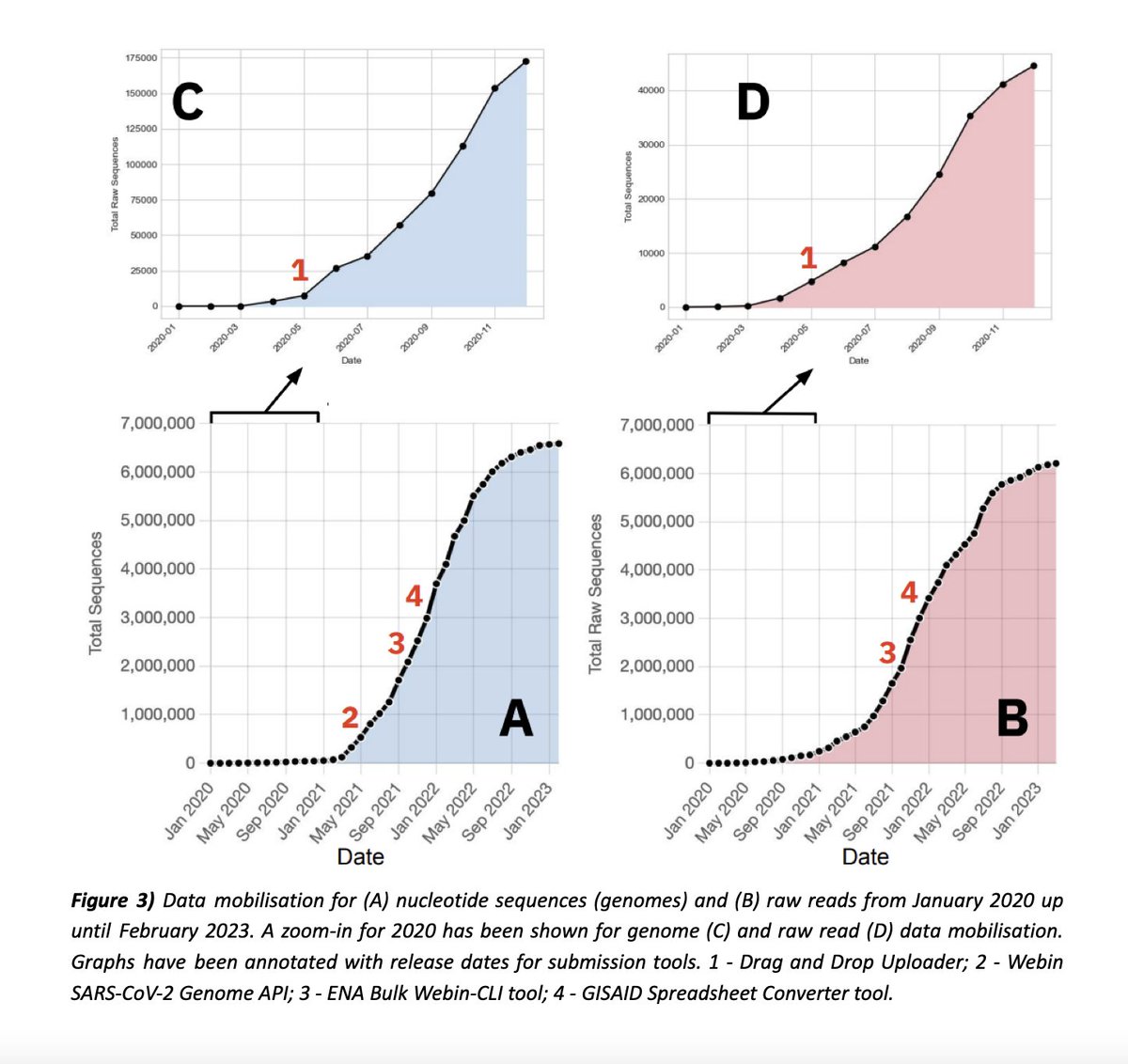
Mobilisation of public data of SARS COV2, a multi-institutional effort developed at the request of the EU presidency as part of the European open data cloud and linked with the INSDC. Here shown for raw reads, the underlying data that often sit in individuals computers. 1/n
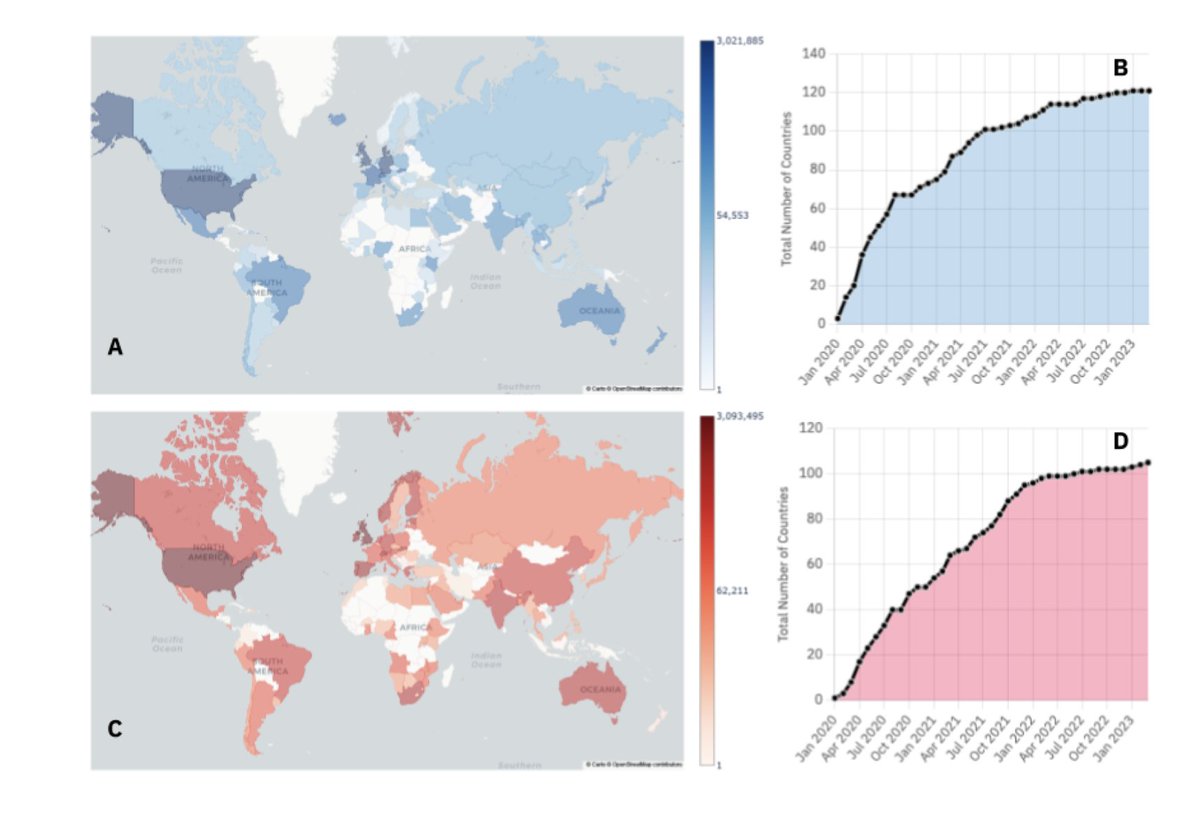
contributions from across the globe. New features: data generators can claim the data which then links it to their OrCID, so that credits are clear and unchangeable. 1/n
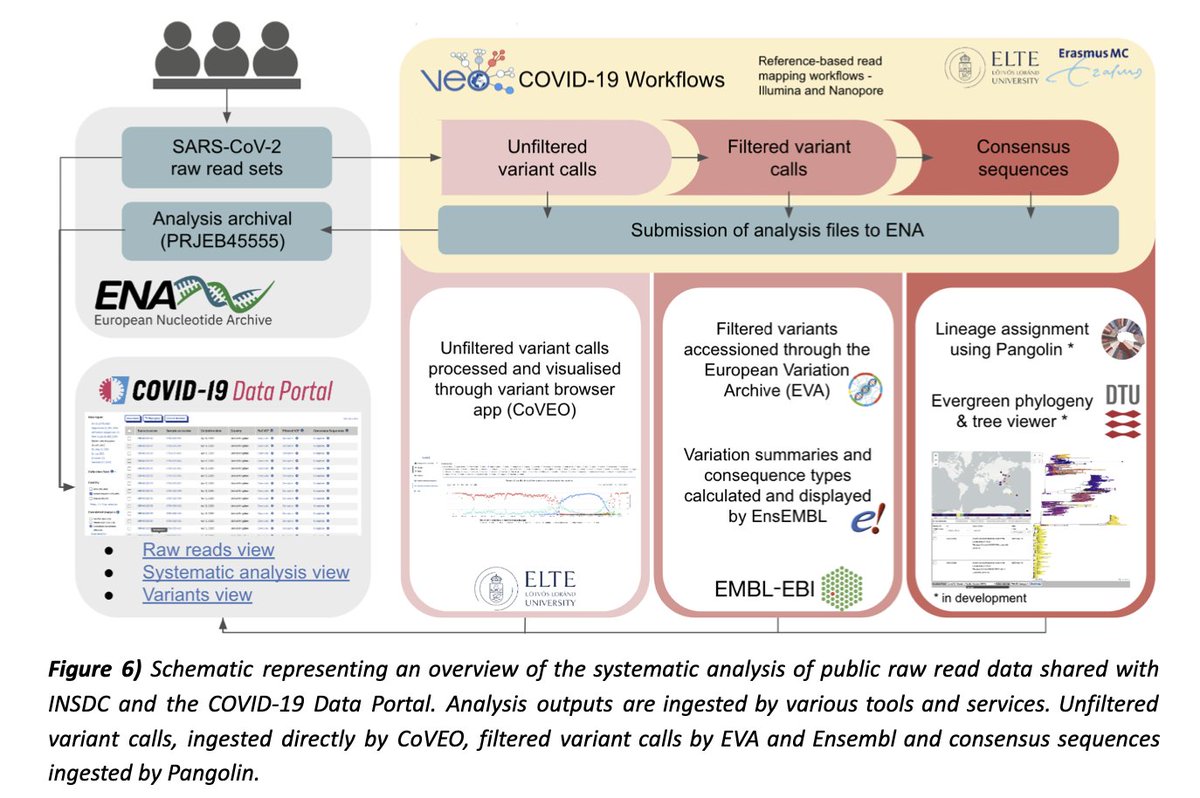
now the longterm multicountry data infrastructure is of course not flexible. Consortium worked to make it more user-friendly. 1/n
Mink are highly susceptible to SARS COV 2, and countries have dealt with this risk in different ways. While NL and DK culled mink farms, other countries established enhanced surveillance and a different approach 1/..
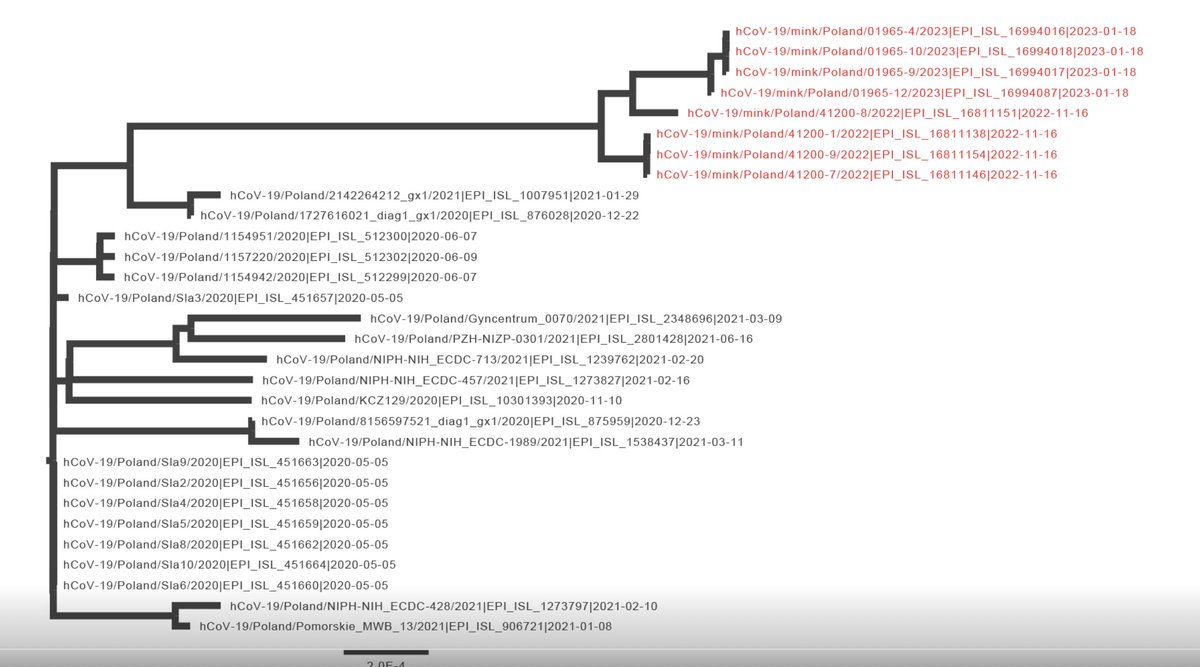
In Poland, positive farms are subjected to rigorous isolation and the animals are tested repeatedly for the presence of SARS-CoV-2 until two consecutive rounds of negative testing. Farms are culled if the mink mortality exceeds 10% or in case of mink-to-human transmission.
here, we describe 3 outbreaks that did not meet these criteria but where SARS COV 2 was present. The virus was most related to viruses identified in humans two years earlier, with up to 40 mutations suggesting continued circulation in a non human source
This analysis was triggered by conclusions from a paper submitted as preprint almost a year ago. In that, the authors analysed SARS COV 2 positive samples from environmental testing on the Hunan seafood market from the first phase of the pandemic assets.researchsquare.com/files/rs-13703…
they also tested for the presence of human DNA and reported that "The SARS-COV-2 nucleic acids in the positive environmental samples
55 showed significant correlation of abundance of Homo sapiens with SARS-CoV-2". No info on animal DNA, which seemed strange
metagenomic data from the samples had been submitted to GISAID long time ago but not for public access and therefore it couldn't be verified what else might be there. That data was released early march, and accessed by this team of scientists
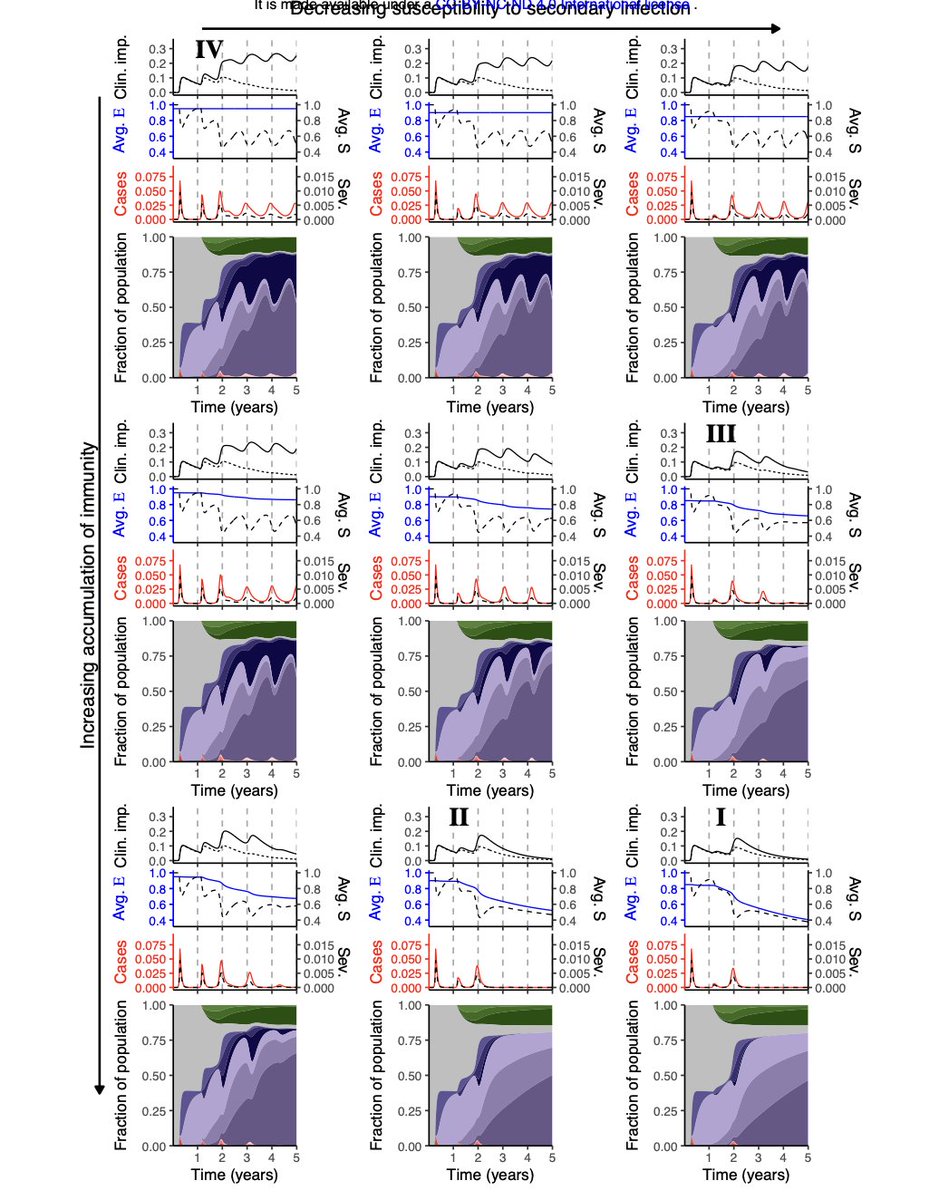
" A range of future scenarios still remain, the importance of collecting real world epidemiological data to identify likely outcomes, and the crucial need for development of a highly effective transmission-blocking, durable, and broadly-protective vaccine". A modelling study 1/..
modelling the current situation with repeated infections with SARS COV 2, assuming gradual increase of clinical immunity and transmission blocking immunity on transmission and long CIVID dynamics
study identifies four scenario's, with quite different impact when including long COIVD risk. These baseline models are then used to assess potential effect of transmission blocking vaccines (not yet on the market). Big effect.
@mkeulemans@Laura68298462@DeMarijndebruin De “ kille” scenario inschatting zegt”: infection to hospitalisation ratio wordt steeds hoger, zelfs in verpleeghuis goeddeels milde kliniek, vaccin bescherming tegen ernstige ziekte relatief stabiel ondanks omicron varianten > meer en meer risicogroep beleid 1/..
@mkeulemans@Laura68298462@DeMarijndebruin En dat us in handen van allerlei specialistische groepen die richtlijnen maken, diagnostiek doen, behandelen. Daarnaast is en blijft hygiene bij luchtweginfecties cruciaal. Testen en test-negatief = wel naar je oma is niet correct. Vandaar: maak dat generiek
@mkeulemans@Laura68298462@DeMarijndebruin Gaat dat werken? Niet als we er bij voorbaat van uitgaan dat dat niet zo is. Maar het “ ik blijf werken ook al heb ik griep” vond ik ook al voor de pandemie geen goed idee. En dat is dus wat nu ook gezegd wordt. Want er komen steeds meer ouden en kwetsbaren
Het 146ste OMT advies waarin wordt geadviseerd om corona als onderdeel van een breder pakket luchtweginfecties te gaan beschouwen waarvoor je bij kwetsbaren oppast. Niet terug naar niets, maar ook niet meer corona als uitzondering tweedekamer.nl/kamerstukken/d…
Best een lastige stap: infectie is endemisch ( is here to stay), circuleert volop, maar de klachten worden verhoudingsgewijs steeds milder. Zelfs in verpleeghuizen vooral verkoudheid. Is het virus nu voorspelbaar? Nee, dat niet en dat is ook echt anders dan bijv griep of RSV
Dus ONT adviseert ook: zorg dat je goed kunt blijven monitoren. Rioolwater, bevolkingsonderzoek, huisartsen, labs. En voor in de gaten houden van het ziektebeeld ook ziekenhuizen, waarbij de vraag is hoe dat in de toekomst gaat, als NICE daar mee ophoudt