Nick Gerli Profile picture
Apr 25, 2023 12 tweets 3 min read Read on X
Money Supply contracts again in March. 📉

This is a massive economic warning. Money Supply contraction hasn't happened in 90 years.

Only other times it has happened we had Depression / Major Banking Crisis. Image
1) Other periods of Money Supply Contraction other than 2023:

-Great Depression 1929
-Depression of 1921
-Panic of 1893
-1870s Banking Crisis

All previous situations had unemployment rate north of 10%. And massive bank failures. Image
2) What's amazing to me is how NO ONE is paying attention to this.

Fed is sucking money out of the system through QT. Just while banks are at beginning of a credit crunch.

And stock/real estate investors are still "risk on". Insane.
3) Look at First Republic's earnings report to see how this money supply contraction works in practice.

First Republic's deposits were down -36% YoY. 📉

But their loans were still up +23% YoY. 📈

That's not sustainable. Image
4) So now First Republic is having to severely CUT BACK it's loan portfolio.

To bring their balance sheet back into balance to account for lower deposits.

Which means fewer available mortgages, business loans, and overall money in economy. Image
5) What's so problematic about this money supply contraction is that inflation is STILL an issue.

So businesses will have less access to capital just as they need it most to pay for expenses and payroll expansion.

Yikes. That's a recipe for mass bankruptcies and layoffs.
6) Especially because of the massive Corporate Debt Bubble that has been fueling the economy for the last 10 years.

$20 Trillion in Corporate/Business Debt at end of 2022.

Double the level in 2008. Image
7) What happens to all those levered Corporations / Businesses when money supply contracts?

Doesn't take a rocket scientist to figure it out.

Big layoffs. And big shutdowns.
8) But most people are writing off these possibilities.

Simply because "they haven't happened yet".

Which I understand to some degree. "Recession" has been discussed for a year. And it hasn't gotten real yet.

But that doesn't mean it won't.
9) The ignorance of the Fed to these realities is shocking.

They rarely, if at all, discuss money supply. Just interest rates.

But I suspect that will change over the next 3-6 months. Because if money supply keeps contracting, there will be big problems.
10) Of course - I don't have a crystal ball. Just evidence from history about what happens to economy when money supply contracts.

Maybe I'm wrong and banks will get aggressive with lending again in 2023.

And Fed will pivot earlier than expected, thereby "saving the day".
11) But based on current chess board, it seems like Fed is determined to hike/tighten until inflation is down to 2%.

Just as banks are getting scared. And cutting back on lending.

Tough combo for a debt-bubble economy to handle.

• • •

Missing some Tweet in this thread? You can try to force a refresh

 

Keep Current with Nick Gerli

Nick Gerli Profile picture

Stay in touch and get notified when new unrolls are available from this author!

Read all threads

This Thread may be Removed Anytime!

PDF

Twitter may remove this content at anytime! Save it as PDF for later use!

Try unrolling a thread yourself!

how to unroll video
  1. Follow @ThreadReaderApp to mention us!

  2. From a Twitter thread mention us with a keyword "unroll"
@threadreaderapp unroll

Practice here first or read more on our help page!

More from @nickgerli1

Jan 31
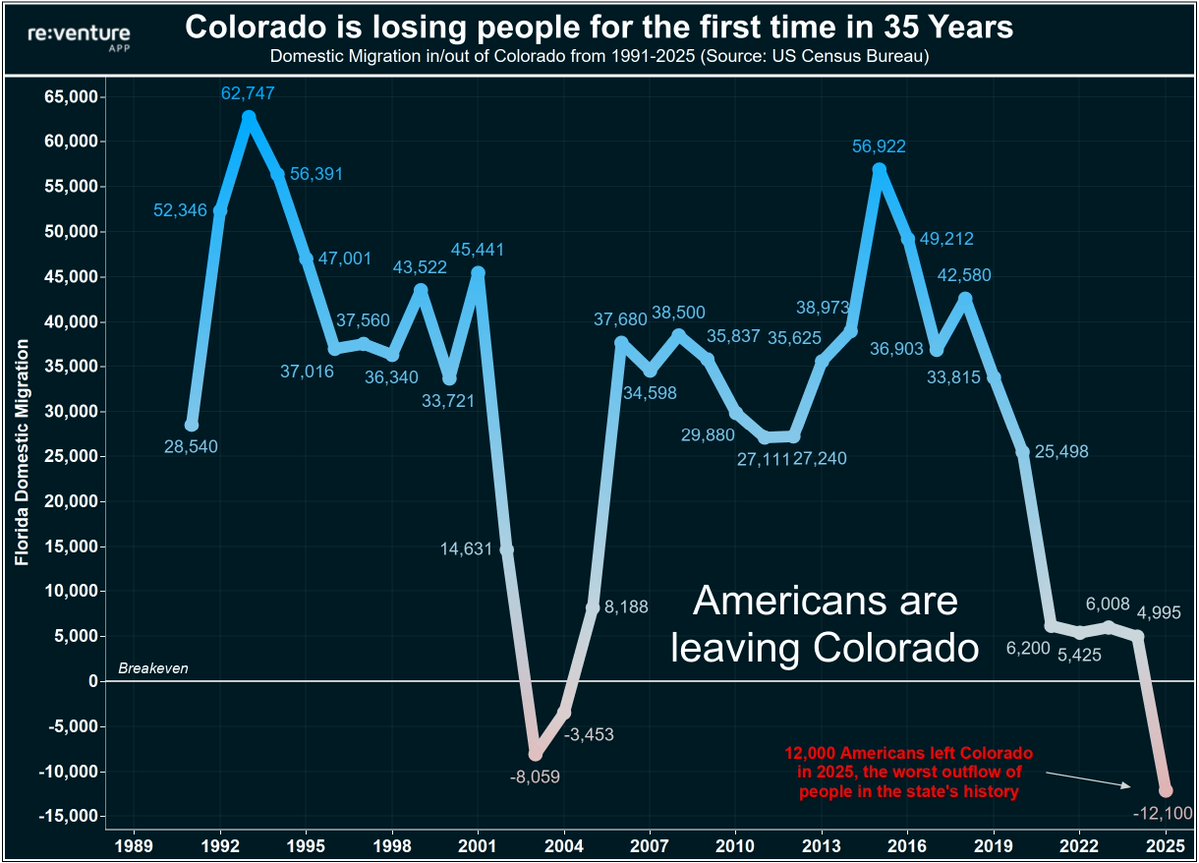
What's going on in Colorado?

The state, normally a migration powerhouse, has fallen off a cliff the last four years.

And in 2025, over 12,000 Americans left Colorado.

The biggest outmigration in the state's history according to US Census Bureau Population Estimates.

Normally, over the last 35 years, Colorado adds about 30,000 people per year. So a -12,000 reading on domestic migration is shocking.

Higher housing costs, return to office mandates, and increases in crime are causing the exodus.Image
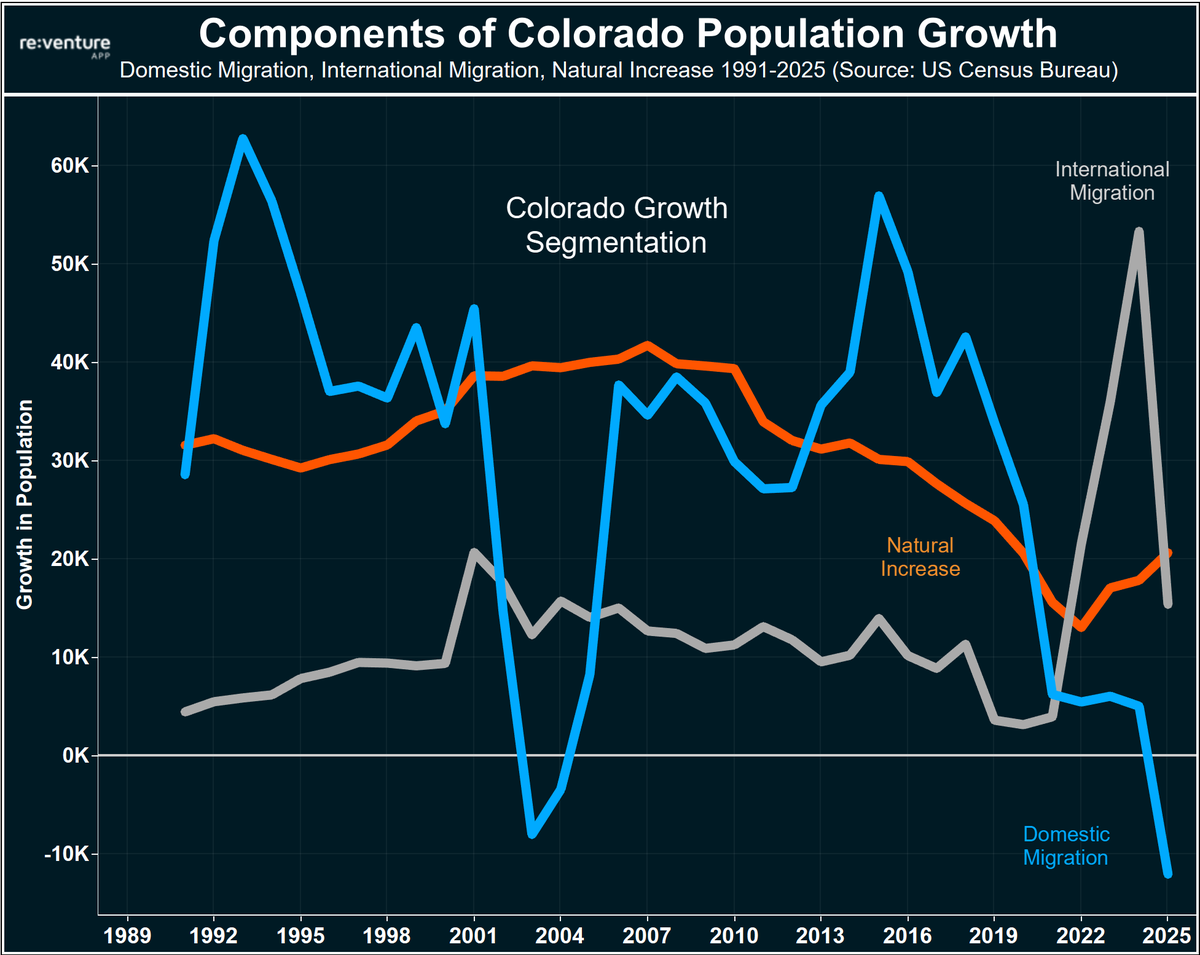
1) Colorado now relies almost exclusively on international migration to drive the bus on remaining population growth.

Although international migration dropped heavily in 2025 as well, and could go even lower in 2026 based on current immigration policies. Image
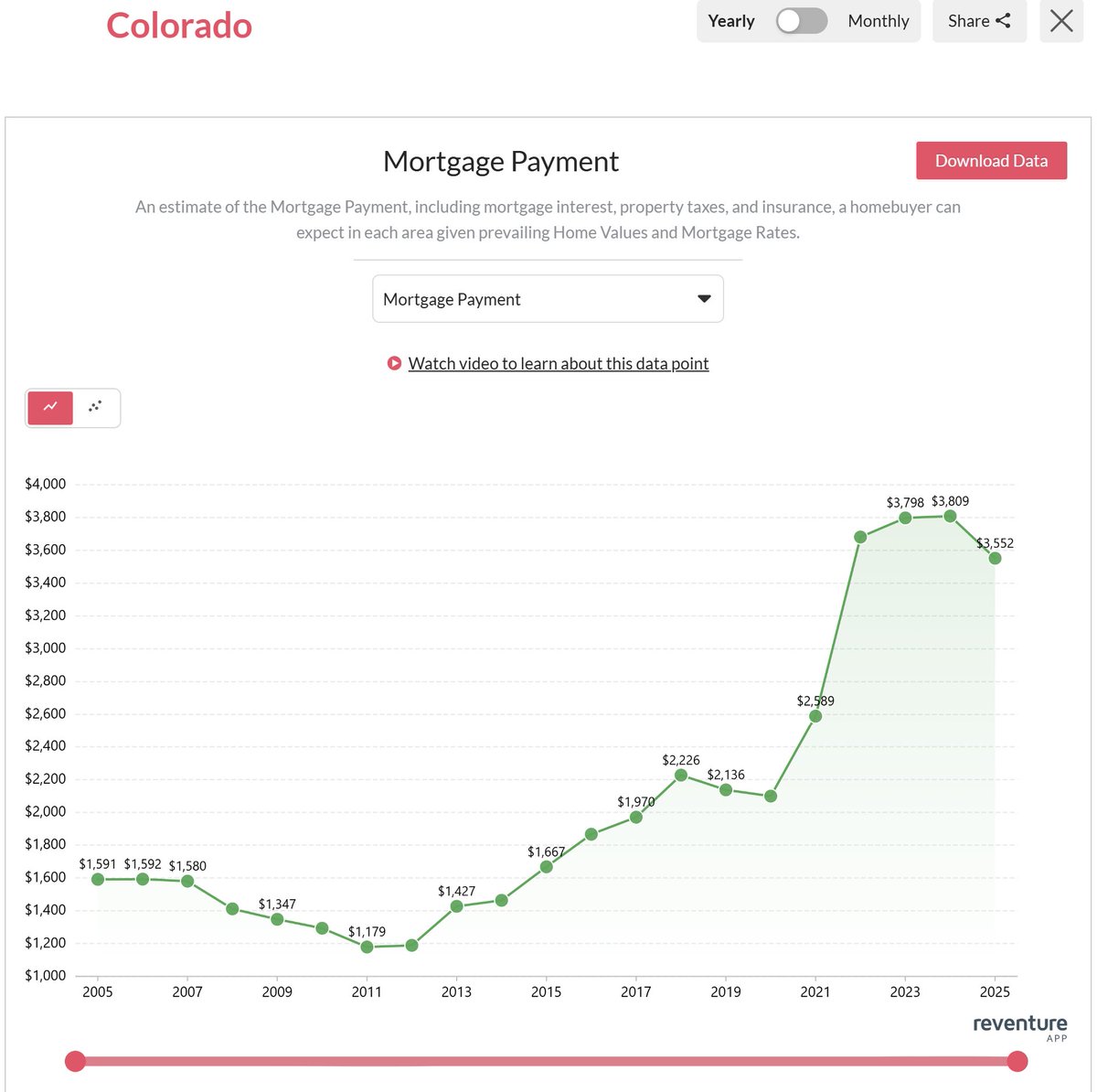
2) The reasons for this are due to high housing costs and increasing crime.

Home values in Colorado are now $529k across the state, which is the 7th highest in the U.S.

And the typical mortgage payment to buy a house is over $3,500/month.

This was a state that used to be affordable back from 2000 to 2020, but post-pandemic has become extremely unaffordable for the local population.Image
Read 8 tweets
Jan 27
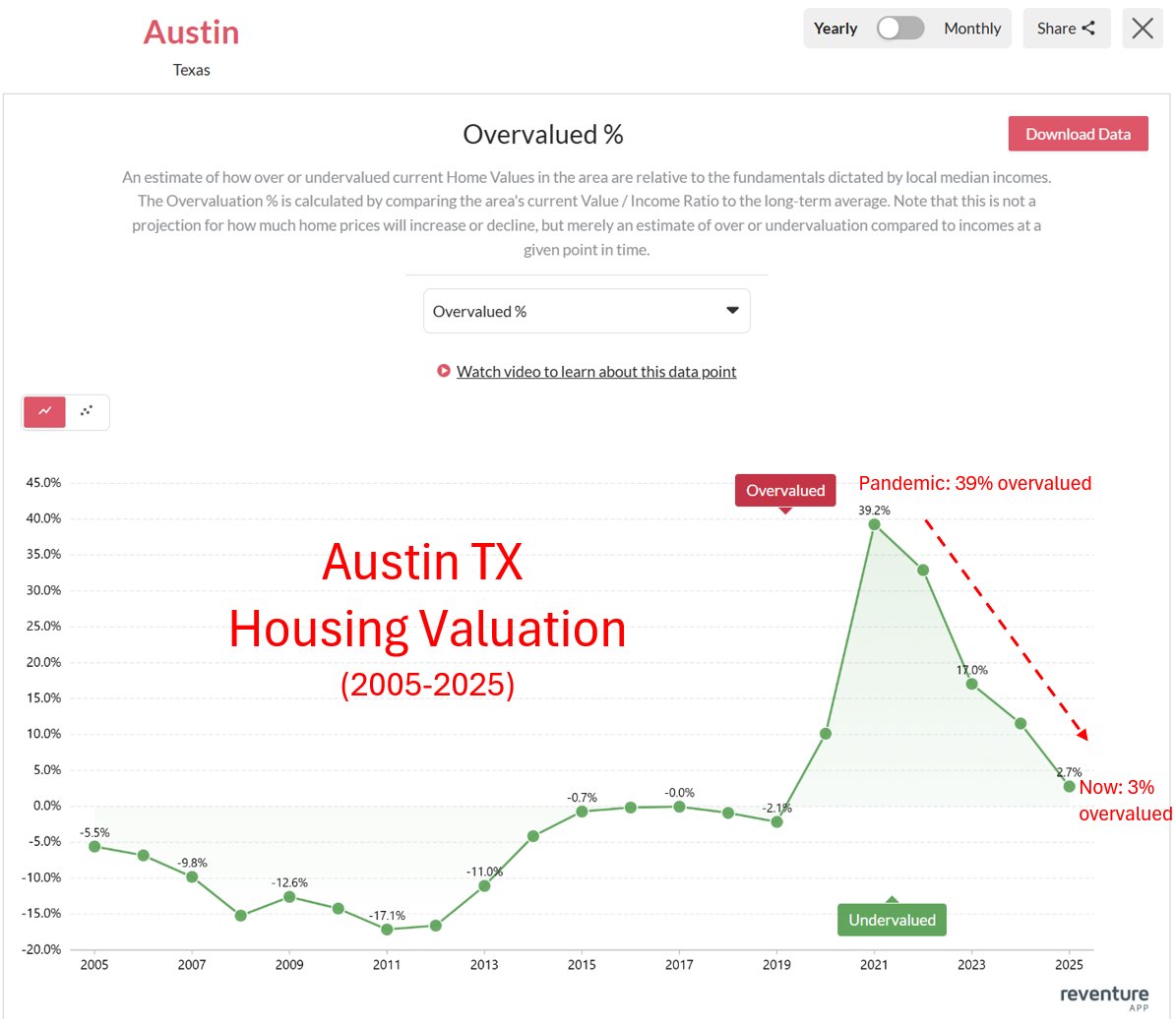
Austin TX - almost undervalued.

Prices have dropped so much that Austin's housing market is now only 3% overvalued in early 2026.

This is how housing crashes can be a good thing. Prices are down nearly 25% from peak and wages have kept rising, and buyers in Austin now have significantly more affordability.

Reventure will be giving a "buy signal" on Austin once it crosses into undervalued territory.

That won't mean prices will immediately stop dropping.

But it will mean the worst is over.

And that buyers/investors can get in at a decent price point in a market that is still top of the table in organic demographic growth.Image
1) Here's the math on the graph from above:

Values in Austin are down roughly 15% from Dec 2021 to Dec 2025 (and they're down by 24% from May 2022 to today).

In the same span, incomes have risen by 17%.

That combination, combined with a rising base effect, has dropped Austin's overvaluation rate from 39% to 3% in the last four years.
2) The reason prices are dropping in Austin is due a combination of a) very high overvaluation during pandemic, b) excessive building and supply, c) a mini local economic recession, which has led to layoffs in the tech industry, and d) reduced inbound migration.

All of these factors have combined to result in aggressive price cuts (and rent cuts) across the market.
Read 10 tweets
Jan 21
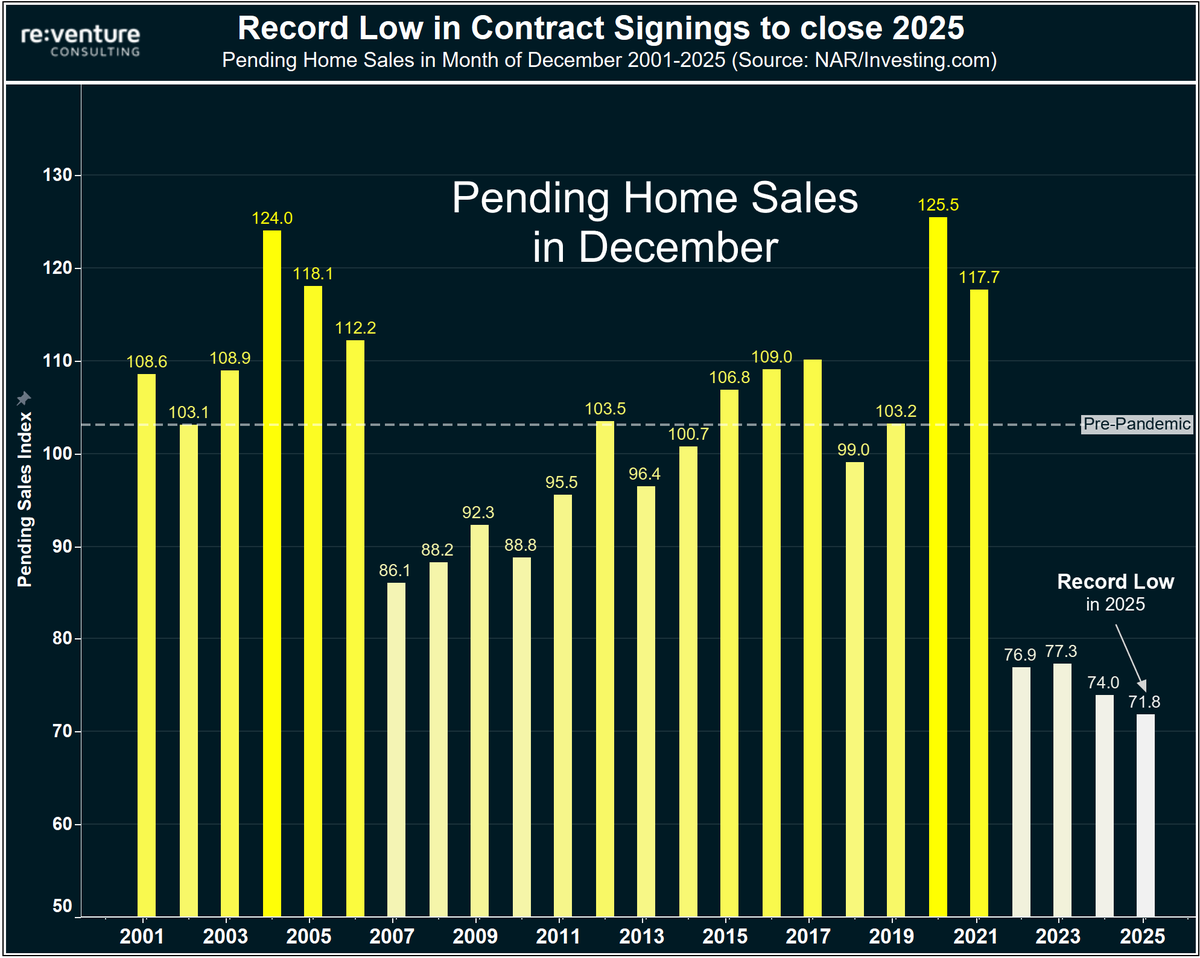
Dec 2025 was the worst December on record for homebuyer demand.

NAR's pending sale index fell to 71.8.

Down 30% from pre-pandemic norms on contract signings. (and still dropping from last year's already historically low levels).

Indicating 2026 is going to get off to a rough start on closings and buyer interest.

The only way out is lower prices.Image
1) I'd like to remind everyone that we've now had 7 rate cuts since August 2024.

Back then the Fed Funds was at 5.25-5.50%.

Now it's at 3.50-3.75%.

And buyer demand is still dropping.
2) Moreover - Mortgage Rates are down about 100 basis points from where they were last year (6.1% v 7.1%).

So, affordability has improved incrementally.
Read 21 tweets
Jan 13
Florida condo crash happening in real-time.

Seller cut price to $256k.

Back in 2022, it was valued at over $1 million.

75% haircut in 3 years. And 50% over the last 10 years.

This condo building was built in the 1970s, and apparently has huge deferred maintenance and repairs. So existing condo owners / new buyers are getting stuck with the bill.

($326k special assessment on this unit, also needs renovation. So the buyer's all-in cost is probably closer to $700k).

In this ZIP code, condo values have dropped about 10% in aggregate the last 3 years. But clearly some units, in older buildings with huge assessments, are getting hit much worse than market average.Image
1) condos are an interesting asset class, because if you are in the wrong building, at the wrong time, the declines in value can be immense.

This condo would have likely sold for close to $900k-1 million in 2021/22.

Now its listed for $256k.
2) This is because in its building in Downtown St. Pete they found $45 million in needed repairs.

The building was built in 1975. And post-Surfside collapse, many of these older properties are being caught up on deferred repairs from the last couple of decades. Image
Read 6 tweets
Jan 9
Multifamily vacancy rates are skyrocketing in Sun Belt Markets.

Apartmentlist is reporting we're now at the highest multifamily vacancy since 2017. And rent cuts are getting deep.

Austin is #1, at -21%.
Fort Myers, CoSprings, Phoenix, North Port, Raleigh, San Antonio, Atlanta, Denver, Lakeland, and Orlando are all at -10% or bigger.

Now - many of these markets had big rental rate run-ups after the pandemic, so rents can still appear expensive to some renters.

But they're officially getting more affordable, and rents will likely drop further in 2026 given the big surge in vacancies over the last couple of years.Image
1) A different way to view this data is by comparison today's rents to pre-pandemic.

San Francisco rents are up YoY, but basically flat from pre-pandemic, due to how much they dropped in 2020-21.

Austin rents are now also basically flat with pre-pandemic, up only 2.2%, due to how much they have dropped.

A host of other markets - San Antonio, Denver, San Jose, New Orleans, Minneapolis, CoSprings, and Houston - has rents up 10% from pre-pandemic.Image
2) If rent growth is only 10-15% over 6 years, that is not so good, as underlying inflation has been much higher than that.

Wages are up 25% or so in the same span.

Property taxes and insurance are up by much more.

So in many markets, rents are failing to keep up with wage growth and inflation.
Read 4 tweets
Jan 4
Something big just happened in the U.S. Housing Market.

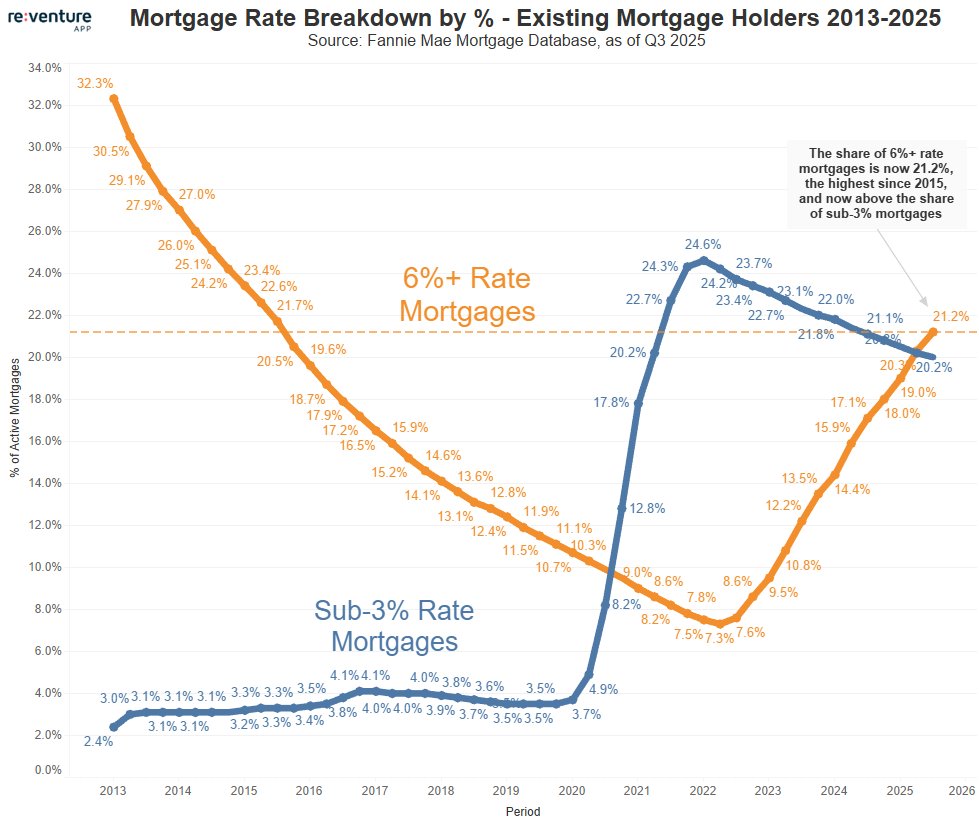
As of the end of 2025, there are now more 6%+ rate mortgage holders than sub-3%.

Meaning that the dreaded Mortgage Rate "Lock-In" Effect is fading.

Since more existing owners have a higher rate, that means more have a payment and rate closer to "market", which means there will be more incentive to sell - which is actually good news.

The 6%+ mortgage share is now 21.2%, the highest level since 2015, and nearly triple the pandemic low.

This is happening because even in today's depressed sales and refinance environment, each year about 5-6 million Americans take out a new mortgage, now at 6%+ rates.

Expect more upward pressure on new listings and inventory in future years as a result.Image
1) The one thing keeping inventory constrained, even in the midst of its rebound from the pandemic, has been sellers delisting homes.

And other sellers electing not to list, because they want to keep their low rate.

Now that this mortgage lock-in effect is gradually fading away, it will structurally unlock more supply, and should push inventory up further in 2026 and beyond.
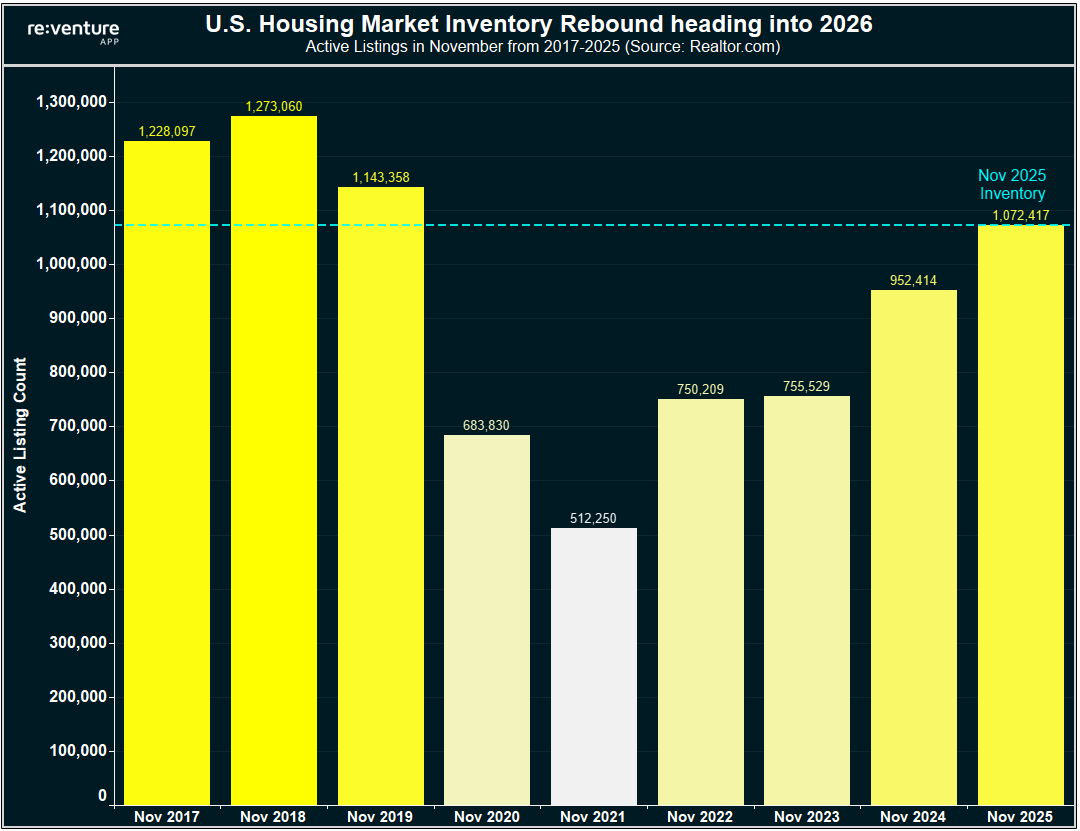
2) Now the already good news is that inventory has grown sigificantly in the last 3 years.

We're now up to 1.1 million listings on the market, as of November 2025, according to Realtor.com, nearly back to pre-pandemic.

Much of this inventory growth is in the South, where prices are now dropping.

But could we see this inventory figure get to say 1.3 or 1.4 million next year, which would be the highest national inventory in over a decade?Image
Read 15 tweets

Did Thread Reader help you today?

Support us! We are indie developers!


This site is made by just two indie developers on a laptop doing marketing, support and development! Read more about the story.

Become a Premium Member ($3/month or $30/year) and get exclusive features!

Become Premium

Don't want to be a Premium member but still want to support us?

Make a small donation by buying us coffee ($5) or help with server cost ($10)

Donate via Paypal

Or Donate anonymously using crypto!

Ethereum

0xfe58350B80634f60Fa6Dc149a72b4DFbc17D341E copy

Bitcoin

3ATGMxNzCUFzxpMCHL5sWSt4DVtS8UqXpi copy

Thank you for your support!

Follow Us!

:(