The PG-99 is a gun-based short-range air defense (SHORAD) system equipped by the PLAGF. It mostly serves as a terminal air defense weapon for various formations. For about a decade, it was one of the most modern gun-based SHORAD systems for the PLAGF. A long 🧵: 
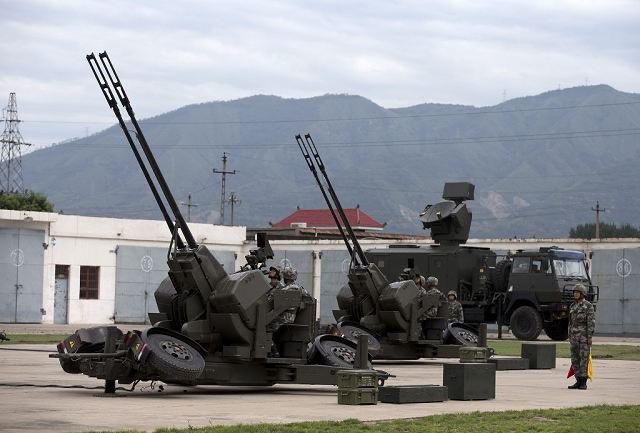
1/n | The system has 3 major components. The PG-99 towed twin 35mm anti-aircraft gun (AAG), a separate generator trailer vehicle to power the gun, and a fire control unit (FCU) vehicle (with its own power generation). Here, the PG-99 systems are organized into a company.

2/n | The gun itself is designed to engage aerial targets at a maximum 3,000m above ground level and at a maximum 4,000m in range. In the age of (mostly subsonic) cruise missiles, this would translate into a maximum 15-20 seconds of interception window before impact.

3/n | Due to this fact, the system is the last line of defense against incoming aircrafts/missiles/loitering munitions for other ground-based assets and personnel of the PLAGF.
4/n | Similar to many modern PLA systems, the PG-99 can trace its origin in the West. It is Swiss by birth. It was acquired during the short yet consequential period when China had extensive access to Western defense technologies through official channels.

5/n | The PG-99 gun, along with the FCU, are licensed production versions of the Swiss Oerlikon Skyguard SHORAD system. According to SIPRI, China built 200 FCUs and 400 guns, making it the largest operator of the Skyguard system and the GDF family of 35mm AAG.
6/n | Throughout the production period and continued operation since the early 1990s, many incremental improvements are made on both the gun and the FCU. The PG-99 gun has at least 4 observed variants currently in service.
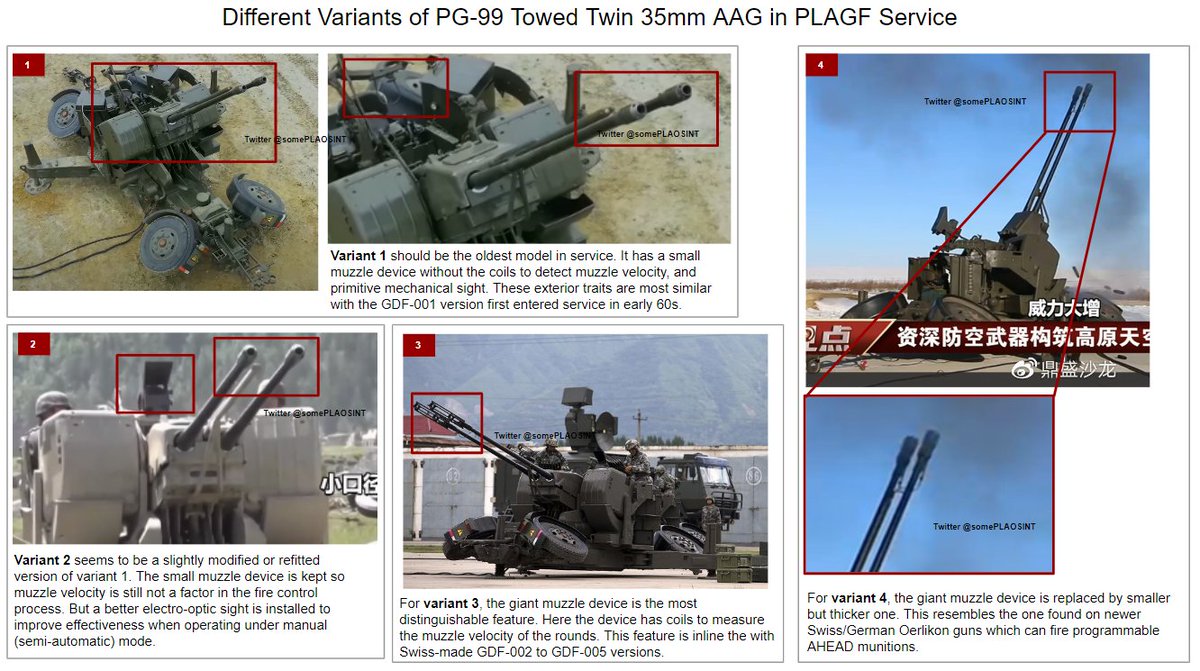
7/n | The latest variant 4 with the ability to fire programmable AHEAD munitions brings the PG-99 gun to a technical level similar to the GDF-006 version of the Swiss/German Oerlikon guns, which were introduced in the late 2000s and early 2010s.
8/n | The PG-99 gun (and the entire GDF family) seems to require the entire crew of 3 to operate at any given time. Yet actually, it’s main advantage is that it can operate on full automatic mode with target tracking and firing fully controlled by the FCU.
9/n | Per an interview with a PLAGF gun crew, the gunner’s most common role is to be ready when automatic mode fails either by FCU damage/failure or strong electronic countermeasures and quickly take over the engagement. While the other 2 crew members need to replenish ammunition
10/n | Although the PG-99 system started as licensed production, China started indigenous improvements of the system from the beginning. It is already a truly Swiss system with Chinese characteristics at its public debut.

11/n | The most unique feature of the Chinese FCU is the Ka-band tracking radar, which has no equivalent in any other foreign versions. It makes the anti-ECM capability of the system more robust as it can pick up the tracking task as the X-band radars are being jammed.
12/n | The improvements of the FCU didn’t stop there. In the early 2010s, a new self-propelled FCU was observed with the PG-99 system. While keeping the basic 3-radar plus optoelectronics sensors the same, most sensors were entirely replaced with newer technologies.

13/n | These major improvements can also be easily observed from the interior of the FCU. The earlier towed FCU has control panels designed in the late 1970s with a very strong analog presence (aka vibe). It is inline with the Skyguard FCUs in service elsewhere.

14/n | On the other hand the newer self-propelled FCU has way more modern control consoles.

15/n | A PG-99 gun battery is the most basic unit that is capable of independently executing air defense missions. A battery consists of 2 guns, 2 generators,1 FCU, and all support vehicles. 2 batteries are usually organized into 1 company and 2 companies into a battalion.

16/n | A PG-99 battalion can provide a very dense AD fire when the 8 guns are deployed together.

17/n | What other assets the PLAGF has in its AD arsenal would be topics for another time. Though it is very relevant to slightly touch upon the continued lineage of 35mm AAGs passed on by the PG-99 system.

18/n | The Skyguard SHORAD system is one of the most capable and popular ones of its time. Interestingly enough, the Republic of China Air Force (ROCAF) in Taiwan is also operating the Skyguard SHORAD system assigning it vastly different roles.
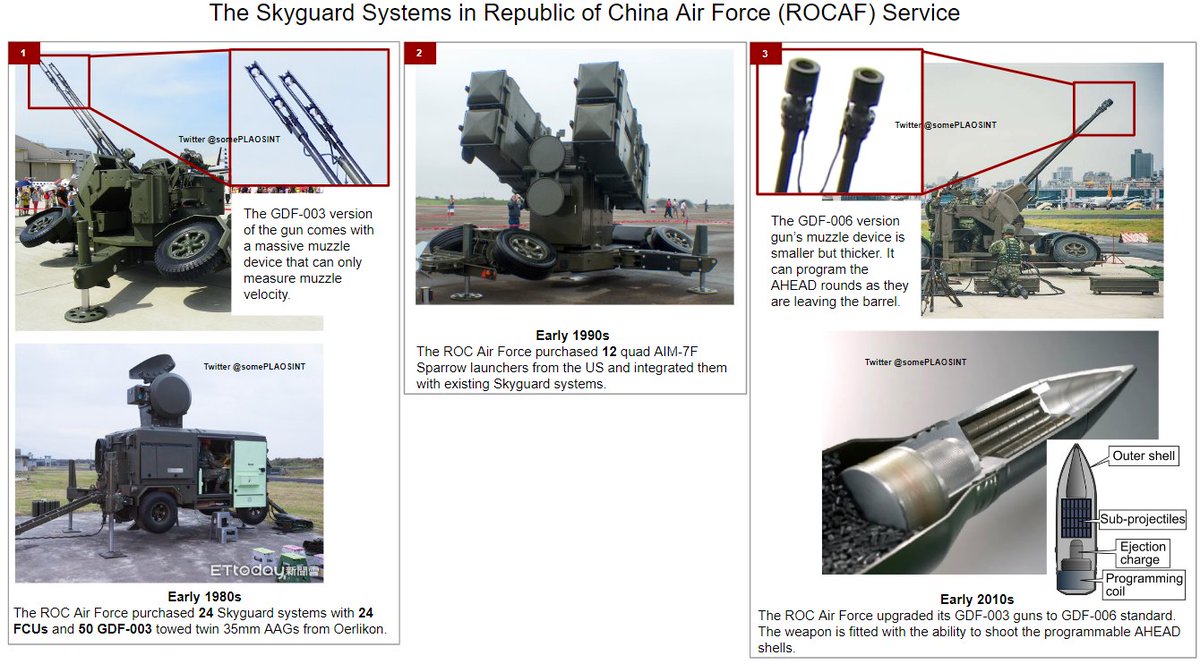
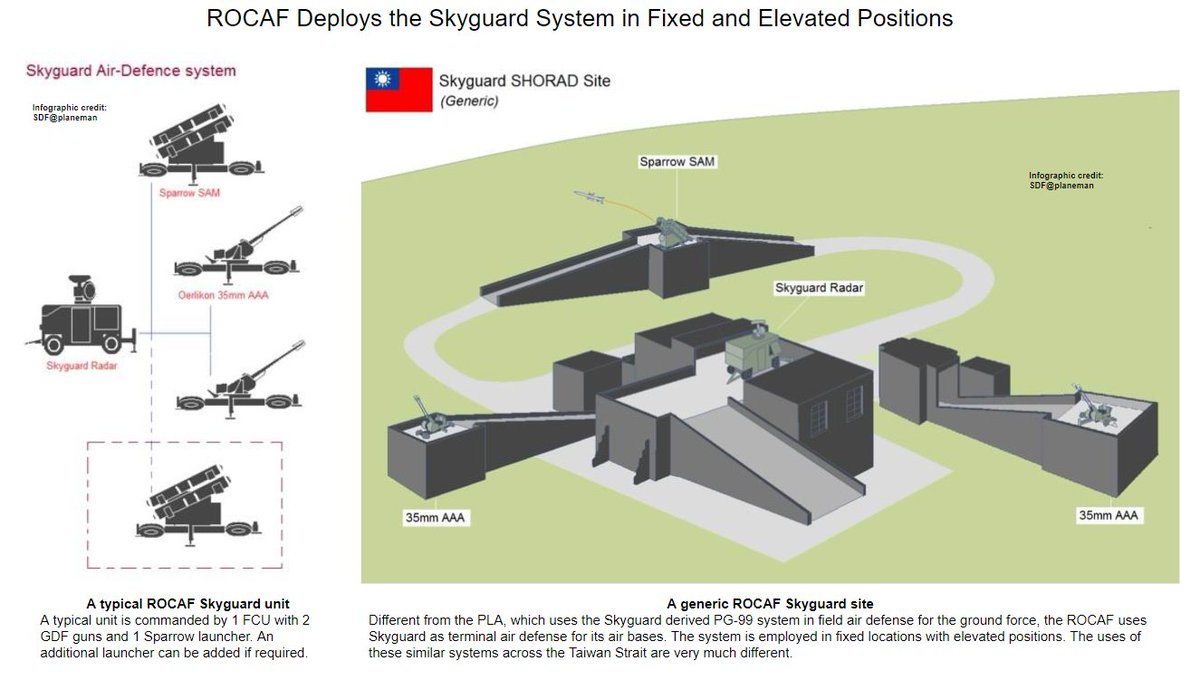
19/n | The PLAGF adopted at least 200 PG-99 systems with 400 guns for field air defense (the guns traveling with other ground troops to provide AD as they move and fight). The ROCAF placed the comparably modest fleet of 50 guns in fixed positions to defend air bases.
20/n | For example, here we could see one out of four such fixed locations of a Skyguard battery defending the Ching Chuan Kang (CCK) air base in Taichung.
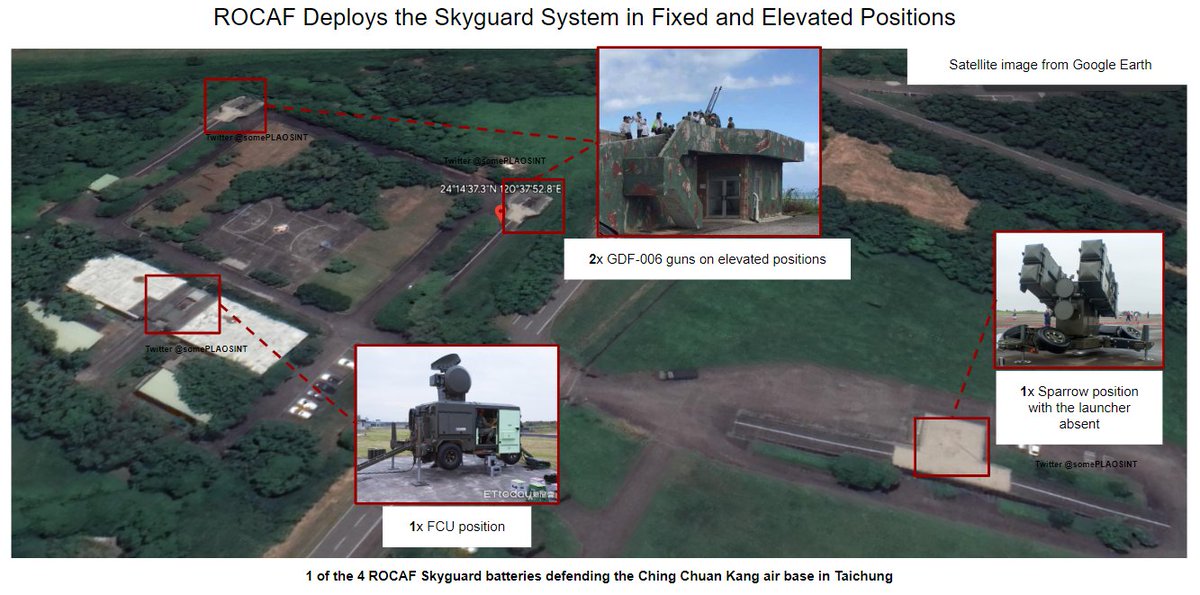
21/n | In this location, the 2 guns, 1 Sparrow missile launcher, and the FCU positions are distantly situated to avoid being destroyed together. This is vastly different from the dense deployment of PLAGF batteries where fire density is the top priority.
• • •
Missing some Tweet in this thread? You can try to
force a refresh