🧵1/9
Kinzhal and Iskander missiles, something similar, but different.
Both missiles reach hypersonic speed, it means above mach 5.
The Kinzhal is air launched, while the Iskander has ground launchers.
But there is a big difference between them: the flight altitude.

Kinzhal and Iskander missiles, something similar, but different.
Both missiles reach hypersonic speed, it means above mach 5.
The Kinzhal is air launched, while the Iskander has ground launchers.
But there is a big difference between them: the flight altitude.


2/9
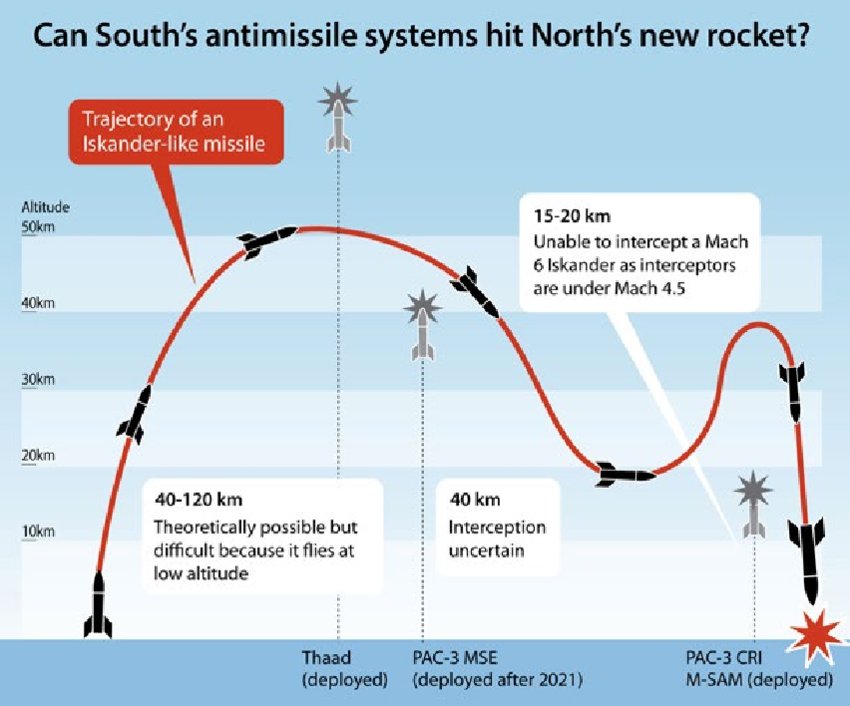
While the Kinzhal is launched at 20km altitude and keep it's flight maneuvering at that zone, the Iskander fly at 40-50km altitude. It makes the missiles completely different and in distinct levels of interceptions.
E.g the Pac-3 has 35km altitude range; Pac-2 (24km) alt.
While the Kinzhal is launched at 20km altitude and keep it's flight maneuvering at that zone, the Iskander fly at 40-50km altitude. It makes the missiles completely different and in distinct levels of interceptions.
E.g the Pac-3 has 35km altitude range; Pac-2 (24km) alt.
3/9
Is true that the whole flight of a Kinzhal can be tracked by a Patriot Pac-2/Pac-3, and the system analyze it's maneuvers, creating a prediction, but the same can't be done against a Iskander, which can be seen only when the missile directly downards to the target.
Is true that the whole flight of a Kinzhal can be tracked by a Patriot Pac-2/Pac-3, and the system analyze it's maneuvers, creating a prediction, but the same can't be done against a Iskander, which can be seen only when the missile directly downards to the target.
4/9
For a Pac-3 it means 35km, or 13-15 seconds considering the speed 2-2.8km/s.
The Pac-3 has 7 seconds of reaction time. So, would left 7-8 to reach the target, counting the flying time. It's really short time because we don't know the distance from the launcher to the target.
For a Pac-3 it means 35km, or 13-15 seconds considering the speed 2-2.8km/s.
The Pac-3 has 7 seconds of reaction time. So, would left 7-8 to reach the target, counting the flying time. It's really short time because we don't know the distance from the launcher to the target.
5/9
And we are talking about a target maneuvering and releasing decoys.
It's why the Iskander is much more dangerous than a Kinzhal.
The Iskander:
The flight lasts up to 6 min/ distance of 575 km, which is due to the fact that the Iskander maintains Mach 7 in the middle phase.
And we are talking about a target maneuvering and releasing decoys.
It's why the Iskander is much more dangerous than a Kinzhal.
The Iskander:
The flight lasts up to 6 min/ distance of 575 km, which is due to the fact that the Iskander maintains Mach 7 in the middle phase.

6/9
It doesn't maneuver during the boost phase because leads to a loss of speed, and the control of the rocket is based on programmable control over the entire length of the flight and self-guidance using the proportional navigation method only in the terminal phase.
It doesn't maneuver during the boost phase because leads to a loss of speed, and the control of the rocket is based on programmable control over the entire length of the flight and self-guidance using the proportional navigation method only in the terminal phase.
7/9
The midcourse phase is a transition period where the rocket moves mainly in a ballistic trajectory.
The maneuvers there do not significantly change the trajectory of the flight in the midcourse phase, but it is enough to change the projectile's range by up to 50 km.
The midcourse phase is a transition period where the rocket moves mainly in a ballistic trajectory.
The maneuvers there do not significantly change the trajectory of the flight in the midcourse phase, but it is enough to change the projectile's range by up to 50 km.

8/9
The Iskander achieves its greatest maneuverability in the terminal phase, where aerodynamic control is used.
This phase is the period when the missile returns to the denser parts of the atmosphere, which allows it to maneuver using aerodynamic forces and loss of speed.
The Iskander achieves its greatest maneuverability in the terminal phase, where aerodynamic control is used.
This phase is the period when the missile returns to the denser parts of the atmosphere, which allows it to maneuver using aerodynamic forces and loss of speed.

9/9
During the flight, it uses gyros, accelerometers and the GPS module, etc.
During the terminal phase, it changes and the optoelectronic or radar head on board the rocket compares digital maps of the terrain surface with the real image of the terrain, correcting its trajectory.
During the flight, it uses gyros, accelerometers and the GPS module, etc.
During the terminal phase, it changes and the optoelectronic or radar head on board the rocket compares digital maps of the terrain surface with the real image of the terrain, correcting its trajectory.
Note:
The best chances against this kind of missile is if the launcher is <5 sec distance to the target.
During it's terminal phase, depending of the maneuvers, it loss speed, but due to the short time to predictions and still a high speed, the interception remain at a low rate.
The best chances against this kind of missile is if the launcher is <5 sec distance to the target.
During it's terminal phase, depending of the maneuvers, it loss speed, but due to the short time to predictions and still a high speed, the interception remain at a low rate.
Note 2:
Can a Pac-2 Gem intercept a Iskander? Obviously yes, but it's more rare. And an Iris-T SLM? Less chances.
Actually the AD layers in Ukraine put the Pac-3 as the first choice for ballistic missiles in general. The other systems are for cruise and the last layer for drones
Can a Pac-2 Gem intercept a Iskander? Obviously yes, but it's more rare. And an Iris-T SLM? Less chances.
Actually the AD layers in Ukraine put the Pac-3 as the first choice for ballistic missiles in general. The other systems are for cruise and the last layer for drones
Note 3
How many RU has?
Before the war they were manufacturing 60 yearly, but now I think they can reach 80-90 if they solve the INS.
The navigation for this missile had imported components, but recently some monopolies were broken and maybe they solved this problem. Or MAYBE not
How many RU has?
Before the war they were manufacturing 60 yearly, but now I think they can reach 80-90 if they solve the INS.
The navigation for this missile had imported components, but recently some monopolies were broken and maybe they solved this problem. Or MAYBE not
Note 4
The Iskander is the most dangerous Russian missile. Later the Kalibr due to it multi speed.
Untill the allies bring a 360 GAN Radar into a ICBS, the Iskander keep being extremely dangerous, and with few true cases of interceptions, differently from the propaganda.
The Iskander is the most dangerous Russian missile. Later the Kalibr due to it multi speed.
Untill the allies bring a 360 GAN Radar into a ICBS, the Iskander keep being extremely dangerous, and with few true cases of interceptions, differently from the propaganda.
Note 5:
The Ukrainian Grom 2 is similar to the Iskander, but smaller. Months ago the Russian MoD accuse Ukraine of using the Grom 2. For me the Grom 2 was the response for the attack on Crimes bridge. The only thing able to by pass all the ADs on the way.
The Ukrainian Grom 2 is similar to the Iskander, but smaller. Months ago the Russian MoD accuse Ukraine of using the Grom 2. For me the Grom 2 was the response for the attack on Crimes bridge. The only thing able to by pass all the ADs on the way.
• • •
Missing some Tweet in this thread? You can try to
force a refresh