Care for a vague, impersonal "humanity" as an excuse to shirk one's own duty to his fellow man.
Dostoevsky: "The more I love humanity in general the less I love man in particular. [...] As soon as anyone is near me, his personality disturbs me and restricts my freedom." 2/
"Disbobedience" as a virtue.
Not sure what history he's referring to here. Genesis 3, perhaps? 3/
Sneering contempt for the poor due to their complacency and insufficient radicalism.
"The virtuous poor [...] must also be extraordinarily stupid." 4/
Instinctive hatred of civilization and tradition, desire to disrupt them and tear them down.
You can just hear 2023 Oscar now, insufferably waxing on in some freshman creative writing seminar on the importance of "deconstruction". 5/
More contempt for the pious poor.
The idea that a peasant may actually love his king is utterly foreign to the small-souled.
CS Lewis: "The man who cannot conceive a joyful and loyal obedience [...]. the man who has never even wanted to kneel or bow, is a prosaic barbarian." 6/
Sloth, laziness, passivity.
A useful exercise is that whenever a socialist identifies something to which "people" or "every man" is entitled, replace the designation with "me" or "I" and you'll have a far more accurate understanding of his true meaning and motivation. 7/
Upside down Christianity. Moralistic theraputic deism, moral relativism, rejection of man's fallenness (not surprising given 3/), Christianity = being nice and "judge not" 8/
Anti-marriage and family, along with another shameful bastardization of Christianity to justify deracinated hedonism. 9/
To Wilde's credit, the portion on democracy is spot on: "democracy means simply the bludgeoning of the people by the people for the people."
Aesthetes have a nose for this kind of thing. 10/
Completely braindead conception of crime and deviance. Just beyond parody. 11/
Final note on Wilde, a prodigal son of the Church:
Job, afflicted by Satan (Jb 1:12), longed for death: “Why did I not perish at birth, and die as I came from the womb? . . . Now I would be lying down and quiet; I would be asleep; then I would be at rest . . . Or why was I not buried like a stillborn child, like an infant that never sees the light? There the wicked cease from troubling, and there the weary are at rest.” (Jb 3:11-17)
2/
“Saul took his own sword and fell upon it.” (1 Sam 31:4) 1 Chronicles reveals the demonic origin of his affliction: “Saul died because he was unfaithful to the Lord . . . [and] even consulted a medium for guidance” (1 Chr. 10:13). 3/
Though often overshadowed by his more famous works, Pope Leo XIII’s 1881 encyclical Diuturnum (On the Origin of Civil Power) is an indispensable text on the Catholic understanding of the state, its origin, form, function, and legitimacy.
Full text below with some summary notes.
- Leo begins by connecting two ostensibly separate conflicts currently underway: the war against divine authority, and that against civil power. The two struggles are really one, the latter proceeding directly from the former. Having first rebelled against God, popular passions now reject every restraint.
- Christianity, in providing a framework by which to ensure the mutual rights and duties of princes and peoples, and constrain the excesses of each, is uniquely suited to allay this turmoil, thereby promoting the security and tranquility of states and peoples.
- Nature and necessity dictate that men will always be ruled: it is impossible that they should obey no one. In attempting to remove political power from states, the multitude has succeeded only in making them worse.
- Leo rejects the Enlightenment notion of popular sovereignty, viz. that political power is granted (and can be revoked) by the will of the people. Catholics must dissent from this view, affirming with Scripture and the Church Fathers that the right to rule comes necessarily and exclusively from God.
- However, Leo emphasizes that the source of a ruler’s right is separate from the method of his selection: whether chosen by the multitude or some other way, the essential point is that his authority comes from God. Even if the people designate the ruler, they do not thereby delegate his power; it is God, and not the people, who confers on him the right to rule in every case. Power comes from above, not below; it flows down, not up.
- It should be noted here what Leo is not saying: that all forms of government (rule by one/many/few) are equally good or practical. Leo takes no position on this question here, nor in his later works (much to the frustration of both his monarchist and republican contemporaries). Rather, he is establishing that none necessarily contradicts Catholic doctrine, so long as it is properly ordered (God > state > people) and oriented toward the common good. Forms of government may vary based on the needs and ancestral customs of each people.
I have no idea who this Murray guy is nor have I listened to @martyrmade’s podcast (yet) but he should drop the sneering tone because has no idea what he’s talking about.
Thread
It is completely uncontroversial even among mainstream historians to note that Hitler downplayed his anti-semitism at various times, in both public and private, throughout the 1930s (and ‘20s) based on his audience and near-term political objectives.
From the outset of his political career Hitler was determined to rebuild Germany’s prestige, yet well aware that his more radical anti-semitic views were unpopular abroad. Thus he and his followers certainly gave the impression internationally from as early as 1922 that his public anti-semitic rhetoric was somewhat of an act.
The Social Network is pretty obviously about the main character’s strained personal relationships. It has f*** all to do with “what was going on in 2010”—it doesn’t even take place in 2010!
“Our villains” Are you 5? The movie is about something else entirely. There aren’t even any “villains” in it. This is like when little kids can only parse men as either my-dad or not-my-dad
Lessons to the Empress on the Origins of French Civilization - Numa Denis Fustel de Coulanges
In 1870, Fustel de Coulanges delivered to Empress Eugenie of France a series of lessons on the history of French civilization. As in his best-known work The Ancient City, de Coulanges began with Indo-European prehistory, gradually tracing the development of French society from its origins in Aryan custom, Greek philosophy, Roman law, and Medieval Christendom, with a special emphasis on the emergence and influence of political institutions.
This is a unique book in that the words were not intended to be published in written form. They are, rather, more like a transcript of lectures from an exclusive and intimate setting, as if you were sitting in his classroom at Strasbourg, or (to be exact) in the private study of a European sovereign.
Adapted from de Coulanges' notes and published in 1930, Lessons to the Empress represents a single-volume summary of the thought of one of the most influential and transformative historians of the 19th century, here translated to English for the first time.
Preface is linked below, and the rest of the chapters will be posted as I complete them.
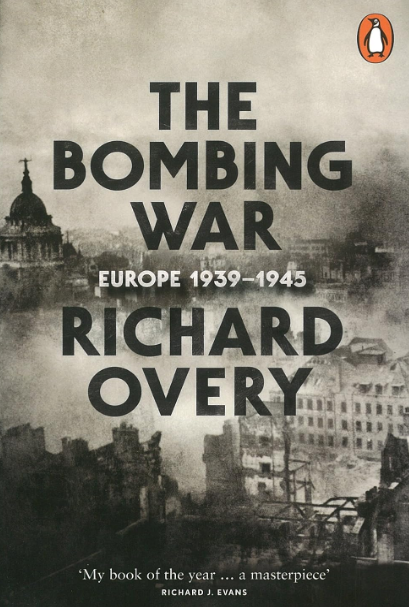
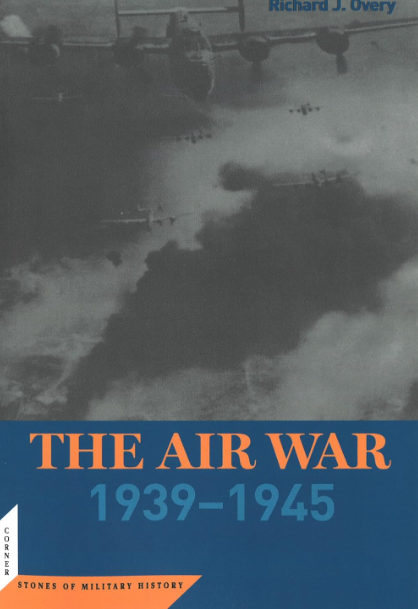
Thread on the WWII aerial bombing campaigns. Main sources throughout will be Richard Overy’s authoritative history, “The Bombing War: Europe 1939-1945” (2013) and earlier work "The Air War: 1939-1945" (1980), as well as his online lectures on the subject. 1/
Like anything else in the study of history, context is everything. As we saw e.g. with Pearl Harbor, to understand the decisions of military planners we must know the information available at the time and their key operating assumptions. 2/
In the interwar period, urban Europeans were terrified of the prospect of area bombing. The common view was that cities in the next war would be reduced to ash almost immediately, similar to the view people came to have of nuclear weapons just a few years later.
3/