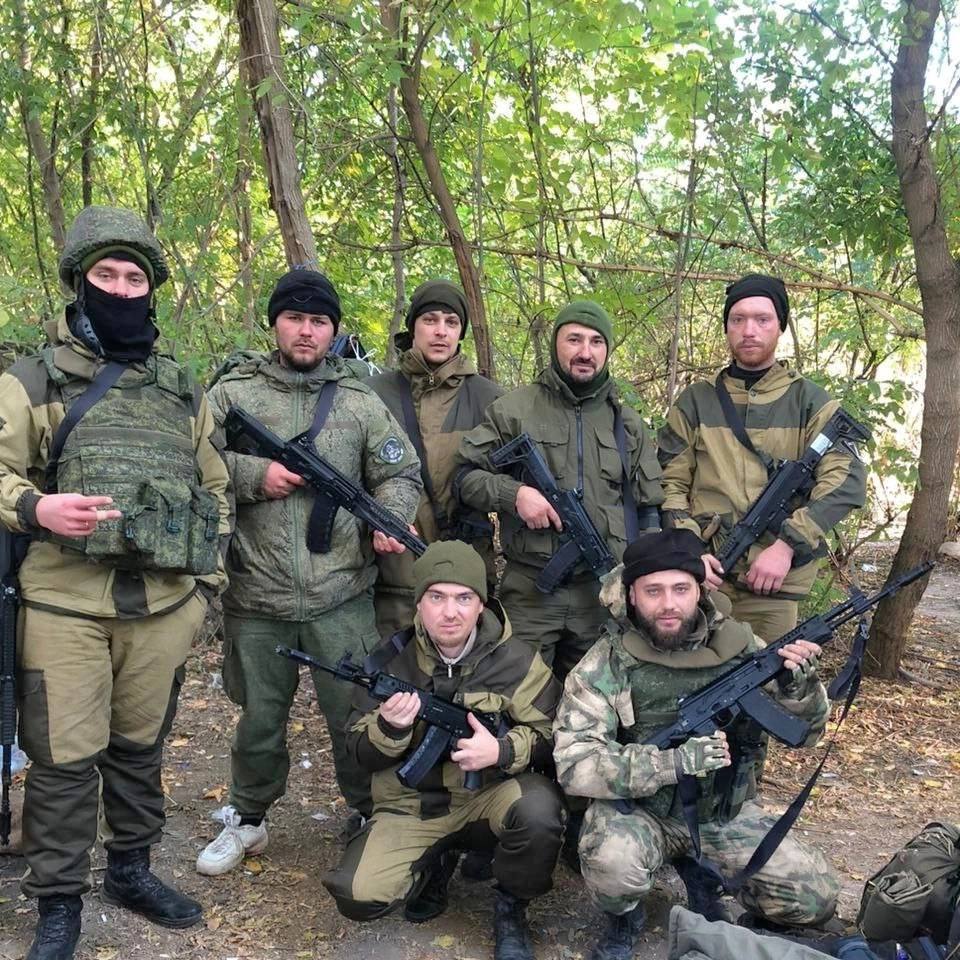
1/ Citizens of the puppet 'Donetsk People's Republic' (DNR) are complaining en masse that they are not being paid their promised compensation for deaths and injuries caused to local residents by the war. The DNR itself admits that it owes more than 38 billion rubles ($467m). ⬇️
2/ Relatives and soldiers of the DNR's armed forces – which have been decimated due to being used as so-called 'meat waves' against Ukrainian positions – have been posting numerous videos complaining about the lack of compensation payments and appealing to Putin for help.
3/ In one video, a wife says: "Starting from September 2022, funding for lump-sum compensation for wounded and killed DNR servicemen for 2022 was terminated. We submitted documents to the commission of the Ministry of Labour and Social Policy of the DNR.
4/ "There are a lot of us. We applied to all authorities. From the presidential administration to the Prosecutor General's Office of the Russian Federation.
5/ "All our appeals are forwarded to the government of the DNR, which redirects them to the Ministry of Labour, and the answers come from there that there is no funding. We write to the deputies and there are no results."
6/ According to the wife of one wounded soldier, his unit "collected all the necessary documents promptly, the medical examiner issued a conclusion of a severe injury.
7/ "In November we submitted all the documents for payment, and for seven months there have been no payments, the allowance during treatment is 30,000 rubles ($371). The answer is the same, there is no funding."
8/ People seeking compensation have complained to the DNR state prosecutor's office, which admitted that an audit had "established the fact of lack of funding for this type of payment, which requires an amount of more than 38 billion rubles."
9/ It's very unlikely that the DNR will be able to pay the sums it owes, as its finances are precarious, its economy is a mess and it's kept afloat only by Russian government funding.
10/ The Russian government has shown little concern previously for the welfare of DNR soldiers and their families, so there seems to be little likelihood that the relatives' video appeals will achieve much. /end
1/ Telegram will not be restored in Russia, and tighter restrictions will be imposed on mobile phone ownership, says Sergey Boyarsky, head of the State Duma IT Committee. He cites scammers, pro-Ukrainian sabotage, and drone attacks as the reasons behind these moves. ⬇️
2/ In a wide-ranging interview with the St Petersburg online newspaper Fontanka, Boyarsky has explained the thinking behind the government's new restrictions on Telegram. He says that "Telegram doesn't comply with Russian Federation law, and hasn't done so for many years."
3/ "The requirements are simple, basic: localise user data within the Russian Federation, remove prohibited information (extremism, terrorism), and cooperate with law enforcement agencies to solve serious crimes (for example, the Crocus [terroist attack] case)."
1/ While Telegram is only part of a wider complex of communications systems used in the Russian army, it comprises a keystone without which the wider system falls apart. A commentary by a Russian warblogger explains the Russian army's communications ecosystem in detail. ⬇️
2/ Responding to comments earlier this week by presidential spokesman Dmitry Peskov, 'Vault No. 8' provides a "briefing note" on the role of Telegram in the Russian military communications ecosystem.
3/ "A typical motorised rifle regiment (today, the basic tactical unit—the military unit that holds the front line) utilises several tools to manage its troops:
1/ While the Russia army struggles with the impact of Telegram and Discord being throttled or blocked by the government, Ukraine has long used a highly sophisticated indigenously developed digital command and control system. Russian warbloggers have highlighted the contrast. ⬇️
2/ Detailed accounts such as the one in the thread below illustrate how Telegram – a commercial app run from Dubai – has been a central tool in the Russian kill chain, allowing for rapid responses to Ukrainian actions. Discord was also heavily used.
3/ Although this approach has been effective, it has now deliberately been rendered unusable by the Russian government. 'Two Majors' compares how Ukraine has approached digital command and control, and never made itself reliant on Telegram:
1/ The Russian army is reportedly forcing its soldiers to abandon Telegram and move over to the government-authorised MAX app. A Russian warblogger explains why the transition will prove to be very difficult. ⬇️
"Some challenges of switching from Telegram to MAX for our military personnel.
Telegram doesn't require a Russian number to be linked, making it difficult for adversaries to [de]anonymise users."
3/ "Max requires not only a Russian number but also real data (according to the messenger's rules), which enemy electronic warfare systems will immediately receive (although a Russian number alone is sufficient for the enemy to identify a user).
1/ Russian presidential spokesman Dmitry Peskov recently said (very wrongly) that "It's difficult, if not impossible, to imagine ... frontline communications being provided via Telegram or any other messenger." Warblogger Nikita Tretyakov has a list of other 'unimaginables'. ⬇️
2/ "What else is unimaginable?
It's unimaginable that just a week ago, our troops' communications relied on an enemy country's satellite constellation.
3/ "It's unimaginable that soldiers still obtain many essential items for war and military life (anti-thermal blankets, radios, gasoline-powered and electric tools, inverter generators, etc.) almost exclusively from their salaries or from volunteers.
1/ Russian warbloggers are outraged at being told by a journalist that it's their own fault that the Russian government is restricting Telegram. They argue that if not for the warblogger community, the military's lies would have gone unchallenged – which is exactly the point. ⬇️
2/ Komsomolskaya Pravda journalist Ivan Pankin has prompted fury with his claim that "endless nameless insiders, all those endless bloggers, the smartest people on earth who know everything and who have been spreading all sorts of nonsense" have annoyed the Russian government.
3/ He is almost certainly correct, but the warbloggers aren't having any of it and have responded angrily. They claim they have been consistently right in warning about the failures of the Russian military, to the overall benefit of the war effort and Russian population.