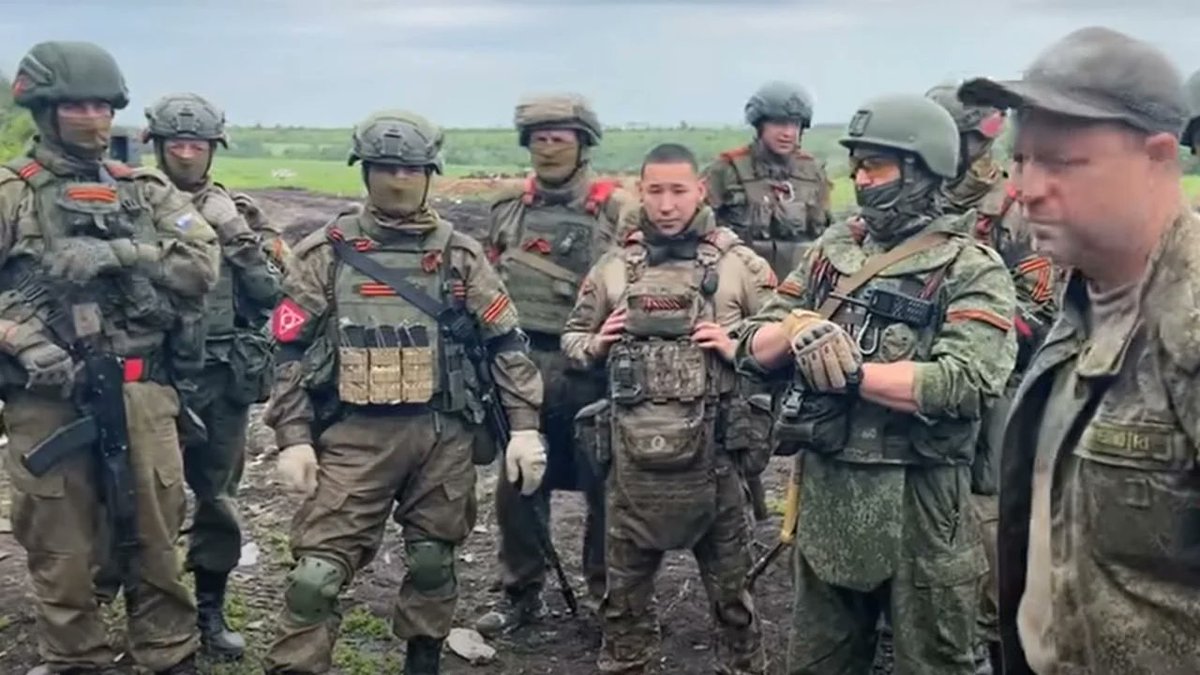
1/ Russian soldiers fighting against the cross-border incursion in the Belgorod region are complaining that they are being "slaughtered" and "entire regiments" have been lost. They blame bad leadership, inadequate equipment, lack of artillery support and no reinforcements. ⬇️
2/ The 'Pskov Province' Telegram channel has published a statement sent to it by mobilised soldiers from the 1009th motorised rifle regiment, which was raised in Russia's Pskov region. They want to "publicise what happened on the Russian-Ukrainian border."
3/ The men say in their statement: "I would like to see the story of our regiment being slaughtered on the Shebekino and Grayvoron directions and somehow put the matter to rest.
4/ "We are under constant shelling, officers, ordinary soldiers and above all the people who have families and all their relatives at home are being killed.
5/ "There is no question of a counter-battery response, each of our shots gets dozens of responses from the Ukrainian Armed Forces. And heavy equipment and reinforcements are out of the question. We are ready to defend our homeland, but with proper supplies.
6/ "And to be taken prisoner without arms or with no possibility to counteract is not defending the homeland. On behalf of the 1009th regiment we ask you to look into this serious problem and make decisions as soon as possible".
7/ After they were mobilised eight months ago, the men were taken to the 'Luhansk People's Republic' for training, which they say took place "with varying degrees of effectiveness".
8/ They were subsequently posted to the Belgorod region for what were presumably territorial defence duties, and all their leave was cancelled without explanation.
9/ In a separate video, a soldier who identifies himself as being from the 138th Brigade talks about catastrophic losses inflicted on his unit while they were defending positions in the Belgorod region. Transcript follows:
10/ "Dear friends, I am an ordinary soldier in the Russian Federation Armed Forces. My name is Vladimir Ivanovich Milyov, 138 Brigade, infantry. Until yesterday we were on the border with Ukraine, Belgorod region.
11/ "We came under the most powerful artillery shelling of our positions, including from those fucking HIMARS [probably Grads or other Soviet-era MLRS]. We received an order to hold position, which we did.
12/ "A few hours after that, Ukrops [pejorative term for Ukrainians] came, a fucking ton of Ukrops [actually Russian Volunteer Corps members]. We fired back and tried to repel them, but there were too many of them. We requested permission to retreat, but were denied.
13/ "As a result, we lost around 80% of our personnel and were forced to retreat without permission and without reinforcements. We left the border. After some time, the same situation occurred with two other groups [units]. They mowed down entire regiments of our men.
14/ "We are aware that our command know everything in advance – about the offensive on our positions. What were you faggots waiting for? Orders from above? But that we told you we would all die here didn't bother you?
15/ "Colonel Kolchin – the blame for the death of our guys lays personally on you. You will not be able to wash the blood off your hands to the end of your life, you fucking pisser!
16/ Because of you we lost a large contingent of our personnel, lost a piece of the border, lost supply lines, a ton of people surrendered. You scum sat in your offices and waited.
17/ "Now you yourselves will have to fucking regain these positions, but now from the trenches, not from behind a desk. That's it from me, thank you for your attention." /end
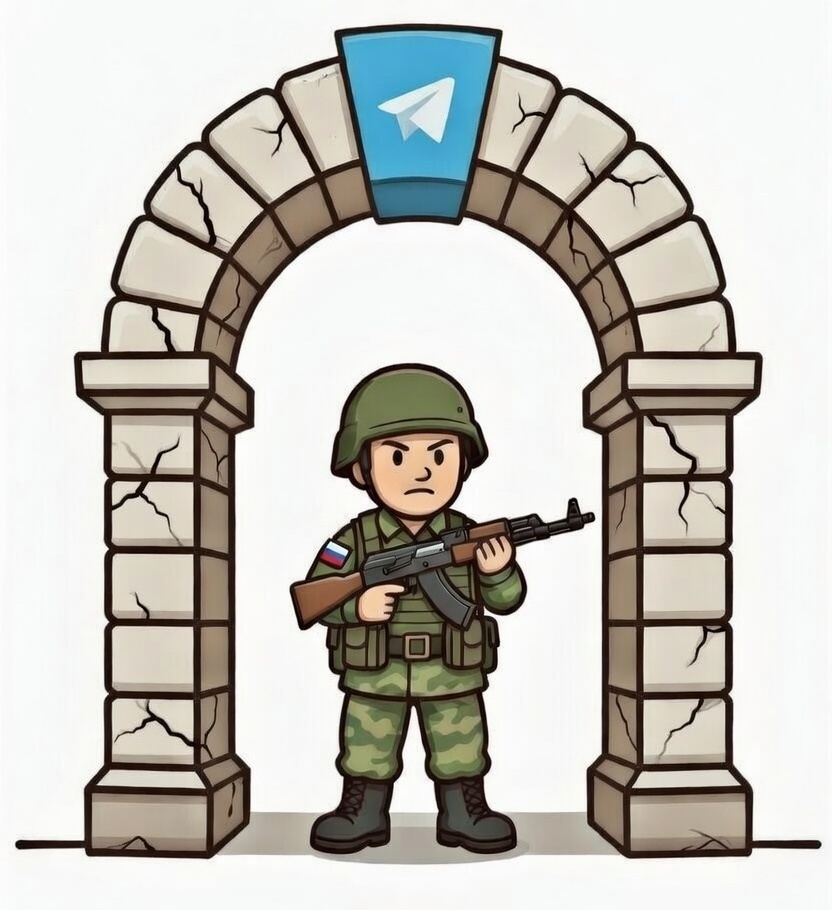
1/ While Telegram is only part of a wider complex of communications systems used in the Russian army, it comprises a keystone without which the wider system falls apart. A commentary by a Russian warblogger explains the Russian army's communications ecosystem in detail. ⬇️
2/ Responding to comments earlier this week by presidential spokesman Dmitry Peskov, 'Vault No. 8' provides a "briefing note" on the role of Telegram in the Russian military communications ecosystem.
3/ "A typical motorised rifle regiment (today, the basic tactical unit—the military unit that holds the front line) utilises several tools to manage its troops:
1/ While the Russia army struggles with the impact of Telegram and Discord being throttled or blocked by the government, Ukraine has long used a highly sophisticated indigenously developed digital command and control system. Russian warbloggers have highlighted the contrast. ⬇️
2/ Detailed accounts such as the one in the thread below illustrate how Telegram – a commercial app run from Dubai – has been a central tool in the Russian kill chain, allowing for rapid responses to Ukrainian actions. Discord was also heavily used.
3/ Although this approach has been effective, it has now deliberately been rendered unusable by the Russian government. 'Two Majors' compares how Ukraine has approached digital command and control, and never made itself reliant on Telegram:
1/ The Russian army is reportedly forcing its soldiers to abandon Telegram and move over to the government-authorised MAX app. A Russian warblogger explains why the transition will prove to be very difficult. ⬇️
"Some challenges of switching from Telegram to MAX for our military personnel.
Telegram doesn't require a Russian number to be linked, making it difficult for adversaries to [de]anonymise users."
3/ "Max requires not only a Russian number but also real data (according to the messenger's rules), which enemy electronic warfare systems will immediately receive (although a Russian number alone is sufficient for the enemy to identify a user).
1/ Russian presidential spokesman Dmitry Peskov recently said (very wrongly) that "It's difficult, if not impossible, to imagine ... frontline communications being provided via Telegram or any other messenger." Warblogger Nikita Tretyakov has a list of other 'unimaginables'. ⬇️
2/ "What else is unimaginable?
It's unimaginable that just a week ago, our troops' communications relied on an enemy country's satellite constellation.
3/ "It's unimaginable that soldiers still obtain many essential items for war and military life (anti-thermal blankets, radios, gasoline-powered and electric tools, inverter generators, etc.) almost exclusively from their salaries or from volunteers.
1/ Russian warbloggers are outraged at being told by a journalist that it's their own fault that the Russian government is restricting Telegram. They argue that if not for the warblogger community, the military's lies would have gone unchallenged – which is exactly the point. ⬇️
2/ Komsomolskaya Pravda journalist Ivan Pankin has prompted fury with his claim that "endless nameless insiders, all those endless bloggers, the smartest people on earth who know everything and who have been spreading all sorts of nonsense" have annoyed the Russian government.
3/ He is almost certainly correct, but the warbloggers aren't having any of it and have responded angrily. They claim they have been consistently right in warning about the failures of the Russian military, to the overall benefit of the war effort and Russian population.
1/ In January 2026, Ukraine reported killing 34,000 Russian soldiers – on average 1,096 a day, or 7,846 per week. Thousands of Ukrainians have likely died in the same period. Last month in Ukraine was much bloodier than the average monthly death toll at Auschwitz. ⬇️
2/ The extraordinary lethality of the Ukraine war stands out in comparison to recent wars and mass killings:
🔺 At least 7,000 people are reported to have been killed in the recent Iranian uprising. More have died in Ukraine in each week of last month.
3/🔺 At least 84,000 people died in the Gaza war between 7 October 2023 and 10 October 2025 – an average of 3,500 per week. The number of weekly fatalities in the Ukraine war last month alone was more than twice Gaza's monthly average.