Read on Twitter
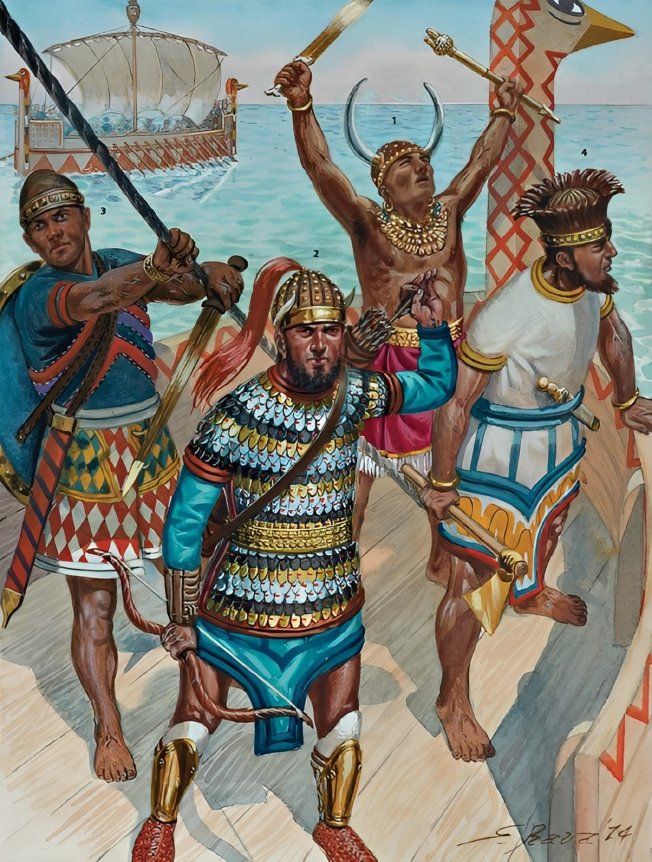
1/ During the period of transition from the Middle to the Late Bronze Age, significant changes occurred in the Aegean, one of which was the emergence of new warfare standards both among the early Mycenaean elites and among those of Minoan Crete. 

2/The depictions of Mycenaean and Minoan warriors in this period (1700-1450 BC),as well as the finding of archaeological finds (weapons), provide us with information about two distinct societies in which armed men were highly valued as a result of a long-standing Aegean tradition

3/In the Neopalatial Age,depictions of Minoan warriors appear in refined artifacts and in scenes of actual or religious duels, athletic competitions, religious events and processions with spears and shields. There are limited depictions of warriors on stone vessels and frescoes.

4/ The early Mycenaean depictions of warriors are strongly influenced by the Minoan artistic tradition with the exception of the gravestones of the Shaft Graves of Mycenae. 👉

👉 The warriors are initially shown engaging in close duels and group combats, while over time there is a rapid increase in depictions of warriors, capturing illustrations of group combats, sieges, chariots, hunting and riding.

5/ The abundance of archaeological evidence from the period reflects the emergence of a new type of warrior in the Aegean region, possessing a complete package of innovative offensive and defensive weapons, as well as associated accessories (ornaments, grooming tools).

6/ This is how a natural necessity is observed in war which is an integral element of their identity. The development and adoption of specialized weapons, such as the appearance and continued evolution of the long sword, indicates a change in the way warfare was conducted.

7/ The long sword was also a symbol of status and prestige, as sword duels were common in the Minoan and early Mycenaean society as an example of the new warlike ethos with artistic depictions presenting the swordsman as invincible, 👉
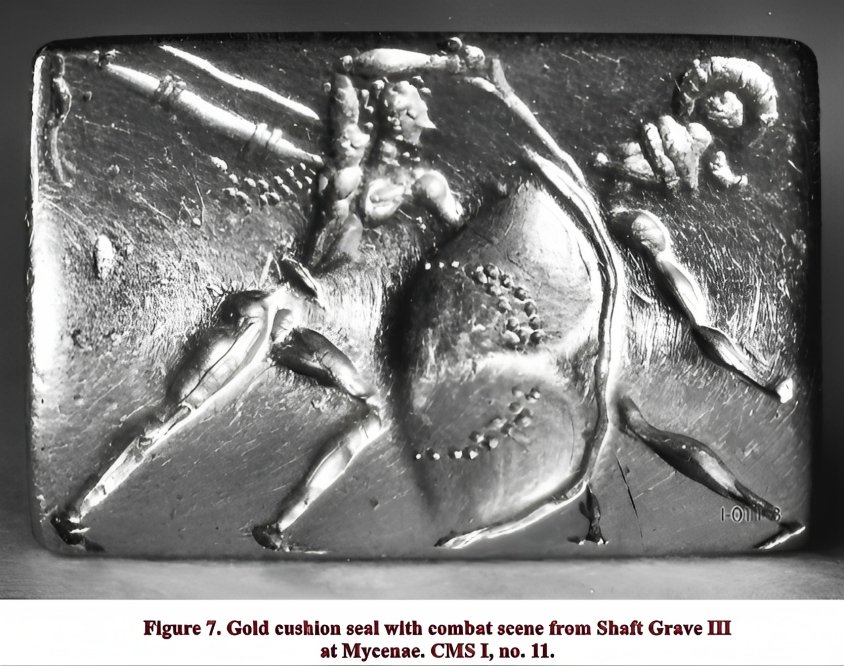
👉 giving him strong heroic-mythical elements. Elaborately decorated swords, which contained precious metals, were found in warrior burials as markers of prestige and social elevation.

8/ Another important weapon was the spear, which was particularly effective in group combats, but also in hunting. In the area of defensive equipment, the helmet made of boar tusks and 👉
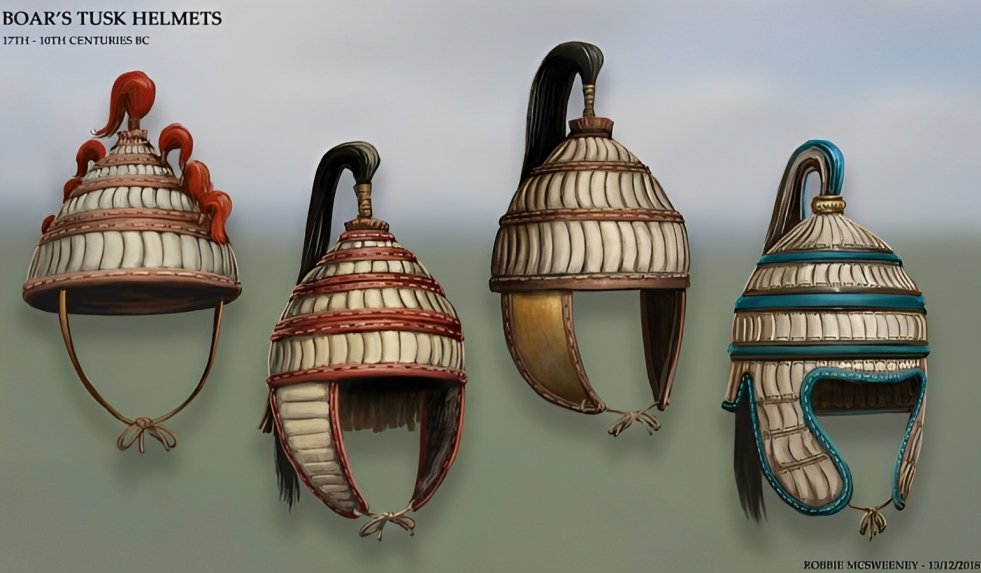
👉 the characteristic eight-shaped shield stand out, while the Mycenaeans seem to use chariots to transport fighters or military equipment to the battlefield.
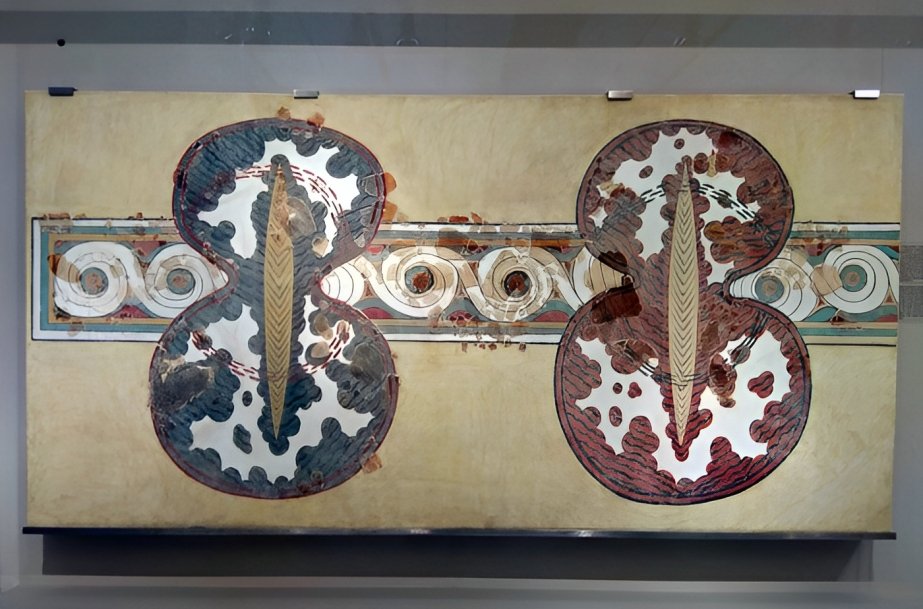
9/ At the same time, the warriors of the time used a series of body ornaments, such as necklaces, bracelets and seal rings, which was used to indicate social rank and status, as well as grooming tools, such as razors, tweezers, cleavers, combs and mirrors, 👉

👉 which were essential to a warrior's lifestyle, as it appears that personal hygiene, hair fashion and physical appearance were an important part of his identity.

10/ In Neopalatial Crete the local elites seem to have controlled a significant part of religious activities and had developed a sophisticated cult apparatus, while keeping the bureaucracy and military power under their centralized control. 👉

👉 The Minoan warriors were associated with the palatial elite and maintained a close relationship with religious and athletic activities, as relevant depictions demonstrate.

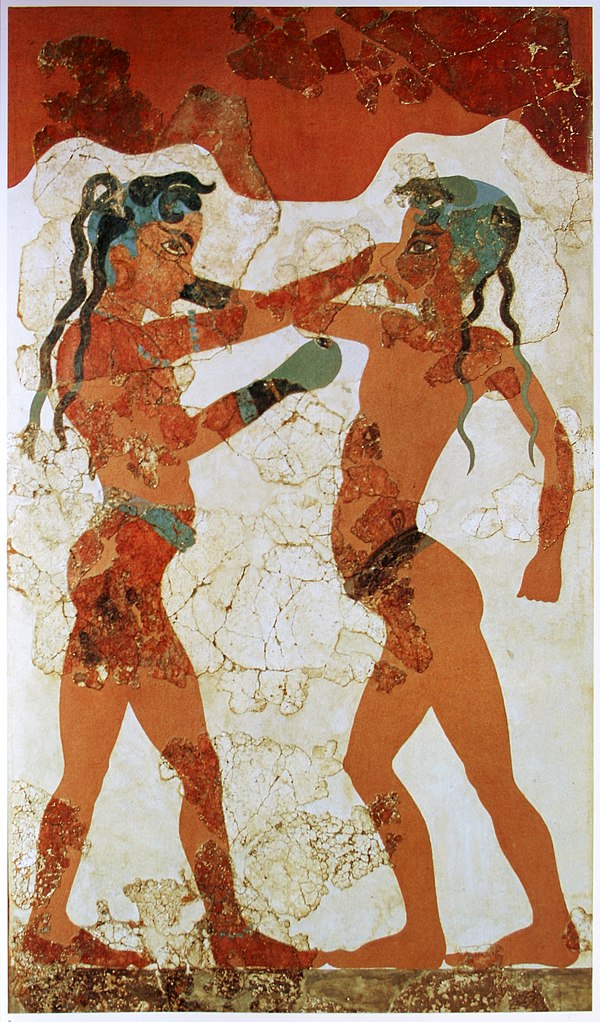
11/ Scenes of coming-of-age ceremonies or initiation into the warrior caste are depicted in an intense mystical context, as well as scenes of athletic competitions, where the muscular physique, strength and agility of the warlike youth of the ruling Minoan elite were extolled.

12/ The early Mycenaean elites wanting to promote the legitimacy of their power present pictorial depictions of imposing and violent chariot racing and hunting scenes. The chariot is used as the ultimate Mycenaean weapon of defeating opponents on the battlefield, 👉
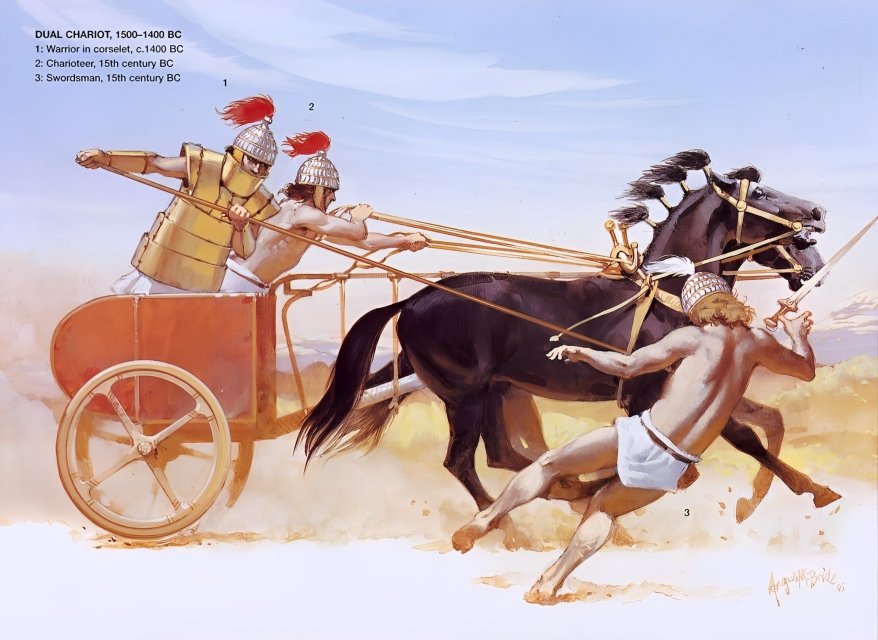
👉 providing its user with a sense of dominance, while on the other hand, it seems to be used in hunting of difficult prey that reflect the bravery, lack of sense of danger and suitable physical qualities of the hunter.

13/ In conclusion we could say that both the Neopalatial Minoans, as well as the early Mycenaean warriors, had become particularly necessary for their societies in an intensely warlike environment and gradually heading towards the military invasion of the Mycenaeans in Crete.

14/ They were tasked with protecting the community from attacks by neighboring cities and keeping the existing trade routes safe, and at the same time conquering neighboring cities through sieges and raids securing control of new lands and economic resources.

15/ Their difference was that the military class of Minoan Crete was under the direct control of the palatial centers with which it was closely connected, while in early Mycenaean Greece there was an independent military class within the elite, 👉
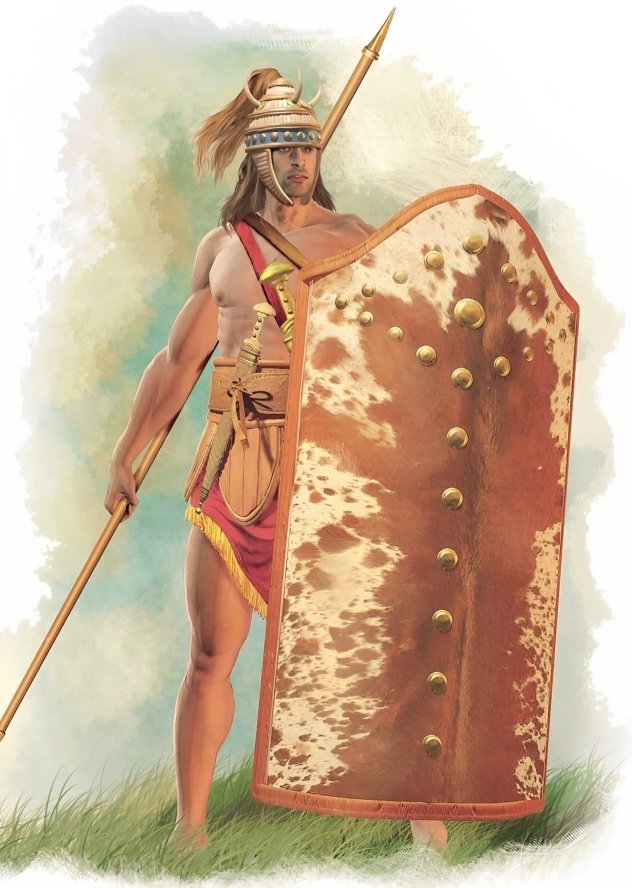
👉 which was willing to provide its services both to its local rulers and to foreign countries as mercenary force (Maybe were early Mycenaean warlords used as mercenaries by the Minoan Cretans and Egyptians?)
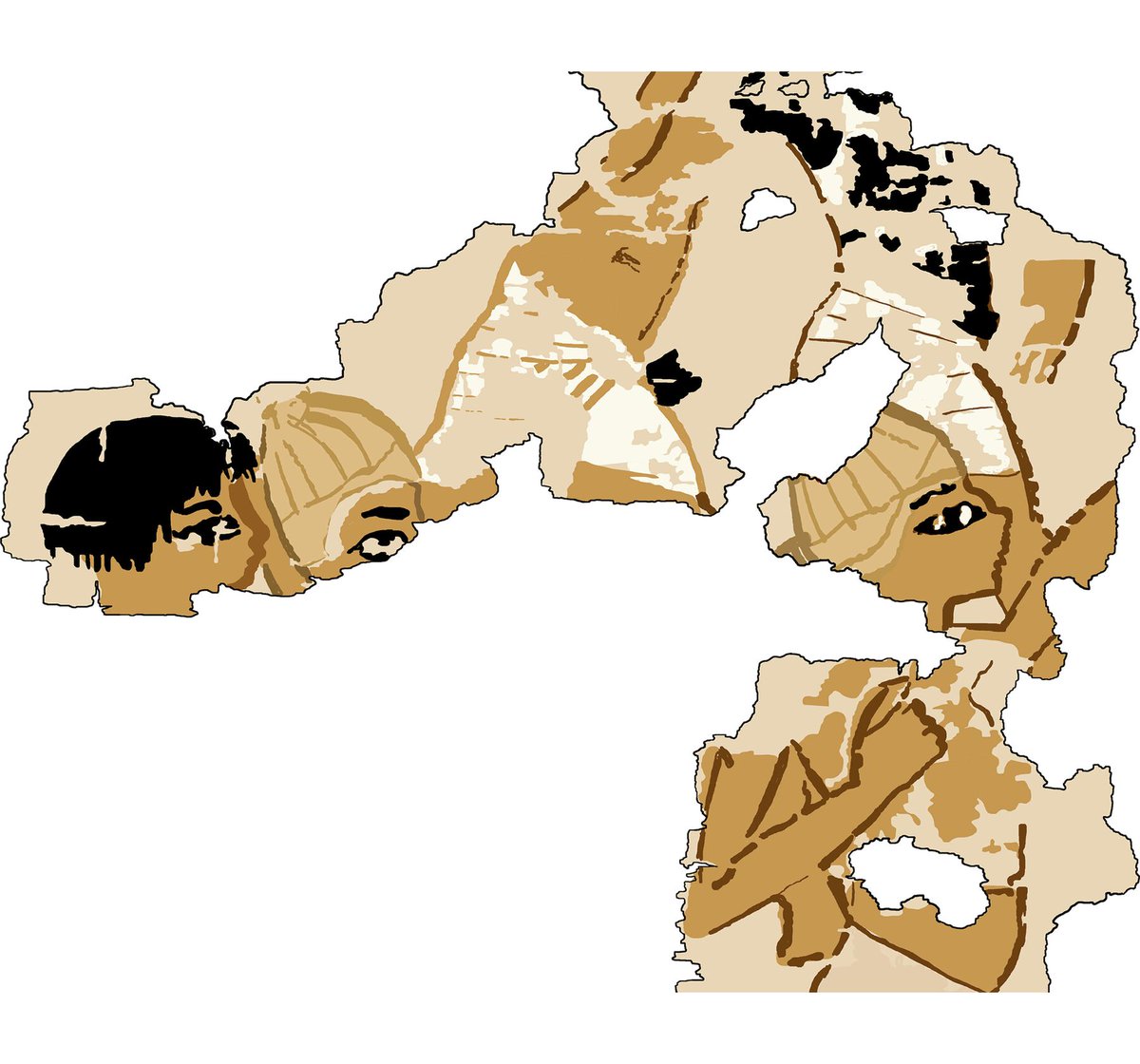
16/ The Minoan warrior is distinguished by his participation in religious and athletic activities, attaching special importance to his physical qualities and to the fulfillment of a specific socio-religious lifeway. 👉
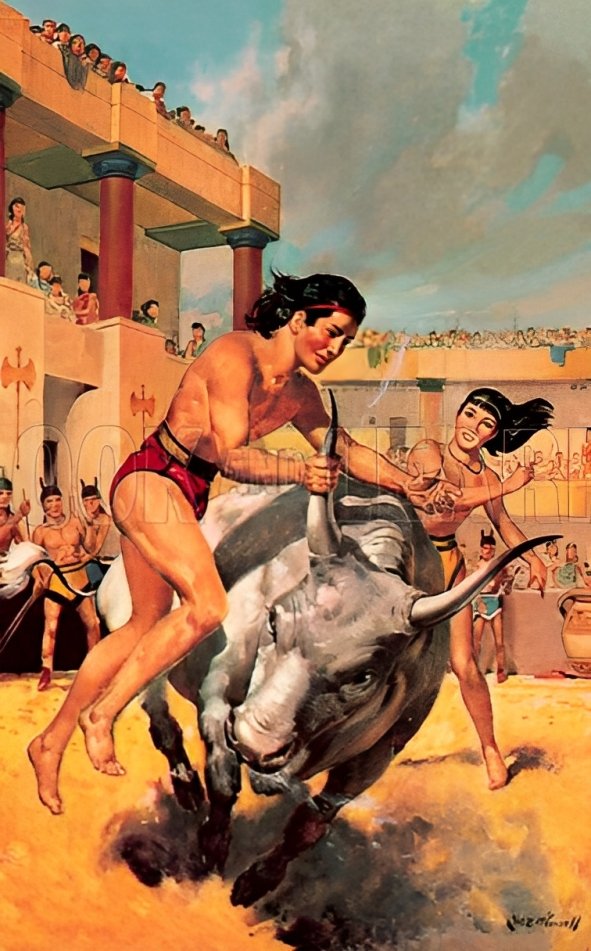
👉 His education was probably beginning at the young age, and his participation in social events was important in his preparation for the war. His standard equipment consisted of the sword, spear and helmet, with the sword being the most important weapon.
17/ The early Mycenaean warrior is clearly distinguished by his engagement in riding and hunting as elements of skill, courage and dominance. The effective use of the chariot and the sword capture the magnificence of the triumphant Mycenaean warrior. 👉
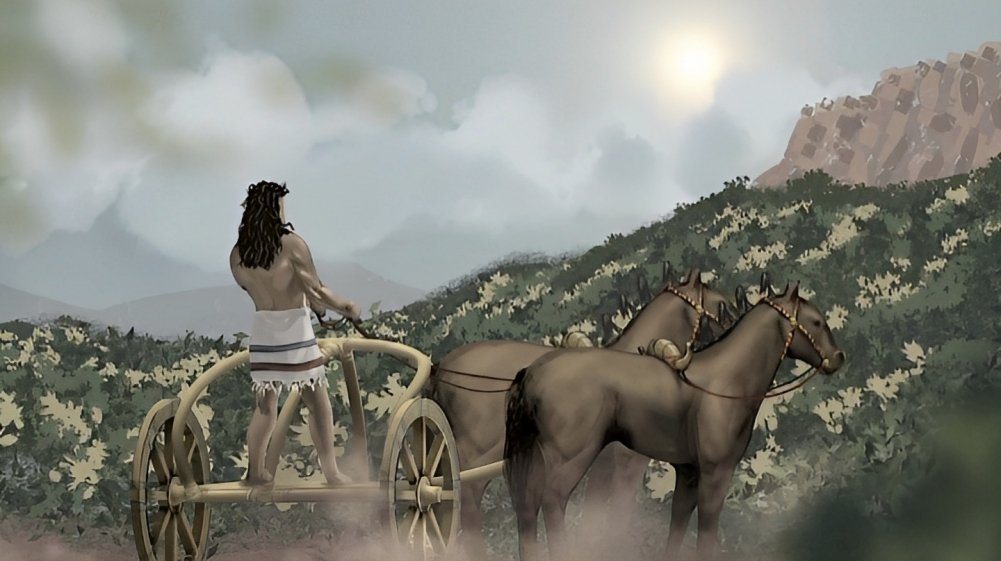
👉 The Mycenaean elites expressed their military prowess by depositing weapons in burials to express their superiority and high office, and there was a strong link between prestige and military achievements.
• • •
Missing some Tweet in this thread? You can try to
force a refresh