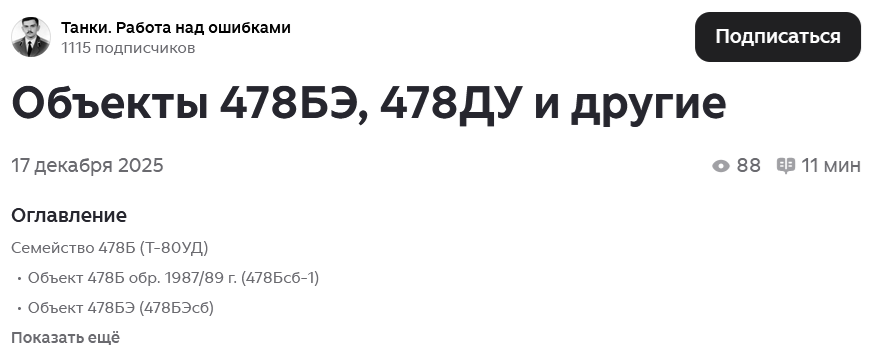
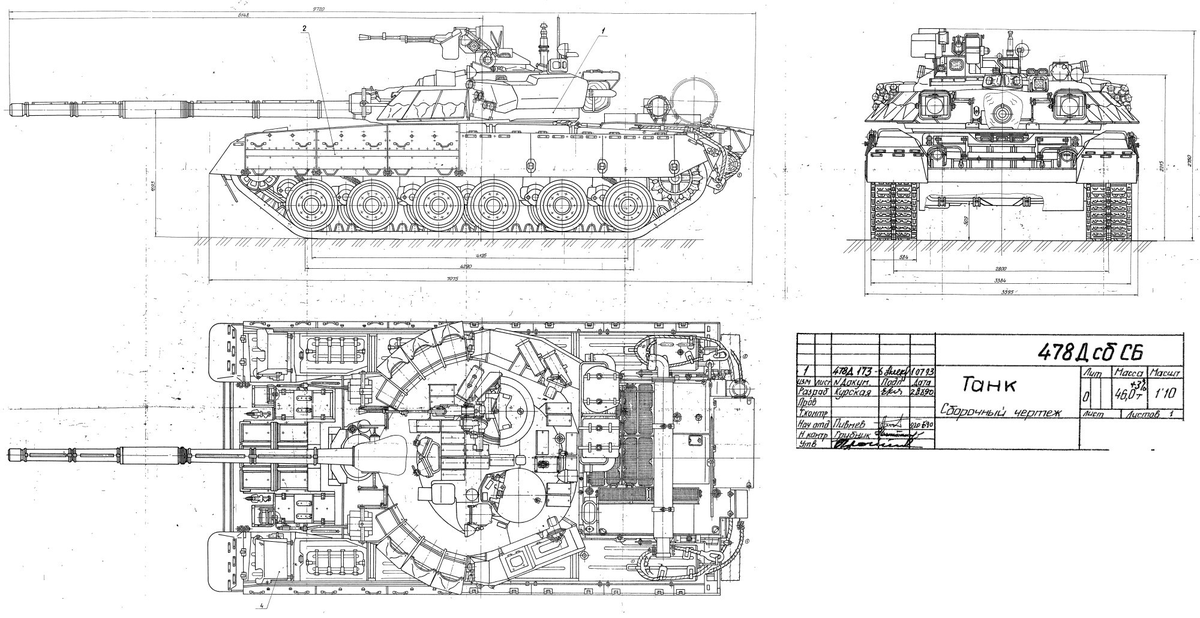
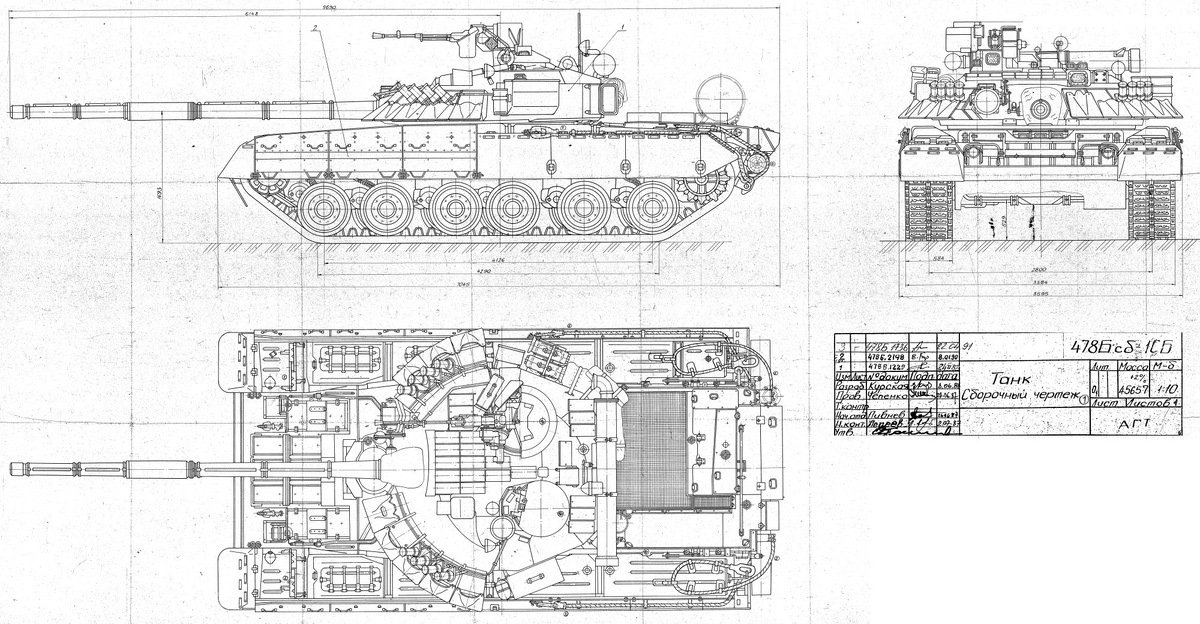
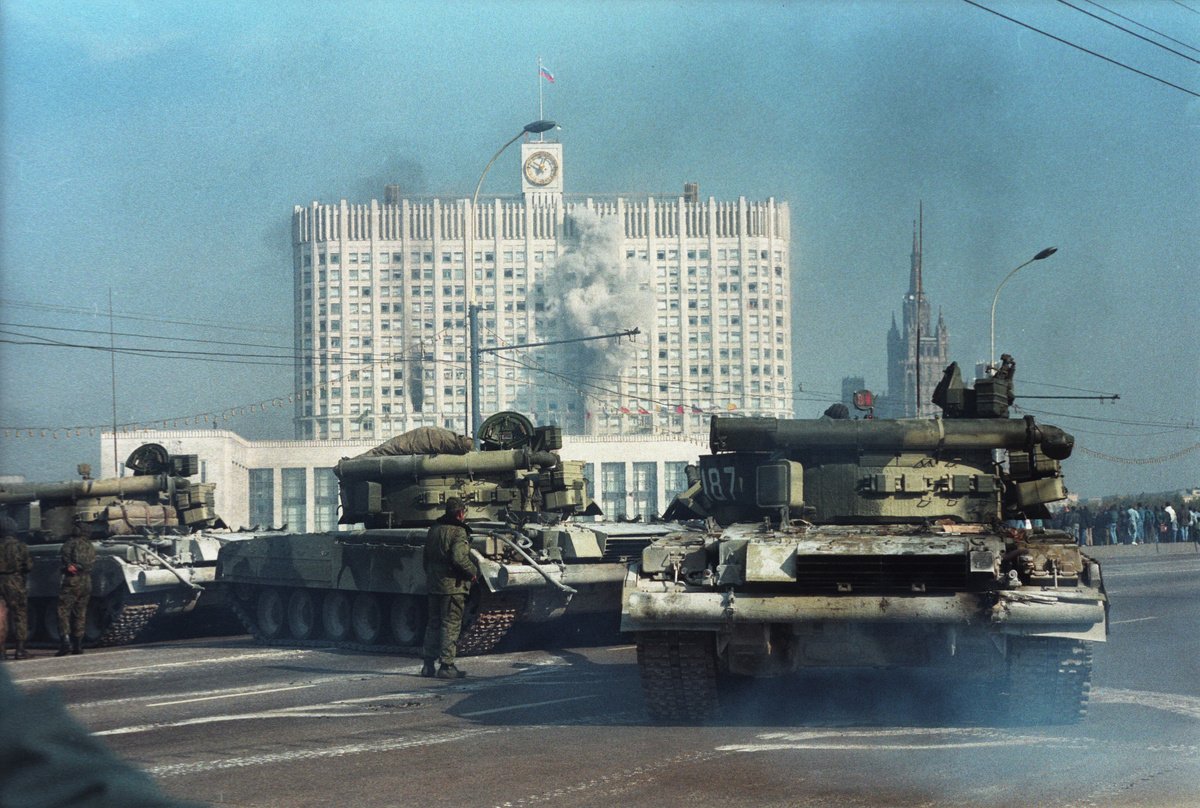
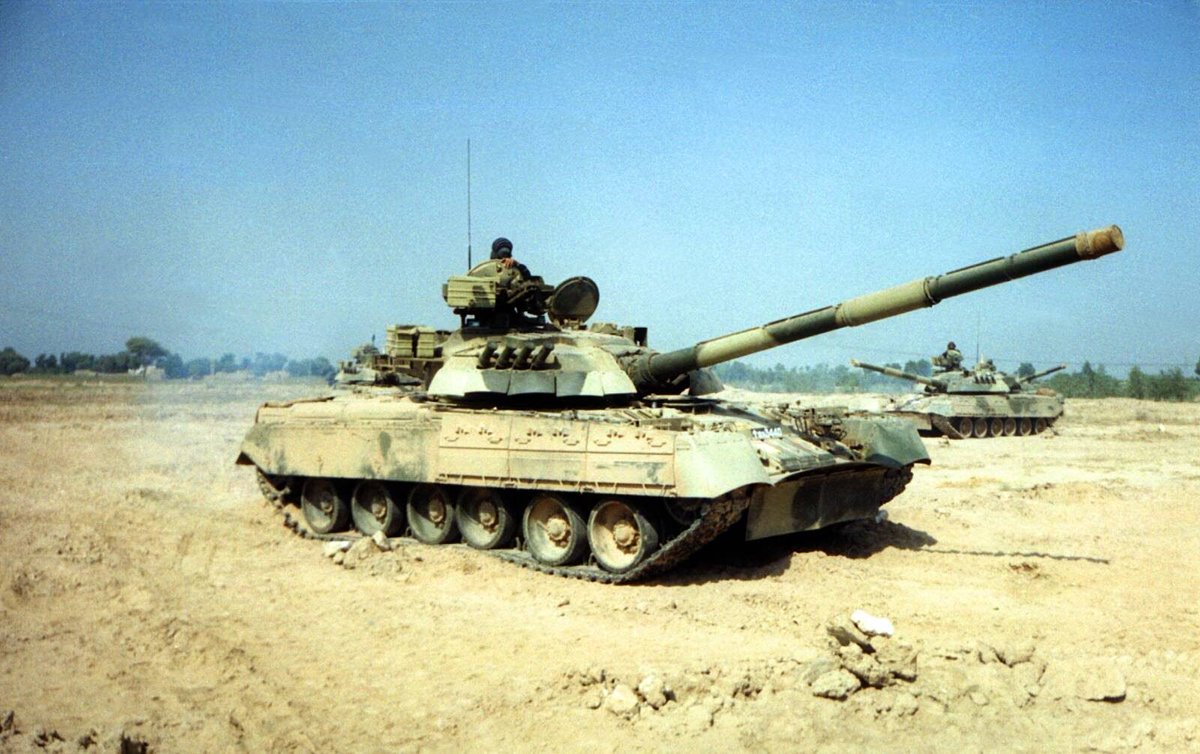
(1/16) For a change, today we will look a non-automotive special feature of the T-64A/B: its commander cupola and AAMG mounting. 

(2/16) Unlike its rivals, the T-72 and T-80, the T-64A and later the T-64B received the remote controlled ZU-64A AAMG mounting with the 12.7 mm Utyos (NSVT) in 1974.
This allows the commander to fire it without exposing himself, as seen in this Georgian Legion video.
This allows the commander to fire it without exposing himself, as seen in this Georgian Legion video.
(3/16) The cupola and ZU-64A are controlled using two control panels: PG-20 (blue) and PV-20 (red)

(4/16) PG-20 controls the horizontal traverse and the cupola's electromechanical drive. The commander rotates it using the handle (46).
The KTsU button (44) is the командирское целеуказание ('commander target designation') button, which overrides the turret.
The KTsU button (44) is the командирское целеуказание ('commander target designation') button, which overrides the turret.

(5/16) PV-20 controls the elevation of the gun and its PZU-5 sight using the handle (39). (38) is the trigger button for the AAMG.

(6/16) The commander aims the AAMG using the PZU-5 sight, which is mechanically linked to the gun and protrudes out to the left of the cupola.


(7/16) The commander's primary optic is the TKN-3V. It can be distinguished from the TKN-3 used on the T-72/80B by the lack of side handles. The lower handle allows you to tilt the sight up or down.
It is paired with the OU-3GKU IR searchlight when used in active NV mode.
It is paired with the OU-3GKU IR searchlight when used in active NV mode.


(8/16) The TKN-3 on the T-72/80B needs those handles because the commander has to turn the cupola manually using 'elbow grease'. This makes it significantly harder to use if the tank is moving or if it is not on level ground.

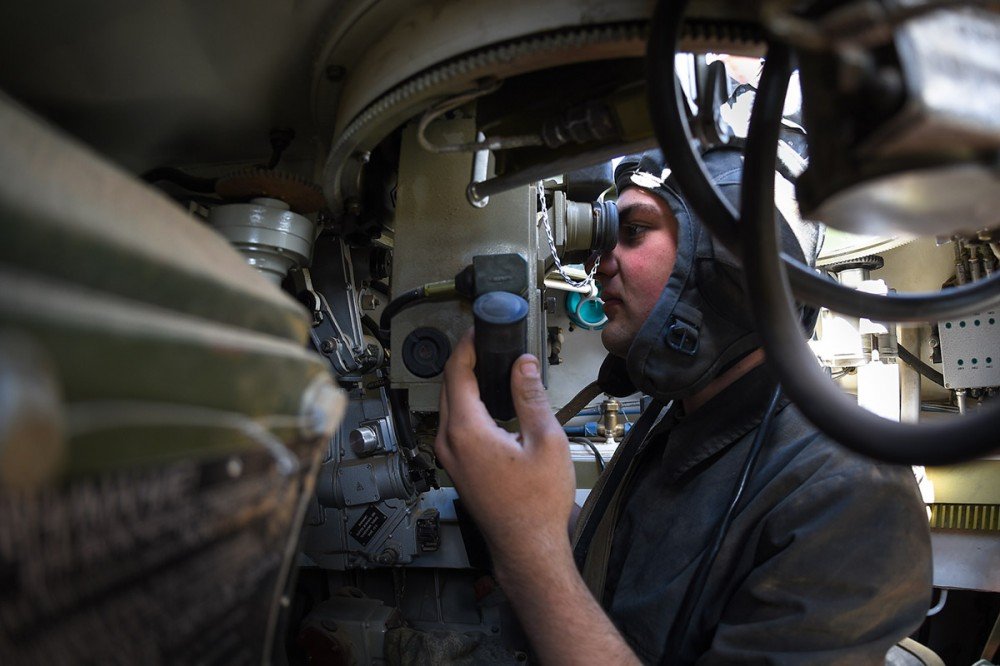
(9/16) The commander in those tanks also has to remember to press the button on the right handle when using the target designation button on the left handle. Otherwise the cupola will rotate along with the turret and he will lose his target.
(10/16) The T-72 also uses a manual ZU-72 AAMG mount, which requires the commander to expose himself to use it. It's also mounted on a separate race from the cupola, so the cupola has to be turned to the rear in order to use the Utyos against targets in front.


(11/16) You can see at around 1:07 how hazardous this can be.
https://twitter.com/LRNZH/status/1585242597173628929
(12/16) Kartsev (the T-72's chief designer) claims in his memoirs that it was in order to provide a better field of view when firing at aircraft, but, personally, I suspect the real reason was in order to keep the costs of the T-72 down...
thesovietarmourblog.blogspot.com/2015/05/t-72-s…
thesovietarmourblog.blogspot.com/2015/05/t-72-s…

(13/16) The T-80B also uses a manual commander's cupola and AAMG for reasons known only to the designers...
The AAMG is also directly attached to the cupola here, which means the commander has to rotate the entire assembly, which weighs around 300 kg, manually...
The AAMG is also directly attached to the cupola here, which means the commander has to rotate the entire assembly, which weighs around 300 kg, manually...


(14/16) Maybe you could ask the "Comrade Weapons Designer" Suvorov mentions here...
btvt.info/1inservice/t-6…
btvt.info/1inservice/t-6…

(15/16) The motorised cupola generally made the T-64 commander's life easier than on the T-72 or T-80B. But the cupola was felt to have poor visibility, so it was eventually improved for the Object 476 before being adopted on the T-80UD and T-84, as well as the BM Bulat.


(16/16) The fact that UVZ eventually adopted a remote controlled AAMG and cupola for the T-90 similar to the T-64's should make it unambiguous who ultimately won this debate...


(Extra) Oh, I should add this video, you can cupola being used while the commander is not exposed.
• • •
Missing some Tweet in this thread? You can try to
force a refresh