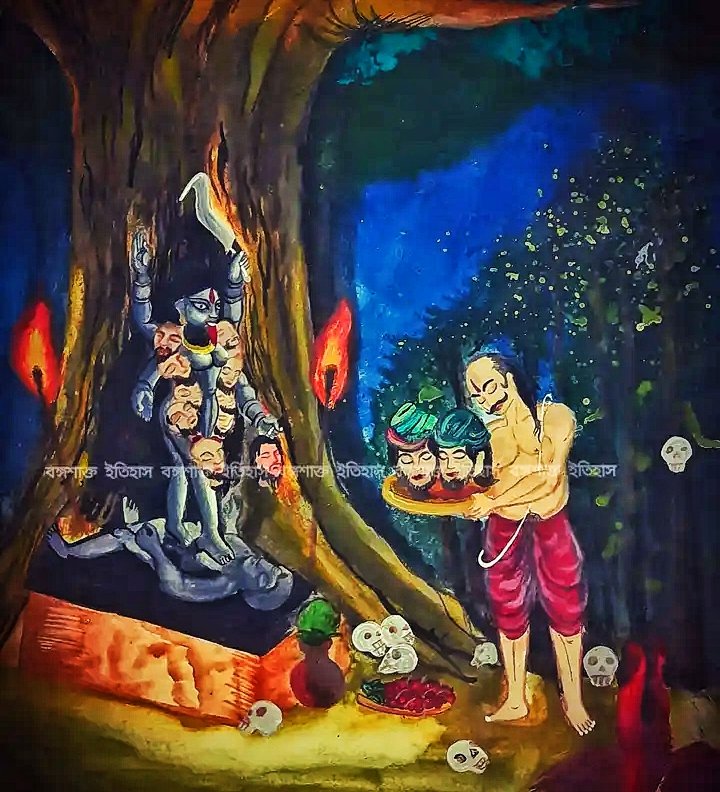
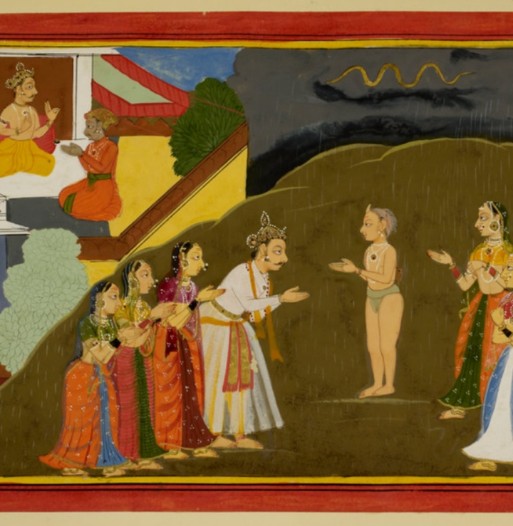
☠️ Dakat Benimadhav Ray - The Pandit who offered Bali of Pathans in front of Yavanamardini Kali 🌺
📜 Art - Sumanto Pal
In the 16th century, in Bengal Dakat Benimadhav Ray and his bandit gang stood as a terror for the Afghans in eastern India.
1/8
Pandit Benimadhav Ray was a Bengali Brahmin dacoit of Rajshahi whose gang used to capture the Pathans on the night of Amavasya and offer narabali of them in front of Maa Yavanmardini Kali. 💀💀💀
2/8
Pandit Benimadhav Ray was a resident of Tarash Chalan-Beel in the Rajshahi kingdom of Bengal. In his early life, he was a scholar Varendra Brahmin Pandit and Sanskrit Acharya. In that era Pathans used to demolish temples & murtis and forced to stop puja of Hindus.
3/8
In view of the chaotic situation in society, Benimadhav decided to sharpen his sword to protect Dharma. He was a skilled swordsman and he used to offer bali of Pathans on every Amavasya night at the feet of his worshipped goddess, Maa Yavanamardini Kali.
4/8
He initially received martial training there by joining the team of warrior Gobindo Singha. Later, after the death of Gobindo Singha, he became the leader of the group, and became popular with the name "Pandit Dakat" [পণ্ডিত ডাকাত| पण्डित डकैत].
5/8
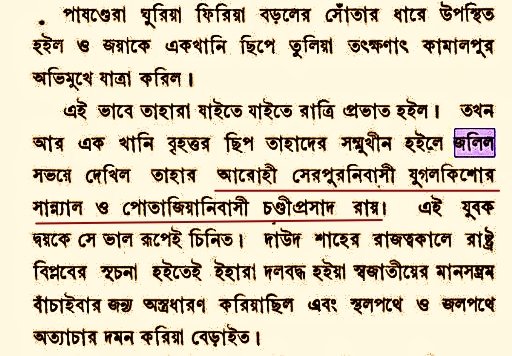
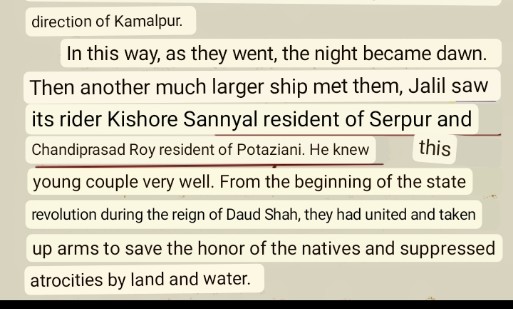
His two chief Commanders were Jugal Kishore Sanyal and Chandi Prasad Ray. Chandiprasad and Jugalkishore, were notorious for implanting fear among Pathans & known by them as "Kaal Chandeya" and "Kaal Jogala" for fear of similar reasons. ☠️
6/8
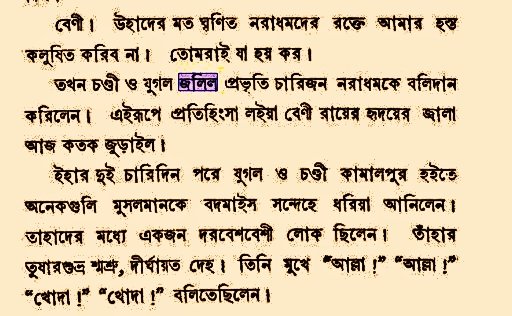
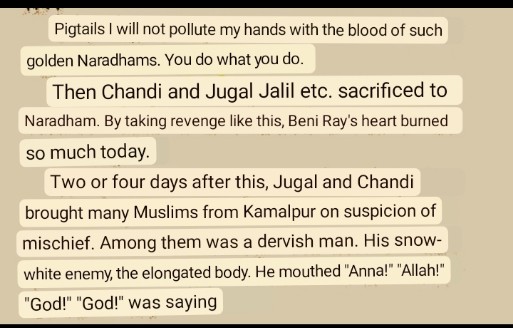
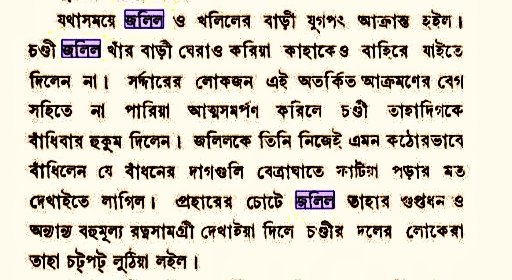
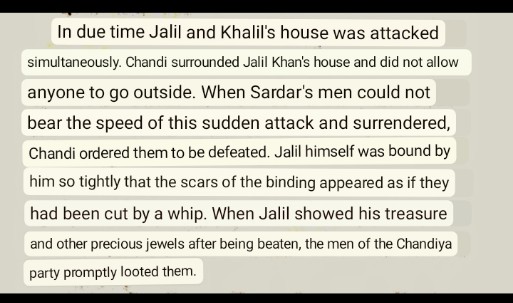
In due time receiving order of Beni Ray, Jugal & Chandi launched attack on Subedar Zalil Khan's house. Chandiprasad surrounded the entire house & Pathans surrendered in fear. Then Zalil Khan & Khalil Khan was tied & brought to Chalanbil, where they were sacrificed to Kali.
7/8
Dakat Benimadhav Ray lived on an island in Chalan beel, his dera was surrounded by dense forest. The area where he lived is known as the "Pandit Dakater Bhita" (পণ্ডিত ডাকাতের ভিটা), although the Pathans called it "Shaitan ka Bhita" خانه شیطان (Residence of the Devil).
8/8
🎥 Video editz -
• • •
Missing some Tweet in this thread? You can try to
force a refresh

Luchi is not merely a beloved Bengali delicacy - it is one of the oldest documented foods of Bengal, with written references dating back to the Pala era. The 11th-century scholar Chakrapani Datta, author of the Ayurvedic text Dravyaguṇa, mentions both the preparation method
+
and the spiritual as well as medicinal benefits of the Luchi diet. In his time, Luchi was known by its ancient name “Śaṣkulī.”
+
Acharya Chakrapani Datta, the Royal physician at the court of Gaudeshwar Nayapala, describes its preparation in the following Sanskrit verse:
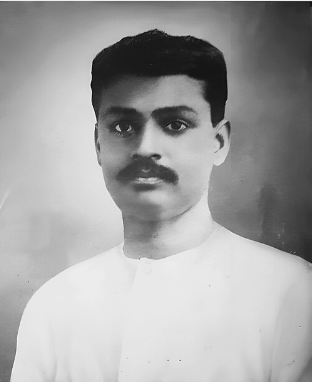
Despite their immense sacrifices, Sachindranath Sanyal and Rajendranath Lahiri remain shadows in India’s mainstream memory. Sachin Sanyal, one of the earliest revolutionaries, founded the Hindustan Republican Association that inspired generations of young revolutionaries.
Rajendra Lahiri, on the other hand, was the principal strategist behind the Kakori Train Action, the operation that announced to the world that India’s youth were ready to take the freedom struggle beyond petitions and prayers.
And yet, how often do we see their names in school textbooks? How often does Bollywood, which claims to “retell” India’s freedom movement, portray their lives? Almost never. Instead, the narrative is repeatedly narrowed to a handful of figures-mostly those who aligned with
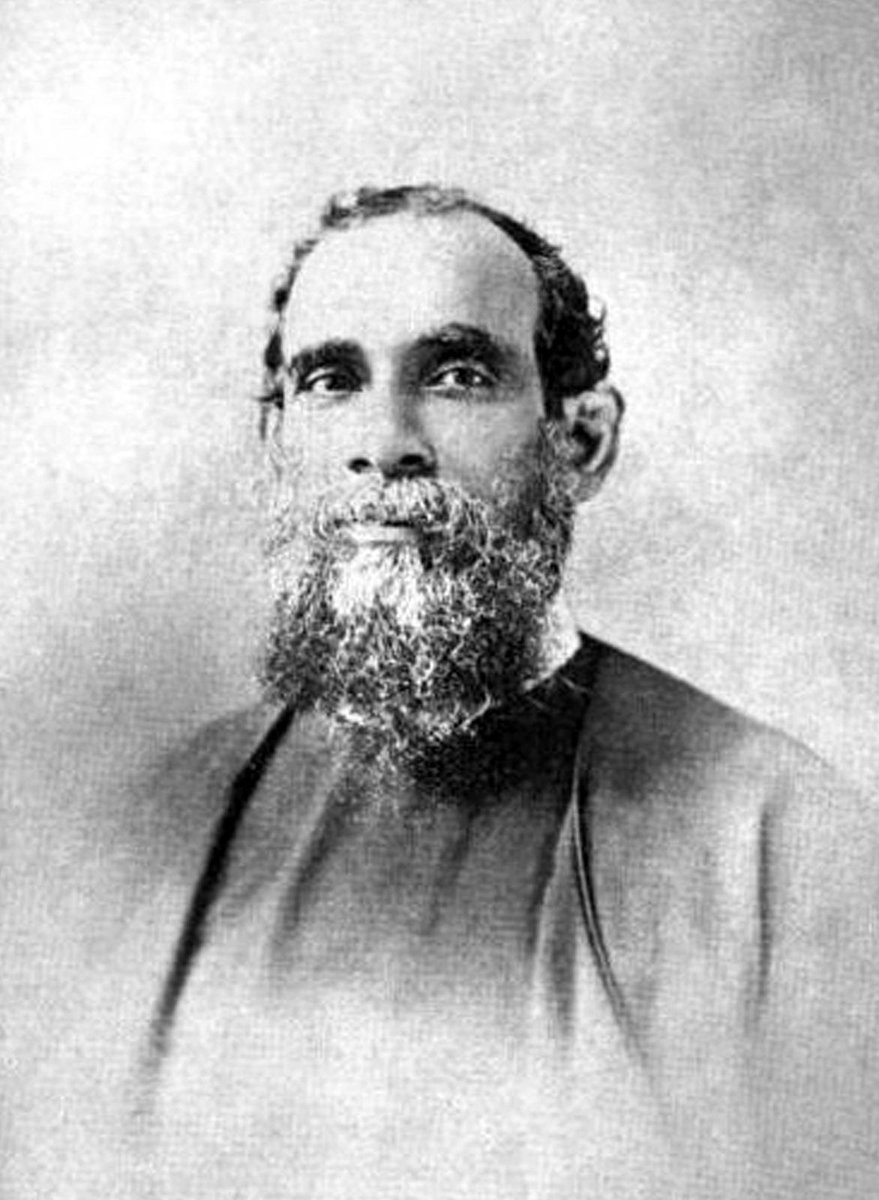
Do you know the title "Father of Nation" was originally bestowed to SN Banerjee?
It is a lesser-known fact that the sobriquet "Father of the Nation" was initially bestowed upon Surendranath Banerjee, a prominent figure in the Indian independence struggle, rather than Gandhi.
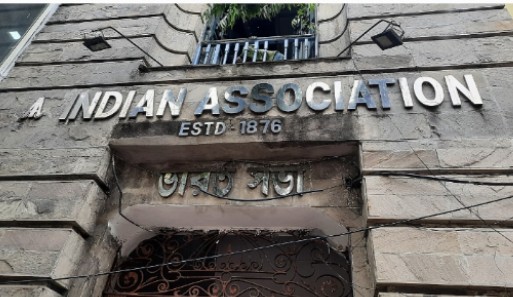
Banerjee's contributions to the Indian nationalist movement were pivotal, particularly through his establishment of the Bharat Sabha (Indian Association) in 1876.
2/6
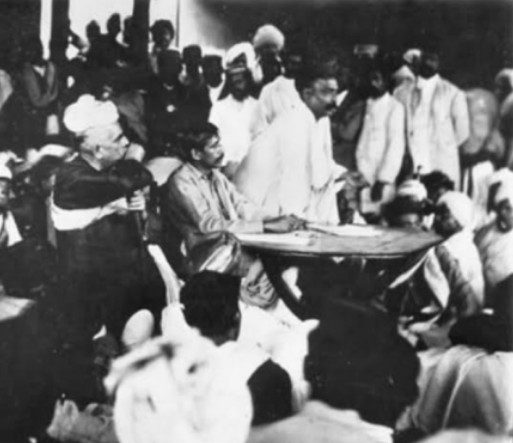
During the late 19th and early 20th centuries, when Bengali dominance was at its peak in Congress moderate politics, Banerjee was instrumental in shaping the national discourse. His efforts helped popularize the concept of an Indian nationhood, laying the groundwork.
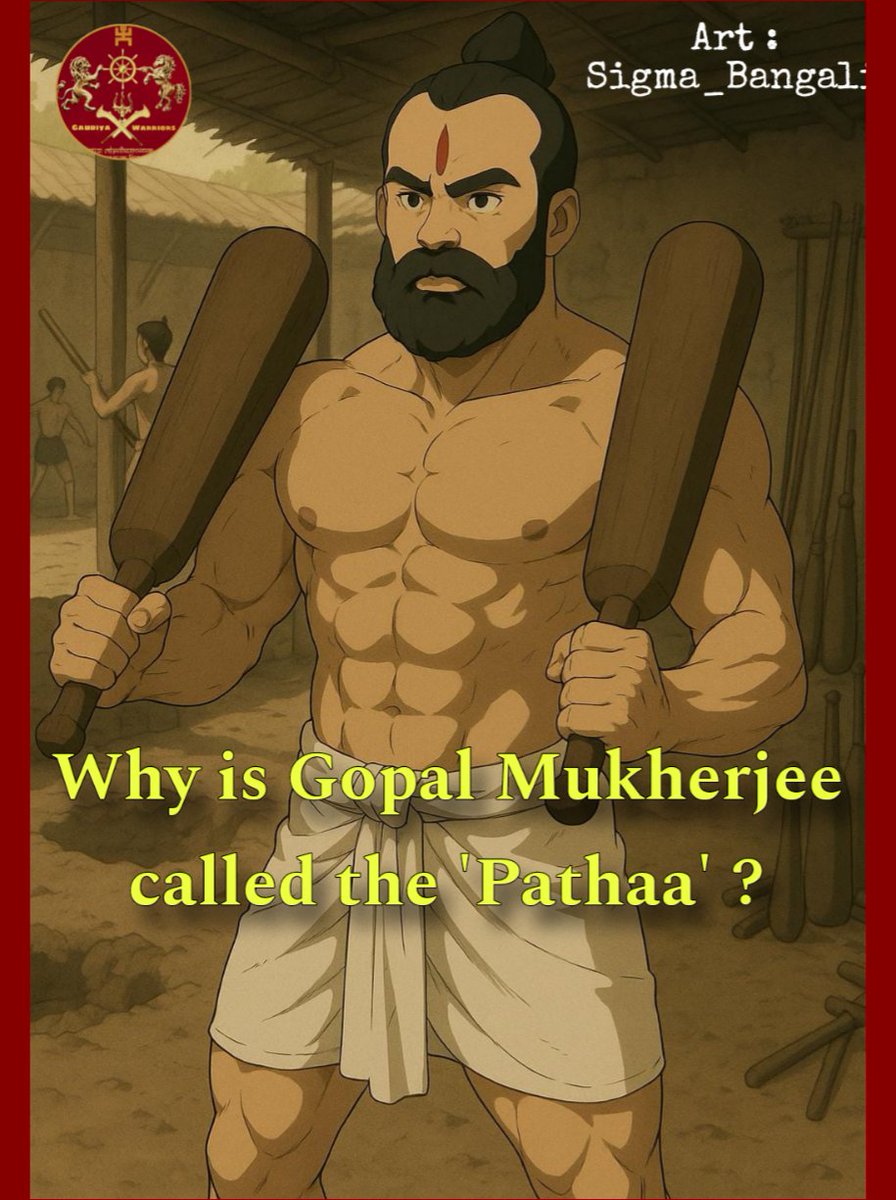
Gopal Mukherjee is often referred to as “Patha.” A common misconception is that he earned this title because he ran a butchery and sold male goat meat (patha'r mangsho in Bangla). However, this is not the real origin of the name.
In fact, the title “Patha” comes from the Varendri dialect (conventionally rougher dialect of Bangla) word “Pāṭhṭhā,” which means a strong, well-built man or a bodybuilder. Since Gopal Mukherjee was himself a bodybuilder, a regular visitor of the revolutionary Akhadas of Bengal
he came to be called “Pattha.” Over time, in the Rarhi dialect of Bangla, “Pattha” evolved into “Pānṭhā.”
Traditionally, a bodybuilder is also described as a “Pattharam.” There is even a Varendri proverb that reflects this usage:
🏹💚|| The Green toned Ram with moustache style of Bengal is linked to the memory of the Vanga King Ghanashyama of the Treta yuga ||💚🏹
Dasharatha, the king of Ayodhya, sought the help of Lompada, the king of Anga, to invoke the sage Rishyasringa for the Putreshti Yajna.
1/n
The kings of various parts of the entire Indian subcontinent were invited to the Putreshti Yajna, which was initiated by Rishyasringa. King Janaka of Mithila, who would become the father-in-law of Ramachandra, the son of this Putreshti Yajna,
2/n
the Malla dynasty king of Kashi, King Bhog Purandar of Marichipur, King Champeshwar of Champapur and others were invited to this great Yajna.
3/n
Bengalis do black magic - not a new propaganda. English dailies used to create comics and spread such propaganda that Bengali babus were performing black magic on British women, as a result British women were leaving their families to become consorts of Bengali babus.
In the same series, Germany's Hamilton story got an Anglo-Bengali version in 1887 where a Bengali magician performs black magic and British women blindly follow him, ready to accept slavery and final death. These were awareness campaigns in the British society at that time.
Many Bengali bhadralok gained the status of participating in the British parties, occupying high administrative positions which were detrimental to the cause of the British.