Ted Kaczynski was one of my "lockdown" reads [1] during a ~3 year twitter hiatus.
(thread)
[1]

(thread)
[1]
https://twitter.com/s7ephen/status/1647347081063854081

A few years before "Covid Times A.D." I learned that Kaczynski's writings were glowingly reviewed by prominent people and "captains of industry", like the founder of Sun Microsystems.


Some people seem to have read him but didnt talk about it publicly.
It seemed odd to me (at the time) that people wrote glowing reviews and that he popped up so frequently in other reading, so I added him to my reading list.
It seemed odd to me (at the time) that people wrote glowing reviews and that he popped up so frequently in other reading, so I added him to my reading list.
https://twitter.com/elonmusk/status/1668004568637087746

I knew nothing about him.
At first glance I was surprised to learn he was one of the youngest people to be accepted to Harvard.
Apparently a brilliant mathematician This humbly bubbles up in his writings as he explains a concept (example later).
ams.org/journals/tran/…
At first glance I was surprised to learn he was one of the youngest people to be accepted to Harvard.
Apparently a brilliant mathematician This humbly bubbles up in his writings as he explains a concept (example later).
ams.org/journals/tran/…


I had this sense that Kaczynski was one of those pop-culture "lacunas":
Something everyone knows about but doesnt actually know any details about.
Something everyone knows about but doesnt actually know any details about.
https://twitter.com/s7ephen/status/1655303796250099715
Other than the name "Unabomber" I didnt actually know any details of what he'd done. Neither did anyone I asked.
He seems to exist in most peoples' heads as a memory-hole that usually hide something else entirely in plain sight.
He seems to exist in most peoples' heads as a memory-hole that usually hide something else entirely in plain sight.
https://twitter.com/CAVDEF_George/status/1667622038314577920

I'd run into Kaczynski occasionally on podcasts...


In a very brief "paid subscriber" chat a year or two ago
with @JimmyFalunGong about
data visualizations, I learned more about Susanne Treister's art work. Note the title of this one:
with @JimmyFalunGong about
data visualizations, I learned more about Susanne Treister's art work. Note the title of this one:

At the time of my chat with @JimmyFalunGong, I didn't realize Suzanne Treister's art wasn't just crazy para-political infographics.
suzannetreister.net/HEXEN2/HEXEN_2…
suzannetreister.net/HEXEN2/HEXEN_2…

They were more like those maps you'd find as a kid in the early pages of scifi or fantasy novels.
Each part of the map blossoming in your mind the more you read. This is especially the case for her coverage of Kaczynski.
weseeyoudawg.com/#53rd
Each part of the map blossoming in your mind the more you read. This is especially the case for her coverage of Kaczynski.
weseeyoudawg.com/#53rd
https://twitter.com/s7ephen/status/1612162565659922436
Anyway, so when lockdowns came-around I had him in my reading list. "Technological Slavery" was the most popular so I started with the least popular "Anti-Tech Revolution"


In the past I'd flirted with some of his shorter essays. And was immediately struck by how clear the voice was.
I expected incoherent rantings. sclerotic. no citations. no synthesis.
It was the exact opposite.
(Also, he really was a nerd, writing his essays in LaTex? lol).
I expected incoherent rantings. sclerotic. no citations. no synthesis.
It was the exact opposite.
(Also, he really was a nerd, writing his essays in LaTex? lol).

but it wasnt till I got into his longer reads that I was also struck by how erudite it was.
He danced from "deep-cut" historical events to mathematics...he did it unpretentiously so you learn stuff along the way.
He danced from "deep-cut" historical events to mathematics...he did it unpretentiously so you learn stuff along the way.

His observation of trends were surprisingly usually backed-up with historical trend analysis.
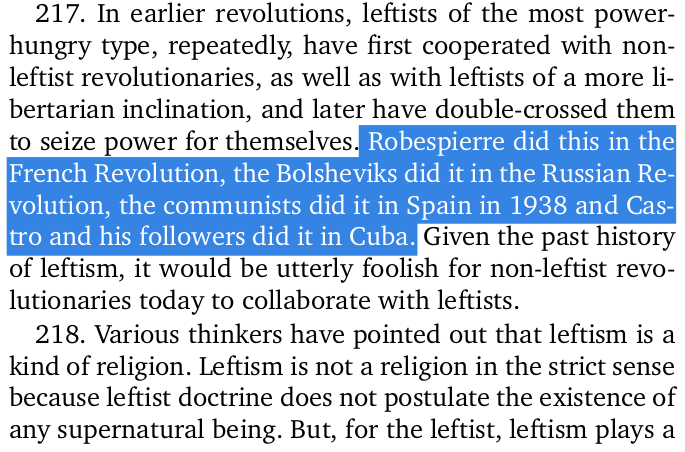
He draws political trends together across national boundaries and historical time periods, like a Political historian. At times it read like "Modernization & Postmodernization" (by Englehart) or something by Caroll Quigley.

Earlier I mentioned how the math bubbles up in his writings, but he does it in a such a way that you dont "hear" ego in his writing. He's not humble-bragging.
You can tell he GENUINELY thinks this way and naturally draws connections back to Mathematics.
You can tell he GENUINELY thinks this way and naturally draws connections back to Mathematics.

He regularly observed things so succinctly sometimes that you have those "hey, I've noticed that too"
Larry-David/Seinfeld moments.
Larry-David/Seinfeld moments.

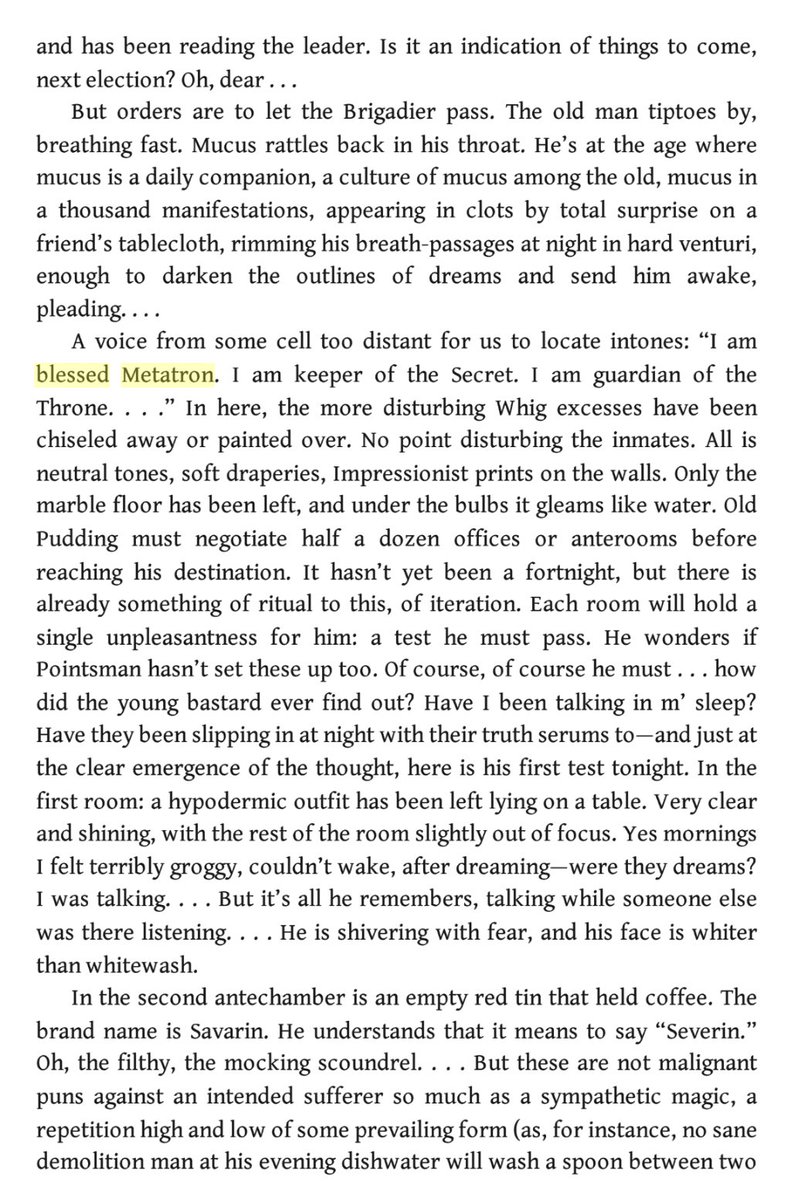
He has lots of keen observations about the time we are living in. But, it doesn't read like a madman living in the woods. It reads more like a social philosopher who writes MacroEconomic pieces for Stratfor or the FT London. Like this bit on our folly of nuclear proliferation

Lots of objective political "faction" observations.
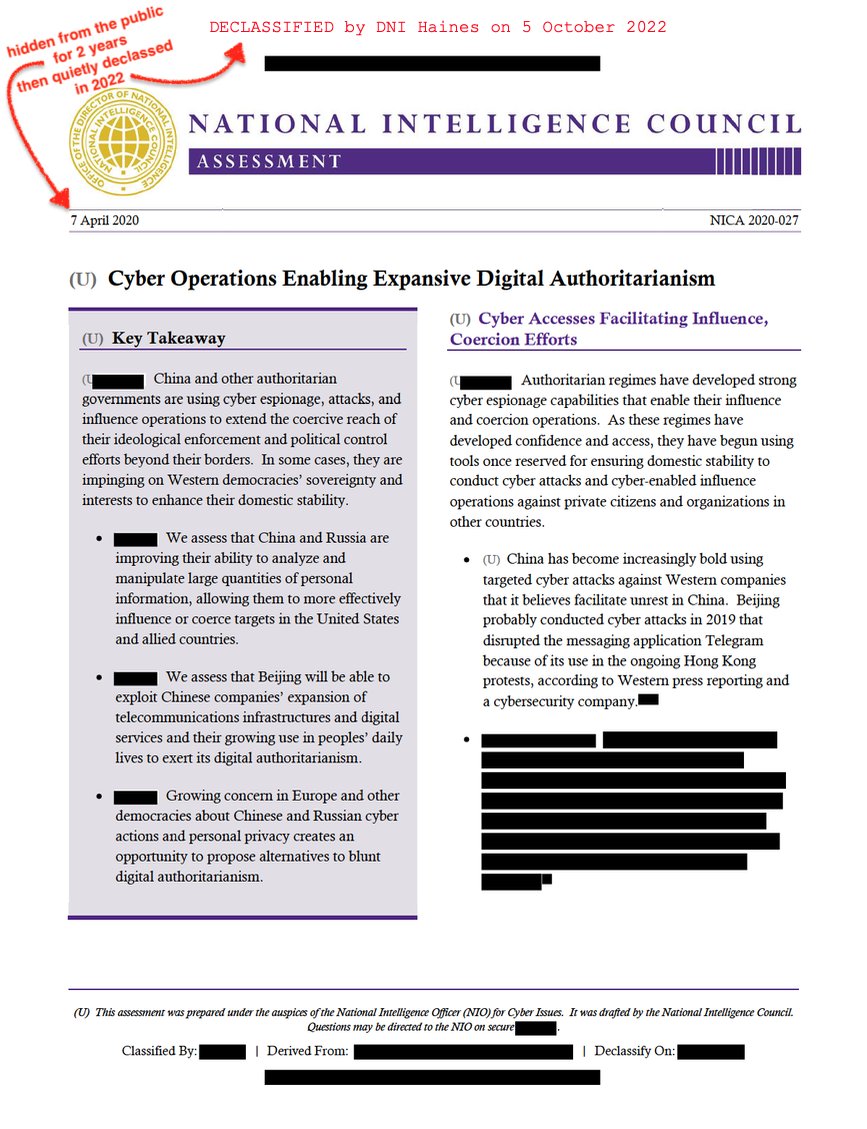
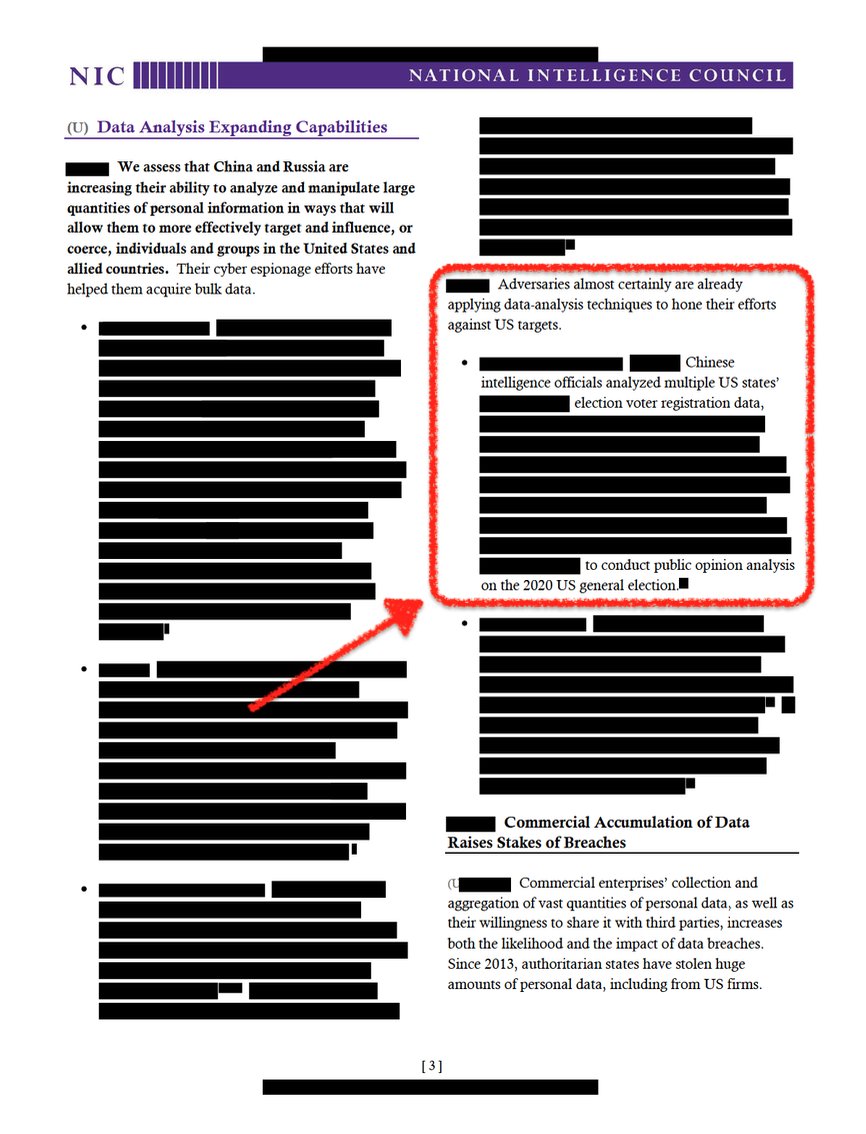
He calls out the slow incremental creep of technocratic authoritarianism hiding behind utopian "marketing"
He calls out the slow incremental creep of technocratic authoritarianism hiding behind utopian "marketing"


Anyway, reading him was quite a surprise.
Here is full pdf of "Industrial Society and Its Future", his books are on amazon,
and many of his essays (and full books sans formatting are free) on .
</THREAD>
Archive.org
archive.org/details/kaczyn…
Here is full pdf of "Industrial Society and Its Future", his books are on amazon,
and many of his essays (and full books sans formatting are free) on .
</THREAD>
Archive.org
archive.org/details/kaczyn…

• • •
Missing some Tweet in this thread? You can try to
force a refresh