Hermahai Profile picture
Jun 15 16 tweets 6 min read Twitter logo Read on Twitter
1/ The Linear A transcribes the mysterious Minoan language, which until today is believed to belong to an unknown language family,which we could look for in the pre-Hellenic linguistic substratum. But by comparing it with the later Linear B, some important elements are extracted. Image
2/ First of all, we should emphasize that the Mycenaean Greeks used Linear A as a graphic model for the development of Linear B, a script that captured a purely Indo-European language, the Mycenaean (archaic Greek), which seems to have evolved quite from the PIE. Image
3/ In terms of the palaeographic aspect, the two scripts show a significant similarity of 70% in relation to the syllabic signs, but the composite/complex signs of Linear A are not present in Linear B 👉 Image
👉 and the logographic repertoire shows substantial changes. We would say that Linear B is a fairly simplified form of Linear A. Image
4/ The Linear B has been successfully deciphered, and given the close relationship between the scripts, it is assumed that most signs, which appear the same in both Linear A and Linear B, can be read with identical or very similar phonetic values in both scriptures. Image
5/This hypothesis is based on elements of common sequences of signs in both scriptures where it seems particularly likely that they contain homophonic signs based on the meanings of the sequences in Linear B. Such similarities are observed mainly in place names and personal names Image
6/ Another element that strengthens this hypothesis is the fact that Linear B was used exclusively for administrative purposes and was probably created in Crete, indicating the graphic and phonetic continuity between the two scripts. Image
7/ Thus it is possible to read Linear A inscriptions phonetically, and complete transcriptions have been produced for inscriptions from the Haghia Triada and elsewhere, although understanding the meaning of most words still eludes us. Therefore, we can read the Linear A. Image
8/ Let us now look at the most important examples of common words between Linear A and Linear B. The most characteristic toponyms are Φαιστός < Pa-i-to (HT 97a.3, 120.6) mentioned in 54 cases in the Knossos Linear B' tablets archive, 👉 Image
👉 the Su-ki-ri-ta (PH Wa 32), mentioned in 9 cases in Linear B', related to the area of Σύγριτα < Σύβριτα of the Amari district of Rethymnon, and the Se-to-i-ja (PR Za 1b), which is mentioned 21 times in the Knossos Linear B' tablets archive. Image
9/ At the same time, the word I-da which is attested several times in the texts of Linear A almost certainly denotes the name of the Mount Ida and the word di-ki-te, which is also recorded several times in the texts of Linear A probably indicates the Mount Dikti Lasithi. Image
10/ Characteristic homophonic anthroponyms are the word Da-i-pi-ta (Za 8.5, 10a.4-5) which is attested in Linear B' tablet KN 799+8306 attributed as Δαϊφίτης ή Δηιφίτης, the A-ki-ta (Za Wc 2.a1-2) attested in Linear B' tablet KN V 831.4, 👉 Image
👉 the female name I-ti-ka (HT 28a.6) attested in Linear B' tablets KN Ap 769.2 and Xe 537.2 attributed as Ιθαΐα, the word Ki-da-ro (HT 47a.4, 117a.9,122a.2-3) attested on Linear B' tablet KN E 842.3 attributed as Κίδαρος 👉 Image
👉 (Kidaria Demeter [Pheneos] - κίδαρις: Arcadian dance or head covering), and the A-ra-ko (KO Zf 2) which is recorded on five tablets of the Knossos archive attributed to Άρακος. Image
12/ Finally we will dwell again on the phrase i-da-ma-te which is attested on two inscribed double axes from Arkalochori and the most likely versions of its interpretation based on linguistic reasons are: 👉 Image
👉 Ίδη μήτερ or Δήμητερ (Demeter). The word μήτηρ is purely Greek and is not found in other Indo-European languages with which Linear A has been associated, such as Luwian and Hittite. Image

• • •

Missing some Tweet in this thread? You can try to force a refresh

 

Keep Current with Hermahai

Hermahai Profile picture

Stay in touch and get notified when new unrolls are available from this author!

Read all threads

This Thread may be Removed Anytime!

PDF

Twitter may remove this content at anytime! Save it as PDF for later use!

Try unrolling a thread yourself!

how to unroll video
  1. Follow @ThreadReaderApp to mention us!

  2. From a Twitter thread mention us with a keyword "unroll"
@threadreaderapp unroll

Practice here first or read more on our help page!

More from @hermahai

Jun 12
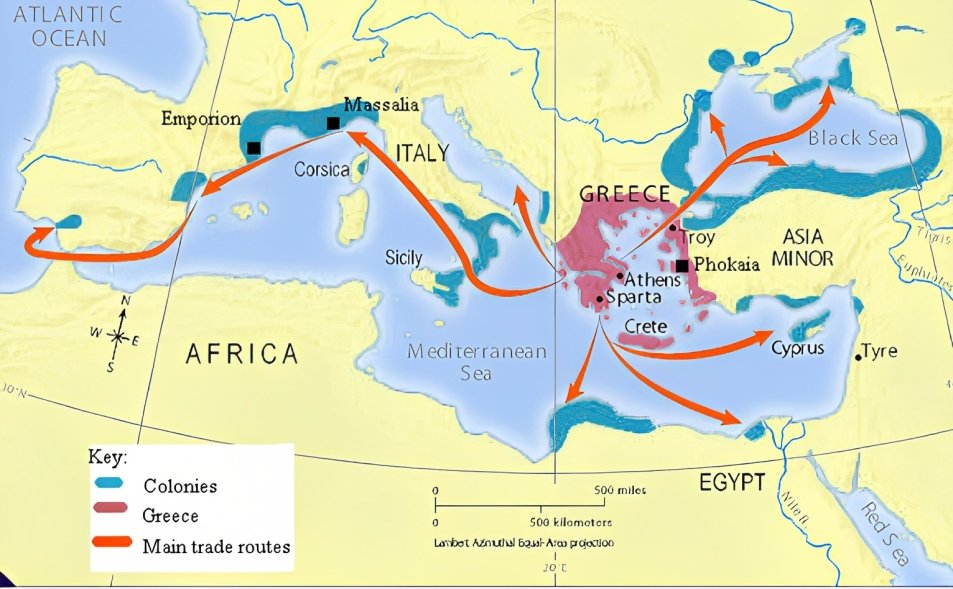
1/ The Greek colonization (8th-6th century BC) was one of the greatest feats of Hellenism, both in terms of the extent of the spread of the venture, and as to the meager means of the time which were available to support a so grand endeavour.
#Cyrene #Thera #Greek_Colonisation Image
2/ The adventurous colonization venture carried out by the Dorian settlers of Thera, who left their barren island and in search of a better future, followed the southern Mediterranean sea trade route, establishing Cyrene on the Libyan coast, is included in this context. Image
3/ As Herodotus reveals to us in great detail in the fourth book of his Histories, when the king of Thera, Grinnos, went to Delphi to receive an oracle regarding matters of the island, Pythia answered him that he should build a city in Libya. Image
Read 30 tweets
Jun 9
1/ The qa-si-re-u is the most typical example of a title of office or vocation, which was preserved from the Mycenaean palatial period into the later years with a clearly more upgraded function, as the qa-si-re-u became the dominant official in many regions of the Hellenic world.
2/ The Linear B' tablets provide several references to officials qa-si-re-we, where in Jn, they are found to play a very important role in the distribution of copper quantities. In total, 21 different qa-si-re-we are known from Pylos (9), from Knossos (11) and from Thebes (1). Image
3/ This fact suggests that each Mycenaean territory had several qa-si-re-we. In the Jn series of documents the qa-si-re-u is recorded after a list of coppersmiths receiving copper and before calculating the total amount distributed. Image
Read 34 tweets
Jun 6
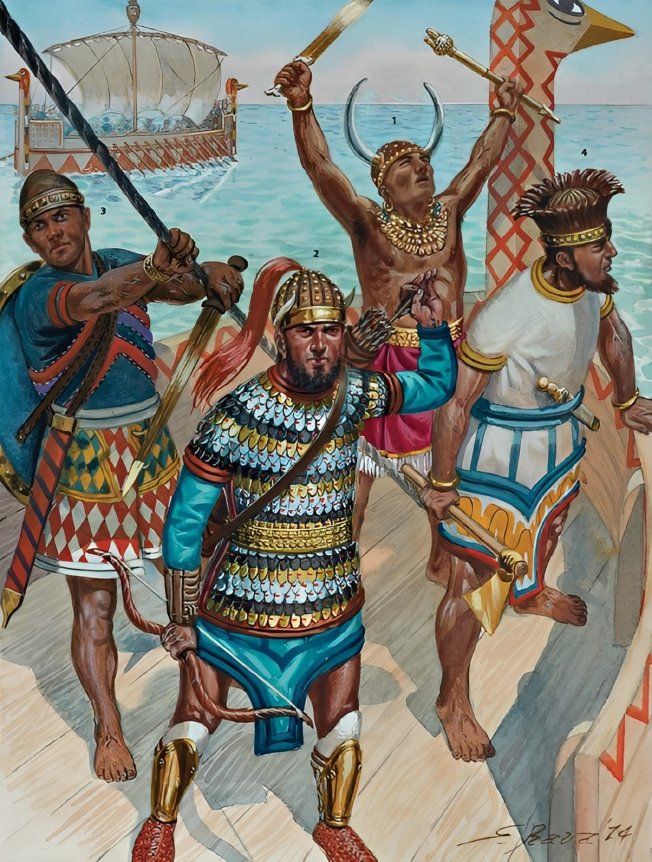
1/ During the period of transition from the Middle to the Late Bronze Age, significant changes occurred in the Aegean, one of which was the emergence of new warfare standards both among the early Mycenaean elites and among those of Minoan Crete. Image
2/The depictions of Mycenaean and Minoan warriors in this period (1700-1450 BC),as well as the finding of archaeological finds (weapons), provide us with information about two distinct societies in which armed men were highly valued as a result of a long-standing Aegean tradition Image
3/In the Neopalatial Age,depictions of Minoan warriors appear in refined artifacts and in scenes of actual or religious duels, athletic competitions, religious events and processions with spears and shields. There are limited depictions of warriors on stone vessels and frescoes. Image
Read 26 tweets
Jun 4
1️⃣ Thucydides states in his History of the Peloponnesian War:
" ...For in early times the Hellenes and the barbarians of the coast and islands, as communication by sea became more common, were tempted to turn pirates, under the conduct of their most powerful men; 👉 Image
👉 the motives being to serve their own cupidity and to support the needy.
2️⃣ They would fall upon a town unprotected by walls, and consisting of a mere collection of villages, and would plunder it; indeed, this came to be the main source of their livelihood, 👉 Image
👉 no disgrace being yet attached to such an achievement, but even some glory.
3️⃣ An illustration of this is furnished by the honor with which some of the inhabitants of the continent still regard a successful marauder, 👉 Image
Read 13 tweets
Jun 1
1/According to Plutarch,Methone was founded in 733/732 BC by Euboean settlers originating from Eretria and is considered the oldest Greek colony in the Northern Aegean. The ancient Greek tradition characterizes the settlers of Methone as "οἱ ἀποσφενδόνητοι" (=ones thrown away). Image
2/ This name came from the fact that the specific Euboean population group originally lived in Corfu, where they were expelled by the Corinthians and while 👉 Image
👉 they wanted to return to their homeland, when they arrived off the coast of Eretria, their compatriots were prevented them by the use of weapons, with the result that they finally ended up in Methone. Image
Read 12 tweets
May 29
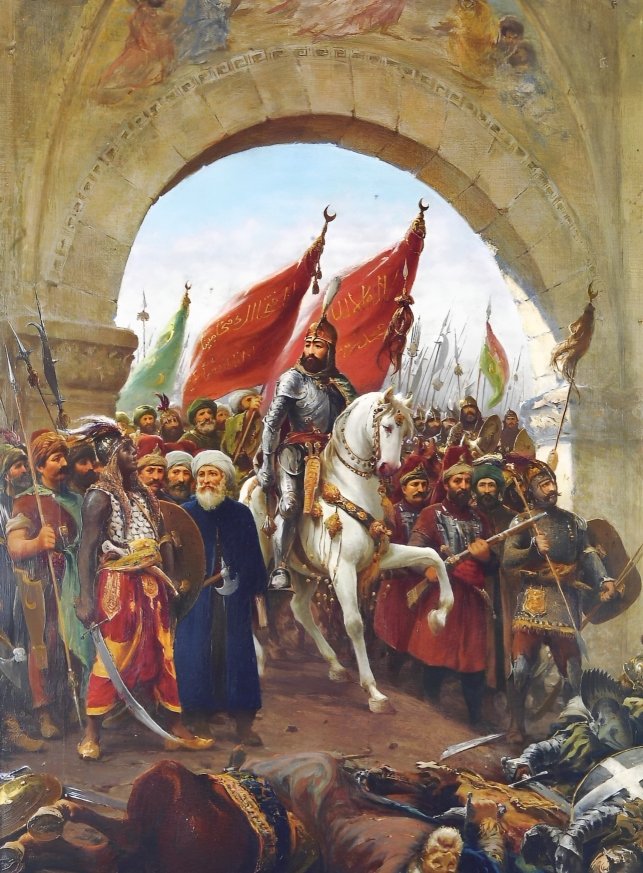
1/ In Greek folkway, the Fall of Constantinople is presented as the saddest event of Hellenism, but at the same time, a point of reference for a burning desire to recover the unredeemed homelands. The popular lament was expressed through a series of sad songs. Image
2/ The oldest lament for the fall of Constantinople probably comes from Venetian-occupied Crete and was found in a 15th century manuscript entitled: "Anakálima tīs Konstantinoupolis", from which only the 4th and 18th verses have survived. Image
3/ [This is revealed by God,
this is revealed by the earth,
this is revealed by the heavens.
This is also revealed by Hagia Sophia,
the great monastery,
which has four hundred semantra
and sixty-two bells.
Every bell and a priest,
every priest and a deacon. 👉 Image
Read 6 tweets

Did Thread Reader help you today?

Support us! We are indie developers!


This site is made by just two indie developers on a laptop doing marketing, support and development! Read more about the story.

Become a Premium Member ($3/month or $30/year) and get exclusive features!

Become Premium

Don't want to be a Premium member but still want to support us?

Make a small donation by buying us coffee ($5) or help with server cost ($10)

Donate via Paypal

Or Donate anonymously using crypto!

Ethereum

0xfe58350B80634f60Fa6Dc149a72b4DFbc17D341E copy

Bitcoin

3ATGMxNzCUFzxpMCHL5sWSt4DVtS8UqXpi copy

Thank you for your support!

Follow Us on Twitter!

:(