
Hand-drawing dungeon maps may sound terribly dull, but it was a core feature of some of the biggest RPGs of the 80s.
I also wouldn't want to play most modern RPGs having to draw my own map, but there's a good reason why some dungeon-crawlers are still designed around that idea🧵
I also wouldn't want to play most modern RPGs having to draw my own map, but there's a good reason why some dungeon-crawlers are still designed around that idea🧵

In these type of games, each dungeon floor is roughly a 20x20 grid. It varies with each series, some games even came with branded graph paper!
It is limiting, but that's the point: you know you are in one of the squares. And spells like Wizardy's DUMAPIC gave you X,Y coordinates
It is limiting, but that's the point: you know you are in one of the squares. And spells like Wizardy's DUMAPIC gave you X,Y coordinates
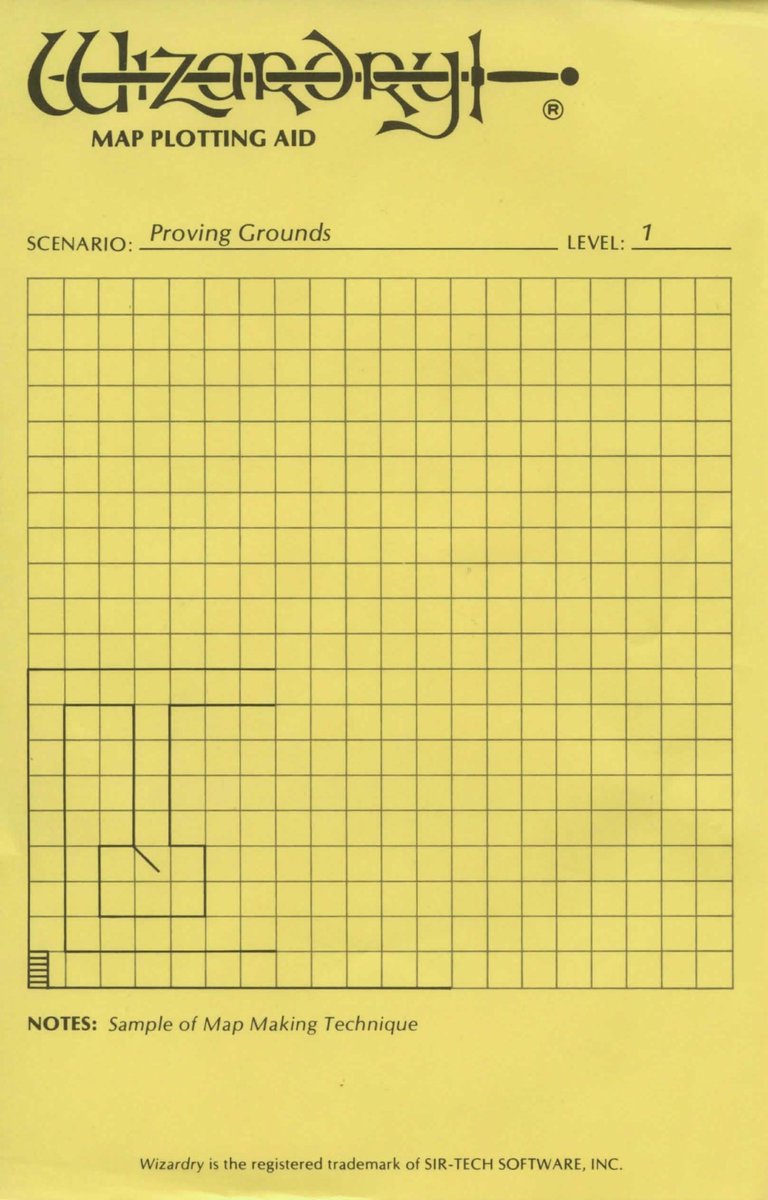

You start at X:0 Y:0, at each step you draw what you see: wall, door, corridor, etc.
To challenge your map skills, devs added things like dark areas, one-way doors, secret entrances, warp-around maps, chutes, and traps that rotate / teleport your party - often with no warning!
To challenge your map skills, devs added things like dark areas, one-way doors, secret entrances, warp-around maps, chutes, and traps that rotate / teleport your party - often with no warning!


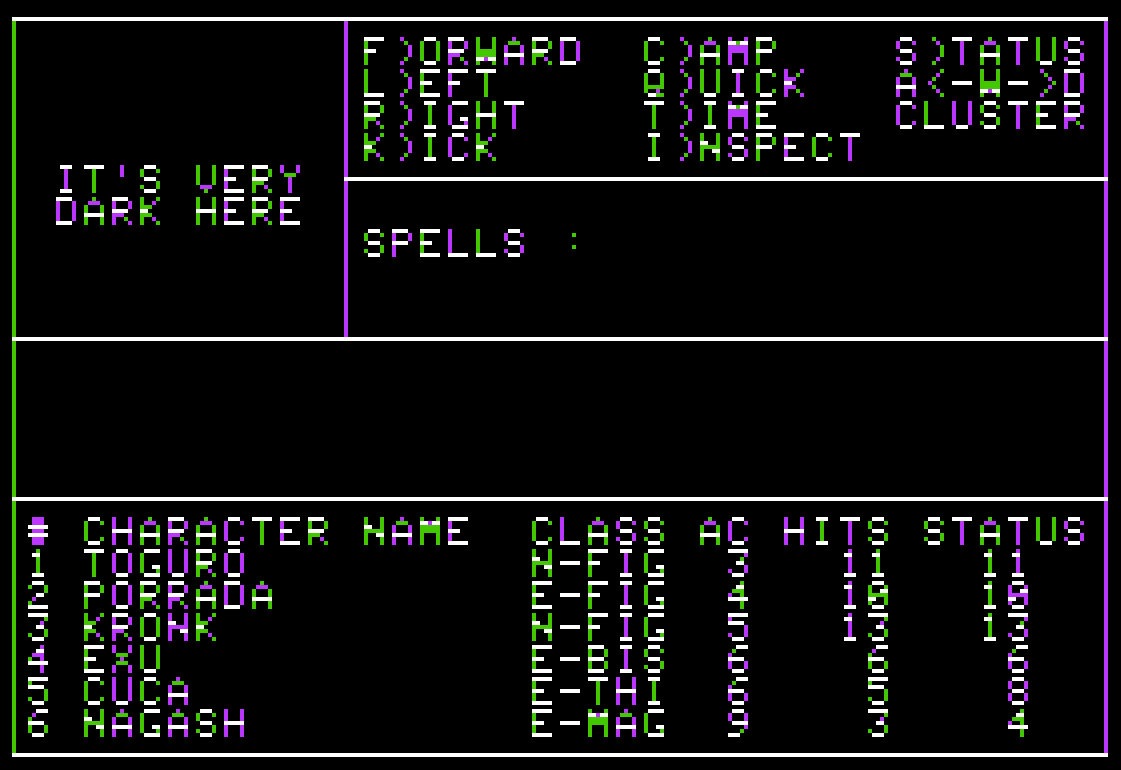
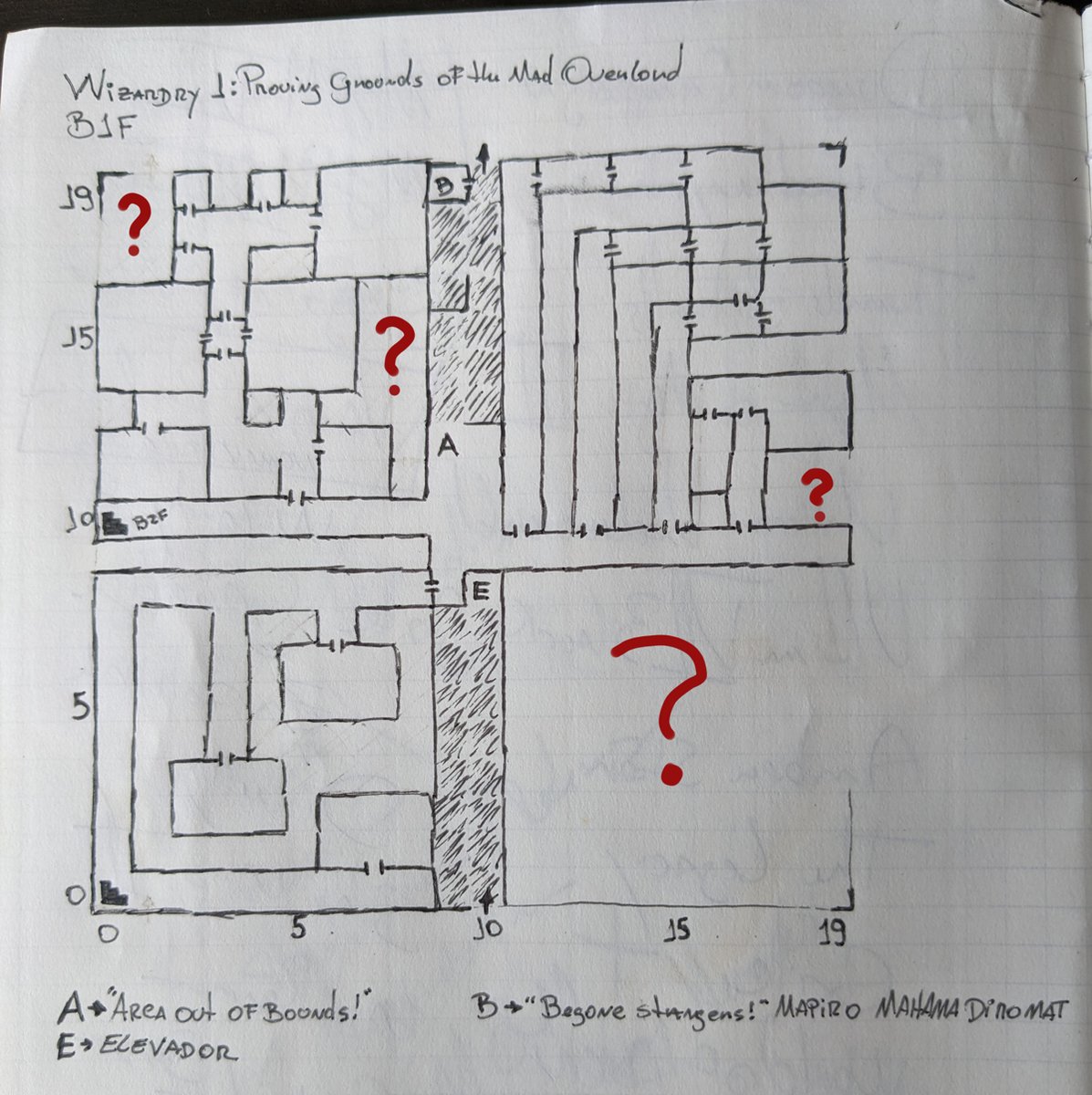
At first they're gentle. Wizardry's 1st level has a dark area (you can't see anything), but if you've explored the surrounding rooms you'll know its rough shape before going in
That's also how to search for hidden doors: you look at your map and there's suspicious empty areas...
That's also how to search for hidden doors: you look at your map and there's suspicious empty areas...
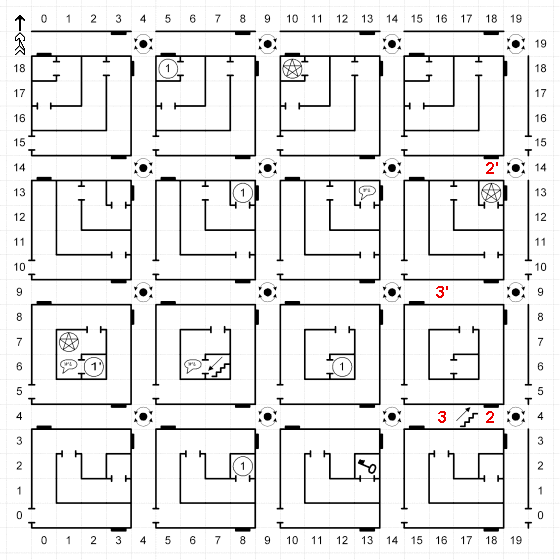
Of course, once you master the concept, the maps can get very cruel. Wizardry 4 is infamous for this.
One of its levels has 16 similar blocks, connected by spinners that randomly rotate you - without telling you! This is a nightmare on paper, but would be trivial with an automap
One of its levels has 16 similar blocks, connected by spinners that randomly rotate you - without telling you! This is a nightmare on paper, but would be trivial with an automap
And if you have a standard, subverting it is fun! Wizardry V added massive maps, some as big as 73x40!
And this wasn't explained anywhere, the box just said "game is bigger!". Players expected a 20x20 grid, but got a corridor intentionally made to not fit on A4 graph paper lol
And this wasn't explained anywhere, the box just said "game is bigger!". Players expected a 20x20 grid, but got a corridor intentionally made to not fit on A4 graph paper lol
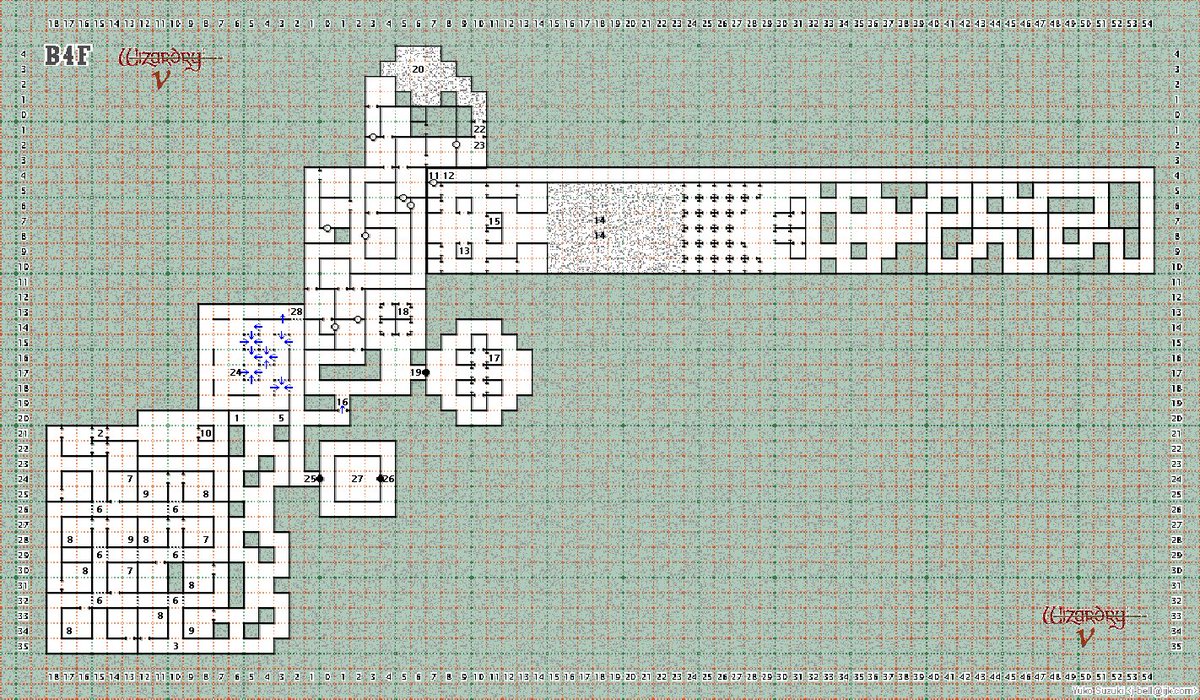
Since the mid 90s hand-drawn maps were mostly replaced by automaps.
Only hardcore titles like Elminage Gothic or Wizardry: The Five Ordeals still require it, but with an added convenience: limited spells & magic items can give you a glimpse at an automap, helping you make yours:
Only hardcore titles like Elminage Gothic or Wizardry: The Five Ordeals still require it, but with an added convenience: limited spells & magic items can give you a glimpse at an automap, helping you make yours:
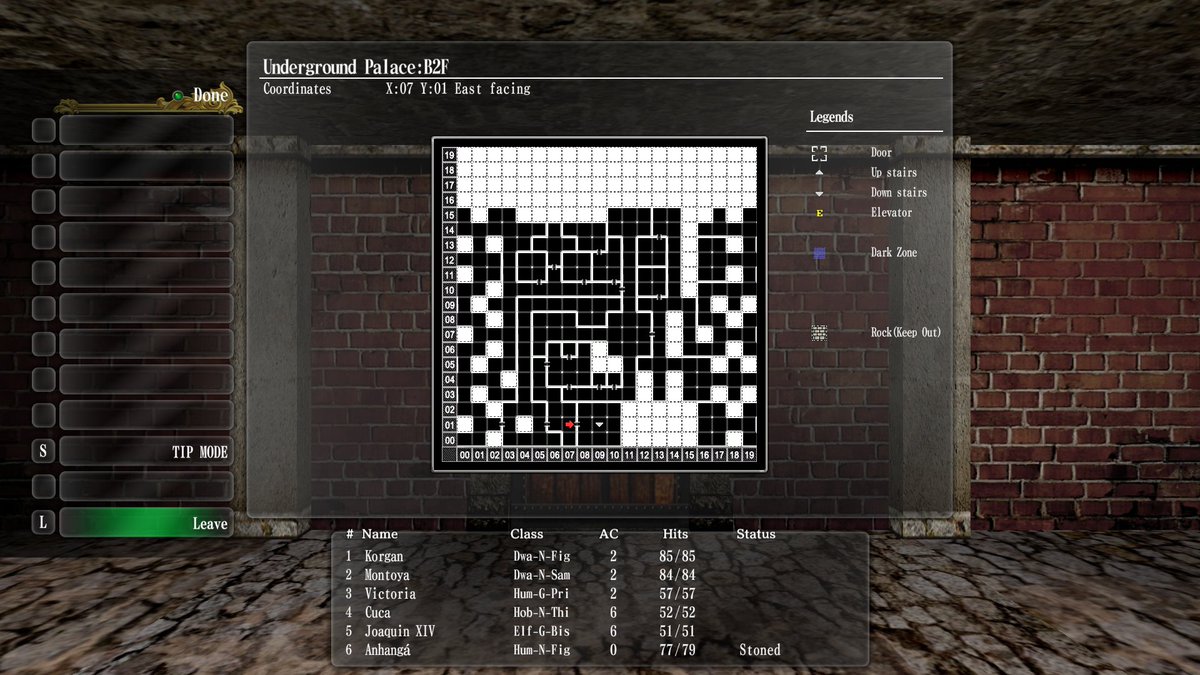
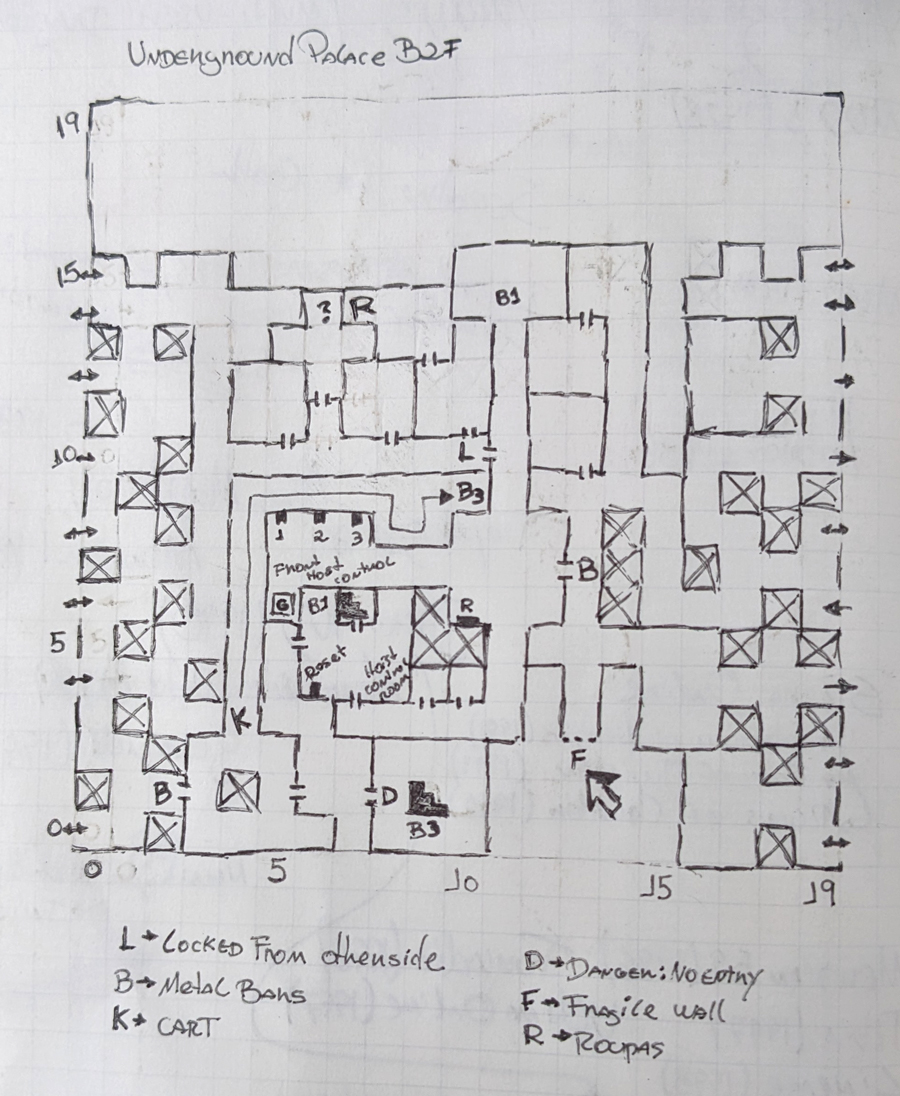
It sounds easy, but maps are rare at first. And late dungeons have "no-magic" areas with teleporters / spinners, so you'll get a pure mapmaking challenge once in a while.
It's kinda like when Etrian Odyssey has teleporters that don't show on the automap - you have to write them.
It's kinda like when Etrian Odyssey has teleporters that don't show on the automap - you have to write them.
In the end, what's important is that player and the game both agree on what kind of experience they are in for.
Wizardry 1 is still great, but it was made for hand-mapping. Some ports add automap, but it's like playing Final Fantasy with unlimited HP - it's a partial experience.
Wizardry 1 is still great, but it was made for hand-mapping. Some ports add automap, but it's like playing Final Fantasy with unlimited HP - it's a partial experience.
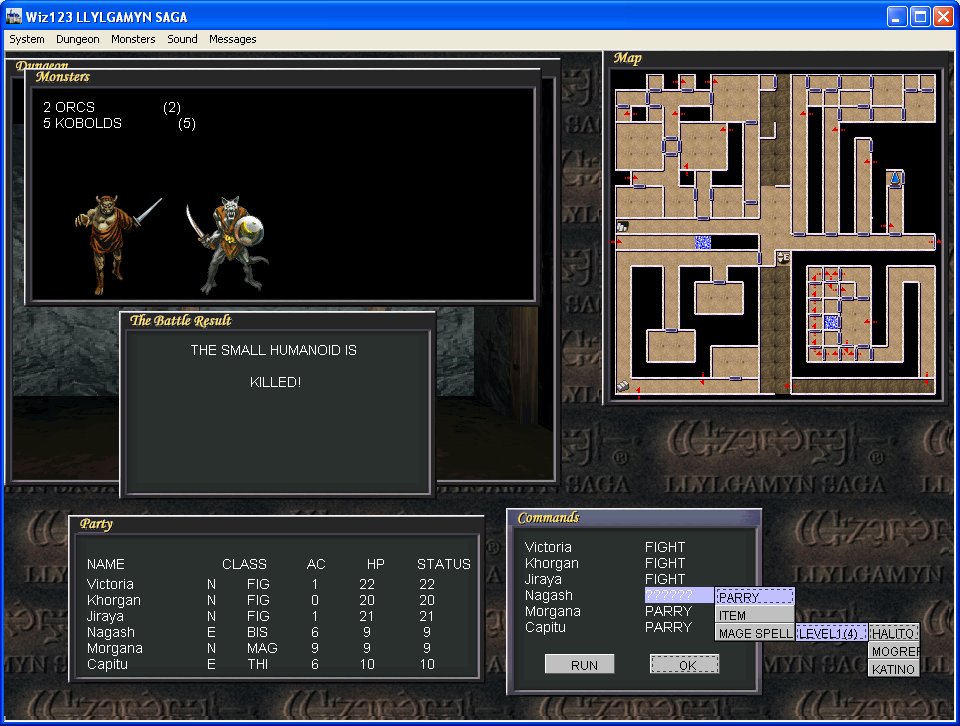
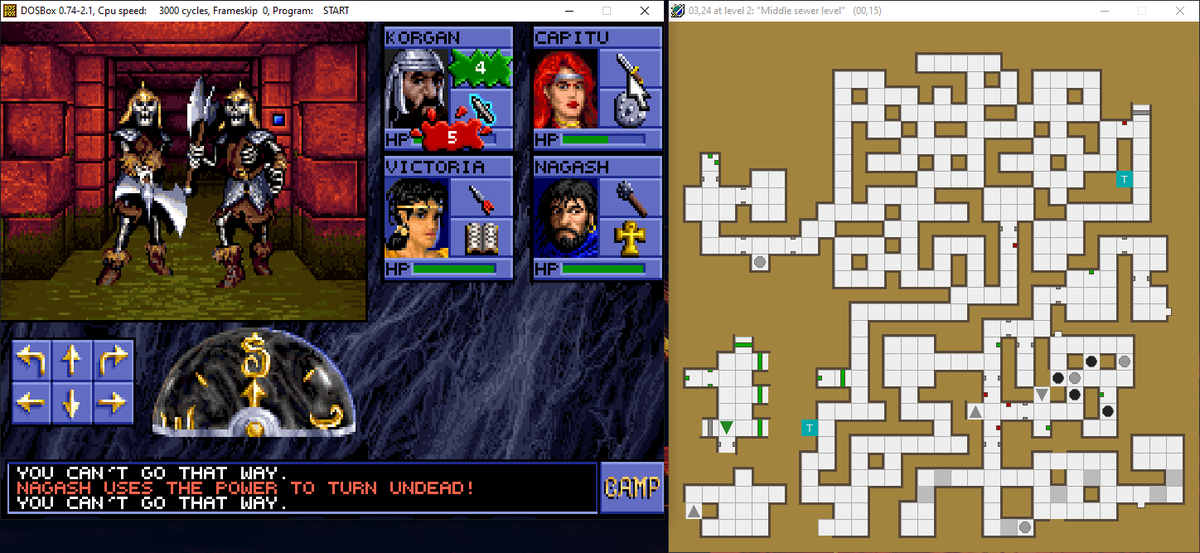
BTW, real-time RPGs like Dungeon Master & Eye of the Beholder also didn't have automaps, but their real-time nature and more linear progression makes handmaping a pain... I think the community as a whole agrees you should use automap mods like All-Seeing Eye or Grid Cartographer.
• • •
Missing some Tweet in this thread? You can try to
force a refresh






