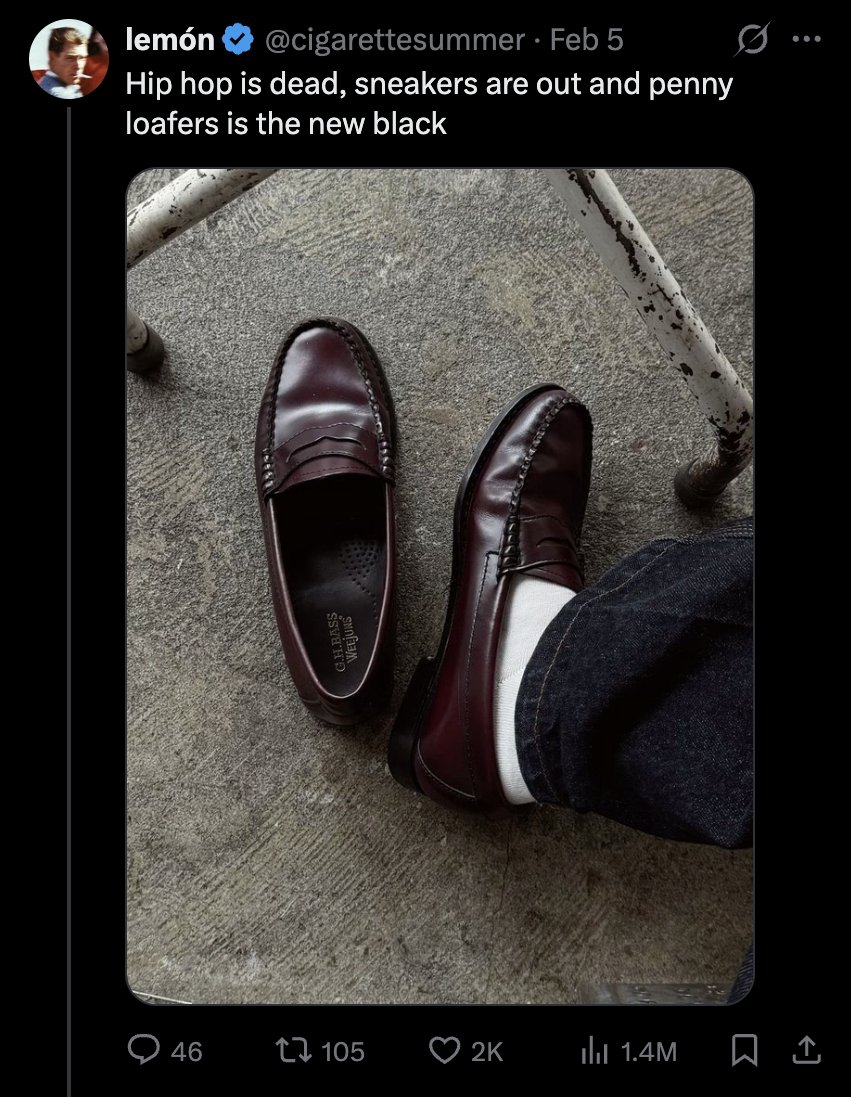
HOW TO FIND SHOES THAT FIT
In the spirit of @lingerie_addict, who has said on many occasions that there's no shame in not knowing something, as everyone learns for the first time, here is a thread on how to find shoes that fit 🧵
In the spirit of @lingerie_addict, who has said on many occasions that there's no shame in not knowing something, as everyone learns for the first time, here is a thread on how to find shoes that fit 🧵
https://twitter.com/dieworkwear/status/1670528816106844160
I've found over the years that many people don't know their shoe size. Instead, they are going off a sneaker size they decided on at age 16. But sneakers are soft, squishy shoes made with foam and sometimes even knitted uppers. They don't indicate your true shoe size.
To figure out your shoe size, you have to get measured on a Brannock device. Most shoe stores will have one of these and can measure you (check Nordstrom's shoe department). This will tell you two things: the length and width of your foot. 

Many ppl find leather shoes uncomfortable bc they don't know these two sizes. Sneakers are not even sized by width (or if they are, they are crudely done, such as "regular" and 'wide"). So if ur a 10EE, where D is "regular width," you'll find shoes painful unless you get an 10EE
Your Brannock size is your "true shoe size." But this is just the starting point. Shoes are made on a wooden or plastic form known as a last, over which the uppers are shaped. The last determines the shape of the shoe, and whether it will fit your foot.
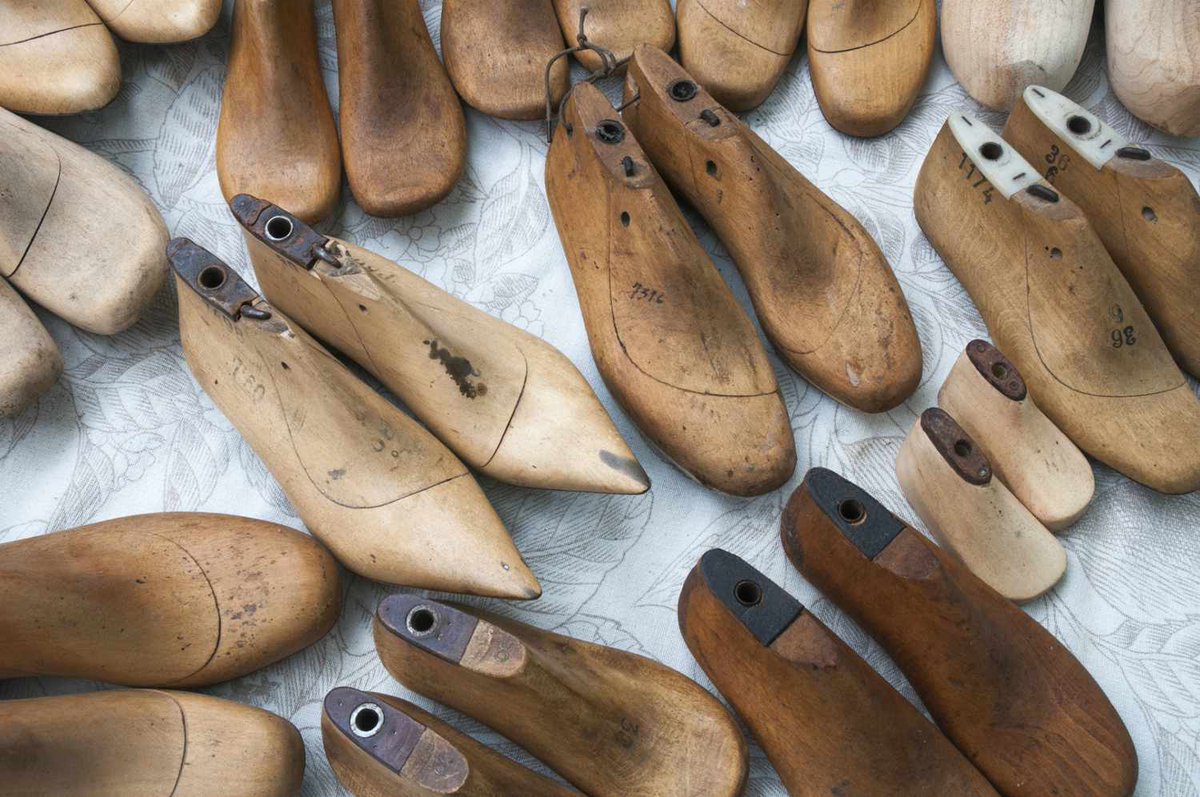

Each shoe company will have its own unique set of lasts. For example, here are Alden's last. Each is named something named Barrie, Plaza, Grant, etc. Some lasts are sleeker than others; some have more room. Which last you choose depends on your foot and stylistic preferences.
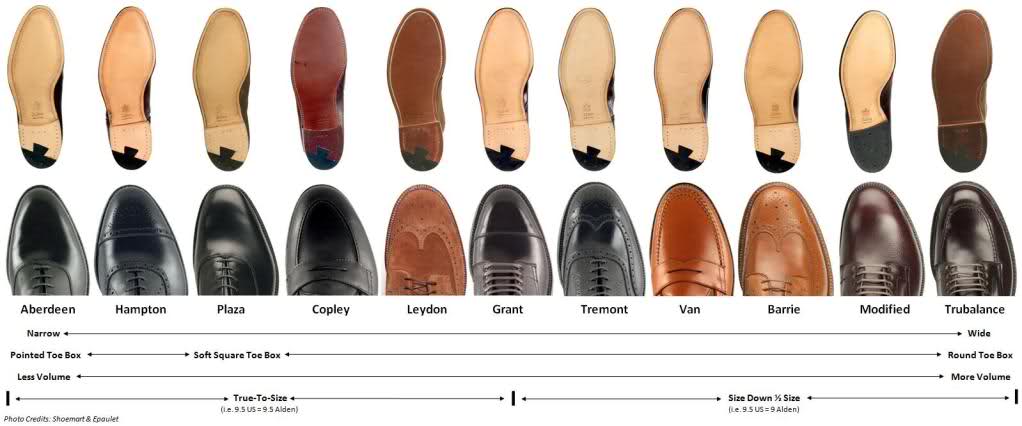
Once you know ur true shoe size, you can use that as a basis for what size you need depending on the shoe company and last. For example, I'm a size 9D, but I take an 8.5 in Alden's Barrie last. @Leffot has a converter on their site, but sometimes you have to do a bit of research

OK, so you have your Brannock size. You've narrowed in a brand and style. You now have the shoes on your feet. Do they fit? Here are some tips on how to know:
It's normal to have a bit of spacing between your toes and the front of the shoe. Ignore this.
It's normal to have a bit of spacing between your toes and the front of the shoe. Ignore this.
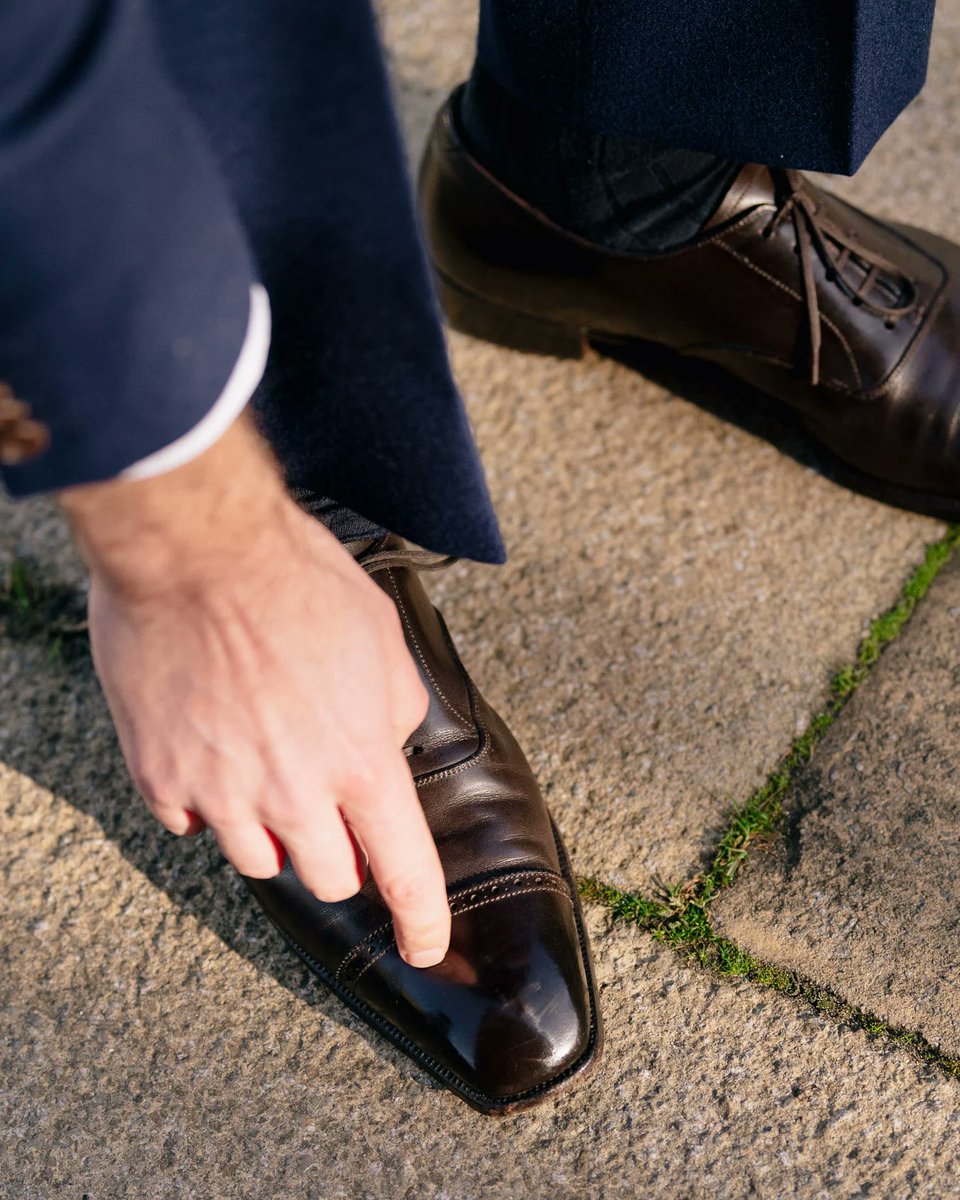
What you should pay attention to is the distance from your heel to the ball of your foot. This should match up with the heel and ball of the shoe.
If you happen to have cap toes and see the creasing crossing over into the cap, your shoes are too big. This is bad:
If you happen to have cap toes and see the creasing crossing over into the cap, your shoes are too big. This is bad:
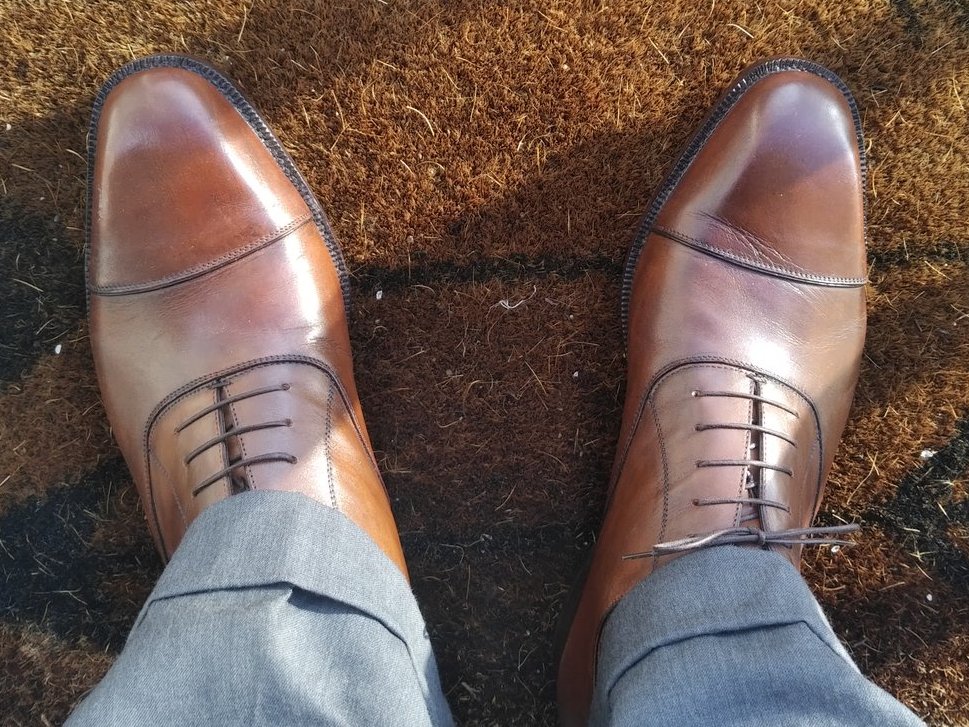
If the leather is painfully cutting into your foot as it bends, your shoes are too small. You may need to size up in width. Width is not just the measurement *across* the ball of your foot, but the overall circumference *around* the ball of your foot. You may need more room here.
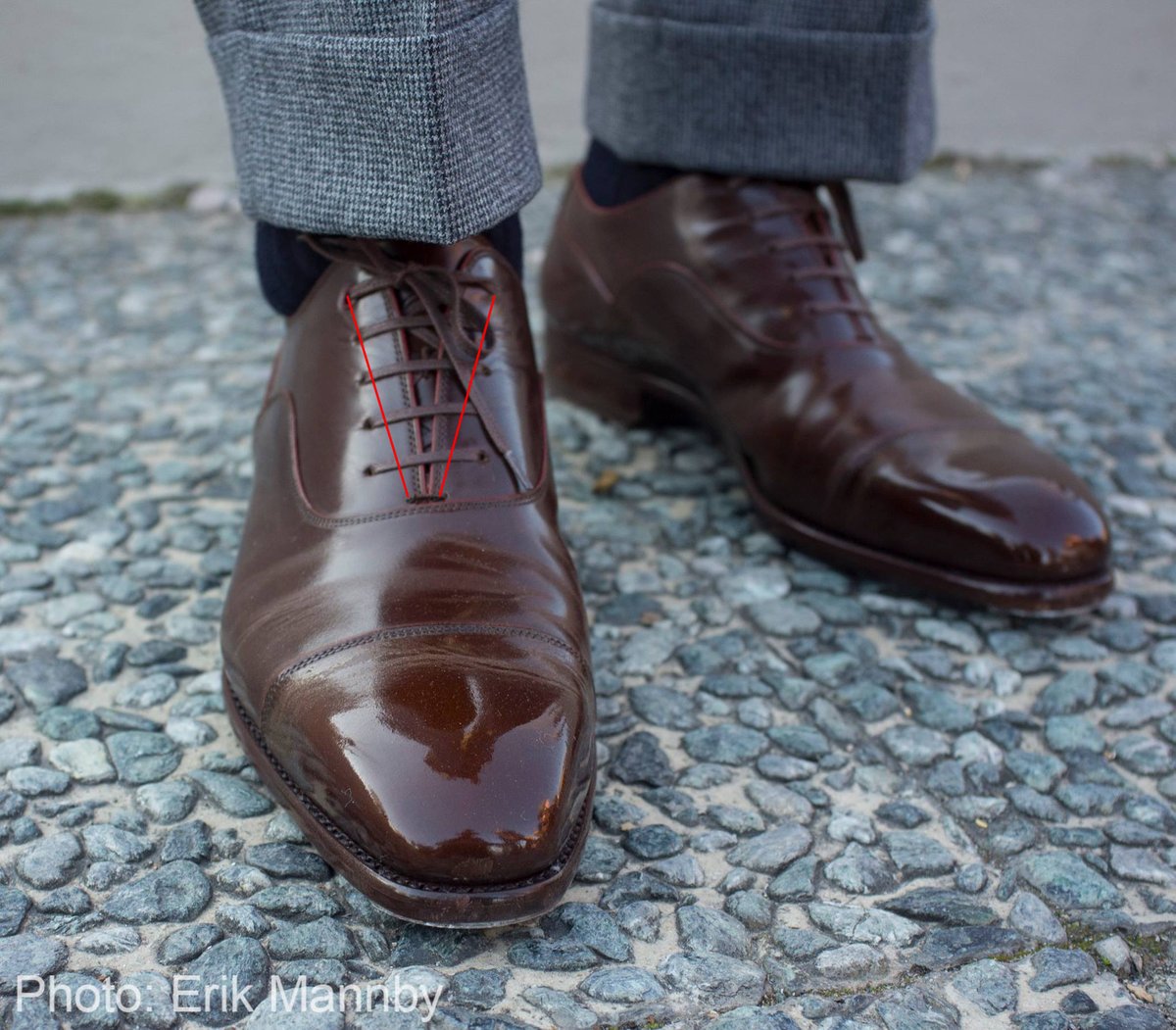
If you're buying lace-ups, it's normal for the facings (the part of the shoe through which laces go) to spread apart a little. This gives adjustability for comfort. But if the facings are too spread apart, you may have a high instep and need a different model. Try Italian brands
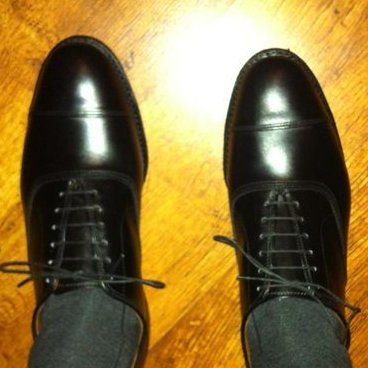
Next, check for heel slippage. Lace-ups shouldn't have any heel slippage, even when brand new. However, non-laced styles, such as loafers or cowboy boots, may have minimal slippage until the soles break in. Try to minimize this for a good fit, but don't go too small
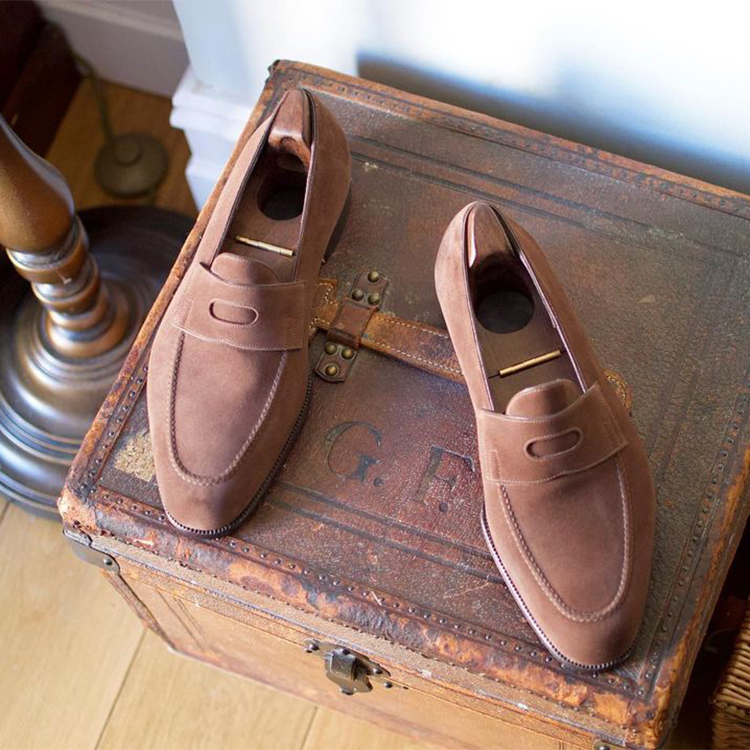
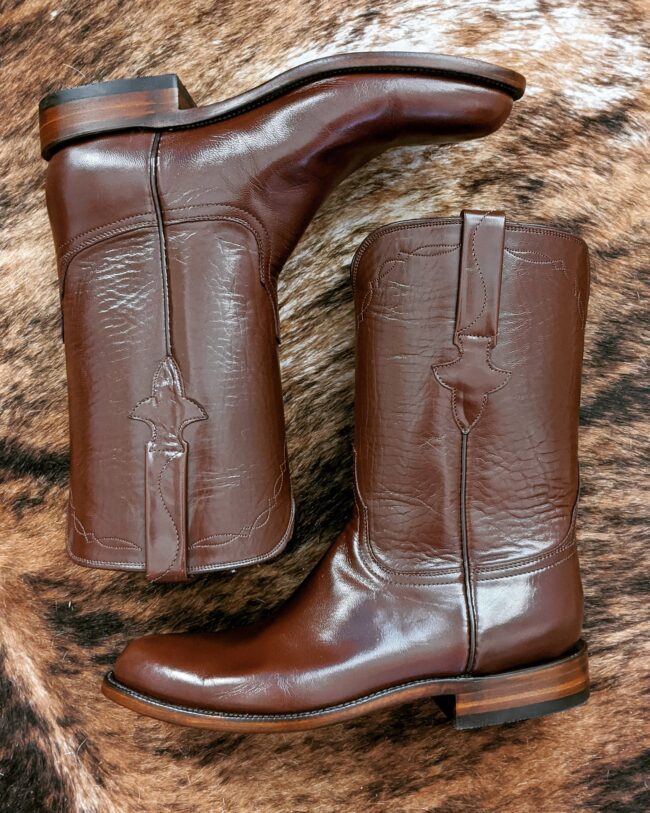
Finally, a word about comfort. Some guys like a very snug fit; others want something looser. Some of this will require a learning curve. Buying your first pair of high-end shoes will feel daunting at first, but you will quickly get the hang of it and figure out what you like.
• • •
Missing some Tweet in this thread? You can try to
force a refresh