1/10 đ§”Experts in the study of democracy hold that the United States has only been a full-fledged democracy since the 1968 election.
âWhy?
2/10 Why 1968?
It was the first time African-Americans could vote without traditional legal barriers.
Before then, voting while Black often meant navigating a gauntlet of literacy tests, poll taxes, and outright intimidation.
3/10 The landmark Voting Rights Act of 1965 began dismantling these barriers.
It targeted racial discrimination in voting, ending practices that silenced many African-Americans.
But change wasnât immediate.
4/10 By the time the 1968 election came around, the impact of the Act had begun to resonate, giving African-Americans a clearer path to the voting booth.
This was a seismic shift in the nationâs political landscape.
5/10 But systemic racism didnât end with the ballot box.
From 1968 to today, the struggle for equality has continued, morphing into new challenges for African-Americans.
6/10 For instance, stricter voter ID laws have emerged, frequently under the banner of âvoter fraudâ prevention.
These laws disproportionately affect marginalized communities, who often face hurdles in obtaining the necessary identification.
7/10 The myth of âvoter fraudâ has been largely debunked, with evidence showing it to be exceedingly rare.
Yet, it serves as a rallying cry for measures that make voting more challenging for certain communities.
8/10 Unfortunately, such laws have found traction in the Republican party, especially in southern states.
The result?
A more complicated voting process for many African-Americans, continuing the legacy of voter suppression.
9/10 So while weâve come a long way since 1968, our journey towards a truly inclusive democracy is still underway.
We must grapple with the reality of systemic racism and strive to eradicate these lingering barriers to full participation. ama-assn.org/delivering-carâŠ
10/10 To truly live up to the ideal of democracy, we must ensure that every citizen has an equal voice.
The Great Betrayal: How a U.S. Envoy Helped Russia Shape a Plan Against an American Ally
Steve Witkoffâs guidance to Vladimir Putinâs top adviser reveals a foreign-policy process captured by private channels, Russian influence, and the abandonment of an ally at war.
A U.S. envoy coached a senior Russian official on how to influence an American president into embracing a plan that advantaged an aggressor and weakened an ally fighting for its survival as a sovereign state.
_________________________________________________
đ§”1/4: A betrayal rarely arrives as a dramatic gesture. It accumulates through processâthrough choices that elevate an adversaryâs interests while diminishing those of an ally, through private conversations that displace public commitments, through the quiet reordering of whose voice is heard first and whose is heard last. What occurred in October 2025 was neither an ideological shift nor a sudden rupture. It was something more deliberate: the migration of American power away from an ally fighting for survival and toward the autocrat attacking it.
On October 14, as Bloomberg reported, Steve Witkoff, the newly appointed special envoy, placed a five-minute call to Yuri Ushakov, Vladimir Putinâs senior foreign-policy adviser. He did not present an American position or outline U.S. red lines.
Instead, he coached Ushakov with an ease that would have been notable even in peacetime. According to the Bloomberg recording, Witkoff offered no deterrent message.
Rather, he advised a senior Russian official on how best to flatter and influence an American president whose sensitivity to praise has been extensively documented in U.S. and foreign reporting.
He urged Ushakov to schedule the call before President Volodymyr Zelenskyâs October 17 White House visit, ensuring that Moscowânot Kyivâwould reach President Donald Trump first. He proposed beginning with congratulations on the Gaza agreement, describing Trump as a âman of peace,â presenting Russia as cooperative, and invoking the â20-pointâ Gaza plan as a model. He even encouraged Putin to reference earlier âSteve and Yuriâ conversations to signal rapport.
2/4: This guidance did not come from Moscowâs political operatives. It came from a U.S. envoyâadvice that helped an adversary prepare for a conversation with the American president at a moment when Ukraine depended on U.S. backing for its survival.
In American diplomacy, envoys do not serve as communications consultants to foreign leaders, especially not to adversaries engaged in active war. AFSA guidance, State Department protocol, and the White Houseâs âOne Voiceâ doctrine all define envoys as extensions of the Secretary of State, charged with advancing U.S. policy rather than refining an adversaryâs messaging.
Yet a U.S. envoy prepared a Kremlin adviser for a call with the American president before Americaâs ally had even been heard. In alliance politics, sequencing is not ceremonial; it determines influence.
The first speaker sets the frame; the second must work within it. By advising Russia on timing, tone, and approachâby helping an adversary craft a calibrated appeal to a president whose reaction to praise is a matter of public recordâWitkoff granted Moscow advantages alliances normally reserve for partners. Ukraineâunder attack and reliant on American military and intelligence supportâentered the conversation only after the adversary had already shaped its outline.
This inversion was not procedural noise. It was, in operational terms, a form of betrayal: an American envoy equipping an adversary to shape his own presidentâs perceptions while the ally under attack received no comparable preparation in a moment that cannot be replayedâthe initial framing that guides all subsequent decisions.
Two days later, as Bloomberg documented, Putin followed the guidance closely. He opened his two-and-a-half-hour call with Trump using the congratulatory tone, Gaza framing, and conciliatory posture Witkoff had outlined. The overlap between the coaching and Putinâs talking points was unmistakable in the recorded evidence.
Within days, Axios and Bloomberg reported that Witkoff met in Miami with Kirill Dmitriev, head of Russiaâs sovereign-wealth fund and long identified by the Senate Intelligence Committee as a Kremlin-linked backchannel to Trump-aligned networks. By monthâs end, Axios reported that Dmitriev and Ushakov were discussing how far Russia should press its âmaximumâ terms.
This was not coincidence. It was structure.
Dmitriev is a Kremlin-designated backchannel operator; Ushakov is Putinâs top foreign-policy aide. Both participated before Ukraine saw anything resembling a plan. The pattern was unmistakable: the adversary brought into the room early, the ally relegated to reacting after the framework had already taken shape.
The result was a shift in negotiating power toward the aggressorâbefore the victim state had been invited to the table.
Ukraine eventually received a 28-point peace proposalâunsigned, unattributed, and far from what Kyiv expected from a major ally. AP and Axios reported that the language displayed hallmarks of Russian bureaucratic drafting: legalistic verbs, administrative cadence, and syntactic patterns associated with Russian state memoranda rather than American diplomatic documents. Ukrainian officials recognized these features immediately. The text did not resemble something produced in Washington. It resembled something shaped in Moscow.
The damage lay not only in authorship, but in form.
A peace proposal is a trust-bearing document: an ally offers it to safeguard anotherâs sovereignty. Here, Ukraine received a plan labeled as Americanâexpected from the country supplying its weapons and intelligenceâonly to discover linguistic traces of the state invading it.
This was not a minor irregularity. It was a procedural breach: Ukraine received, under an American banner, the conceptual architecture of the aggressorâa plan demanding concessions and long-term constraints that originated not in Washington but in consultations with the invading state. Few signals could more deeply erode confidence than a document bearing an allyâs label and an adversaryâs fingerprints.
This is why the proposal alarmed Ukraine and Europe. It was not only the terms. It was the realization that the voice inside the document did not sound like Washingtonâs.
When Ukraine examined the plan, it found demands that, according to AP, Axios, The Guardian, and Politico Europe, would formalize Russian territorial gains without requiring Russia to withdraw or disarm.
The proposal required Ukraine to recognize Russiaâs control over Crimea, Luhansk, and Donetsk; withdraw from additional territory Russia had not taken by force; accept frozen front lines in Kherson and Zaporizhzhia; renounce NATO membership; and limit its troop levels and long-range weapons. Russia, meanwhile, faced no reciprocal force caps, no withdrawal, and would receive phased sanctions relief.
These provisions were not theoretical. They would have redrawn Europeâs map, weakened Ukraineâs capacity to defend itself, and rewarded Russiaâs invasion in concrete terms. They would codify gains achieved by force while constraining only the victim.
Perhaps most revealing were the proposed âsecurity guarantees.â AP reported that they were non-binding, dependent on the political choices of future U.S. administrations, and voidable if Ukraine used certain U.S. weapons. Ukraine was being asked to trade territory and sovereignty for assurances the United States could reverse easily.
The historical recordâHelsinki in 2018, the 2019 Ukraine aid pause, public statements suggesting NATO allies deemed âdelinquentâ might be left vulnerable, and the 2025 suspension of military and intelligence supportâshaped how Kyiv evaluated those guarantees. These events, reported by CBS, PBS, AP, UPI, and the Senate Intelligence Committee, formed the context through which small states assess reliability.
When AP reported that U.S. officials warned Ukraine its intelligence support might be affected if it refused to engage with the plan, the structure clarified. Pressure flowed only toward the state under attack.
Ukraineâdependent on U.S. intelligence for air defense and targetingâwas told its essential tools might be limited if it resisted a framework that advantaged the invader. Russia faced no equivalent pressure. The process resembled not negotiation but the management of Ukrainian concessions, shaped in part by early Russian input.
This dynamic aligned with longstanding Western intelligence assessments: Russia sought not only territory but enduring leverage over Ukraine. Any settlement leaving Ukraine militarily inferior or barred from NATO would invite renewed assault. Those assessments, reiterated by NATO, the European Commission, and multiple Western intelligence chiefs from 2022 to 2025, warned that a weakened Ukraine and discretionary guarantees would create conditions for future aggressionânot prevent it.
European partners reacted quickly. The Guardian reported that EU leaders deemed the plan a ânon-starter.â Several noted the irregularity of learning about it through press leaks rather than coordinated briefings. Allies were treated not as participants but as recipients of a nearly finished documentâobservers rather than stakeholders in a process that affected their security.
Ukrainian officials recognized the pattern immediately. As The Guardian and AP reported, they described the proposal as âcapitulation,â âabsurd,â and incompatible with sovereignty.
One adviser repeated a line held since the invasionâs first hours: âSovereignty is not negotiable. Survival is not negotiable.â These assessments were not rhetorical; they reflected the lived experience of a country repeatedly forced to endure decisions made beyond its borders.
Historical analogies can mislead, which is why precision matters.
Munich is often invoked reflexively, but the 2025 process bears little resemblance to Chamberlainâs world. Britain entered the crisis militarily unprepared, guided by incomplete intelligence, and constrained by constitutional machinery that governed its diplomacy. Chamberlain acted within that systemâdefending his policy before Parliament, accepting its verdict when support collapsed, and transferring power peacefully. In a 1939 letter, he wrote, âI act as the Constitution prescribes, and I shall abide by it,â a line reflecting both his temperament and the institutional limits within which he operated.
The United States in 2025 faced none of those guardrails. Several key actions surrounding the Ukraine proposal unfolded outside the diplomatic and interagency channels meant to protect American foreign policyâunder a president who had been impeached twice, first for pressuring Ukraine to advance his domestic political interests and later for encouraging a mob to disrupt the transfer of power; who was subsequently convicted in New York on 34 felony counts for falsifying business records in a scheme prosecutors arguedâand the jury agreedâwas intended to influence the 2016 election by concealing a sexual encounter with adult film actor Stormy Daniels; and who repeatedly challenged core elements of the constitutional order.
He was also the first U.S. president ever found liable for sexual abuse and for defaming the woman who reported that abuse, in civil trials decided by two New York juries.
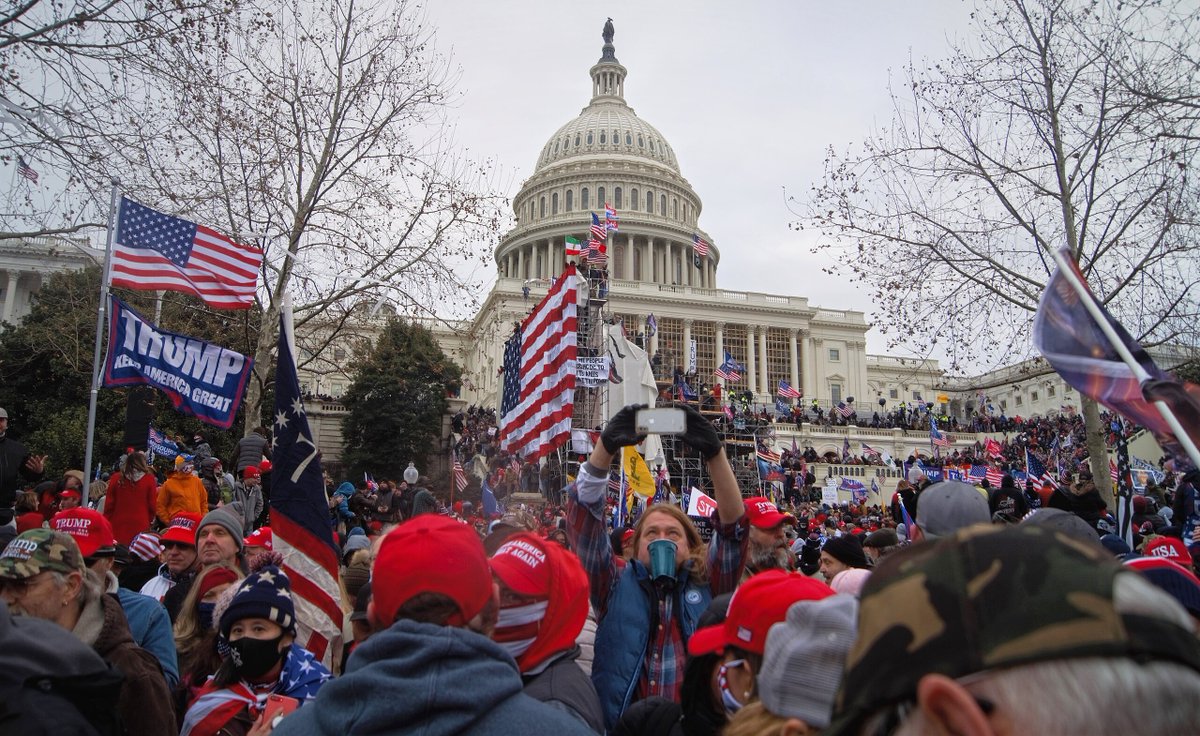
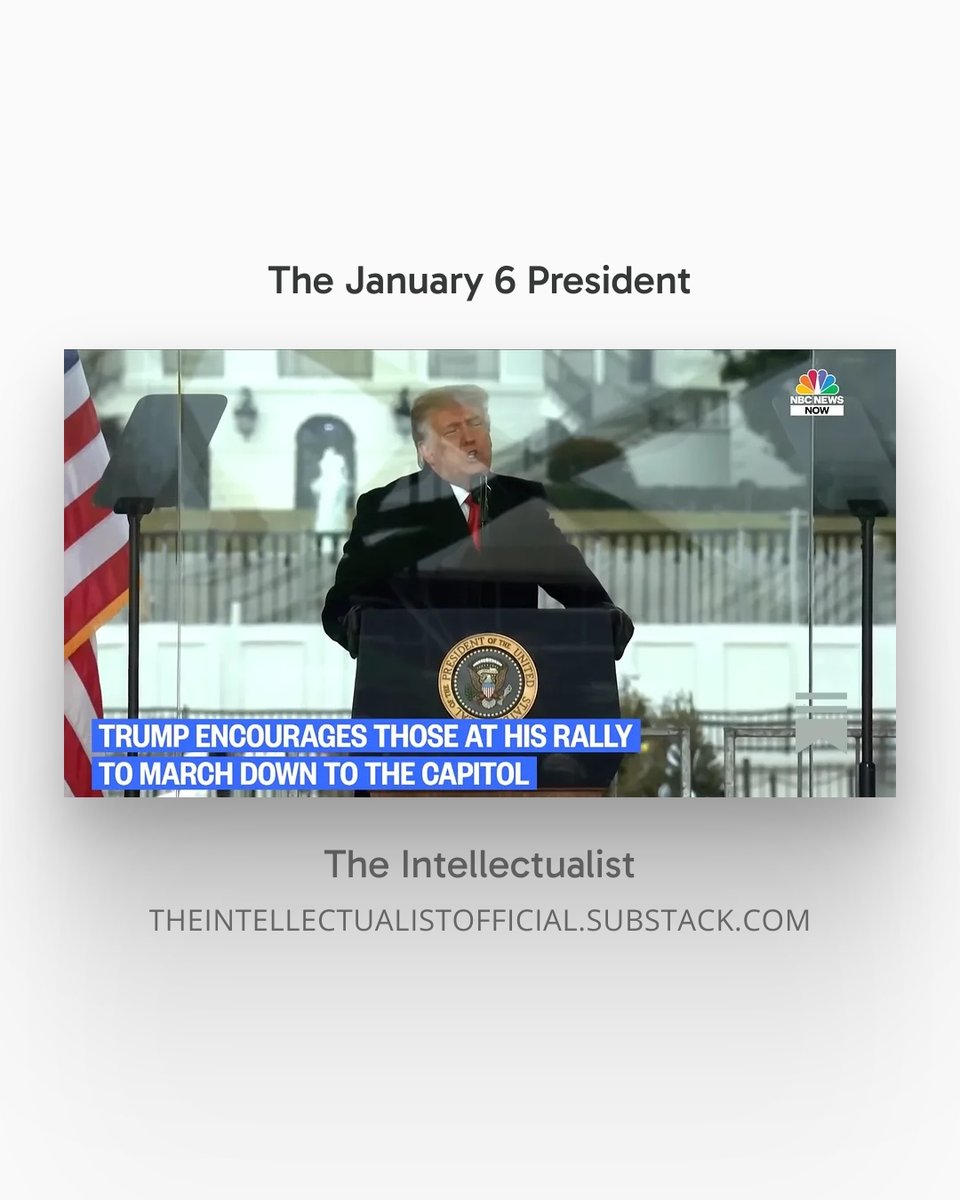
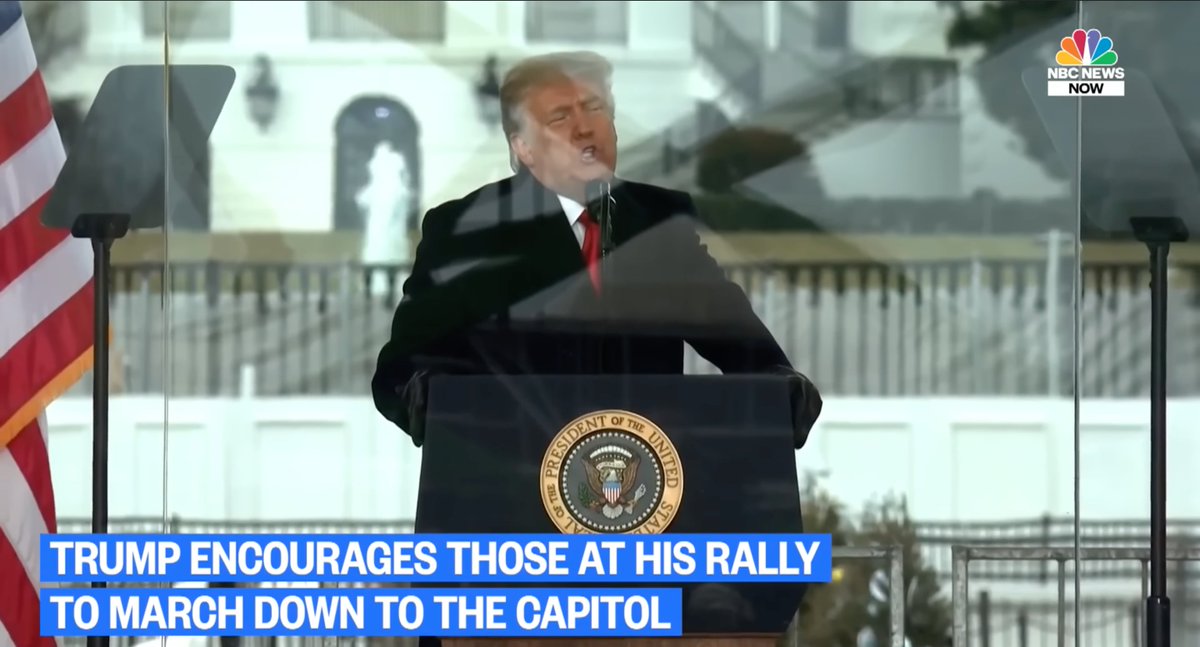
Those challenges included publicly encouraging his supporters to disrupt Congressâs certification of electoral votes on January 6, 2021âan assault in which more than 140 police officers were injured, several subsequent deaths were later attributed to the attack, and rioters vandalized the Capitol, including smearing human feces in hallways and offices; refusing to accept certified electoral results; proposing that parts of the Constitution be âterminatedâ; and publicly deriding Danielsâincluding in a 2018 tweet in which he called her âhorseface.â
None of this resembled the constitutional discipline within which Chamberlain operated. It reflected a political environment in which the safeguards normally governing American foreign-policy decision-making had been weakened or bypassed altogether. âŠeintellectualistofficial.substack.com/p/the-great-beâŠ
3/4: The more revealing parallel is the MolotovâRibbentrop logic of 1939. The method of the 28-point proposalâan aggressor engaged early, an ally excluded until the end, and borders discussed without the participation of the state affectedâechoed the architecture of the secret protocols, in which larger powers negotiated the fate of smaller states without their presence.
The contexts differ, but the structure does not. When decisions are shaped with the aggressor before they reach the intended beneficiary, they signal that sovereignty is being bargained in rooms the endangered state is not permitted to enter.
Seen as a sequence rather than isolated acts, the meaning becomes unmistakable. A U.S. envoy coached a Kremlin adviser on how to influence an American president.
Russian officials shaped the early contours of a peace plan. Ukraine received an unsigned document bearing Russian linguistic features. The plan weakened Ukraine and strengthened Russia. The guarantees were structurally unsound. Pressure fell on the ally, not the aggressor. Allies were briefed late or through the press. None of this is moral inference; it is grounded in procedural facts.
Diplomacy depends on predictable architecture: allies consulted early, adversaries managed carefully, proposals vetted through institutions. October 2025 inverted that architecture, treating Russia as a drafting partner and Ukraine as an impediment. It constructed a parallel diplomatic track that bypassed the systems designed to guard against foreign influence and preserve alliance integrity. It replaced transparency with informality, expertise with improvisation, and collective security with private negotiation.
In that sense, this is betrayal in its precise meaning: a structural reordering of obligations. It occurs when an ally becomes the last to know and an adversary becomes the first to shape; when institutions built to protect democratic partners give way to backchannels with those seeking to weaken them.
Such moments do not vanish when the documents fade or the actors depart. They endure because they reveal not only what was decidedâbut whom the decision was made to serve. âŠeintellectualistofficial.substack.com/p/the-great-beâŠ
Trump Seeks Control of 9/11 Memorial After Years of False Claims About Attacks
đ§”1/5: Donald Trump is seeking federal control of the 9/11 Memorial & Museum, a site built from the grief and labor of families, survivors, and New Yorkers. The move would strip authority from the nonprofit that has raised three-quarters of a billion dollars in private funds and operated the memorial since 2014. open.substack.com/pub/theintelleâŠ
2/5: Trump frames it as a national honor, but his long record of false claims about 9/11 raises fears of politicization. Local leaders argue the memorial belongs to those who endured the attacks, not to Washington. At stake is whether Ground Zero remains a covenant of memory or becomes a conquest of narrative.
On 9/11 itself, Trump went on television to boast that Trump Tower was now the âtallestâ building in Lower Manhattan because the Twin Towers had just been destroyed. He later spread the long-debunked story that âthousandsâ of Muslims in New Jersey had celebrated the attacks. open.substack.com/pub/theintelleâŠ
The Bad Analogy: Why Comparing Donald Trump to Neville Chamberlain Flatters Trump and Stains Chamberlain.
1/9: Many compare President Donald Trumpâs submission to President Vladimir Putin of the Russian Federation on Ukraine with Prime Minister Neville Chamberlainâs appeasement of Chancellor Adolf Hitler, but the analogy is wrong.
Prime Minister Chamberlain, though disastrously mistaken in pursuing appeasement, never sought to abolish Britainâs common law, its constitutional foundation, nor unleashed a mob against Parliament when he lost power to his Conservative colleague, Prime Minister Winston Churchill.
He remained loyal to the Crown, and no one ever credibly accused him of collaborating with Chancellor Hitler.
By contrast, President Trump betrayed allies and incited an assault on his own nationâs constitutional order.
Moreover, both the United States Senate Intelligence Committee and the Special Counsel Robert Mueller Report documented extensive contacts and Russiaâs efforts at coordination with President Trumpâs campaign during the 2016 election. âŠeintellectualistofficial.substack.com/p/the-bad-analâŠ
I. The Analogy That Distorts
2/9: In political commentary, analogies are rarely neutral. They compress history into symbols, wielding past figures as shorthand for present judgment.
One of the most common in recent years is the claim that Donald Trump is a new Neville Chamberlainâthe British prime minister whose policy of appeasement is remembered as the ultimate failure of leadership, enabling Adolf Hitlerâs aggression and paving the road to world war.
At first glance, the analogy seems intuitive: both men are associated with weakness in the face of authoritarian menace.
But the comparison collapses under scrutiny. Chamberlain, for all his catastrophic misjudgment, acted in what he believed was Britainâs best interest.
Trumpâs record shows no such civic good faithâthe duty to place constitutional order and democratic institutions above self-interest.
To equate the two diminishes Chamberlainâs sincerity and flatters Trump with a stature he has never earned.
3/9: Before his premiership, Chamberlain built a reputation for seriousness and service. As Minister of Health in the 1920s, he introduced twenty-one major billsâon housing reform, local government, and public healthâthat Parliament enacted into law (Hansard, 1923â1929).
He was known for immersing himself in committee work and parliamentary debates, reluctant even to miss sessions. His was the career of a diligent, if uncharismatic, public servant.
Appeasement arose from the conditions of its time. According to the Commonwealth War Graves Commission and War Office returns, Britain lost about 673,000 Army soldiers in the First World War, rising to more than 900,000 deaths across the Empire, with over 1.6 million wounded.
In total, roughly 36 percent of all mobilized British and imperial forces became casualties.
The demographic toll fell most heavily on the young: men aged 15 to 24 suffered devastating rates of death and injury, and in some towns and battalions, local losses approached seven in ten. Precise figures vary, but the scale of devastation is beyond dispute.
These figures explain the public mood of the 1930s. Britain was not merely weary of warâit was demographically and psychologically broken by it. Chamberlainâs generation feared that another continental conflict would consume a second generation of youth, this time with even more devastating consequences.
Munich 1938, in which Chamberlain conceded the Sudetenland to Hitler, was celebrated by many Britons as the avoidance of catastrophe.
Within a year, that relief curdled into disillusionment as Germany pressed on to Poland. Historians still debate whether appeasement bought valuable time for rearmament or fatally emboldened Hitler.
Even critics concede that rearmament accelerated in those years, though they argue it came at a dangerous cost. What cannot be doubted is that Chamberlain believedâgravely but sincerelyâthat he was protecting his country.
That good faith, rooted in demographic trauma, forms a stark foil to Trumpâs record, where grievanceânot sacrificeâshaped every choice.
Trump's New Work Rules Are Triggering a Rural Hunger Crisis
One grocer lost 40% of her SNAP sales overnight. For the families who disappeared, the food isnât unaffordable â itâs unreachable.
âWe Had Fewer Carts. More Silence.â
đ§”1/10: In Monticello, Arkansas â population just under 9,000 â the shelves arenât empty, but the aisles have fallen quiet. For Teresa Johnson, who has run Johnsonâs Market for over 16 years, the change was sudden and unmistakable. âWeek one, it was like a light switch,â she said. âWe had fewer carts, fewer kids, more silenceâ The New York Times.
Her store once served nearly 400 SNAP-reliant households, many shopping multiple times a week. But since enforcement of the new work requirement began in early July, Johnson estimates a 38 to 42 percent drop in food stamp purchases â almost entirely from regulars she used to see weekly.
The shift wasnât tied to seasonal change or economic growth. It stemmed directly from the revised SNAP work policy implemented under President Donald Trumpâs second term, passed as part of the June debt ceiling compromise. The rule increased mandatory work hours from 20 to 30 per week for childless adults under 60, classifying those who do not meet the new standard as ineligible The New York Times.
While federal officials defended the change as a way to promote employment and personal responsibility, small-town grocers say the reality is a cascading retail crisis. âTheyâre rationing,â Johnson said. âSome are sending one family member with a list for everyone elseâ The New York Times.
Monticello has just one major grocery store â the one Johnson owns. The nearest full-service alternative is nearly 45 minutes away. With fuel prices high and transit options scarce, every lost customer represents not just a personal hardship, but the fraying of a townâs entire economic loop.
âThis isnât a city where folks can hop on a bus to Aldi,â she said. âThis is where you see your neighbor, buy your dinner, and sometimes ask if anyoneâs hiring.â
As July wore on, Johnson noticed more parents counting coins, more elders holding off on protein, and fewer families walking through her automatic doors. âIâve never seen anything quite like it,â she added. âNot even during COVID.â âŠeintellectualistofficial.substack.com/p/trumps-new-wâŠ
SNAP Isnât a Bonus â Itâs the Business Model
2/10: For rural grocers like Teresa Johnson, SNAP isnât a bonus â itâs the economic foundation. At Johnsonâs Market, nearly 70 percent of all monthly transactions once involved SNAP Electronic Benefit Transfer (EBT) cards. Since the July work rule changes took effect, Johnson says her revenue has dropped by more than a third The Guardian.
The Supplemental Nutrition Assistance Program has long been portrayed by federal policymakers as a welfare safety net. But in rural economies, itâs something else entirely: a stabilizer for private business. âIf I lose my SNAP customers, I donât have customers,â Johnson said.
That collapse is already visible across the country. Rural store owners from Mississippi to Missouri are cutting hours, laying off staff, and slashing fresh inventory. Some have already posted closure signs The Guardian.
In these communities, SNAP doesnât just help feed families â it keeps grocery infrastructure viable. A single SNAP household might spend $100 to $250 a month, most of it on staple goods with low margins. But multiplied across dozens or hundreds of households, that spending represents the volume necessary for small retailers to qualify for bulk purchasing rates and maintain access to perishable suppliers.
âWhen those EBT cards stop scanning,â Johnson said, âthe dairy truck stops coming.â
Unlike suburban chains, independent rural grocers donât have the buffer of private equity or diverse customer bases. They operate close to the line, often stocking inventory on 30-day credit. When SNAP-funded purchases dry up, the line collapses.
The new policyâs impact isnât just about economics, Johnson says. It also reshapes her sense of community. âIâm not just losing sales,â she said. âIâm losing neighbors. Iâm losing Sunday church conversations. Iâm losing the everyday check-ins that hold a town together.â âŠeintellectualistofficial.substack.com/p/trumps-new-wâŠ
A Rule Change with No Cushion
3/10: The new SNAP rule didnât arrive with a cushion â no bridge funding, no grace period, no public awareness campaign tailored for the rural South. âMost folks didnât even know it was coming,â said Teresa Johnson. âThey just showed up one day and their cards got deniedâ The New York Times.
Under the terms of the Fiscal Responsibility Act passed in June, the work requirement for able-bodied adults aged 18 to 59 without dependents was increased from 20 to 30 hours weekly. The new policy took effect on July 1, 2025. But in places like Drew County, Arkansas, the infrastructure to absorb that shock simply doesnât exist.
Federal officials estimate hundreds of thousands of Americans may be disqualified in the initial wave. Rural counties â already short on job openings, child care, and transportation â are absorbing a disproportionate share of the fallout The New York Times.
Drew County has an unemployment rate nearly double the national average. Jobs are scarce, and many that exist donât offer stable schedules. âIf you have to work 30 hours to qualify for food,â Johnson said, âbut your job only gives you 25, what are you supposed to do â quit and go hungry?â
This isnât a theoretical concern. Johnson says several of her longtime customers worked part-time at the local mill or gas station â jobs that never guaranteed 30 hours. When they lost their benefits, they also cut back on shopping, sometimes dropping by only for rice, eggs, or ramen.
âThereâs no glide path here,â said one regional advocate. âThis is a cliff. You fall off or you hustle to hang onâ The Guardian.
Many affected individuals are unable to complete benefit appeals or requalification steps due to limited access to broadband or in-person guidance. Johnson said sheâs fielded questions from customers who received rejection letters they didnât understand. Some tried to reapply online but couldnât complete the process without internet at home. Others gave up entirely. âYou canât navigate a bureaucracy from a flip phone,â she said. âŠeintellectualistofficial.substack.com/p/trumps-new-wâŠ
âI love America more than any other country in the world and, exactly for this reason, I insist on the right to criticize her perpetually.â
â James Baldwin (1924â1987)
đ§”1/11: IN 1968, just three years after Bloody Sunday and one month after Martin Luther King Jr.âs assassination, Black Americans in many Southern states were finally able to vote without fear of firebombs or billy clubs.
That was less than a lifetime agoâyet in those same states today, voters stand in line for hours, face surgical voter ID laws, or find themselves quietly purged from the rolls.
The weapons have changedâpaper instead of chains, laws instead of whipsâbut the impulse has not.
The United States oscillates between emancipation and exclusion, between the promise of liberty and the practice of control.
But this latest swing isnât natural. It is being pulledâby courts, legislators, billionaires, and ideologues.
And unless we confront that pull directly, democracy itself may not return to center.
2/11: From its founding, the United States has been animated by a paradox: a republic committed to liberty and built on domination.
Nowhere was this contradiction more violently expressed than in the American South, where an economy of cotton and blood sustained a regime of total subjugationâeconomic, legal, and spiritual.
Enslaved Africans were denied not just freedom, but even personhoodâdefined legally as property and spiritually as cursed.
The U.S. Constitution, for all its democratic pretensions, contained no affirmative right to vote.
It still doesnât.
Voting was left to the states, many of which ensured that political power would remain white, male, and landed. Exclusion, in other words, was not a regional deviation. It was an architectural choice.
After the Civil War, the 13th, 14th, and 15th Amendments promised something closer to full citizenship for the formerly enslaved.
But rights enshrined in law required power to enforce themâand that power collapsed quickly.
In 1877, as part of the infamous Compromise to resolve a disputed presidential election, Northern leaders withdrew federal troops from the South, effectively ending Reconstruction. In exchange for executive power, they surrendered the project of Black citizenship.
The Jim Crow order that followed was not a spontaneous backlashâit was a deliberate reassertion of racial control through literacy tests, poll taxes, grandfather clauses, and racial terror.
The old slaveocracy had simply adapted to new constraints. It no longer needed chains. It had paperwork.
For nearly a century, democracy in the South was a mirage. Not until the passageâand federal enforcementâof the Voting Rights Act in 1965 did meaningful Black enfranchisement begin. And even then, it was incomplete. The Jim Crow order had not collapsed; it had simply rebranded.
Today, across many of the same states, polling places in Black communities are shuttered, voters are purged from rolls through âexact matchâ policies, and ID laws surgically target demographics unlikely to vote Republican. This is not a Southern betrayal.
It is an American design flawârooted in the founding omission of a constitutional right to vote, and perfected through a century of practice. The form is democratic. The function remains exclusionary. âŠeintellectualistofficial.substack.com/p/the-descent-âŠ
Sectionalism Reborn
3/11: Today, the legal landscape of the United States is once again fracturing along sectional lines.
In one state, abortion is a protected right; in another, itâs criminalized. In one, transgender youth can access affirming care; in another, their doctors face felony charges.
This isnât federalism in actionâitâs the fracture of a shared constitutional identity.
The ideal of âequal protection under lawâ no longer means what it once did.
Some states, like California or New York, are expanding civil liberties. Others, like Texas or Florida, are engineering legal regimes to restrict them.
Once again, as in the decades before the Civil War, the country is being pulled apart not only by policy differences, but by incompatible moral visions.
These disparities raise urgent questions about national coherence.
Why should states that expand rights be required to fund federal and state systems that entrench repression elsewhereâthrough tax dollars, military bases, or judicial appointments?
What does âshared governanceâ mean when core values no longer intersect, and equal citizenship depends on geography? The Constitution may still bind the states together in law, but the cultural contract is fraying. Sectional resentment is no longer rhetorical; itâs becoming systemic.
And unless it is directly confronted, it may erode not just federal cohesion, but the very idea of the Union itself.
The Rise of Hitler: A History of How Democracy Fell in Germany and Its Parallels to Today
đ§”1/11: His past was steeped in scandalâa felon, accused of treason and sedition, his actions and rhetoric frequently straddling the line of legality.
He was convicted for attempting to overthrow the government, yet this criminal history didnât disqualify him.
It only made him more appealing to those who viewed the establishment as corrupt and broken. Instead of disqualifying him, his criminal record and charges became part of his defiant charm, painting him as an outsider willing to fight the system.
Every accusation, every charge of treason, only fueled his rise, showing his supporters that he could not be tamed and was the only one willing to challenge the powers that had held the nation in their grip. open.substack.com/pub/theintelleâŠ
2/11: At first, they dismissed him. The elites, the media, the political classâthey thought they could control him. They mocked him as a sideshow, a foolish provocateur, destined to be forgotten.
But in the wake of high inflation, economic instability, and a country that had lost its bearings, his words struck a chord with those who had been cast aside.
In an age of rising populism, economic dislocation, and a shrinking middle class, his rhetoric didnât promise solutionsâit promised retribution.
It wasnât just blame he offered; it was a convenient, scapegoated enemy to rally against.
His was a message soaked in anger, dripping with resentment for anyone deemed an outsider.
Minorities, immigrants, political rivalsâall of them were the root of the nationâs collapse. And in this narrative of vengeance, he found his power. open.substack.com/pub/theintelleâŠ
3/11: It wasnât just the forgotten and the downtrodden who rallied to him.
His support was a web of disenfranchised voters, alienated workers, and desperate communitiesâa rage that turned inward, then outward.
People who had once believed in the promise of democracy now saw him as their only hope, their only defender. He was the hammer to crush a system they believed had betrayed them.
They didnât care what he stood for, as long as he was willing to destroy the things they hated. And with every provocation, every scandal, his following grewâspurred on by his audacity and his defiance.
The more they despised him, the more they were drawn to him, their loyalty strengthening with every wave of mockery that he deflected effortlessly. open.substack.com/pub/theintelleâŠ