A generation after the disaster at Pliska, war again loomed over the Haemus Mountains.
During these preparations a secret embassy arrived in the capital, imploring Emperor Theophilos for his help.
The Emperor accepted & initiated one of the greatest rescue missions in history.
After crushing the Byzantines at Pliska, killing Emperor Nikephoros I, & famously turning his skull into a chalice, Khan Krum extended his Empire south into Byzantine territory. Integrating these Byzantines into the Bulgarian state was a key priority for the Khan.
Many of these populations & their leaders were allowed to maintain their posts & homes in the borderlands; however, Krum’s successors became uneasy with this arrangement. They felt these populations might serve as a fifth column for any Byzantine counterattacks.
In order to strengthen their frontiers the Bulgars moved many of these Byzantines to the northern banks of the Danube & settled them there. These “themesemen” were entrusted with border security against steppe peoples, a job they once fulfilled in Macedonia against the Bulgars
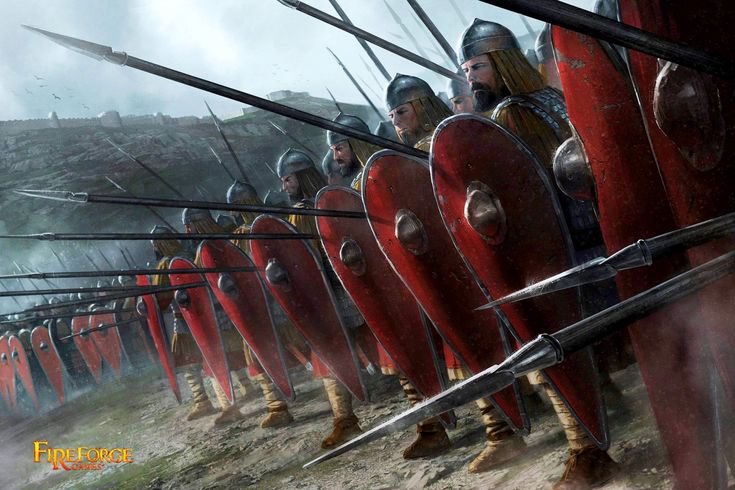
With war preparations underway these resettled Byzantines sent a secret embassy to Constantinople. The embassy stressed that these people remained loyal to the Byzantine Emperor & asked Theophilos to send boats up the Danube & retrieve them.
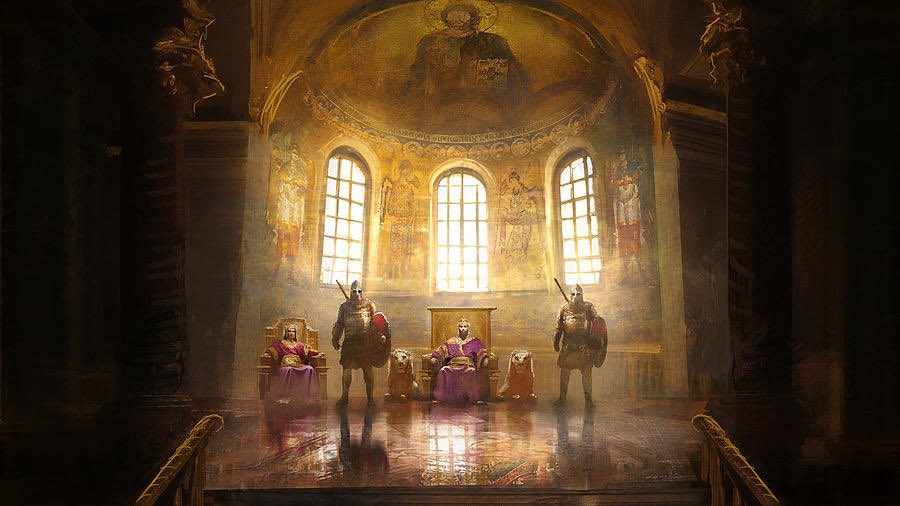
Theophilos agreed to help his kinsmen & launched a coordinated attack on the Bulgars. The army ravaged the mountainous southern frontier, drawing the focus of the Buglar military, while the fleet sailed north toward the captive Byzantines.
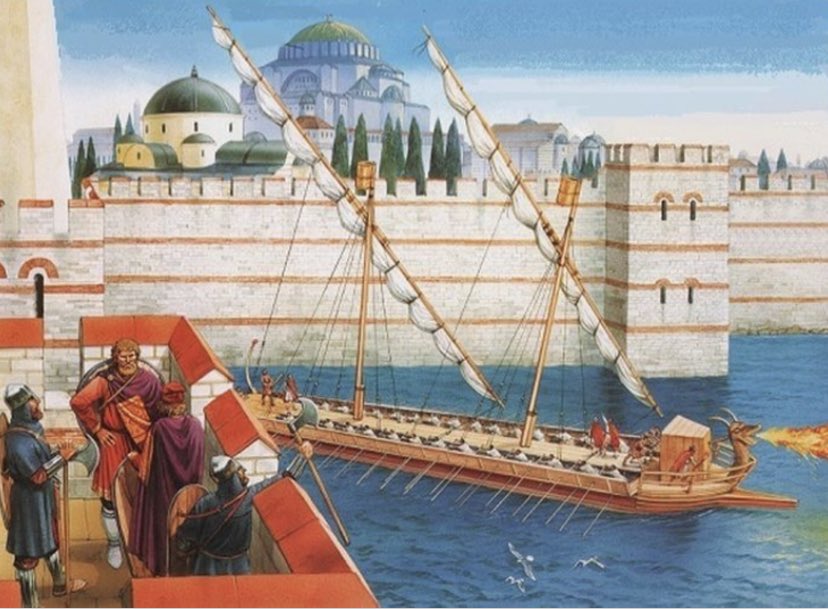
Although the campaign in the south was inconclusive, the rescue of the Byzantines on the Danube was a resounding success. The fleet brought 10,000 Byzantines back to safety & resettled them in the Empire, a major psychological & propaganda victory for Theophilos.
Although details on the rescue of the “Macedonians on the Danube” are scarce one can imagine the fleet navigating the unpredictable waters of the Black Sea, avoiding the roving steppe tribes of the Danube, & Bulgar contingents pressing on the evacuation area & desperate evacuees.
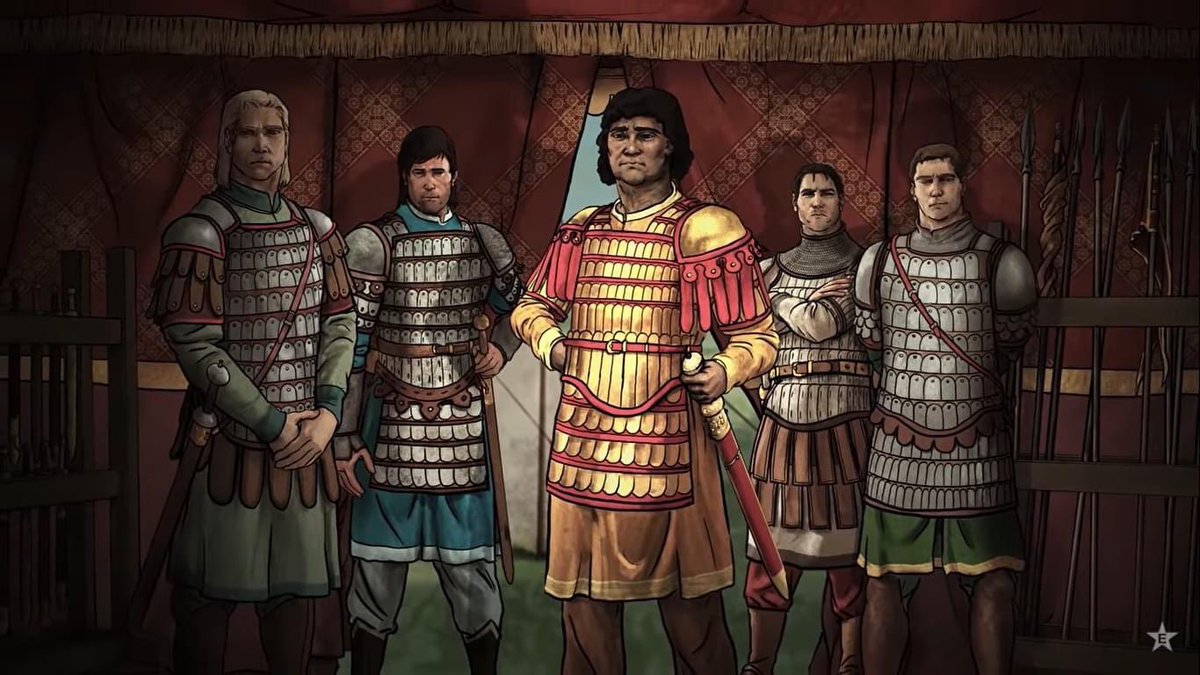
This is one of many occasions in which the Byzantine Empire went to great lengths to bring populations who identified themselves as “Romans,” into lands controlled by the government in Constantinople.
During the Arab conquests ships were sent to Egypt & counterattacks into Syria whose objectives included the evacuation of self-identifying Romans (largely Greek-speaking Chalcedonian Christians).
This phenomenon occurred again during the Komnenian Dynasty when campaigns would be launched into the Anatolian interior & locals given the opportunity to evacuate Seljuk lands under the protection of the army. Many settled in Constantinople, swelling its population.
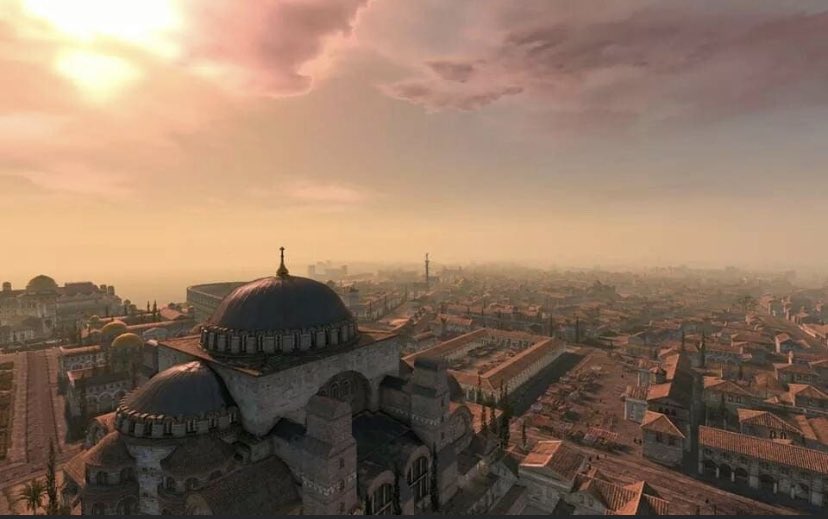
We know tantalizingly little about the Byzantine “Escape from Bulgaria,” do you know of any similar rescue operations?
• • •
Missing some Tweet in this thread? You can try to
force a refresh

For hundreds of years the “Wild Fields” of the Pontic Steppe, was a battleground. Millions would be driven to the great slave markets of Crimea and sold to a life of misery in the Ottoman Empire.
This brutal conflict birthed the Cossacks, modern Russia, & changed Europe forever.
The medieval steppe of S. Ukraine was controlled by nomads, any settlement was under constant threat by Turkic bands that drove their great herds across the plains.
After the collapse of the Golden Horde in the early 16th c., massive raids were launched into Russia & Ukraine.
Beauplan, a Frenchman residing in 17th century Ukraine remarked on the awful spectacle of the raids, “During the interval of this week-long stop, they bring together all their booty, consisting of slaves and livestock, and divide the entire quantity among themselves. The most inhuman of hearts would be touched to see the separation of a husband from his wife, of a mother from her daughter, there being no hope of their ever seeing each other again. They are to become wretched slaves of Mohammedan pagans, who abuse them atrociously. The brutality [of these Tatars] causes them to commit an infinite number of filthy acts, such as ravaging young girls, raping women in the presences of their fathers and husbands, and even circumcising children before their parents’ very eyes, so that they may be offered to Mohammed.”
Saint-Emperor Nikephoros Phokas dedicated his life to defeating the Muslim Emirates that for centuries had attacked Byzantium.
His success was so complete that the military manual he penned with his brother Leo, the Praecepta Militaria, begins with an apology:
“[The treatise might not offer] much application in the eastern regions at the present time. For Christ, our true God, has greatly cut back the power and strength of the offspring of Ishmael and has repelled their onslaughts…
Nonetheless, in order that time, which leads us to forget what we once knew, might not completely blot out this useful knowledge, we think we ought to commit it to writing…
Today, 570 years ago, Ottoman Janissaries poured over the Theodosian Walls.
The Genoese fled when their leader, Giovanni Giustiniani, was injured. The Emperor threw himself into the hopeless struggle & died with his men.
After over 2,000 years, the Roman Empire was no more.
The final siege of Constantinople is the last chapter in the swan song of the Late Byzantine Empire & a dramatic tale of betrayal, duty, determination, honor, and horror.
In 1449, Emperor John VIII died & his brother Constantine XI took the throne. Crowned in a small ceremony in Mystras, Constantine was never coronated by the Patriarch in Constantinople thanks to his support for a Union with the Papacy, an unpopular movement in Byzantium.
The fact that the Byzantines basically forgot they ruled Sardinia will always be funny to me.
After the Muslim conquest of Sicily, Sardinia was isolated from the rest of the empire. The Byzantines had more pressing matters & through negligence, Sardinia slowly gained a measure of de facto independence.
The Sardinians repelled frequent raids from Sicily & Africa by Muslim pirates. Such attacks forced them to abandon many of the old ports and cities of the coast, further isolating them from the rest of the Byzantines by making the life-line of communication by sailing weaker.
During the reign of Constantine VII, a raiding party from Tarsus attacked the sleepy village of Herakleos.
The villagers were celebrating Divine Liturgy when they received the grave news.
The village priest, Themel, decided to act. That decision would change his life forever.
As Themel prepared the Holy Mystery a messager burst into the church to announce that Muslim raiders had been spotted marching toward the village.
Themel stopped the liturgy and stormed out of the church at the head of his flock, wearing his priestly vestments and armed with a semantron, a big wooden or iron board to hit as a sort of bell.
If you’ve read Ibrahim you’ll know he isn’t a historian; he’s a polemicist. He uses primary sources to weave a narrative of constant, civilizational conflict between Islam & Christianity.
There is no scrutiny of sources or historiography, these are broad strokes to get the scene set for another chapter in a 1,400 year cage match.
If you are looking for Treadgold or Kaldellis here you won’t find him. Ibrahim understands that the Byzantines after Basil II struggled to adapt to new threats, yet is uninterested in the complex political, social, and material causes.



