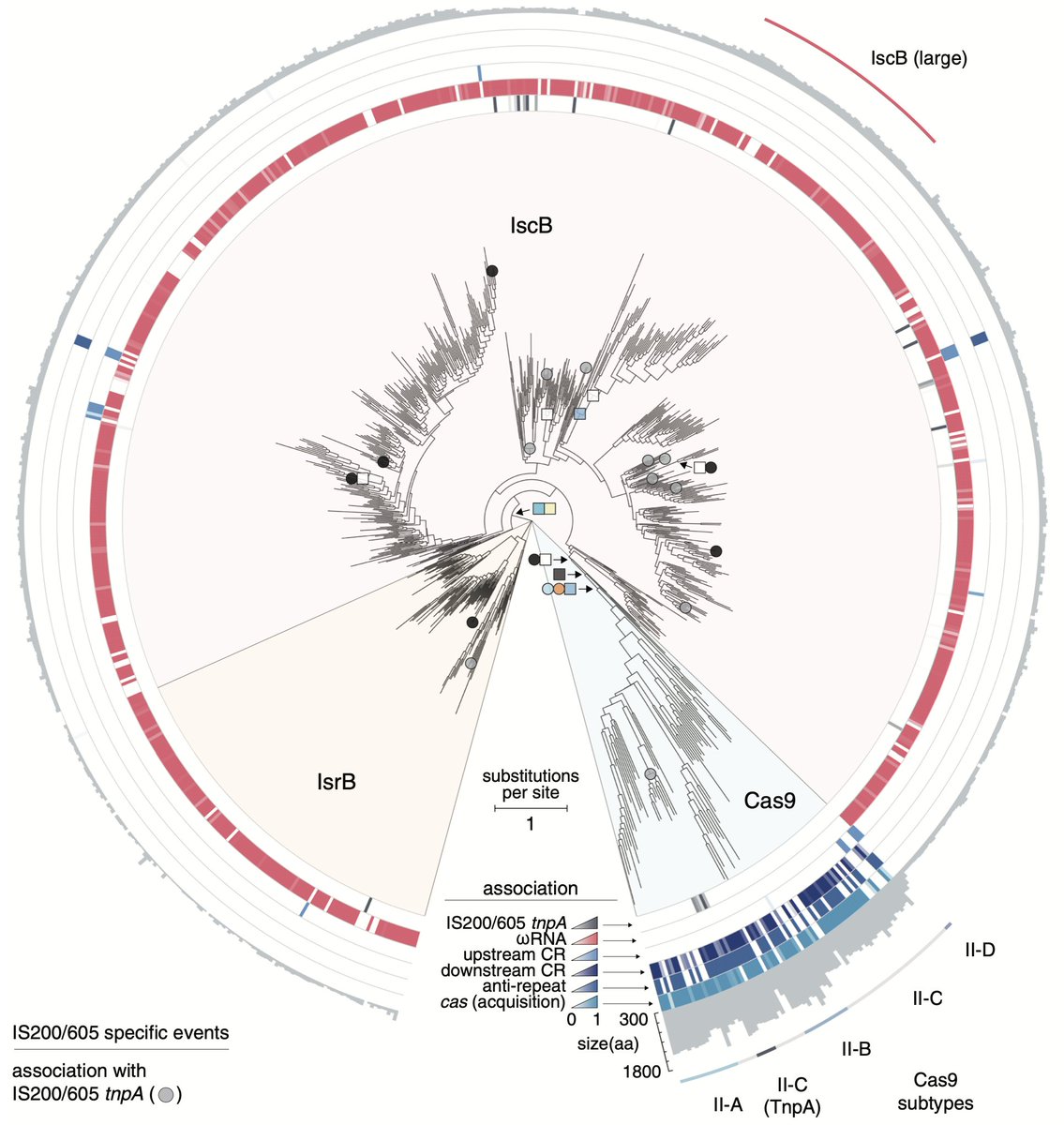
Since the discovery of CRISPR-Cas systems, people have wondered if a similar type of system exists in eukaryotes. Today, we report in @Nature the characterization of Fanzor, a eukaryotic RNA-guided system that can be reprogrammed for human genome editing. nature.com/articles/s4158…
1/x In exploring the evolution of Cas9, we identified Fanzor (Fz) as a putative RNA-guided nuclease while studying IscB, IsrB, and TnpB–collectively called OMEGA systems–in collaboration with Eugene Koonin’s group. Here, we expand our analysis of the diversity of Fz proteins,… https://t.co/7XIcScOPlhtwitter.com/i/web/status/1…
2/x Fz1 and Fz2 share similar domain architecture and catalytic residues with the OMEGA effector TnpB and the CRISPR effector Cas12, and our analysis suggests TnpB evolved into both prokaryotic Cas12 and eukaryotic Fz.
3/x Based on this, we predicted Fz is also an RNA-guided DNA endonuclease. To test this, we first performed RNA pull-downs with Fz1 and Fz2 and found these proteins bind to the non-coding RNA found in Fz loci, confirming this region encodes an ωRNA.
4/x We next experimentally confirmed that Fz1 and Fz2 perform ωRNA-guided DNA cleavage in a TAM-dependent manner, and obtained four active Fz orthologs (from fungus, algae, amoeba and hard clam).
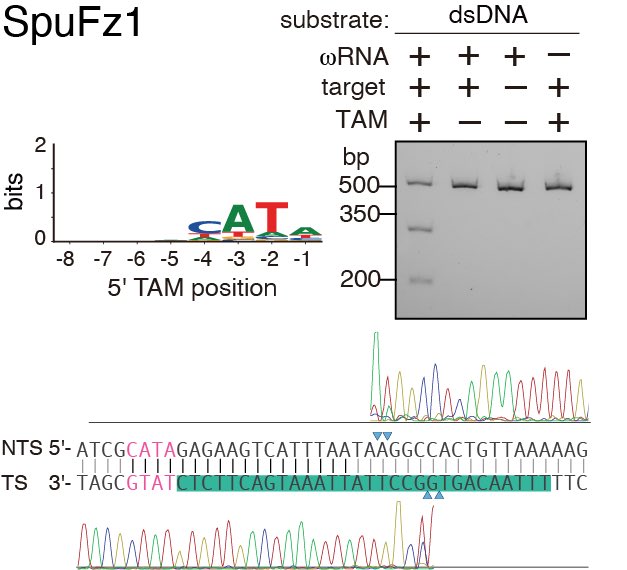
5/x We then showed that Fz1 and Fz2 can be reprogrammed to target the human genome in cells.
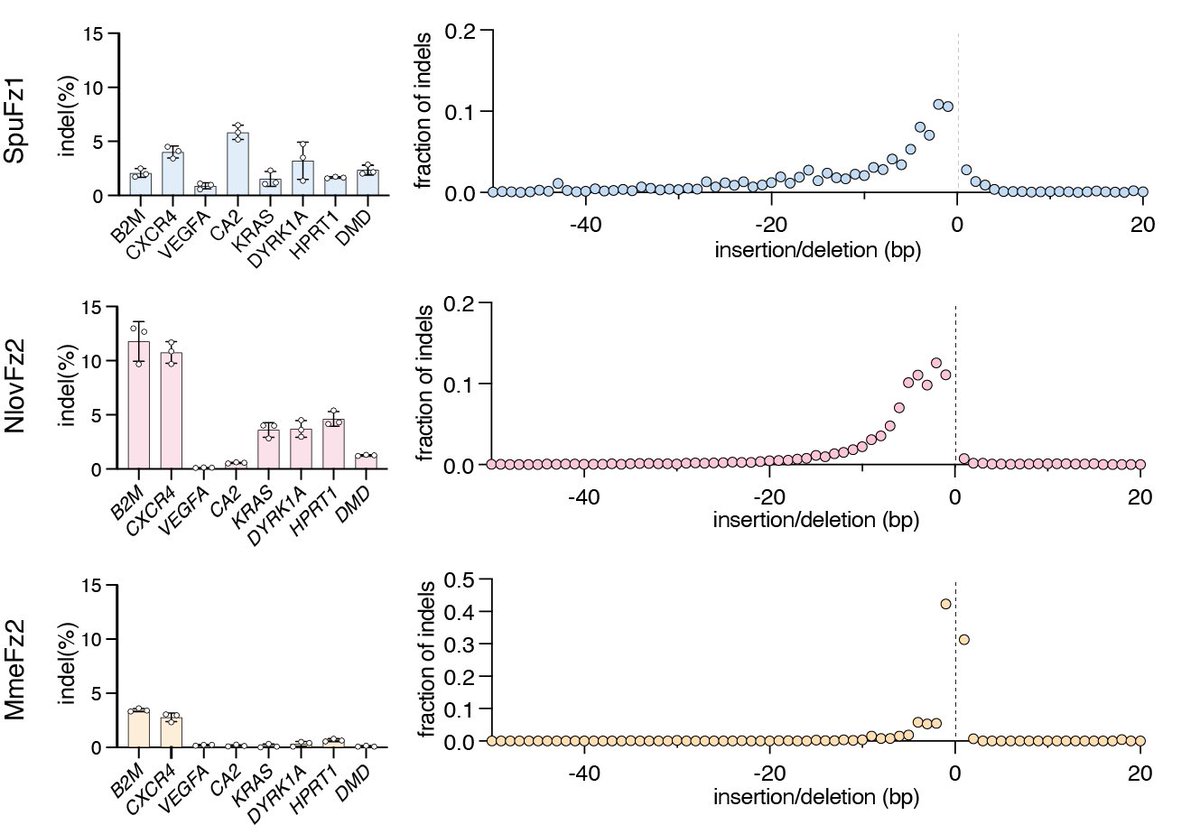
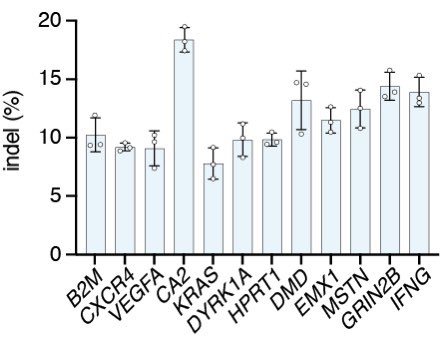
6/x To boost in vivo editing, we focused on Fz1 from the fungus Spizellomyces punctatus (SpuFz1), and optimized both the ωRNA and protein component, achieving a nearly 10-fold increase in activity (max. 18.4% indel formation) on the human genome.
7/x Finally, to gain insight into the mechanism of Fz and guide future development, we used cryo-EM to resolve the structure of SpuFz1 in complex with ωRNA and target DNA at 2.7 Å.
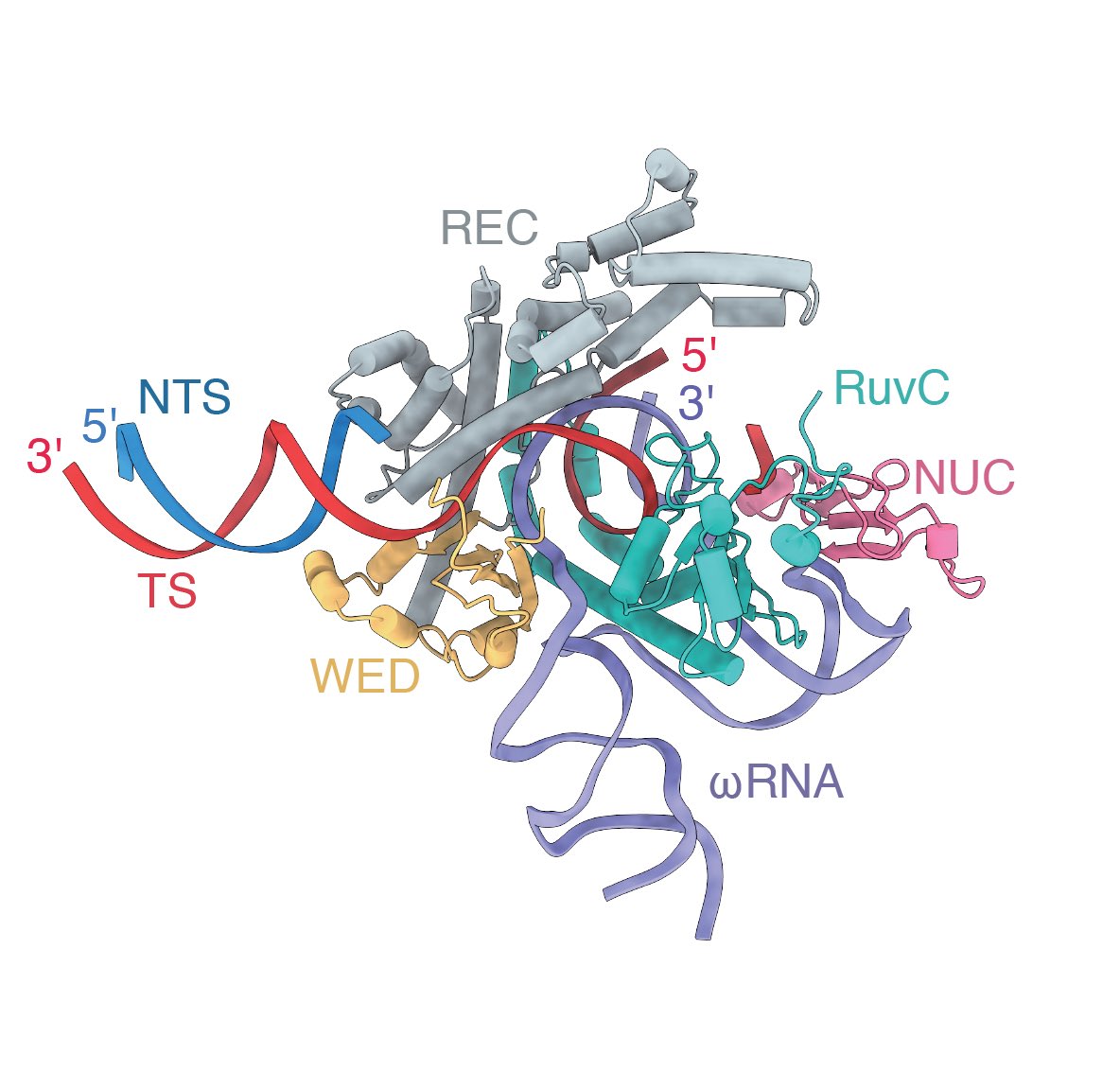
8/x Fz shares structural similarities with TnpB and Cas12, but the interaction between the ωRNA and the catalytic domains of Fz is notably more extensive, suggesting that the ωRNA might play a role in the catalytic reactions involving Fz.
9/x This work was led by postdocs Makoto Saito and Peiyu Xu in collaboration with @GuilhemFaure , S. Maguire, @soumya_kannan12, @altaetran, S. Vo & A. Desimone. Congratulations on a beautiful and comprehensive study!
• • •
Missing some Tweet in this thread? You can try to
force a refresh

Delivery of therapeutic molecules is a major bottleneck for treating a wide range of diseases. Today we describe a new modality for delivering proteins based on an engineered contractile injection system @naturenature.com/articles/s4158…
1/ Inspired by the machinery used by endosymbiotic bacteria to deliver protein payloads to their host animals’ cells, we sought to engineer these systems, called contractile injection systems (CISs), for delivery to human cells.
2/ We focused on the Photorhabdus virulence cassette (PVC), a type of CIS that is secreted by Photorhabdus and known to infect insect and mouse cells. We reconstituted PVCs in E. coli and confirmed they could attach to insect cells, their native target.
CRISPR technologies are powerful gene editing tools because they are programmable. We are excited to describe 3 new programmable systems, IscB, IsrB, and TnpB, some of the most abundant genes on the planet, with potential for gene editing. @ScienceMagazinescience.org/doi/10.1126/sc…
1/ We were exploring Cas9 diversity when we found IscB, a transposon-encoded protein that shares nuclease domains with Cas9. However, unlike Cas9, no RNA or CRISPR components are known to interact with it, making its function a mystery.
2/ Using both computational and experimental approaches, we found IscB associates with a new, diverse class of large structured non-coding RNAs, termed omegaRNAs.
1/ Delivery of nucleic acid therapies to cells remains a bottleneck for gene therapy. We wanted to develop a modular delivery system that would be safe and cell-type type specific, avoiding the immunogenicity of common viral vectors.
2/ Given cool findings by Vivian Budnik/Travis Thomson and @JasonSynaptic showing the retrotransposon-derived protein ARC forms capsids and transfers mRNA between cells, we collaborated with Koonin lab to identify other retroelement-derived proteins that might form capsids.
We are excited to share STOPCovid, an inexpensive, one-step, & sensitive #COVID-19 detection protocol developed with @omarabudayyeh & @jgooten. This revamped assay was streamlined with the future goal of developing an in-home test for COVID-19. zlab.bio/s/COVID-19-det… 1/X
#STOPCovid requires no sample extraction, can be performed using a single mastermix, and uses a paper strip to display results. #STOPCovid can detect down to 100 copies of SARS-Cov-2 RNA from patient samples. 2/X
Enabling testing at home and in low-resource settings requires that we can’t be reliant on complex instrumentation. #STOPCovid can be used with a sous-vide cooker (<$40). 3/X