Is the Catholic faith the true faith?
part 3 (see my pinned thread for parts 1 and 2)
part 3 (see my pinned thread for parts 1 and 2)

We established in the last 2 parts that:
1) God exists
2) God became man to save us from our sins
3) It would be most fitting if he established a Church
In this thread we will establish that this is the Catholic Church
1) God exists
2) God became man to save us from our sins
3) It would be most fitting if he established a Church
In this thread we will establish that this is the Catholic Church
There are countless evidences of the Catholic Church, but I will advance 4 lines of evidence:
1) The authority of the bishop of Rome
2) The constancy of doctrine
3) The fulfillment of the mission of the Christ
4) Miracles
1) The authority of the bishop of Rome
2) The constancy of doctrine
3) The fulfillment of the mission of the Christ
4) Miracles
One of the primary claims that makes Catholicism unique among other Christian denominations is our claim in the preeminent authority of the bishop of Rome. This doctrine is founded on 2 claims:
1) Jesus gave preeminent authority to St. Peter
2) Peter passed this authority to Rome
1) Jesus gave preeminent authority to St. Peter
2) Peter passed this authority to Rome

We see Jesus give preeminent authority to St. Peter when he gives him the keys in Matthew 16. These keys must be understood contextually. One of the key points in the ministry of Jesus is the reestablishment of the kingdom of David.

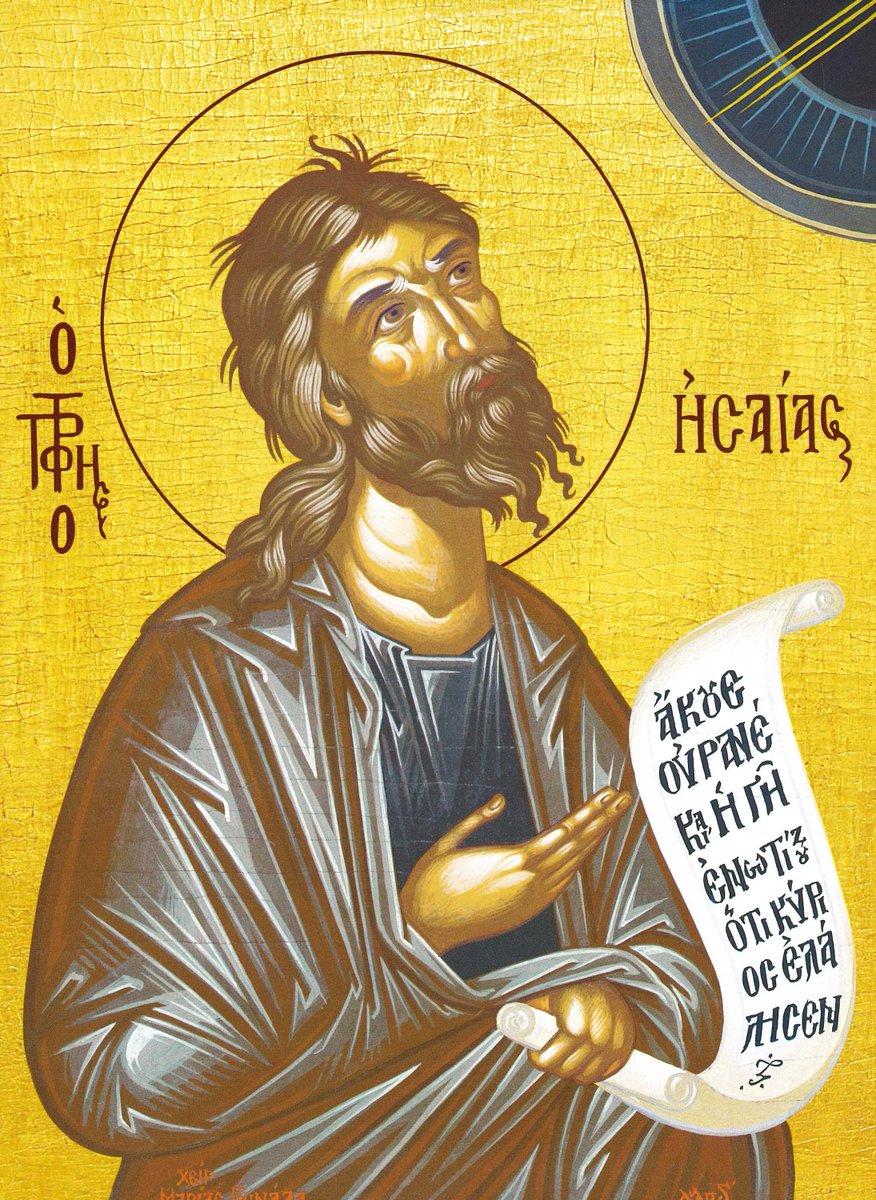
In the kingdom of David, there was a prime minister, whose authority (as recorded in Isaiah 22) was to open and shut with the key of David. This was only an earthly authority. However, Peter is given the keys to heaven, with authority on heaven and earth.

From the earliest days of the Church, it was recorded that Peter died in Rome, and that his authority was passed on in Rome. This is recorded in both Pope St. Clement (96 AD) and St. Irenaeus (180 AD).


Some will say that they accept that Rome should have a higher authority than other bishops, but not as high as it has become. However, only one Church has a bishop of Rome to begin with.
Now that we have established the authority of Rome, has it always taught the same faith?
Now that we have established the authority of Rome, has it always taught the same faith?
It would be too long to detail the countless examples, but all the essential doctrines, such as baptismal regeneration, the real presense of Christ in the eucharist, the authority of Rome, and many other doctrines have been taught consistently over 2 millenia.
These beliefs are well documented in the Church Fathers, the medieval scholastics, and modern theologians. Every Catholic doctrine is well attested to in the early centuries of the Church. The Church Fathers have been heavily translated in English and are free online to read.

Some will object that there has been development. However, this is a good thing. The Church teaches that theology is a science. While the fullness of the faith was revealed by the first century, many great theologians have since come to help us better understand it.

Thus, Catholic doctrine is not a random amalgamation of doctrines, but a well ordered synthesis. All the seemingly arbitrary doctrine of scripture and the Church Fathers were shown by the scholastics to fit together and make perfect sense.

They even showed the consistency of the faith with what could be known by reason. Thus, the Church does not oppose reason, but elevates it by giving us truths that are beyond even the grasp of our reason, as well as correcting suttle errors in our reasoning.
Now what was the purpose of the mission of Christ in the first place? It was to reconcile mankind with God and neighbor. Thus, we should see these actually fulfilled in history. We can see this in the witness of the Church as a whole and the witness of the many saints.
The Church has a whole has been foundational in many areas. It singlehandedly invented the very concepts hospitals and universities, as well as international law, modern science, and many other areas. It also continues to be the largest charity today. Tom Wood’s book is very good

Christ also told the Church to bring the gospel to the whole world. The Catholic Church has done more than any other denomination to bring Christianity to every corner of the earth.

While some allege that this is due to colonialism, missionaries frequently fought against colonial governments to defend the rights of the natives. For example, St. Junipero Serra walked from California to Mexico City to complain to the governor about colonial abuses.

The Church has thousands of canonized saints. These saints show the example of what it means to be transformed by divine grace and made virtuous. There are saints of every walk of life: kings, peasants, missionaries, martyrs, monks, doctors, and everything in between.

Finally, there is the evidence of continuing miracles. For every canonized saint, 2 verified miracles are necessary, Skeptics can even show up to try and debunk the miracles. This means there are thousands of well documented miracles by the saints.
While other Christians have miracles too, none of these miracles are contrary to the Catholic faith. There is a miracle though that uniquely proves Catholicism though: Our Lady of Fatima.

3 children claimed that on October 13, 1917, the Virgin Mary would provide a sign in Fatima, Portugal. Thousands of skeptics showed up to debunk the children. These skeptics reported seeing the sun move in the sky, and the event was well documented even in anti-Catholic media.

The children reported that Mary had revealed 3 secrets to them. One of these was that the Pope consecrated Russia to the Immaculate Heart of Mary. Thus, it requires 2 uniquely Catholic doctrines: the papacy and the immaculate heart of Mary.

Now that we have established the truth of the Catholic faith, what should you do? We’ll deal with this in part 4.
• • •
Missing some Tweet in this thread? You can try to
force a refresh