The forgotten leper warriors of the crusades.
Knights who suffered from leprosy joined the Order of Saint Lazarus, which was established to take care of lepers, and continue to fight in battles.
These leper warriors were known as the Living Dead and were very intimidating!🧵
Knights who suffered from leprosy joined the Order of Saint Lazarus, which was established to take care of lepers, and continue to fight in battles.
These leper warriors were known as the Living Dead and were very intimidating!🧵

Yes, the leper knights were a real thing!
To understand what led to this we need to understand the attitude towards leprosy among medieval Christians.
It was a terrible disease, but it was also seen as a "holy disease" and special religious meanings were attributed to it!
To understand what led to this we need to understand the attitude towards leprosy among medieval Christians.
It was a terrible disease, but it was also seen as a "holy disease" and special religious meanings were attributed to it!

Leprosy is a disease in which bacterial infection causes skin lesions, nerve damage and gradual disfigurement, progressively triggering a deterioration of control over one's limbs, causing gradual decay of the body.
It was an ancient disease and endemic in medieval Europe.
It was an ancient disease and endemic in medieval Europe.

Because of fear of getting infected, lepers were often treated as outcasts in their societies.
But Christianity brought a change to these attitudes because Jesus Christ healed a leper, extending his grace to outcasts.
Leprosy was incurable at the time and this was a miracle.
But Christianity brought a change to these attitudes because Jesus Christ healed a leper, extending his grace to outcasts.
Leprosy was incurable at the time and this was a miracle.

It became seen as an example of Christian love to treat lepers with kindness.
Charity towards lepers was greatly respected!
Furthermore it was believed by some that lepers were already marked by God for salvation and showing them charity would win favor with God.
Charity towards lepers was greatly respected!
Furthermore it was believed by some that lepers were already marked by God for salvation and showing them charity would win favor with God.


This is how it began to be seen as the "holy disease".
It was a disease that humbled even the proudest and wealthiest, bringing them closer to God.
It was also seen as an earthly reminder that, in putting on human flesh, Christ had become the most despised and rejected of men.
It was a disease that humbled even the proudest and wealthiest, bringing them closer to God.
It was also seen as an earthly reminder that, in putting on human flesh, Christ had become the most despised and rejected of men.

Leper hospitals were created where lepers were isolated from mainstream society.
Despite the association of leprosy with holiness, most people still didn't want to associate with them.
In these hospitals they could associate with each other and govern their own affairs.
Despite the association of leprosy with holiness, most people still didn't want to associate with them.
In these hospitals they could associate with each other and govern their own affairs.

Leper hospitals received charitable donations from wealthy elites.
One of such hospitals was established in early 12th century in Jerusalem following the crusader conquest of the city.
It was out of this hospital that the Order of Saint Lazarus of Jerusalem emerged.
One of such hospitals was established in early 12th century in Jerusalem following the crusader conquest of the city.
It was out of this hospital that the Order of Saint Lazarus of Jerusalem emerged.

Saint Lazarus was the patron saint of lepers.
He appears in the Bible as a poor beggar "covered with soars" which was believed to be a reference to leprosy.
The Order of Saint Lazarus adopted a green cross on a white field as their symbol!
He appears in the Bible as a poor beggar "covered with soars" which was believed to be a reference to leprosy.
The Order of Saint Lazarus adopted a green cross on a white field as their symbol!

The Order of Saint Lazarus received a lot of donations from the rulers and elites of crusader kingdoms.
The order started as a purely hospitaller order, taking care of lepers. It was a monastic order following Augustine rule.
But it would evolve into a military order as well!
The order started as a purely hospitaller order, taking care of lepers. It was a monastic order following Augustine rule.
But it would evolve into a military order as well!

The crusader states were in constant need of manpower and eventually the Knights of Saint Lazarus participated in battles as well.
The order accepted knights who suffered with leprosy and gave them a chance to continue to fight in crusades!
The order accepted knights who suffered with leprosy and gave them a chance to continue to fight in crusades!

Other military orders such as the Templars forced out knights who suffered from leprosy.
Such knights were then able to join the Order of Saint Lazarus and continue fighting.
It eventually became obligatory for a leprous Templar to enter the Order of Saint Lazarus!
Such knights were then able to join the Order of Saint Lazarus and continue fighting.
It eventually became obligatory for a leprous Templar to enter the Order of Saint Lazarus!

Secular leprous knights also joined.
Livre au Roi, the legal code of the Kingdom of Jerusalem drawn up around 1198-1205, stated that a knight with leprosy should join the Order of Saint Lazarus "where it is established that people with such an illness should be."
Livre au Roi, the legal code of the Kingdom of Jerusalem drawn up around 1198-1205, stated that a knight with leprosy should join the Order of Saint Lazarus "where it is established that people with such an illness should be."
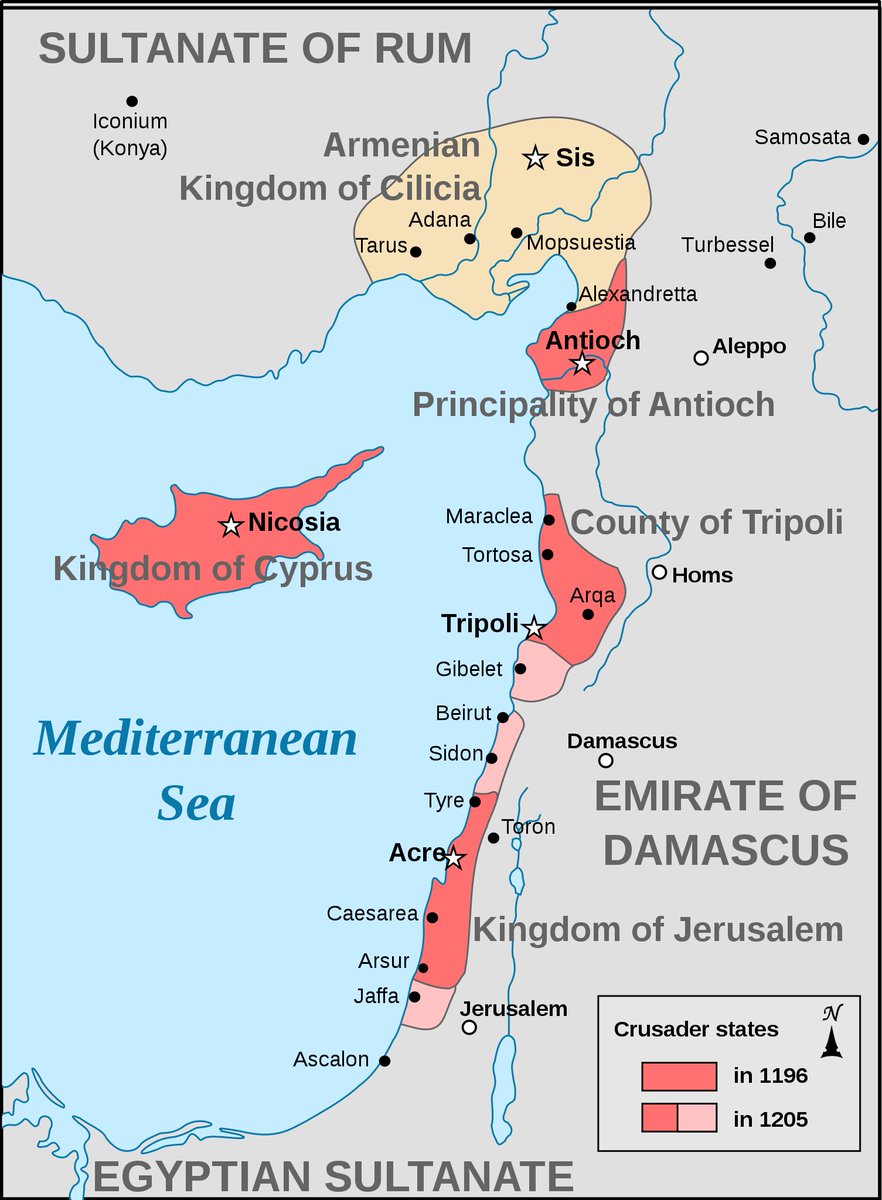
In 1255 Pope Alexander IV spoke very highly about the Order of Saint Lazarus as a "convent of nobles, of active knights and others both healthy and leprous, for the purpose of driving out the enemies of the Christian name."
The prestige of the order grew!
The prestige of the order grew!

The idea of leper knights might seem strange but it fit perfectly into the ideology of the crusades and also its practical needs.
There was already the example of the 16-year-old leper King Baldwin IV leading crusaders to victory at Montgisard in 1177.
https://t.co/KgPFaeDgOr
There was already the example of the 16-year-old leper King Baldwin IV leading crusaders to victory at Montgisard in 1177.
https://t.co/KgPFaeDgOr
https://twitter.com/LandsknechtPike/status/1596164712198475776
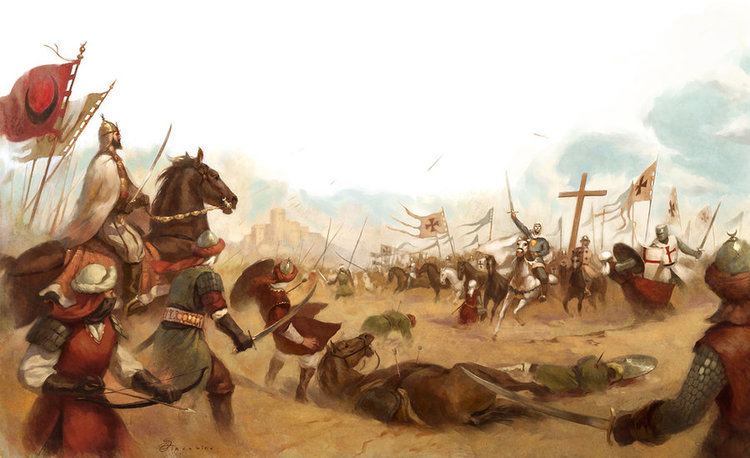
Leprosy has a slow gestation period and can be diagnosed as much as seven years before serious debility begins to set in.
Many could still fight.
Baldwin IV was a good horseman who learned to ride horse despite his handicap. He was courageous and personally fought in battle.
Many could still fight.
Baldwin IV was a good horseman who learned to ride horse despite his handicap. He was courageous and personally fought in battle.

Due to shortage of manpower in the crusader states, leprous knights who could continue to perform their basic fighting function were useful in battlefield.
But there was also a religious aspect to it due to the status of leprosy as a "holy disease".
But there was also a religious aspect to it due to the status of leprosy as a "holy disease".


Leper crusader knights were seen God's chosen sufferers heading into battle to achieve martyrdom.
They were nicknamed the Living Dead!
They developed a reputation for fighting until death and never surrendering.
They were nicknamed the Living Dead!
They developed a reputation for fighting until death and never surrendering.

The Knights of Saint Lazarus participated at the Battle of La Forbie in 1244 where they fought until death.
After the battle which where the crusader army was defeated it was reported that "all the leper knights of the house of Saint Lazarus were killed."
After the battle which where the crusader army was defeated it was reported that "all the leper knights of the house of Saint Lazarus were killed."

The Knights of Saint Lazarus also participated at the Battle of Mansurah in 1250.
The leper knights were seen as "suicidally reckless"!
In 1253 Pope Innocent IV remarked "all the leper knights of the said house have been miserably killed by the enemies of the faith."
The leper knights were seen as "suicidally reckless"!
In 1253 Pope Innocent IV remarked "all the leper knights of the said house have been miserably killed by the enemies of the faith."

It appears that the leper knights were fighting as an independent force on the battlefield and distanced themselves from the main body of troops so that they wouldn't infect them.
Chronicler Jean de Joinville mentioned a raiding expedition of leper knights near Ramleh in 1252.
Chronicler Jean de Joinville mentioned a raiding expedition of leper knights near Ramleh in 1252.

The last battle of the leper knights was the Siege of Acre in 1291.
The Order of Saint Lazarus was able to bring together 25 knights for one final battle.
They fought for the crusader states until the end and all of them perished that day.
https://t.co/gzGWw7l7rg
The Order of Saint Lazarus was able to bring together 25 knights for one final battle.
They fought for the crusader states until the end and all of them perished that day.
https://t.co/gzGWw7l7rg
https://twitter.com/LandsknechtPike/status/1527204150466985991


With the crusader states in the Holy Land gone following the loss of Acre, the Order of Saint Lazarus was reduced to Europe where it had established an international network.
The order abandoned all of its military activities.
The days of leper crusader warriors were over...
The order abandoned all of its military activities.
The days of leper crusader warriors were over...

But stories and legends about the leper knights persisted.
In 1323 a bishop reminded how "Brother knights and others of the aforesaid hospital have many times been horribly killed and their house in Jerusalem and in many other places in the Holy Land devastated."
In 1323 a bishop reminded how "Brother knights and others of the aforesaid hospital have many times been horribly killed and their house in Jerusalem and in many other places in the Holy Land devastated."

My main source for the activity of the Order of Saint Lazarus in the Holy Land is David Marcombe, Leper Knights: The Order of St Lazarus of Jerusalem in England (Woodbridge: The Boydell Press, 2003), page 6-15. twitter.com/i/web/status/1…
It's also interesting that King Philip IV of France, who famously destroyed the Templars in 1307, gave the Order of Saint Lazarus personal protection and allowed it to move its headquarters to Boigny near Orléans.
But it was a smaller order and he didn't perceive it as a threat.
But it was a smaller order and he didn't perceive it as a threat.


Since some were asking me, the picture I used of leper knights with torches is from the TV series Knightfall.
I have not watched the series but it looks like the leper knights of Saint Lazarus appear in this episode.
https://t.co/NOTWhV7vBZimdb.com/title/tt898826…
twitter.com/i/web/status/1…
I have not watched the series but it looks like the leper knights of Saint Lazarus appear in this episode.
https://t.co/NOTWhV7vBZimdb.com/title/tt898826…
twitter.com/i/web/status/1…
• • •
Missing some Tweet in this thread? You can try to
force a refresh