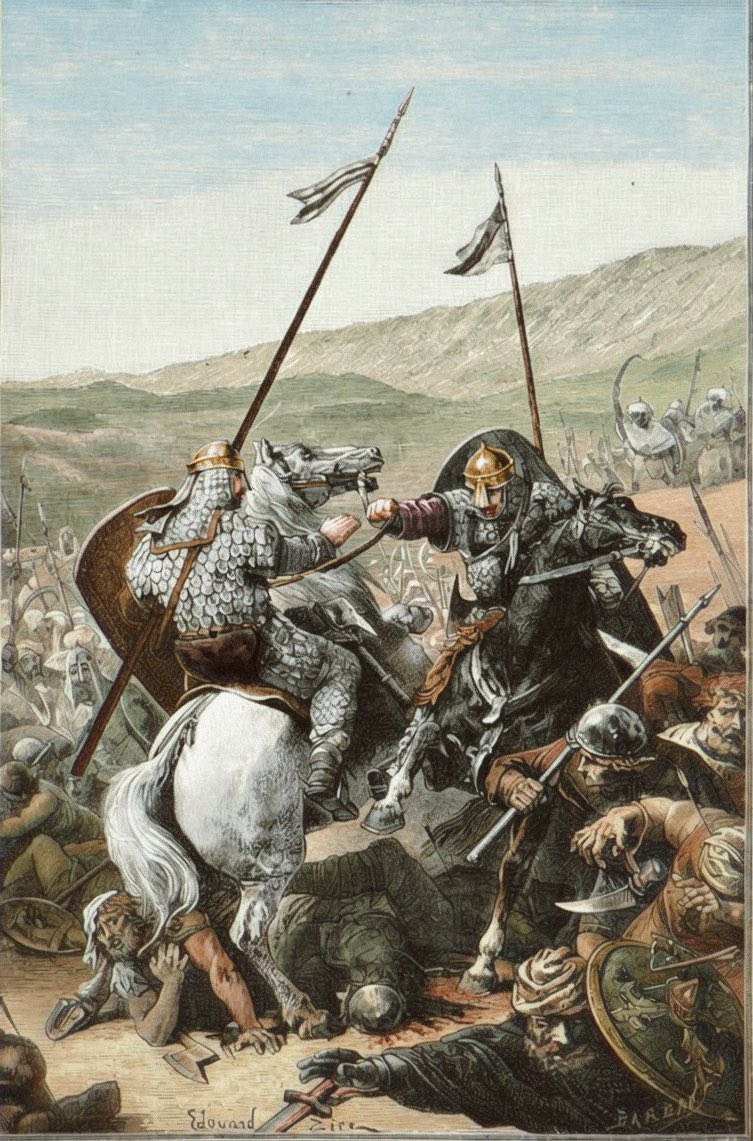
Today in AD 1209 the army of the Albigensian Crusade massacred the inhabitants of the town of Beziers.
It was a day of butchery and bloodshed.
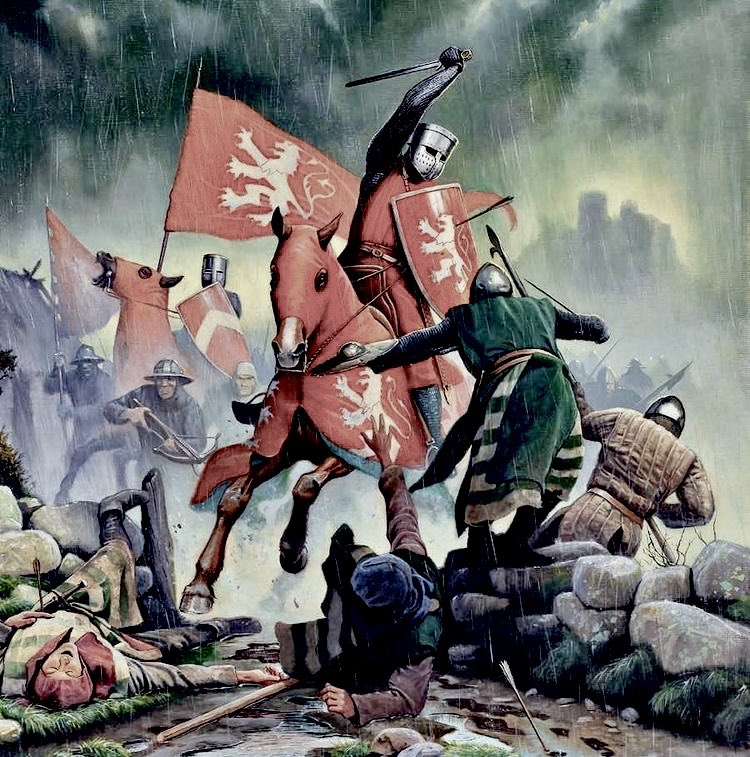
On the 21st of July the army, led by the Papal legate, the Abbot of Citeaux, Arnaud Amalric, reached the town of Beziers.
Not many townsfolk has decided to leave and the Bishop of Beziers attempted to negotiate. He was given a list of 222 of Cathars & Waldensians to hand over.
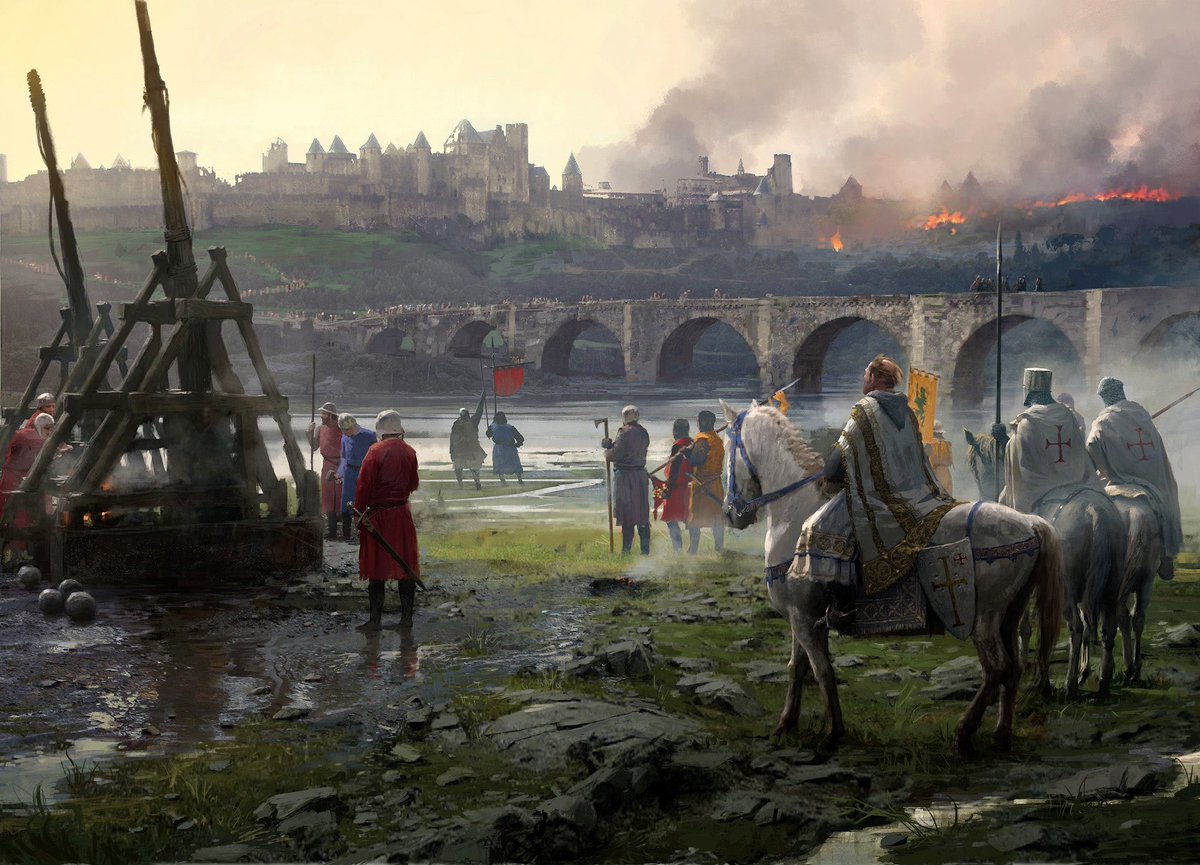
However, these people were too influential in the town and it was not possible to simply hand them over to the besieging crusaders.
At this point the Bishop asked the Catholic townsfolk to save themselves and leave but they refused.
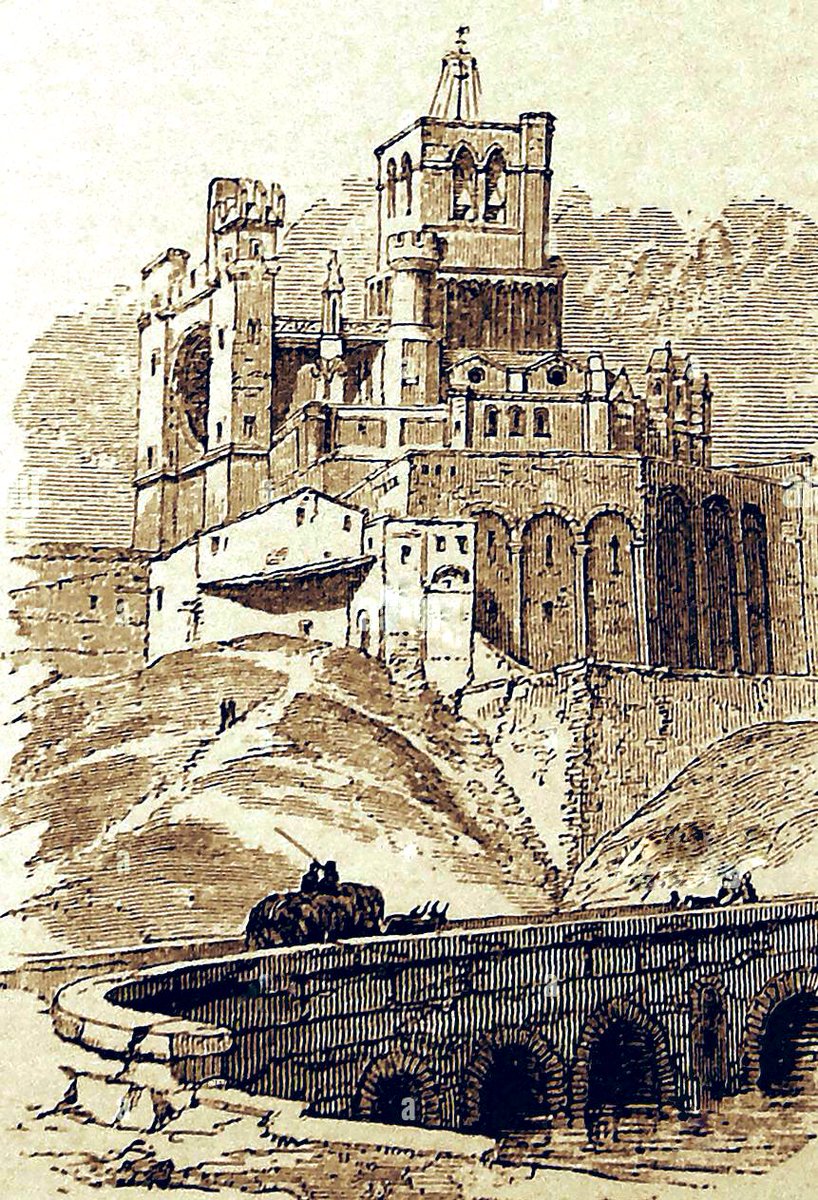
On the morning on the 22nd, a sortie came out from the town which was quickly attacked by mercenaries among the crusaders, driving it back inside the town, along with some of the mercenaries who fought for control of the gate.
When the main army saw this they decided to attack.
These mercenaries, called routiers, rampaged through the streets, killing indiscriminately and plundering as they went. The crusading knights did nothing to stop them except to intervene to appropriate the plunder. The angry routiers decided to burn the town in response.
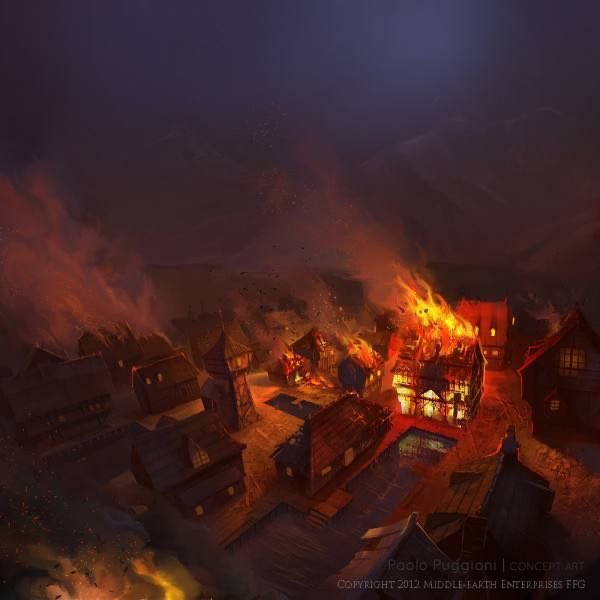
In Caesarius of Heisterbach’s account of the sack, he recalls a soldier asking the abbot Amalric:
‘Sir, what shall we do, for we cannot distinguish between the faithful and the heretics.’
To which he infamously replied;
‘Kill them all for the Lord knoweth them that are His.’
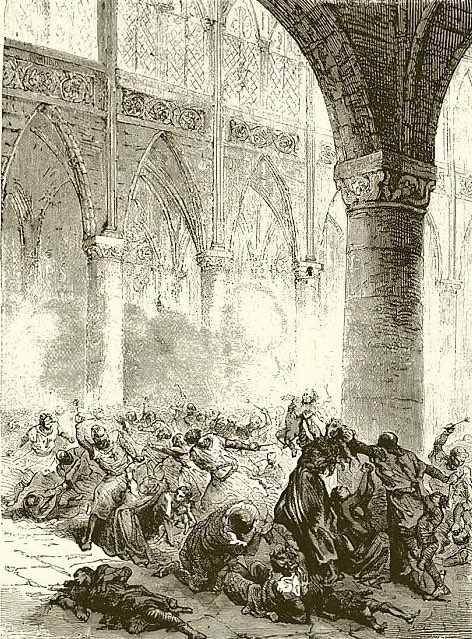
And so, according the Amalric’s own likely inflated account, 20,000 townsfolk are said to have been massacred.
In the aftermath of this brutality, many nearby towns and castles surrendered quickly to the crusade in hopes of avoiding the fate of Beziers.
The Albigensian Crusade lasted ten years and is thought to have caused the deaths of between 200,000 to a million people.
• • •
Missing some Tweet in this thread? You can try to
force a refresh

In the 8th century the fate of the world hung in the balance when a series of defeats tested the might of the Umayyad Caliphate.
From Spain to China the onslaught of Islamic Jihad was halted and pushed back!
[Thread]🧵
• Jihad •
After the death of Muhammad, his followers invaded the Roman Empire and Persia.
Both empires suffered devastating defeats at the battles of Yarmouk and al-Qadisiyyah, respectively.
The Muslims captured the Levant from the Romans and Iraq from the Persians before effectively destroying the remnants of the Persian army at Nahavand in 642.
While the Persian state suffered total collapse, the Roman emperor Heraclius pulled back his forces back behind the Taurus mountains to fight another day.
The centuries long rivalry between Rome and Persia came to an end with the culmination of one of the most spectacular military campaigns ever fought.
When Heraclius triumphed at Nineveh!
[Thread]🧵
By the start of the 7th century the empire had been struck by plague in 542, 558, 573, 586, and 599 and the emperor Maurice was tirelessly campaigning against the Slavs and Avars in the Balkans, having won respite against the Persians by intervening to aid the Shah Khusrow II when he was ousted.
In AD 602 the Roman field army in the Balkans rebelled and marched on Constantinople, killed Maurice and installed Phocas as emperor.
Khusrow declared war, executed Roman emissaries, and invaded.
The war was going poorly when Heraclius deposed Phocas and when Khusrow refused his offer to step down and allow Khusrow to nominate his own Emperor, it was clear that this would be a war fought to the very end.
It has been suggested that Khusrow’s motivation for pressing on with the war was to destroy the empire or weaken it to the point of irrelevance as the Persians did not want a Christian Empire claiming to be the protector of all Christians, even those in Persia, especially at a time when they felt increasingly threatened by their Turkic neighbours.
This painting is famous the world over, but did you know it depicts the Hospitaller Knight Mathew of Clermont?
When the Muslims poured over the walls of Acre in 1291 he refused to flee and fought until he ‘was covered on all sides and glistening with blood!’
[Thread]🧵
The glory of those mightiest of Christian warriors who stormed Jerusalem in AD 1099 had long since faded and the power of the Kingdom of Jerusalem was shattered long before 1291 when the Muslims gathered outside Acre, the last stronghold of Christendom in the Holy Land.
The truces were over, the Muslims were coming, and no crusade was on its way this time.
The Mamluk Sultan called up troops from Syria and Egypt. The Muslims arrived on the 6th of April and began undermining the walls.
The Hospitallers and Templars sent troops to defend Acre led by Mathew de Clermont and Geoffroi de Vendac. The Hospitallers led by Mathew and their grandmaster Jean de Villiers were responsible for defending the important Gate of St. Anthony which they guarded in alternating shifts with the English knights.
This is a thread on the arms and armour of the Roman Army from the founding of Rome 753 BC to the fall of Constantinople in AD 1453
Over 2000 year of military innovation, indomitable spirit, and glory!
[Thread]🧵
• The Earliest Times •
The traditional date for the founding of Rome is 753 BC. At this point Rome is centuries away from being thru powerful city we know. Warfare for the next few centuries seems to be small-scale skirmishing between warrior bands. A hint of this is given in Livy when he describes the Fabii gens asking the senate to let them fight the city of Veii by themselves with 306 men.
This is a reconstruction of the earliest Roman warriors based on burial finds. However, it would be a mistake to assume that armour at this time was standard across all Romans.
• Hoplites •
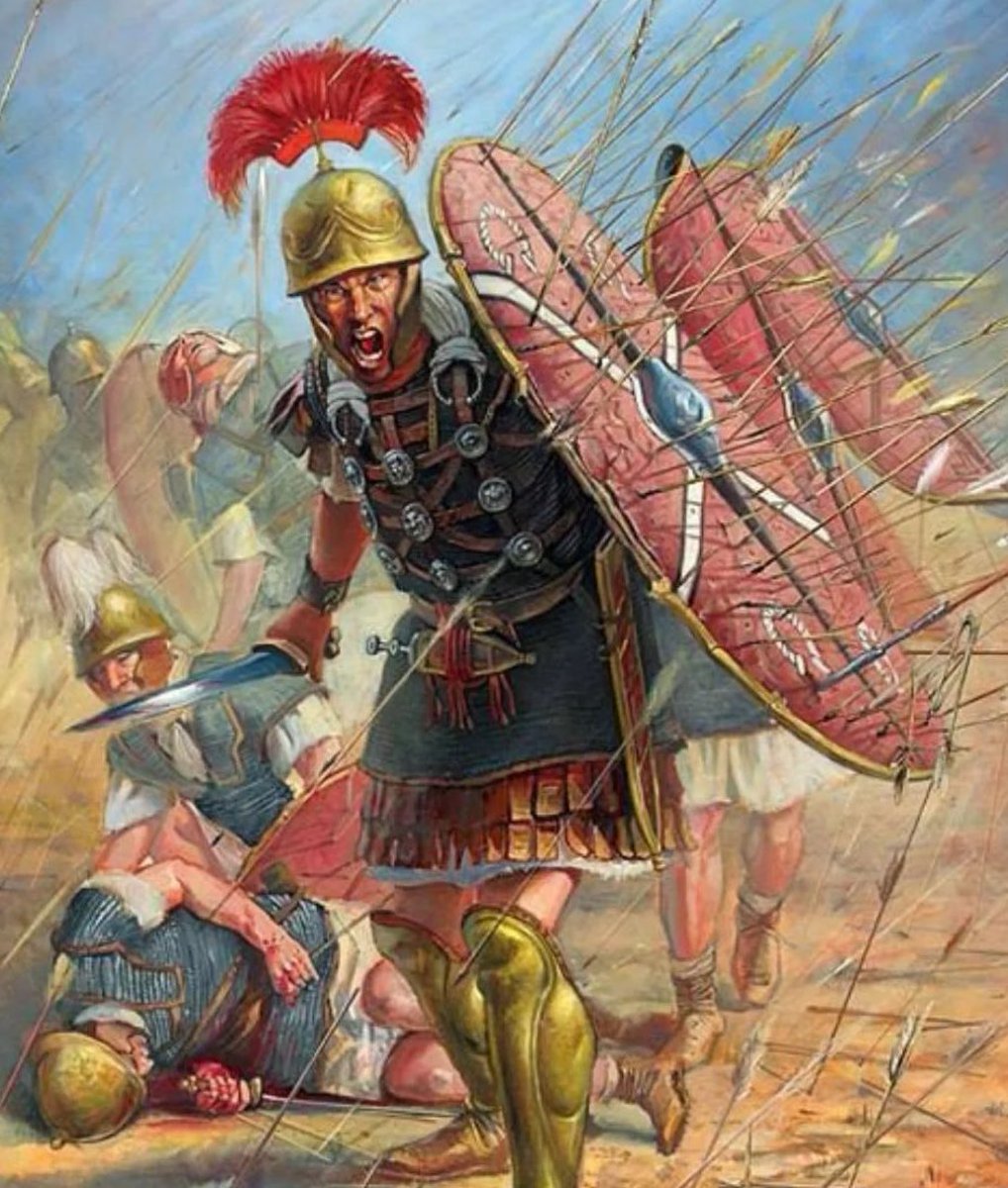
Eventually the Romans adopted hoplite armour by at the 6th century BC.
Until the adoption of the gladius in later centuries, Romans fought using Greek styled xiphos and falcata.
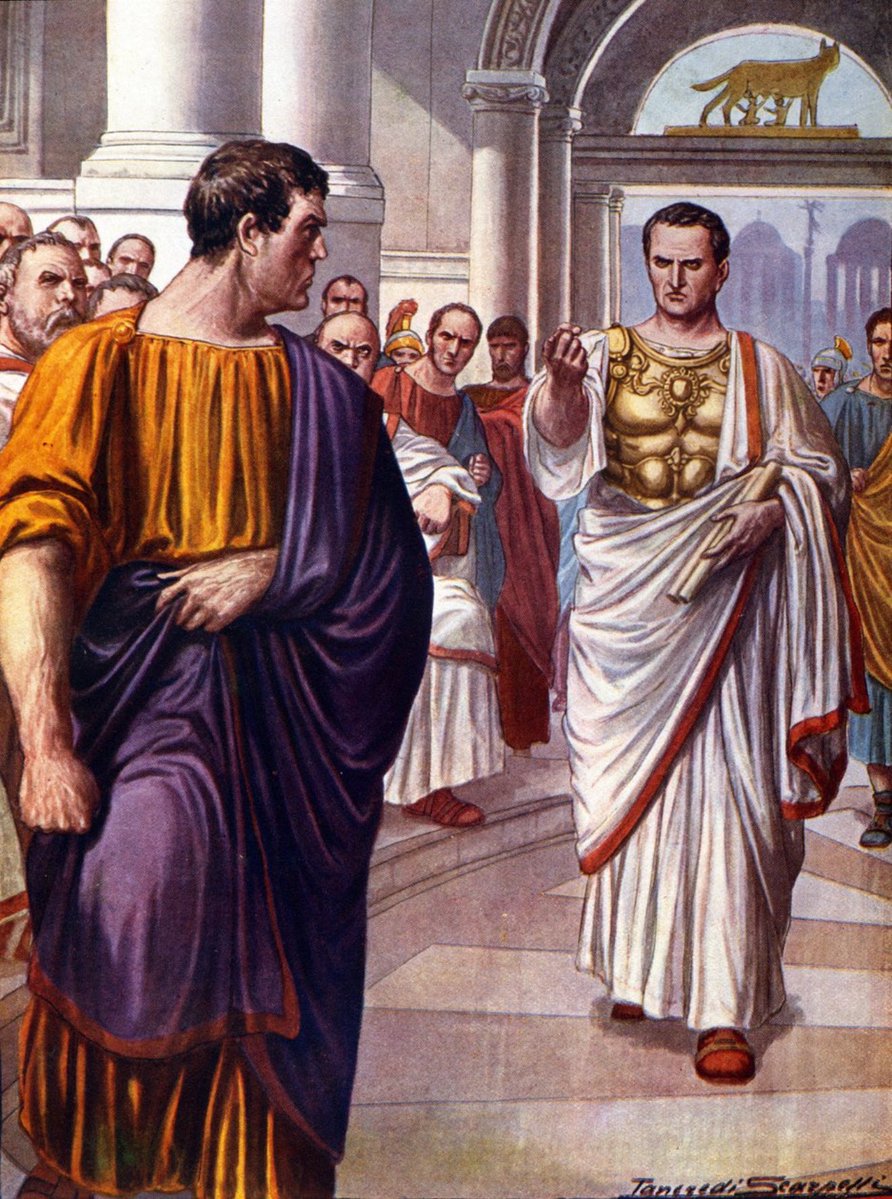
Pyrrhus of Epirus had invaded Italy and defeated the Romans in battle. Peace was offered and some Romans seemed willing to accept terms.
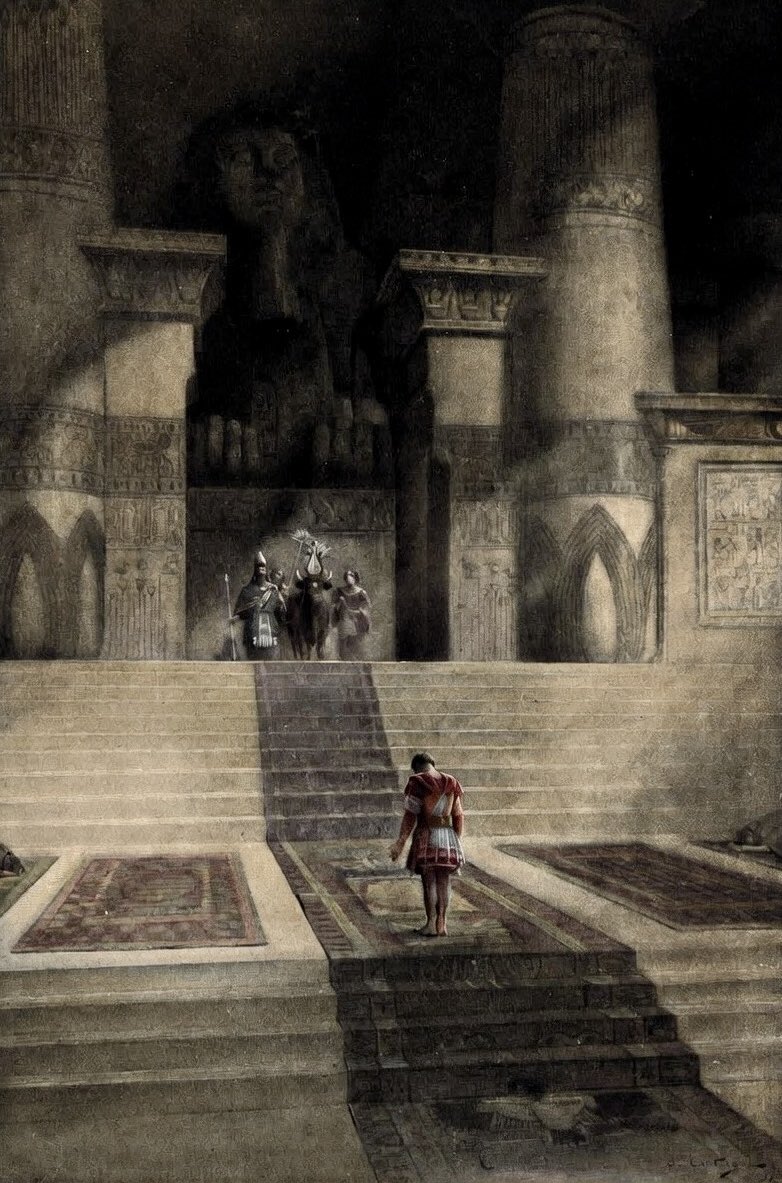
Then the blind old Appius Claudius Caecus was led into the Senate House with a warning from the past…
[Thread]🧵
Rome had emerged the dominant power on the Italian peninsula after many gruelling years of warfare which saw the Samnites defeated and alliances made with the Greek cities of Southern Italy.
But the good times created by the hard men of the 4th and 3rd centuries were at risk when Pyrrhus of Epirus, one of the mightiest warriors ever, invaded Italy at the behest of the city of Tarentum which bristled at Roman power.
Pyrrhus landed in the winder of 281 BC and crushed the Romans at Heraclea, killing and capturing thousands of Romans. Pyrrhus enjoyed the support of several other peoples of Italy including the Bruttii, Lucani, and Samnites.
Roman hegemony was in peril and Pyrrhus even reached out to the Etruscans.
FABIVS MAXIMVS was Rome’s least likely hero in her most uncertain times!
Scorned for his guerrilla warfare strategy until vindicated by the Cannae disaster when the Romans turned to him to save them.
This is the life of Fabius Maximus, the Shield of the Romans!
[Thread]🧵
The Fabii claimed descent from Hercules and it is ironic that their least warlike son was to be their greatest member.
Fabius Maximus was born in around 280 BC, the year Pyrrhus defeated the Romans at Heraclea.
As a youth he was given the moniker Ovicula or ‘the lamb’ for his mild manner, slow speech, and long deliberation before taking decisions. Plutarch wrote that some ‘esteem him insensible and stupid; and few only saw that this tardiness proceeded from stability, and discerned the greatness of his mind, and the lionlikeness of his temper.’
Fabius was made an augur in his youth and developed a careful and deliberate style of speech which did not always endear him to his contemporaries. The sources are quiet on much of his early life.
Eventually he became consul in 233 BC and won a victory against the Ligurians that was decisive enough to drive them back over the Alps. He was awarded a triumph for this.