Read on Twitter
Do you Know the 5 Types of Cash Flow and How to Use them? 

They are highly confused, often misunderstood and mostly underutilized.
Here’s what they are and how to use them:
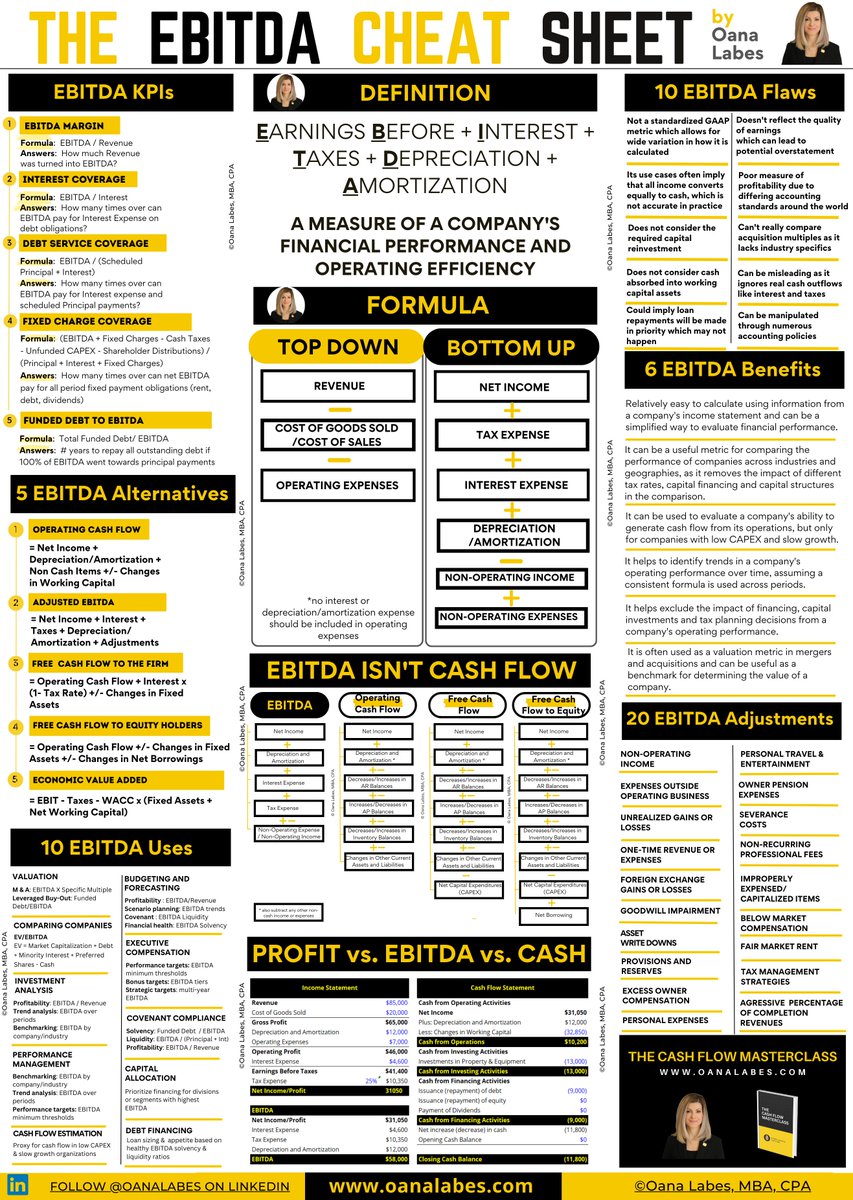
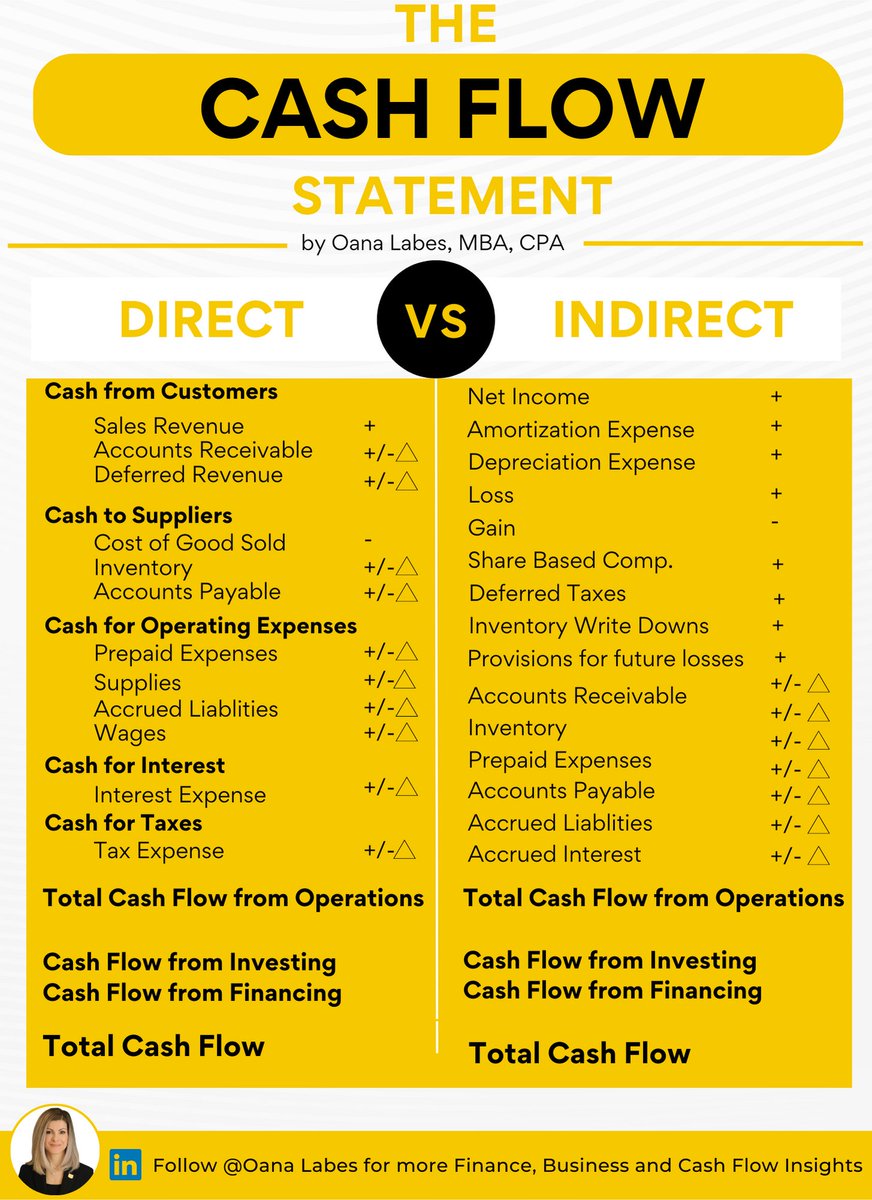
1️⃣ Operating cash flow
⚫ Represents the net cash generated by your company's core operations
Here’s what they are and how to use them:
1️⃣ Operating cash flow
⚫ Represents the net cash generated by your company's core operations
⚫ Calculated by adjusting Net Income for non-cash items & changes in net working capital assets.
⚫ Used to assess:
>> your company's financial health
>> your company's ability to meet its financial obligations
⚫ Used to assess:
>> your company's financial health
>> your company's ability to meet its financial obligations
>> your company’s ability to generate sufficient cash to fund ongoing business operations
>> trends in how the business generates cash
2️⃣ Investing cash flow
>> trends in how the business generates cash
2️⃣ Investing cash flow
⚫ Represents the net cash generated by your company's investments in long-term assets such as property, plant and equipment (PPE).
⚫ Calculated by totaling the net investments in PPE over the period (purchases less sales of PPE)
⚫ Used to assess:
⚫ Calculated by totaling the net investments in PPE over the period (purchases less sales of PPE)
⚫ Used to assess:
>> your company's investment decisions
>> your company's ability to generate returns from its investments
3️⃣ Financing cash flow
⚫ Represents the cash generated by your company's net debt and/or equity activity.
>> your company's ability to generate returns from its investments
3️⃣ Financing cash flow
⚫ Represents the cash generated by your company's net debt and/or equity activity.
⚫ Calculated by totaling net debt and equity proceeds over the period.
⚫ Used to assess:
>> your company's financing choices and risk profile
>> your company's ability to raise capital
4️⃣ Free Cash Flow to Firm (FCFF or Unlevered Cash Flow)
⚫ Used to assess:
>> your company's financing choices and risk profile
>> your company's ability to raise capital
4️⃣ Free Cash Flow to Firm (FCFF or Unlevered Cash Flow)
⚫ Represents the cash remaining in your business after accounting for cash outflows that support product sales and operations (product costs + operating expenses + working capital) and cash outflows that support the capital asset base (capital expenditures).
⚫ Calculated by adjusting Operating Cash Flow for after tax interest expense and investments in capital assets
⚫ Used to assess:
>> your company's financial strength and ability to generate sufficient cash for growth and reinvestment
⚫ Used to assess:
>> your company's financial strength and ability to generate sufficient cash for growth and reinvestment
>> your company's value based on the discounted cash flow (DCF) valuation.
5️⃣ Free Cash Flow to Equity (FCFE or Levered Cash Flow)
5️⃣ Free Cash Flow to Equity (FCFE or Levered Cash Flow)
⚫ Represents the cash remaining in your business after accounting for all business expenses, investments in working capital assets, investments in fixed assets, and also all debt obligations (principal & interest).
⚫ Calculated by adjusting Operating Cash Flow for after tax, interest expense, investments in capital assets and net debt payments.
⚫ Cash flow available to be used for investments, dividend payments, returns of capital, additional debt repayments, or acquisitions (includes new debt raises).
⚫ Used to assess:
>> your company's ability to generate cash for distributions to shareholders holders
⚫ Used to assess:
>> your company's ability to generate cash for distributions to shareholders holders
What do you think?
If you enjoyed this thread:
1. Follow me @IAmOanaLabes for more of these
2. Sign up for my free newsletter. and join 30,000 subscribers:
3. RT the tweet below to share the knowledge: https://t.co/mN8zFMoyhythe-finance-gem.beehiiv.com/subscribe
If you enjoyed this thread:
1. Follow me @IAmOanaLabes for more of these
2. Sign up for my free newsletter. and join 30,000 subscribers:
3. RT the tweet below to share the knowledge: https://t.co/mN8zFMoyhythe-finance-gem.beehiiv.com/subscribe
https://twitter.com/1612701806697627650/status/1683425867299536896
If you like this tweet, you will love my exclusive emails for my subscribers.
Join here: the-finance-gem.beehiiv.com/subscribe
Join here: the-finance-gem.beehiiv.com/subscribe
• • •
Missing some Tweet in this thread? You can try to
force a refresh