Read on Twitter
This one is for all the Nothing New, Castles Crumbling, and Mirrorball girls. For the burnt-out gifted kids, for anyone who has ever struggled with their mental health. In short, for anyone who misses who they used to be.
Buckle in: it's time to analyze This is Me Trying. A 🧵:
Buckle in: it's time to analyze This is Me Trying. A 🧵:

1) As always, we begin with the title, which will become the song's central thesis: "This is me trying." The very phrase itself feels weighed down by exhaustion. It's a tired, plaintive appeal to be understood, to be recognized for the endless invisible work of simply persisting.
2) It almost seems to be an answer to a question asked by a judgmental onlooker: "Is this it? Is this really all you can do? Are you even trying?" To which this song is a response--this IS a person trying their best, whether or not that "best" is appreciated or even acknowledged.
3) Note the passive construction of this phrase. She doesn't use direct, active voice, never insisting that "I am trying" or "I will try." Instead, she seems to stand beside herself, gesturing weakly, almost to say--"This is it. This is what you get. This is me. This is trying."
4) So who was this song written for? Who is she addressing? Who does she feel is challenging her, who is driving this need for self-justification?
While you could imagine any loved one here, I believe that the true muse of this song is actually her younger self.
Let's dive in.
While you could imagine any loved one here, I believe that the true muse of this song is actually her younger self.
Let's dive in.
5) As a note, while this song (like many on Folklore) can and should be interpreted with a fictional lens, I will be using "Taylor" and she/her to break it down for simplicity. At the end of the day, whether it was written fictionally or not, this is a song of deep introspection.
6) The internal struggle central to the song is evident in the first few lines: "I've been having a hard time adjusting, I had the shiniest wheels now they're rusting." Taylor is in a crisis of disappointment and self-doubt--unsure, unsteady, missing an old version of herself.
7) She may be having a hard time adjusting to new external circumstances, but more importantly, she is devastated by the decay she sees in herself, and in her ability to cope. She misses her old self--she misses the girl with shiny wheels who could take on any challenge in life.
8) I don't think there is a clear-cut "answer" to the internal conflict that motivated this song, nor should there be. Whether it is the struggle of addiction, or mental illness, or grief, I think this song appeals to something more universal: the feeling of losing yourself.
9) The car metaphor has several layers of meaning. She has lost her ability to "drive" forward in life. She once had shiny wheels--she knew where she was headed, and could speed easily to meet all her goals. But those wheels of progress have rusted over, falling into disrepair.
10) I find it interesting that her wheels have rusted, because metal will rust after exposure to air or water. Perhaps at first, her youthful vigor carried her forward, but the more harshly she was exposed to life, the more it rusted away at the very core of her energy and being.
11) "I didn't know if you'd care if I came back, I have a lot of regrets about that." In these moments of self-doubt, Taylor also doubted her own value to others. She believed that her struggles had made her worthless to them, that their love was conditional on her shiny wheels.
12) "Pulled the car off the road to the lookout, could've followed my fears all the way down." The car metaphor returns. As she struggled forward, impaired and frustrated by her "rusted wheels," she paused at the "lookout" of her life, trying to visualize a path forward.
13) CW: Self-Harm
Her frustration at her own limitations led to fear and hopelessness. She feared that she could never move forward--that she would be forever stuck at this "lookout" over the precipice, in sad contemplation over the ruins of the life she had planned for herself.
Her frustration at her own limitations led to fear and hopelessness. She feared that she could never move forward--that she would be forever stuck at this "lookout" over the precipice, in sad contemplation over the ruins of the life she had planned for herself.
14) She knows she could "follow her fears all the way down," becoming forever lost in the spiral of her own anxiety and dark thoughts. She knows she's in danger of losing herself--both physically and emotionally--in this painful process, in her reckoning with her own limitations.
15) But she did not follow her fears. Instead, she pulls her car away from the lookout, choosing to come back to "you," the intended audience of these words. "And maybe I don't quite know what to say but I'm here in your doorway, I just wanted you to know that this is me trying."
16) When we get to the bridge, I will delve further into why I think she trying to connect with and speak to her old self, but once again, I think it can also be interpreted as a conversation with a loved one. Let's explore the meaning of both possibilities.
17) Perhaps this is a loved one that she thought "wouldn’t care if I came back" after she became unwell. Perhaps she isolated from them once she became ashamed about who she had become, feeling unworthy of their love or support, digging herself into a deeper pit of self-disgust.
18) Perhaps she has now realized that the only way to make it forward, rusted wheels and all, is to allow herself to be supported by others. She has begun to open herself up to connection again, opening up about the grim struggles and even more grim self-reproach she is facing.
19) Or perhaps this is a metaphorical doorway, and the person she wants to connect with most is the old version of herself. She wishes she could see herself again, shiny wheels and all, and tell her that she is still trying to be the person she always wished she could become.
20) She is besieged by self-doubt and self-blame, but she wants to fight back against these voices in her head, and remind both her past and current self that this IS her trying. This IS her best, and this IS everything she could possibly do to stay true to herself right now.
21) She wants compassion from others, but more importantly, she wants compassion from herself. She doesn't quite know how to say it yet, but she desperately wants to know that it's okay that she is struggling. It's okay that she is trying. Her best is enough--she is enough.
22) The second verse brings us more context regarding her sense of personal deterioration. "They told me all of my cages were mental, so I got wasted like all my potential." These "cages" provide insight into the potential contribution of mental illness to her current challenges.
23) When she first began to struggle, she was told by others that she was only being constrained by herself--that the "cages" holding her back and keeping her from reaching her potential were all in her mind, whether those cages were anxiety, depression, trauma, or addiction.
24) I wonder if she feels frustration here, if her struggles had been dismissed as "all in her head." Perhaps she wasn't offered the support she needed to break herself free from those cages, so the bars only strengthened over time, constraining and trapping her in her own mind.
25) And because she could not break free of those mental cages, she "got wasted like all her potential." Again, this could be literal. This song could very well be directly describing a struggle with alcoholism, which began as a method to cope with the challenges she was facing.
26) But the "wasting" could also be figurative. Her time, her mental health, her efforts could all have felt wasted, the same way her potential felt wasted by her untreated, unrecognized personal struggles. She felt hopeless, directionless--utterly discouraged and demoralized.
27) She feels a complete lack of control over her own emotions and emotional expression: "And my words shoot to kill when I'm mad
I have a lot of regrets about that." She could be referring to her interactions with others, to the short temper unleashed by her poor mental health.
I have a lot of regrets about that." She could be referring to her interactions with others, to the short temper unleashed by her poor mental health.
28) But, devastatingly, she could also be referring to how she speaks to herself. In her anger and frustration at her own limitations and illness, her words "shoot to kill" at herself. She blames herself for what is out of her control, degrading herself for her own vulnerability.
29) She has "a lot of regrets" about the way she has treated and cared for herself, wishing she had the self-compassion to not only recognize just what dire straits she was in, but also accept that she may have needed (and absolutely deserved) help and connection from others.
30) "I was so ahead of the curve, the curve became a sphere, fell behind on my classmates, and I ended up here." Perhaps it is the STEM in me (nerd alert!), but I think a diagram would really help with the emotional implications of this incredibly powerful statement.
31) To be "ahead of the curve" is to be in the top percentile of personal achievement, but it also indicates an ability to anticipate and quickly tackle any surprise or challlenge in life. When you are ahead of the curve, you can easily manage any "curve ball" thrown your way.
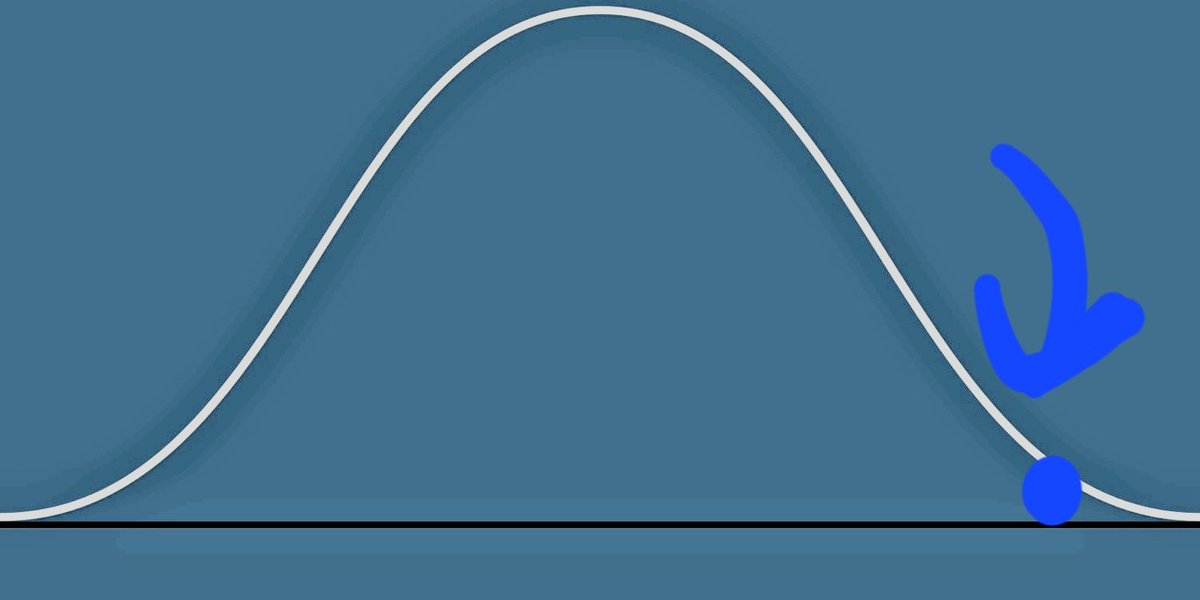
32) Young Taylor was used to being "ahead of the curve." She was the best at everything she tried, she got to her achievements faster and more successfully than anyone around her. But perhaps the very agility with which she got herself so far and so fast also became her downfall.
33) She pushed herself so hard that she burned out. She pushed herself so fast that she missed out on the important lessons she ought to have learned along the way. Perhaps if it hadn't always been so easy for her, she might have learned what it was like to struggle--or to "try."
34) But when she came to her first struggles in life, she felt woefully ill-equipped. She stood alone at the edge of this curve, and the ground beneath her gave way, becoming a sphere that took her all the way back to the beginning, now behind the peers she once easily overtook.

35) And now that she finds herself at the very back of this curve, struggling to keep up with her peers and painfully learning the lessons she never had to learn as a child, she has to learn just how desperately difficult it can be to have to "try" so hard, all day and every day.
• • •
Missing some Tweet in this thread? You can try to
force a refresh