Read on Twitter
"Enhanced Ventilation and Cleaner Air in Buildings"
A Webcast from the US National Academies of Sciences, Engineering, and Medicine @theNASEM
STARTS in 10 min, can watch online
W/ @WBahnfleth, V. Loftness, B. Gilligan, K. Keene
nationalacademies.org/event/40066_07…
A Webcast from the US National Academies of Sciences, Engineering, and Medicine @theNASEM
STARTS in 10 min, can watch online
W/ @WBahnfleth, V. Loftness, B. Gilligan, K. Keene
nationalacademies.org/event/40066_07…
Workers were only satisfied with their air quality when CO2 < 600 ppm. Sobering. 

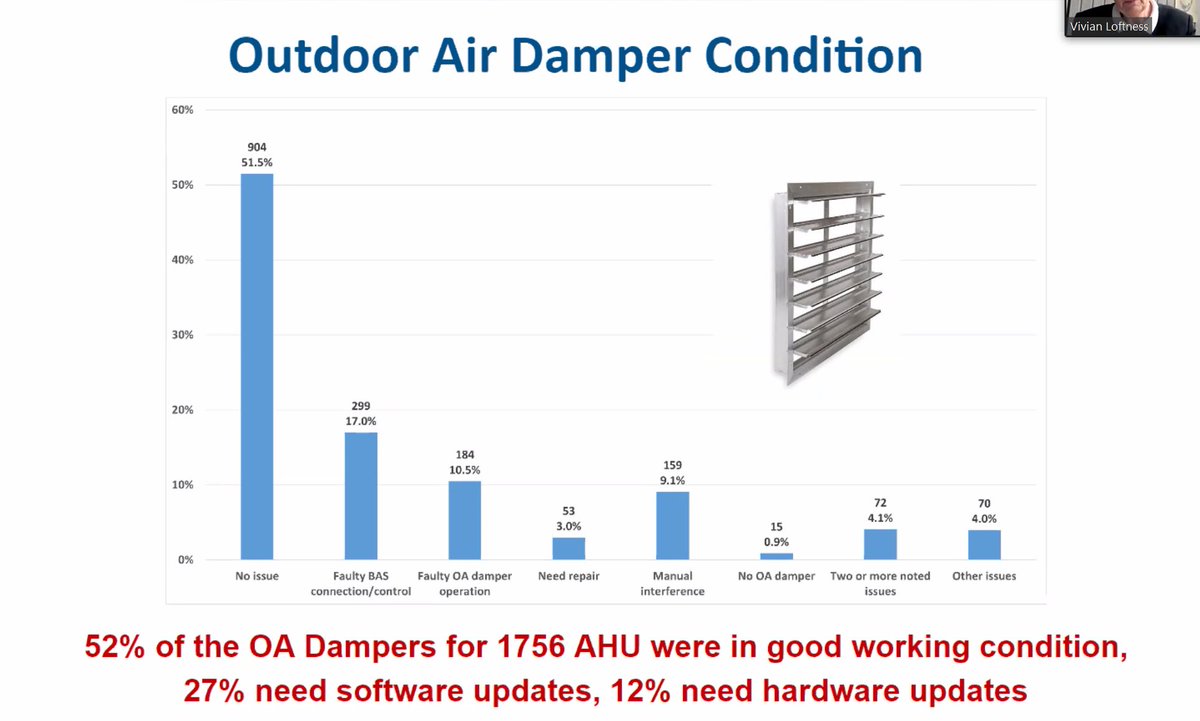
Outdoor air dampers only working properly on half of the Federal buildings tested. Meaning that they may not be letting in enough outdoor air for ventilation.
That's probably HIGH (better condition) than in average non-Federal buildings out there.
@joeyfox85 @JennaElfman
That's probably HIGH (better condition) than in average non-Federal buildings out there.
@joeyfox85 @JennaElfman
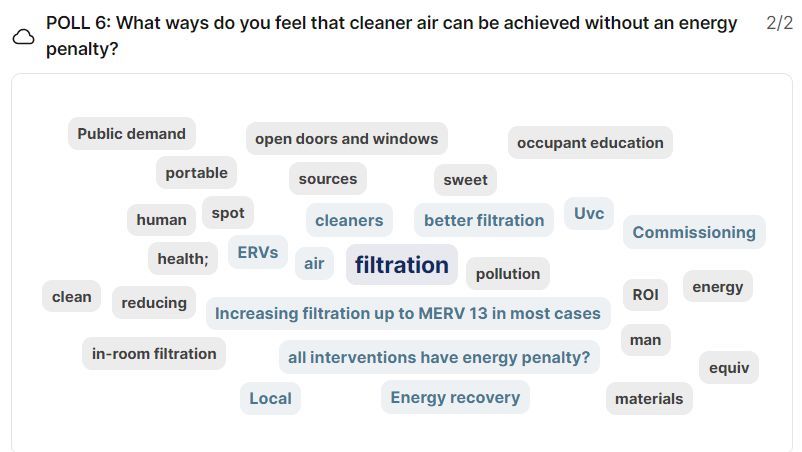
A poll of the @thenasem webinar audience.
I agree with the results.
I agree with the results.
@theNASEM A classic thread from @joeyfox85 explaining how he also find the same issues with the borken dampers.
"THE MOST COMMON ISSUE
"THE MOST COMMON ISSUE
https://twitter.com/joeyfox85/status/1517218027644854274
@theNASEM @joeyfox85 6/ ASHRAE 241-P Infectious Disease Standard
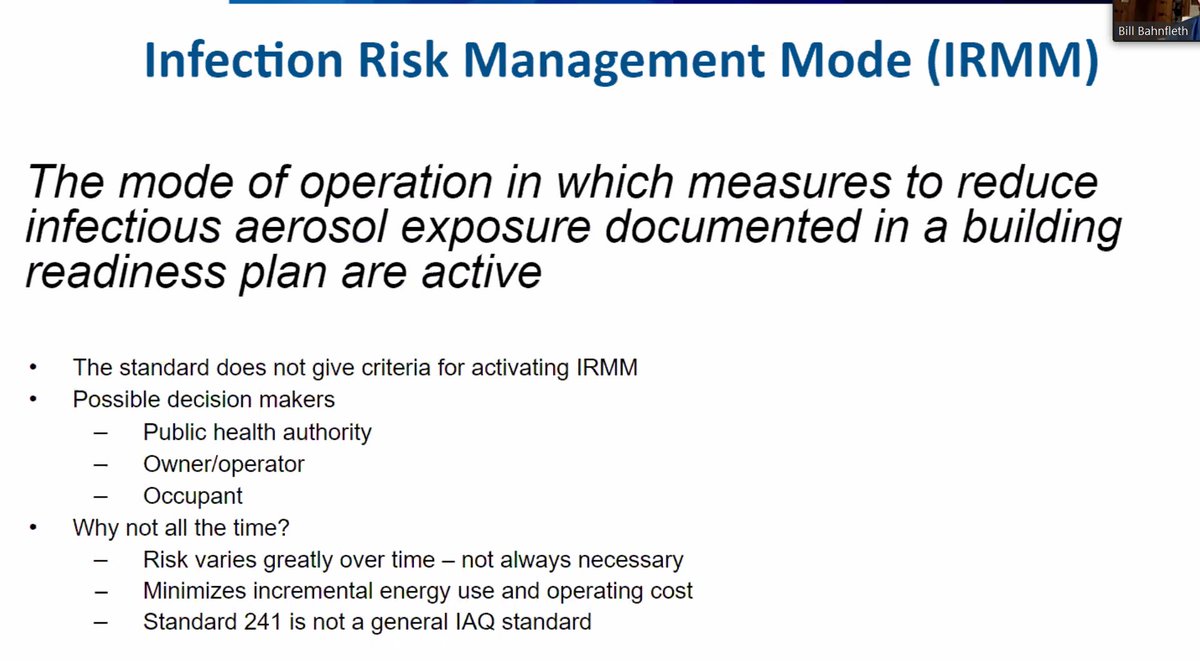
Being discussed by ASHRAE Committee Chair @WBahnfleth
ONLY applies in periods of high airborne disease. Clear risk that Public Health will be VERY reluctant to activate this (from tendency to minimize COVID even in bad waves).
Being discussed by ASHRAE Committee Chair @WBahnfleth
ONLY applies in periods of high airborne disease. Clear risk that Public Health will be VERY reluctant to activate this (from tendency to minimize COVID even in bad waves).
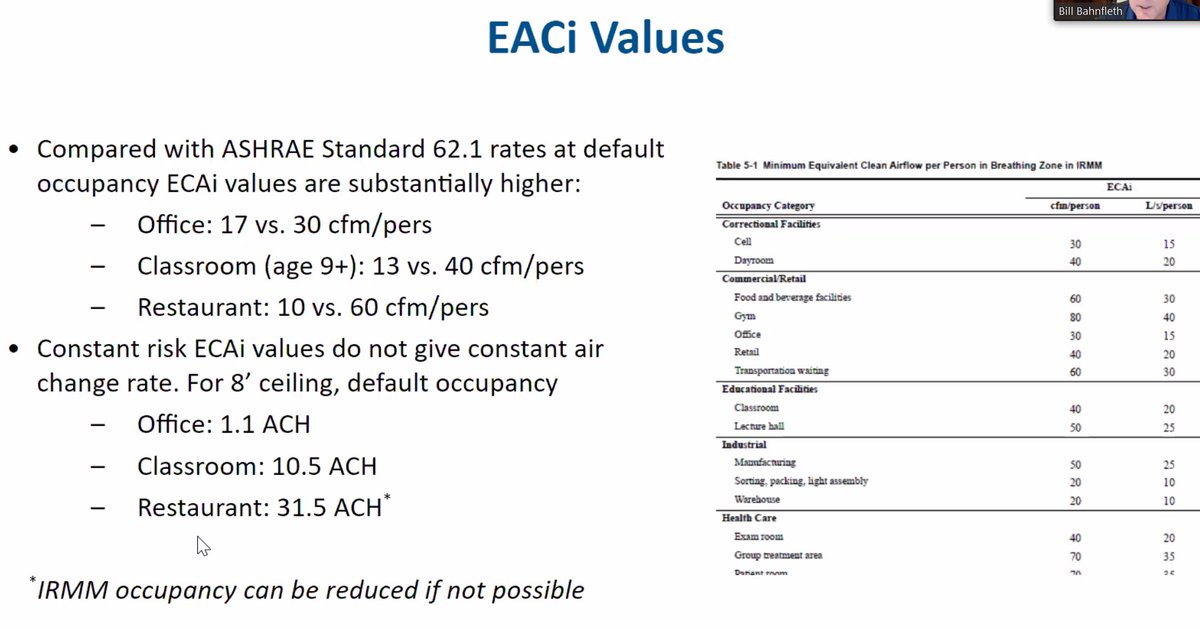
7/ ASHRAE 241-P Infectious disease standards
- Values of equivalent clean ir values. They are relatively high. [But they only apply if public health activates a high airborne disease period]
- Values of equivalent clean ir values. They are relatively high. [But they only apply if public health activates a high airborne disease period]
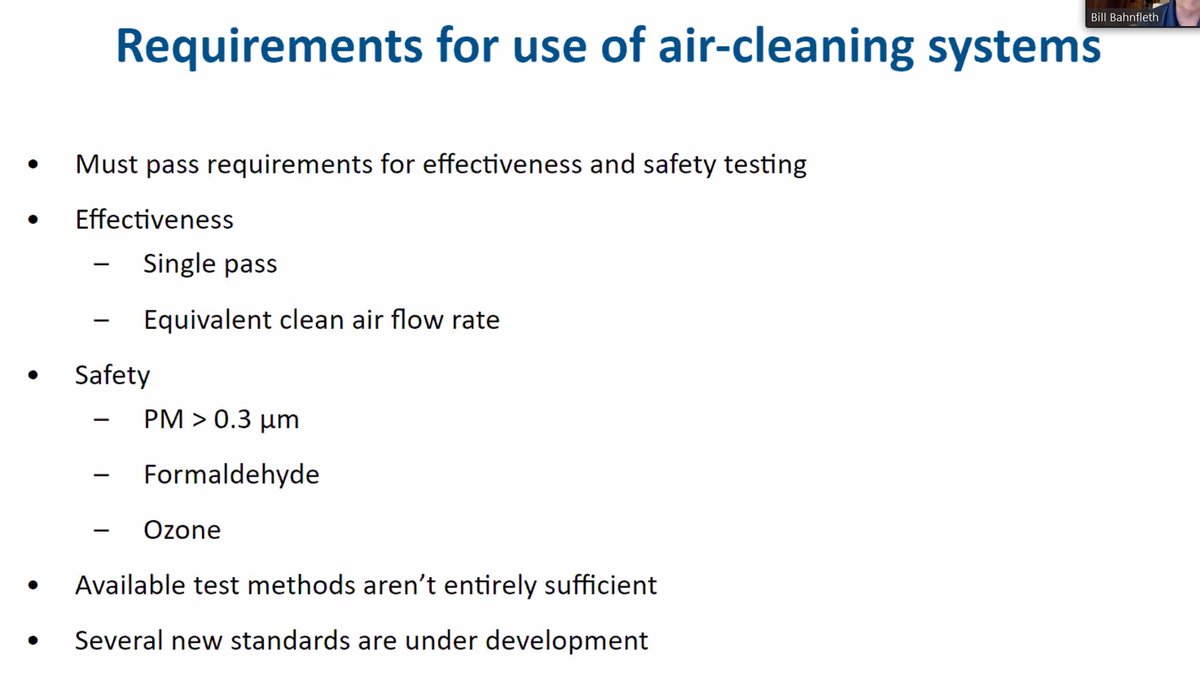
8/ Some requirements for air cleaning systems.
This is VERY useful, but it is insufficient IMHO. Some of the test methods are not good enough (which @WBahnfleth recognizes below)
This is VERY useful, but it is insufficient IMHO. Some of the test methods are not good enough (which @WBahnfleth recognizes below)
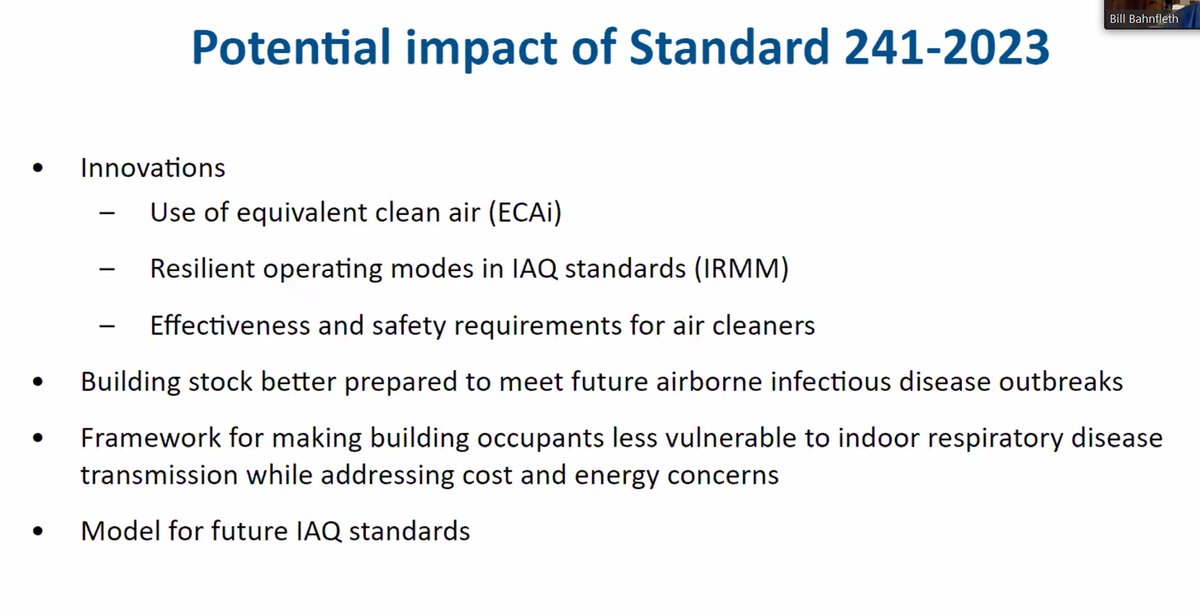
9/ Impacts of new ASHRAE 241-P Infectious Disease Std
- Agree 110% with everything that @WBahnfleth says in the slide. The standard is not perfect, but it is a huge advancement
But REALLY depends on whether standard is adopted by local/federal govt.
AND activated w/ disease
- Agree 110% with everything that @WBahnfleth says in the slide. The standard is not perfect, but it is a huge advancement
But REALLY depends on whether standard is adopted by local/federal govt.
AND activated w/ disease
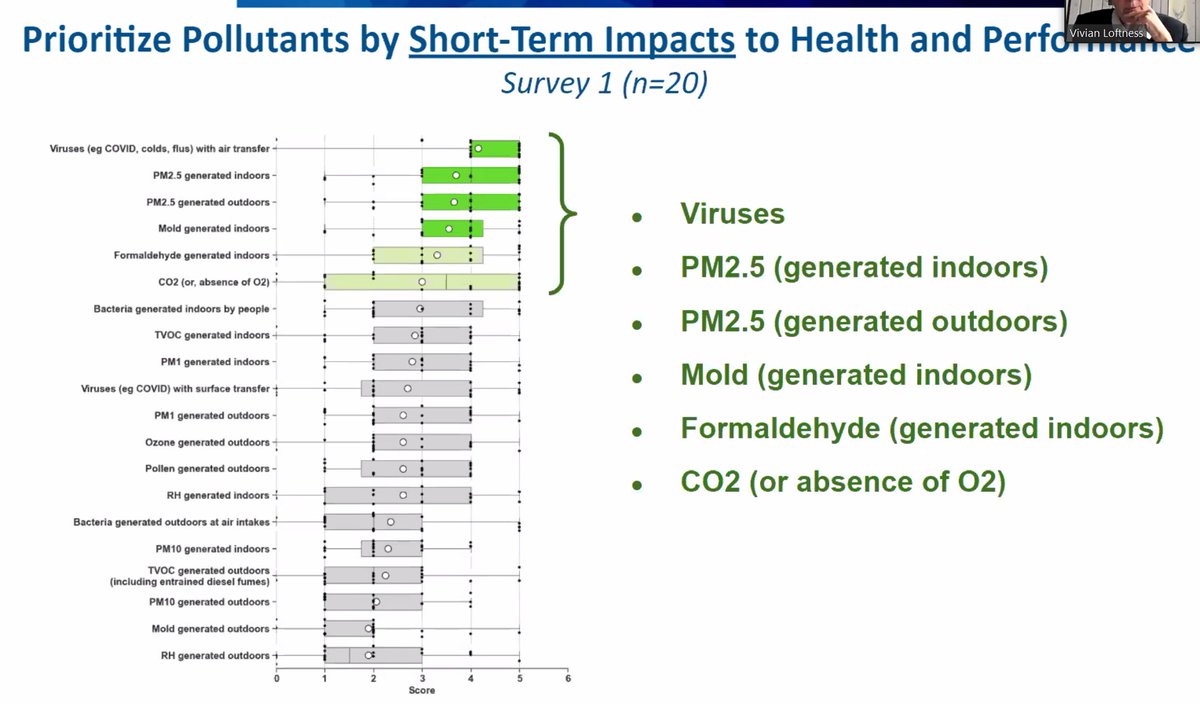
10/ Survey on which pollutants were of concern to US Federal building occupants
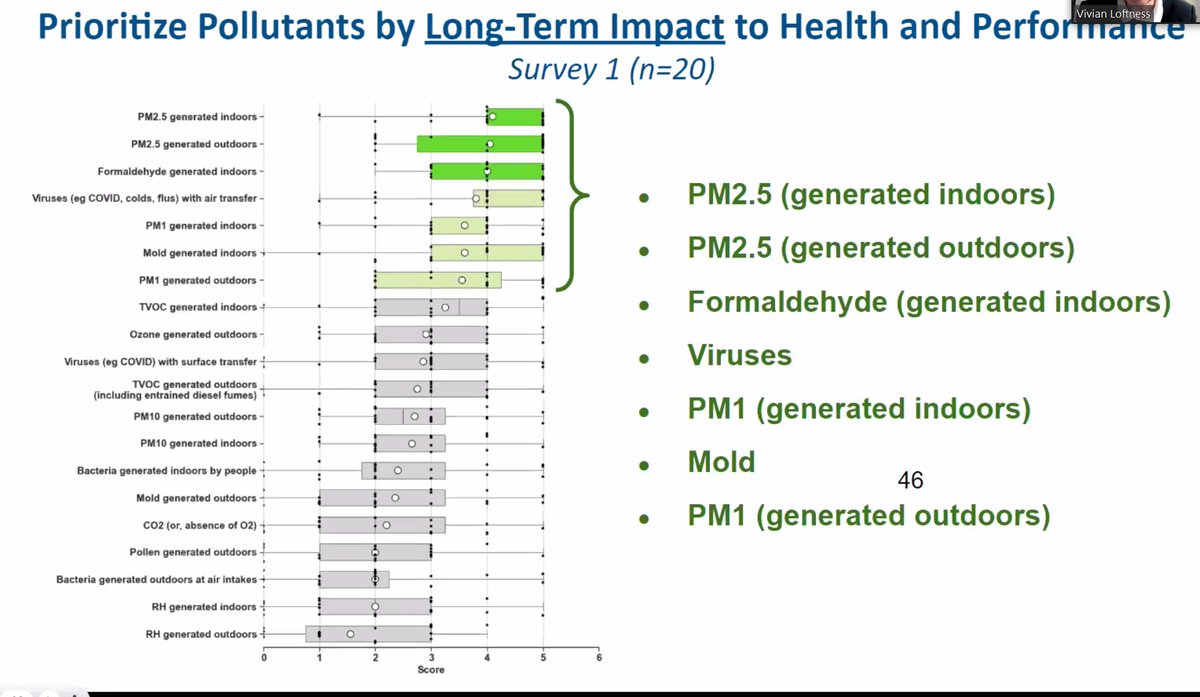
11/ The same survey on which pollutants were of concern to US Federal building occupants https://, but for LONG TERM (previous was SHORT term)
12/ Continuing survey on which interventions were of concern to US Federal building occupants
(at the room level and at the building level, 2 slides)
(at the room level and at the building level, 2 slides)
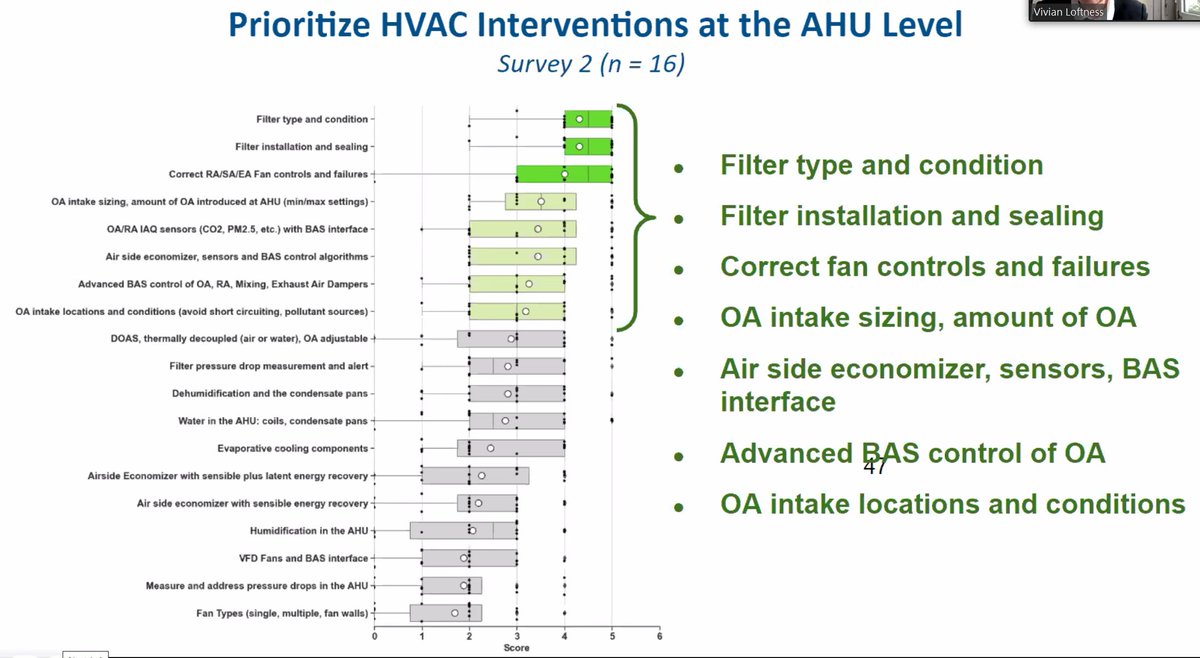
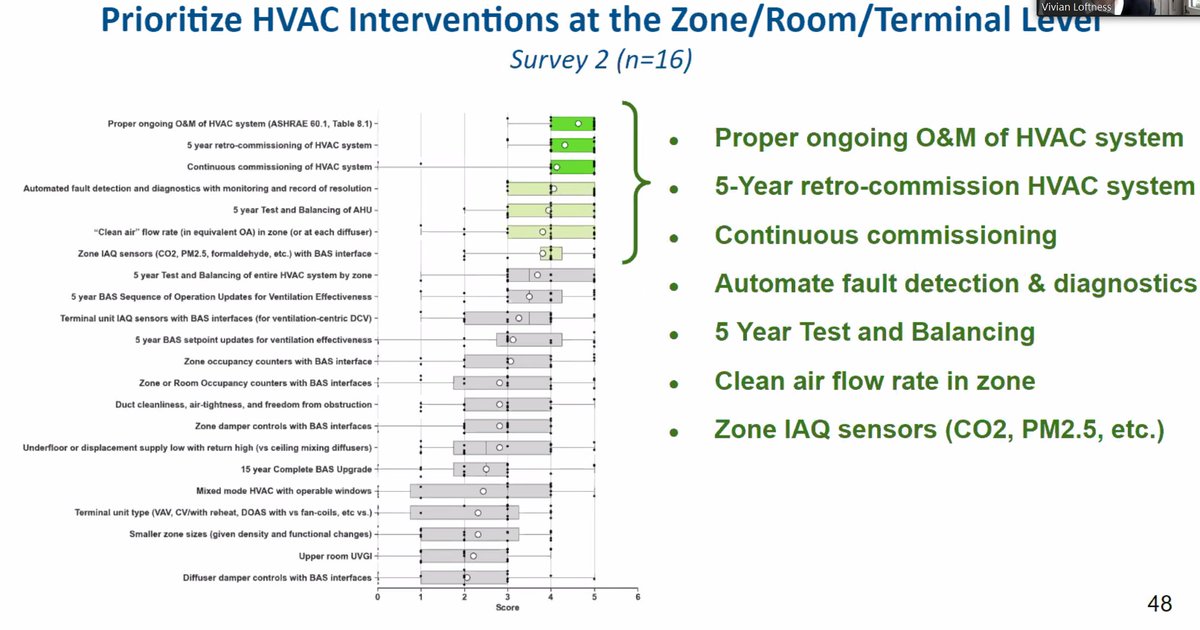
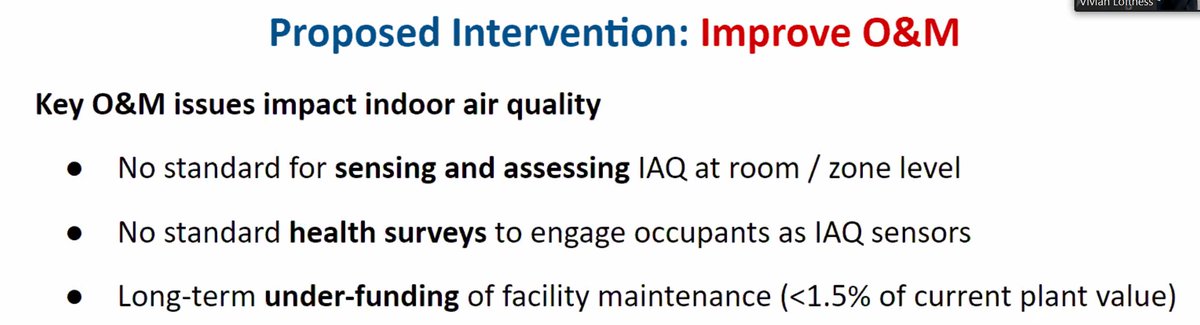
13/ Wisdom of the experts on how to improve IAQ in buildings: improve operation and maintenance
[IMHO this should be a HUGE priority. Buildings may be built well, but then the HVAC breaks and in many cases nobody notices for years - as earlier in the thread for dampers]
[IMHO this should be a HUGE priority. Buildings may be built well, but then the HVAC breaks and in many cases nobody notices for years - as earlier in the thread for dampers]
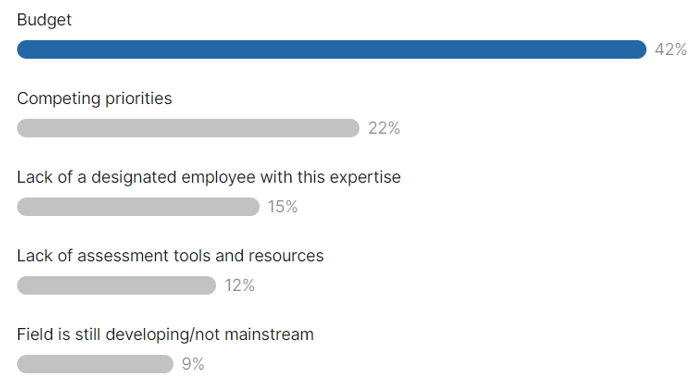
14/ The audience's input on what are the main barriers to improving IAQ in buildings
Budget is important, but lack of enough attention and standards for decades has created lots of practical problems as well.
Budget is important, but lack of enough attention and standards for decades has created lots of practical problems as well.
• • •
Missing some Tweet in this thread? You can try to
force a refresh