I've been investing for 19 years.
Here are 10 painful investing lessons I learned the hard way:
Here are 10 painful investing lessons I learned the hard way:
1: You don't need leverage
Margin & options are fun on the way up, but BRUTAL on the way down.
I’ve lost more than 100% on investments before.
Why? Leverage.
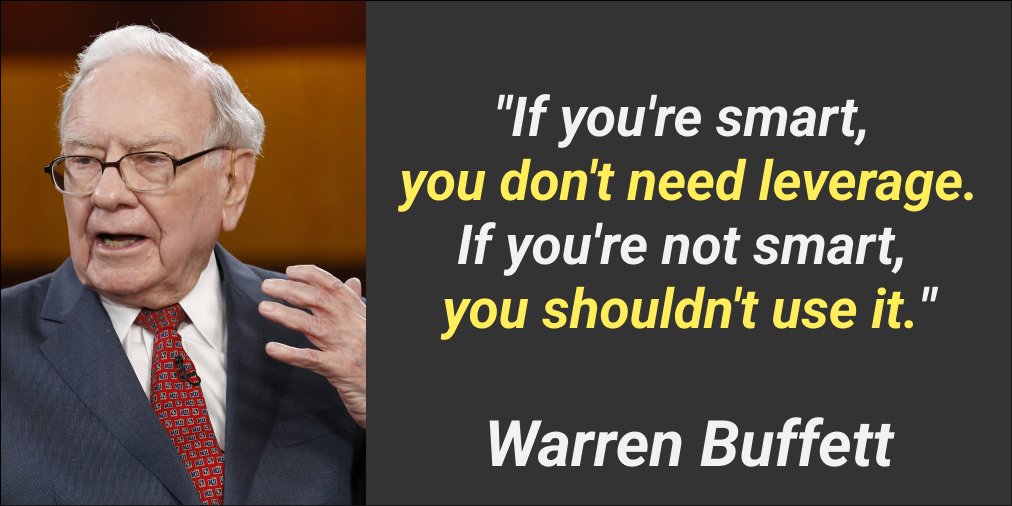
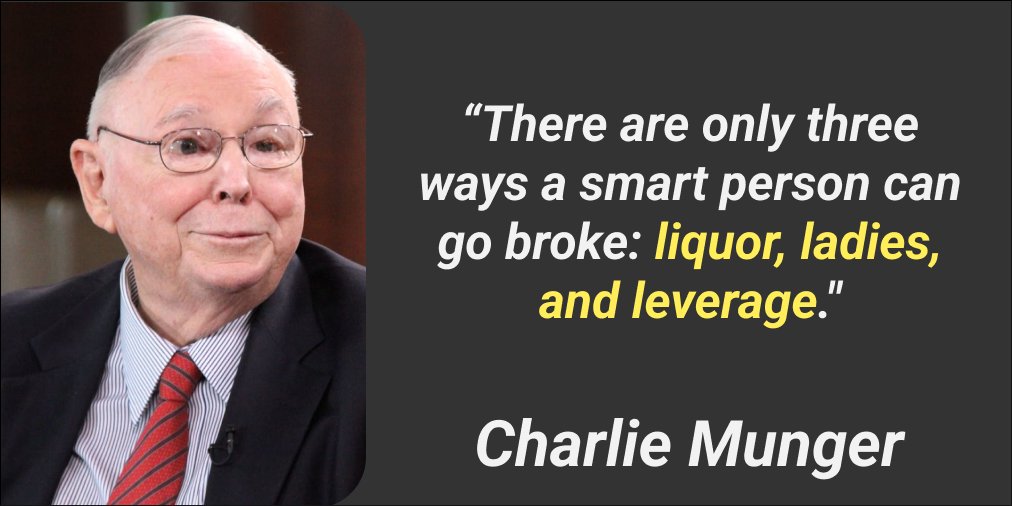
Buffett & Munger said it best:
Margin & options are fun on the way up, but BRUTAL on the way down.
I’ve lost more than 100% on investments before.
Why? Leverage.
Buffett & Munger said it best:
2: Optimize for longevity, not upside
Compound interest is the most powerful wealth-building force that exists.
But it only works if you SURVIVE long enough for it to work.
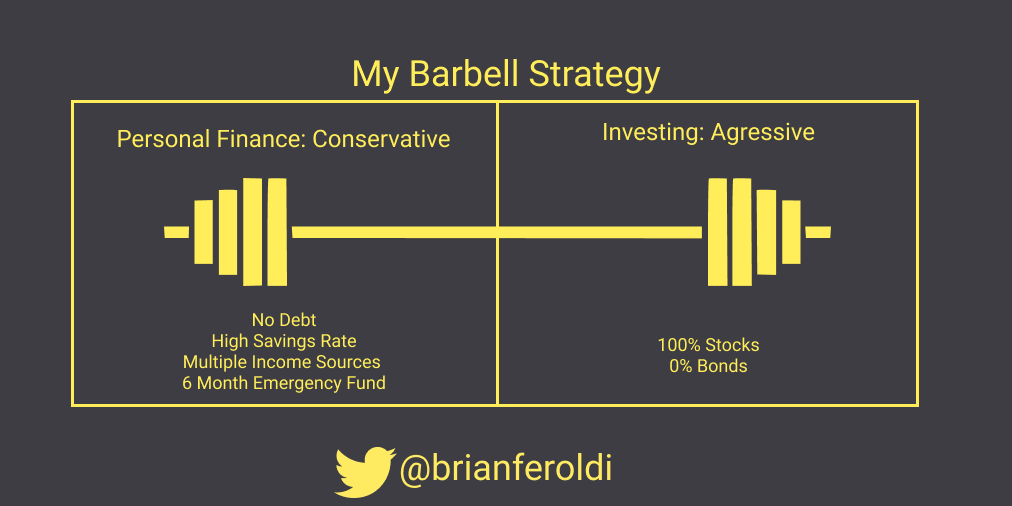
I used to optimize for upside. Now, I use the barbell method to optimize for longevity.
Compound interest is the most powerful wealth-building force that exists.
But it only works if you SURVIVE long enough for it to work.
I used to optimize for upside. Now, I use the barbell method to optimize for longevity.
3: High conviction does not mean I'm correct
I convinced myself several times that a stock could only go up.
I was right on some. On others, I lost 70% (!!)
Conviction is useful, but just because you think you are right doesn’t mean you are.
Allocate accordingly.
I convinced myself several times that a stock could only go up.
I was right on some. On others, I lost 70% (!!)
Conviction is useful, but just because you think you are right doesn’t mean you are.
Allocate accordingly.
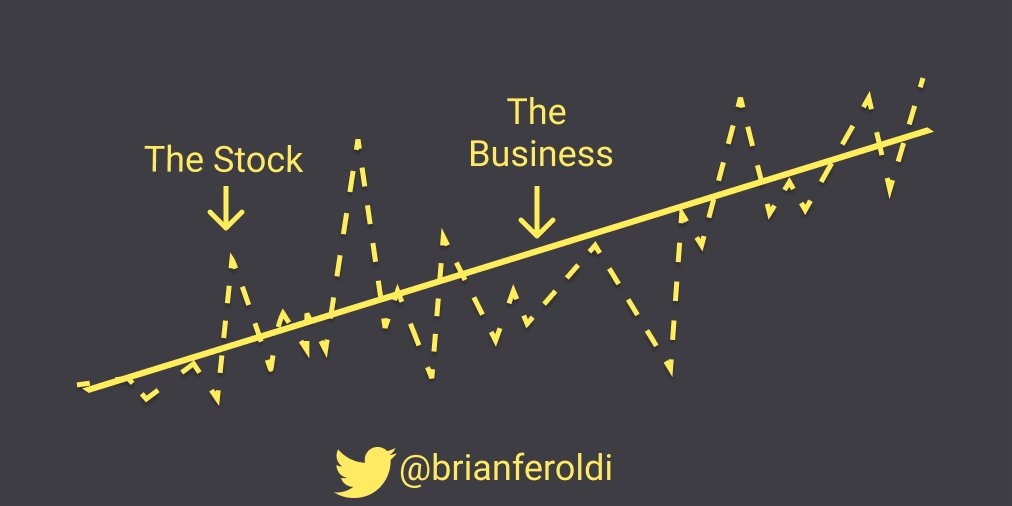
4: Stock prices & business results are 0% correlated in the short-term and 100% correlated in the long-term
I’ve sold future mega-winners because their stocks were down (dumb).
I was watching the stock, not the business.
Now, I do the reverse.
I’ve sold future mega-winners because their stocks were down (dumb).
I was watching the stock, not the business.
Now, I do the reverse.
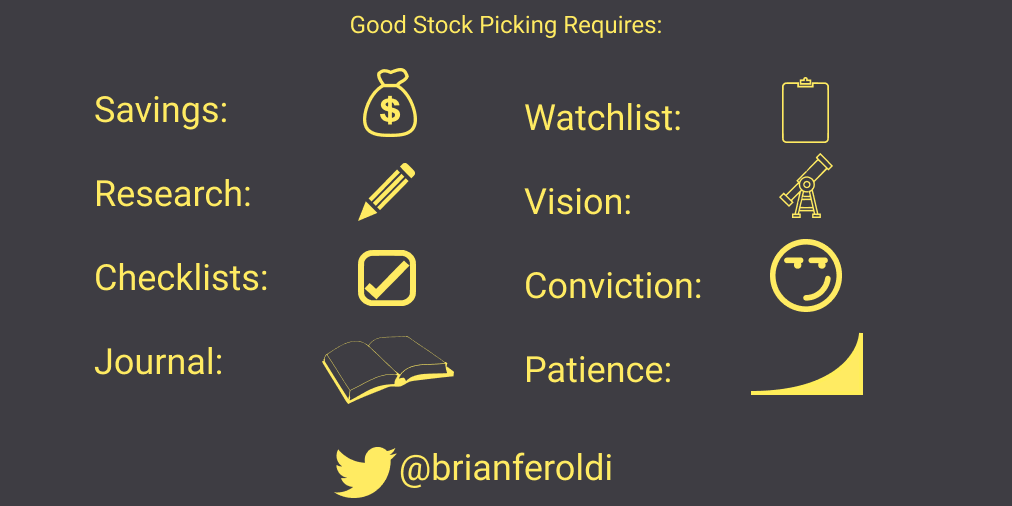
5: Not having a system
I used to keep everything in my head, which was dumb (and impossible).
I didn't use checklists, journals, or watchlists, which are invaluable free tools.
This caused me to make tons of mistakes.
Now, I have a system:
I used to keep everything in my head, which was dumb (and impossible).
I didn't use checklists, journals, or watchlists, which are invaluable free tools.
This caused me to make tons of mistakes.
Now, I have a system:
6: Not understanding valuation
I passed on high p/e ratio stocks (that went up big).
I bought low p/e ratio stocks (that went down big).
Why? I didn’t understand the business growth cycle.
Now, I know WHICH valuation metrics to use (and WHEN to use them).
I passed on high p/e ratio stocks (that went up big).
I bought low p/e ratio stocks (that went down big).
Why? I didn’t understand the business growth cycle.
Now, I know WHICH valuation metrics to use (and WHEN to use them).

7: Panic selling and panic buying
My emotions have caused me to panic buy hype stocks and panic sell future mega-winners.
It’s easy to say you’ll be greedy when others are fearful, and visa-versa.
It’s damn hard to actually do it.
My emotions have caused me to panic buy hype stocks and panic sell future mega-winners.
It’s easy to say you’ll be greedy when others are fearful, and visa-versa.
It’s damn hard to actually do it.
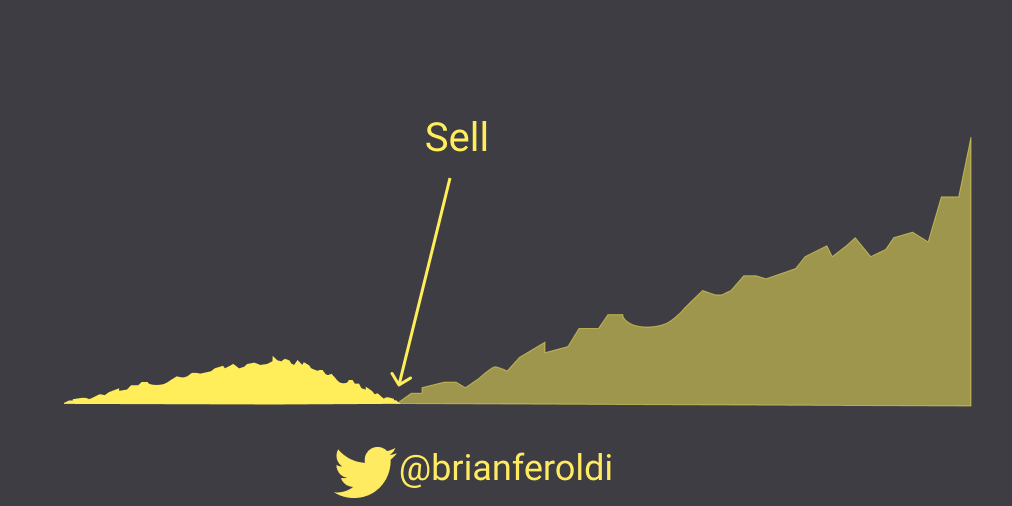
8: I didn't study history
Human nature is remarkably consistent. The same forces that drove markets 100+ years still exist in all of us today.
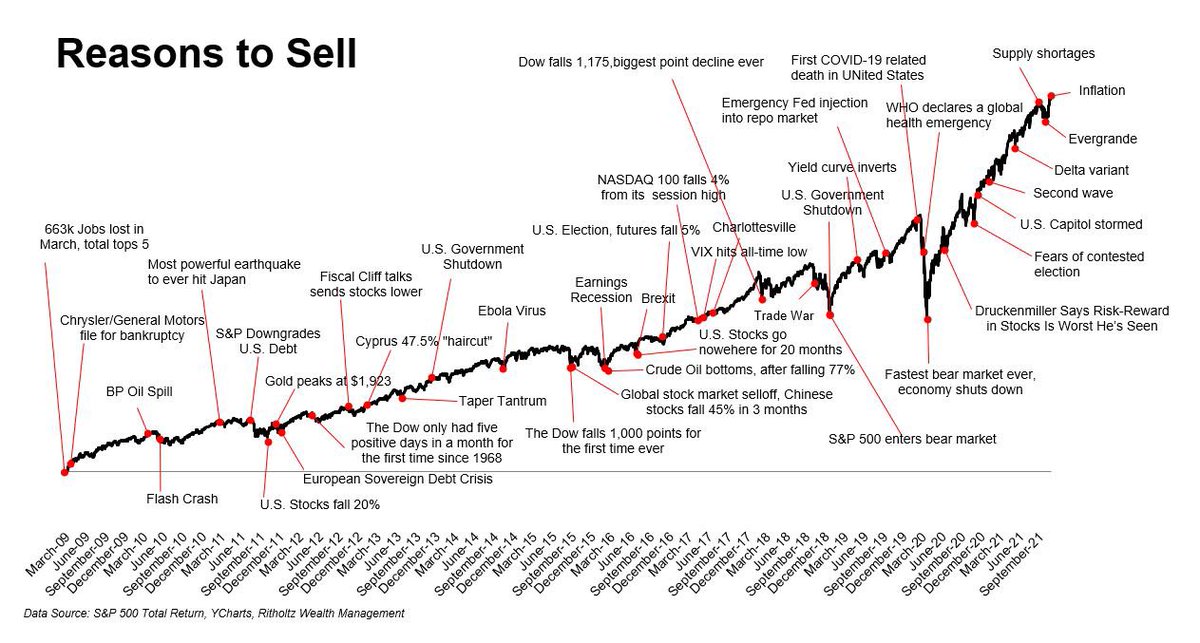
There’s always a smart-sounded reason to sell.
I didn't understand that. Now, I do.
Human nature is remarkably consistent. The same forces that drove markets 100+ years still exist in all of us today.
There’s always a smart-sounded reason to sell.
I didn't understand that. Now, I do.
9: I focused on what I can't control
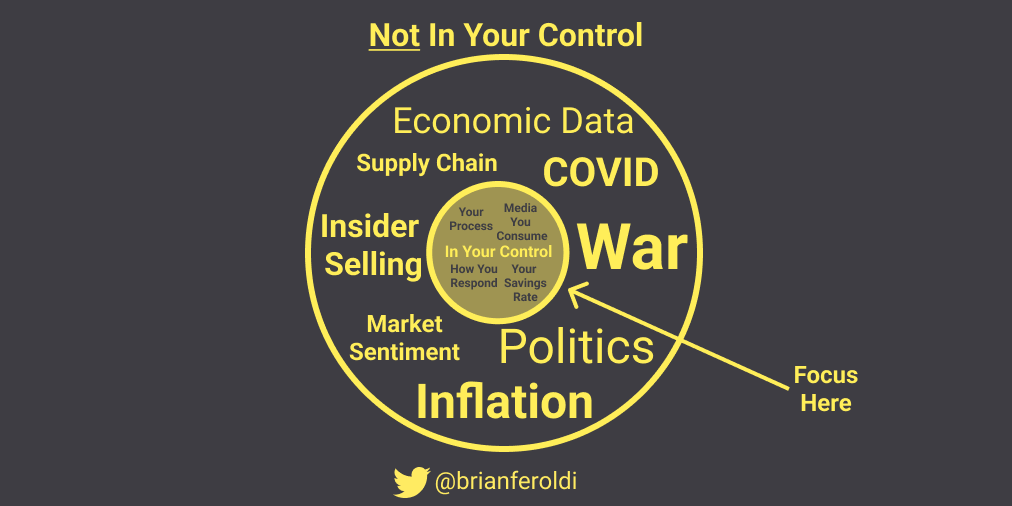
I used to follow stock prices + the news closely, watching for clues to predict the market.
This was time poorly spent. Macro factors matter, but I have no control over them.
I now focus far more on what I can control.
I used to follow stock prices + the news closely, watching for clues to predict the market.
This was time poorly spent. Macro factors matter, but I have no control over them.
I now focus far more on what I can control.
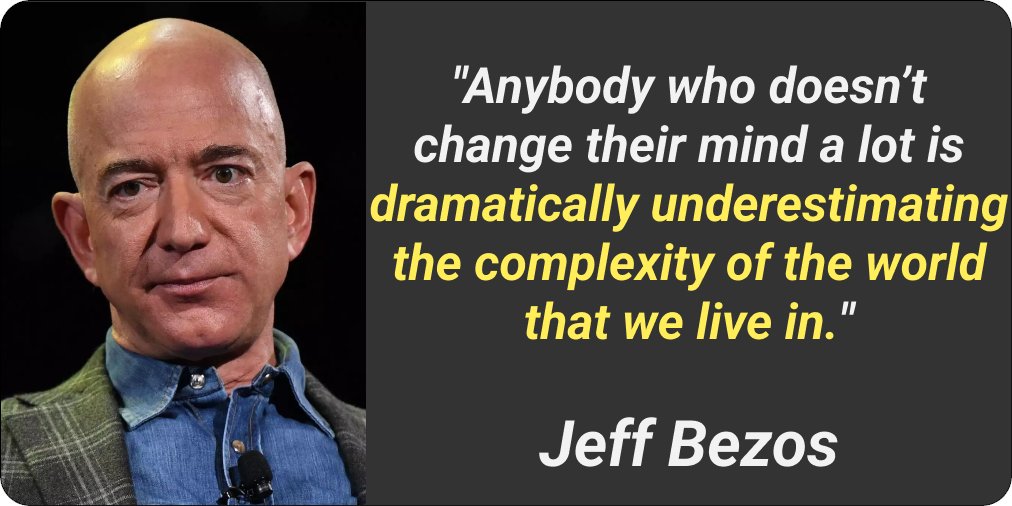
10: Not changing my mind
This one is REALLY hard, but it’s necessary to do well.
Changing your mind is hard. Admitting you're wrong is hard.
But @JeffBezos said it best:
This one is REALLY hard, but it’s necessary to do well.
Changing your mind is hard. Admitting you're wrong is hard.
But @JeffBezos said it best:
I learned all of these lessons the expensive way.
Want to fast-track your learning?
Join me tomorow for my LIVE course, Valuation Explained Simply.
Interested? DM me for a coupon code.
https://t.co/FN0VAheL4Gmaven.com/brian-feroldi/…
Want to fast-track your learning?
Join me tomorow for my LIVE course, Valuation Explained Simply.
Interested? DM me for a coupon code.
https://t.co/FN0VAheL4Gmaven.com/brian-feroldi/…
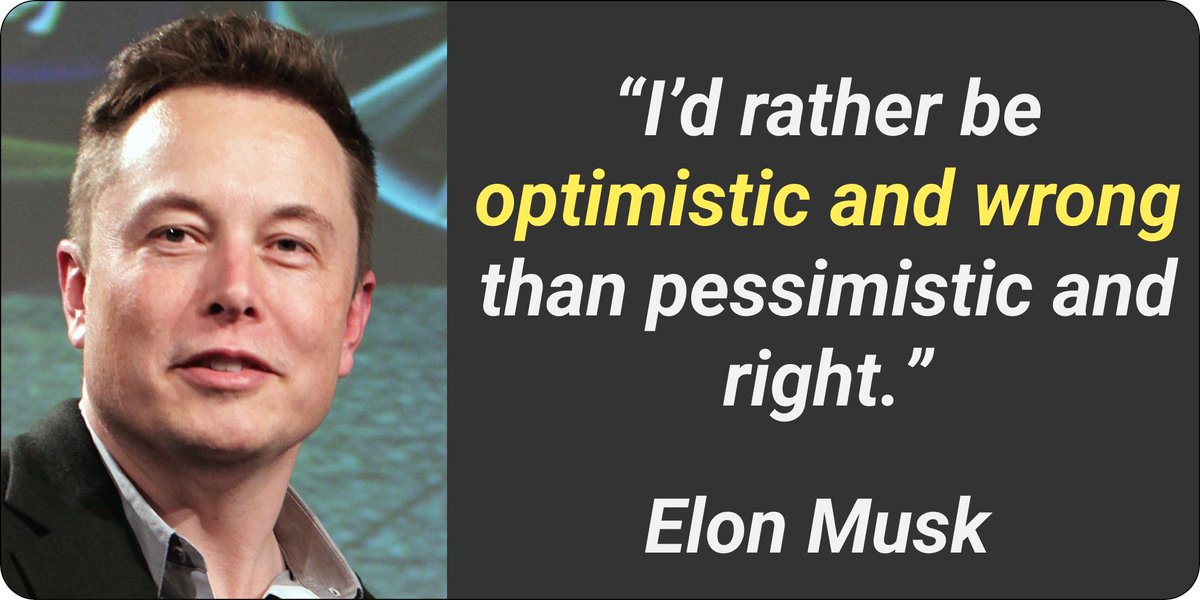
Last one:
Stay humble yet optimistic.
If you invest, you're going to be wrong. A lot.
Don't beat yourself up. That's just how you get better.
Saving money is hard. Investing is hard. The world is complex.
Invest & stay optimistic anyway.
Stay humble yet optimistic.
If you invest, you're going to be wrong. A lot.
Don't beat yourself up. That's just how you get better.
Saving money is hard. Investing is hard. The world is complex.
Invest & stay optimistic anyway.
Like this thread? Follow me @BrianFeroldi.
I demystify the stock market with daily tweets and weekly threads like this.
To share this thread with your audience, ♻️ retweet the first tweet below.
I demystify the stock market with daily tweets and weekly threads like this.
To share this thread with your audience, ♻️ retweet the first tweet below.
https://twitter.com/61558281/status/1688166448840019969
If you liked this thread, there's a 100% chance you'll like this one, too:
https://twitter.com/BrianFeroldi/status/1677283541984460801?s=20
• • •
Missing some Tweet in this thread? You can try to
force a refresh