1
It is not a “narrative of 1000 years of slavery” which must be questioned, but Hindu holocaust deniers like @ashokkantha who want us to ignore the rape, enslavement, conversion & murder of millions of Hindus by Muslim kings, starting with Muhammad Qasim down to the last Mughal.

It is not a “narrative of 1000 years of slavery” which must be questioned, but Hindu holocaust deniers like @ashokkantha who want us to ignore the rape, enslavement, conversion & murder of millions of Hindus by Muslim kings, starting with Muhammad Qasim down to the last Mughal.
https://twitter.com/ashokkkantha/status/1691485913501642752
2
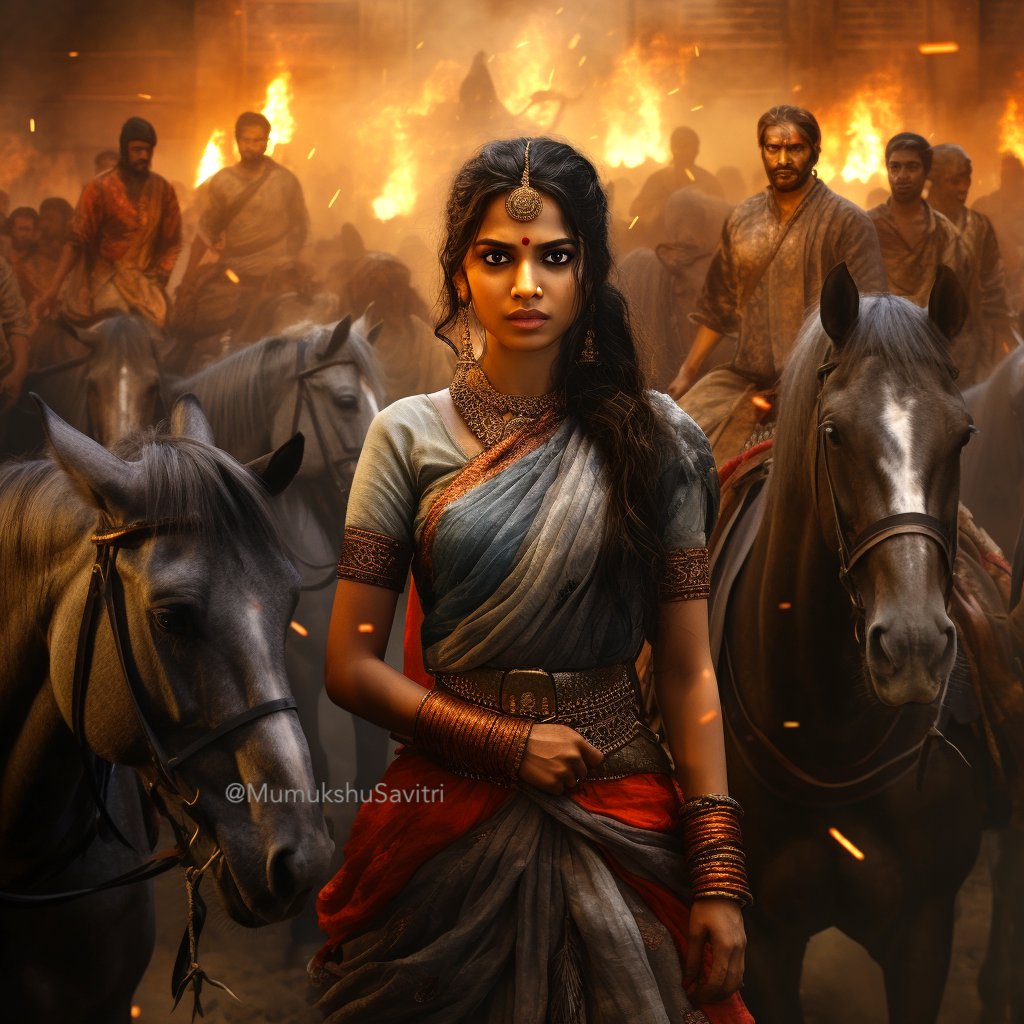
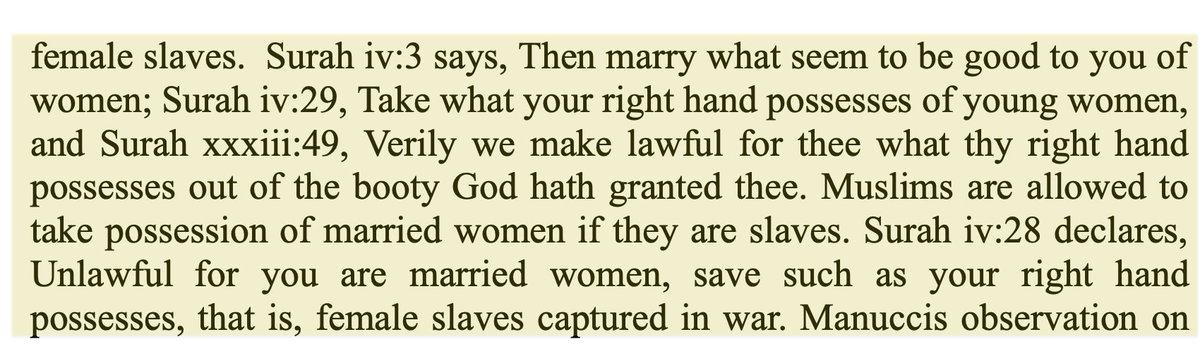
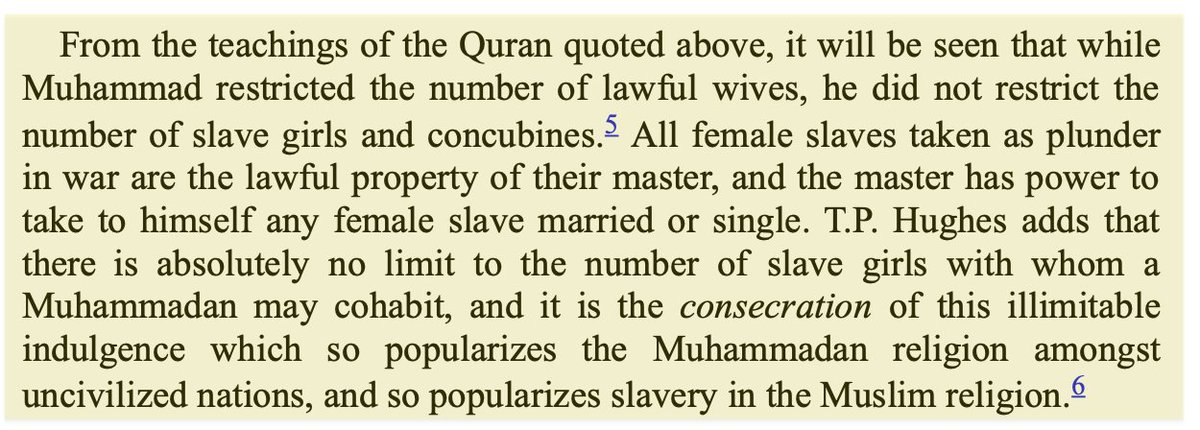
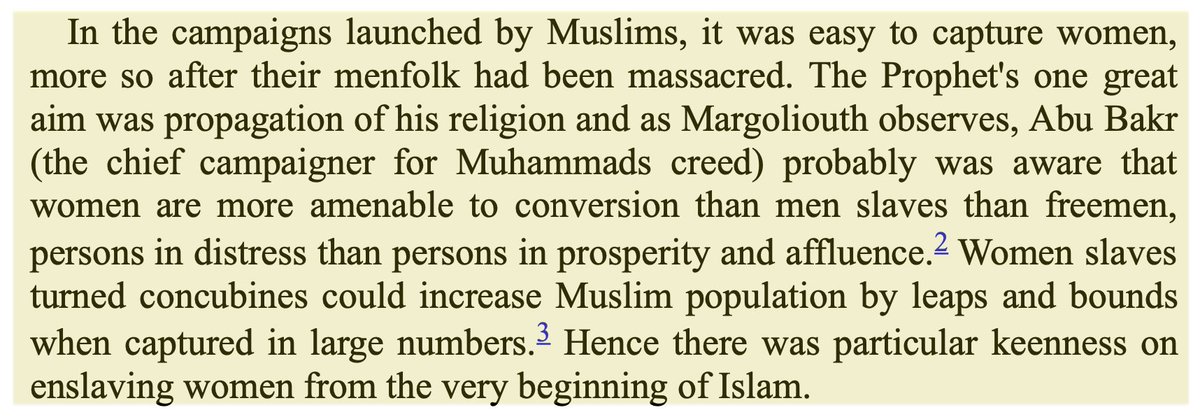
Islamic invaders had sanction from their Holy book to enslave unlimited Kafirs as concubines (sex slaves) in war. Systematically enslaving millions of Hindu women in India from the very 1st invasion to the end of their reign served the main goal of converting the world to Islam
Islamic invaders had sanction from their Holy book to enslave unlimited Kafirs as concubines (sex slaves) in war. Systematically enslaving millions of Hindu women in India from the very 1st invasion to the end of their reign served the main goal of converting the world to Islam
3
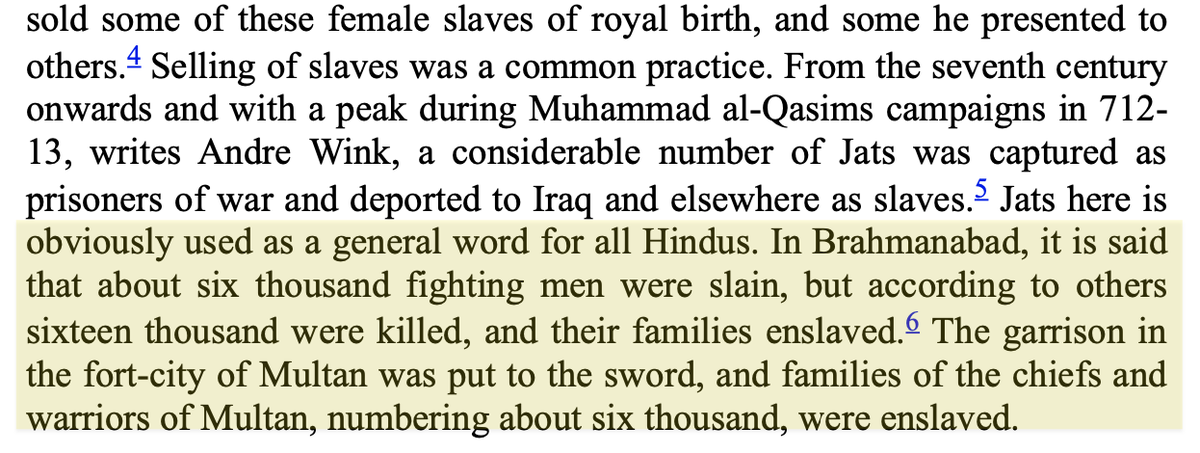
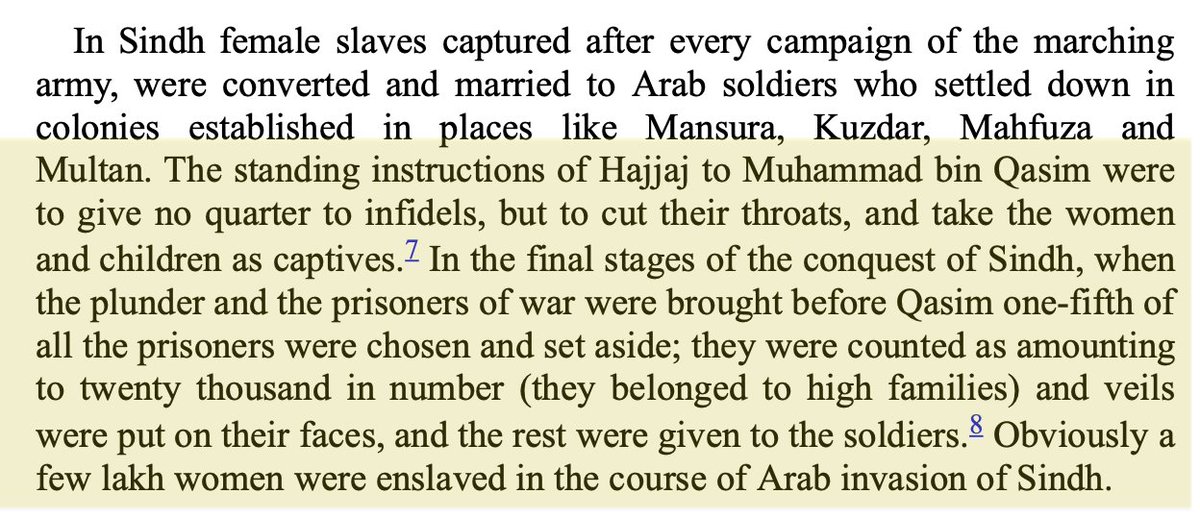
In 8th c. after 14 failed Arab attempts, Qasim finally conquered Sindh. He massacred 6000 men & enslaved 60,000 women & kids in Rawar. In Brahmanabad 16,000 were killed & 1000s enslaved. Qasim kept 1/5 or 20,000 for himself which means 1 Lakh+ slaves were captured from Sindh.
In 8th c. after 14 failed Arab attempts, Qasim finally conquered Sindh. He massacred 6000 men & enslaved 60,000 women & kids in Rawar. In Brahmanabad 16,000 were killed & 1000s enslaved. Qasim kept 1/5 or 20,000 for himself which means 1 Lakh+ slaves were captured from Sindh.

4
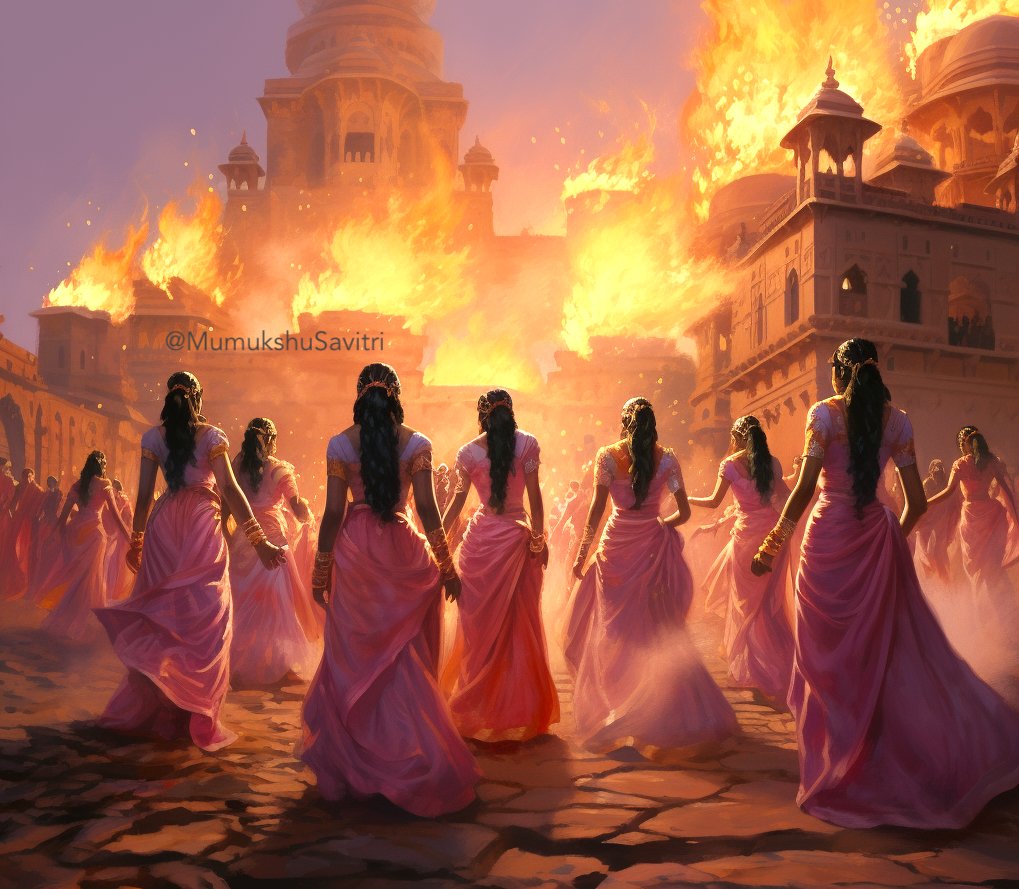
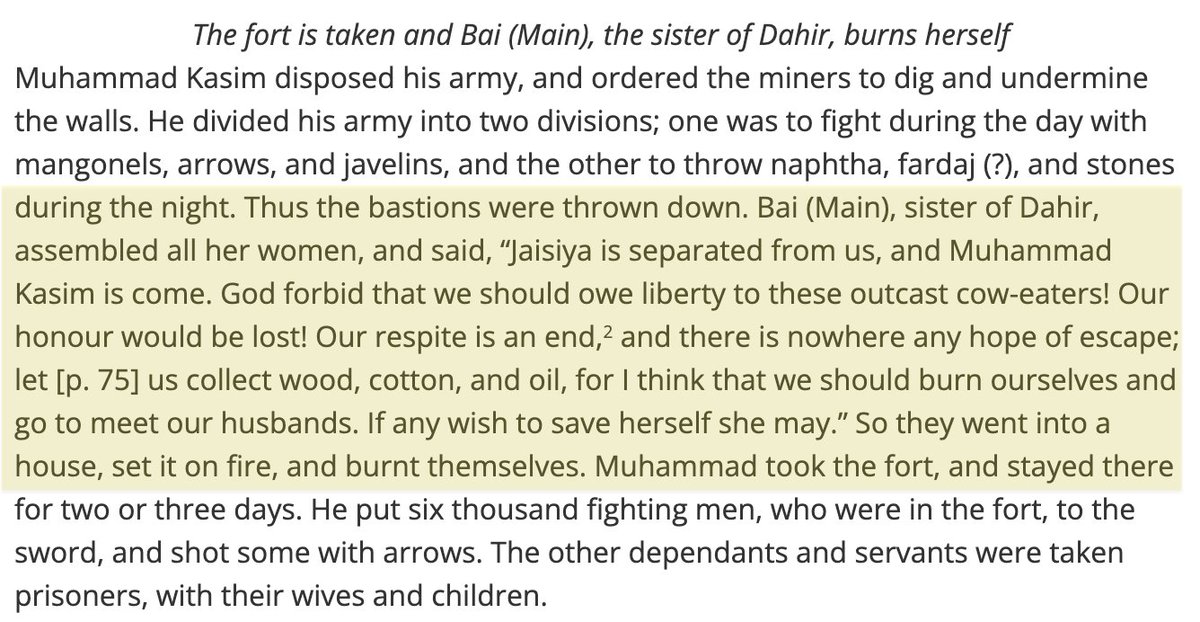
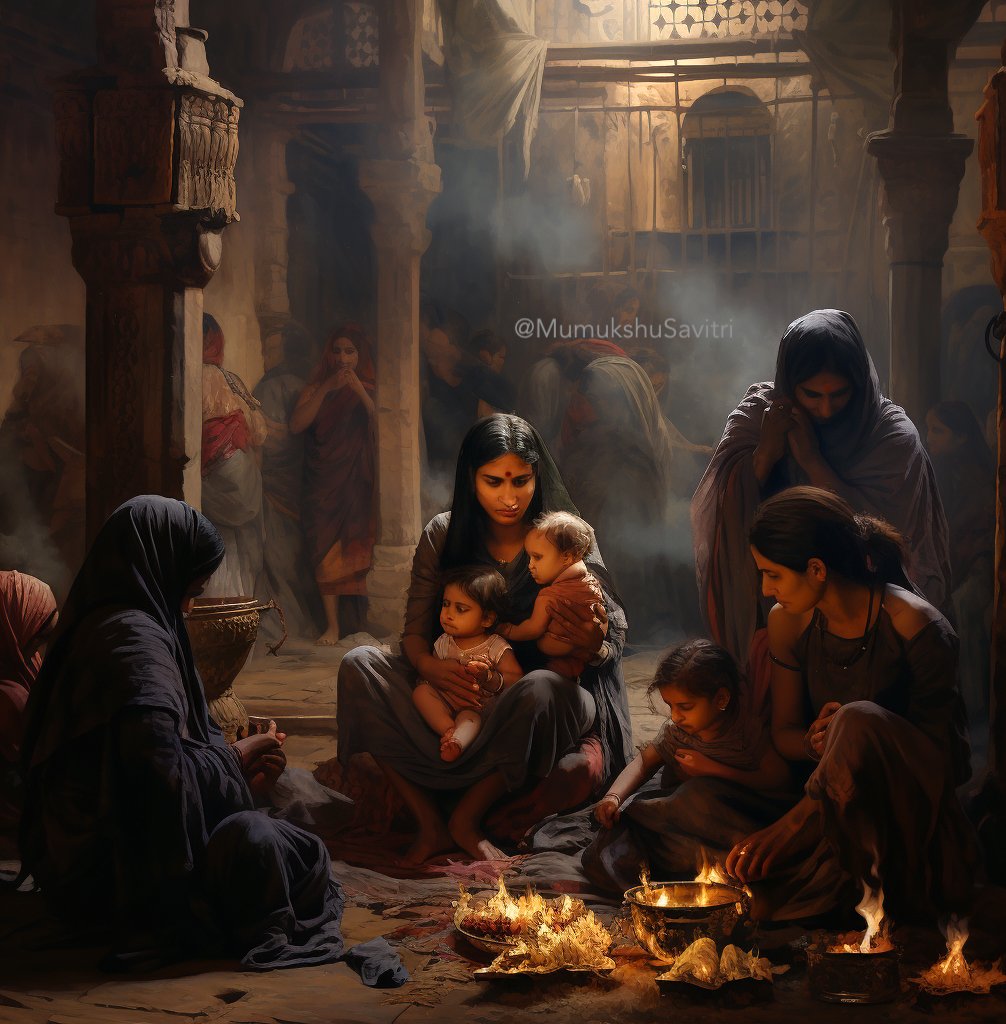
Yet from the very 1st invasion, Hindus resisted enslavement fiercely. In 712 A.D as Qasim savaged Sindh, Dahir’s sister Bai exhorted 1000s of women in the captive Rawar fort to commit Jauhar in the sacred fire to escape rape & torture at the hands of “chandals & cow-eaters’’.
Yet from the very 1st invasion, Hindus resisted enslavement fiercely. In 712 A.D as Qasim savaged Sindh, Dahir’s sister Bai exhorted 1000s of women in the captive Rawar fort to commit Jauhar in the sacred fire to escape rape & torture at the hands of “chandals & cow-eaters’’.
5
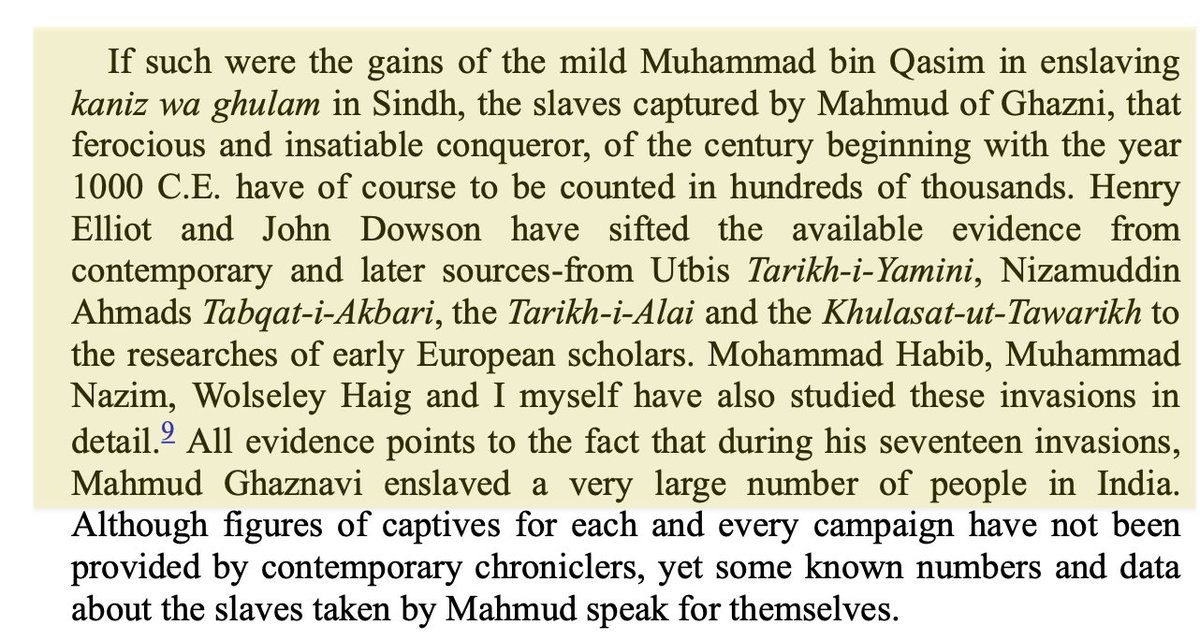
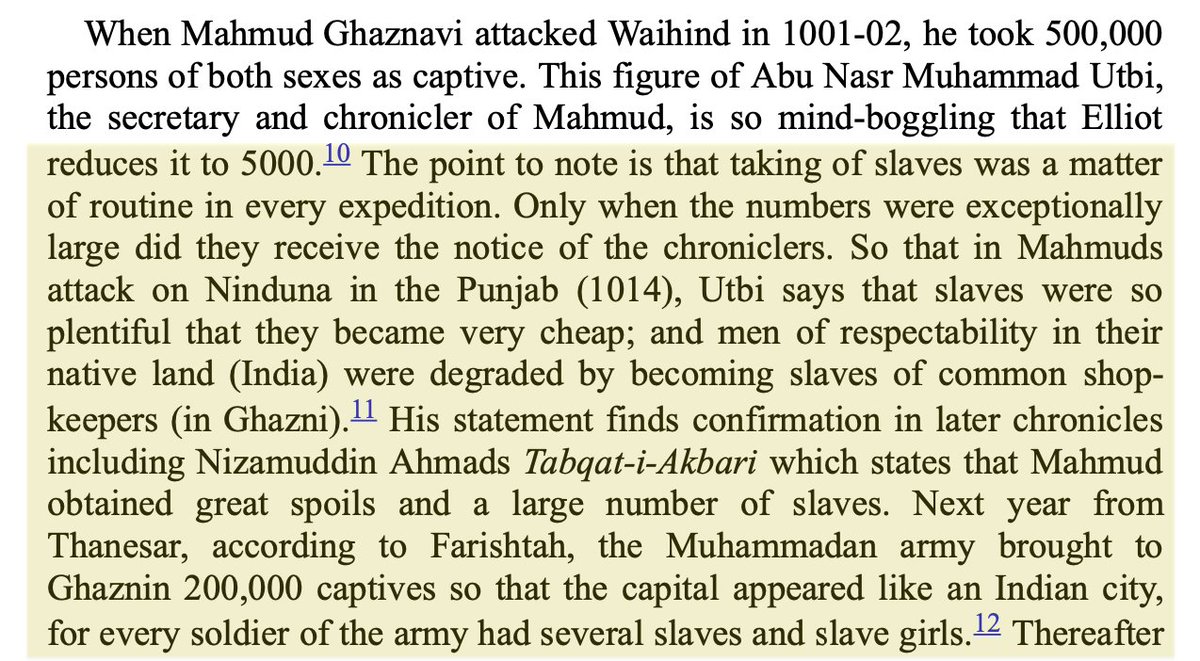
In 11th c. Mahmud of Ghazni was even more barbaric than Qasim & brutally enslaved Lakhs of Hindus. Utbi boasts that Mahmud enslaved half a million Indians in Waihind. Farishta gloats that the Muslims took 200,000 slaves back to Ghazni, & every J1hadi1 got numerous slaves.
In 11th c. Mahmud of Ghazni was even more barbaric than Qasim & brutally enslaved Lakhs of Hindus. Utbi boasts that Mahmud enslaved half a million Indians in Waihind. Farishta gloats that the Muslims took 200,000 slaves back to Ghazni, & every J1hadi1 got numerous slaves.
6
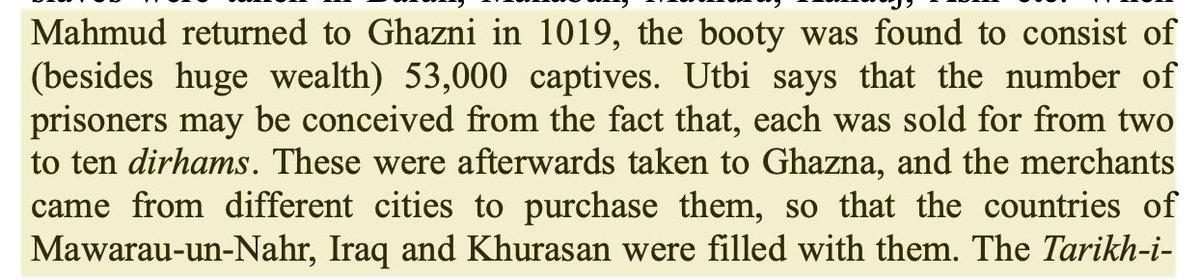
Alfi adds that 1/5 of the share for the Sayyids was 150,000 slaves indicating Ghazni may have enslaved upto 750,000 Hindus, Buddhists & Jains. ~2 Million died fighting Ghanzni’s army & their families were enslaved to be raped & savaged to death for the sake of Islamic supremacy
Alfi adds that 1/5 of the share for the Sayyids was 150,000 slaves indicating Ghazni may have enslaved upto 750,000 Hindus, Buddhists & Jains. ~2 Million died fighting Ghanzni’s army & their families were enslaved to be raped & savaged to death for the sake of Islamic supremacy

7
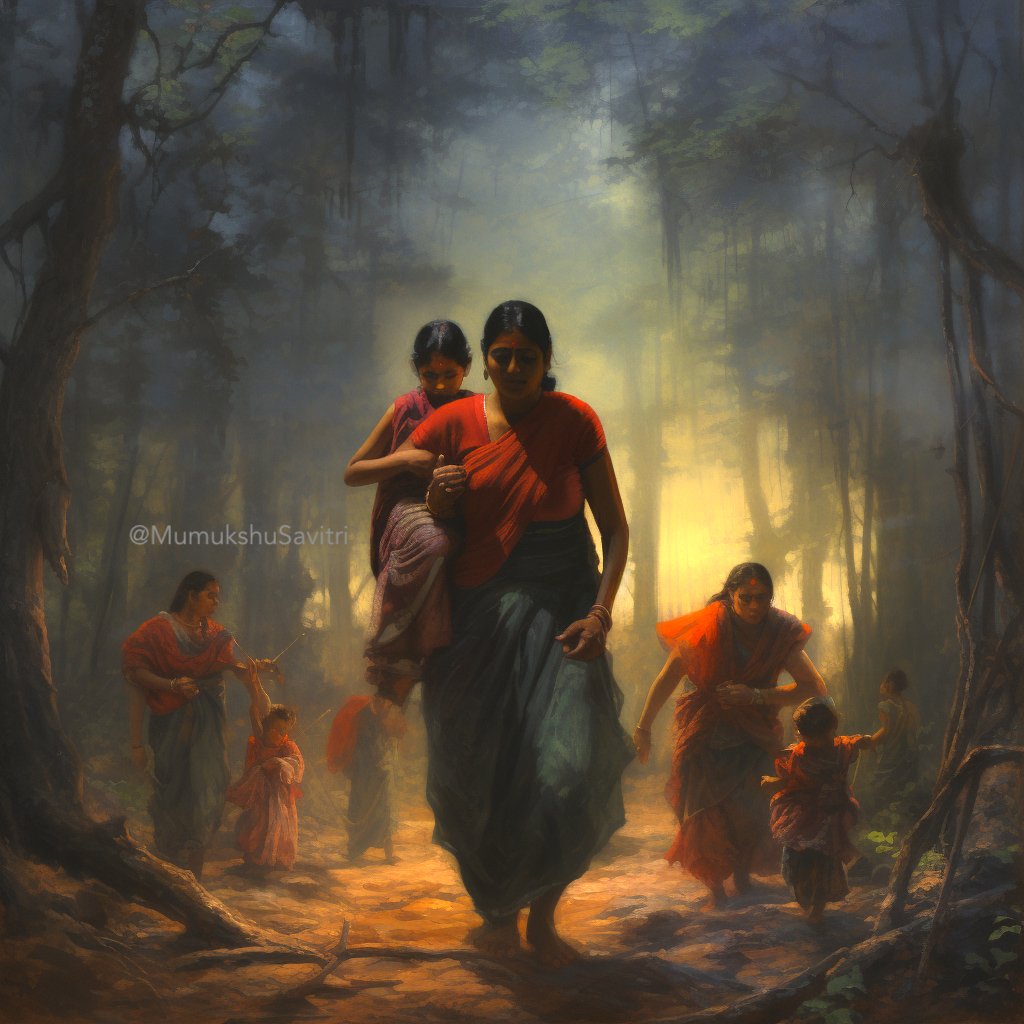
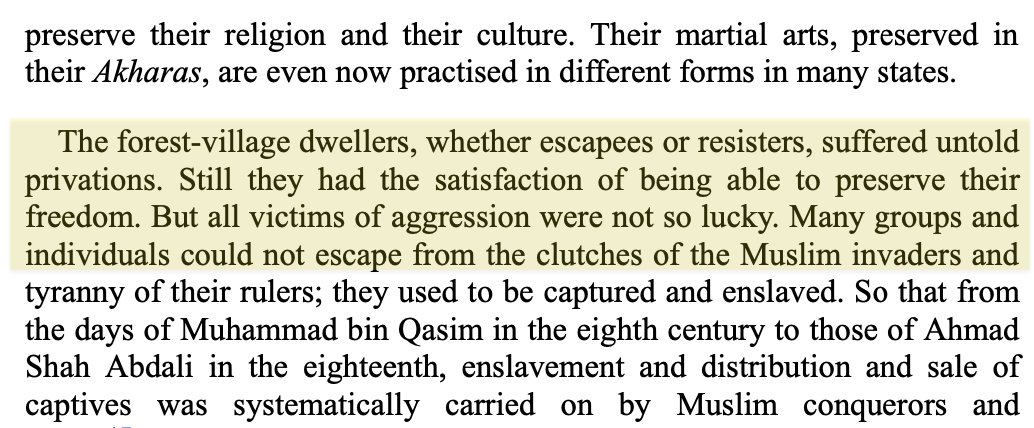
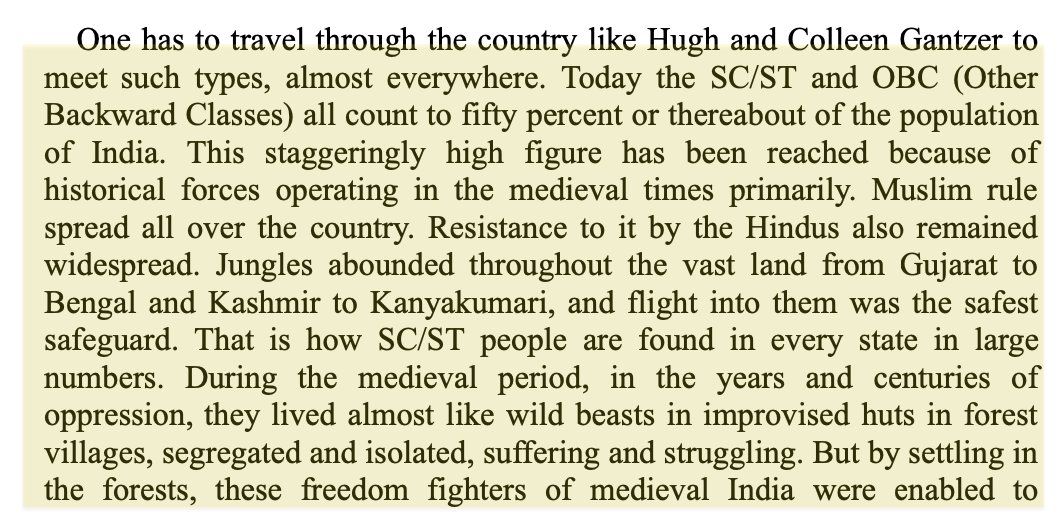
All sections of Hindu society resisted the onslaught fiercely to protect families from massacre, enslavement & conversion. When left with no choice, Lakhs escaped into jungles & mountains. Many of these Hindus became the scheduled tribes & backward castes of present day India.
All sections of Hindu society resisted the onslaught fiercely to protect families from massacre, enslavement & conversion. When left with no choice, Lakhs escaped into jungles & mountains. Many of these Hindus became the scheduled tribes & backward castes of present day India.
8
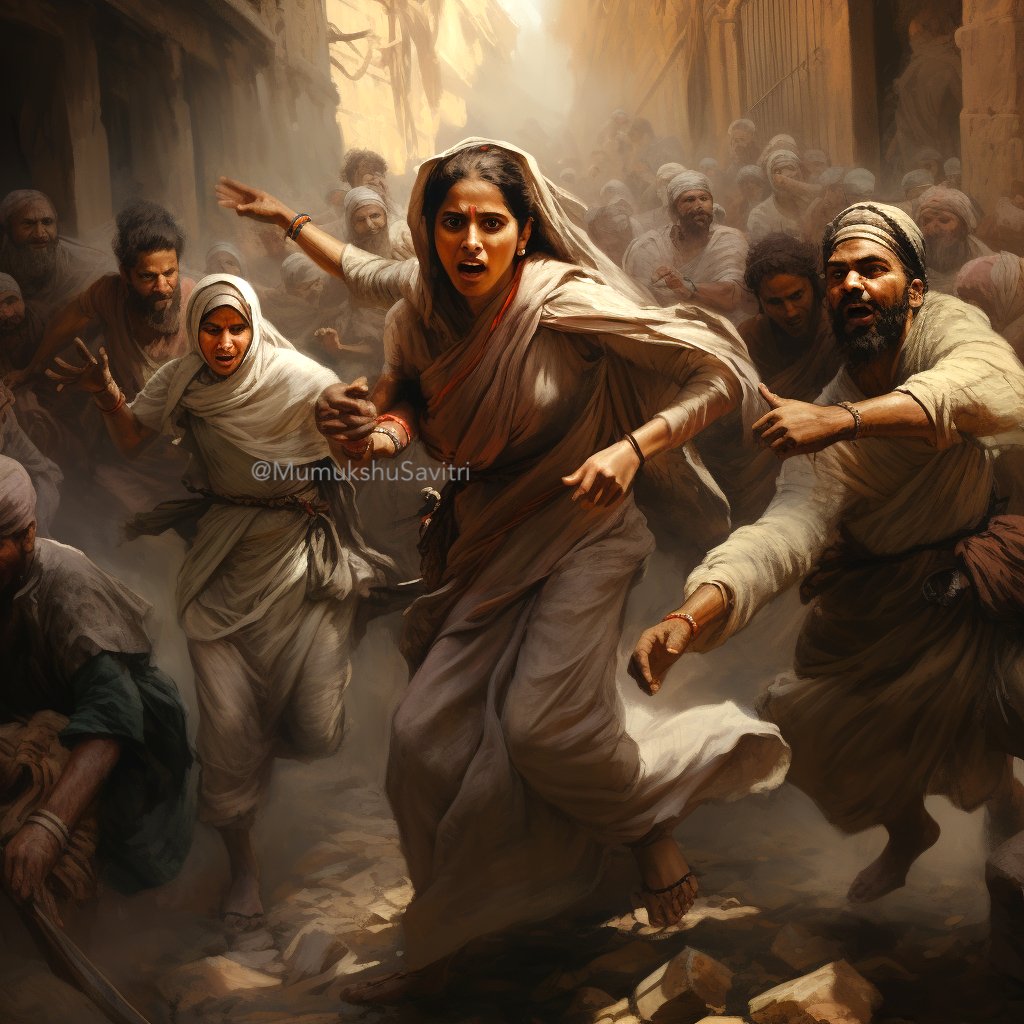
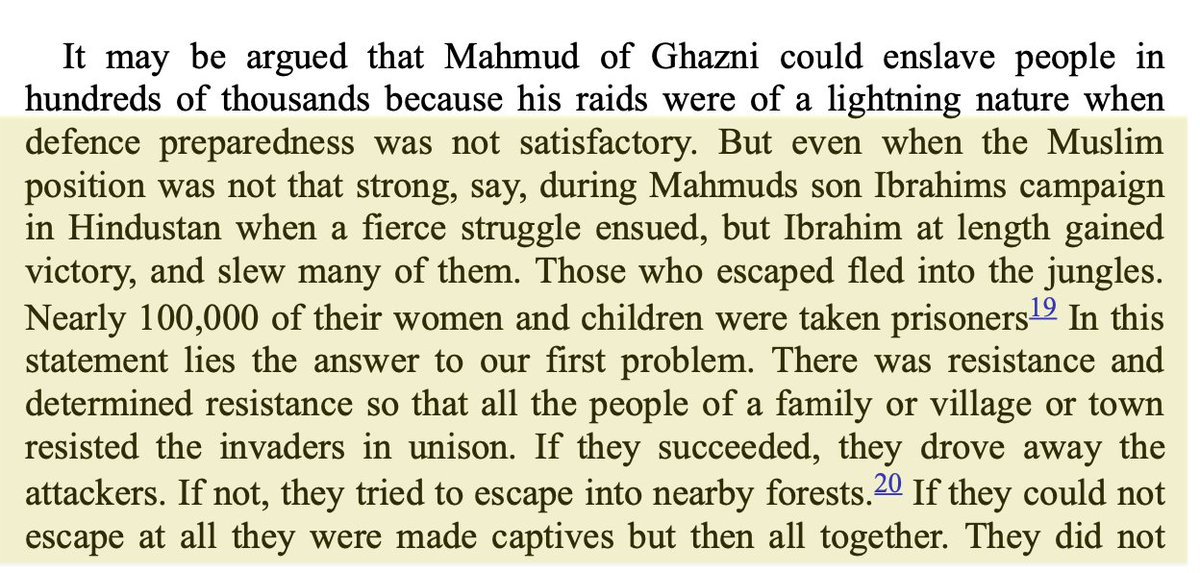
In late 11th c., Mahmud’s son Ibrahim followed his father & enslaved 100,000 women & children after fierce battle. Hindus fought back but when entire families were enslaved, their innate loyalty to clan ensured the whole community was captured together leading to disaster.
In late 11th c., Mahmud’s son Ibrahim followed his father & enslaved 100,000 women & children after fierce battle. Hindus fought back but when entire families were enslaved, their innate loyalty to clan ensured the whole community was captured together leading to disaster.
9
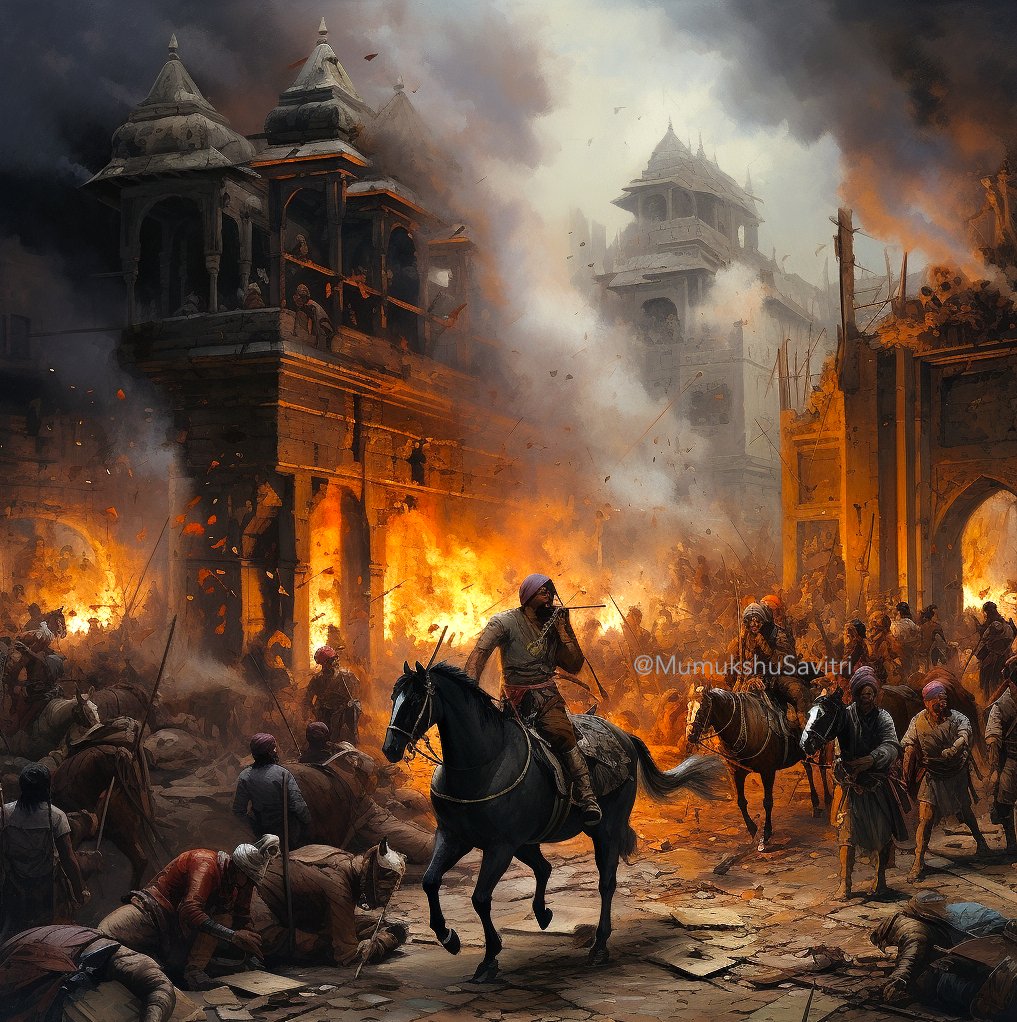
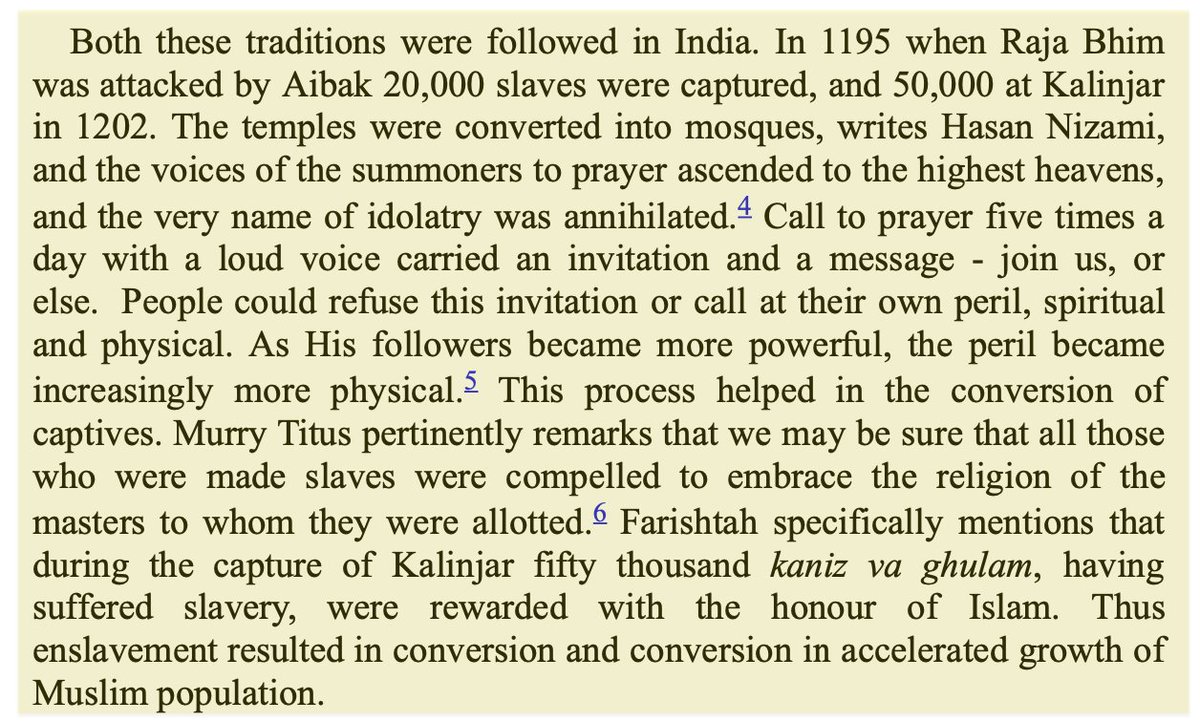
In the 12th c., Aibak enslaved 20,000 during his attack on Raja Bhim & 50,000 from Kalinjar. 100s of Temples were destroyed & made mosques. Ghori sent Aibak reinforcements as new Muslim converts from Central Asia poured in for loot & slaves, giving them a numerical advantage.
In the 12th c., Aibak enslaved 20,000 during his attack on Raja Bhim & 50,000 from Kalinjar. 100s of Temples were destroyed & made mosques. Ghori sent Aibak reinforcements as new Muslim converts from Central Asia poured in for loot & slaves, giving them a numerical advantage.
10
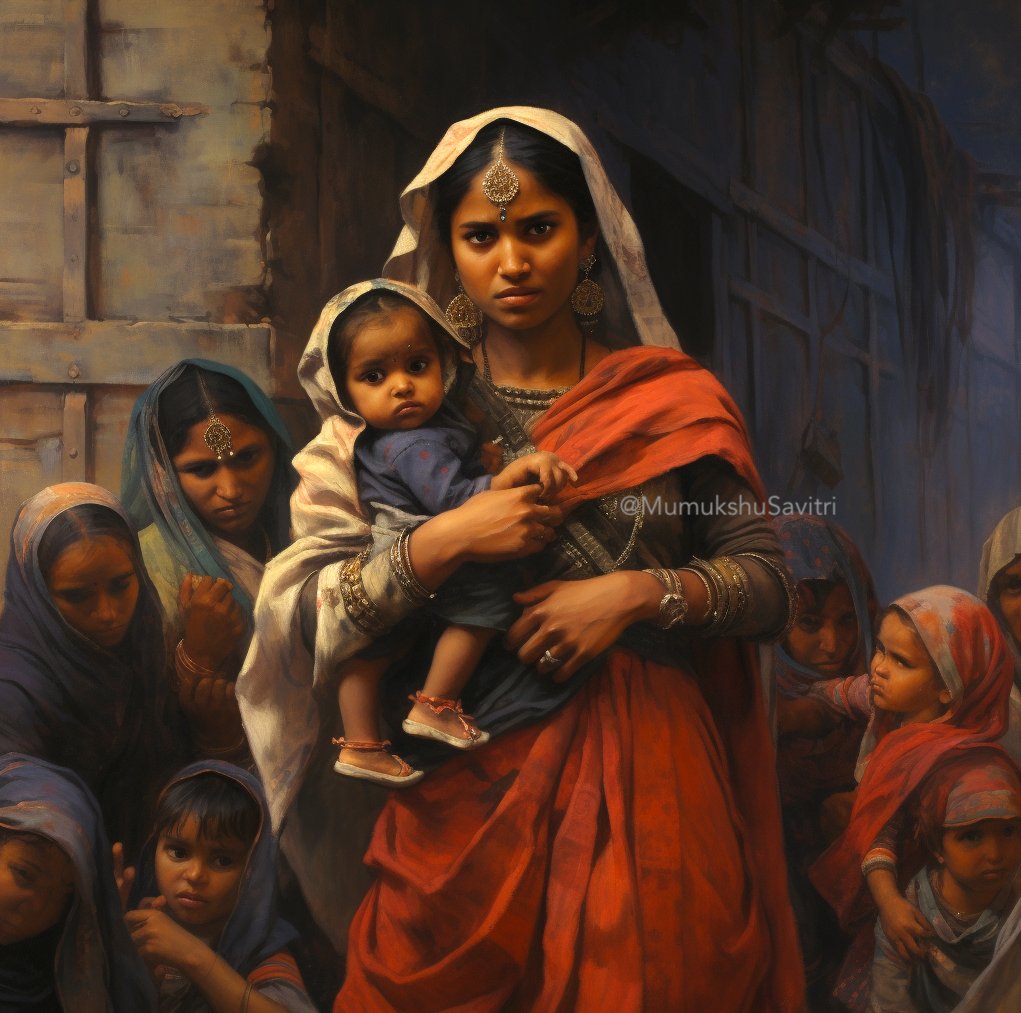
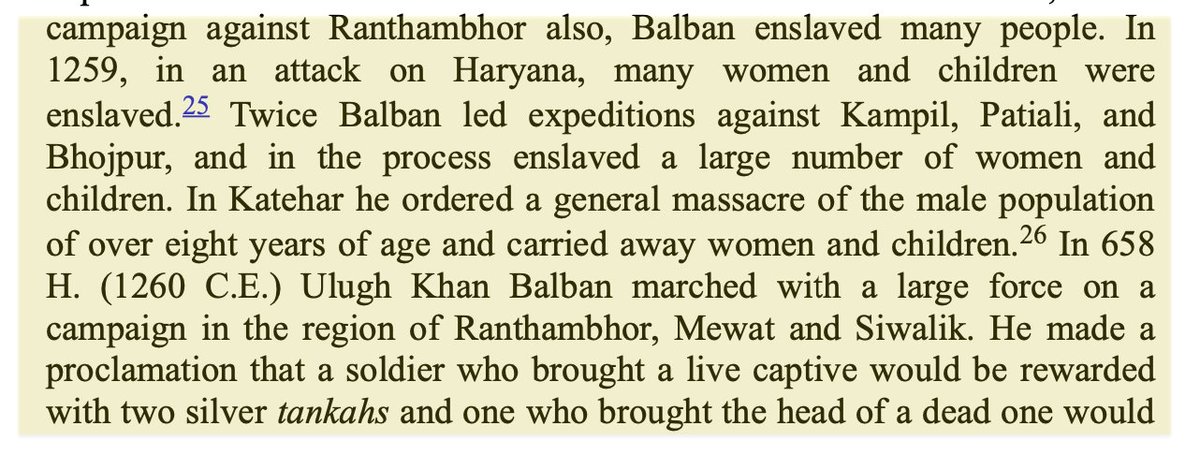
In early 13th c. Balban massacred & enslaved 1000s in Ranthambore, Kampil, Patiali, Bhojpur, Katchar, & Mewat. He ordered general massacre of any Hindu male over 8 yrs & enslaved all the women & children. Capture of a live slave earned 2 Tankah & a Hindu's head earned 1 Tankah
In early 13th c. Balban massacred & enslaved 1000s in Ranthambore, Kampil, Patiali, Bhojpur, Katchar, & Mewat. He ordered general massacre of any Hindu male over 8 yrs & enslaved all the women & children. Capture of a live slave earned 2 Tankah & a Hindu's head earned 1 Tankah
11
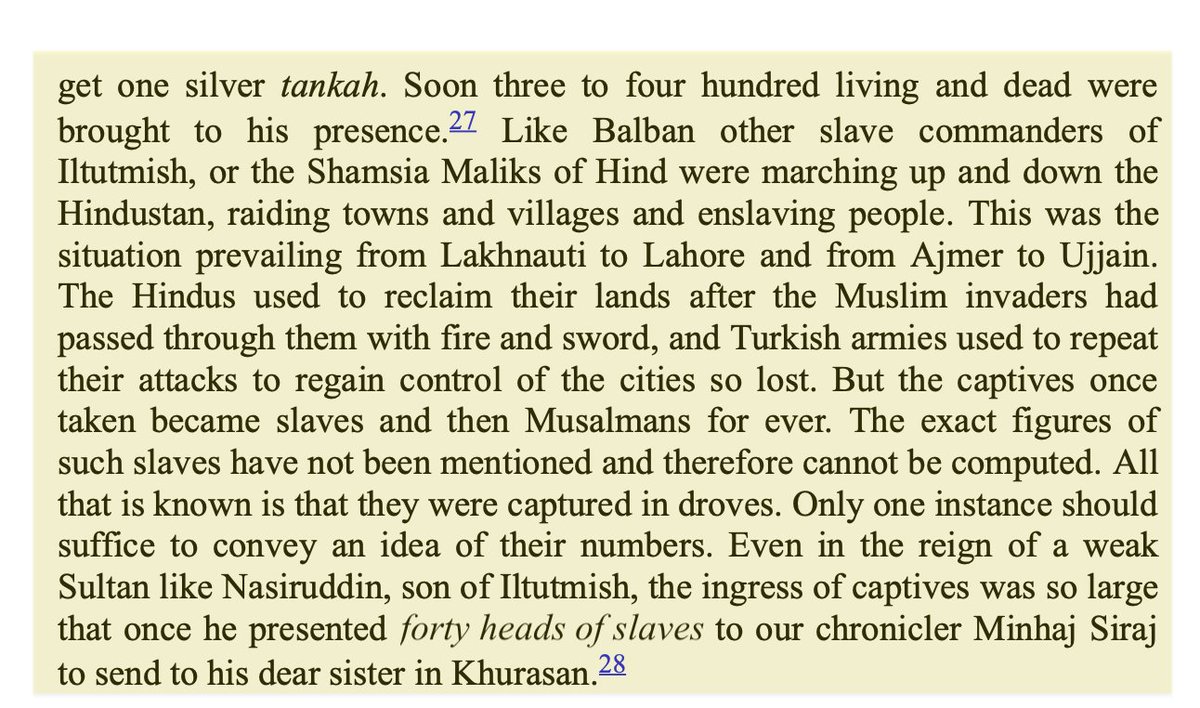
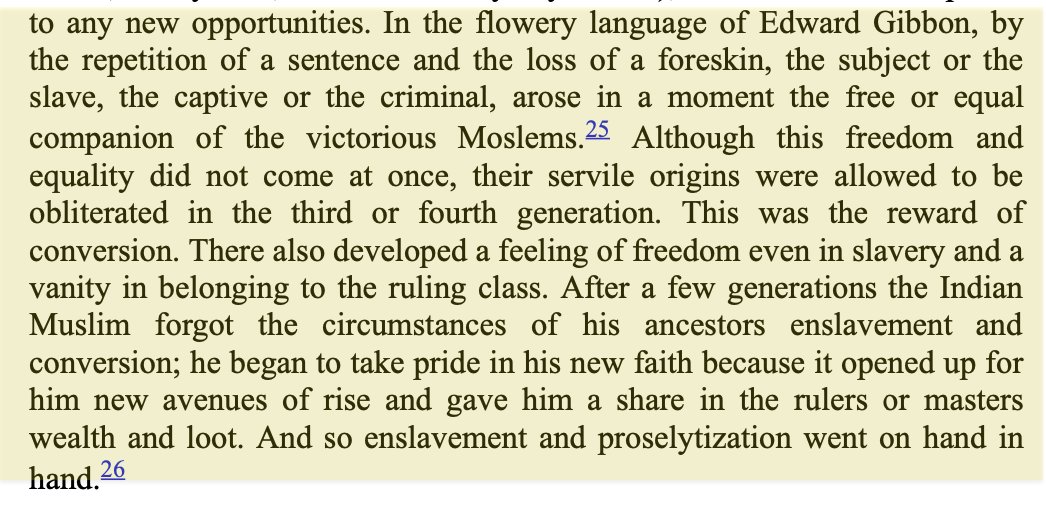
A Hindu slave had no choice except conversion or death. Even a weak Sultan like Nasiruddin, son of Iltumish, had so many slaves that he sent 40 to his chronicler for a “gift” to Khurasan. Thus most Indian Muslims are descendants of forcibly converted Hindu slave ancestors.
A Hindu slave had no choice except conversion or death. Even a weak Sultan like Nasiruddin, son of Iltumish, had so many slaves that he sent 40 to his chronicler for a “gift” to Khurasan. Thus most Indian Muslims are descendants of forcibly converted Hindu slave ancestors.
12
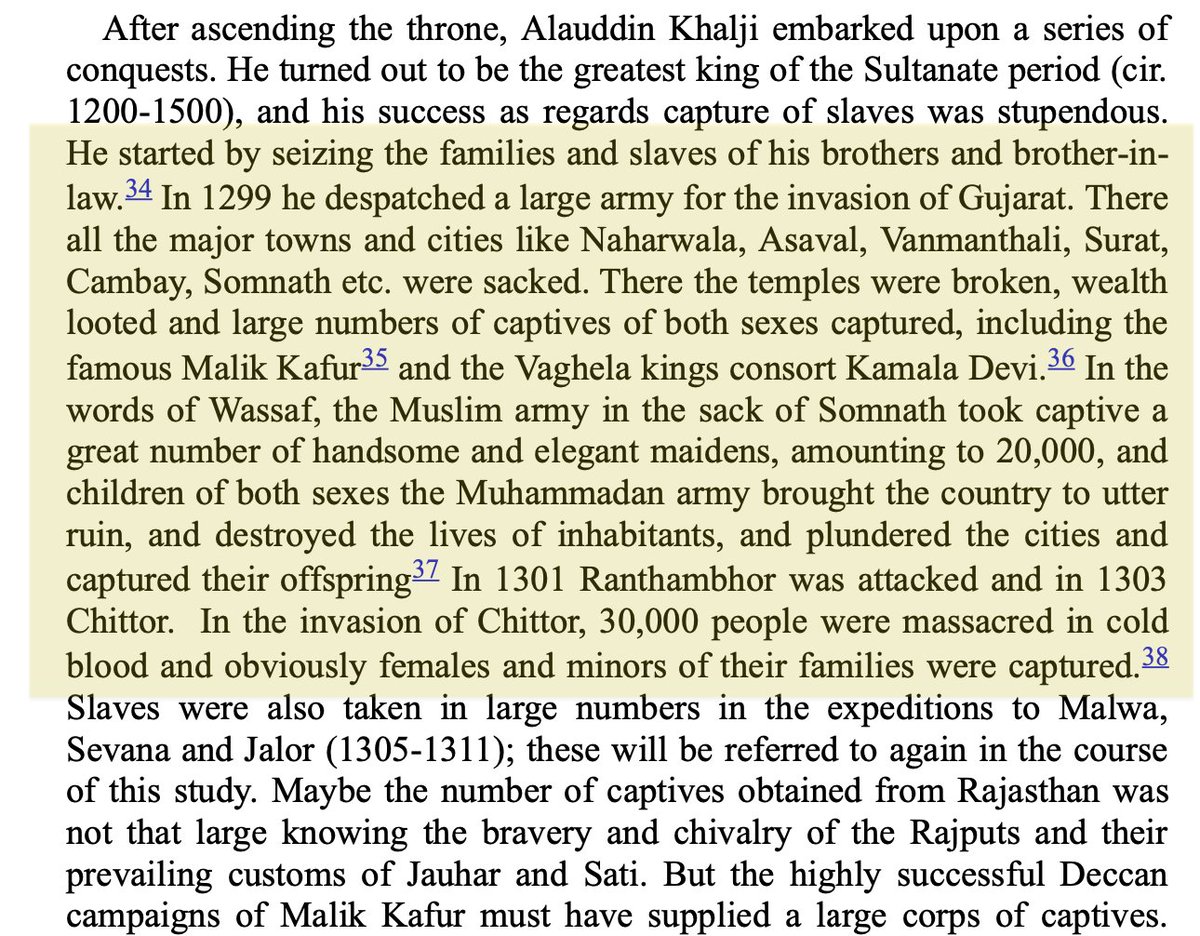
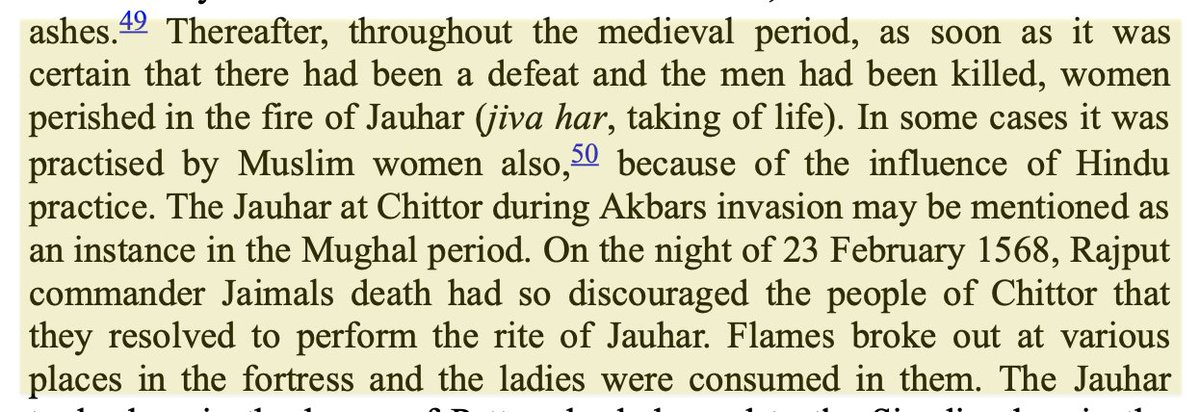
In 13th c., Alauddin Khalji sacked & enslaved 20,000 women from Somnath. 30,000 men were massacred in Chittor. Khalji had 4,75,000 soldiers compared to just 3-4000 in Ratan Singh's army. Yet the brave Rajputs fought to the death & 16,000 women led by Padmavati committed Jauhar
In 13th c., Alauddin Khalji sacked & enslaved 20,000 women from Somnath. 30,000 men were massacred in Chittor. Khalji had 4,75,000 soldiers compared to just 3-4000 in Ratan Singh's army. Yet the brave Rajputs fought to the death & 16,000 women led by Padmavati committed Jauhar
13
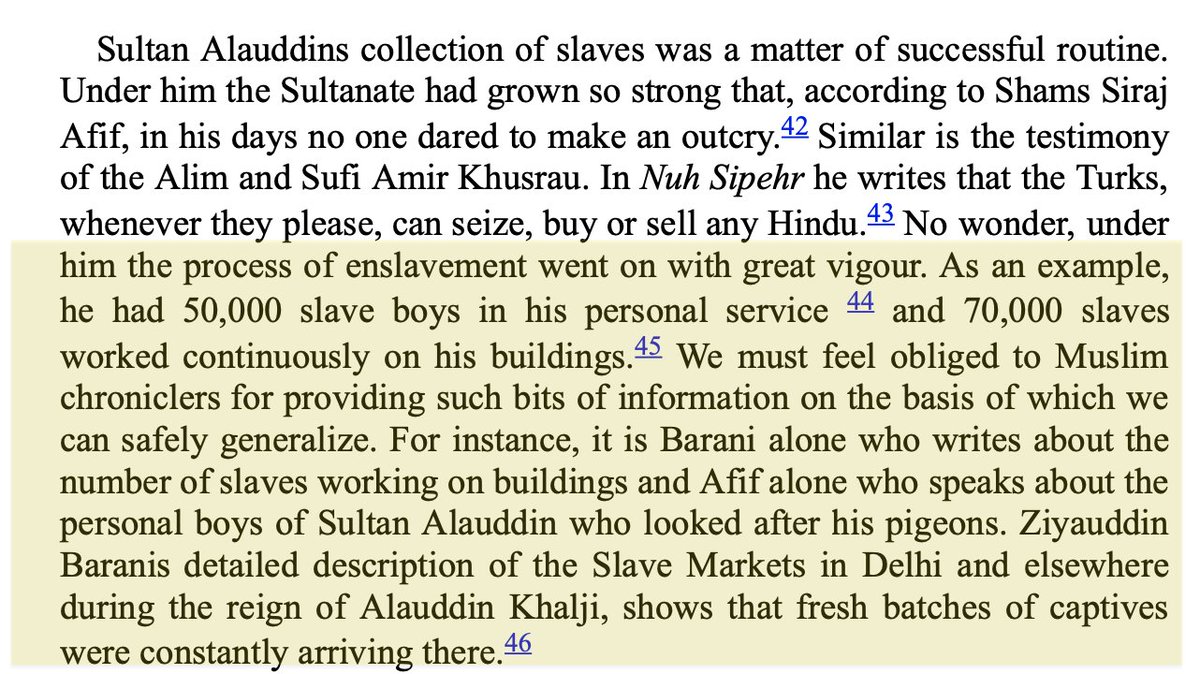
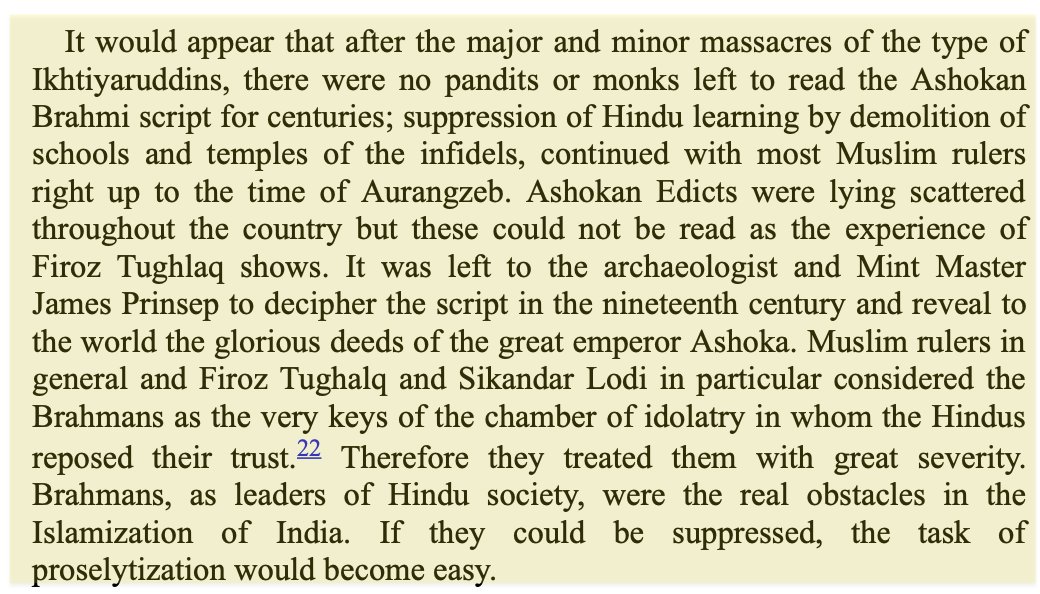
Arts & culture were devastated as all skilled Hindu artisans were enslaved. Chroniclers Afif & Barani describe Khalji’s 50,000 'boys' & 70,000 slaves working on buildings. Universities & libraries were decimated & Brahmins persecuted so widely that entire scripts were lost.
Arts & culture were devastated as all skilled Hindu artisans were enslaved. Chroniclers Afif & Barani describe Khalji’s 50,000 'boys' & 70,000 slaves working on buildings. Universities & libraries were decimated & Brahmins persecuted so widely that entire scripts were lost.
14
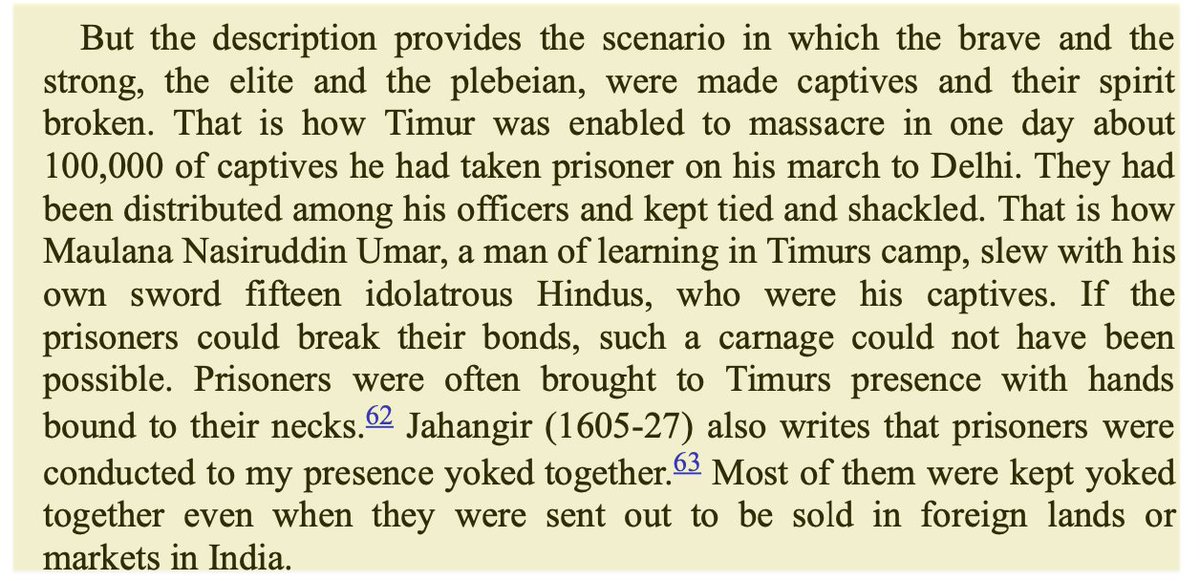
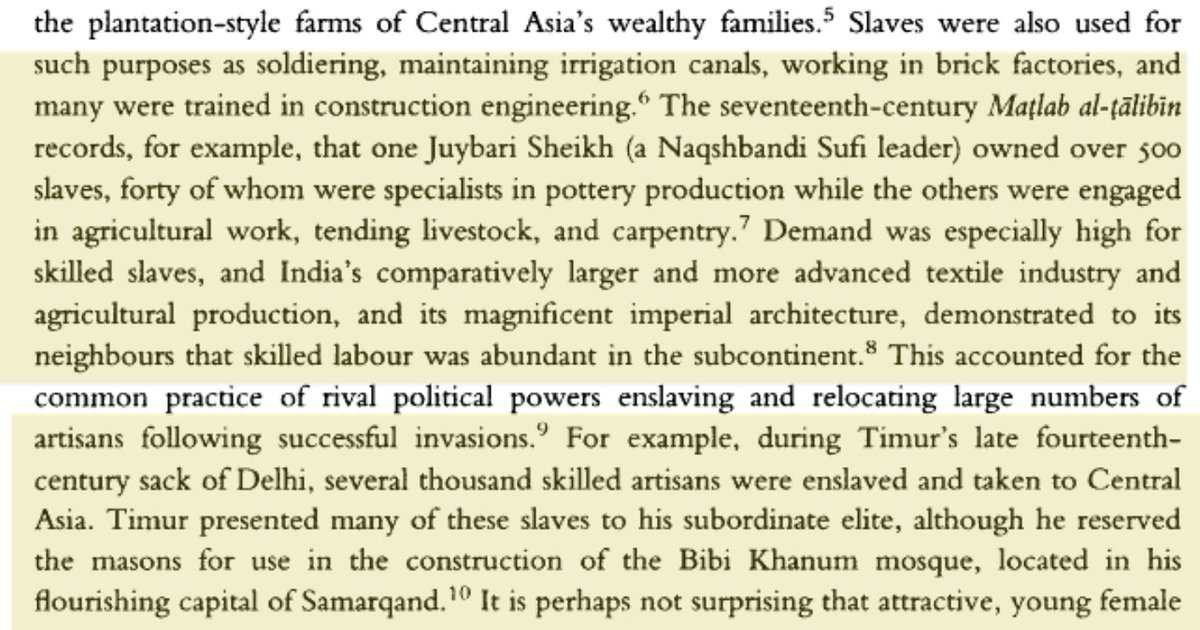
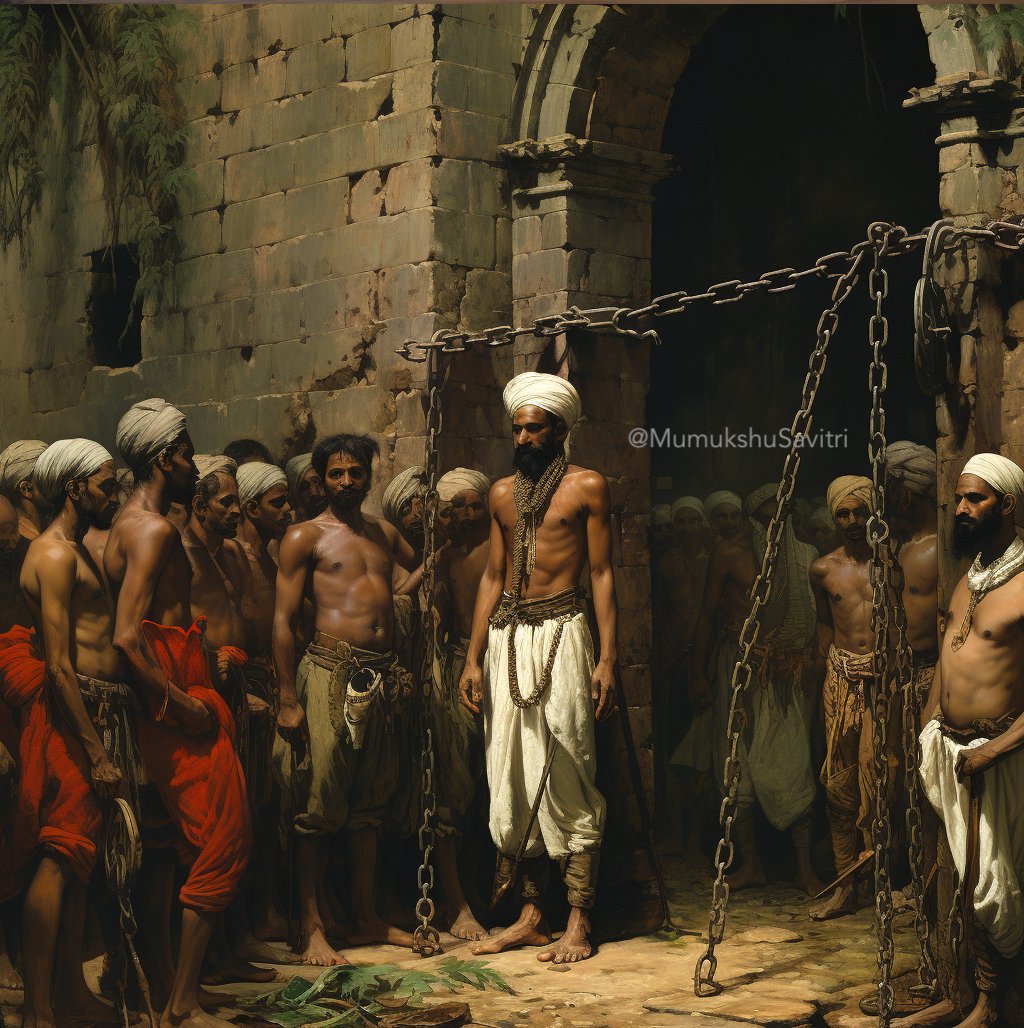
In 14th c. Timur began the Mughal era by slaughtering 100,000 Hindus before attacking Delhi. They could not escape as their hands were tied to their necks & they were yoked together. 250,000 skilled Hindu builders were enslaved and taken back to Samarkand for their expertise.
In 14th c. Timur began the Mughal era by slaughtering 100,000 Hindus before attacking Delhi. They could not escape as their hands were tied to their necks & they were yoked together. 250,000 skilled Hindu builders were enslaved and taken back to Samarkand for their expertise.
15
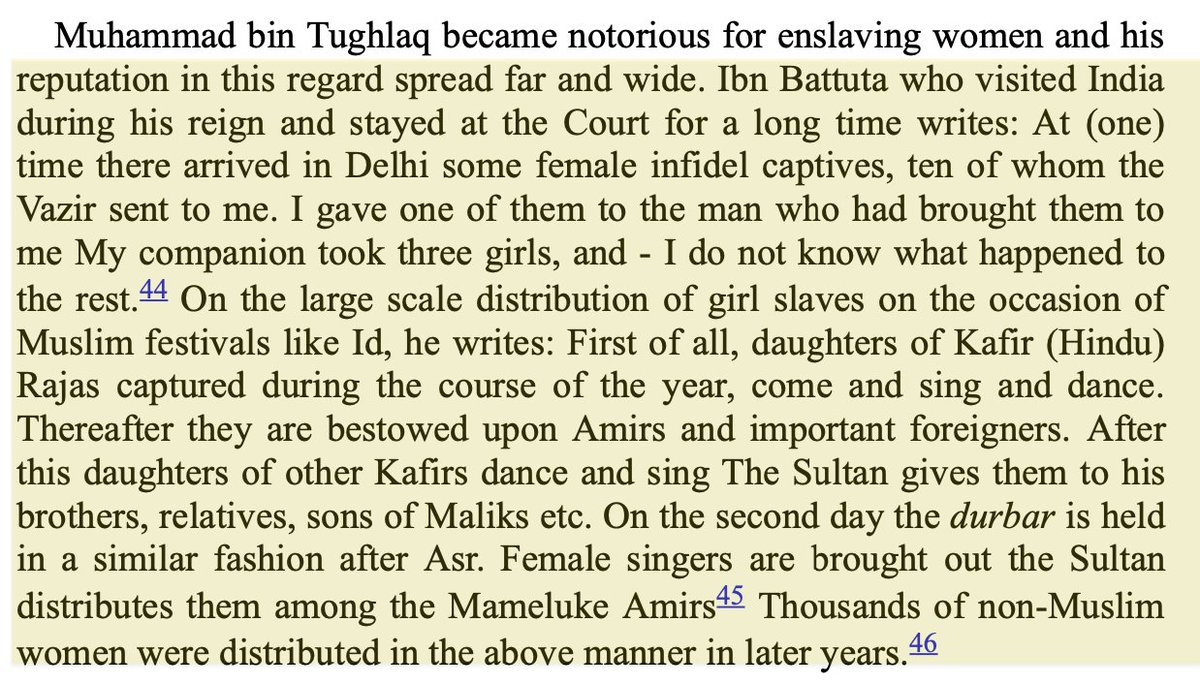
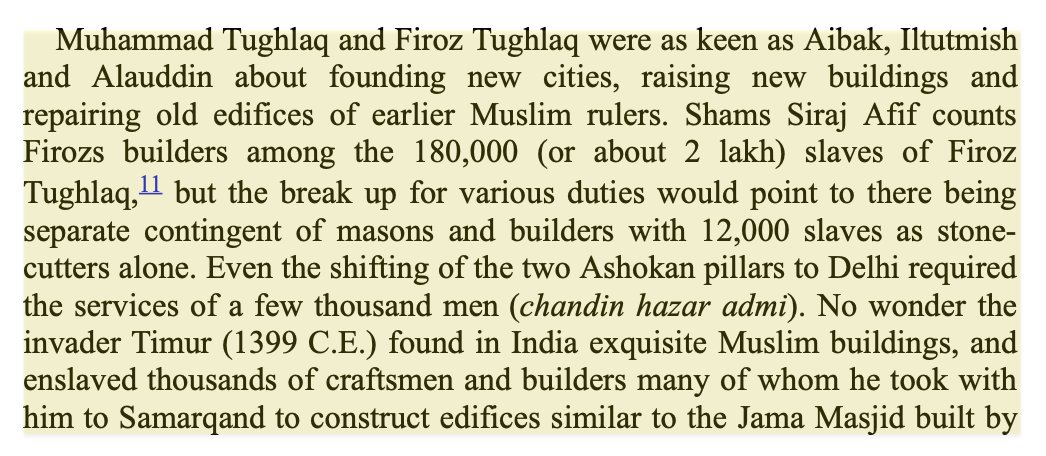
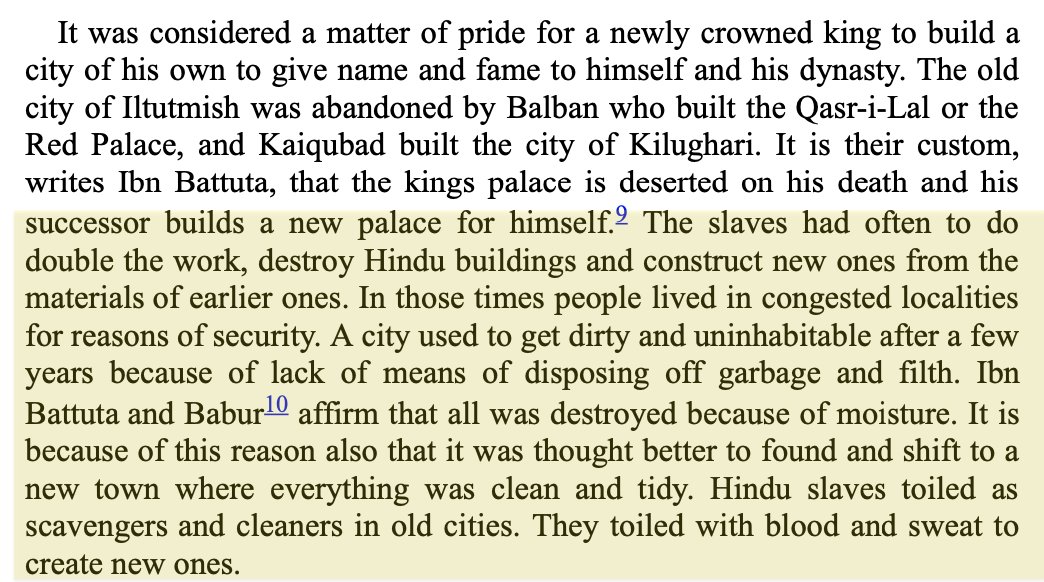
In the same era, Tughlaq was notorious for“distributing” Hindu women like sweets on Id. 1000s of enslaved women were forced to sing & dance - then raped. 2 Lakh skilled Hindus (12,000 stone-cutters) built all his cities & Lakhs had to clean & scavenge the city's trash & sewage
In the same era, Tughlaq was notorious for“distributing” Hindu women like sweets on Id. 1000s of enslaved women were forced to sing & dance - then raped. 2 Lakh skilled Hindus (12,000 stone-cutters) built all his cities & Lakhs had to clean & scavenge the city's trash & sewage
16
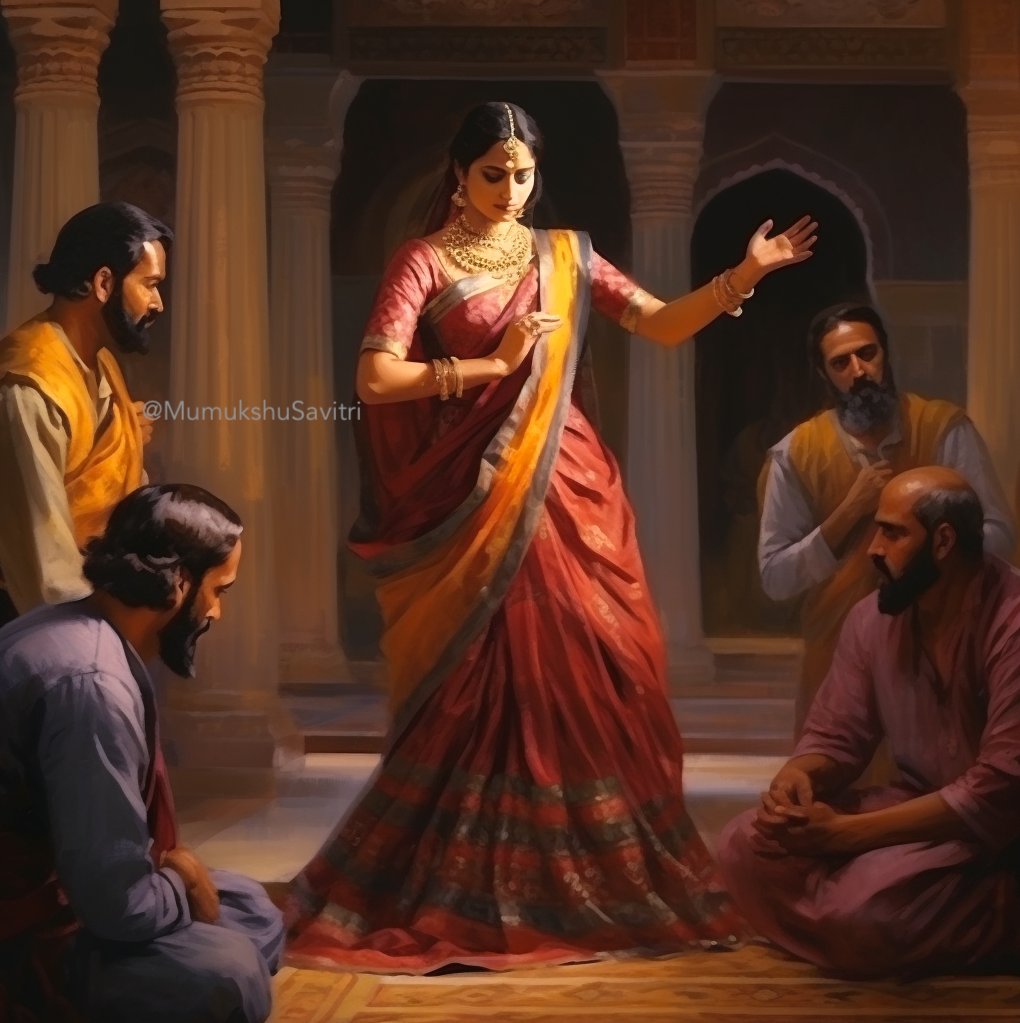
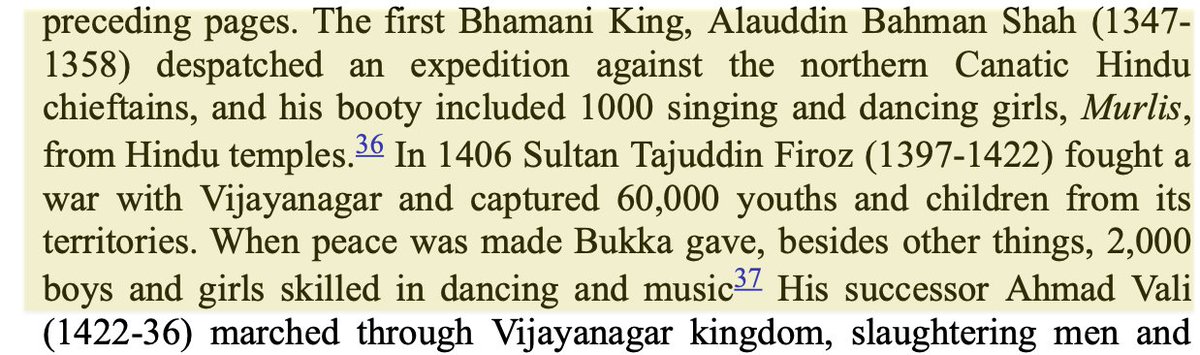
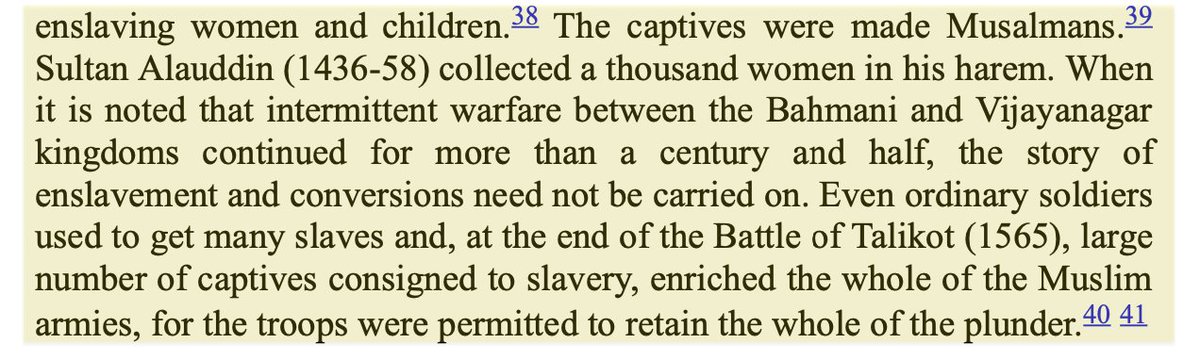
In 15th c. Bahmani Sultan Tajuddin Firoz fought Vijayanagar & enslaved 60,000 Hindus. Many of the slaves were singers & dancers & musicians of highest caliber. They were forced to convert & degrade their expertise in classical Hindu arts to become performers in Islamic courts.
In 15th c. Bahmani Sultan Tajuddin Firoz fought Vijayanagar & enslaved 60,000 Hindus. Many of the slaves were singers & dancers & musicians of highest caliber. They were forced to convert & degrade their expertise in classical Hindu arts to become performers in Islamic courts.
17
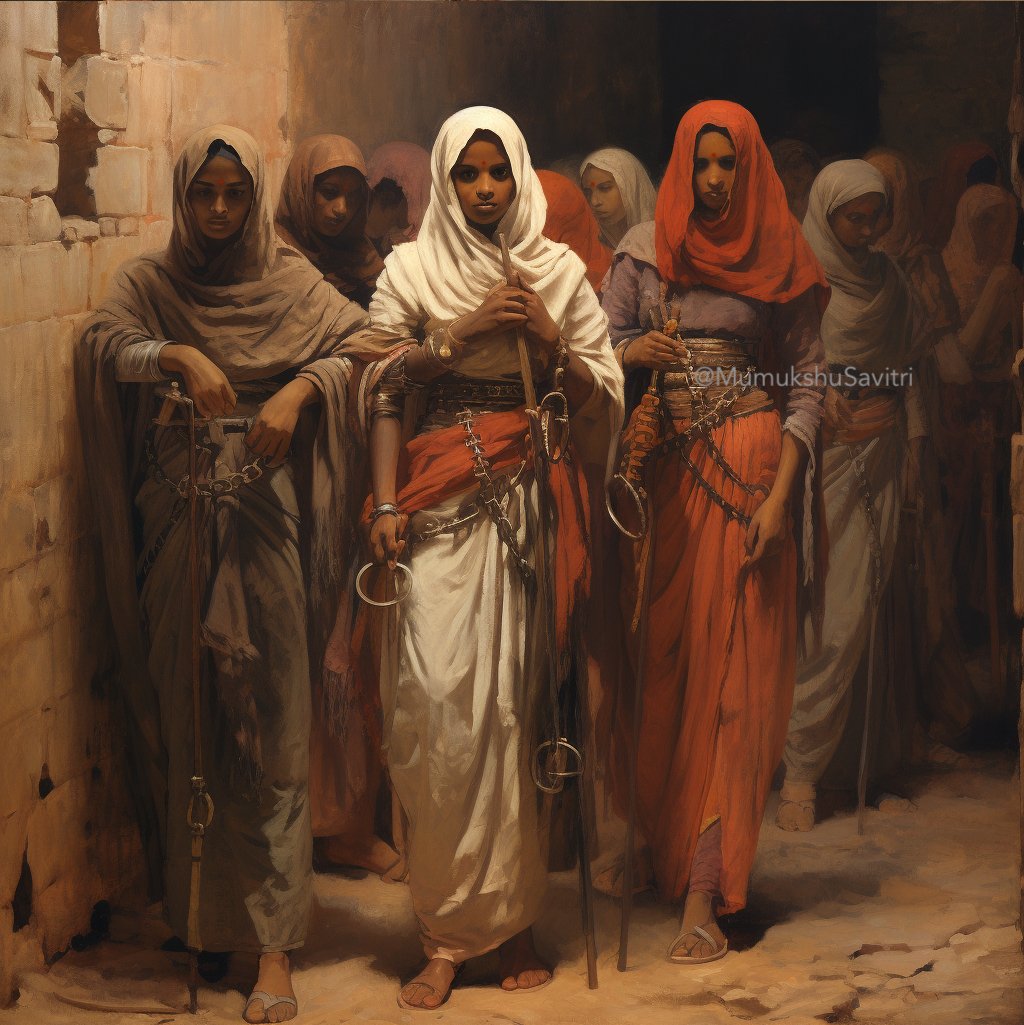
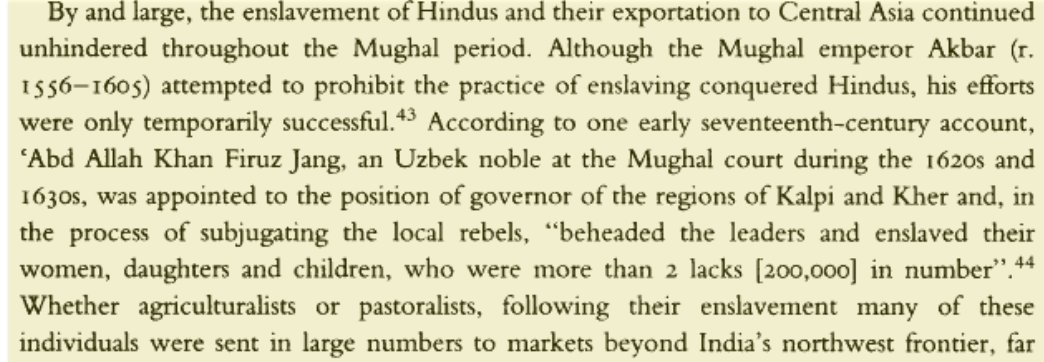
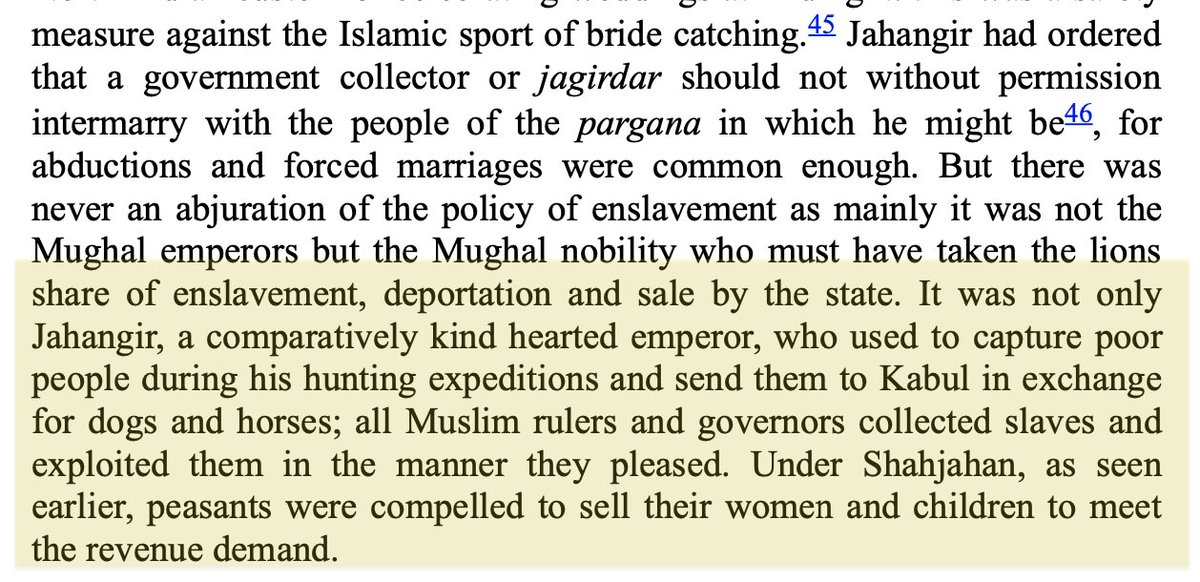
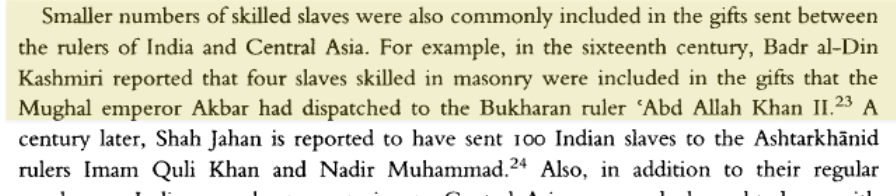
In the 16th c. Akbar the “Great” sent skilled Hindu artisans as gifts to Muslim kings. Jahangir enslaved many Hindus during his hunts & traded them to Kabul for dogs & horses. Jahangir’s Uzbek governor massacred 1000s to enslave 2 Lakh Hindu women & children in Kalpi & Kher.
In the 16th c. Akbar the “Great” sent skilled Hindu artisans as gifts to Muslim kings. Jahangir enslaved many Hindus during his hunts & traded them to Kabul for dogs & horses. Jahangir’s Uzbek governor massacred 1000s to enslave 2 Lakh Hindu women & children in Kalpi & Kher.
18
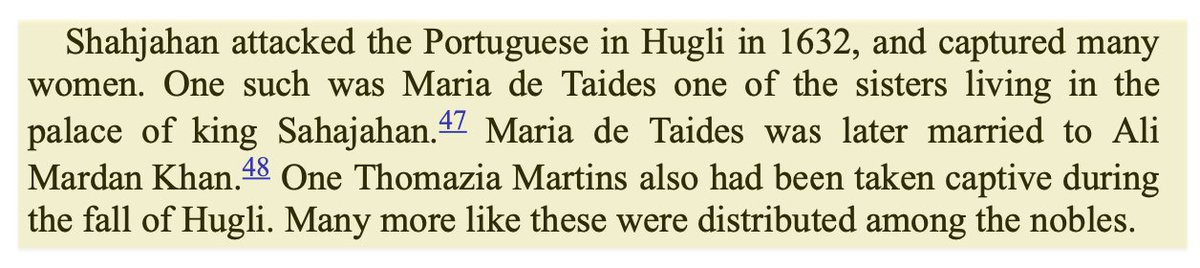
In 17th c. Shah Jahan continued to send Hindu slaves to Muslim kings abroad. During his attack on the Portugese in Hugli he captured many Hindu & Portugese women including Maria De Taides & Thomazia Martins who were taken as slaves & distributed among Shah Jahan’s courtiers.
In 17th c. Shah Jahan continued to send Hindu slaves to Muslim kings abroad. During his attack on the Portugese in Hugli he captured many Hindu & Portugese women including Maria De Taides & Thomazia Martins who were taken as slaves & distributed among Shah Jahan’s courtiers.

19
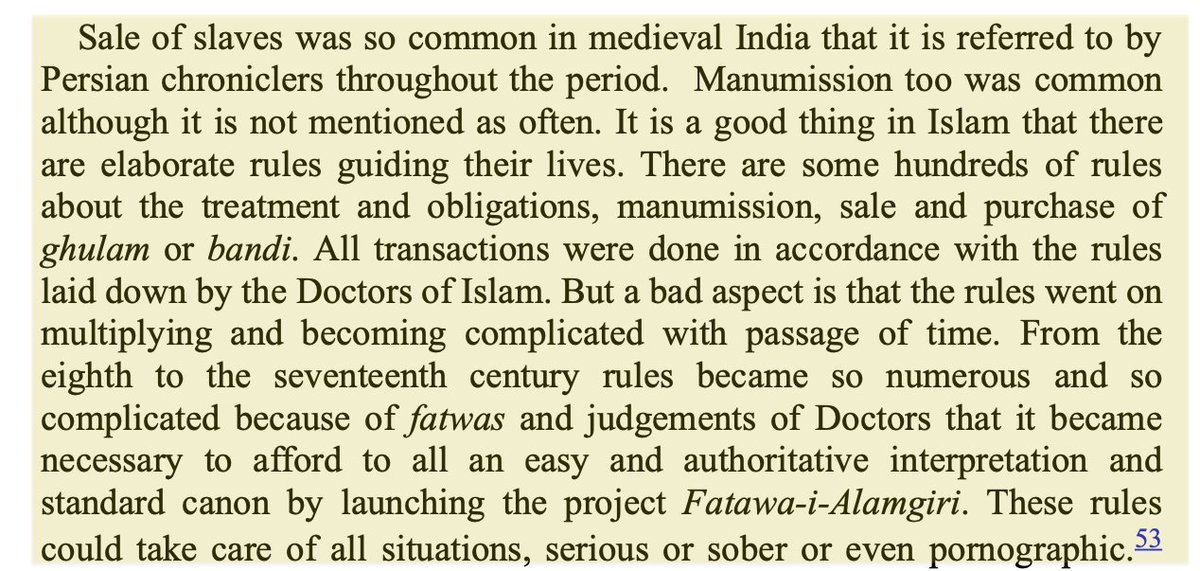
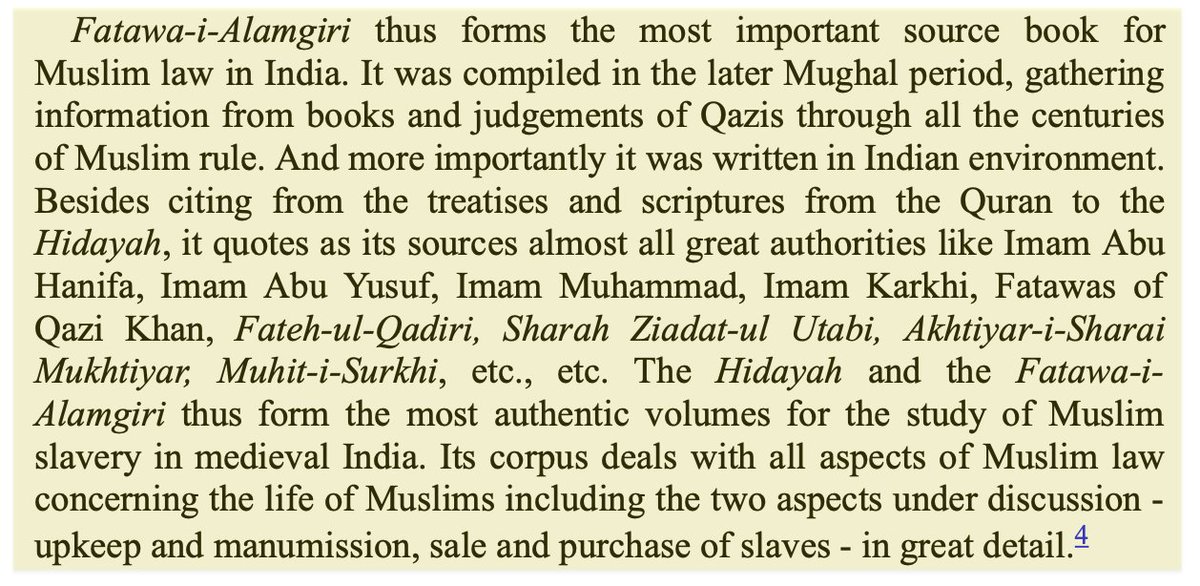
By the 18th c. slavery by Muslims had existed for so long in India that Islamic rules on slaves had become too complex. Aurangzeb invited 100s of Islamic scholars to create Fatwa-i-Alamgiri which quoted Islamic authorities on rules for Muslim life & slavery in great detail.
By the 18th c. slavery by Muslims had existed for so long in India that Islamic rules on slaves had become too complex. Aurangzeb invited 100s of Islamic scholars to create Fatwa-i-Alamgiri which quoted Islamic authorities on rules for Muslim life & slavery in great detail.
20
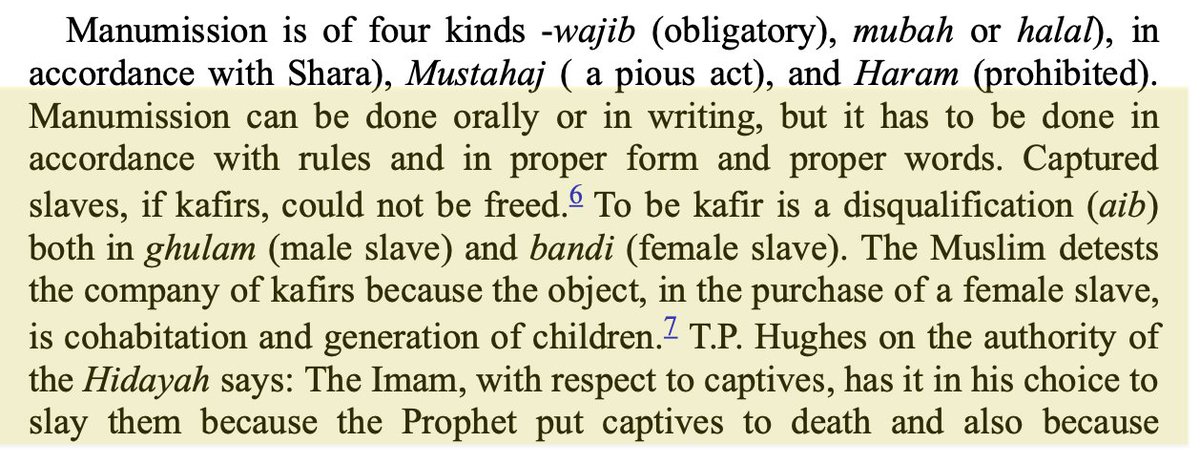
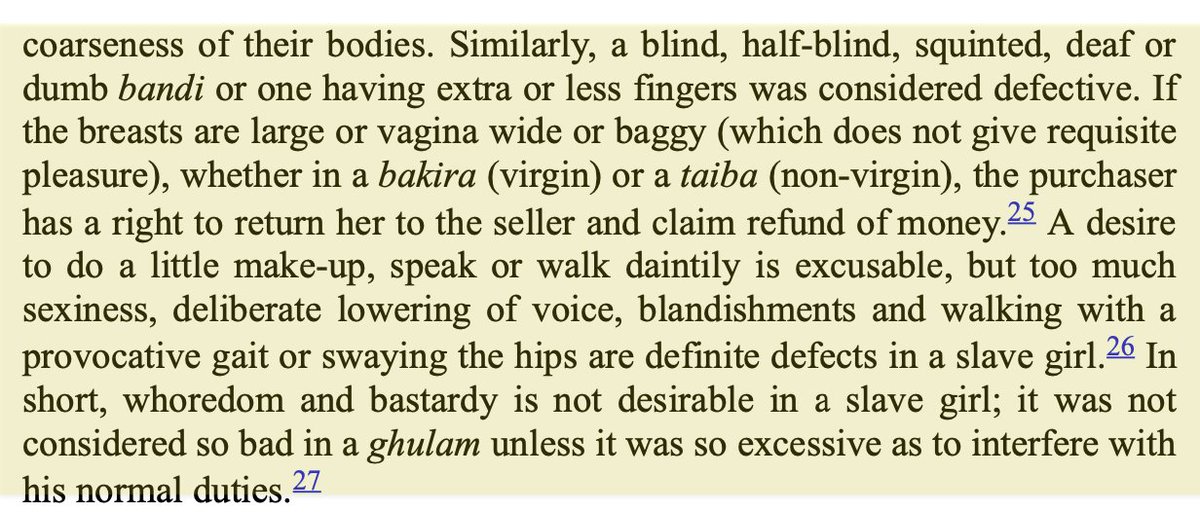
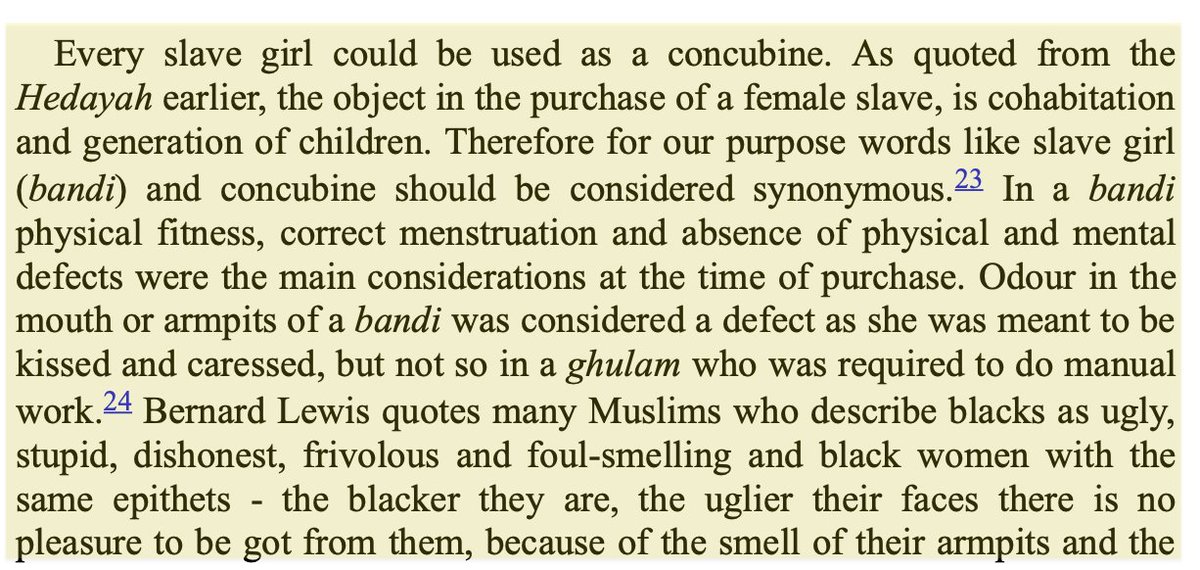
These horrifying rules stated Kafirs could never be freed. The object of enslaving Kafir “Bandis” including children was only to rape & produce Muslims. Female slaves were pieces of meat whose value reduced if they were dark skinned, handicapped, or sexually unattractive.
These horrifying rules stated Kafirs could never be freed. The object of enslaving Kafir “Bandis” including children was only to rape & produce Muslims. Female slaves were pieces of meat whose value reduced if they were dark skinned, handicapped, or sexually unattractive.

21
Historical evidence by Muslim chroniclers shows ‘1000 years of slavery’ is no narrative but the brutal truth. Slavery, massacre & rape of millions of Hindus & destruction of Indic arts, culture, society & knowledge systems was the PRIMARY contribution of Muslim kings to India.
Historical evidence by Muslim chroniclers shows ‘1000 years of slavery’ is no narrative but the brutal truth. Slavery, massacre & rape of millions of Hindus & destruction of Indic arts, culture, society & knowledge systems was the PRIMARY contribution of Muslim kings to India.
22
Yet 1000 years of slavery did not mean 1000 years of rule over Hindus. Turkish rule lasted only about 150 yrs due to Rajput resistance & Vijayanagara Empire. Despite best attempts Muslim could never rule all of India. Their influence was limited to NW regions & around Delhi.
Yet 1000 years of slavery did not mean 1000 years of rule over Hindus. Turkish rule lasted only about 150 yrs due to Rajput resistance & Vijayanagara Empire. Despite best attempts Muslim could never rule all of India. Their influence was limited to NW regions & around Delhi.
23
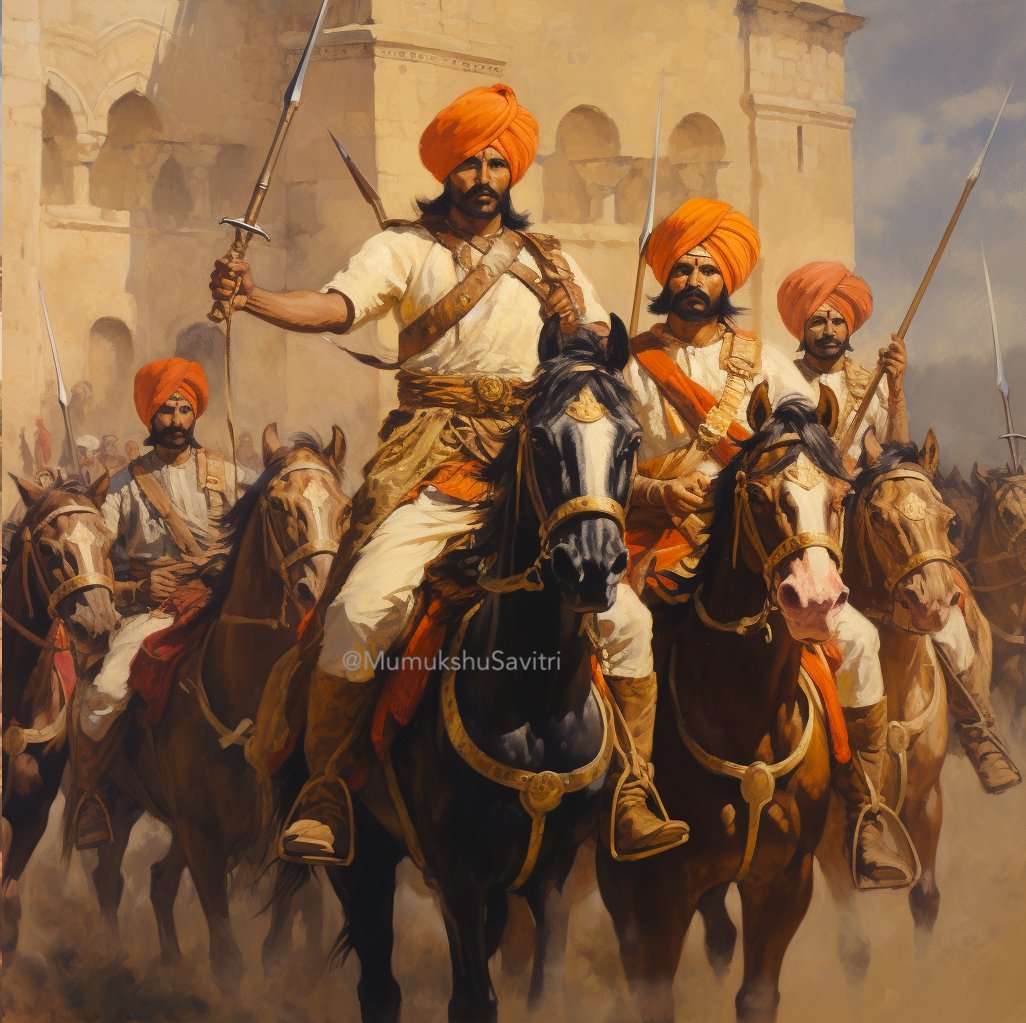
By 17th c. Mughal Empire had declined & lost many territories due to sustained revolt by the Marathas in South, Ahoms in NE, Rajput rebellion in W & Sikhs in North. Hindu slavery became rare NOT due to Mughal benevolence but because Hindu warriors decimated the Muslim forces.
By 17th c. Mughal Empire had declined & lost many territories due to sustained revolt by the Marathas in South, Ahoms in NE, Rajput rebellion in W & Sikhs in North. Hindu slavery became rare NOT due to Mughal benevolence but because Hindu warriors decimated the Muslim forces.
24
Massive nations like Persia, Mesopotamia, Egypt, Spain, Byzantine, Syria, & Africa bowed to Islamic conquest in decades. But even 1000 years of Islamic attempts to enslave & genocide could not defeat Hindus from defending Dharma & rebuilding free Bharat back to its glory.
Massive nations like Persia, Mesopotamia, Egypt, Spain, Byzantine, Syria, & Africa bowed to Islamic conquest in decades. But even 1000 years of Islamic attempts to enslave & genocide could not defeat Hindus from defending Dharma & rebuilding free Bharat back to its glory.
25
• • •
Missing some Tweet in this thread? You can try to
force a refresh