Richard III made his last charge against the Tudor forces at the Battle of Bosworth, where he died fighting alone among his enemies!
This is the story of the end of the Plantagenet Dynasty at the dawn of the modern world 🧵
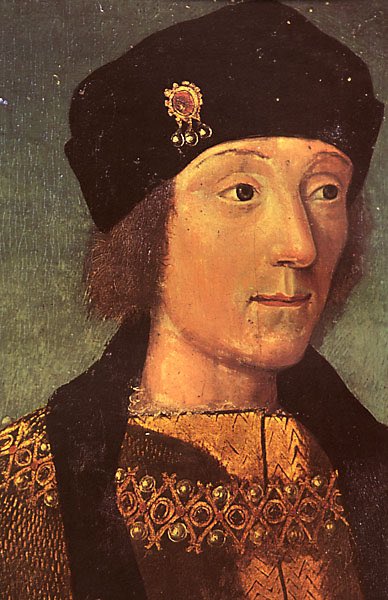
Richard ruled as king for two years after usurping and disposing of the sons of his older brother, Edward IV.
But the bitterness created among elite English society by the Wars of the Roses ran too deep & many still sought after a Lancastrian king.
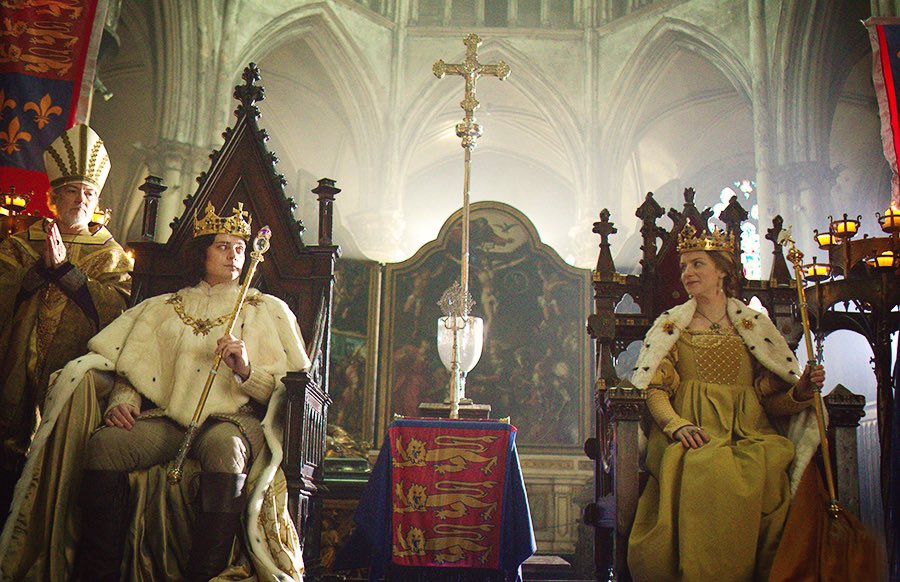
That Lancastrian was now Henry Tudor, thrice great-grandson of Edward III and distant cousin of Richard.
He was in hiding in France, fearful of his safety if he returned to England.
Upon realising the troubles & instability of Richard’s reign, he invaded.
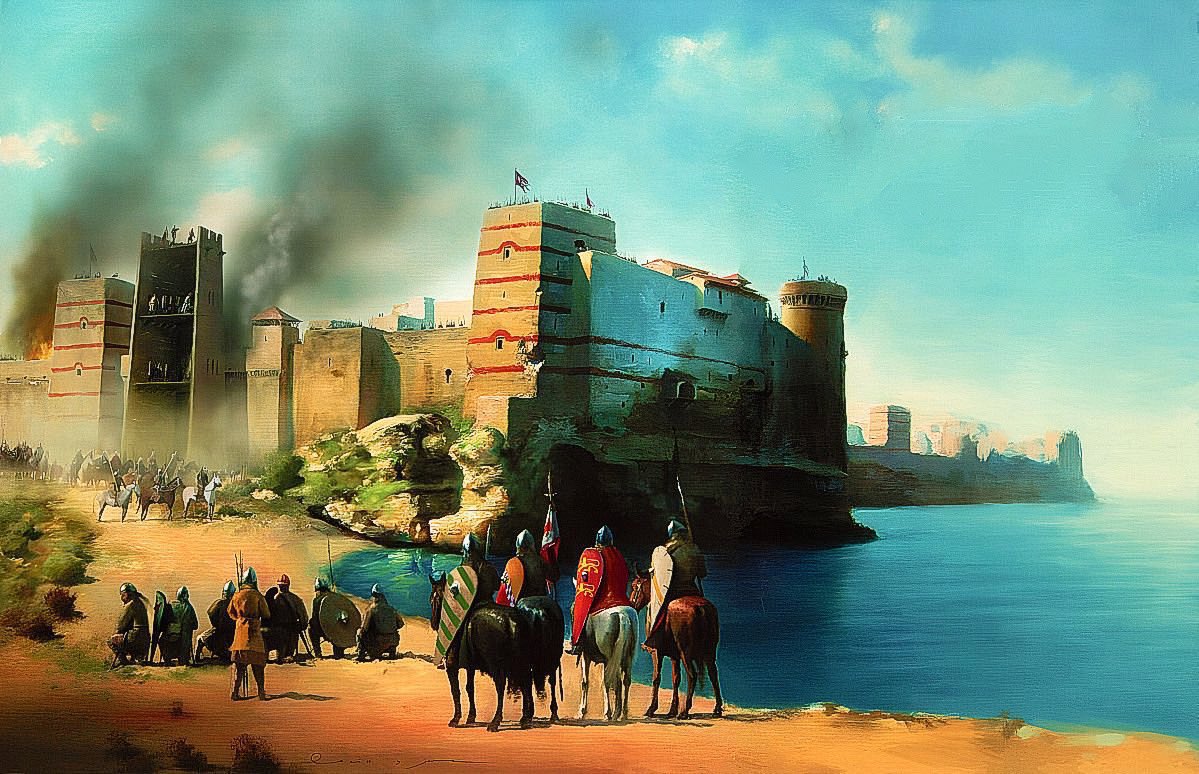
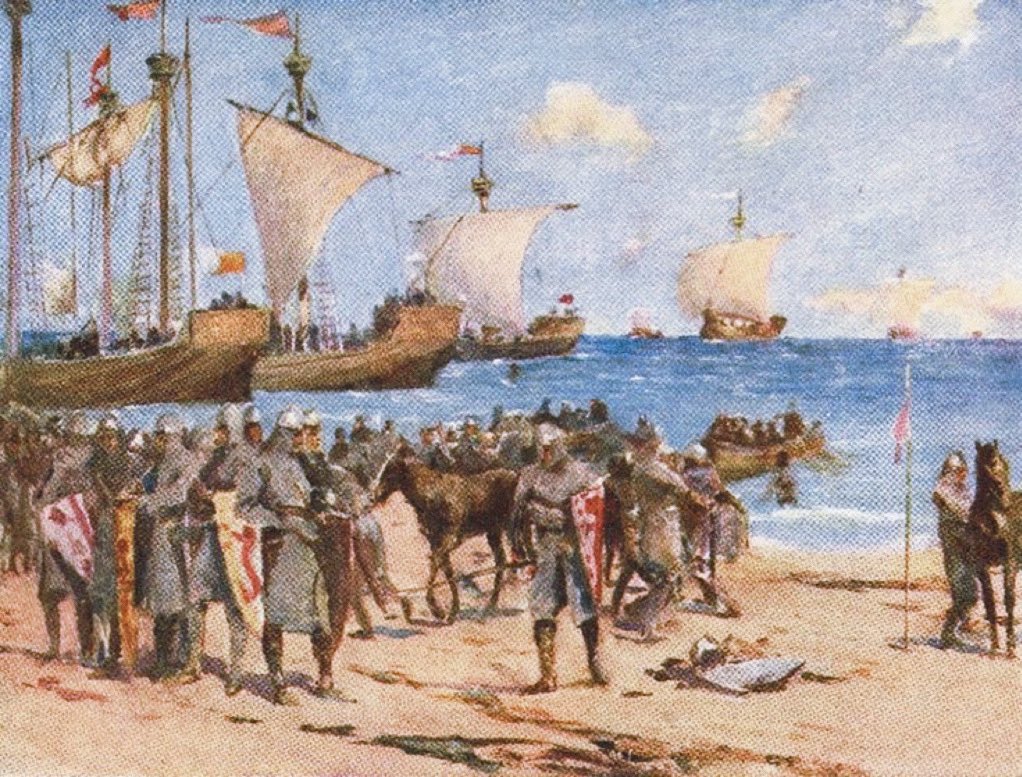
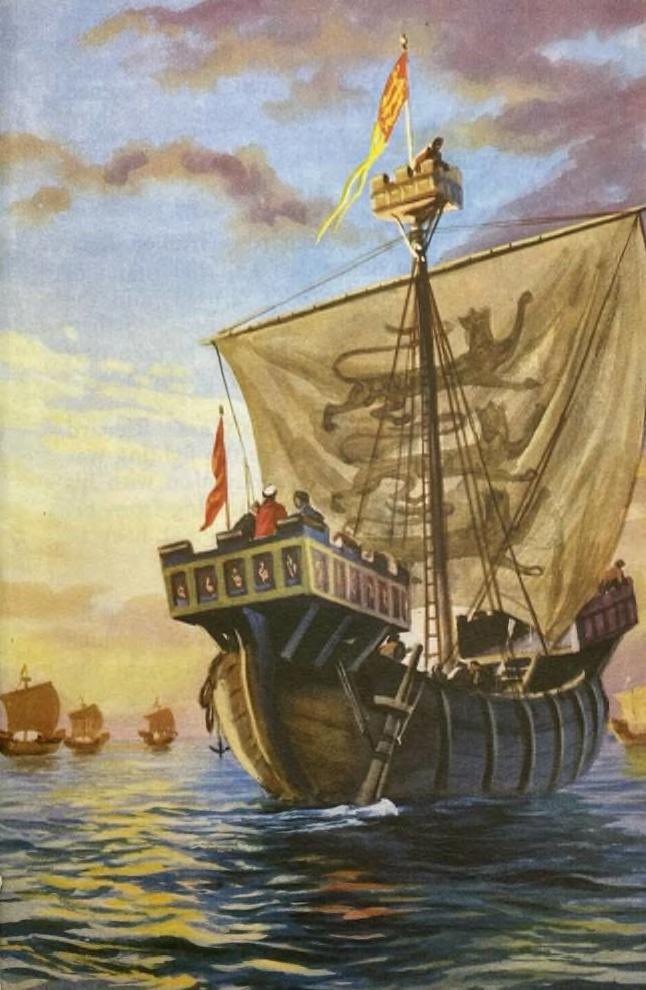
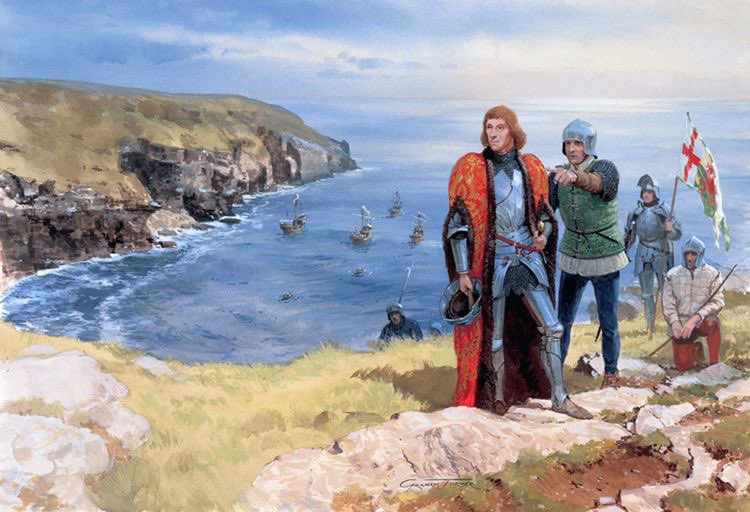
Landing in Wales, the half-Welsh Henry marched towards London picking up support along the way, eventually amassing a force of around 5,000 men including 2000 Breton allies
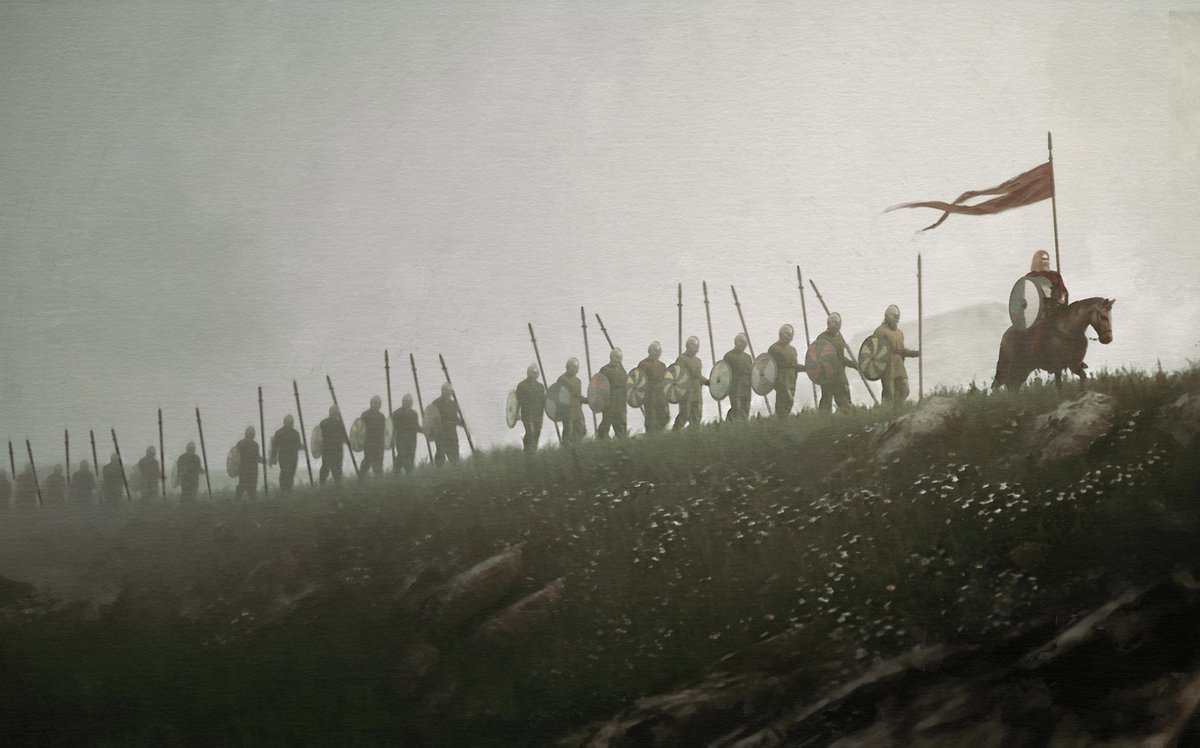
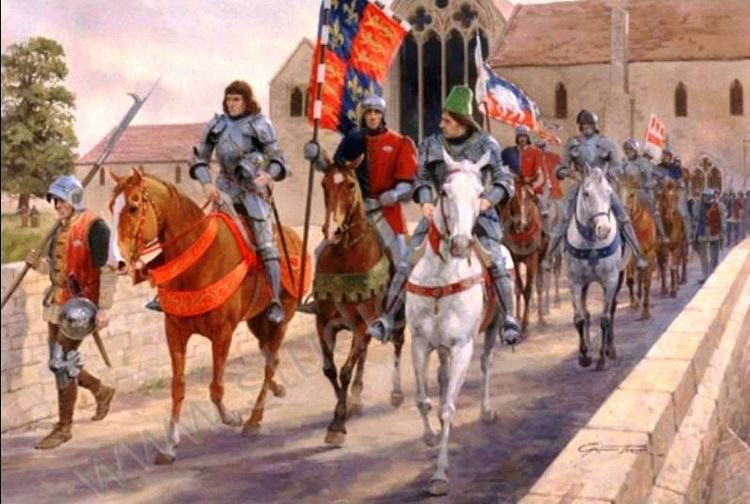
Richard gathered his forces as quickly as possible and rushed from London to battle against Henry, taking around 8,000 men with him.
Upon reaching Bosworth, Richard divided his forces into three battalions led by the Duke of Norfolk, Earl of Northumberland, and himself
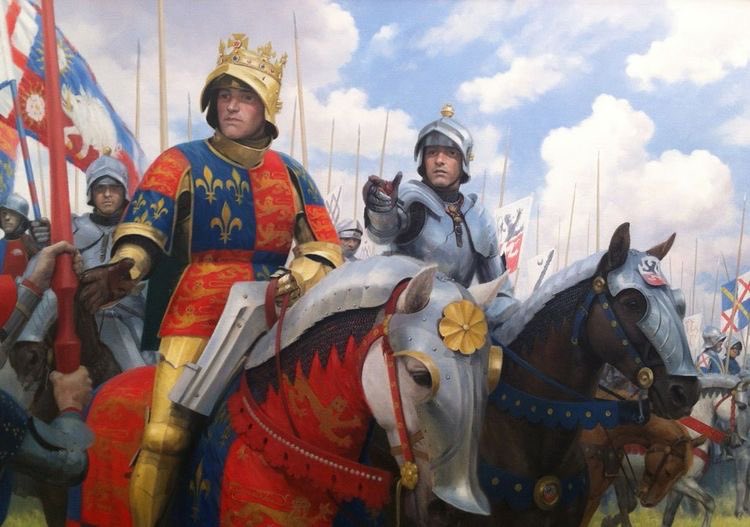
Nofolk led the vanguard of Richard’s army against the Earl of Oxford who was commanding Henry’s army.
The fighting was hard and some of Norfolk’s men fled the field of battle.
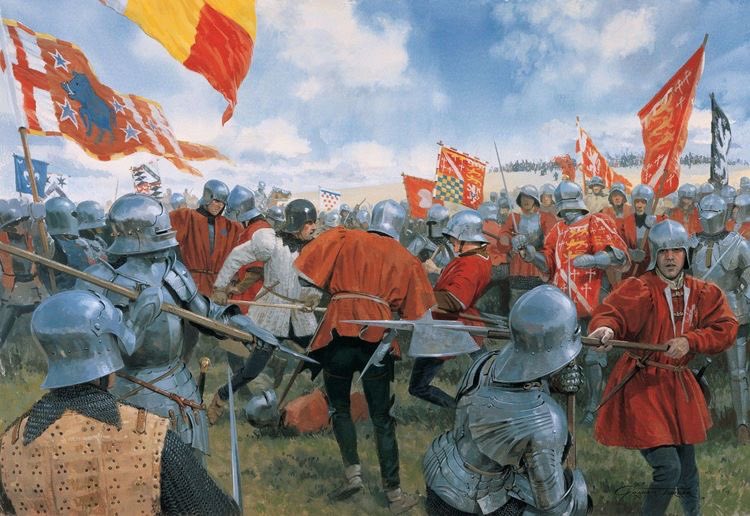
The treacherous Earl of Northumberland did nothing when signalled by Richard to lead his men into battle.
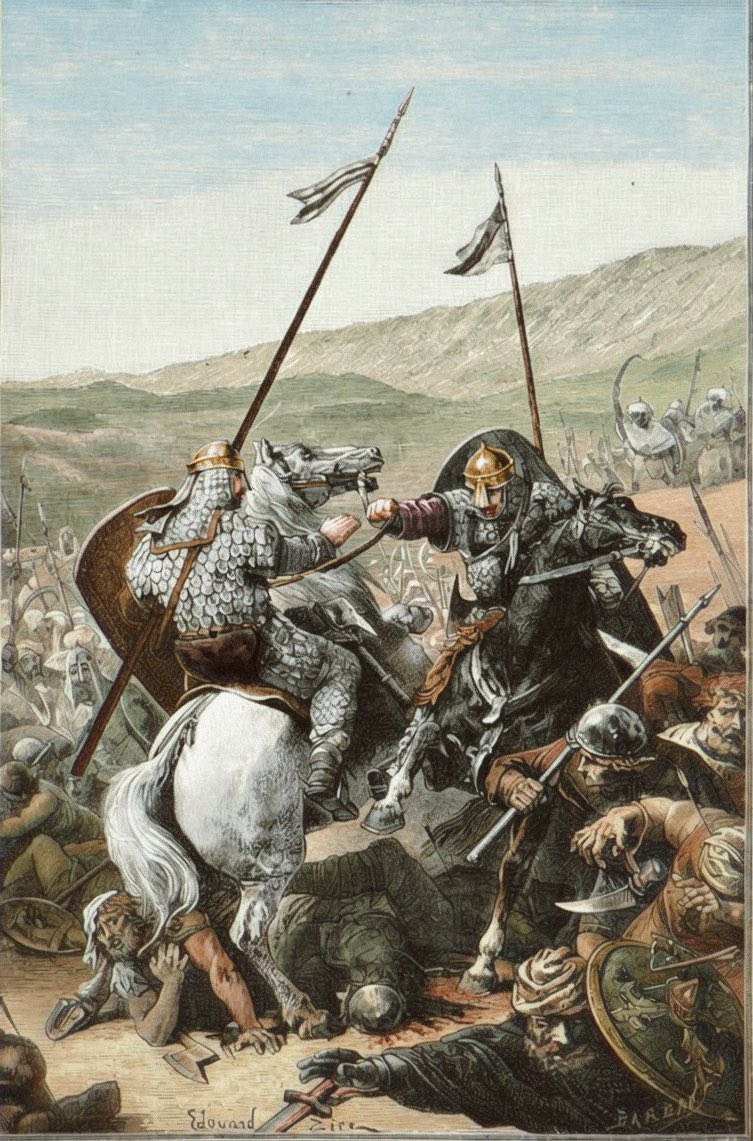
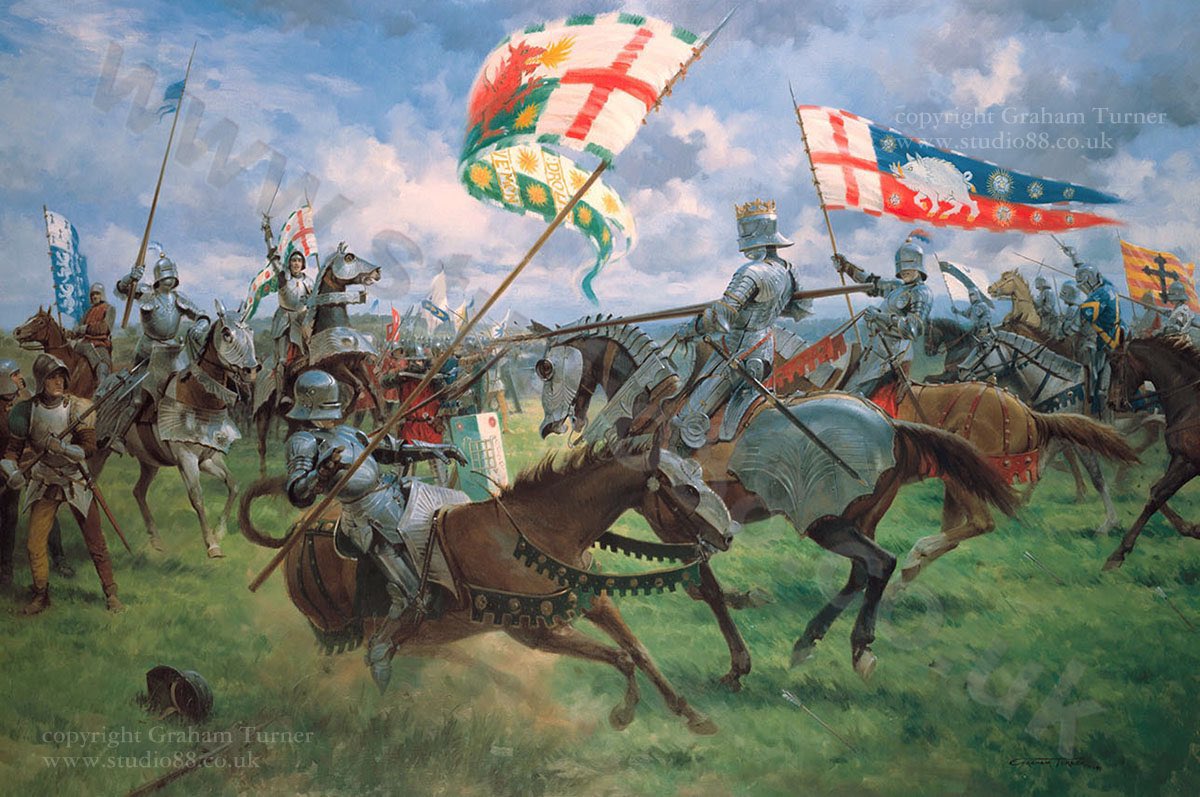
Richard, realising now that he was in danger of losing, saw Henry and led a hazardous charge in attempt to end the battle with one fell swoop.
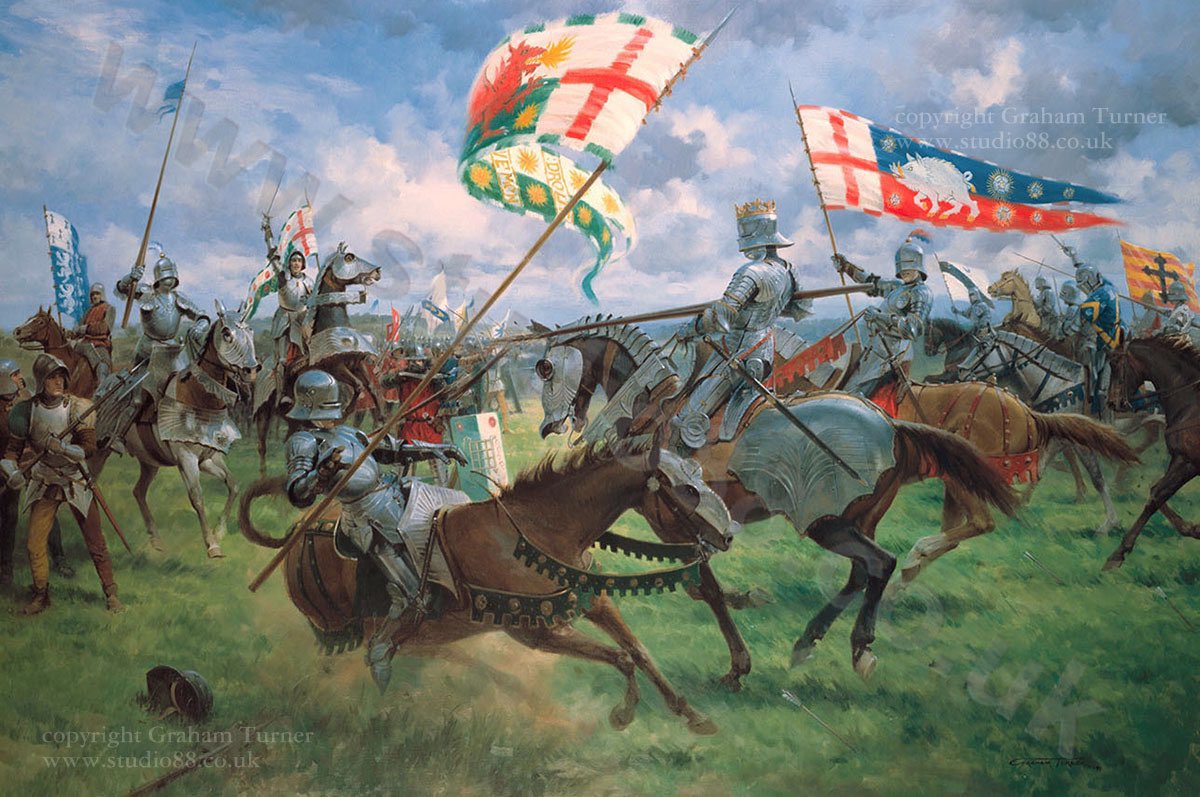
Richard’s thunderous charge killed Henry’s standard-bearer Sir William Brandon immediately and unhorsed the enormous Sir John Cheyne,
However he couldn’t reach Henry, who dismounted and went to hide among his men.
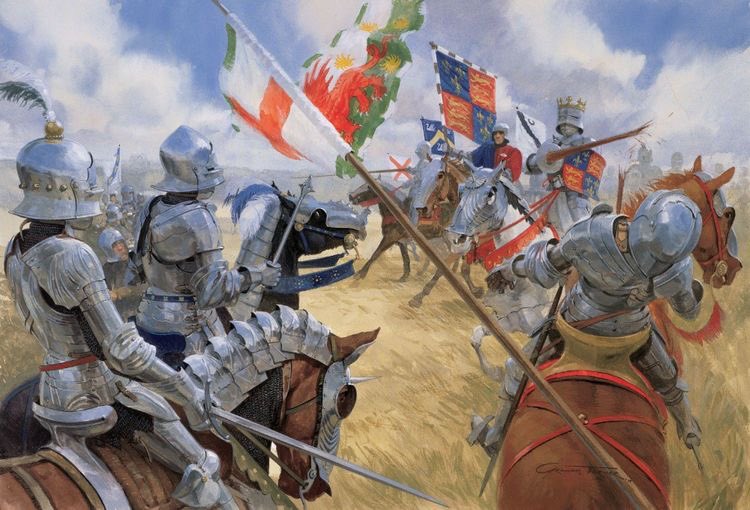
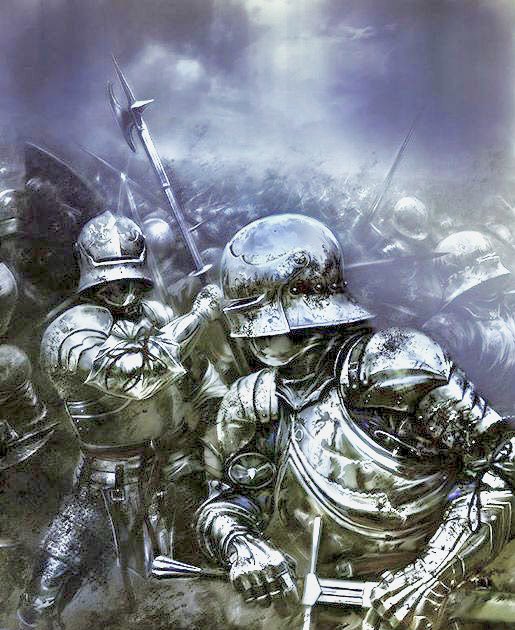
Richard & his companions were surrounded among Henry’s men, fighting bravely but increasingly taking casualties, Richard eventually found himself in grave danger.
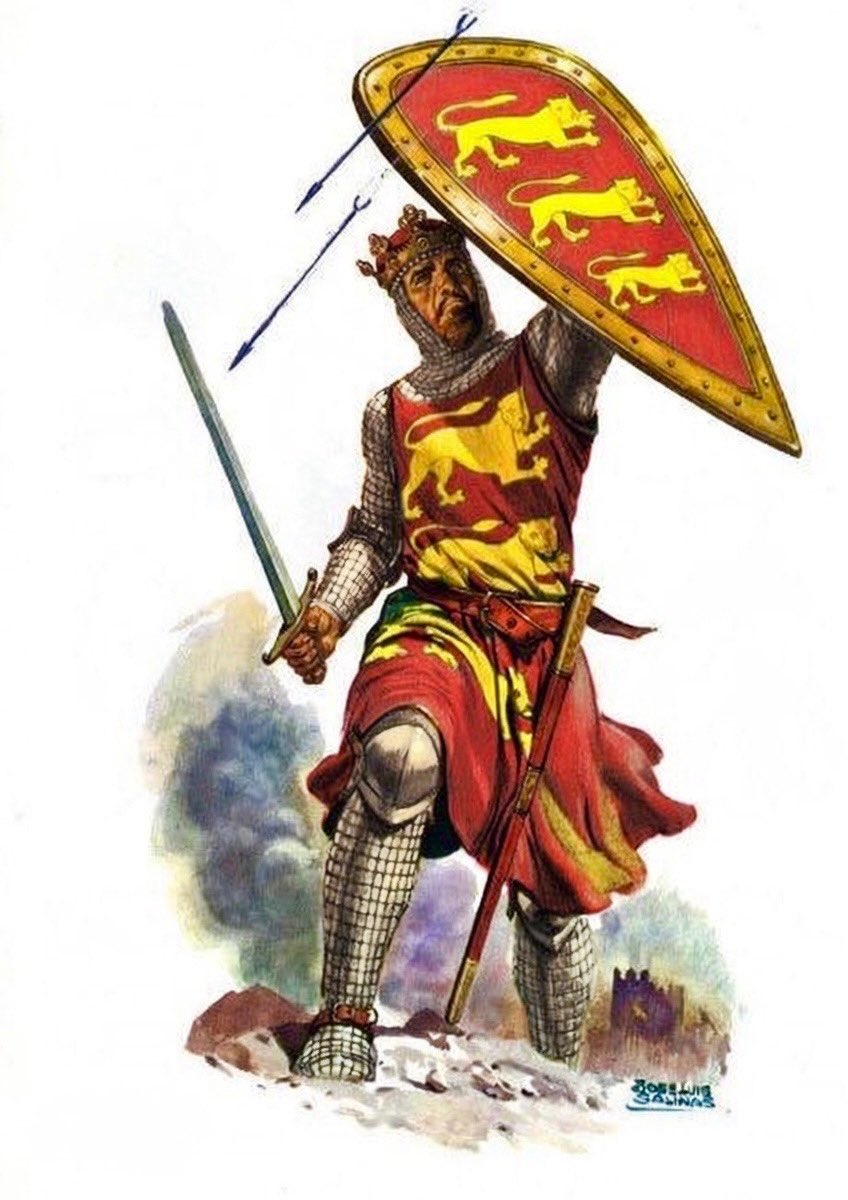
He was heard to shout "God forbid that I retreat one step. I will either win the battle as a king, or die as one."
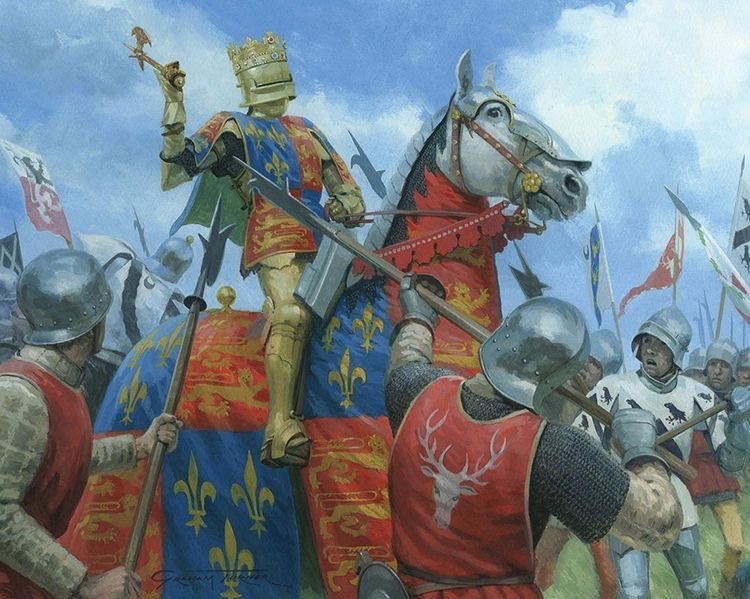
And then, as Polydore Vergil recounts:
‘King Richard, alone, was killed fighting manfully in the thickest press of his enemies’
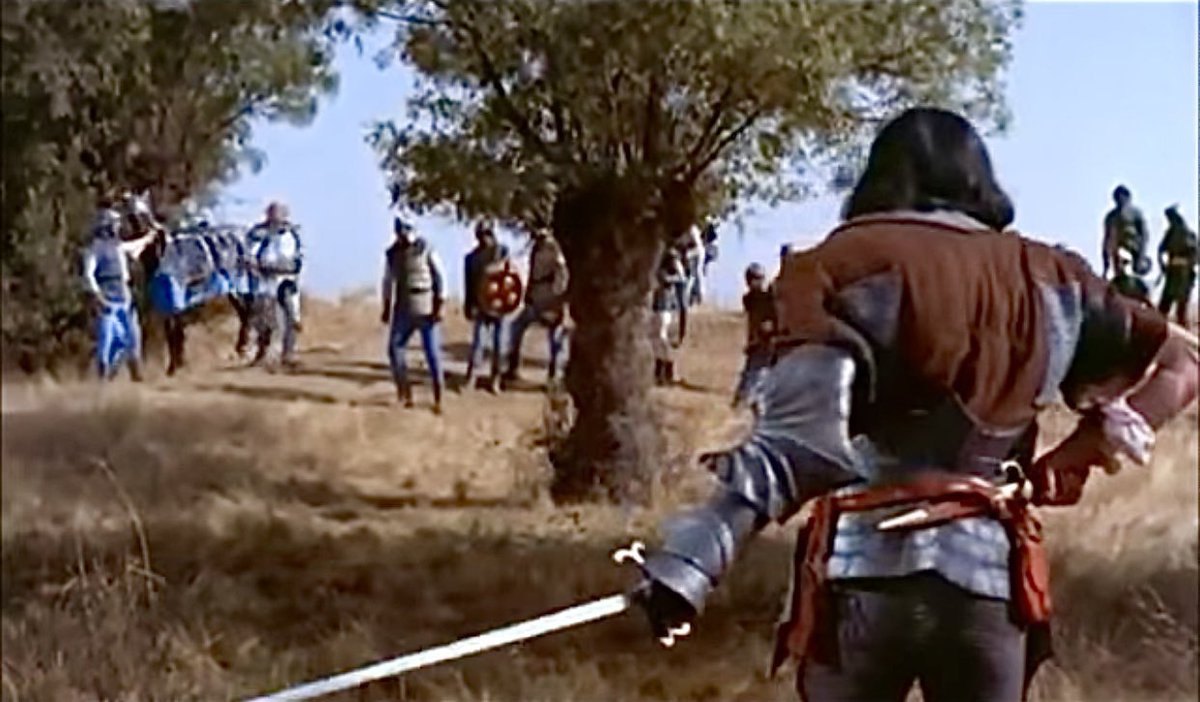
It is believed that a Welshman struck Richard from behind with a halberd. Analysis of his newly discovered remains show eleven wounds, nine of which were to his head.
The last king of the Plantagenet line of English monarchs died 334 years the first Plantagenet king was crowned
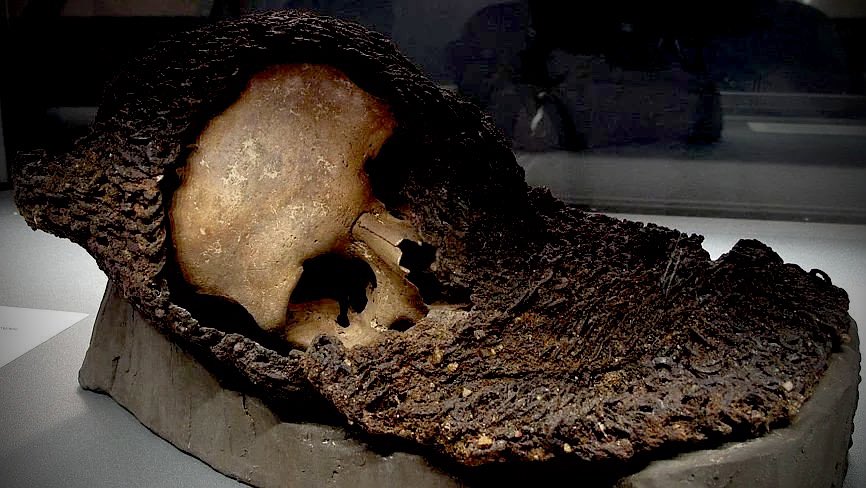
Richard’s circlet crown was found on the field not too far from his corpse and Henry was crowned on the spot
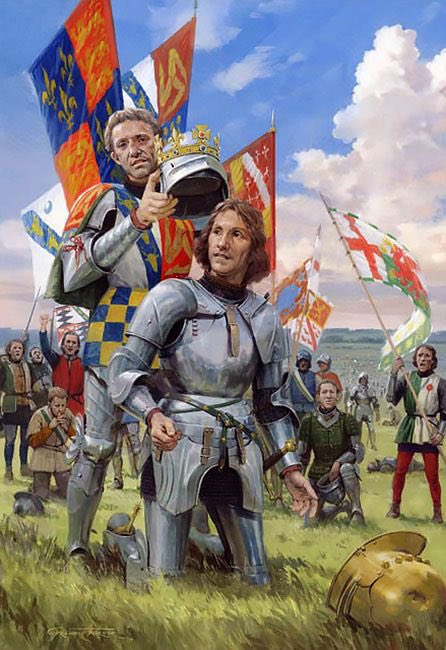
Of Richard’s commanders, the loyal Duke of Norfolk was thought to be slain in single combat by Sir John Savage.
The Earl of Northumberland, whose inactivity doomed Richard, was imprisoned after the battle but was later released on favourable terms.
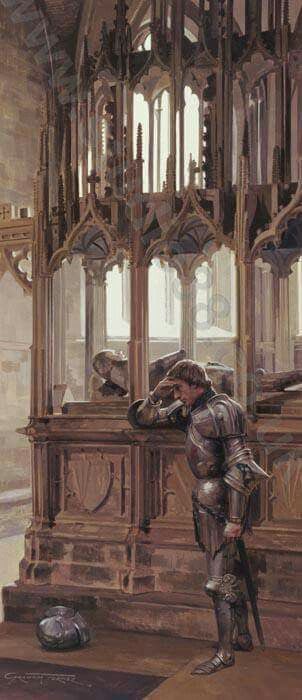
Henry VII ruled for 24 years and married Richard’s niece and daughter of Edward IV, Elizabeth of York.
His reign plagued by intrigues launched by Richard’s sister Margaret, Duchess of Burgundy.
Bohemond of Antioch was one of the most charismatic figures in the Middle-Ages!
He was a disinherited son, a bold warrior, and a crusading legend.
This is a timeline of his life and deeds!
[Thread]🧵
• c. AD 1054:
Birth of Bohemond, whose baptismal name was Mark, to Robert Guiscard, the Norman conqueror of Southern Italy, and Alberada of Buonalbergo, in Italy.
• AD 1058:
- Robert Guiscard repudiated Bohemond’s mother when their marriage was annulled due to new rules on the degrees of kinship allowed in married.
- Guiscard marries Sikelgaita. Bohemond is now technically a bastard.
• AD 1073:
Robert Guiscard falls ill and Sikelgaita holds a council and persuades Robert’s vassals that her son Roger Borsa and not Bohemond, should be his heir.
• AD 1079:
Bohemond fights alongside his father against rebel barons in Italy.
• AD 1081:
Bohemond invades the Balkan territory of the Roman Empire and fights at the battle of Dyrrachium where the emperor Alexios Komnenos was severely defeated.
• AD 1082:
- Capture of Ioannina.
- Alexios Komnenos induces the Germans to attack Robert Guiscard’s territory in Italy and he returns and leaves Bohemond in charge.
- Bohemond captures Ioannina.
- Bohemond defeats Alexios outside of Ioannina.
• Bohemond besieged Arta and defeats Alexios in battle again.
One of the greatest adventures of the Middle Ages was the crusade led by Prince Edward Longshanks!
Outnumbered and hoping against hope to rescue the Holy Land from the Muslims, he befriended the Mongols and faced off against assassins and Mamluk warriors!
[Thread]🧵
In 1260 the Mamluks won a startling victory over the invading Mongols and the Mamluk general Baibars seized power and began conquering the Christian cities of the Holy Land.
In 1268 he captured Antioch and a crusade was called in response. This was to be the Eighth Crusade led by Louis IX of France who diverted it to Tunis.
The Eighth Crusade to Tunis was an unmitigated disaster. Louis IX died in Tunis, as did his son John Tristam who was born in Damietta during the seventh crusade.
Prince Edward of England, also called Edward Longshanks, was supposed to join the crusade with his brother Edmund but they arrived after the crusade already failed.
Cicero is a famed Roman politician, writer, and orator.
But what about Cicero the general?
This is the tale of Cicero’s Cilician adventure when was hailed as imperator by his troops!
[Thread]🧵
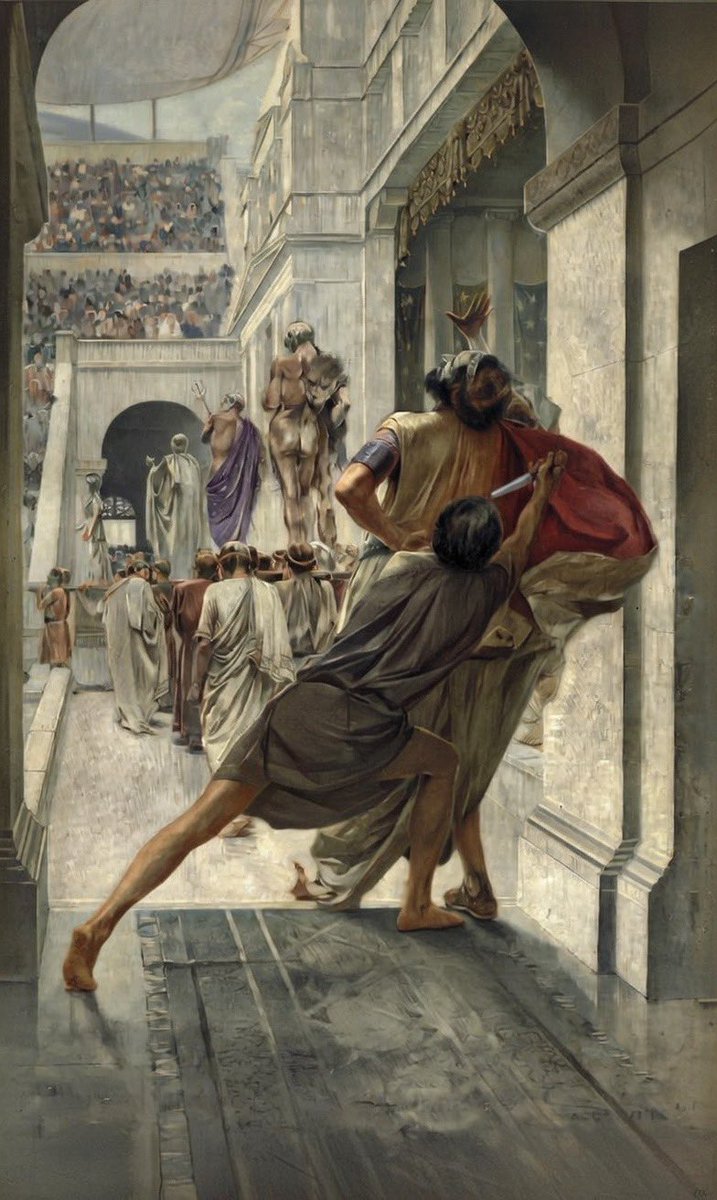
When he was consul in 63 BC, Cicero famously foiled a conspiracy by Lucius Sergius Catilina to seize power in Rome.
When he discovered the plot, he put on armour and made his way to the senate to deliver a series of speeches against Cataline. The conspiracy was thwarted but Cicero remained unpopular with some for having some of the conspirators executed.
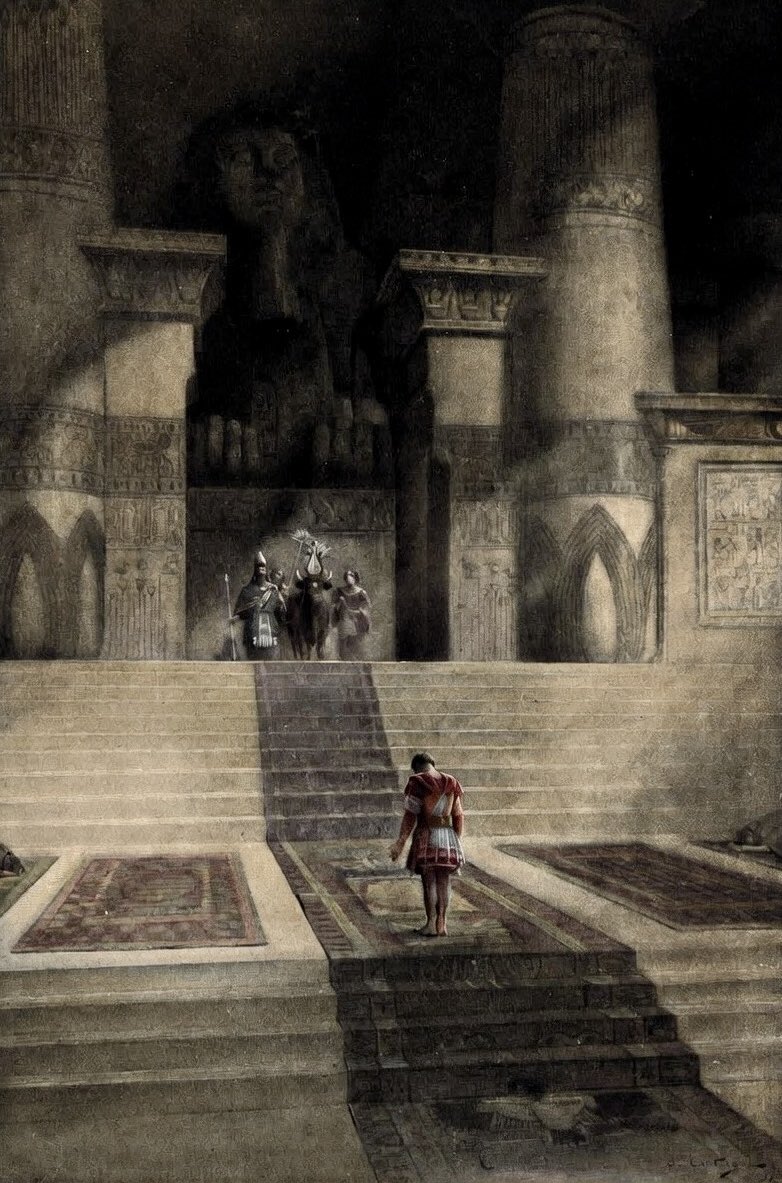
Cicero was eventually exiled when his enemies gained power in Rome. During this exile, and thanks to certain legislative requirements, he was made governor of Cilicia in 51 BC. It was not a position he wanted.
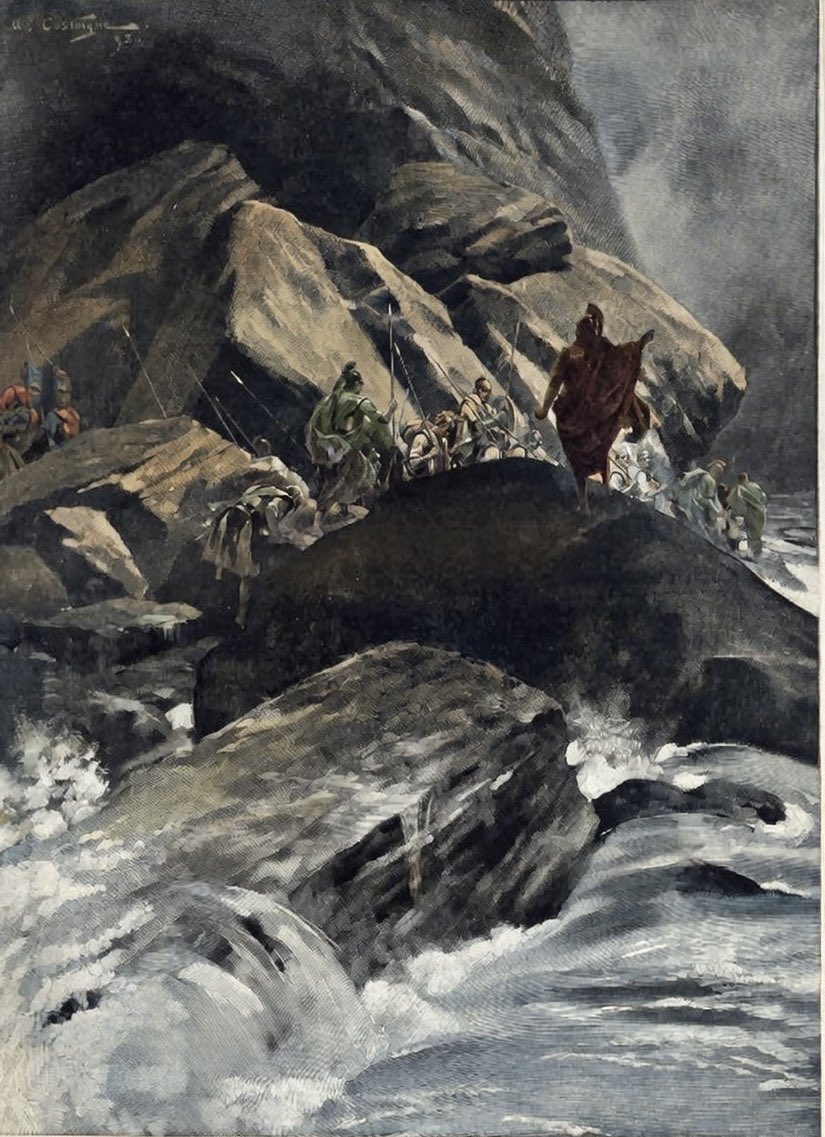
In 53 BC, Crassus led his doomed expedition against the Parthians. He was enticed into a trap and his exhausted army was savaged by Parthians horse archers at the battle of Carrhae.
Crassus died and Cassius led what was left of the army back to safety.
But then Pacorus, son of the Shah Orodes, invaded Roman territory and besieged Cassius in Antioch.
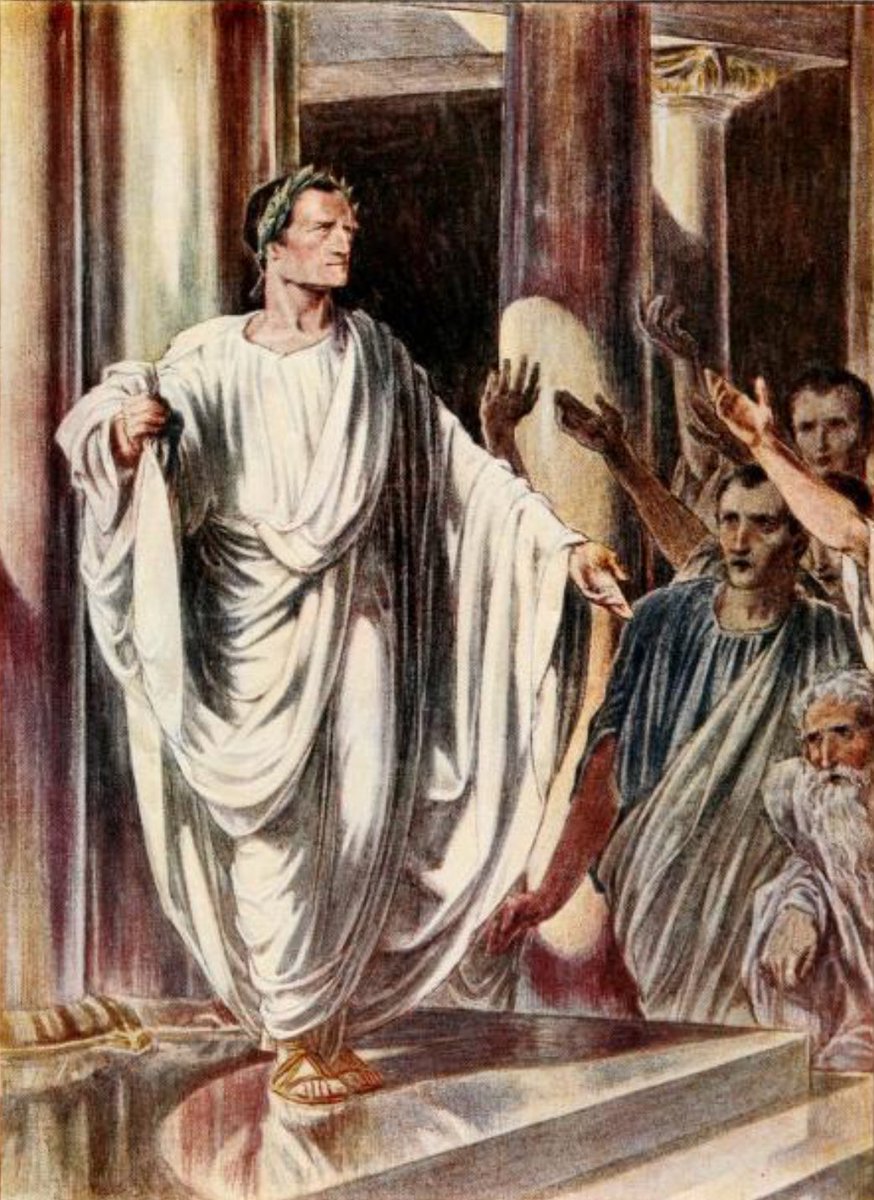
After the Roman Senate threatened to declare him a public enemy, Gaius Julius Caesar changed the history of the world forever…
And crossed the Rubicon!
[Thread]🧵
The Roman Republic had fallen into vicious cycle of corruption, violence, and political instability. In the mid-1st century BC the three most powerful men were Julius Caesar, Pompey Magnus, and Marcus Licinius Crassus.
But Crassus’ death ended this coalition between them, and the short-lived marriage of Caesar’s daughter to Pompey could not stop either man from scheming. Pompey remained in Rome and governed his provinces from a distance while Caesar was conquering Gaul.
Plutarch tells us that ‘Caesar had long ago resolved upon the overthrow of Pompey, as had Pompey, for that matter, upon his. For Crassus, the fear of whom had hitherto kept them in peace, had now been killed in Parthia.’
‘Caesar had entertained this design from the beginning against his rivals, and had retired, like an expert wrestler, to prepare himself apart for the combat. Making the Gallic wars his exercise-ground, he had at once improved the strength of his soldiery, and had heightened his own glory by his great actions, so that he was looked on as one who might challenge comparison with Pompey’
There was great tension in Rome over Caesar’s conquest of Gaul, which ended with the victorious siege of Alesia, and the end of his appointment there. Perceiving the threat, Cato persuaded the senate to make Pompey sole consul - ‘a more legal sort of monarchy he might be withheld from demanding the dictatorship.’
Alfred the Great and Æthelred the King fought ‘for life, loved ones, and country’ and thrashed the Vikings at…
The Battle of Ashdown!
[Thread]🧵
By 870 the Vikings ‘of hateful memory’ had stormed into England and conquered Northumbria and East-Anglia!
On the 31st of December 870, after invading Wessex, a force of Vikings led from the main host was defeated at the Battle of Englefield by the Ealdorman of Berkshire, Æthelwulf, and his levies.
However, King Æthelred and his brother Alfred, having tried to capitalise on this victory were defeated by the Vikings just a few days later at the battle of Reading.
But they were ‘roused by grief and shame’ and rallied at Windsor.
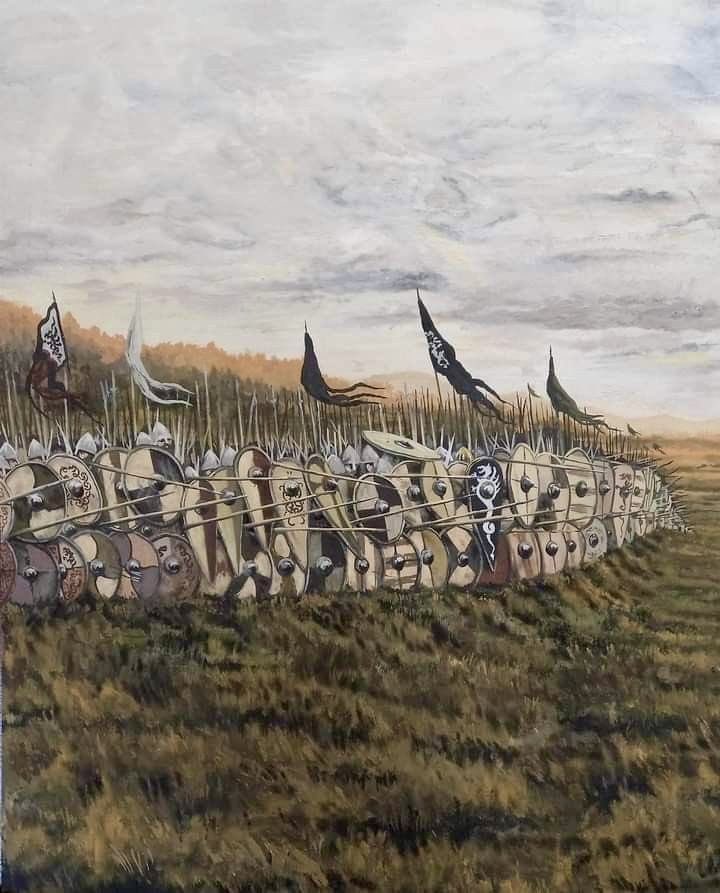
The Saxons then marched to face the Vikings again with ‘all their might and in a determined frame of mind’ and met them at Ashdown.
The Vikings divided their army into two contingents. One was led by kings Bagsecg and Halfdan, and the other was led by the Vikings earls.
The English did the same with Alfred facing the earls and Æthelred facing the kings.