Impressive thread was done by the @Black_BirdGroup about defenses in the south. In relation to this subject, I'd like to add additional insights and context. My intention is not to critique their presented report, but to emphasize crucial details that need to be added. 🧵Thread
2/ Frequently, I see analysts focusing on visible defenses. This could foster the perception that the first defensive line is where fortifications are visible through satellite imagery, based on the presence of features like dragon's teeth, trenches, or anti-tank ditches.
3/ In my perspective, this tendency can be attributed to the Streetlight effect - an observational bias wherein people exclusively search where it's easiest to look. In the context of satellite imagery, this translates to focusing on only visible defense structures.
4/ However, considering on-ground reporting, it's worth noting that virtually every tree line has been fortified to some extent. These fortifications range from concealed positions for ATGM and machinegunner teams to discreet well-protected individual positions
5/ In this short timelapse video spanning from May to August, I've highlighted fortified zones that mappers often chart. However, by looking at damages it's evident that the true theater of combat was across all tree lines visible in the area.
6/ Which brings me to the point where I contest the definition of the first defense line by looking at anti-tank trench with pyramids, considering that there were dozens and dozens of manned tree lines with defense positions which were already destroyed or captured by our forces
7/ This distinction holds significant weight, as statements such as "Ukrainian forces haven't reached the first line of defense" could be misleading. In reality, our forces have gained control over numerous tree lines that constitute major defensive formations.
8/ Ultimately, the destruction of enemy forces and assets positioned within these tree lines carries greater significance than obstacles like dragon's teeth and AT ditches, which can be circumvented in under 20 minutes when the enemy is suppressed or lacks the resources to resist
9/ In this final clip north of Robotyne, most tree lines have been heavily shelled due to intense battles fought over each one, making this hidden defensive formation more important than the widely discussed mapped lines.
I'd like to fix my earlier statement. Saying "20 minutes" might sound dismissive due to the battle's complexity, so it's inaccurate. I aimed to show that poorly manned or unguarded positions aren’t the biggest issue, but "20 mins" is incorrect statement.
10/ P.S.: I believe the main battle is ongoing, leading to the deployment of russian strategic reserves. This implies we should avoid statements like "Ukraine hasn't reached the first defense line," even though they might eventually retreat to the "Surovikin line."
11/ I'd like to retract my comment about 20 minutes. Using "20 minutes" might come across as dismissive considering the complexity of the battle. My intention was to highlight that unmanned or undermanned positions aren’t the biggest issue, but "20 mins" is incorrect statement.
• • •
Missing some Tweet in this thread? You can try to
force a refresh

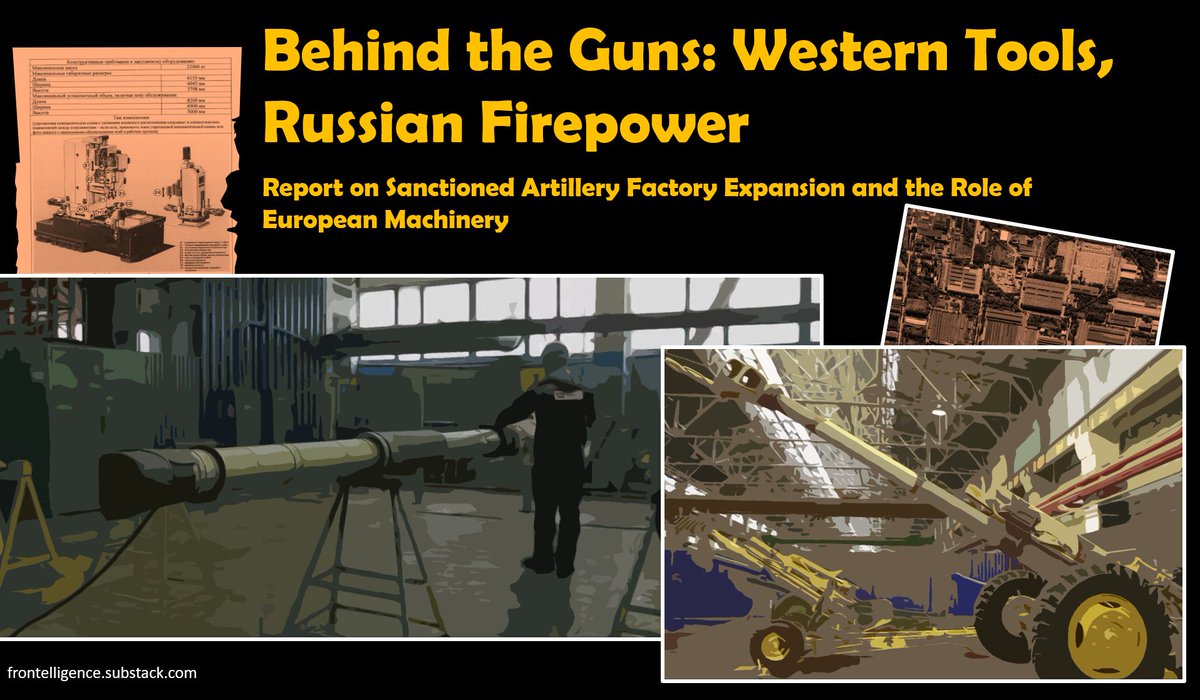
Russia’s war in Ukraine has increasingly become a war of drones, but artillery still plays a key role on the battlefield. Newly obtained documents from 2014 to 2025 show that Russia continues to modernize its artillery production using industrial machinery from Europe. 🧵Thread:
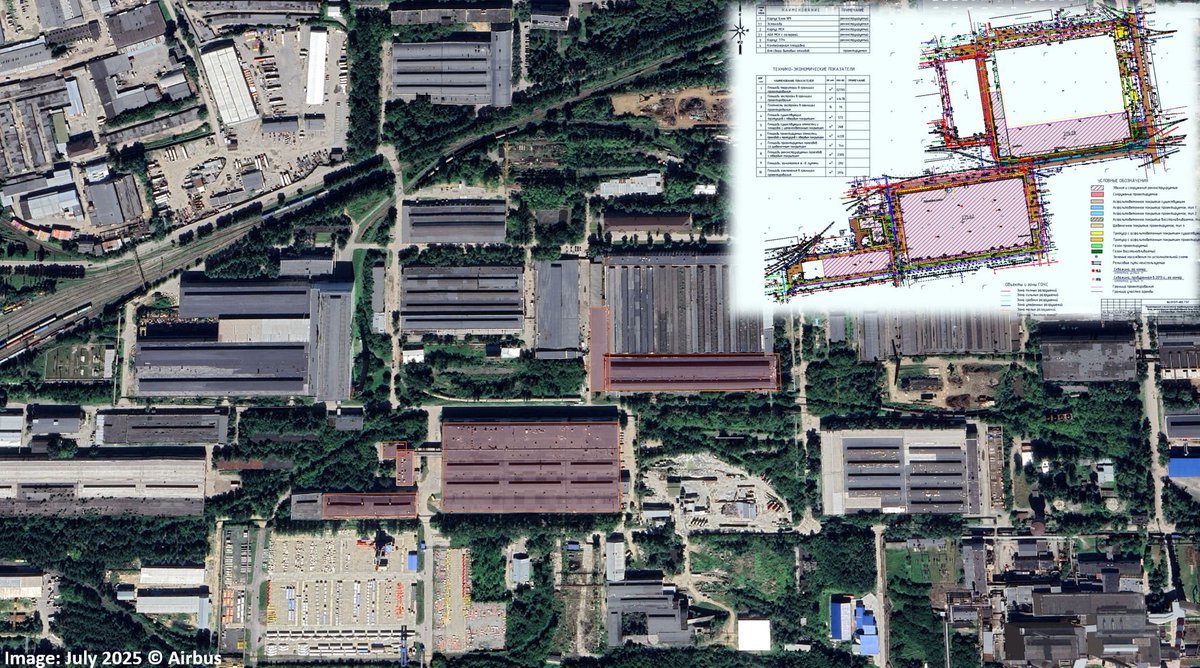
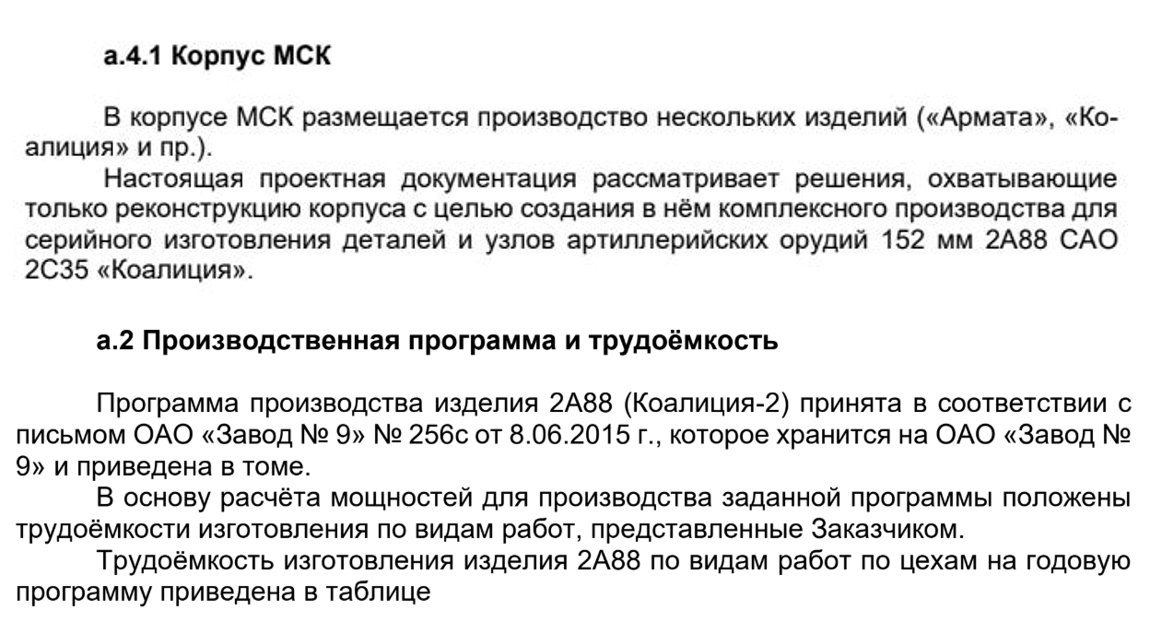
2/ In a joint analysis, Frontelligence Insight and the @dallasparkua company reviewed hundreds of internal documents from Russian defense contractor Zenit-Investprom and found that Plant No. 9, a maker of artillery barrels and tank guns, went through major upgrades in 2025
3/ Six facilities within the Uralmash industrial zone were found to be undergoing modernization, including planned delivery of industrial machinery from several European countries. Several workshops were dedicated to work on the Armata project and the Koalitsiya SPG.
As we approach a point marking the beginning of the war’s 5th year, it is time to discuss how we assess the war’s overall dynamics, strictly from a military standpoint. One method many analysts use is the pace of territory capture. However, this methodology has a serious issue🧵:
2/ Generally, this is not a bad method of analyzing battlefield dynamics, as the history of wars shows far more cases of states advancing along frontlines or into enemy territory before a war ends in their favor than the opposite. The devil, however, lies in the details
3/ Putting aside other domains of war, such as economics and socio-politics, battlefield dynamics are often judged by metrics like casualty rates and square kilometers of controlled territory. This can produce a distorted picture, a problem I informally term the “Sahara Fallacy”
The catastrophic situation of Russian forces trapped in Kupyansk, who continue to lose ground, together with a second consecutive year of failure to fully seize Pokrovsk, represents one of the more optimistic scenarios for 2025.
Thread:
2/ As war fatigue increasingly affects Russia, the prospect of enforcing a rapid, unfavorable capitulation of Ukraine through Washington, DC now appears even more remote, not not entirely excluded
3/ While Russia has used the negotiation process primarily to delay new sanctions and slow support for Kyiv, its economic situation continues to deteriorate, and tactical gains have failed to translate into strategic breakthroughs.
Information about a new modification of Russia’s Geran-2 drone has been published by Ukraine’s Defense Intelligence, including a detailed technical breakdown. According to the analysis, the Geran drone has been fitted with an R-60 air-to-air missile mounted on its fuselage:
2/ The missile, fitted with an APU-60-1MD (P-62-1MD) aircraft launcher, is mounted on a special bracket located on the upper front section of the Geran’s fuselage.
3/ The most likely employment of rocket involves transmitting images from the drone’s cameras to an operator via the modem. If a Ukrainian aircraft or helicopter enters the engagement zone, the operator sends a launch command to the missile’s control unit.
Analysis: New Data Suggests Russia Is Sustaining Mi-8 Output Despite Wartime Losses
According to non-public Russian procurement documents obtained and analyzed by the Frontelligence Insight team, current Mi-8 production appears sufficient to offset wartime losses. 🧵Thread:
2/ Since the Soviet era, more than 12,000 Mi-8 helicopters of all types have been produced. It’s a versatile military transport platform that can move troops, cargo, serve as a flying hospital or EW asset, and conduct attack missions with unguided rockets and 100–500 kg bombs.
3/ Correspondence between Aviafarm and ZOMZ the Defense Ministry and ZOMZ show a request for 40 IS-264A thermometers: 20 for Kazan and 20 for Ulan-Ude, where Mi-8s are produced.
Most know Kirill Dmitriev as the Russian president’s envoy. But to more than 200 investors in Ukraine, he is known for taking part in a Kyiv real estate project that ended in a fraud and criminal case. Using articles from 2011, I was able to find more details. 🧵Thread:
2/ The story begins in 2000s, when N. Lahuna and A. Dmitriev (Kirill Dmitriev’s father) planned the elite suburban “Olympic Park.” Construction was to be carried out by Traverz-Bud, a subsidiary of "Evropa", in which, according to "Argument," Kirill Dmitriev held a majority stake
3/ Based on court documents cited in the media, in 2011 (links at the end), a prosecutor’s audit found that construction of the properties, which under agreements with the developers of the “Olympic Park” was due to be completed by the end of 2008, has not been carried out