Marijn van Putten Profile picture
Sep 2 6 tweets 2 min read Twitter logo Read on Twitter
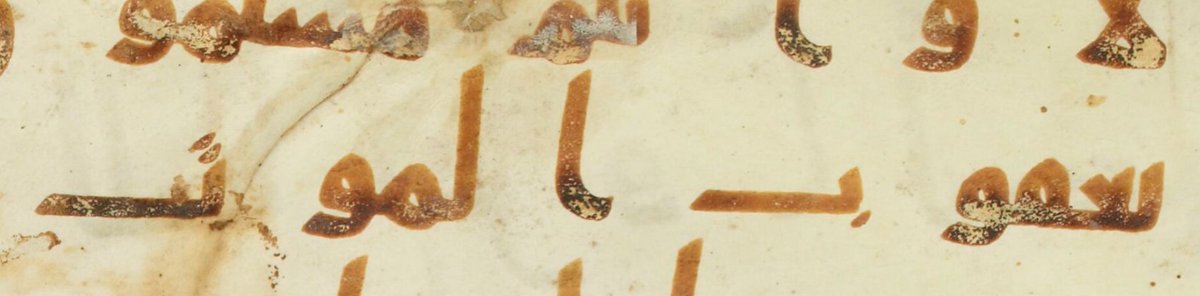
The Arabic letter rāʾ is a bit of a puzzle. In the Islamic era, and even in the centuries leading up to the Islamci Era, the shape of the rāʾ is clearly distinct from the dāl...

But this was not always the case!

#ArabicLetterofTheWeek Image
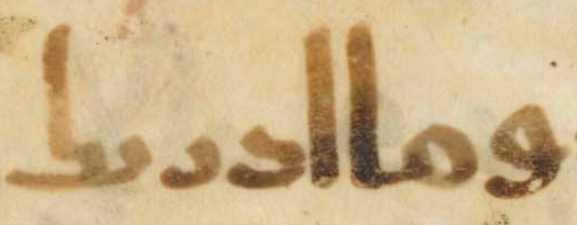
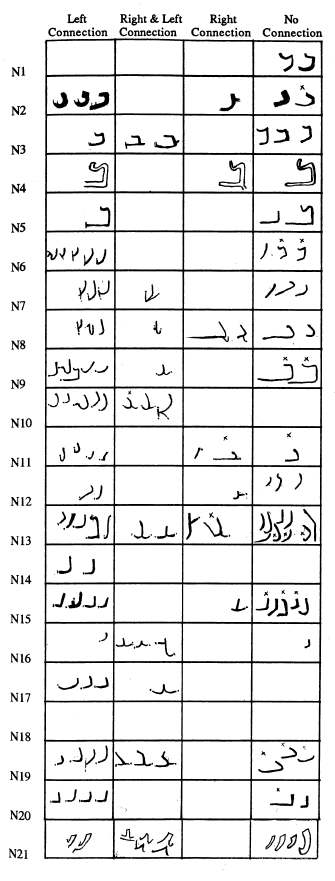
In the Aramaic script (and by extension the Nabataean Aramaic script -- the ancestor of the Arabic script) the <d> and <r> signs have always been quite similar, but were originally distinct. This is also the reason why the Hebrew script's ד <d> and ר <r> look so damn similar.
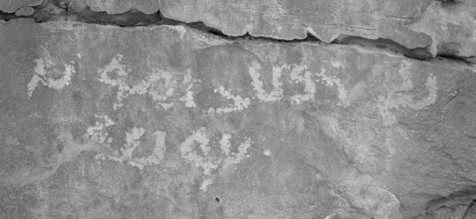
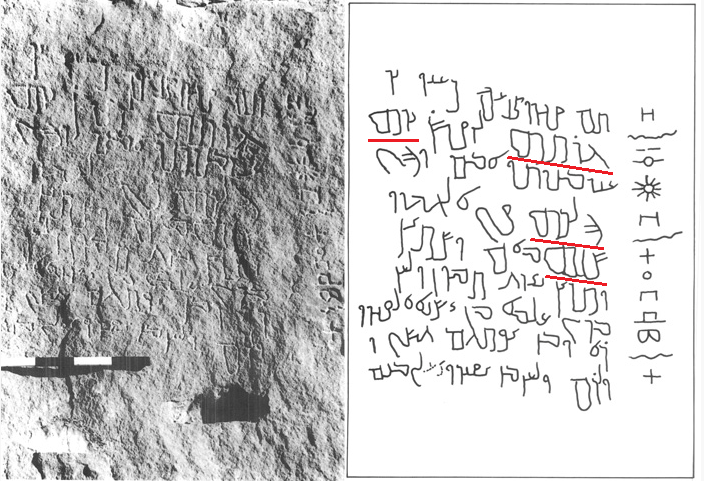
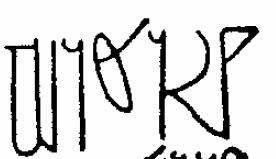
But in Nabataean Aramaic proper, even from its very earliest stage, these two signs are basically indistinguishable. For example this inscription reads

<qbrʾ dnh> "this grave", but as you can see the d and r are simply the same straight line with a little u at the top. Image
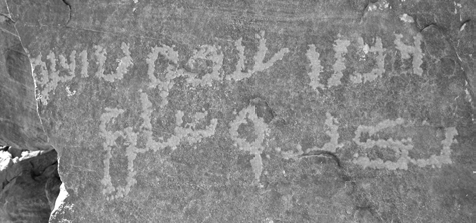
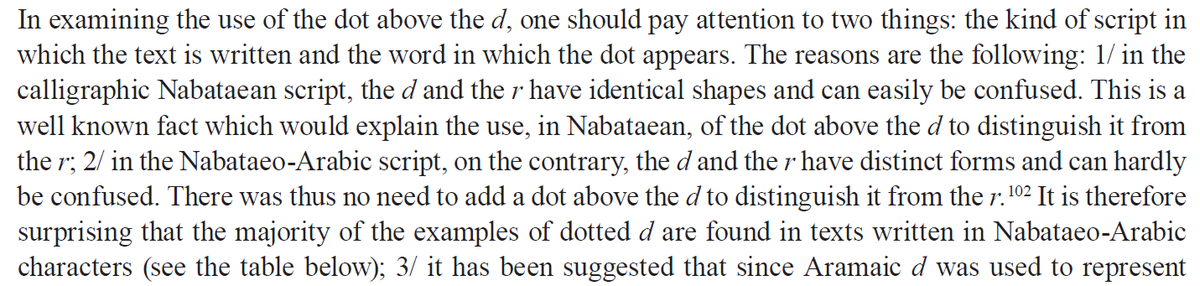
This is very annoying, of course. So at some point the Nabataean writers came to agree, and decided to place a dot on top of the dāl to distinguish it from the rāʾ, surprisingly we see this most in inscriptions where the <d> and <r> actually have distinct shapes!

<bly dkyr ...> Image
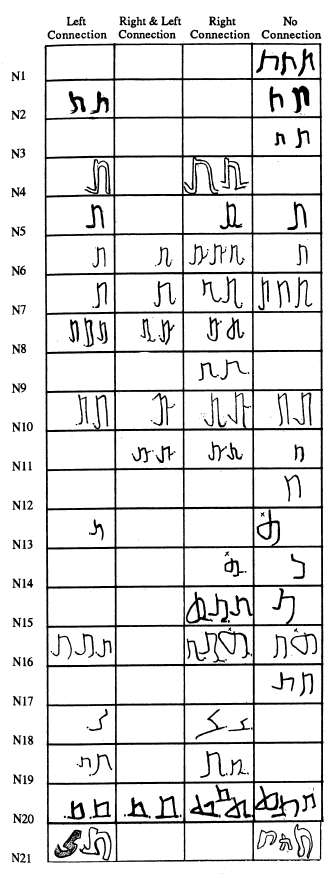
And that is the real mystery: Somewhere in the history of the Nabataean script, the shape of the <r> and <d> demerge. They really seem to have been indistinguishable, but in the centuries leading up to Islam, become distinguished again. Image
This is especially striking because the overall trend of the Nabataean script in this period is to merge more and more shapes with one:
<q> with <f>
<n> with <b>
<y> with <t>

But <r/d> splits into <r> and <d>. Why? and How? I don't think anyone has a satisfying answer yet.

• • •

Missing some Tweet in this thread? You can try to force a refresh

 

Keep Current with Marijn van Putten

Marijn van Putten Profile picture

Stay in touch and get notified when new unrolls are available from this author!

Read all threads

This Thread may be Removed Anytime!

PDF

Twitter may remove this content at anytime! Save it as PDF for later use!

Try unrolling a thread yourself!

how to unroll video
  1. Follow @ThreadReaderApp to mention us!

  2. From a Twitter thread mention us with a keyword "unroll"
@threadreaderapp unroll

Practice here first or read more on our help page!

More from @PhDniX

Sep 9
The Zāy today has the same shape as the Rāʾ, only being distinguished by a dot above. But this was not always the case. In the ancestral script to the Arabic script, the Nabataean Aramaic script, the zāy had a unique and distinct shape.
#ArabicLetterofTheWeek Image
The zāy was a simply single vertical stroke. Whereas the rāʾ had a shape that was (surprisingly!) identical to the the dāl/ḏāl.

For example in this fairly typical Nabataean inscription which mentions the name of the Goddess al-ʿuzzā (spelled <ʾlʿzʾ العزا>. Image
Last thread I shows that the rāʾ mysterious unmerges with dāl at some point in the pre-Islamic period. When it does so, the new shape of the rāʾ merges with the zāy! As can be seen in this transitional Nabatae-Arabic inscription, top line reads:

<dkyr ʿnmw br zkyw> Image
Read 9 tweets
Aug 4
This article is now also accessible on the Brill website!


There are a bunch of other cool articles in this volume (JIM 14:2-4), let me highlight a couple for you! https://t.co/cavdiePxKFdoi.org/10.1163/187846…
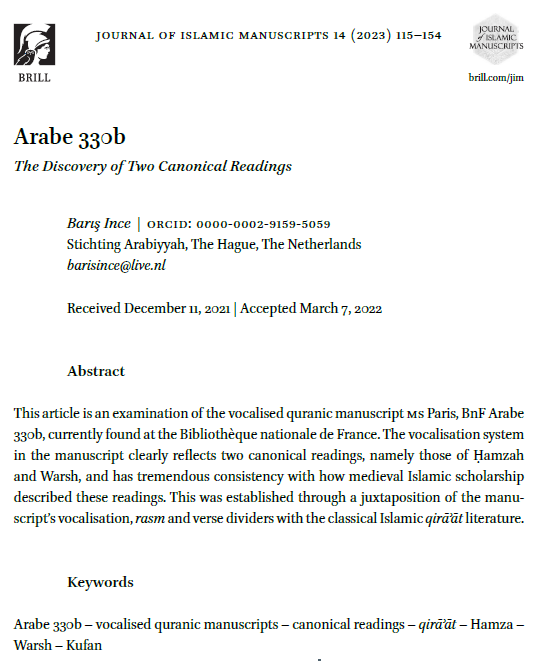
The one that I'm most excited about is the article by an old student of mine, Barış İnce, who studies this manuscript, Arabe 330b, for his fantastic BA thesis. I told him to turn it into an article and he did.

(sadly behind a paywall) https://t.co/Ip6sJSqdwBdoi.org/10.1163/187846…
Image
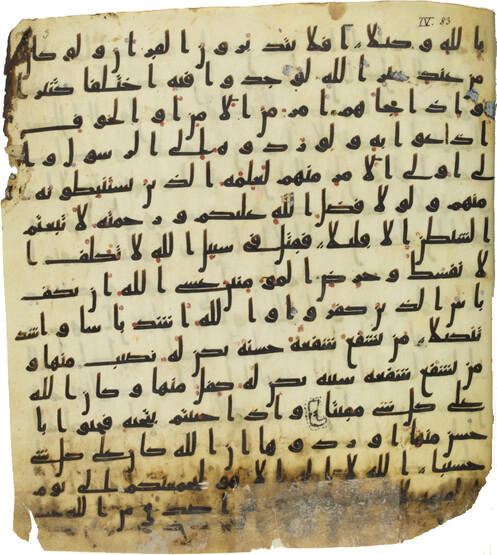
He shows that Arabe 330b follows the rare system of using red to mark one reading and green to mark a second reading. Usually the secondary colours just occasional deviations.

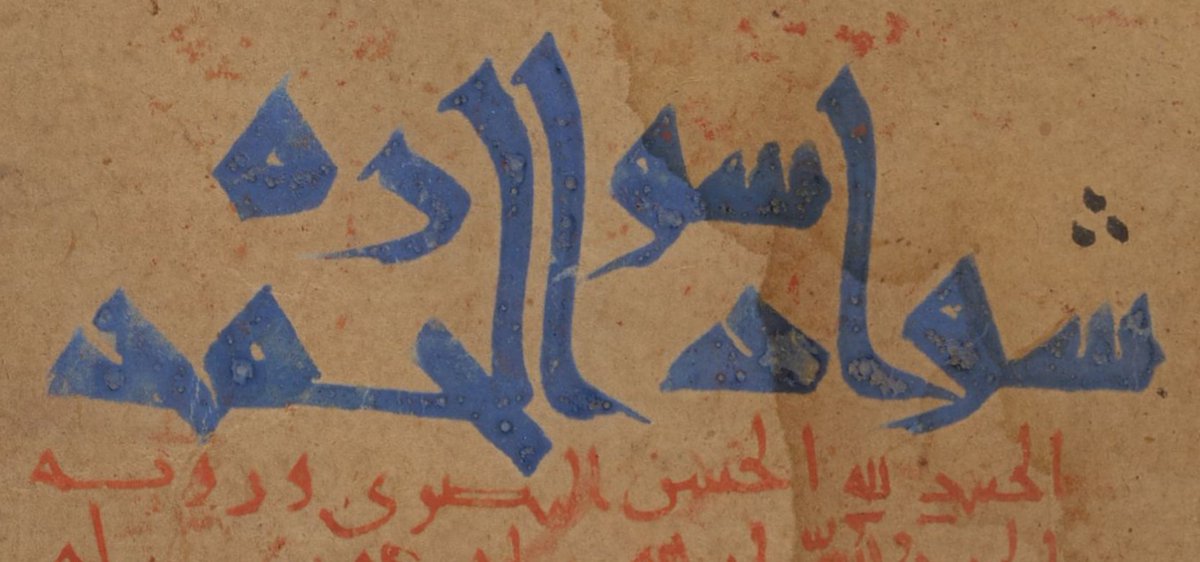
What's more: the two readings are recognisably canonical: red = Ḥamzah, green = Warš ʿan Nāfiʿ. Image
Read 6 tweets
May 19
In the modern Arabic script the letter tāʾ and bāʾ have the exact same letter shape. This is true for the Arabic script in all Islamic era documents.

But this was not always the case! While bāʾ & tāʾ merge, they were at one point distinct!

#ArabicLetterofTheWeek Image
In the Nabataean Aramaic script, the <b> and <t> had very distinct signs, quite similar to the shapes we find in the Hebrew script: ב and ת.

The bāʾ takes on the simple hook + horizontal stroke quite early on, but the tāʾ continues to have a distinct two downward strokes. ImageImage
As the Nabataean script progresses into what Laïla Nehmé has dubbed "transitional Nabataeo-Arabic", the final tāʾ develops a distinctive loop, seen for example in the name ḥāriṯat in JSNab 17 where it stands next to the non-final tāʾ (see also <brt>, <hlkt> and <šnt>). Image
Read 5 tweets
May 9
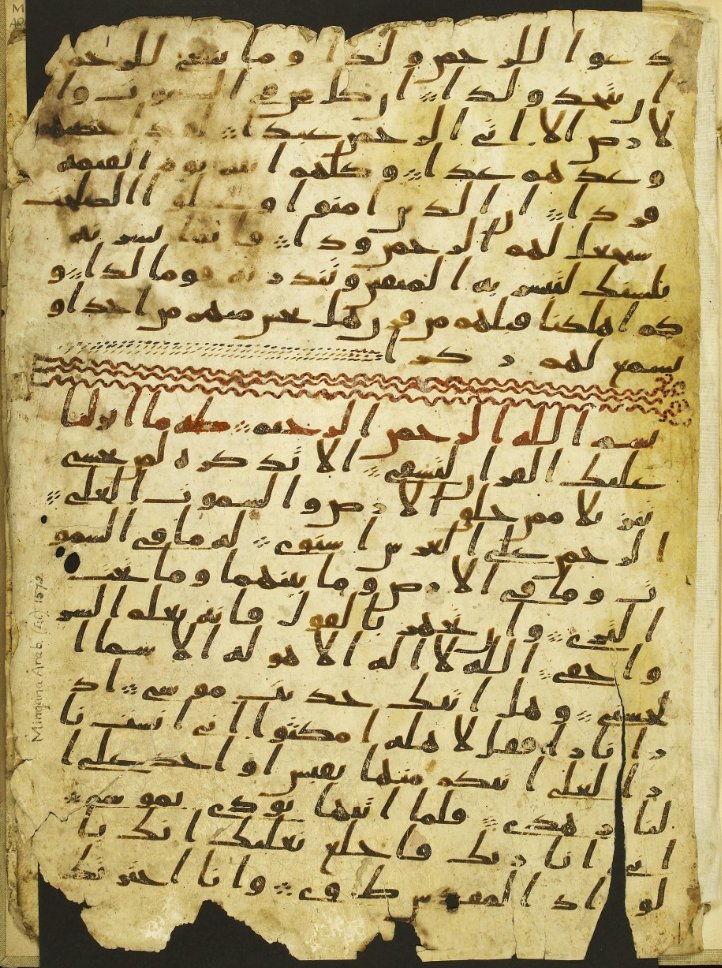
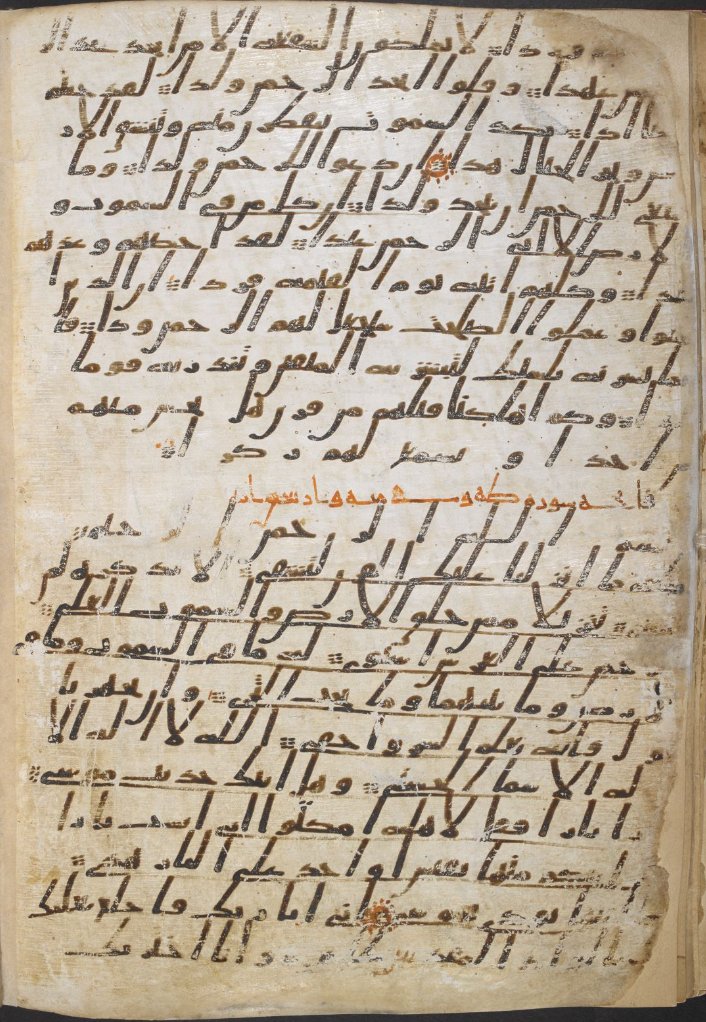
Some people seem to confuse the difference between an Archetype and Ur-Text. And believe that the claim that all manuscripts (except for the Sanaa Palimpsest) descend from a single archetype is tantamount to saying that we can access the Quranic Ur-Text. 🧵 ImageImage
An Ur-Text is a hypothetical original composition of a text. This would go back to the original composer of the text.
In (biblical) textual criticism, the concept of an idealized Ur-text has become somewhat unfashionable, and I think also for the Quran we ought to be skeptical.
Assuming that the stories about Muhammad's revelation are historical, this would mean he recited parts of the Quran throughout his career, would sometimes expand earlier revelations etc. At several of these stages throughout his career, scribes would have written parts down.
Read 20 tweets
May 6
@CikrikciE Good question. Let me try to unpack.
First, preservation is really poorly defined, so there is a chance of us talking past one another.
1. I would say HC scholarship is not interested in the question of "preservation" per se. It is interested at getting at the most original text.
@CikrikciE Of course, in New Testament studies it is of vital importance to get at what the original text of the different books of the Bible is. In part because it is such a mess. That's lower text critcism. For the Uthmanic text, there's really not much to do: the text is super stable.
@CikrikciE After reconstructing what the most likely original text is, you then proceed to ask: to what extent is this historically "reliable". Maybe that's what you mean by preservation. If you do, then yes HC is interested in it, and as am I :-)
Read 11 tweets
May 6
What renders a qirāʾah (Quranic reading tradition) sound, and what renders it šāḏḏ (anomalous). The Islamic science of qirāʾāt has had a clear answer to this question for centuries, but the implications and what it actually disqualifies are frequently misunderstood. 🧵 Image
Everyone who has spent some time learning about the qirāʾāt will have learned about Ibn al-Ǧazarī's tripartite requirement of a sound qirāʾah:
1. ʿArabiyyah (agreement with Arabic grammar)
2. Rasm (agreement with one of ʿUṯmān's codices)
3. Sanad (a sound chain of transmission) Image
While this explicit formulation is fairly late (Ibn al-Ǧazarī dies 833/1429), it's clear that these three principles always played an important role in evaluating readings, already in the time of Ibn Mujāhid (who canonzied the first seven of the ten canonical readers).
Read 18 tweets

Did Thread Reader help you today?

Support us! We are indie developers!


This site is made by just two indie developers on a laptop doing marketing, support and development! Read more about the story.

Become a Premium Member ($3/month or $30/year) and get exclusive features!

Become Premium

Don't want to be a Premium member but still want to support us?

Make a small donation by buying us coffee ($5) or help with server cost ($10)

Donate via Paypal

Or Donate anonymously using crypto!

Ethereum

0xfe58350B80634f60Fa6Dc149a72b4DFbc17D341E copy

Bitcoin

3ATGMxNzCUFzxpMCHL5sWSt4DVtS8UqXpi copy

Thank you for your support!

Follow Us on Twitter!

:(