The Nazis failed to win the Catholic vote.
The typical explanation goes something like "Of course. The Catholics had their own party, Zentrum!"
But this explanation doesn't work all that well🧵
The typical explanation goes something like "Of course. The Catholics had their own party, Zentrum!"
But this explanation doesn't work all that well🧵

The Catholic church warned against both communism and Nazism.
And yet, Catholicism had an asymmetric effect: it reduced support for the Nazis, but it failed to affect support for communists.
Catholics ended up against the far right, but not the far left.
And yet, Catholicism had an asymmetric effect: it reduced support for the Nazis, but it failed to affect support for communists.
Catholics ended up against the far right, but not the far left.

The real "Catholic effect" on far right vote shares was small.
In reality, Catholics only became poised against the far right when the church began to actively campaign against it.
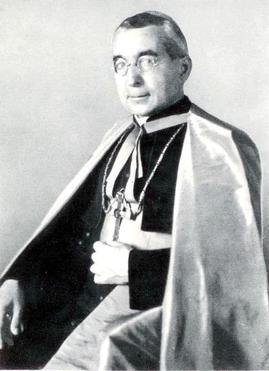
But when the local clergymen were "Brown Priests" (Nazi-supporting priests) like Alois Hudal?
In reality, Catholics only became poised against the far right when the church began to actively campaign against it.
But when the local clergymen were "Brown Priests" (Nazi-supporting priests) like Alois Hudal?
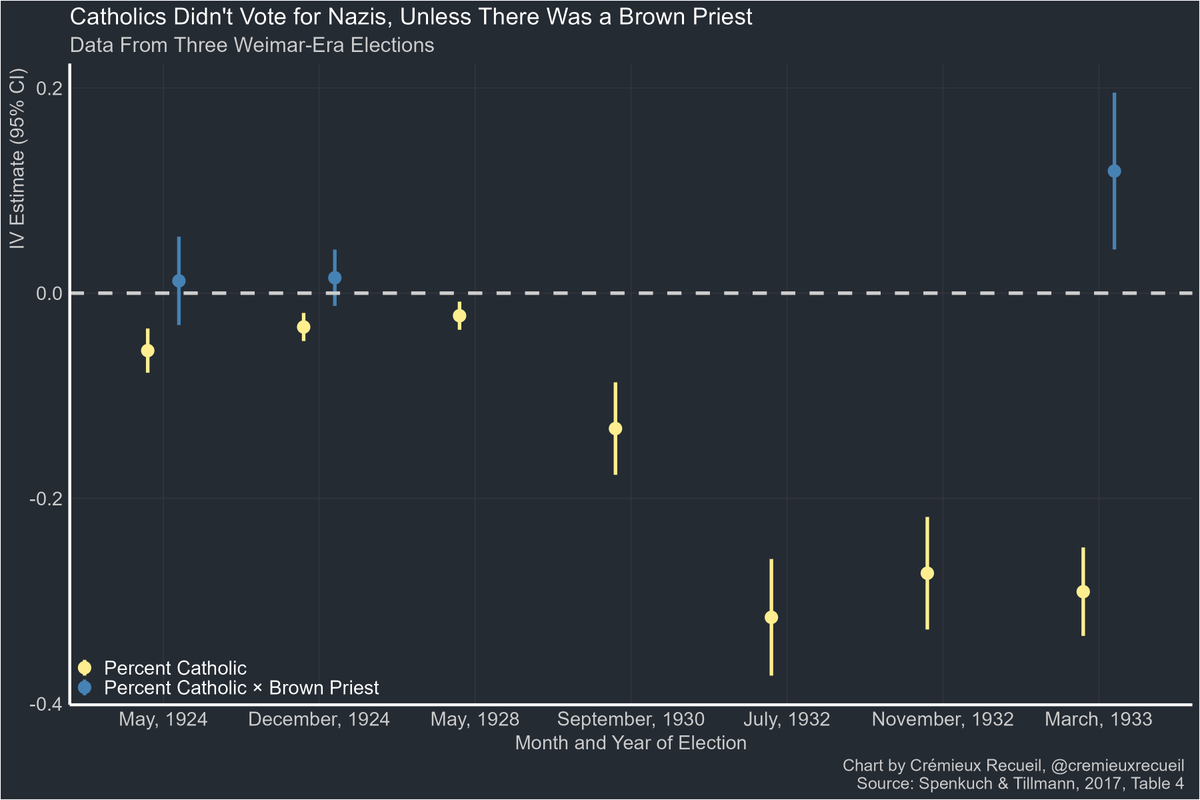
If the local priest was a Nazi supporter, the Protestant-Catholic Nazi support difference was reduced by 32–41%.
Brown priests also only had their effects when the Catholic church opposed the Nazis. Before then, they didn't make a difference to Catholic voting patterns.
Brown priests also only had their effects when the Catholic church opposed the Nazis. Before then, they didn't make a difference to Catholic voting patterns.
Catholic opposition to Nazis was an elite thing. They didn't support the party because Catholic elites campaigned to convince them it was bad.
Until March 28, 1933, when Bishop Bertram called "general proscription and warnings of National Socialism . . . no longer necessary".
Until March 28, 1933, when Bishop Bertram called "general proscription and warnings of National Socialism . . . no longer necessary".
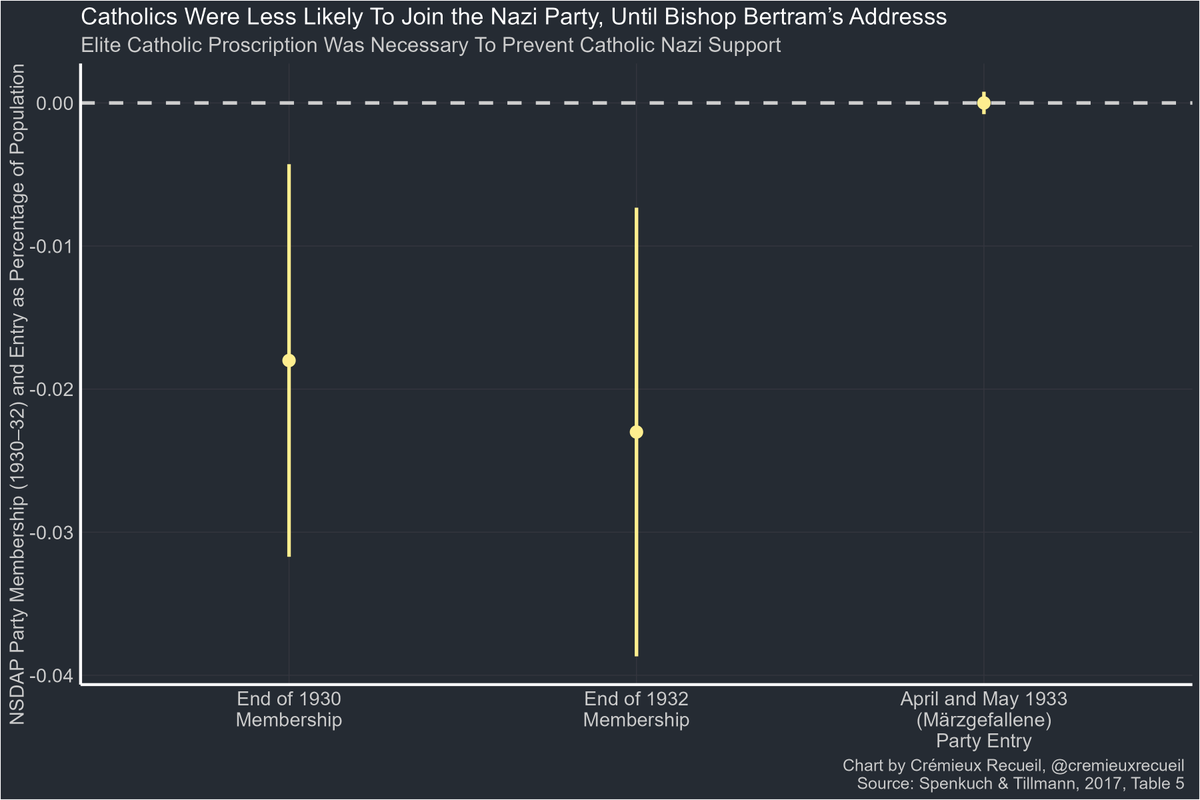
The public saw Bertram's statement and the end of the Catholic anti-Nazi campaign as the "episcopacy’s approval of the Third Reich and its Führer".
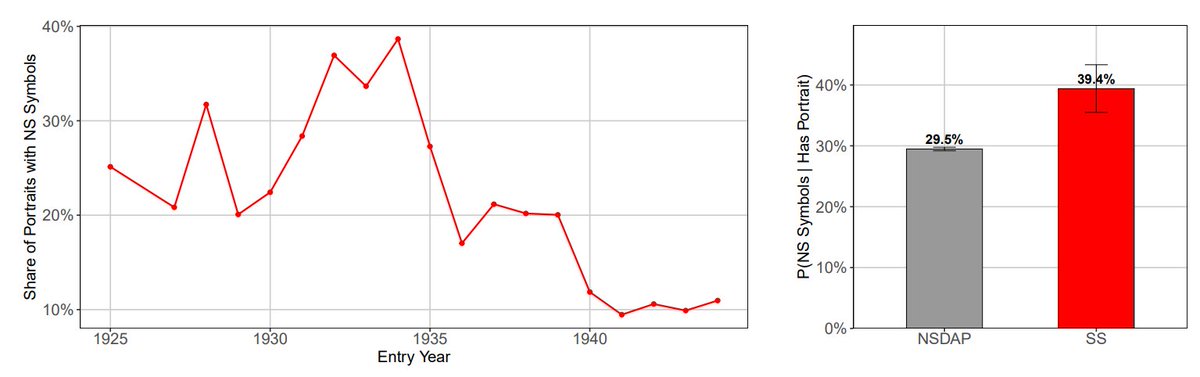
Overnight, equal numbers of Catholics and Protestants joined the Nazi party.
To qualify further, let's ask: which Catholics?
Overnight, equal numbers of Catholics and Protestants joined the Nazi party.
To qualify further, let's ask: which Catholics?
You won't be surprised to know that the answer has deep roots.
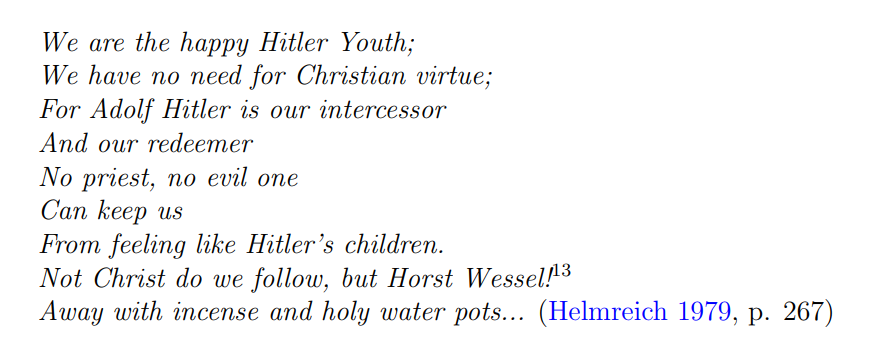
This will sound clichéd, but the Nazi movement was religious. Or, at least, quasi-religious.
Consider the following lines from the official song of the Hitlerjugend:
This will sound clichéd, but the Nazi movement was religious. Or, at least, quasi-religious.
Consider the following lines from the official song of the Hitlerjugend:
One of the propaganda efforts the Nazis did was to gather German's essays about their views on the Nazi party.
Many of these essays are truly deranged, but they are incredibly, highly religious. Consider this, from one Anges Mosler-Sturm of Berlin-Spandau:
Many of these essays are truly deranged, but they are incredibly, highly religious. Consider this, from one Anges Mosler-Sturm of Berlin-Spandau:

The Nazi movement really was quasi-religious in nature.
And Christianity stood in opposition to it, but not all Christians have similarly deep beliefs; suppress Christianity a bit and it seems Nazism could easily replace it for many.
Recall the words of C.S. Lewis:
And Christianity stood in opposition to it, but not all Christians have similarly deep beliefs; suppress Christianity a bit and it seems Nazism could easily replace it for many.
Recall the words of C.S. Lewis:

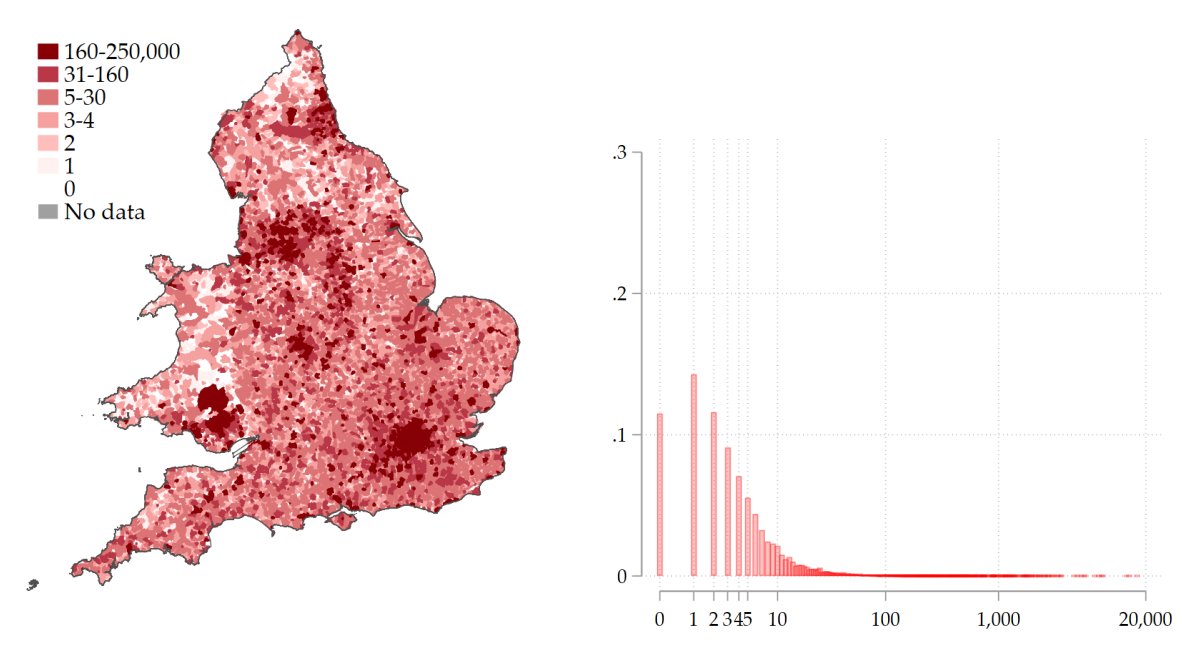
One symbol of the strength of people's belief in Christianity is whether they give their kids Christian names.
Does this map seem familiar?
Does this map seem familiar?
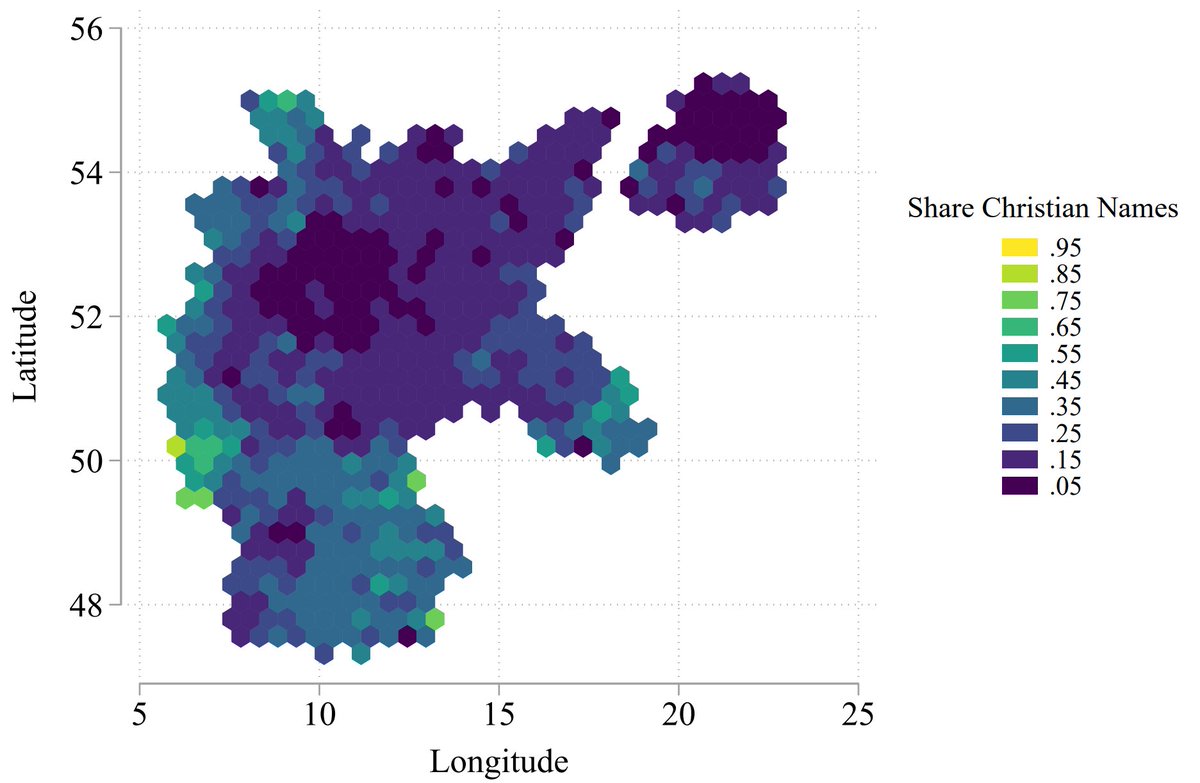
If it seems related to Nazism, that's because it was.
Being more religious, and thus more likely to give kids a Christian name (and esp. a very religious one) negatively related to Nazism across regions, and this held up such that Nazis were less likely to have Christian names!
Being more religious, and thus more likely to give kids a Christian name (and esp. a very religious one) negatively related to Nazism across regions, and this held up such that Nazis were less likely to have Christian names!
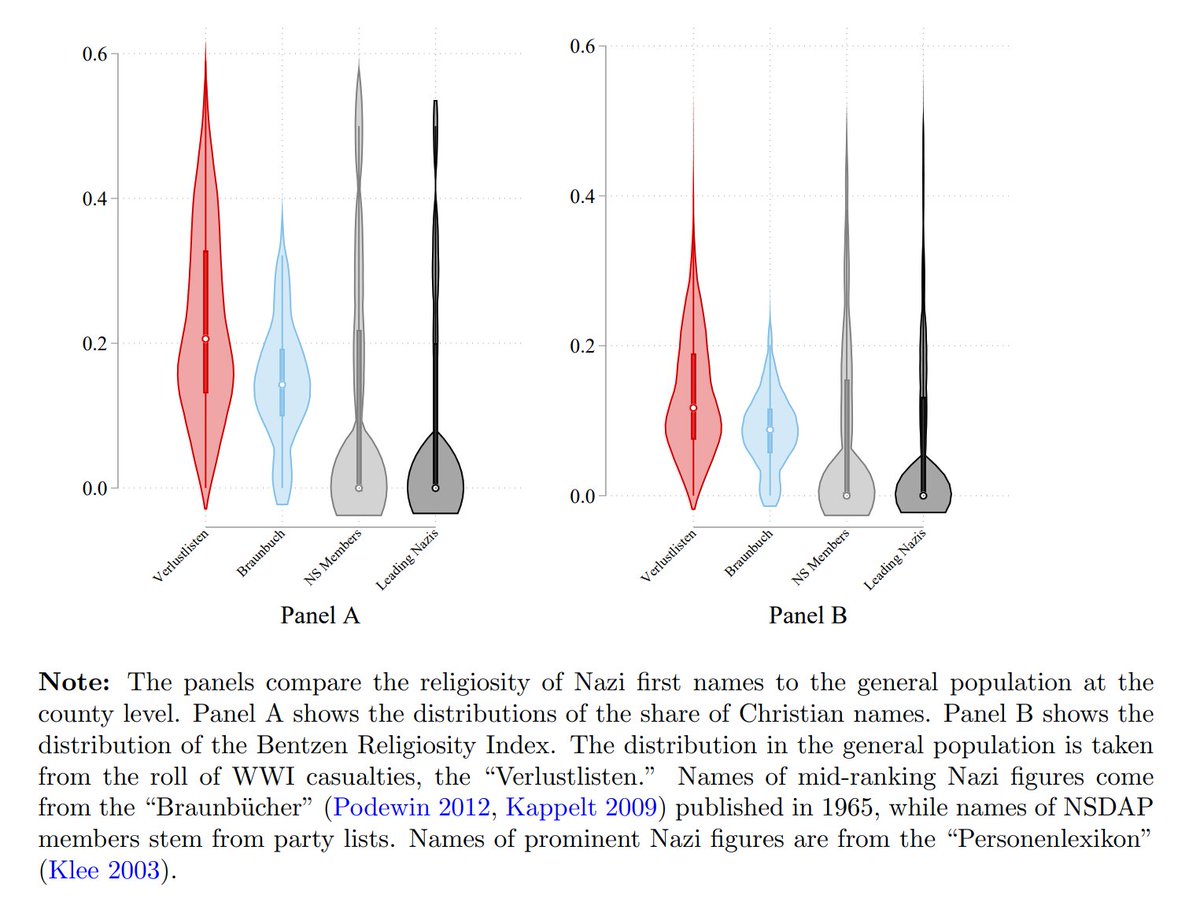
Consider something else: a symbol of weak belief in Christianity is the coexistence of Christian and supernatural beliefs.
People who believe in clairvoyance believe in an alterative to doctrine, and they are not strong Christians.
Another map?
People who believe in clairvoyance believe in an alterative to doctrine, and they are not strong Christians.
Another map?
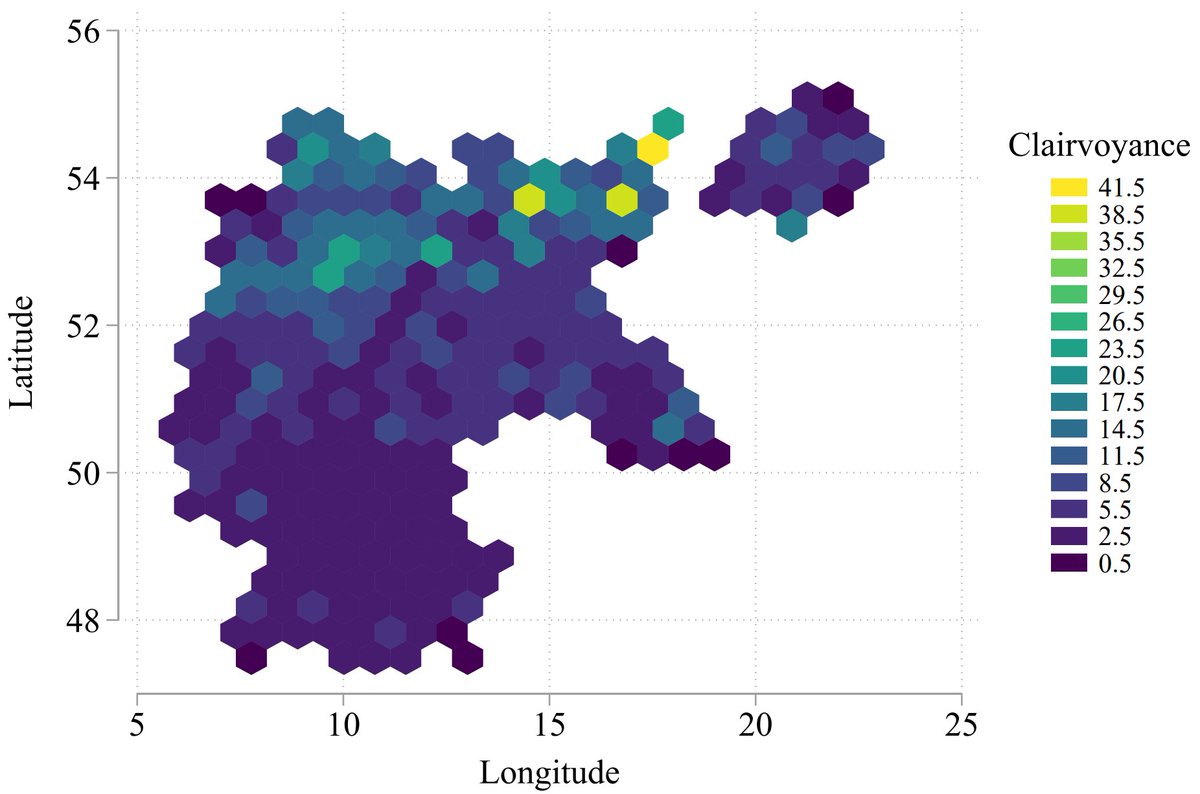
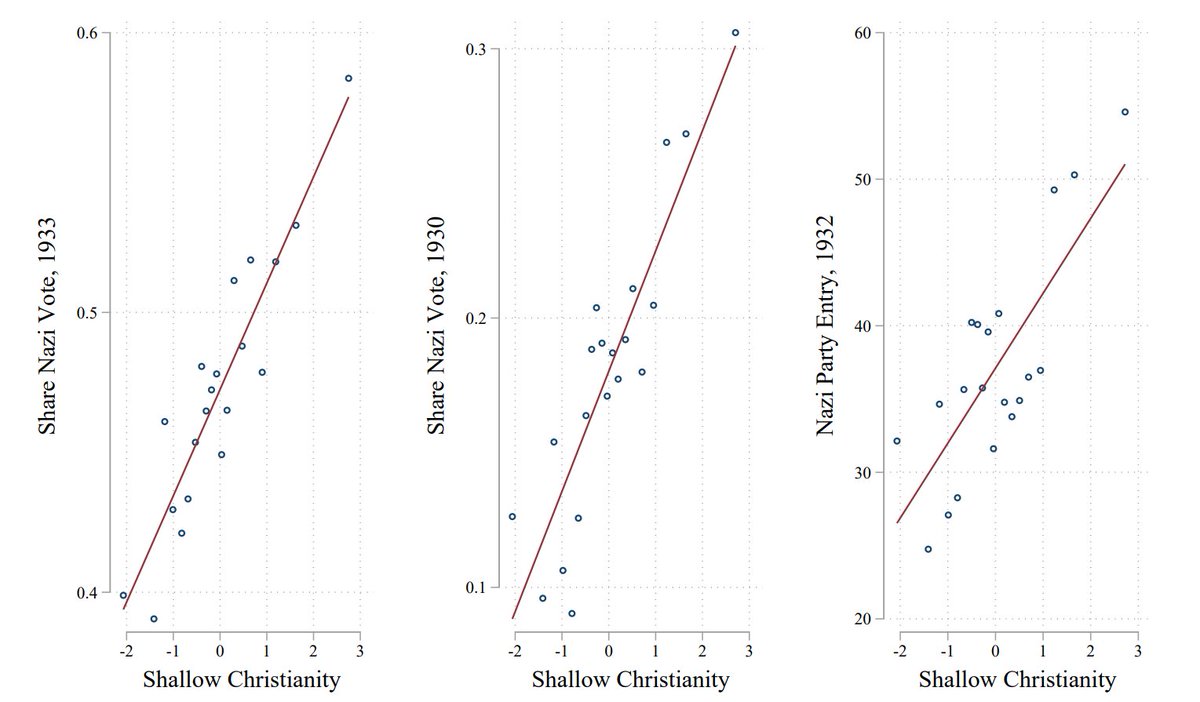
Some places had a more "shallow" conception of Christianity than others. They weren't as likely to give their kids a Christian name, and they held more "alternative" views, outside of Christian doctrine.
These places had greater Nazi support.
Or, as a familiar map:
These places had greater Nazi support.
Or, as a familiar map:
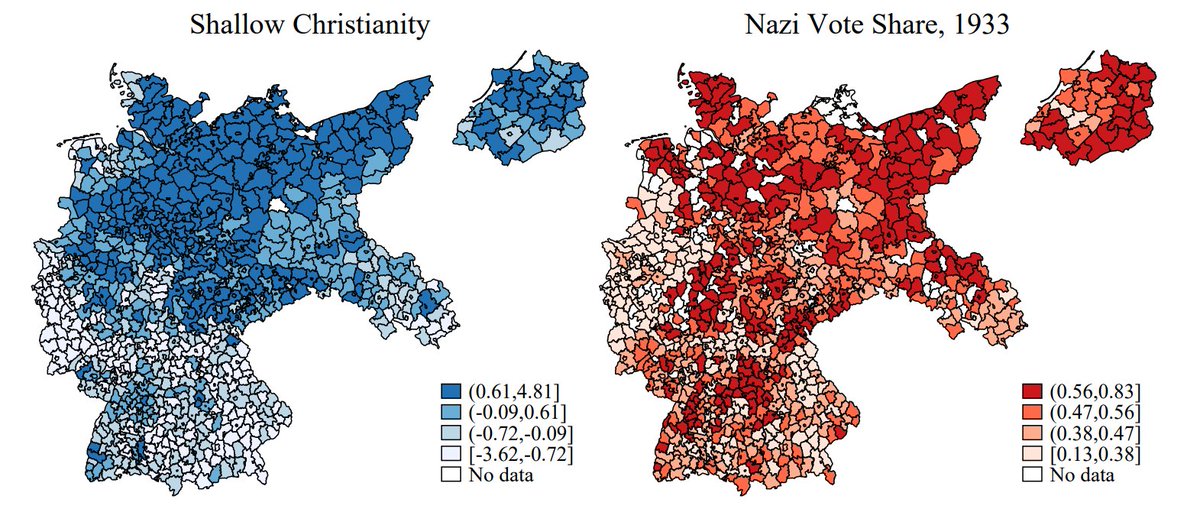
Shallow Christian beliefs really were related to considerably greater Nazi vote shares and more party entry.
To understand why this is, we need to think theoretically. Consider this framework:
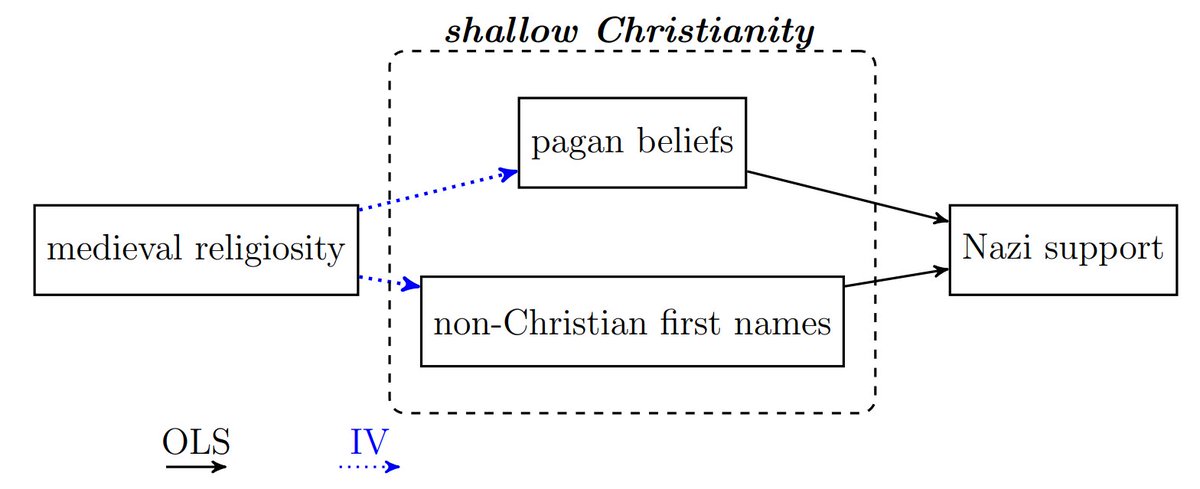
So, looking back at medieval times, this is what we have: the more local monasteries, the less shallow the Christian belief; the greater the distance to the nearest monastery or shrine, the shallower the Christianity in the area.

But let's be more explicit: those same predictors of shallow Christian belief also predicted Nazi support.

Christianity was of course not the only religious belief that had deep roots touching Nazism.
The closer a place was to an ancient pagan shrine, the greater their Nazi support.
The closer a place was to an ancient pagan shrine, the greater their Nazi support.
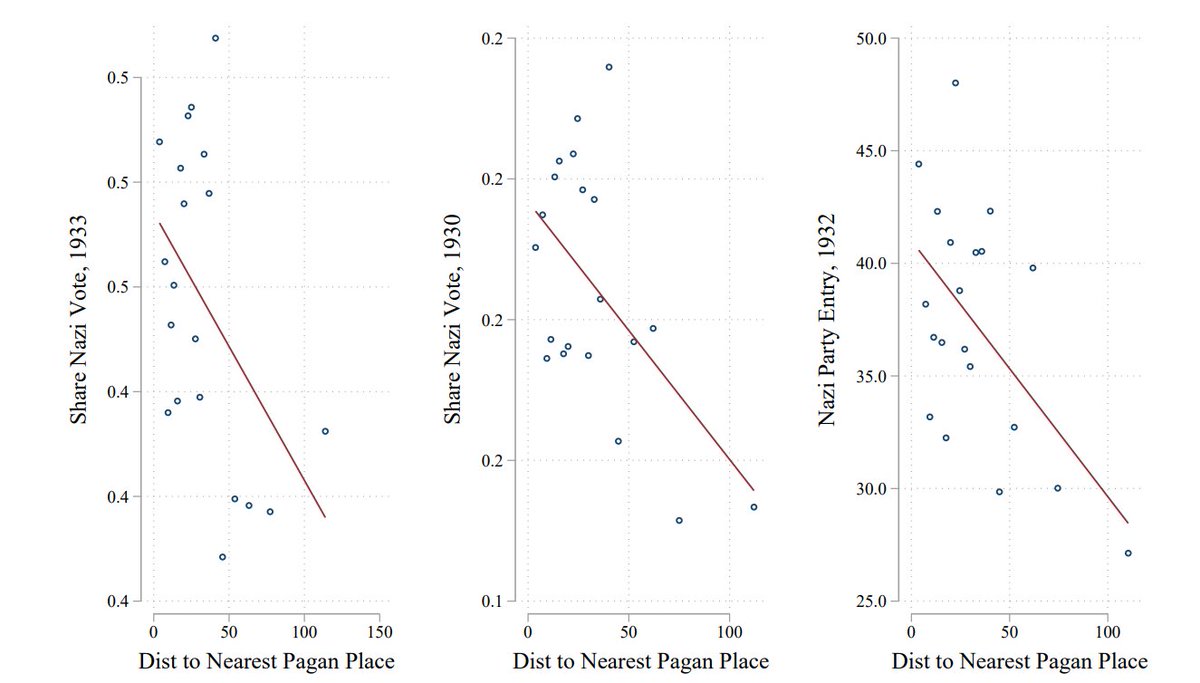
We have two tales here: Catholicism protected against Nazism. But it only did so when elite Catholics proscribed it; otherwise, those who were weakly Christian, both Catholic and Protestant (see Figure A.4), turned to a new religious icon in the form of Hitler.

Elites held back the morally loose from supporting the Nazis, but Protestants had much more limited elite coordination for historical reasons. Protestants who were Christian at heart were protected; if their belief was shallow, they switched to the new faith.
A final quote:
A final quote:

• • •
Missing some Tweet in this thread? You can try to
force a refresh