To delve deeper into the topic of Russia's ability to refurbish and modernize their stored tanks, I would like to introduce further updates, images, data, and ultimately, share my conclusions on the subject.
But first, let's examine the Kamensk-Shakhtinsky facility. 🧵Thread:
2/ I'd like to emphasize that the scope of the conversation is not centered on tank storage bases but rather on refurbishing and modernization capabilities. I intend to provide an estimate of their capacities and track recent developments in the Kamensk-Shakhtinsky area
3/ It's probable that the 72nd factory operates or will operate within the confines of the 91st Central Reserve Base for Motor Vehicles or its immediate vicinity. In September 2022, Russian Prime Minister Mishustin announced:
4/ "In Kamensk-Shakhtinsky, we will construct the Armored Vehicle Repair Plant No. 72. The workforce at the plant in Kamensk-Shakhtinsky will consist of 227 individuals. A land area of 25.7 hectares has been allocated for it in proximity to the Shahta-17"
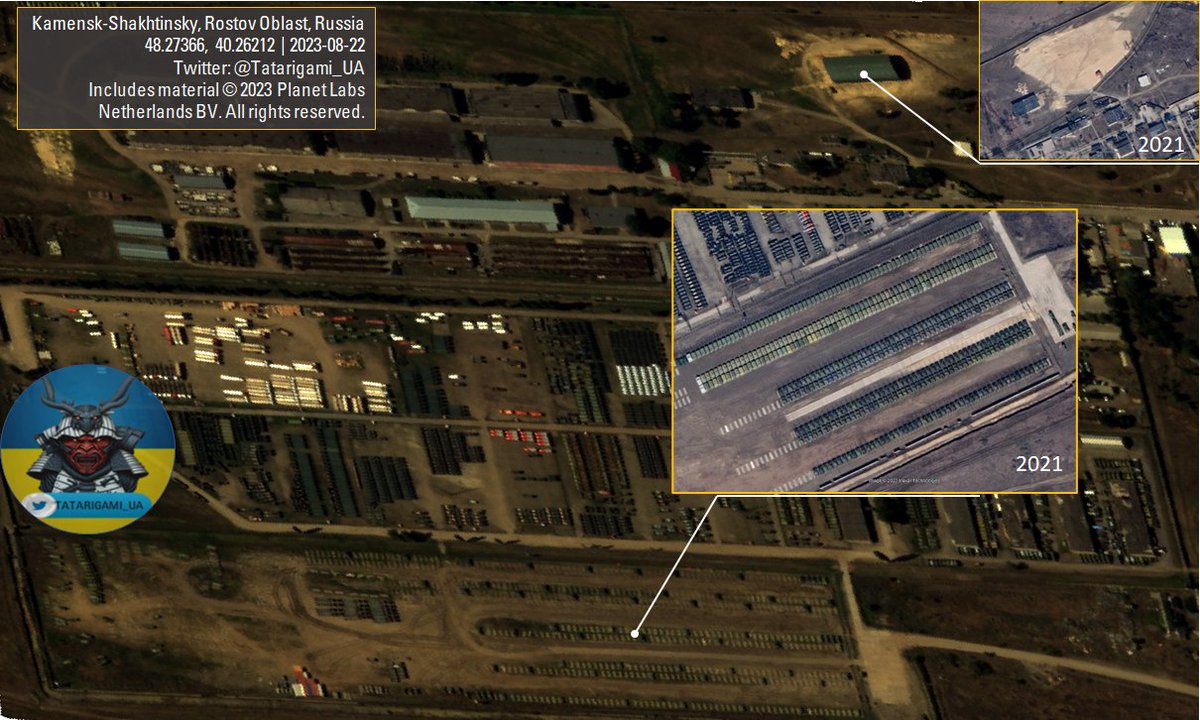
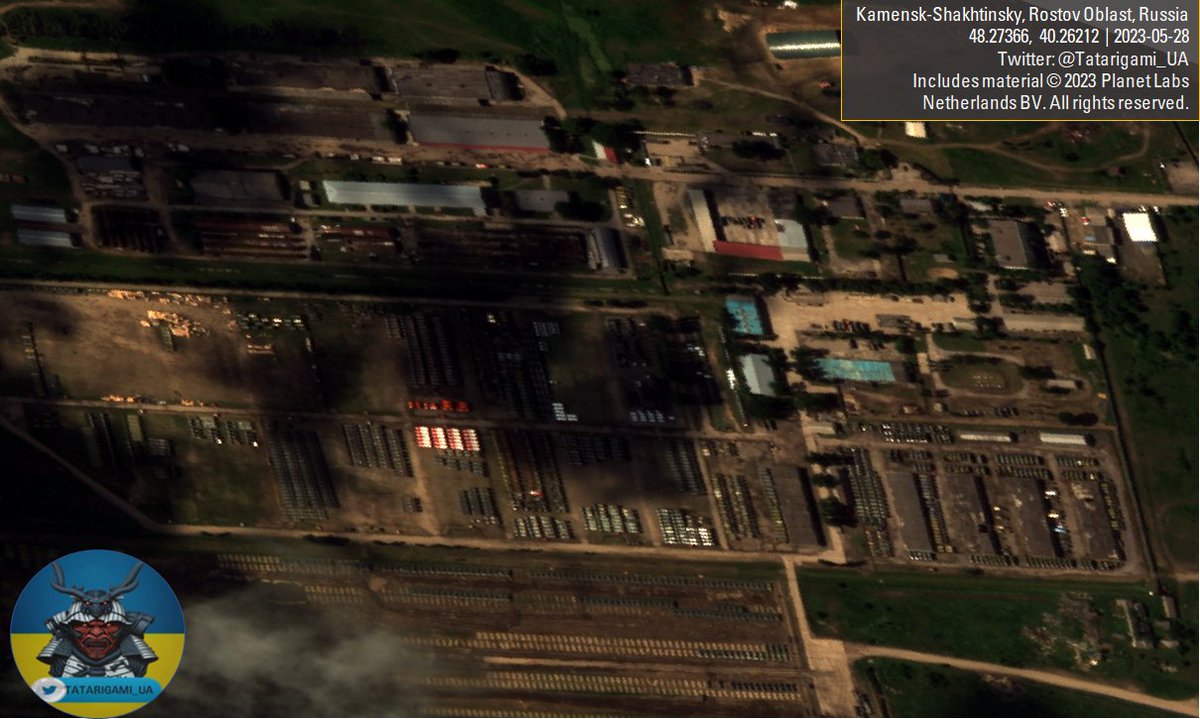
5/ Analysis of imagery reveals a new hangar-like structure within the base. Its status as the previously announced "new plant" is unclear. The absence of external new facilities indicates that construction may not have commenced, or it might have been confined to this hangar.
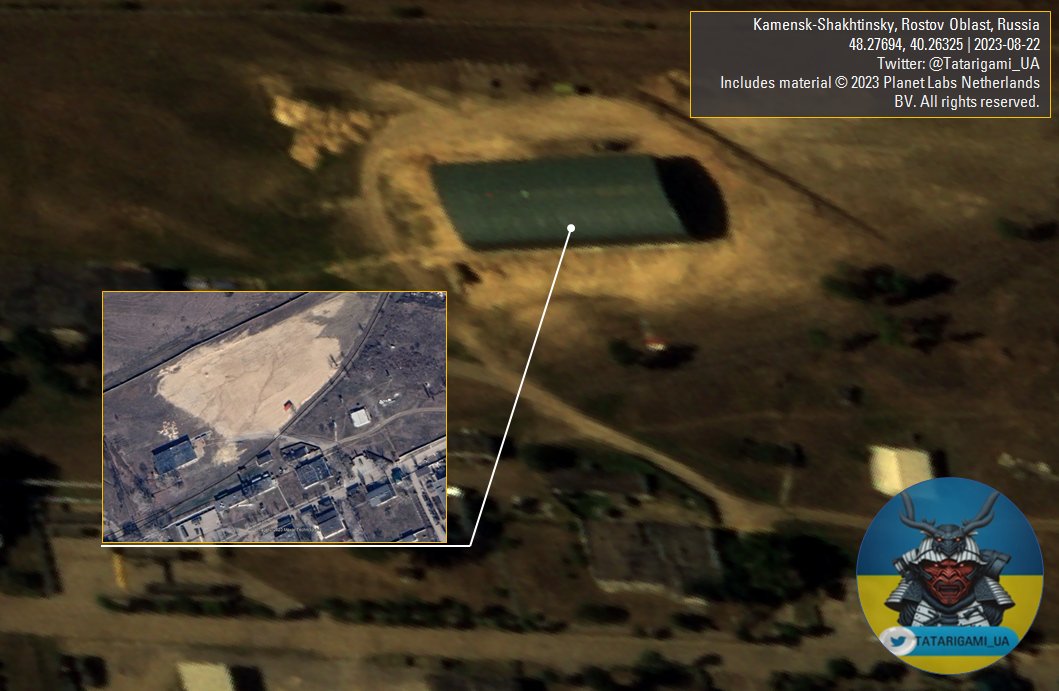
6/ As per available public reports, this specific section (on the image) is allocated for T-62M and T-64 tanks. Nevertheless, based on on-site imagery and other satellite data, it appears that other tank variants, modifications, and IFVs are also present within the same area.
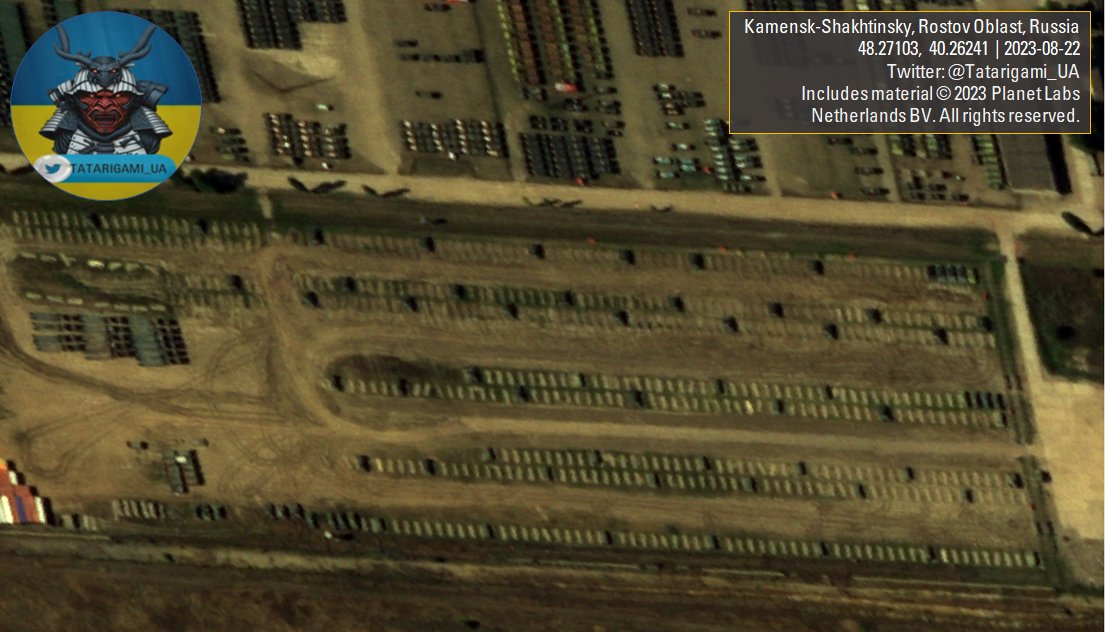
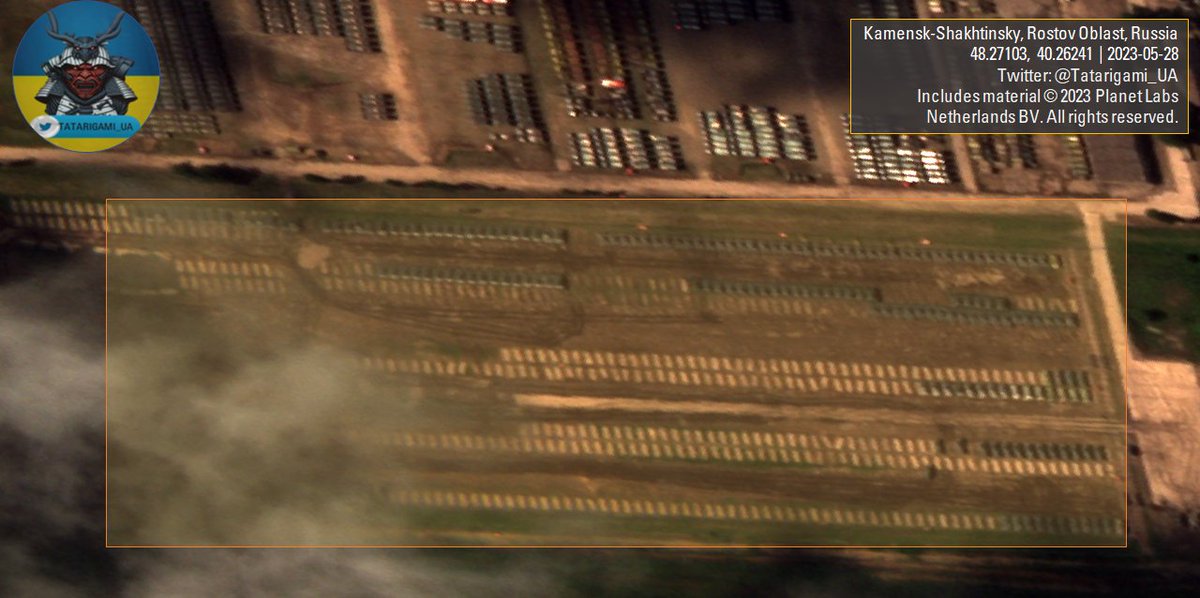
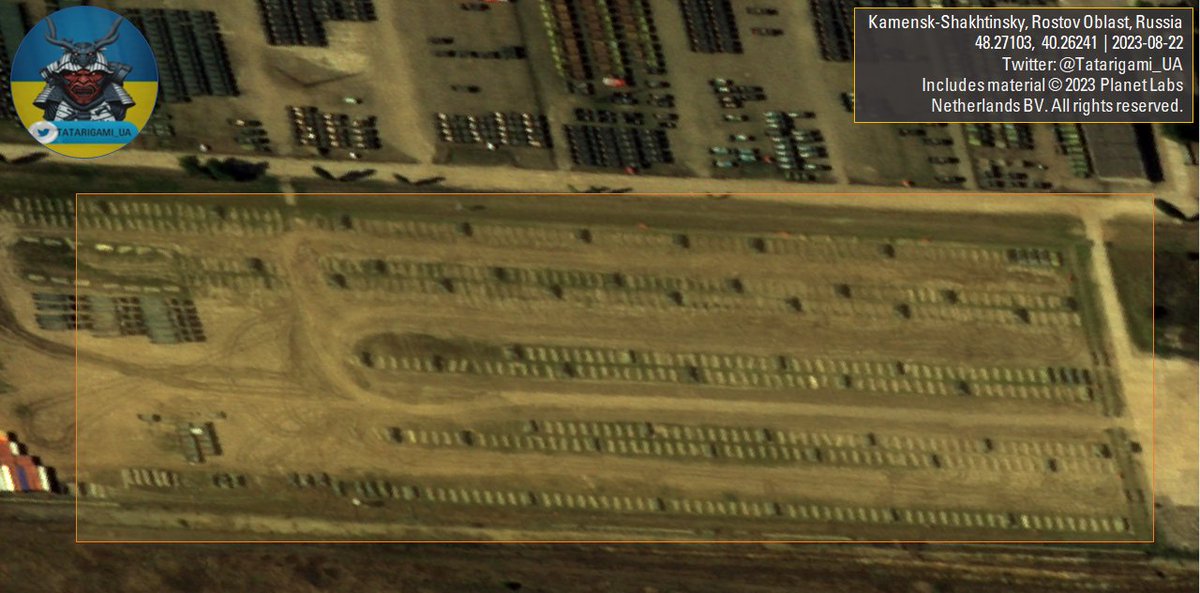
7/ Comparative satellite imagery reveals a reduction of over 50% in tanks and IFVs between May and August. The frequent presence of tank-transporting trailers suggests active utilization of the facility.
8/ Regrettably, these figures, on their own, do not offer a comprehensive perspective and cannot address inquiries such as the monthly tank upgrading capacity. Nonetheless, it remains crucial to contextualize it within the framework of publicly accessible data
9/ According to the recent report by the "Institut Action Resilience," it is estimated that russia's storage inventory comprises nearly 6,000 tanks. An essential point to emphasize is that this figure encompasses all tanks, irrespective of their condition.
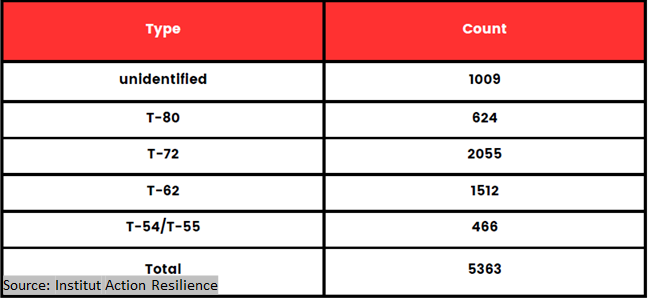
10/ While providing a precise estimate can be challenging, their calculations rely on manual assessments of imagery and estimations regarding the potential storage capacity within hangar facilities.
11/ According to Oryx estimates, russian tank losses currently stand at approximately 2,289 tanks and continue to rise, which forces russians to take tanks from their reserves, undergo refurbishment, and carry out modernization processes. This usually takes at least 30 days.
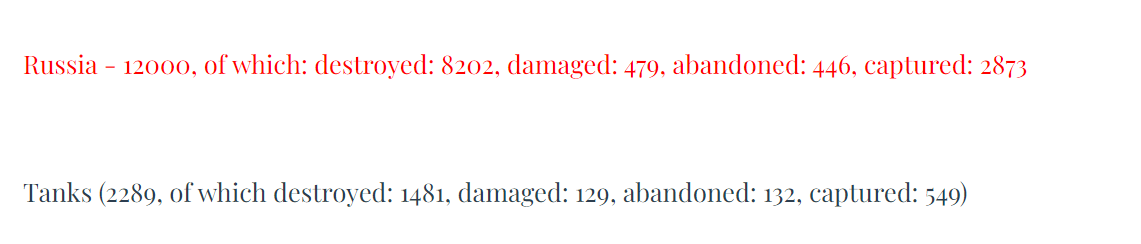
12/ While the exact figure remains speculative, my estimate for russia's modernization and refurbishment capabilities, considering the contribution of 5 facilities and data from the "Institut Action Resilience," falls within the range of approximately 200-290 tanks per year.
13/ This situation suggests that Russia is notably lagging in terms of tank refurbishment and modernization of older tanks. While this is positive news for Ukraine, it's essential to recognize that every tank on the battlefield, regardless of its age, poses a potential threat.
14/ Tanks continue to be a vital component of assaults, although their traditional role has been reduced due to heavy minefields and abundance of anti-tank means. This dynamic often forces tanks to engage in a hit-and-run tactics or use indirect fire from concealed positions.
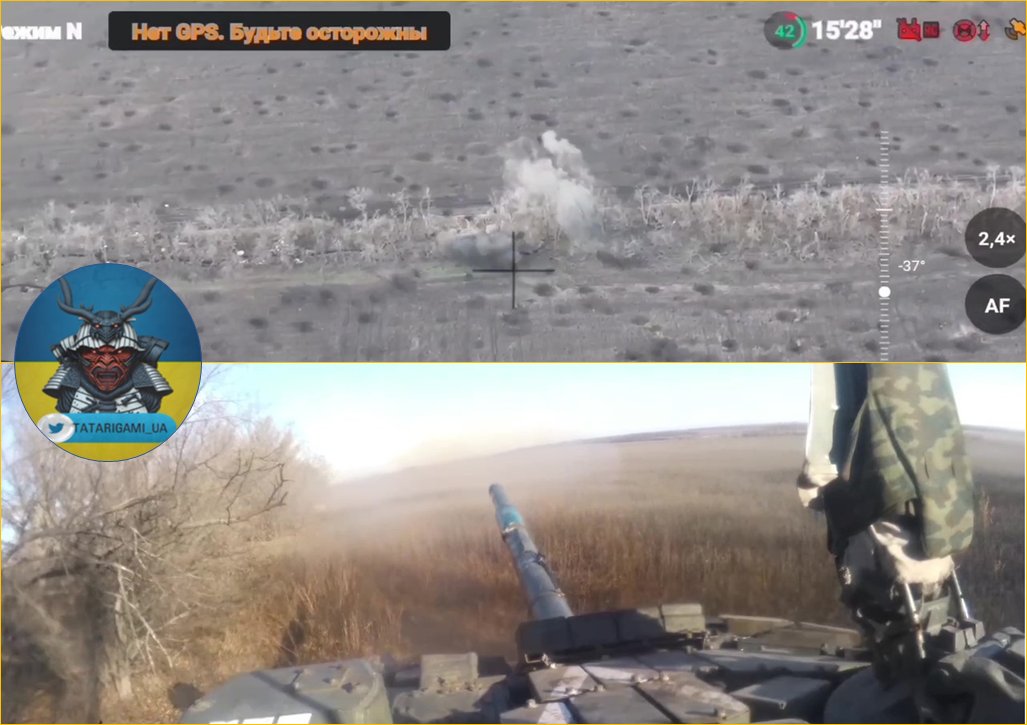
15/ Older, modernized tanks still require efforts and means for neutralization. It's a vital reminder that Ukraine requires a steady supply of not only advanced weapons but also regular munitions and ammo to maintain its capabilities for protecting and liberating territories
Thanks to your contributions via Buy Me A Coffee, I was able to purchase and publish this satellite imagery. If you've found this thread useful, please like and repost the first message of the thread. You can also follow my Substack, as I plan to expand: tatarigami.substack.com
• • •
Missing some Tweet in this thread? You can try to
force a refresh

As we approach a point marking the beginning of the war’s 5th year, it is time to discuss how we assess the war’s overall dynamics, strictly from a military standpoint. One method many analysts use is the pace of territory capture. However, this methodology has a serious issue🧵:
2/ Generally, this is not a bad method of analyzing battlefield dynamics, as the history of wars shows far more cases of states advancing along frontlines or into enemy territory before a war ends in their favor than the opposite. The devil, however, lies in the details
3/ Putting aside other domains of war, such as economics and socio-politics, battlefield dynamics are often judged by metrics like casualty rates and square kilometers of controlled territory. This can produce a distorted picture, a problem I informally term the “Sahara Fallacy”
The catastrophic situation of Russian forces trapped in Kupyansk, who continue to lose ground, together with a second consecutive year of failure to fully seize Pokrovsk, represents one of the more optimistic scenarios for 2025.
Thread:
2/ As war fatigue increasingly affects Russia, the prospect of enforcing a rapid, unfavorable capitulation of Ukraine through Washington, DC now appears even more remote, not not entirely excluded
3/ While Russia has used the negotiation process primarily to delay new sanctions and slow support for Kyiv, its economic situation continues to deteriorate, and tactical gains have failed to translate into strategic breakthroughs.
Information about a new modification of Russia’s Geran-2 drone has been published by Ukraine’s Defense Intelligence, including a detailed technical breakdown. According to the analysis, the Geran drone has been fitted with an R-60 air-to-air missile mounted on its fuselage:
2/ The missile, fitted with an APU-60-1MD (P-62-1MD) aircraft launcher, is mounted on a special bracket located on the upper front section of the Geran’s fuselage.
3/ The most likely employment of rocket involves transmitting images from the drone’s cameras to an operator via the modem. If a Ukrainian aircraft or helicopter enters the engagement zone, the operator sends a launch command to the missile’s control unit.
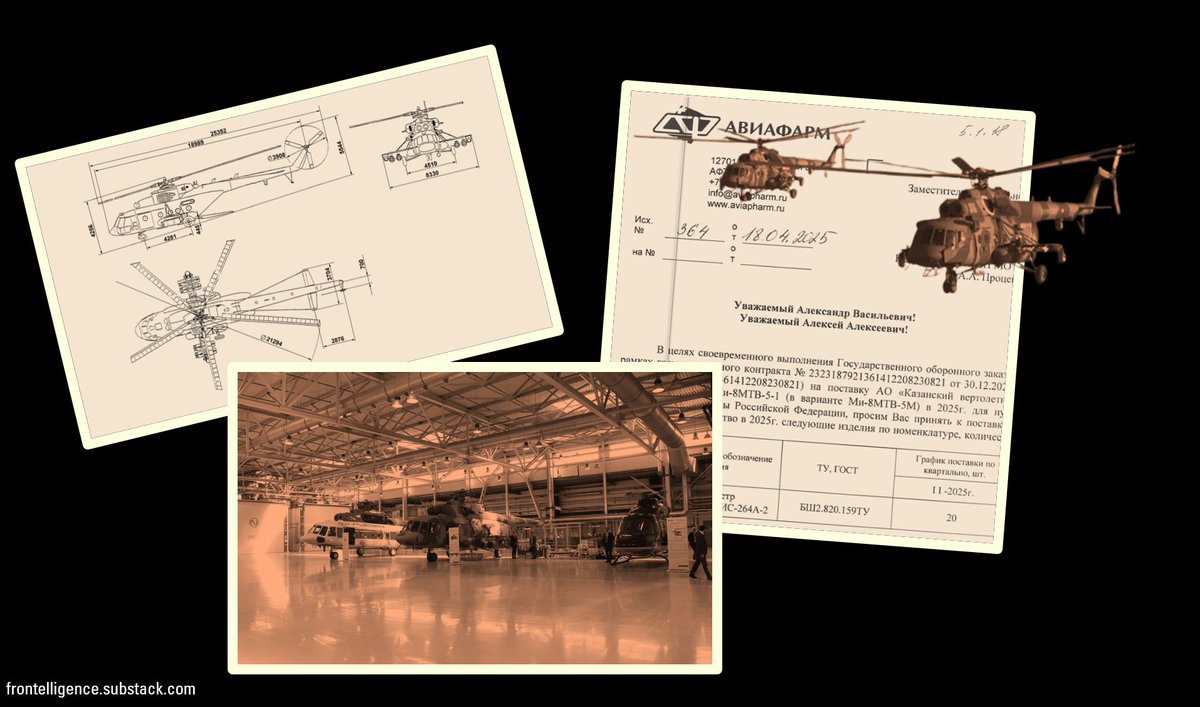
Analysis: New Data Suggests Russia Is Sustaining Mi-8 Output Despite Wartime Losses
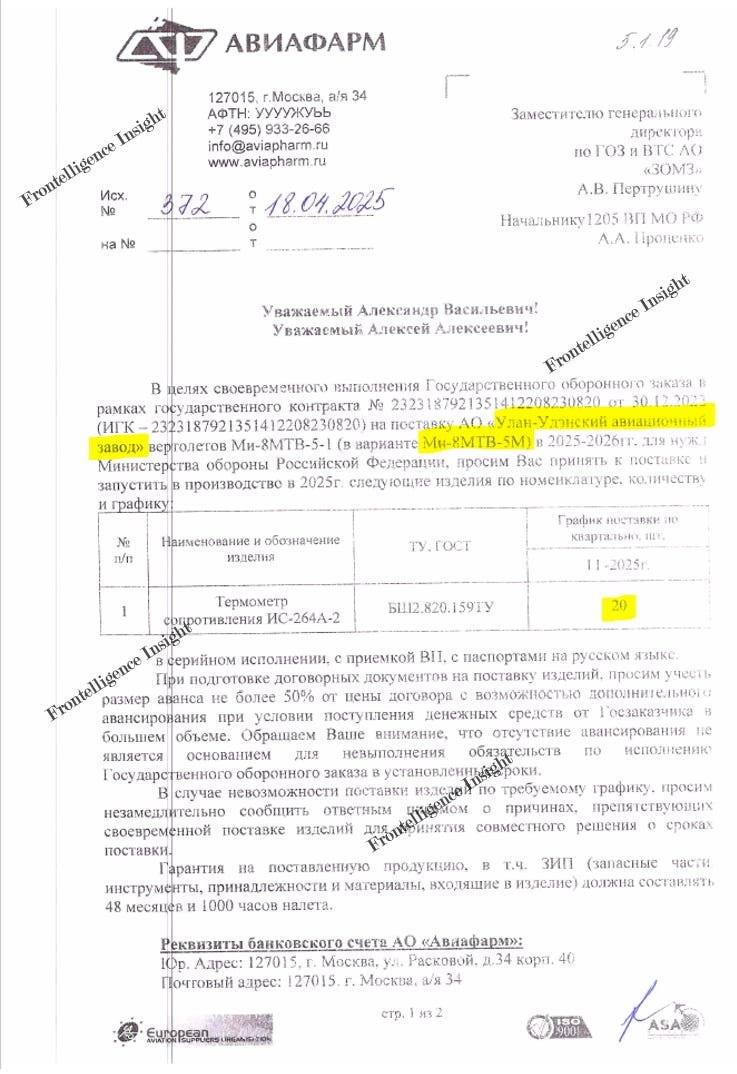
According to non-public Russian procurement documents obtained and analyzed by the Frontelligence Insight team, current Mi-8 production appears sufficient to offset wartime losses. 🧵Thread:
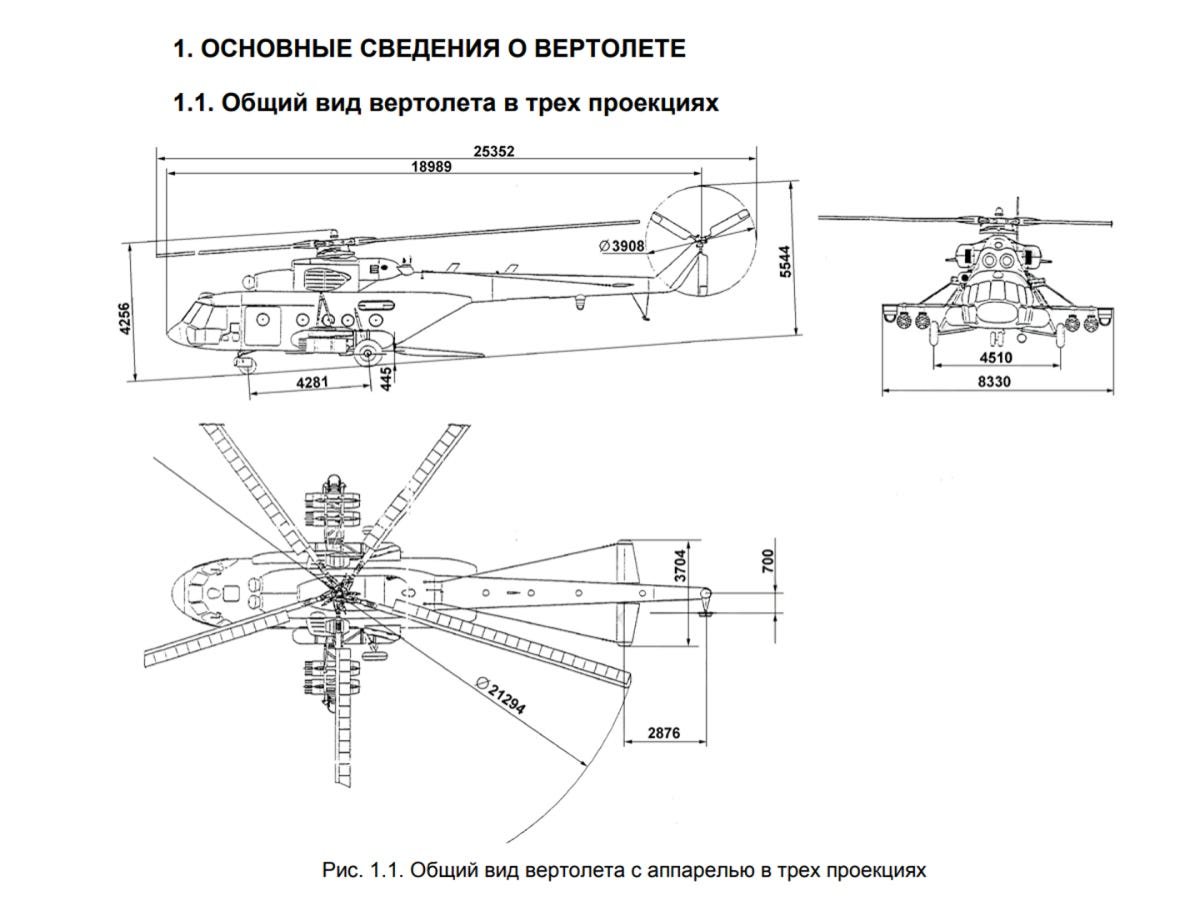
2/ Since the Soviet era, more than 12,000 Mi-8 helicopters of all types have been produced. It’s a versatile military transport platform that can move troops, cargo, serve as a flying hospital or EW asset, and conduct attack missions with unguided rockets and 100–500 kg bombs.
3/ Correspondence between Aviafarm and ZOMZ the Defense Ministry and ZOMZ show a request for 40 IS-264A thermometers: 20 for Kazan and 20 for Ulan-Ude, where Mi-8s are produced.
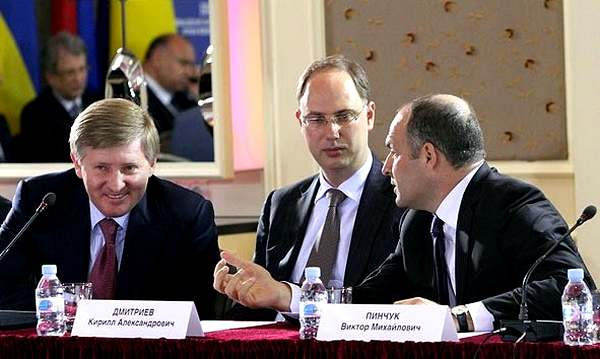
Most know Kirill Dmitriev as the Russian president’s envoy. But to more than 200 investors in Ukraine, he is known for taking part in a Kyiv real estate project that ended in a fraud and criminal case. Using articles from 2011, I was able to find more details. 🧵Thread:
2/ The story begins in 2000s, when N. Lahuna and A. Dmitriev (Kirill Dmitriev’s father) planned the elite suburban “Olympic Park.” Construction was to be carried out by Traverz-Bud, a subsidiary of "Evropa", in which, according to "Argument," Kirill Dmitriev held a majority stake
3/ Based on court documents cited in the media, in 2011 (links at the end), a prosecutor’s audit found that construction of the properties, which under agreements with the developers of the “Olympic Park” was due to be completed by the end of 2008, has not been carried out
The Financial Times, a media outlet I respect and one of the few that consistently produces exceptional reporting on Ukraine, has released a new editorial opinion. Many, including myself, agree that changes are needed. However, I believe the timing is extremely problematic:
2/ The situation on the frontlines is currently very difficult. At the same time, Kyiv is facing external pressure from Washington, where many are echoing Kremlin-style “capitulation” narratives. In moments like these, the President must stand on solid ground.
3/ This is not about Zelensky personally - it is about the institution of the Presidency. Completely overhauling the government and appointing untested figures in the name of transparency could create a situation where we might end up with no state and government at all